Blog
Pickle-Making Traditions in Banaras Homes: The Courtyard, the Roof and the Women

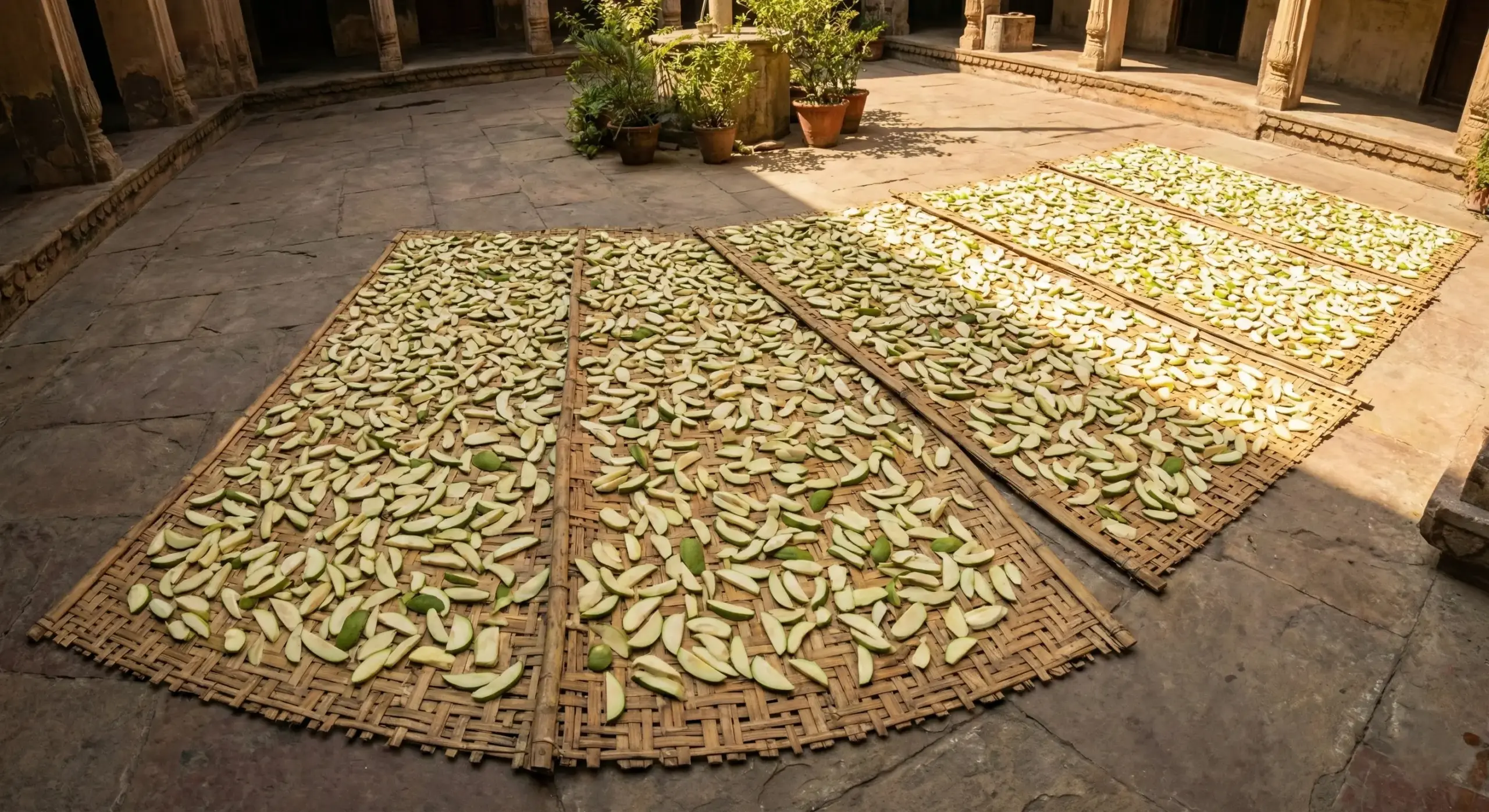
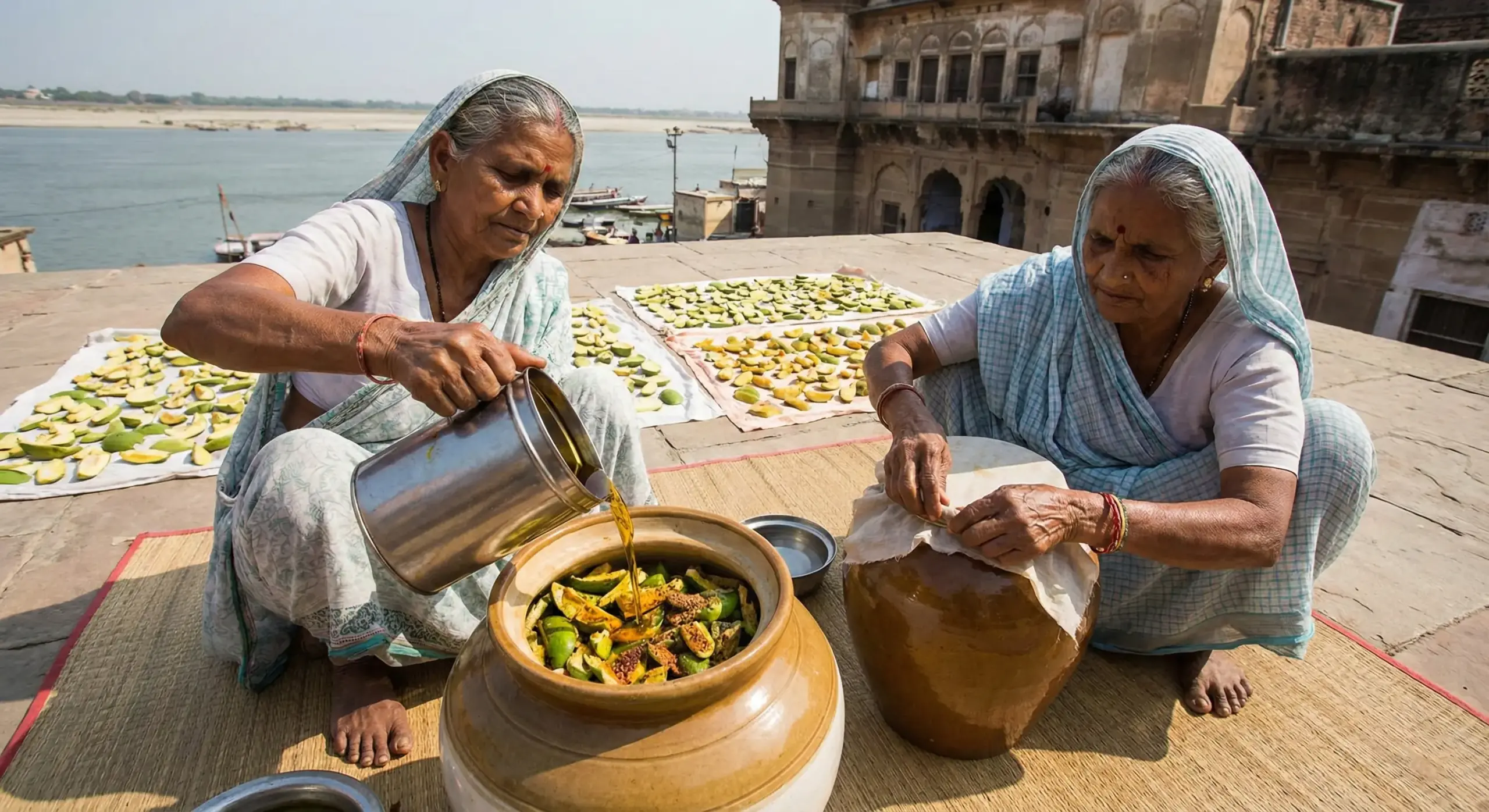
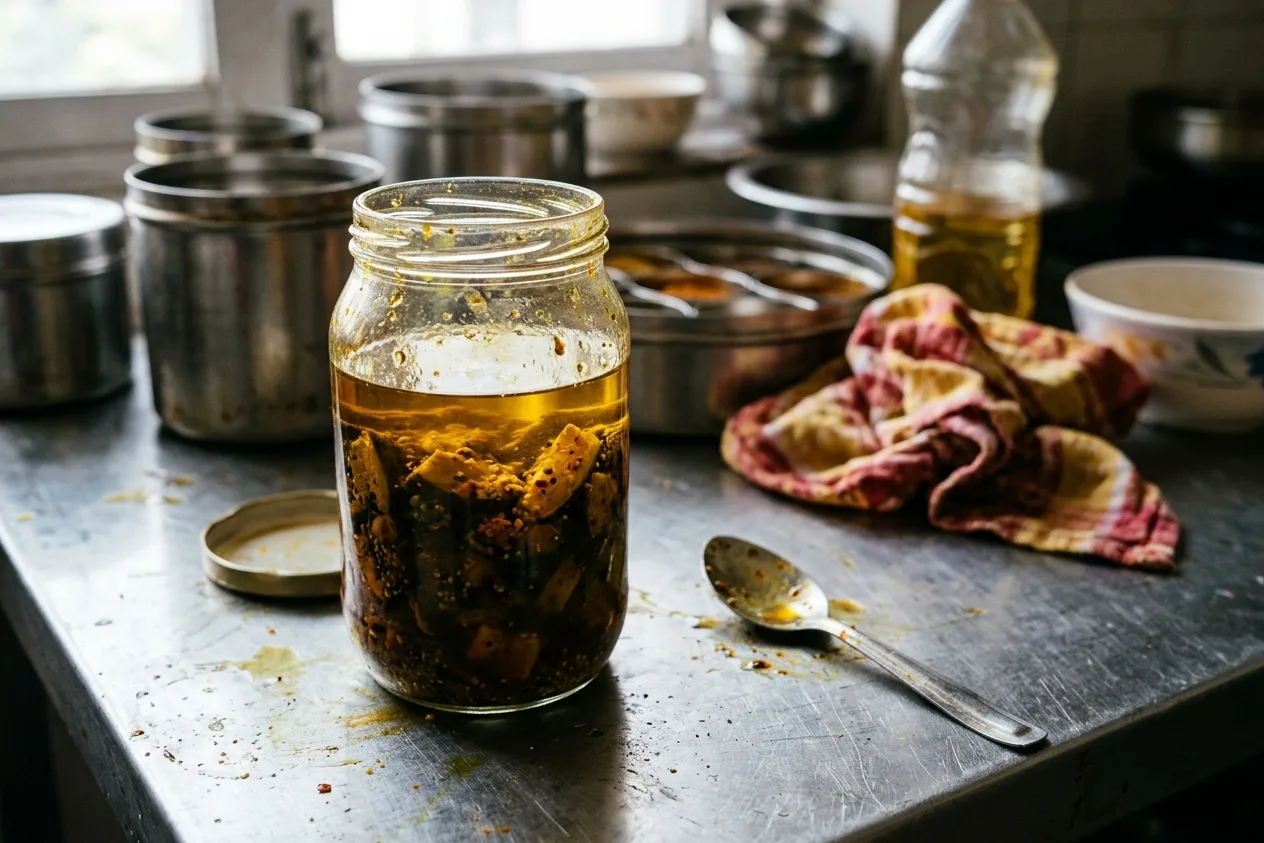
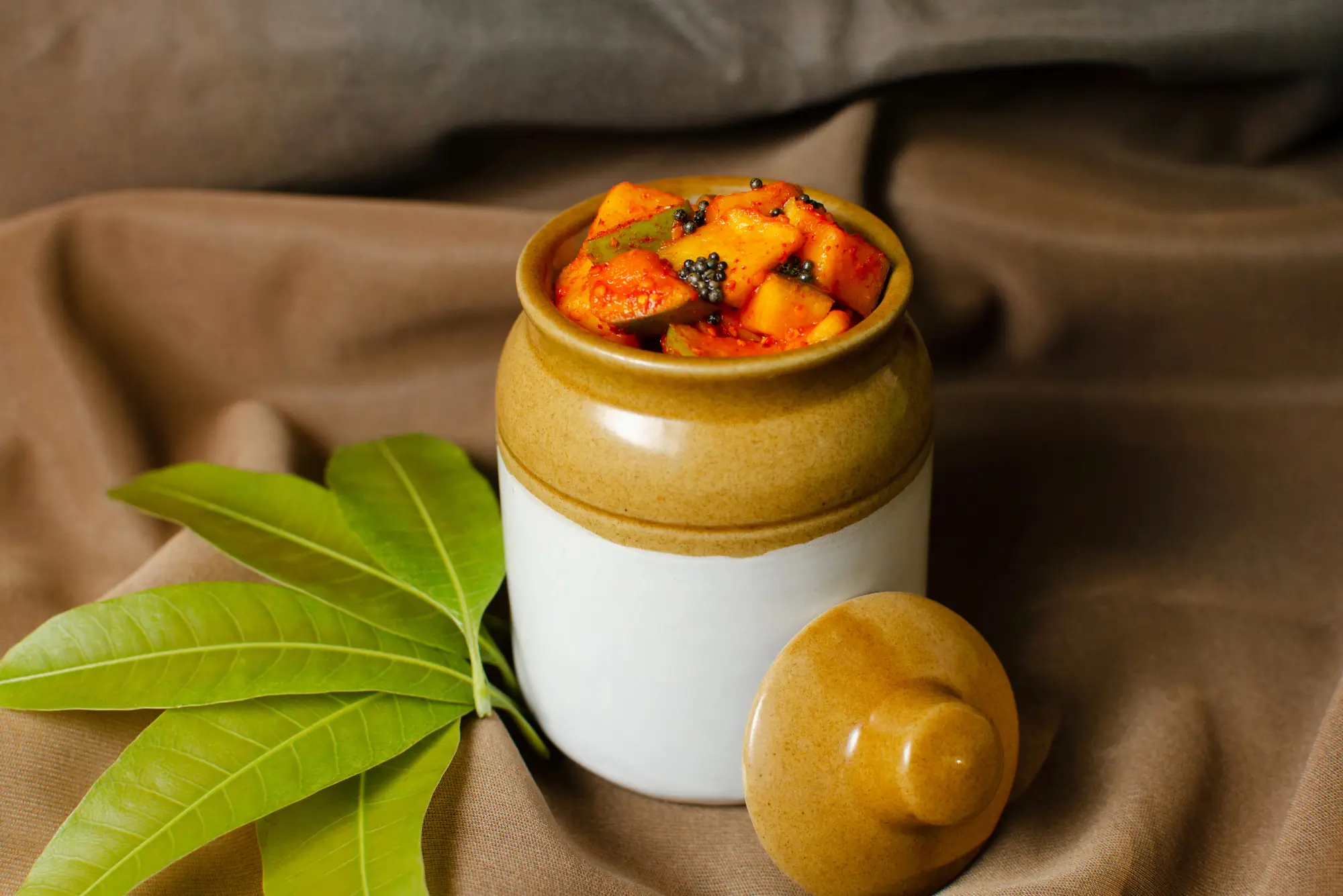
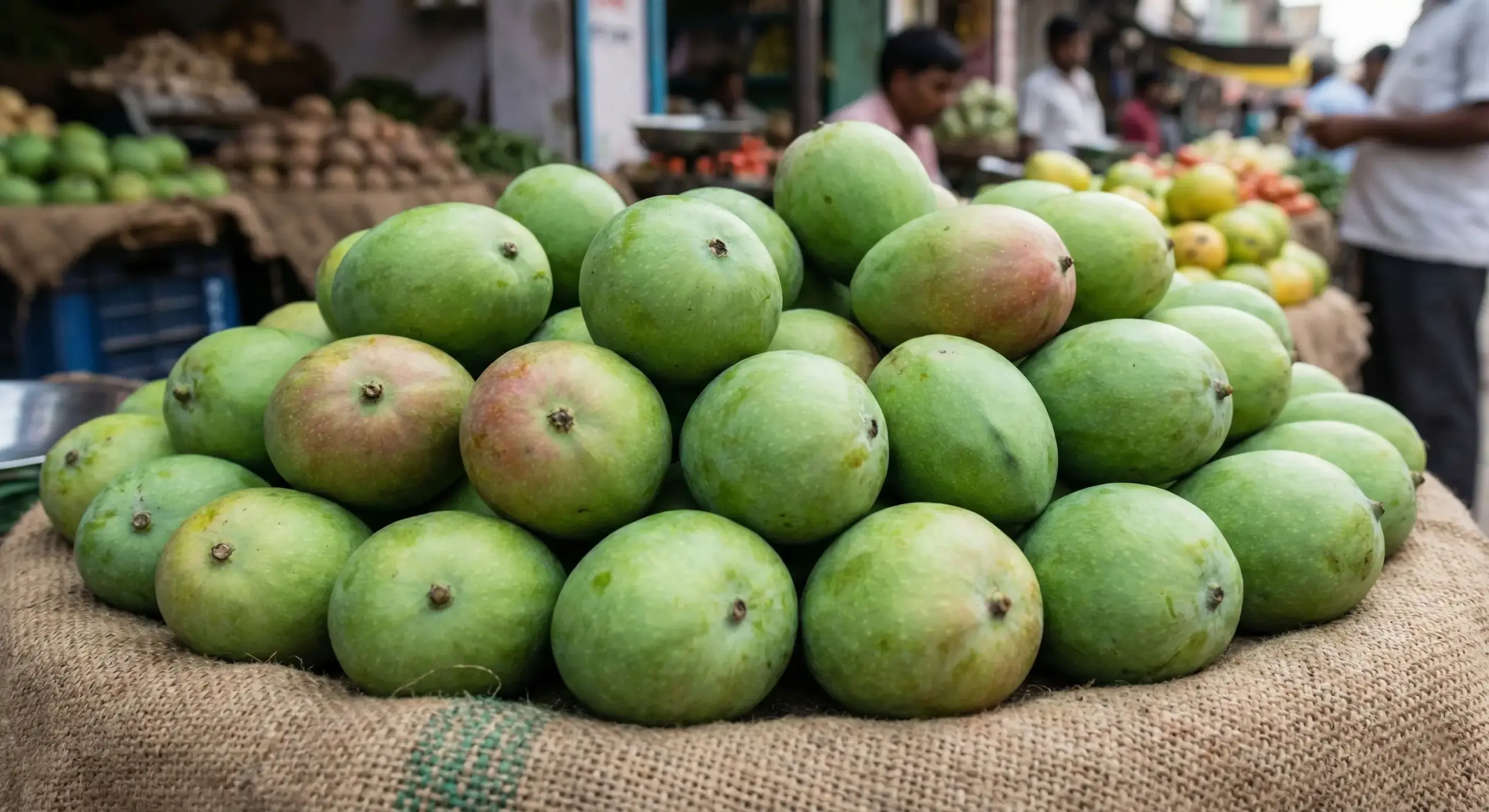
Mangoes were washed and laid to dry on old cotton saris, their faded colours rich with stories, writes a contributor to The Tribune India in a memoir of her family’s pickling season. Mornings began with women in the courtyard turning mango pieces under the sun, and afternoons belonged to the spices, which were sun-dried, roasted on an iron tawa and pounded in a stone mortar while the women talked.
The scene is not specific to Banaras, and we do not claim it as a record of any one Banaras household. It does describe the pattern that published accounts of north Indian pickle-making share, and the pattern is the subject of this guide: who makes the pickle, in which season, with which ingredients, in which spaces and by what kind of knowledge.
The short answer
In short
In many north Indian homes, including those of Banaras, pickle-making is a seasonal, shared and mostly female activity. Raw mango pickles are made in the hot weeks before the monsoon, and mixed vegetable pickles in winter. Mustard oil, whole spices and sun-drying are the common ingredients and methods. Recipes are usually remembered and demonstrated, not written. The courtyard and the roof serve as the workspace.
Two seasons: mango in summer, vegetables in winter
The year has two peaks. In summer, the raw mango arrives and the long-keeping pickle is made. We cover the summer work in the raw mango ritual of summer and summer food preservation in the Gangetic plain.
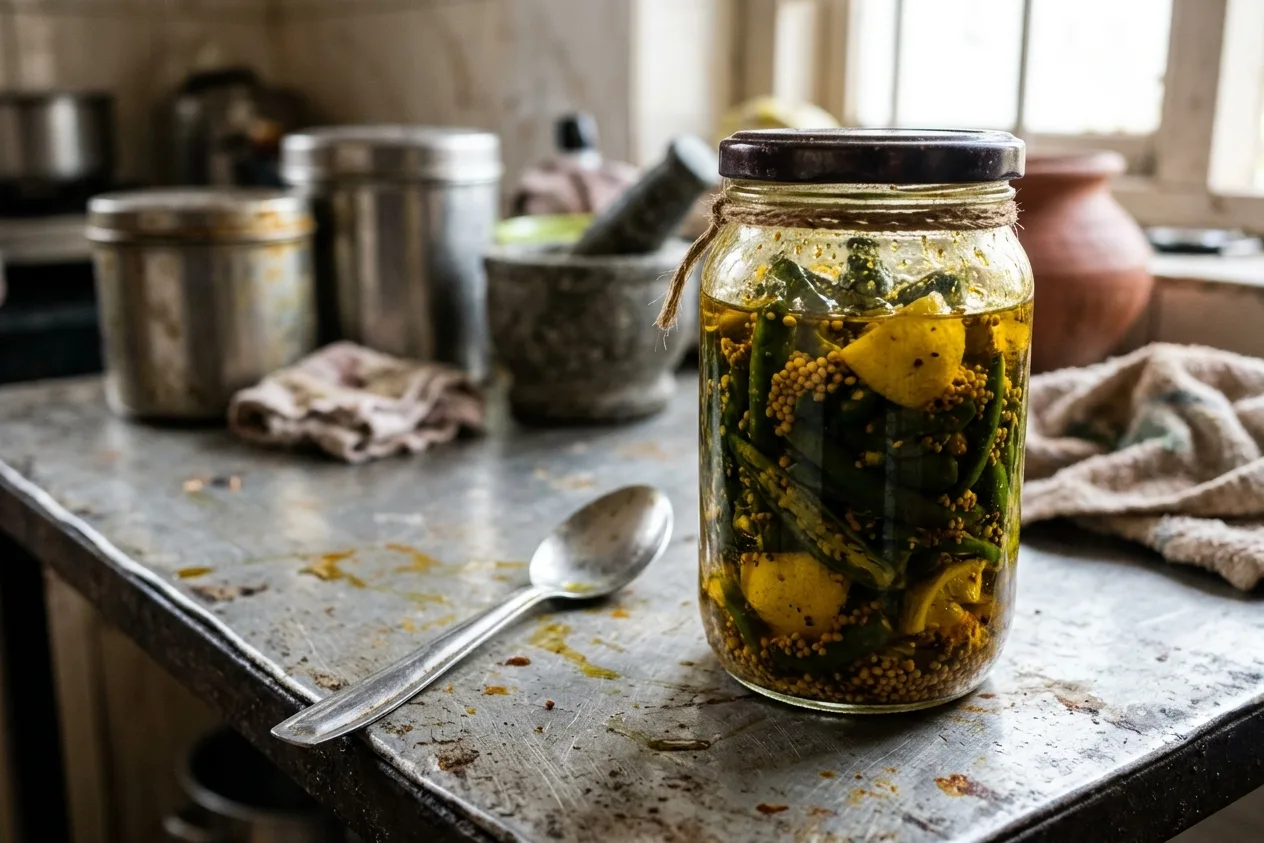
Winter brings a different set of vegetables. A Scroll piece on a book of pickle recipes quotes its author writing that the Kayasth women in her family were experts at making pickles from fresh, bright red chillies, lasode (the Indian cherry), a mixed pickle of turnips and cauliflower, and even jackfruit. The same piece notes that mangoes are pickled with saunf (aniseed) in Uttar Pradesh and Bihar, a regional signature that matches the Banarasi mango pickle. For the winter side in our own series, see gajar, gobhi and shalgam achar.
The courtyard and the roof as workspaces
Accounts of pickle-making return to open space. The Tribune memoir places the work in the courtyard, with mango pieces drying on cotton saris. An account in The Wire’s Livewire says that making pickles brought all the women of the house together on sultry afternoons, and the Daily Star’s essay on achaar repeats the same description of women in communion over spices and drying mangoes, which suggests the pattern is shared across the wider region.
In a Banaras house the setting would be the aangan, the open courtyard, or the flat roof. The terrace routine of spreading fruit on cloth, turning it and guarding it from birds is described in terrace drying of vadi and papad in Banaras, and the same principles apply to pickle. Why the sun matters is in why sun-drying is essential for Indian pickles.
The work and the people
Making a year’s pickle takes many hands. The Deccan Herald notes that making pickles has long been a family activity, with children helping to wash mangoes, wipe jars completely dry or spread ingredients on clean cloths. A report on pickle-making among Andhra families describes relatives or neighbours getting together on appointed days, and adds that it was not just women, as children also took part in small ways by running errands.
The labour is, in most published accounts, led by women. A Homegrown essay describes pickle-making as one of the secrets women pass down to one another as a form of blessing across generations, and the SCMP’s feature on Indian pickles says that in rural areas the arrival of mango season sees women gathering together to make achaar in a tradition perfected over generations. Whether that division of labour was imposed by social convention or chosen is a fair question, and the Homegrown writer raises it herself, noting the practice might have emerged from patriarchal leanings. We report the pattern and do not assume a single explanation.
Recipes that live in the hands
The knowledge is rarely written. The Deccan Herald says that grandparents pass down recipes that are often remembered rather than written, and a JhaJi Store tribute from Darbhanga in Bihar says the same: the recipe was carried in the hands because nobody thought to write it down, and learning meant watching, helping and being corrected, with advice such as a little more salt, or if this chilli is small, it needs less time. That tribute is a brand’s writing about its own tradition, so we read it as testimony and not as research.
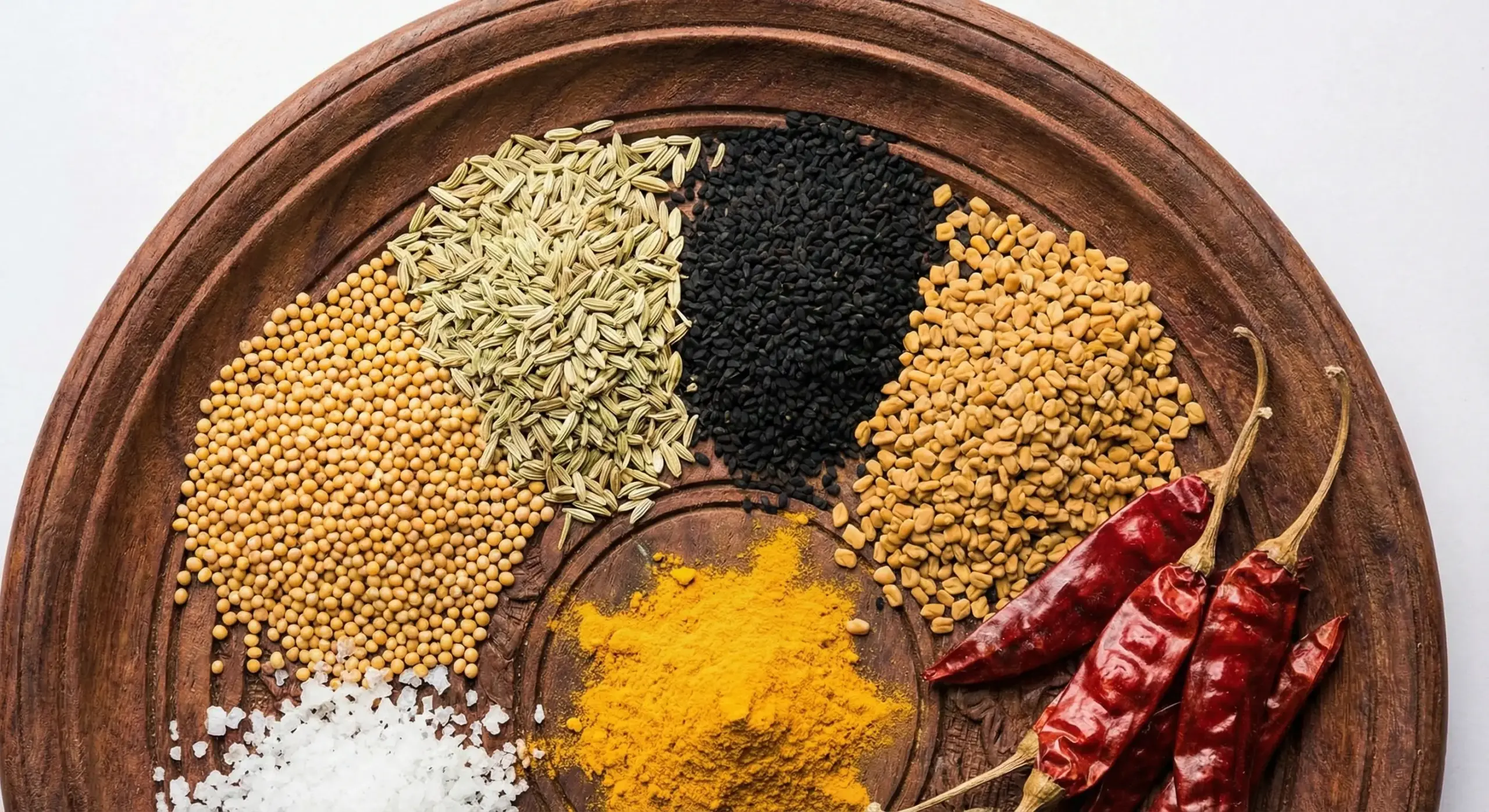
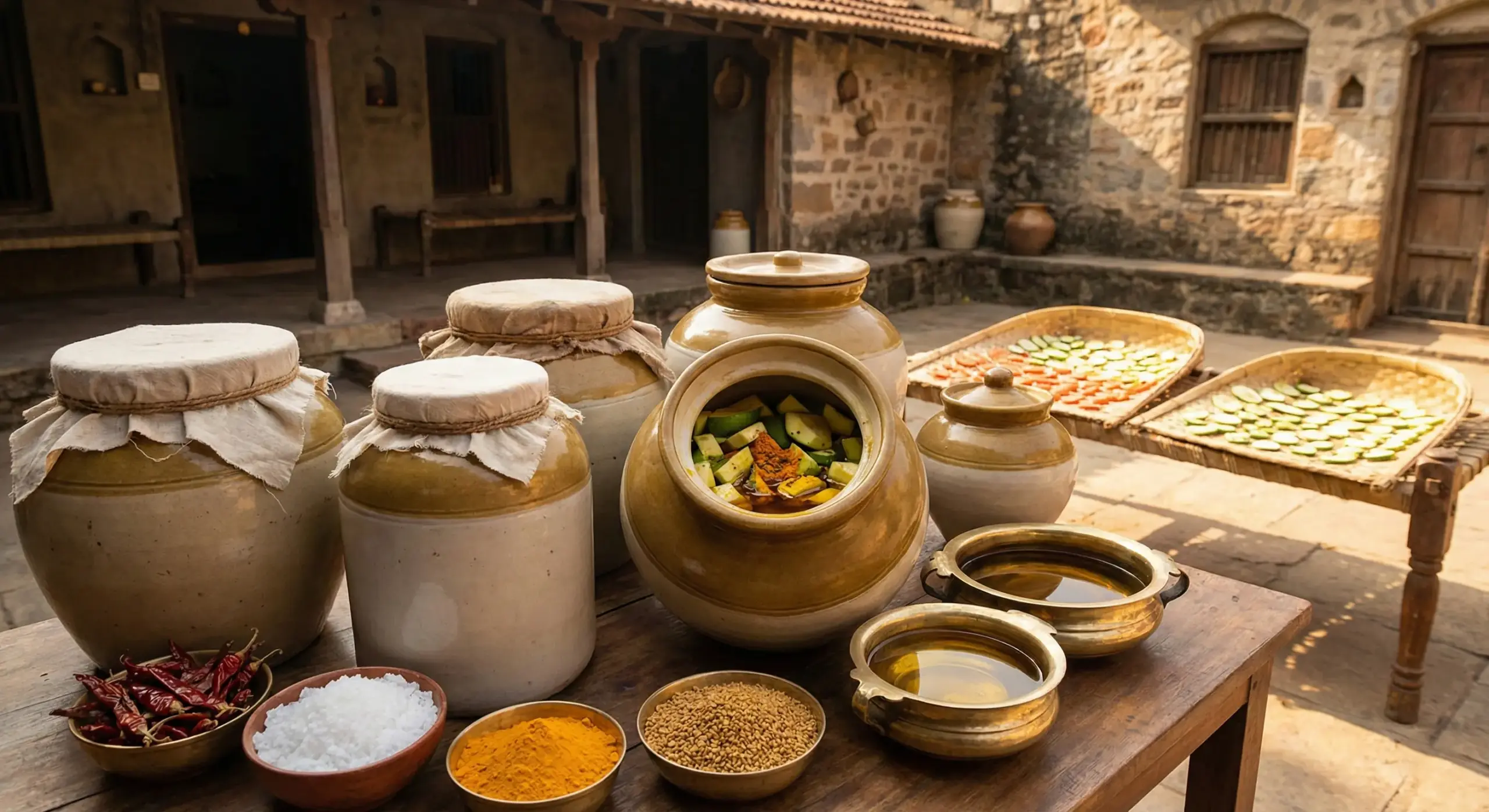
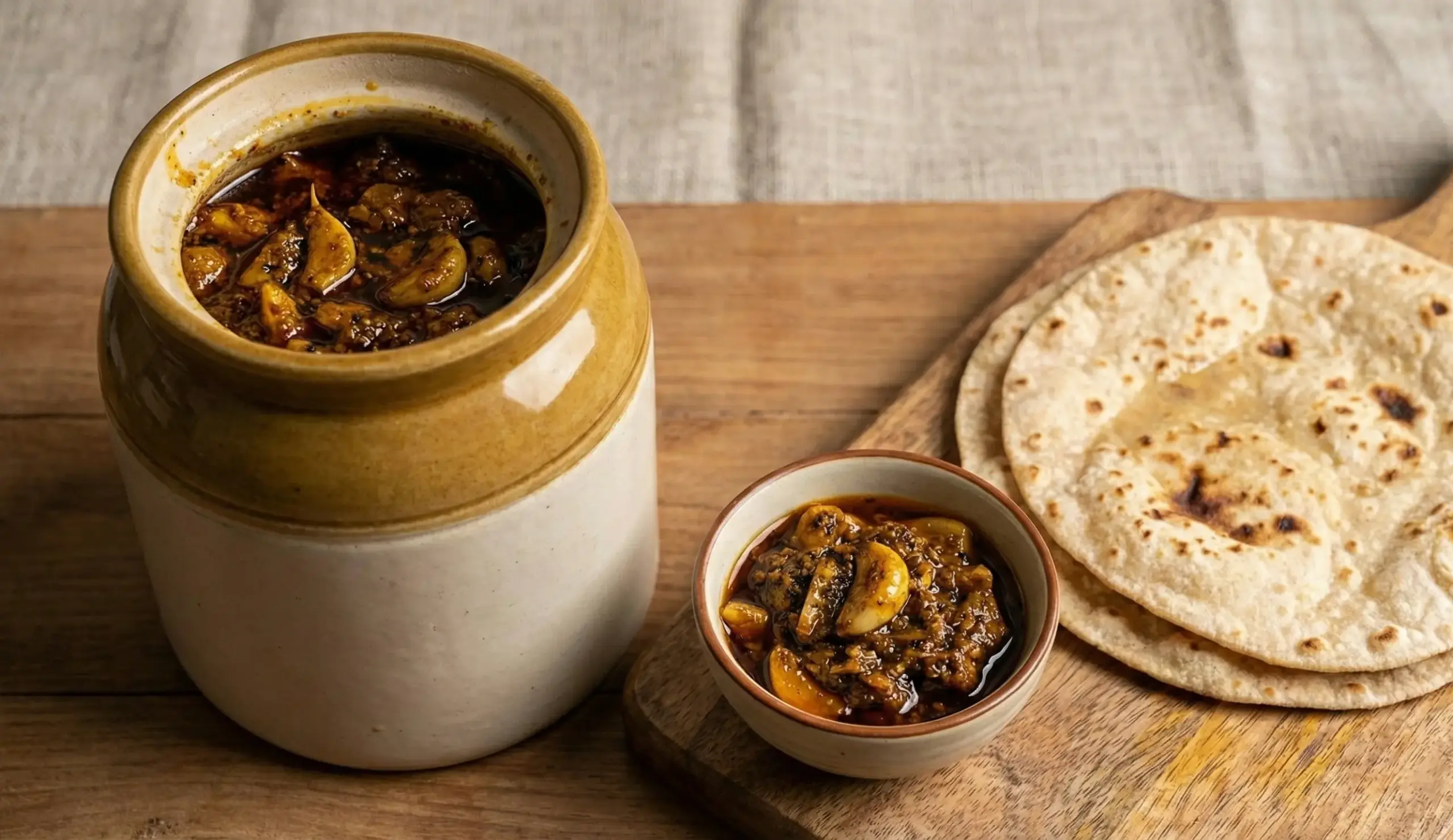
The consequence is variation. Households guard their spice mixtures, as the Deccan Herald notes, and two families a few streets apart can produce noticeably different pickles from the same fruit. The details we can report for Uttar Pradesh pickle are thin. A producer’s description of a family recipe from the state says that roasted spices and wood-pressed mustard oil are added and the pickle is sun-matured for nearly fifteen days. The spice side of the Banarasi jar is in hing, methi and saunf in Banarasi achar, and traditional spice blends in Banaras covers the kitchen spices in general.
Mustard oil and the sealed jar
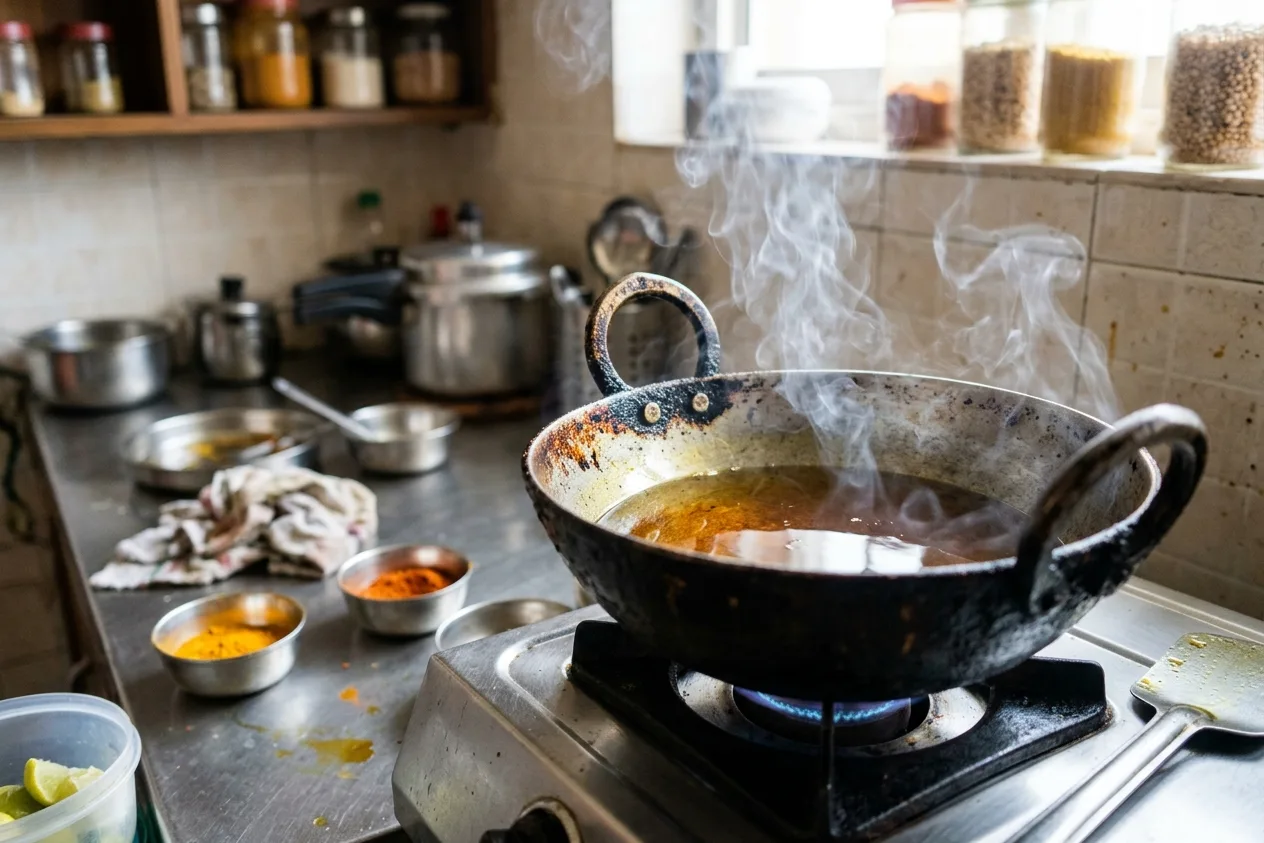
Mustard oil is the usual medium in this part of India, and we explain why in mustard oil in Banaras cooking and why mustard oil is heated for achar. The oil covers the fruit as a seal against air, and the jar then goes to a cool dry shelf, as we describe in traditional storage methods for pickles.
One line from the Livewire essay captures how recipes are remembered through rhyme: half of white, half of black mustard, four spoons of oil, dried in the sun for seven days, are lines of an oft-repeated rhyme. The essay does not tie it to Banaras, but it shows the form such knowledge takes: short, spoken and meant for the memory.
Pickle as gift and as currency
Pickle moves between households. Our post on achar in a suitcase covers the Banaras version of mothers sending jars with their children. The Scroll piece adds a ritual example from elsewhere: among the Parsis in Ahmedabad it is mandatory to make lagan nu achar and give it to the elders and relatives before they finalise the marriage of a couple.
A changing practice
Not everyone still makes pickle at home. An opinion column in IOL (South Africa) laments that home pickle-making is a dying art, because migration and assimilation have made it less central to identity and daily life. The Express Tribune in Pakistan reports how commercial mango-pickle producers took over a small-scale trade that had kept thousands of rural women employed. In India, the SCMP describes a home cook whose family pickle became a business when word spread to acquaintances and orders began pouring in.
These are different countries and different circumstances, and Banaras may follow its own path. What they share is the pattern: when communal work becomes optional, the knowledge that lived in it thins out. That is a reason to record the practice carefully, and it is why this article states what it knows and flags what it does not.
Frequently asked questions
When do Banaras households make pickle?
Raw mango pickles are made in the hot weeks before the monsoon, and mixed vegetable pickles in winter, following the general north Indian pattern.
Who traditionally makes pickle in the home?
Published accounts describe it as a shared household activity led mostly by women, with children helping.
Which spices go into a Banarasi mango pickle?
Fennel (saunf) is the signature in Uttar Pradesh and Bihar. Fenugreek, mustard seed and nigella are commonly used too. Recipes vary by household.
Why are pickle recipes not written down?
In most accounts, knowledge passes by watching and helping, with measures judged by sight, smell and touch.
Where is the pickle dried?
In the courtyard or on the roof, on clean cloth, in direct sun and away from birds.
Is pickle-making disappearing?
Several accounts say home pickle-making is declining as families buy ready-made pickle. Many households still make it.
How long does a family pickle keep?
It depends on the recipe, the dryness and the handling. We do not promise a shelf life.
Sources used for this post:
– The Tribune India, “Preserving love, legacy in pickle jars”
– Scroll.in, pickle makers feature
– The Wire (Livewire), “‘Achaar’: A Legacy of Spices, Care and Afternoon Tales”
– The Daily Star, “Achaar: A jar of spices, sunshine and love”
– Deccan Herald, “How India’s pickles tell stories of climate”
– Gulf News, “Recipe: The art of making spicy Andhra pickle”
– Homegrown, “The Tangy Tradition of Indian Pickles”
– SCMP, “How Indian pickles matured into an ancient art”
– JhaJi Store, “Maai ke Haath” Mother’s Day pickling tribute
– Masala Monk listing of a family UP mango pickle
– IOL, “The forgotten jar: why pickle no longer sits at our table”
– The Express Tribune (Pakistan), pickle trade story