Blog
The Raw Mango Ritual: From Kairi to Pickle Jar in a North Indian Summer

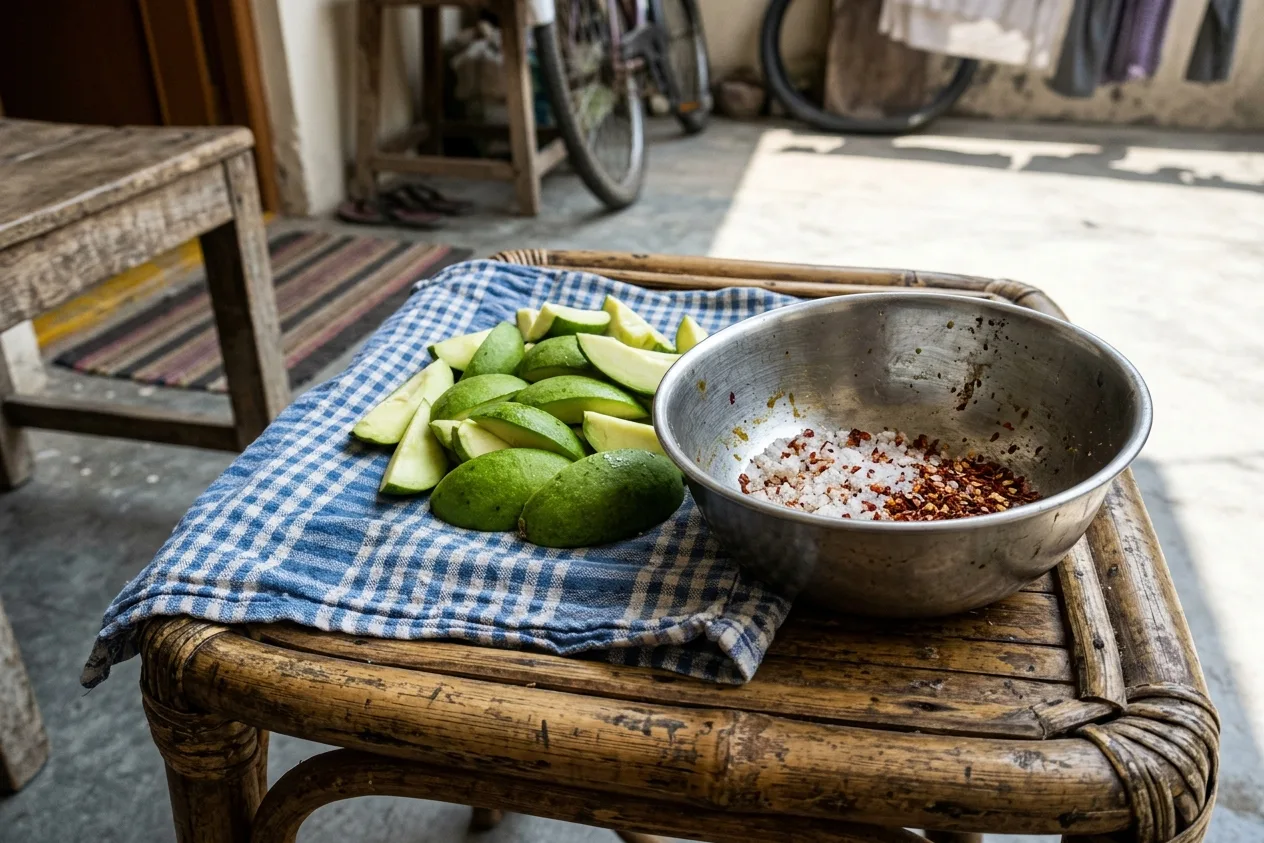
Deccan Herald’s piece on how India’s pickles tell stories of climate says it directly: long before refrigerators existed, people learned to preserve seasonal foods using nature itself, and every region developed methods that suited its environment. Raw mango is India’s most popular pickle ingredient, it adds, and raw mango pickles appear in summer.
This post covers the ritual as published sources describe it, and ends with Sanju Yadav’s own season.
The short answer
In short
Indian homes pickle raw mango in summer because that is when raw mango is in the market, and the sun and heat of the season help cure the jar. Markets fill with mangoes by mid-April, and the work of making the year’s pickle follows.
When the season begins
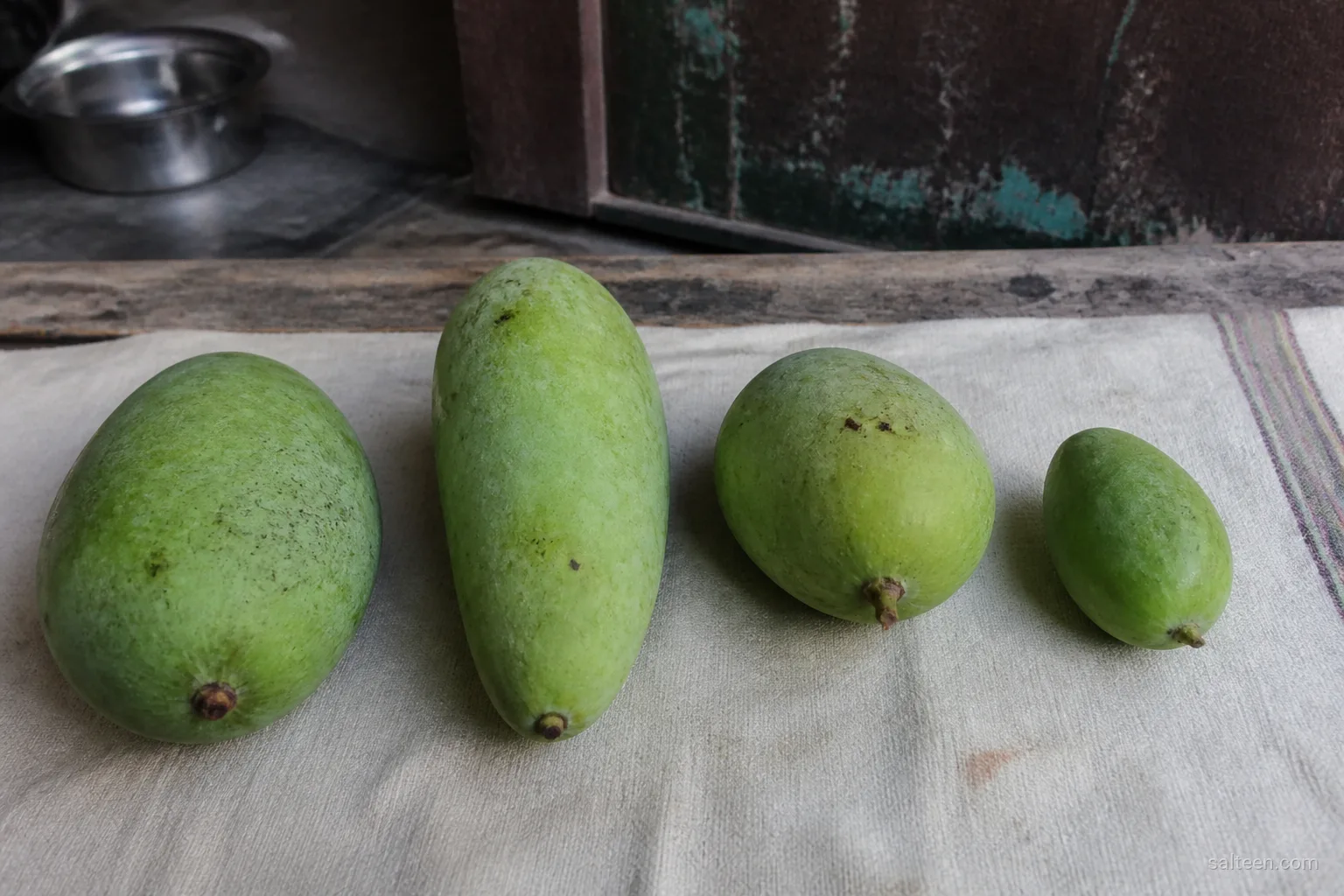
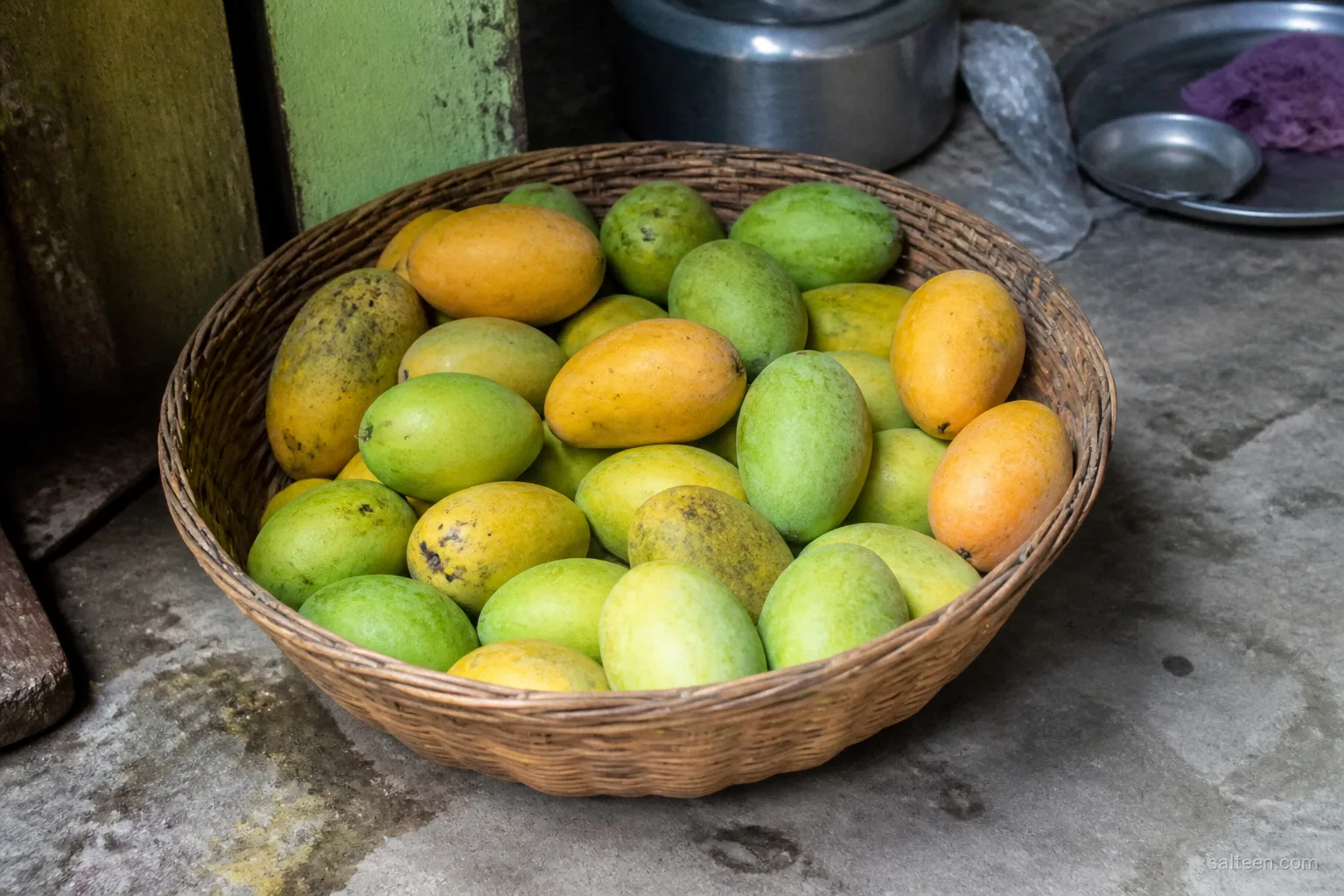
The Asia Media Centre writes that by mid-April, markets across India begin filling with mangoes. It adds that mangoes were not just eaten fresh: raw Totapuri, or kairi, meant pickle season. Our post on raw mango varieties of eastern UP covers what grows around Varanasi.
The ritual
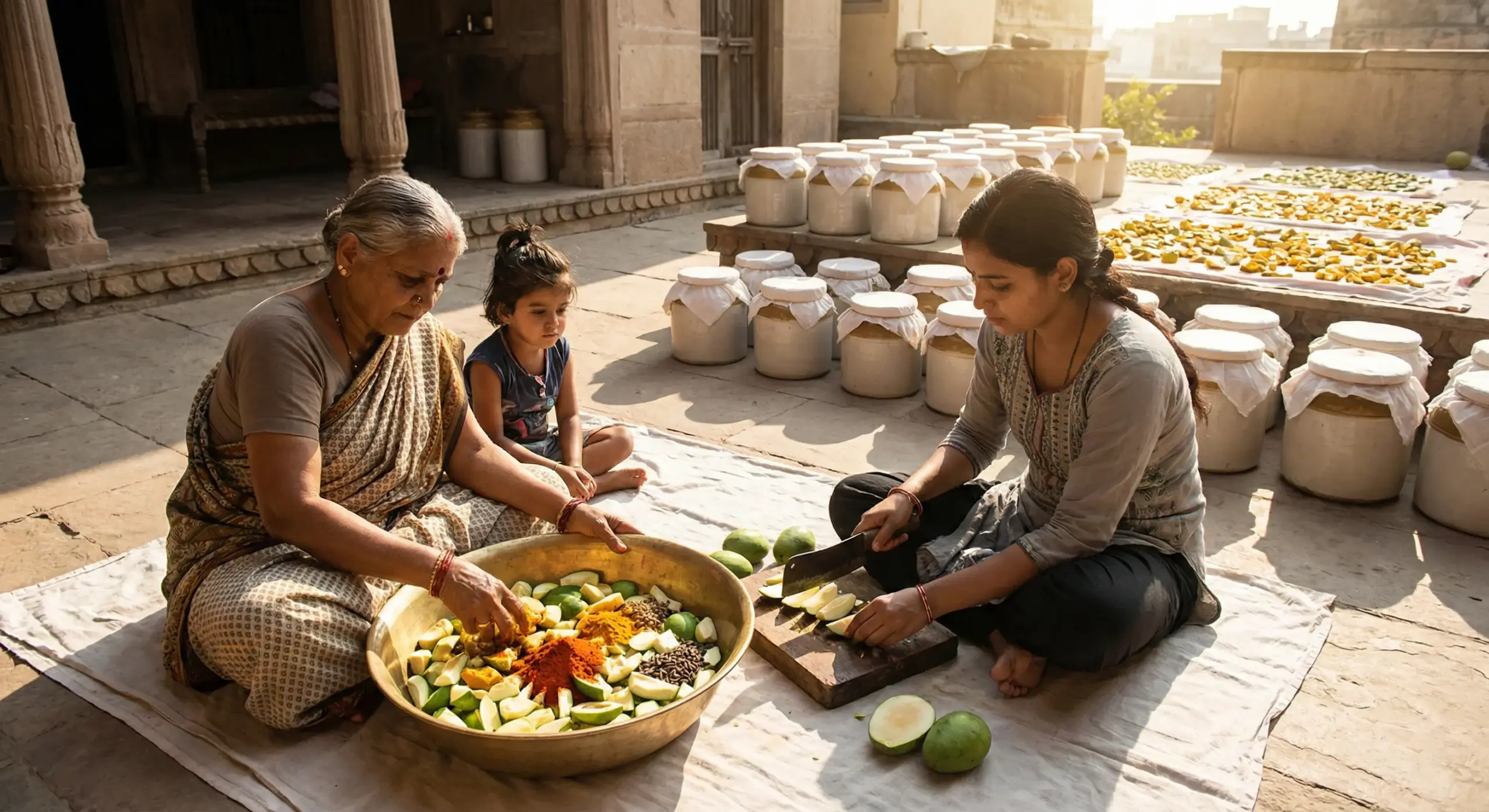
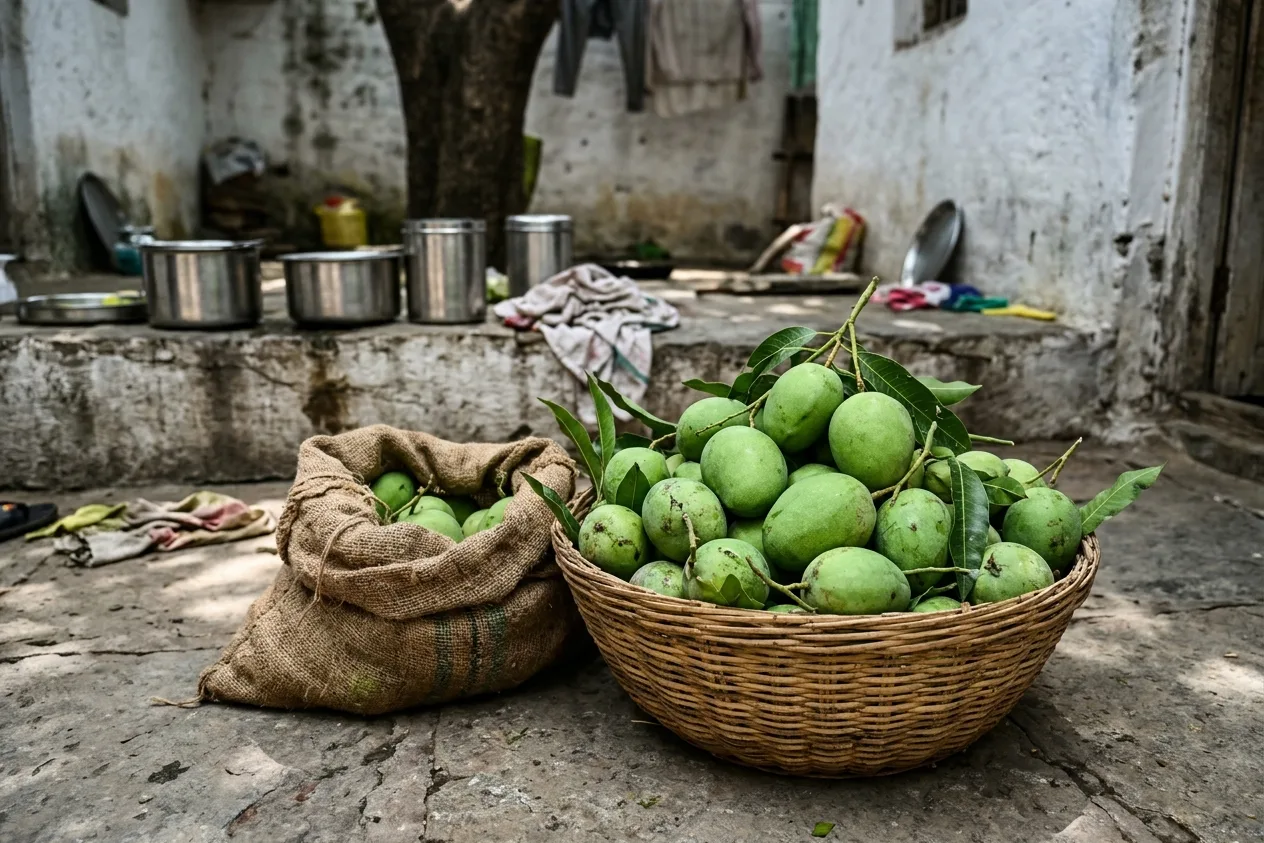
Slurrp’s essay on the long summer of achaar describes a particular hour in an Indian summer, just before noon, when the light turns almost white and the air begins to hum, that belongs to making mango pickle. Priya Foods imagines the scene in most Indian homes: a father sets out to the market with his mother’s instructions in mind, to select only the firmest, sourest raw mangoes. A Telugu feature adds that colleagues would apply for leave for a couple of days in April or May to join the family ritual of making avakaya for the season.
The sun
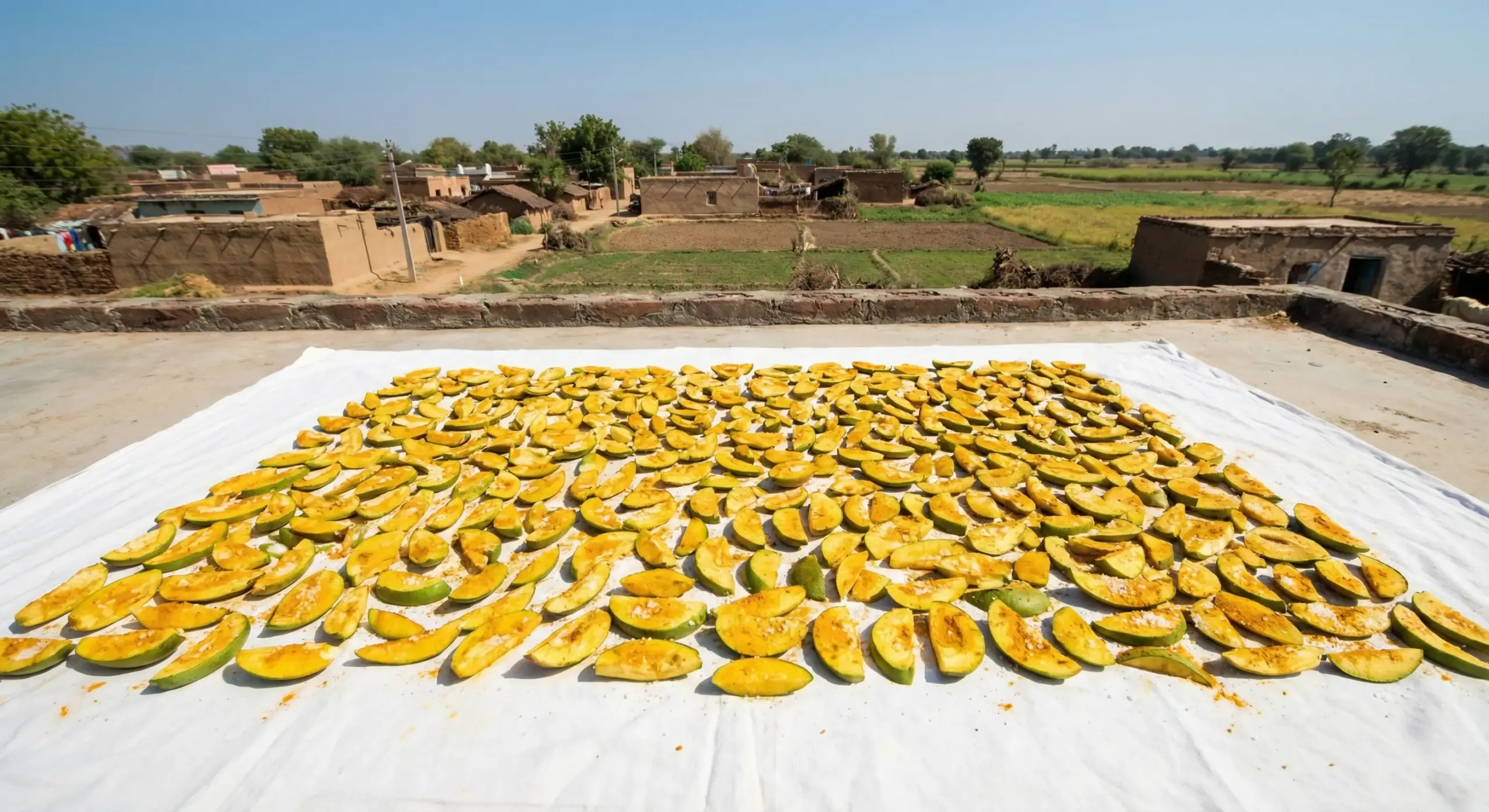
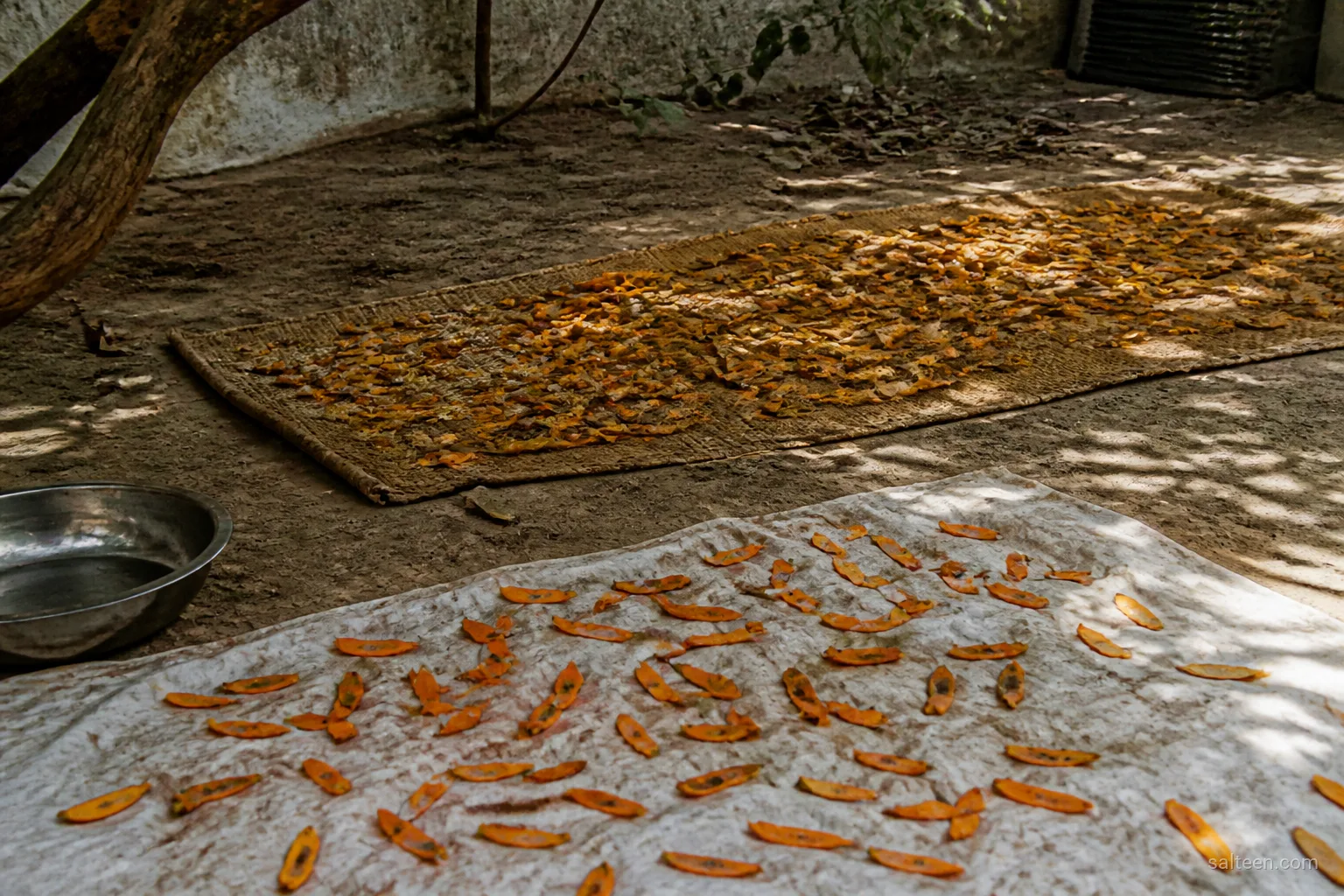
Slurrp’s guide to regional mango pickles calls sun drying perhaps the most critical step in the traditional pickling process. Deccan Herald says families may carefully move the jars into the sun each morning and bring them indoors every evening, and that a layer of oil helps keep air away from the pickle. In wetter regions, it adds, constant humidity can make sun drying difficult. Our guide to sun curing achar covers the steps.
The jar after
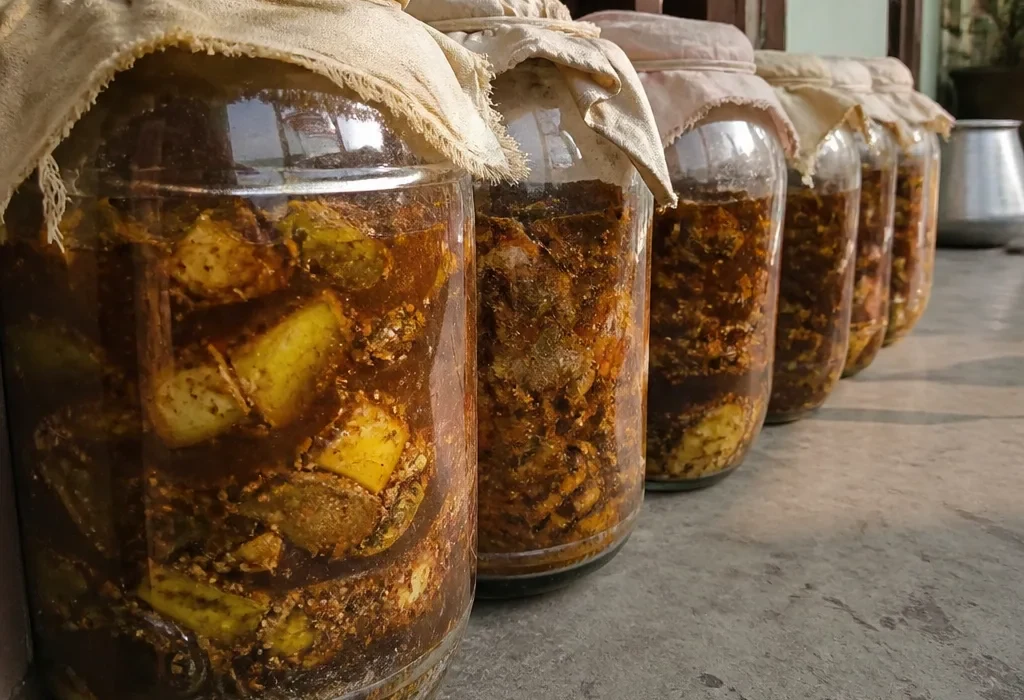
Slurrp notes that it is a common practice in Indian homes to keep a small jar for daily use and leave the main large jar undisturbed in a cool, dark place. See how long achar lasts.
A season that is changing
Slurrp’s essay observes that urban homes rarely have the space or the sunlight for large scale pickling, and the slow work of drying and curing has in many cases been replaced by convenience.
Frequently asked questions
Why do Indian homes pickle raw mango in summer?
Raw mango is in season, and the sun of the season helps cure the jar.
When is raw mango season?
Markets fill with mangoes by mid-April, according to the Asia Media Centre. The raw fruit used for pickle comes first.
Does the jar need sun every day?
Traditional sun curing moves jars into the sun in the morning and indoors in the evening, as Deccan Herald describes.
Sources used for this post: Deccan Herald, how India’s pickles tell stories of climate; Asia Media Centre, why mango season matters in India; Slurrp, the long summer of achaar, and regional mango pickle recipes; Priya Foods, Indian summer and mango pickle; The South First, avakaya.