Blog
Why Banaras Pickles Are Oil-Rich

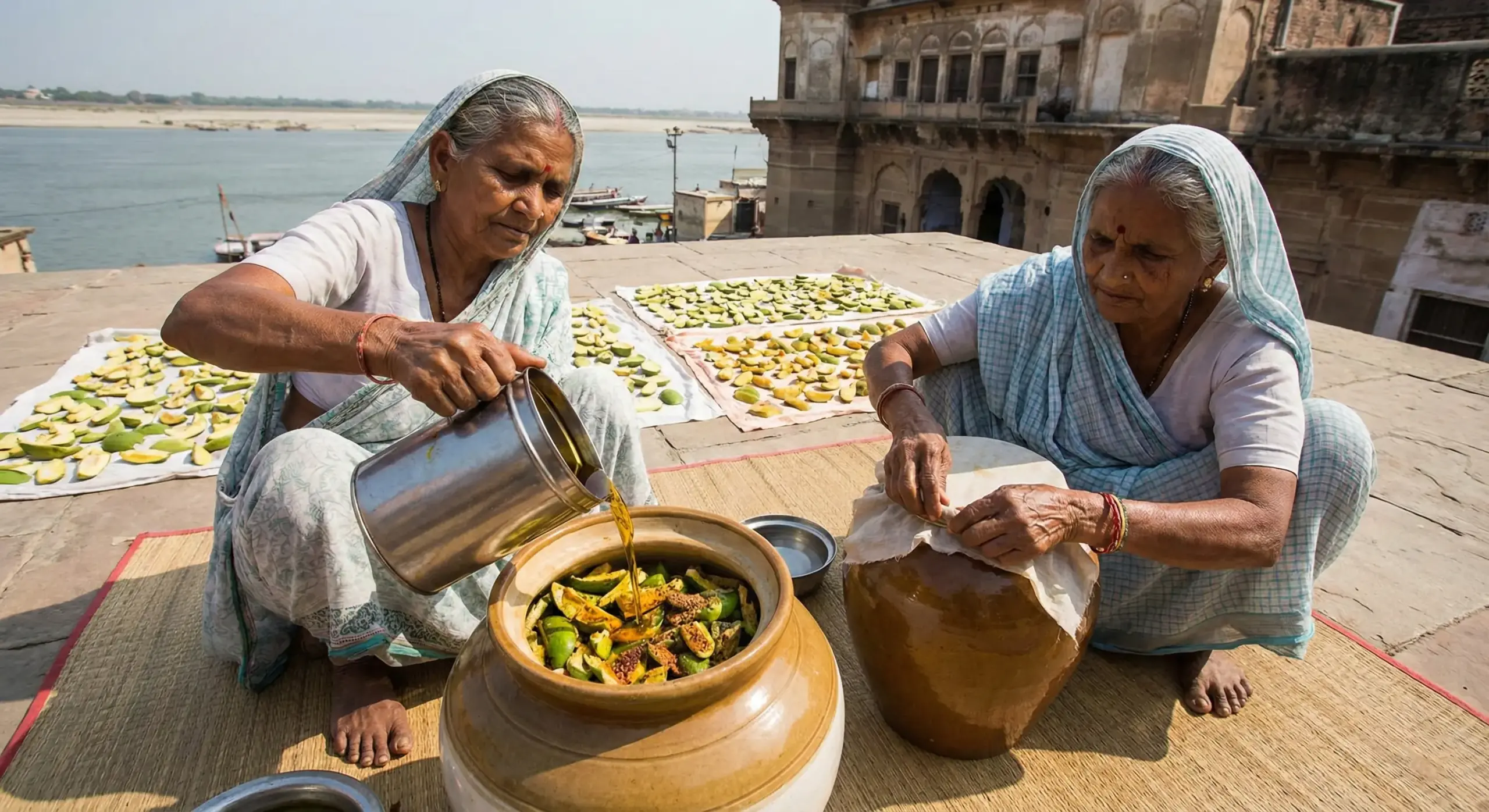
A recipe for kathal ka achar by Nisha Madhulika uses 300 grams of jackfruit and 100 grams of mustard oil. A recipe for the same pickle on Maayeka uses 1 kg of jackfruit, 350 grams of mustard oil and a warning that the pickle should be submerged in oil completely, or it gets mould easily. A third, for aam ka sookha achar on a recipe site, is praised for its minimal oil, so no oil spills on the plate or in the lunchbox. Between those three the range of oil in north Indian pickle is wide, and the phrase “oil-rich” needs to be pinned down before it can be explained.
This guide looks at why a Banaras pickle tends to carry a visible layer of mustard oil, what that oil does in the jar, what claims about mustard oil are weaker than they sound, and what a buyer can read from the oil level.
The short answer
In short
Banaras pickles are made with a generous amount of mustard oil because the oil seals the fruit against air, carries the fat-soluble flavours of the roasted spices, matches the regional taste for pungency, and comes from a local crop. The oil is protective but is not a sterilant, and the pickle’s real stability comes from salt, drying and acid. An oilier pickle is a style, not proof of quality.
First, what “oil-rich” means
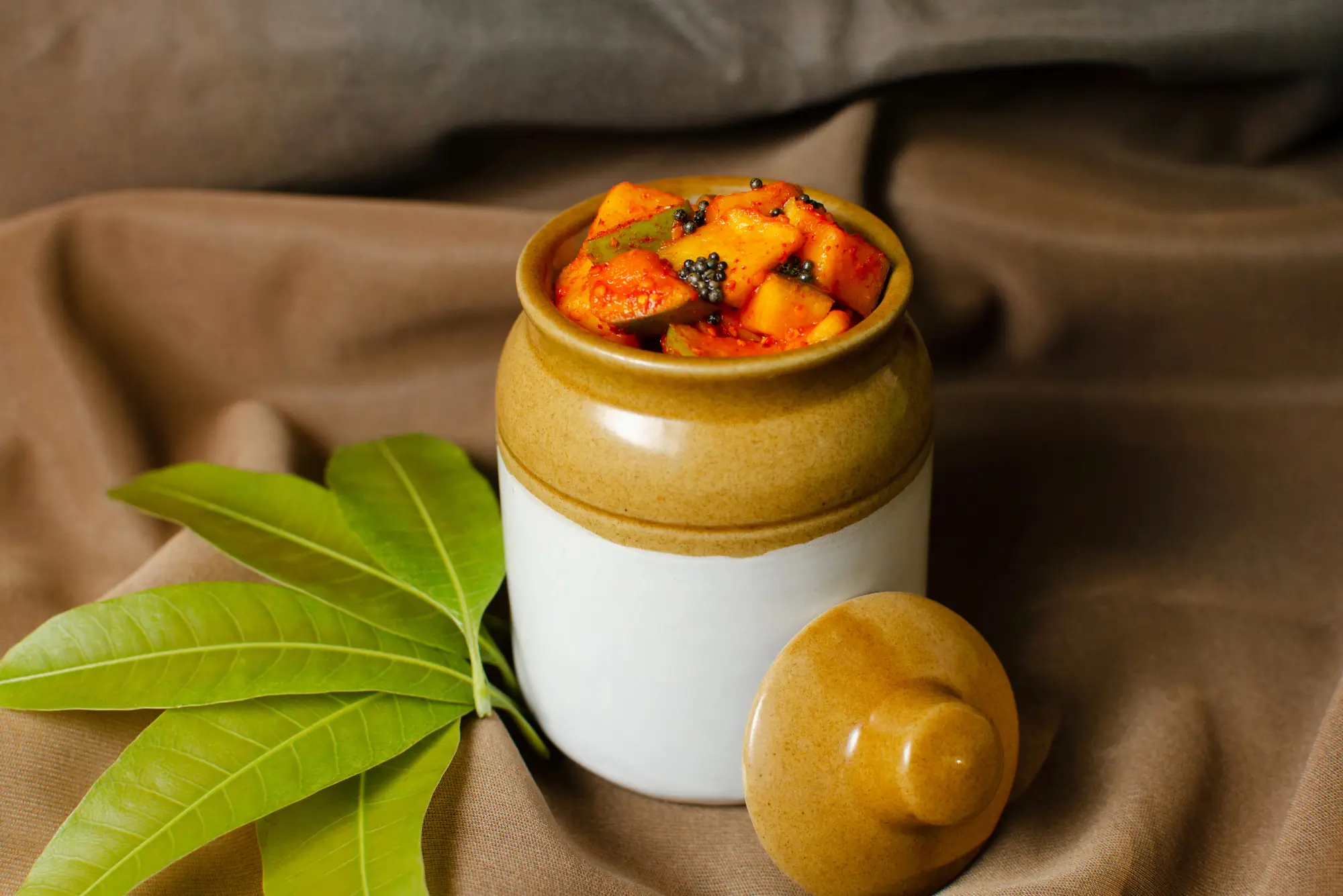
A seller’s listing for a Banarasi mango pickle, for instance, markets it as authentic and made since 1938, and a Bihar brand sells a stuffed red chilli pickle under the name Banarasi Lal Mirch.
What the published recipes do show is that the amount of oil is a choice. Some pickles are made with minimal oil, and others with enough to cover everything. Which a household picks depends on the fruit, the season and the expected storage.
Reason one: the oil keeps air off
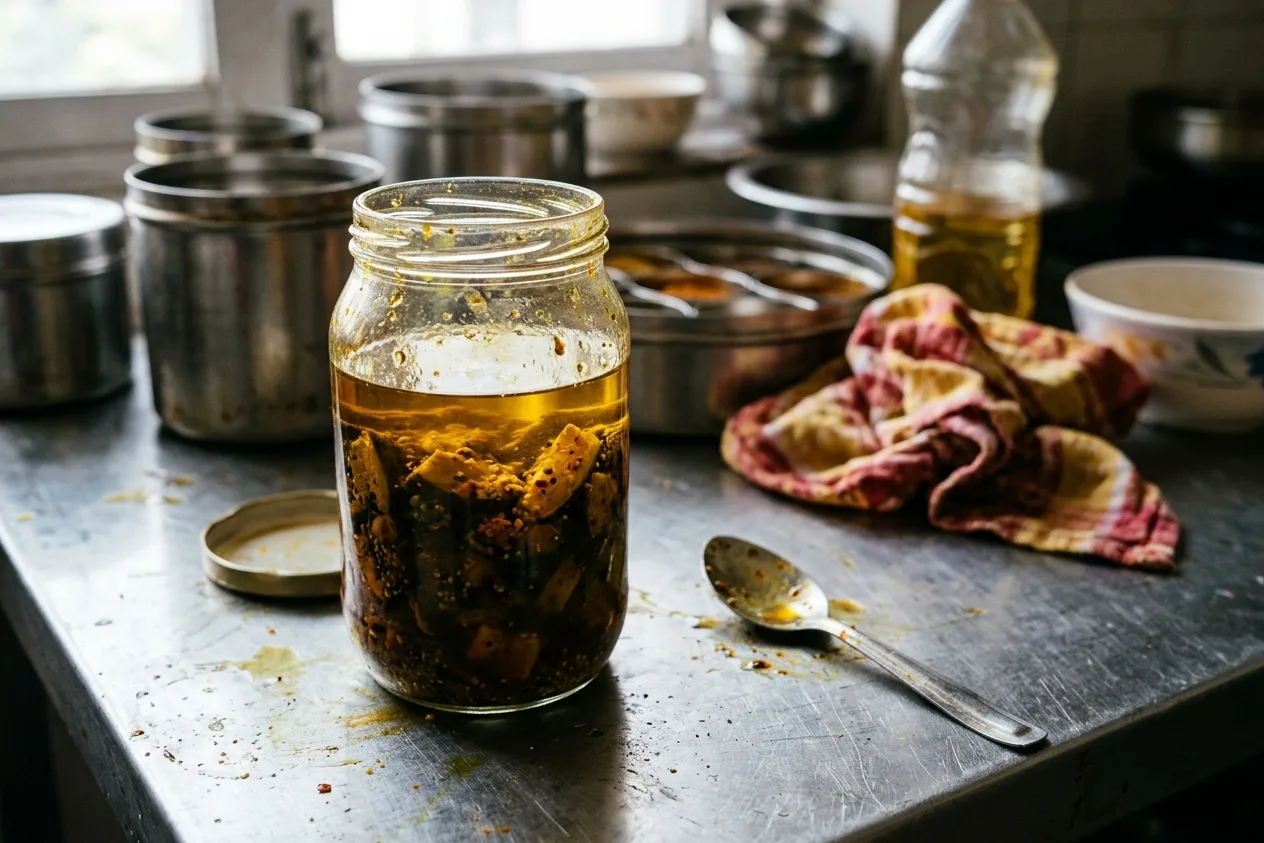
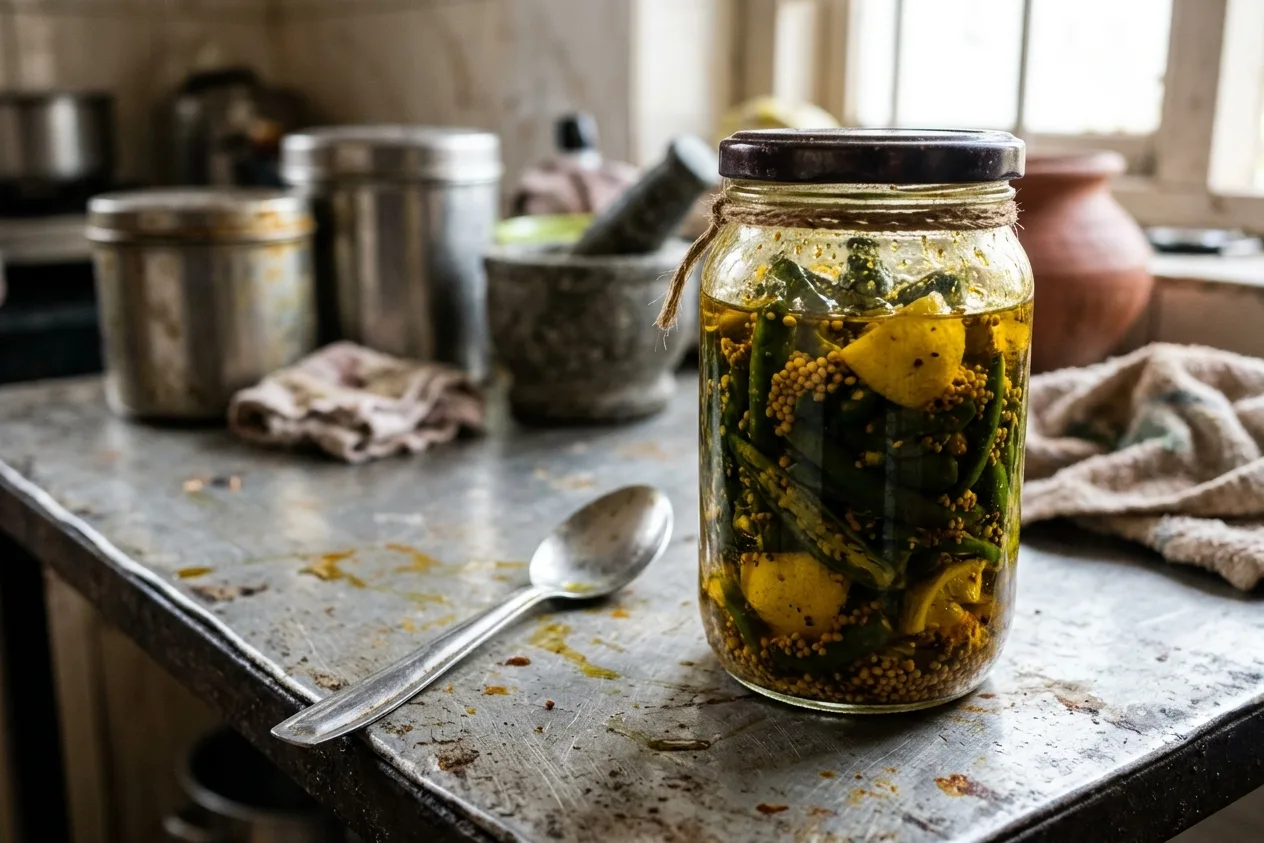
The most direct function is the physical layer. The Deccan Herald describes it simply: a layer of oil helps keep air away from the pickle. A pickle that is exposed to air at the surface grows mould and yeast there, and oil is the traditional cover. The recipe guidance quoted above, that the pickle must be completely submerged in oil or it will get mould, is the same point in a cook’s words. Fruit absorbs oil over weeks, which is why the level drops and why many families top up the jar.
The detail of this seal, and its limit, is in why the oil layer on achar matters and how oil preserves food in Indian kitchens. The limit is important enough to repeat: oil is a barrier, not a disinfectant, and food-safety authorities warn against storing fresh low-acid vegetables in oil at room temperature. Banarasi pickle gets its stability from salt, drying and acid first.
Reason two: oil carries flavour
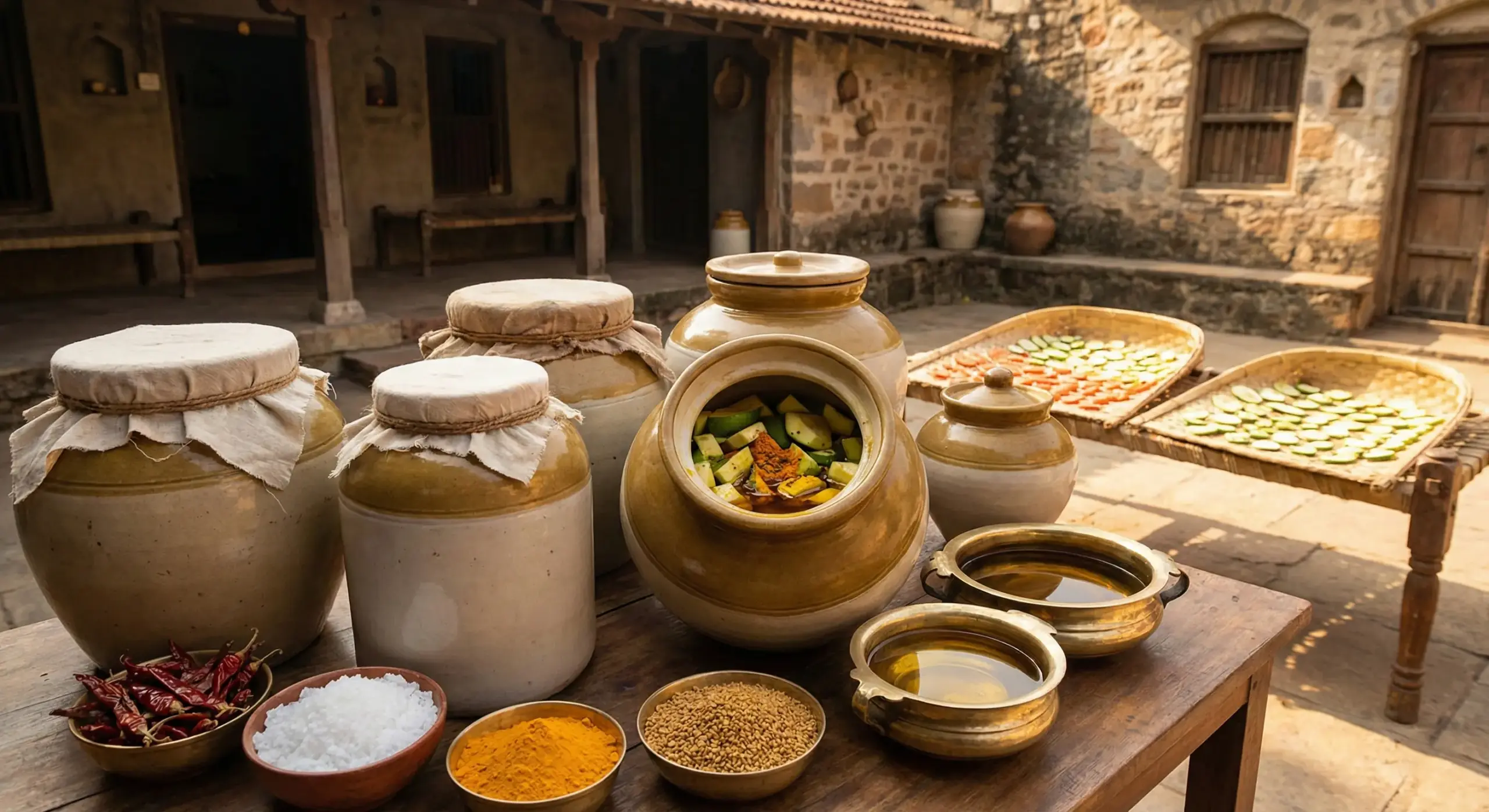
Spices release much of their flavour into fat. Recipes for UP-style pickles typically coat salted, dried fruit with roasted, coarsely ground fennel, fenugreek, mustard seed and nigella, then pour oil over it. As the jar matures in the sun, the warm oil takes up the spice compounds and passes them back into the fruit. A Banarasi stuffed red chilli pickle shows the logic in its purest form: the chilli is packed with a dry mixture of powdered mustard, fennel and fenugreek, and then submerged, as a recipe from the Aahaaram site describes, in a completely dry glass or ceramic container with oil.
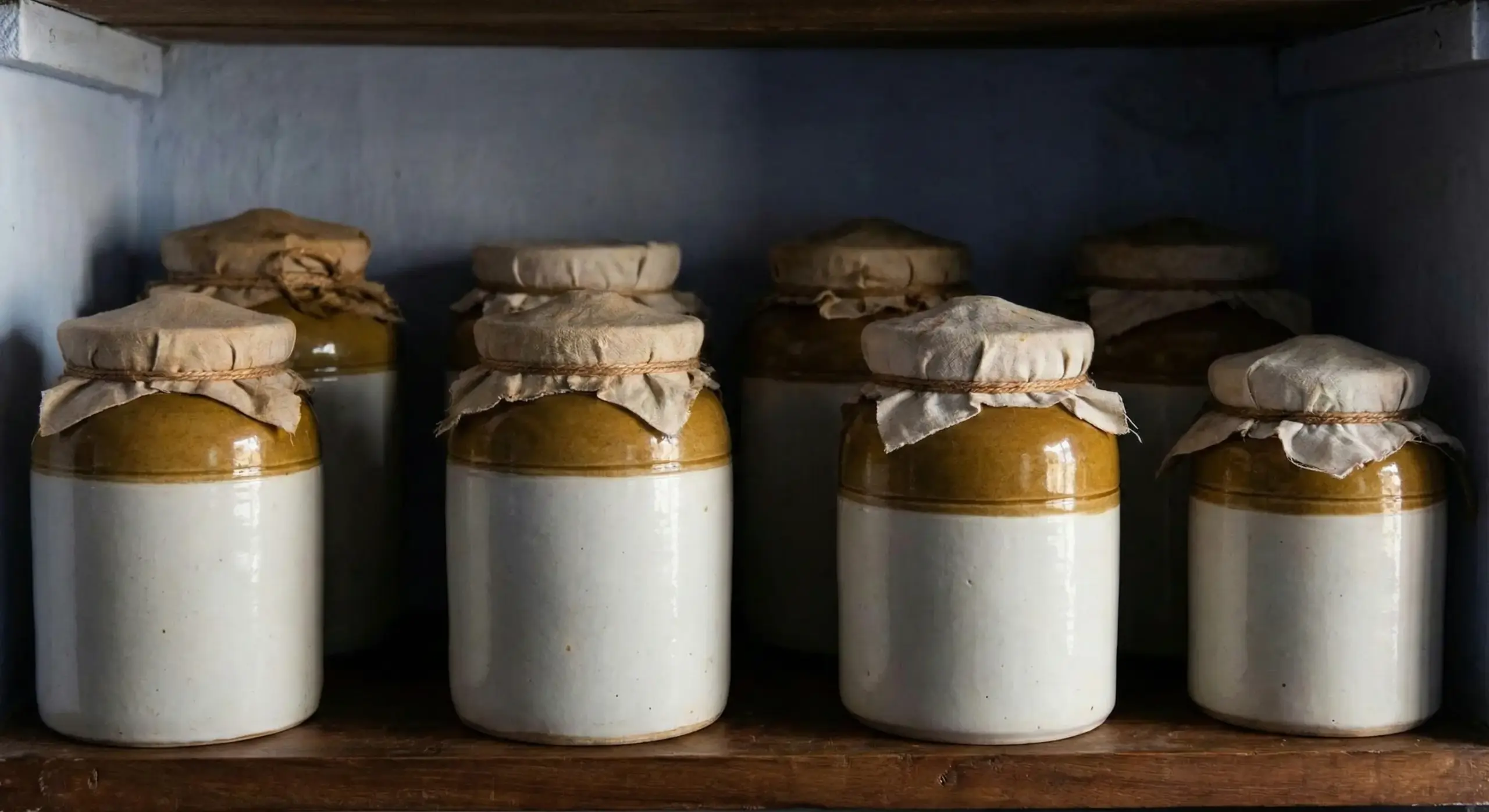
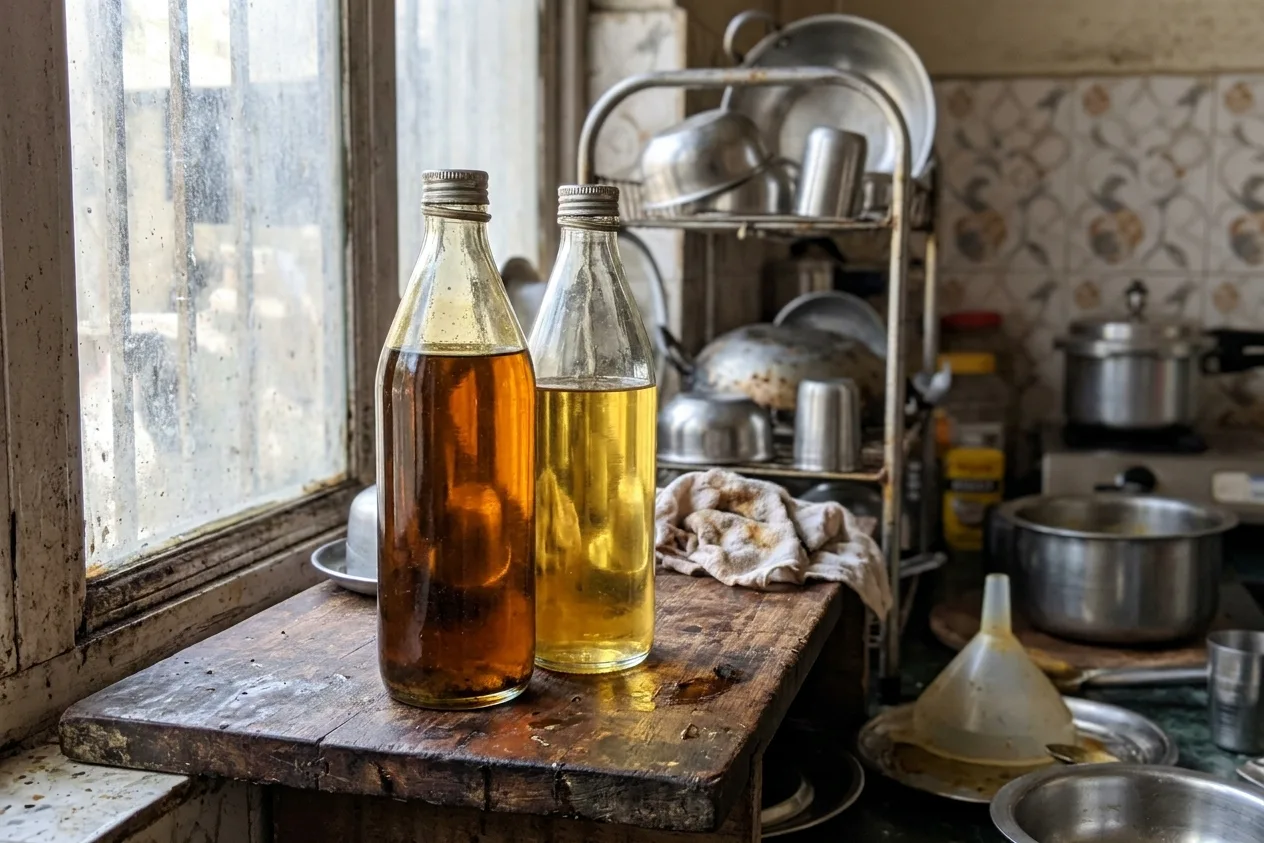
The mustard flavour itself is unusual. Wikipedia notes that mustard oil’s pungent flavour is due to allyl isothiocyanate, a compound found across the mustard family, and that use of the oil is a feature of Punjabi, Assamese, Bengali and North Indian cooking. For why the oil’s raw bite is mellowed before pickling, see why mustard oil is heated for achar, and for the oil’s pungency and aroma see mustard oil pungency and aroma.
Reason three: the oil is local
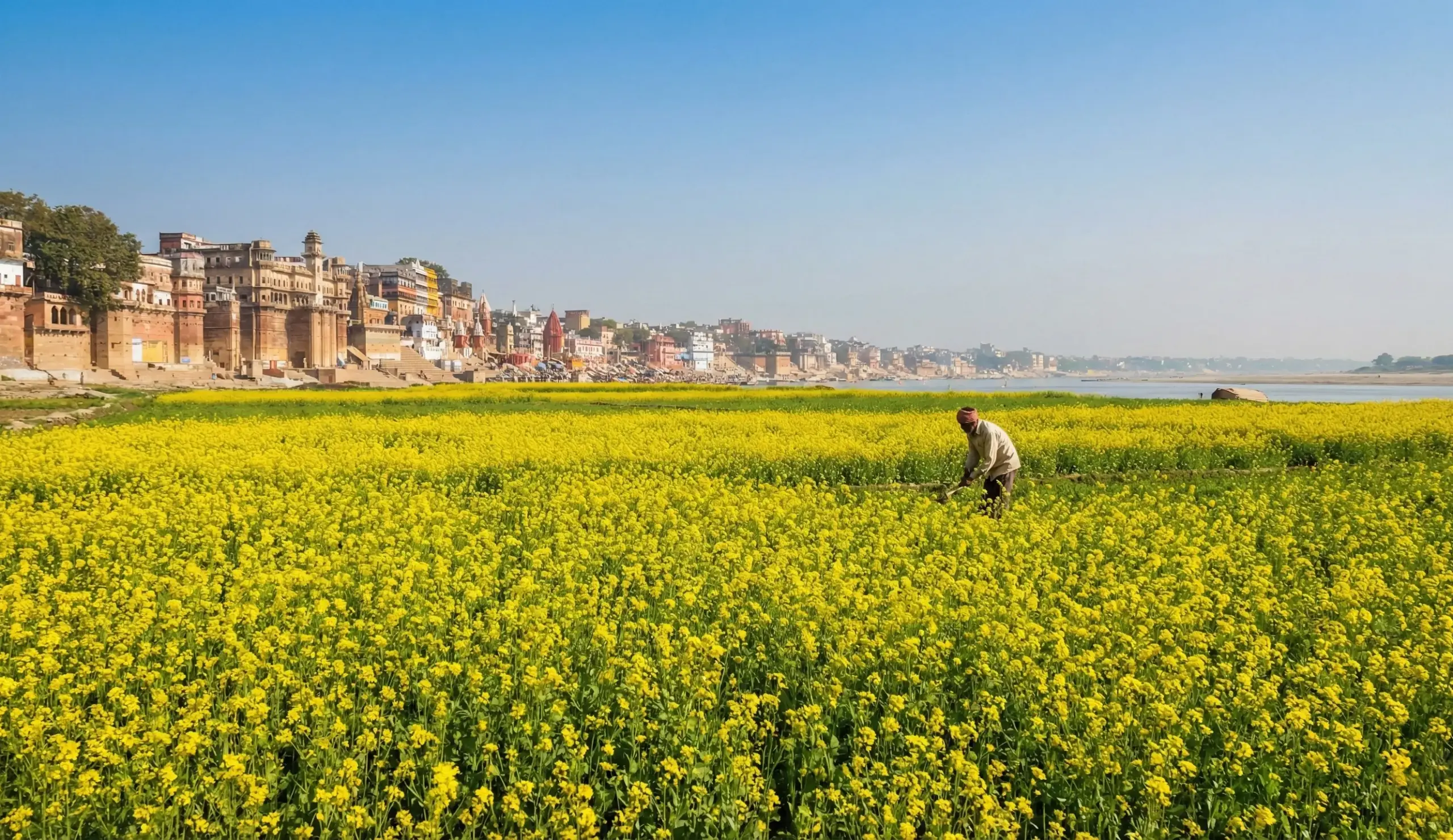
Uttar Pradesh grows mustard, and a household that has the oil nearby has little reason to reach for another. Wikipedia describes oil as about 30 percent of mustard seed. The farm-to-kitchen link in Varanasi is the subject of mustard farms around Varanasi and mustard oil in Banaras cooking. Elsewhere in India, other oils take over, and we cover one such case in groundnut oil pickle.
What mustard compounds can and cannot do
The research is more careful.
A US Department of Agriculture laboratory study of acidified cucumbers found that allyl isothiocyanate at 2 millimolar prevented growth of Zygosaccharomyces globiformis, a yeast responsible for commercial pickle spoilage, and of yeasts on fresh cucumbers, but did not prevent growth of Lactobacillus plantarum. A study of white mustard essential oil found antimicrobial activity in the laboratory, and also found that food components can reduce it: soybean oil had a negative effect on its efficacy against Listeria monocytogenes, and at 5 percent soybean oil the activity against Salmonella Enteritidis was eliminated after 48 hours.
Those are laboratory studies of purified or concentrated compounds, not of a mango pickle in a ceramic jar. They show that mustard compounds can inhibit some microbes and that fat can dampen the effect. We do not claim the oil in a pickle is a preservative on the strength of its pungency, and a review of mustard-derived AITC in the journal Foods describes preservation as a promising field rather than a settled one.
Oil-rich versus dry: a trade-off
An oilier pickle gives a bigger oil seal, a gloss and a richer, rounder flavour. It is also heavier, drips, and makes the jar harder to keep clean. A drier pickle, such as the aam ka sookha achar described on one recipe site, is neater to pack in a lunchbox and is promoted as having a long shelf life, but needs more care in drying and handling. Neither is more authentic. They are different answers to the same problem.
A note on mustard oil and food rules abroad
The oil that is common in Indian kitchens is regulated differently elsewhere. Wikipedia notes that mustard oil can contain up to 44 percent erucic acid, and Tasting Table reports that the US Food and Drug Administration, in Import Alert 26-04, states that expressed mustard oil is not permitted for use as a vegetable oil, though the essential oil of mustard is recognised as safe as a flavouring agent. Anyone who ships pickle abroad should check the destination country’s rules for mustard oil in food.
How to judge a jar by its oil
A few practical points follow.
- The level matters more than the volume. All the fruit should be under the oil, whether the layer is thin or thick.
- Oil can pool. Fruit absorbs oil over weeks, so a jar that looked generous at first can look thin later.
- Clean oil is a good sign. Cloudiness, a sour smell or fuzzy growth at the surface are not.
- Handling decides the outcome. A dry spoon matters more than any quantity of oil. See the best jar for achar.
Frequently asked questions
Why is there so much oil in Banarasi pickle?
The oil seals the fruit against air, carries spice flavour, suits the regional taste and comes from a local crop. How much is used varies by household.
Does mustard oil preserve pickles?
It helps by keeping air away and has compounds that inhibit some microbes in laboratory tests, but the pickle is preserved mainly by salt, drying and acid.
Is more oil always better?
No. Enough to cover the fruit is the aim. Excess oil is a style choice, and a dry-style pickle can keep well with care.
Why is the fruit submerged?
Fruit above the oil is exposed to air and can grow mould.
Should I top up the oil?
Many families do when the level drops, using the same kind of oil. Keep the jar and utensils dry.
Can I store fresh garlic or chillies in oil like pickle?
Food-safety bodies advise against room-temperature storage of fresh low-acid vegetables in oil because of botulism risk. A traditional pickle is salted, dried and acidic first.
Is mustard oil allowed everywhere?
Rules differ. In the United States, expressed mustard oil is not permitted as a vegetable oil, according to a report on an FDA import alert.
Sources used for this post:
– Nisha Madhulika, Kathal ka Achar
– Maayeka, Kathal Ka Achar
– Masala Monk, Aam ka sookha achar
– Deccan Herald, “How India’s pickles tell stories of climate”
– Aahaaram, UP Style Bharwan Lal Mirch ka Achaar
– Wikipedia, “Mustard oil”
– USDA ARS, “Preservation of Acidified Cucumbers with a Natural Preservative Combination of Fumaric Acid and Allyl Isothiocyanate”: ars.usda.gov/ARSUserFiles/60701000/Pickle Pubs/p367.pdf
– “In vitro antimicrobial activity of white mustard essential oil” (PubMed 25474051)
– “Health Benefits, Applications, and Analytical Methods of Freshly Produced Allyl Isothiocyanate,” Foods 2025
– Tasting Table, “Everything You Need to Know About Mustard Oil”
– IndiaMART mango pickle listings
– JhaJi Store, Lal Mirch ka Bharua Achar