Blog
Summer Pickle Rituals in Kashi Households

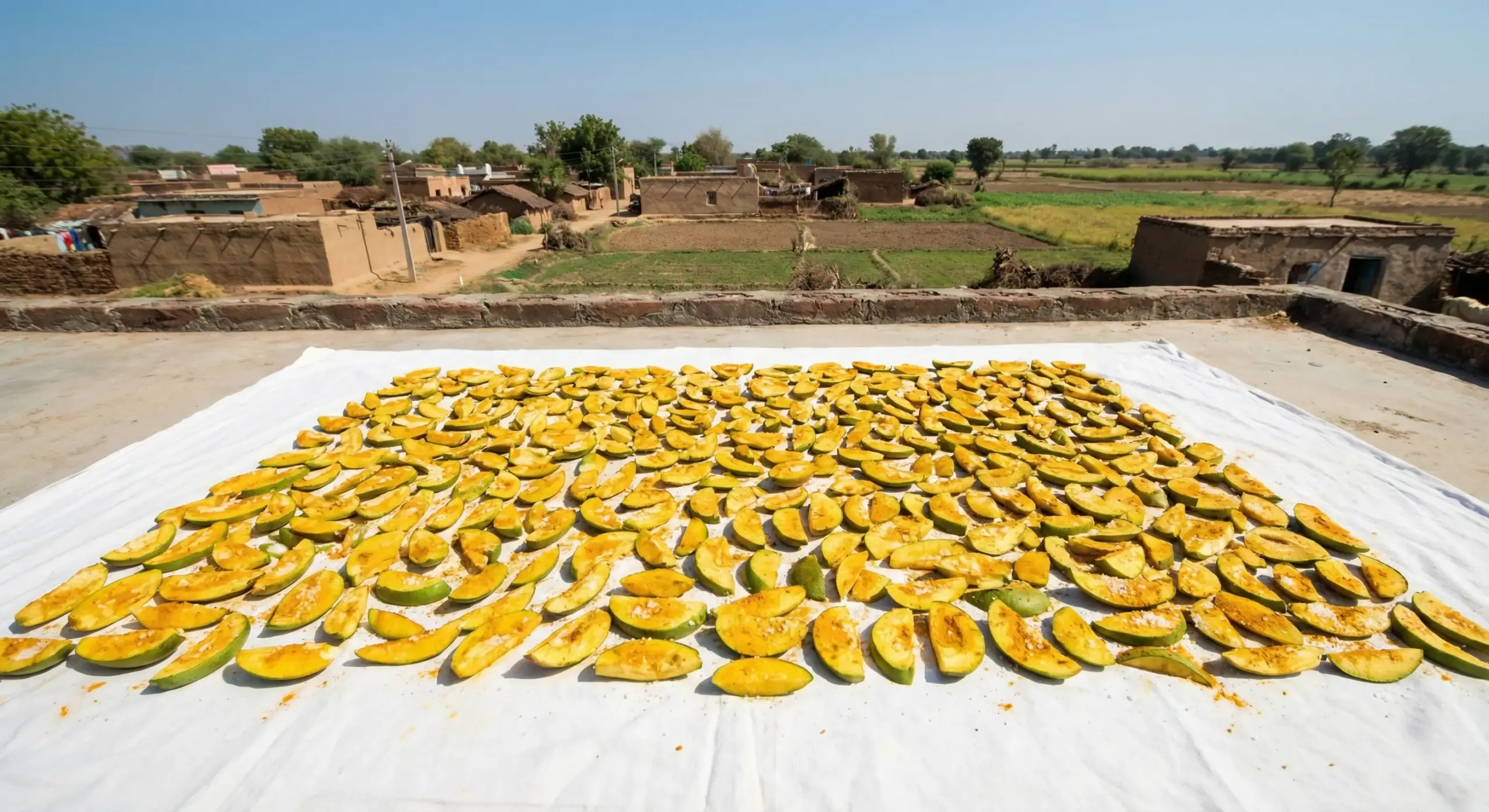
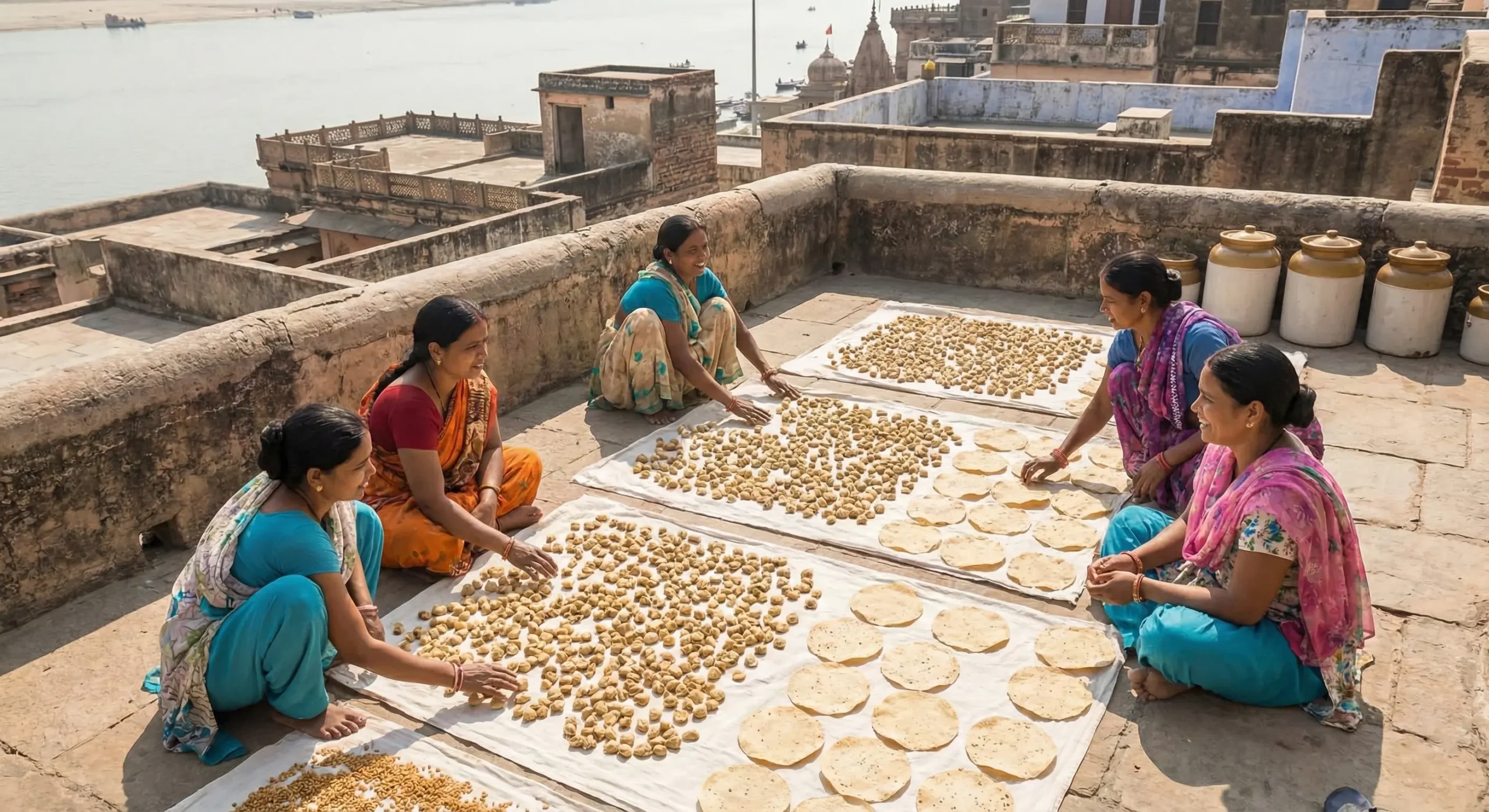
For most households, the true harbinger of summer is the annual ritual of pickle making, according to a Slurrp feature on regional mango pickles, a time when balconies and terraces transform into a mosaic of glass jars and white sheets covered in spiced fruit. In Kashi, where the hot, dry wind called the loo arrives in the same weeks that raw mangoes and tender jackfruit reach the market, that picture holds in its own way: the season is short, the sun is strong, and the work has to be finished before the rains.
This guide walks through the summer pickle in sequence, from the fruit that is chosen to the jar that is put away. It draws on published accounts of north Indian pickling and marks where a Kashi detail needs confirmation from a household that still does the work.
The short answer
In short
A Kashi summer pickle follows a pattern common across north India. Raw mango (kairi) and tender jackfruit (kathal) are cut and salted, dried in the sun on the terrace or in the courtyard, mixed with roasted spices and mustard oil, and matured in jars for days or weeks in the sun. The work happens in the hottest, driest weeks before the monsoon, usually with several people helping, and it ends with jars set aside for the year.
The season: loo, kairi and kathal
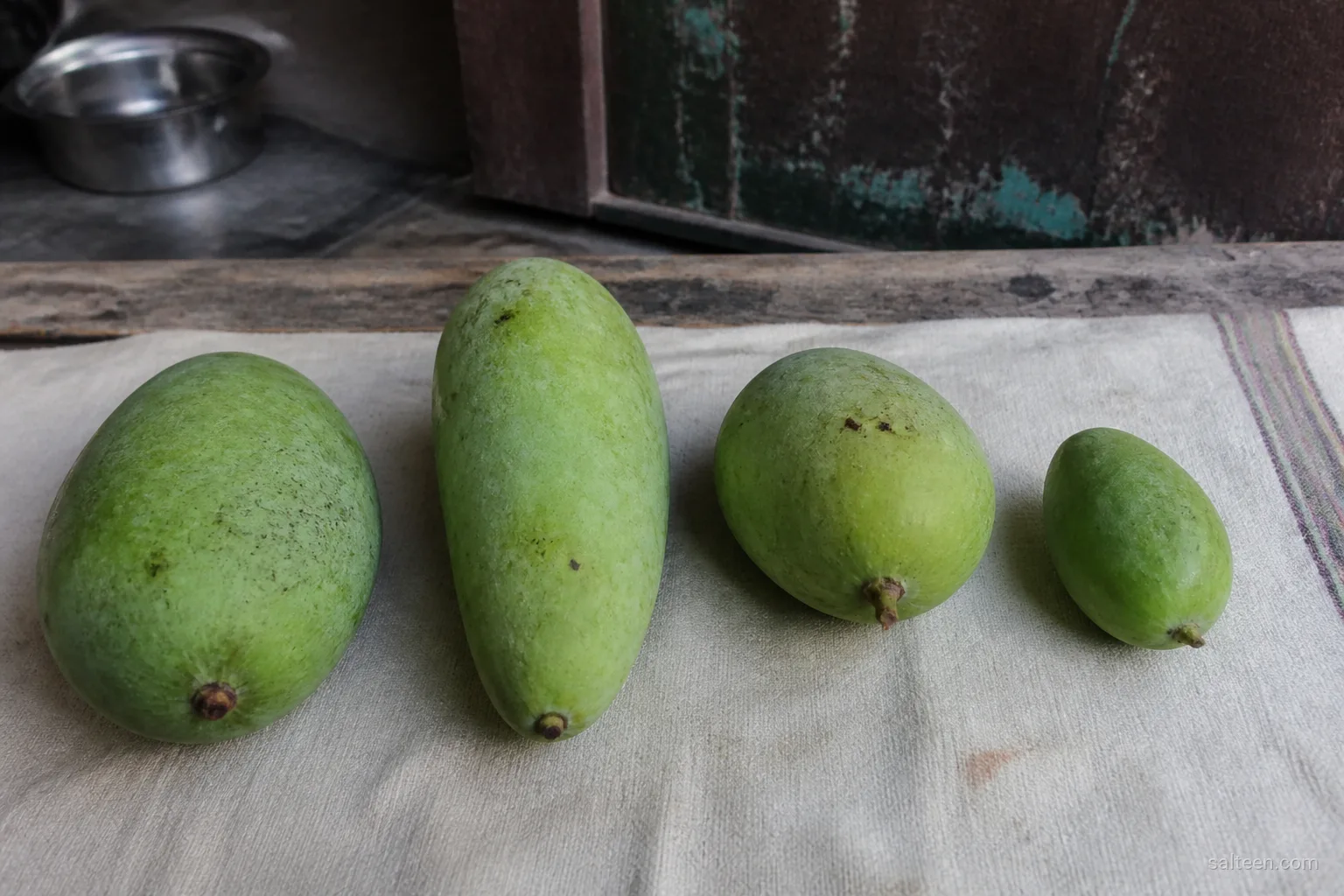
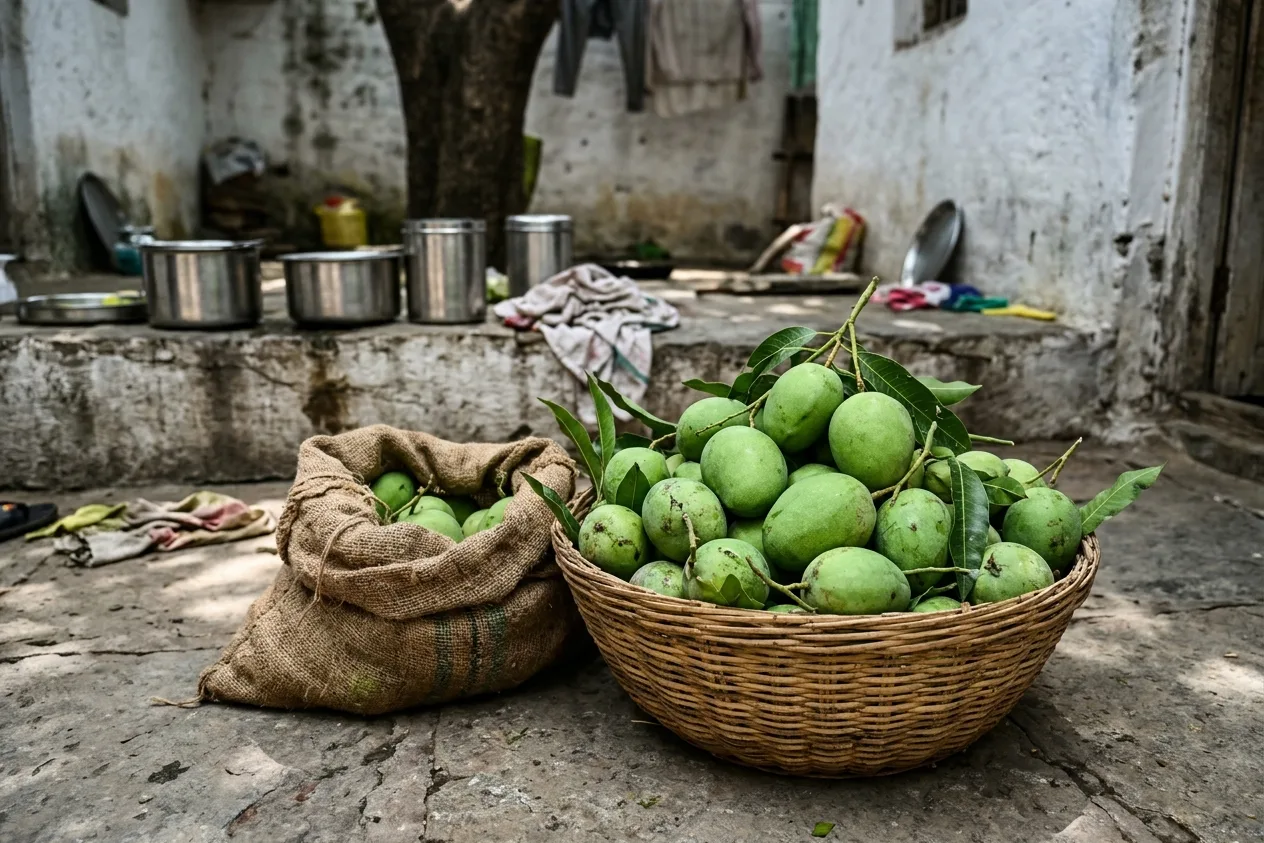
The hot season in India runs from March to June, and one of its signs is the strong, dusty wind called the loo that blows during the day over northern and north-western India. The same weeks bring the fruit. An Asia Media Centre feature on why mango season matters in India says it plainly: raw Totapuri, or kairi, meant pickle season.
Tender jackfruit arrives alongside. A recipe from Maayeka describes jackfruit as a seasonal vegetable available during the summer season in India, eaten as a fruit and a vegetable both, and another recipe notes that jackfruit and raw mango come in the same season, which is why the two are sometimes pickled together. The Cuisine India Society describes kathal ka achaar as a North Indian pickle made with tender raw jackfruit and mustard oil, a way to preserve its texture beyond the harvest. We cover the kathal pickle itself in seasonal pickles of Uttar Pradesh.
The mango side is explained in the raw mango ritual of summer and in mango pickle traditions in Banaras, and the wider calendar is in the seasonal pantry calendar for north India.
The sequence of a summer pickle
Published recipes and accounts agree on an order of work, even where details differ.
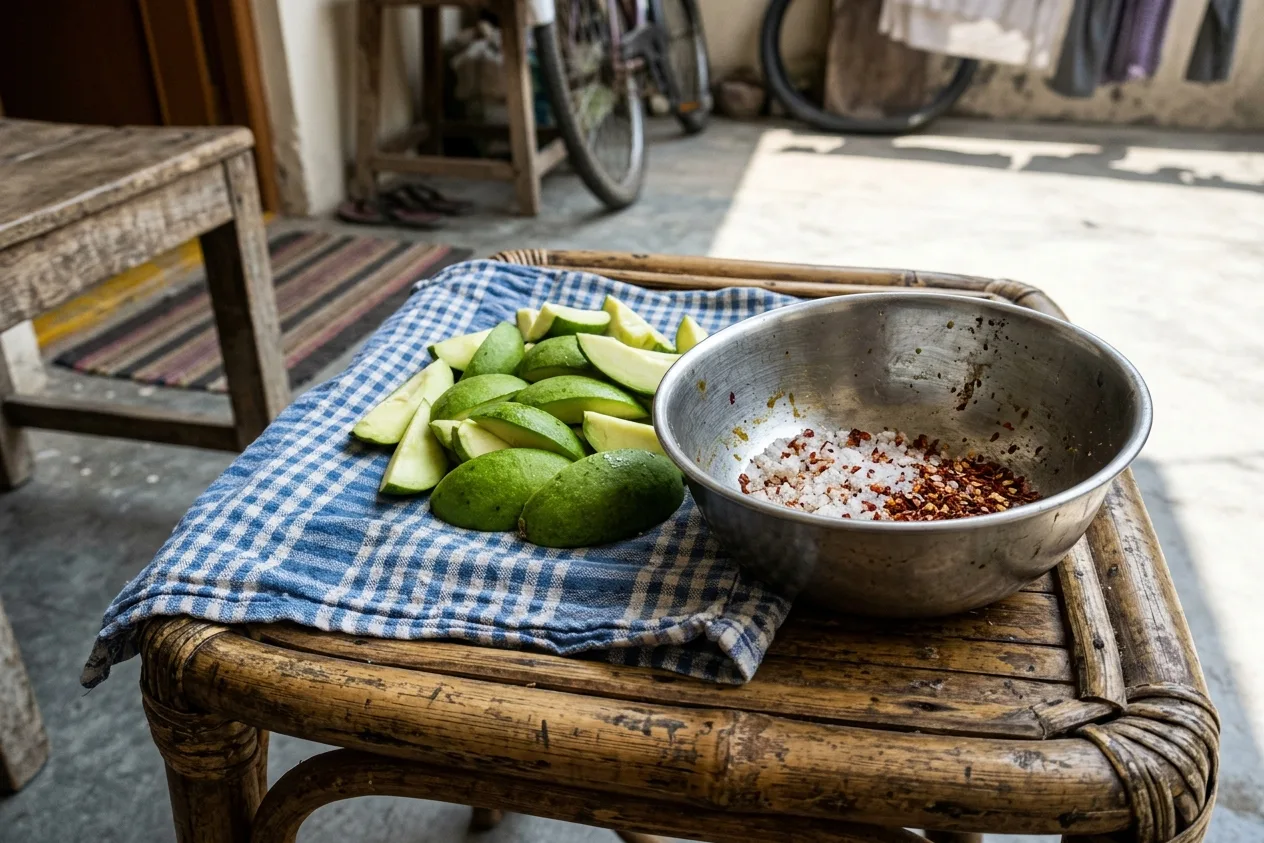
- Wash and dry the fruit. A recipe on Cookpad insists the raw mango be wiped with a clean cotton cloth until there is no moisture on it. Water on the fruit is the enemy of the jar.
- Cut and salt. Pieces are cut, then salted. The Al Jazeera feature on India’s pickle people describes the simplest method as washing, drying and slicing the fruit and tossing it with salt in proportion to its weight, followed by sun-drying.
- Dry in the sun. InstaCuppa’s method for a grandmother’s mango pickle puts the cut pieces on a clean cloth or plate in direct sunlight for four to six hours, covered with thin muslin to keep flies away and not with a lid, because moisture needs to escape.
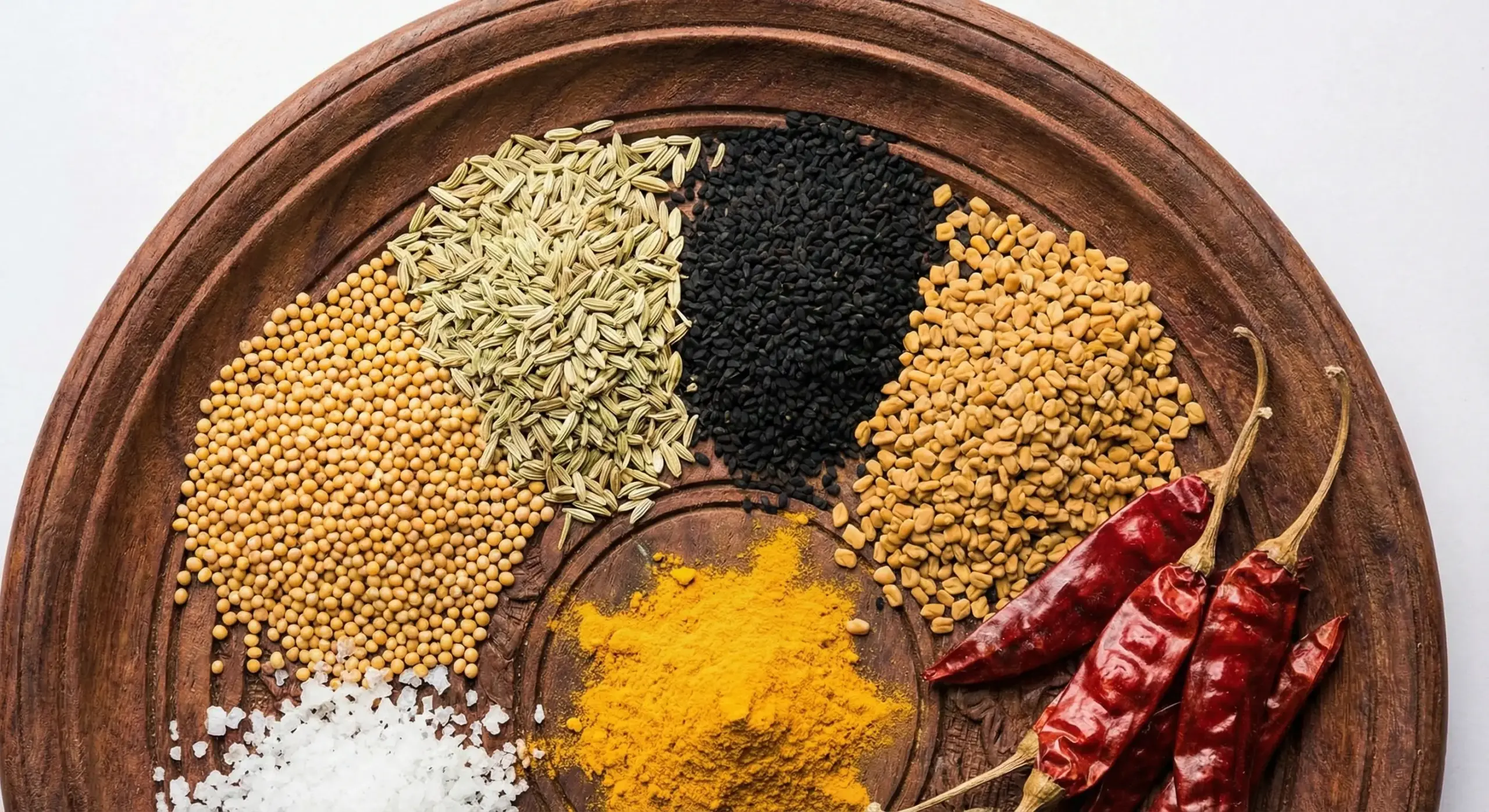
- Mix with spices and oil. Roasted, coarsely ground spices, salt, turmeric and mustard oil are added. Hing, methi and saunf in Banarasi achar goes through the spices, and why mustard oil is heated for achar covers the oil.
- Sun-cure in the jar. The jar, its mouth covered with cloth, goes into the sun. The Masterclass guide to achar gives three to four days for spiced fruit in a muslin-covered jar, while a Uttar Pradesh family-recipe producer describes sun maturation of nearly fifteen days. The right period depends on the fruit and the sun. Sun-curing for achar explains why.
- Seal and store. After curing, a tight lid replaces the cloth and the jar goes to a cool dry shelf, as described in traditional storage methods for pickles.
What kathal needs that mango does not
Jackfruit is a denser, starchier fruit, and published recipes treat it differently. A Siasat recipe for kathal ka achaar begins by boiling the kathal with salt, draining the water and leaving it to dry, patting it dry if necessary, with mustard oil and spices added afterwards. A Slurrp recipe says to boil the pieces until tender, and another tells the cook to leave the jackfruit tender and not fully cooked.
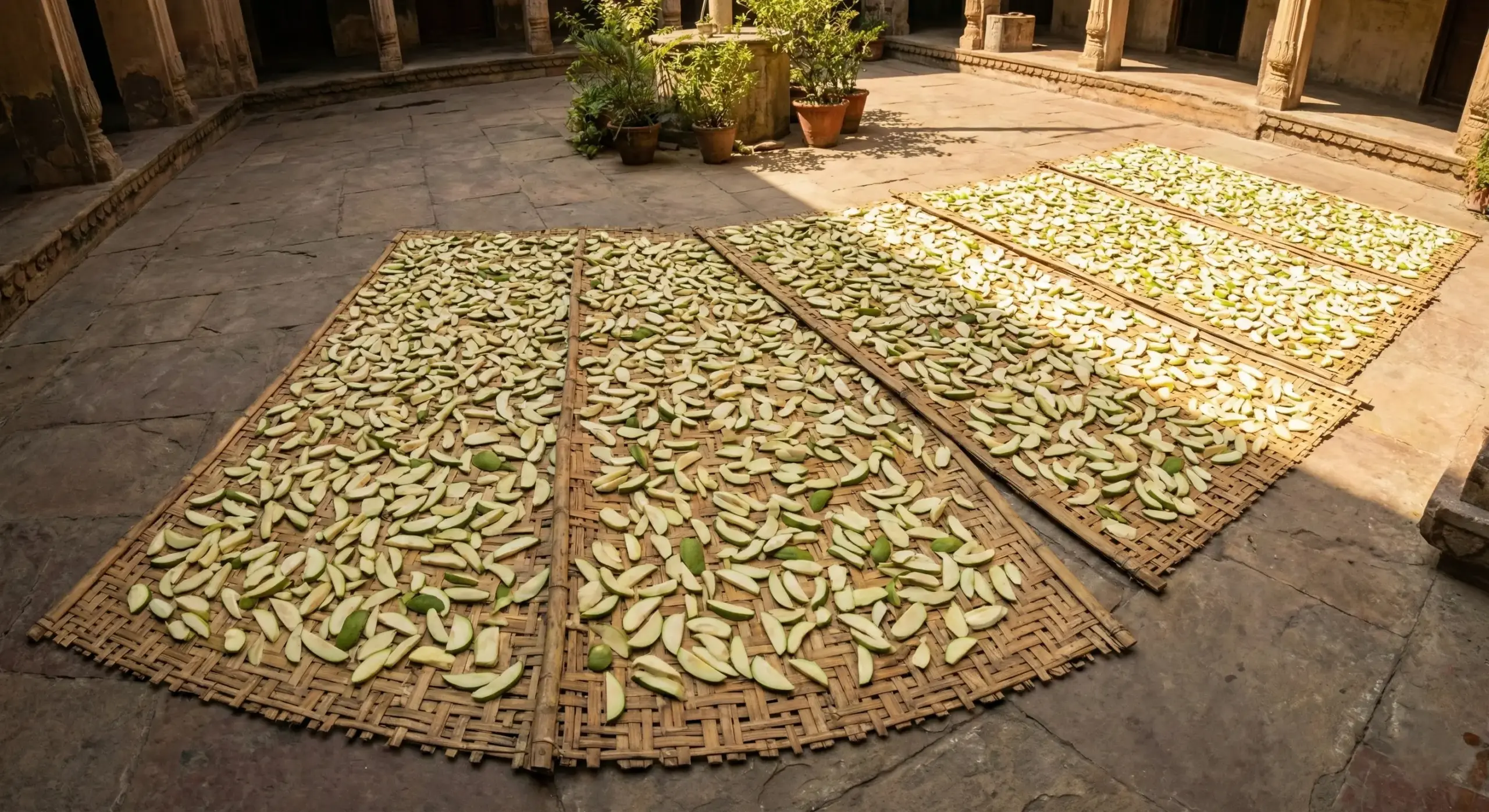
Not every recipe boils it, and a trade listing describes jackfruit pickle as made from raw jackfruit that is steamed or sun-dried and then marinated in mustard oil and spices. The common point is that kathal is first softened and dried, then spiced. A Maayeka recipe also warns that the pickle should be completely submerged in oil, or it gets mould easily, and to add more oil if needed.
The loo, the terrace and the weather
The loo does real work. A hot, dry wind speeds drying and keeps humidity low, which is the condition a pickle needs. It also makes the work uncomfortable and sets a rhythm: the drying is done in the middle of the day and the fruit is brought in or covered at dusk. The same wind carries dust, and a sudden dust storm can spoil a drying tray.
Climate decides the calendar too, and a hot March can change a fruit season. A Gaon Connection report on Varanasi’s Langda mango records a local horticulture teacher saying excessive heat in March had wilted the mango flowers and adversely affected fruiting. That was a ripe-mango story, not a pickle one, but it shows how a weather shift upstream changes what arrives in the kitchen. Climate and its effect on pickle making follows that thread.
Who does the work
Summer pickling is described across published accounts as shared work. The Deccan Herald notes that making pickles has long been a family activity, with children helping to wash mangoes, wipe jars completely dry and spread ingredients on clean cloths. The Tribune India memoir places women in the courtyard turning mango pieces under the sun, and a Gulf News account of Andhra pickling describes relatives and neighbours gathering on appointed days. We discuss the social side in pickle-making traditions in Banaras homes.
Frequently asked questions
When do Kashi households make summer pickle?
In the hot weeks before the monsoon, when raw mango and tender jackfruit are available. Exact weeks vary with the year’s weather.
What goes into a summer pickle?
Cut fruit, salt, turmeric, roasted spices such as fennel, fenugreek and mustard, and mustard oil. Recipes differ by household.
Why is the fruit dried before spicing?
Water carried into the jar encourages mould, so the fruit is salted and dried first.
Is kathal pickle made the same way as mango pickle?
Not quite. Many recipes soften the jackfruit by boiling or steaming, then dry it before adding spices and oil.
How long is a pickle kept in the sun?
Sources range from three to four days to about fifteen days. There is no single standard.
Why a cloth cover and not a lid during sun-curing?
A cloth lets moisture escape and keeps out flies and dust. A tight lid goes on afterwards.
Can I use this guide as a recipe?
No. It describes practice and gives no quantities. Follow a tested recipe and a food-safety source for amounts, and do not store fresh low-acid vegetables in oil at room temperature.
Sources used for this post:
– Slurrp, “Give Your Summer Pantry a Boost With These Mango Pickle Recipes”
– Shaalaa, “The Summer or Hot Weather Season” (loo)
– Asia Media Centre, “The Taste of Summer: Why Mango Season Matters in India”
– Maayeka, Kathal Ka Achar recipes
– Cuisine India Society, Kathal Ka Achaar
– Siasat, Kathal Ka Achaar
– Slurrp, jackfruit pickle recipes
– IndiaMART jackfruit pickle listing
– Cookpad, kachche aam ka meetha achar
– Al Jazeera, “India’s pickle people”
– InstaCuppa, grandmother’s mango achaar method
– Masterclass, “All About Achaar”
– Masala Monk listing of a UP family mango pickle
– Gaon Connection, Varanasi Langda mango
– Deccan Herald, “How India’s pickles tell stories of climate”
– The Tribune India, “Preserving love, legacy in pickle jars”
– Gulf News, “The art of making spicy Andhra pickle”