Blog
Mustard Oil in Banaras Cooking: Kacchi Ghani, Heated Oil and Pickles

The Food Safety and Standards Authority of India says an oil may be labelled “Kachi Ghani” or “Cold Pressed” only if its natural allyl isothiocyanate content is not less than 0.20 percent by weight. That is a very specific legal test for a very old habit: pressing mustard seed into an oil sharp enough to make a cook’s eyes water.
Mustard oil is the everyday fat of the Banaras kitchen and the base of its pickles. This guide covers how it is made, why it tastes the way it does, how Banaras cooks prepare it before use, where ghee takes over from it, and what the rules say about buying it today. It is a cultural and kitchen explainer. We make no health claim, and the oil is described as the region cooks use it.
The short answer
In short
Mustard oil (sarson ka tel) is pressed from mustard seed, and its sharp, nose-clearing smell comes from a compound called allyl isothiocyanate. Banaras cooks heat it in an iron kadhai until it smokes lightly, let it cool a little, and then temper spices in it. It is the main fat for everyday vegetables, the traditional oil for pickles and the winter cooking oil, while ghee is kept for festival and temple food. Indian rules now require mustard oil to be sold unblended.
Where the oil comes from
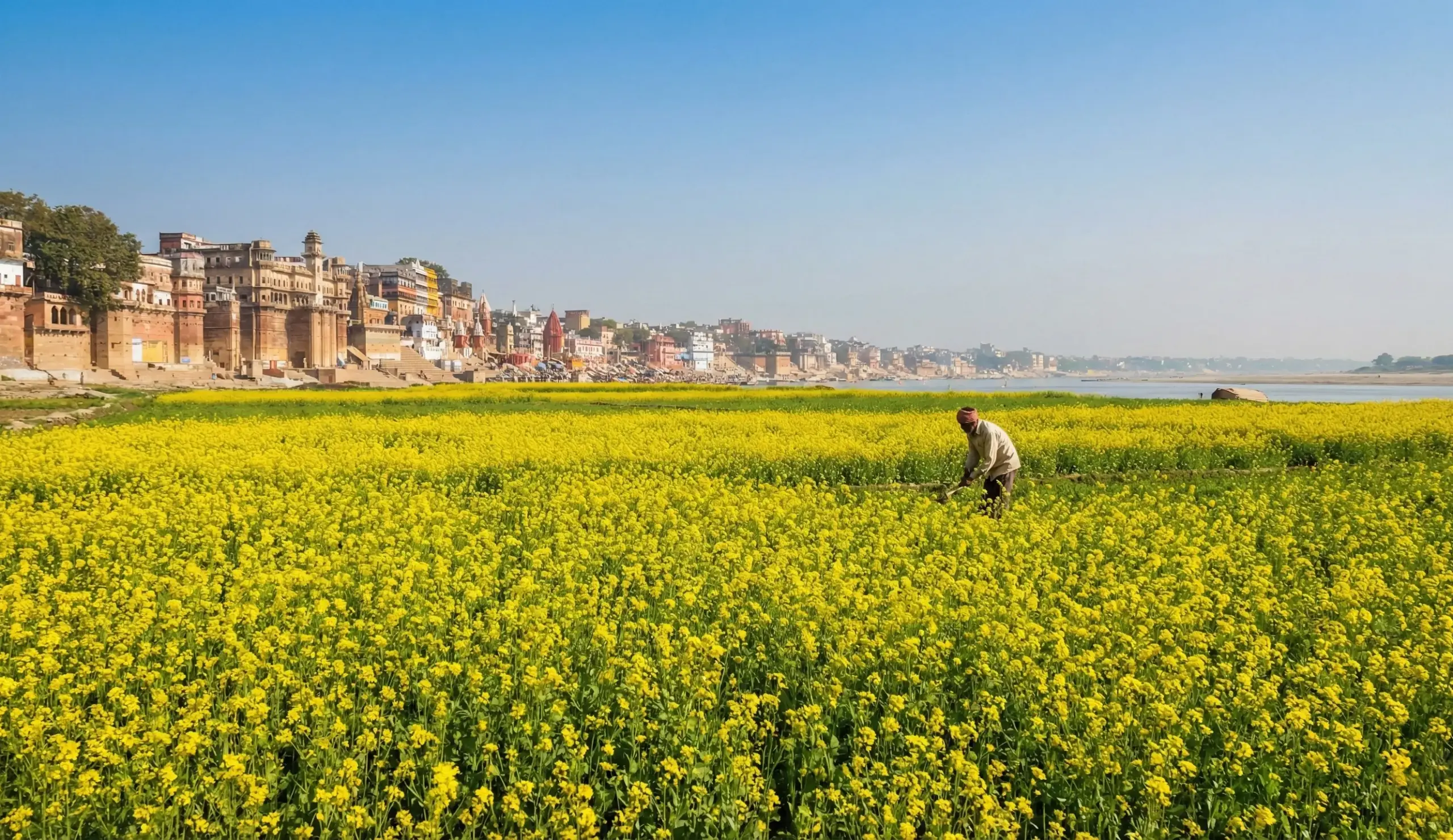
Mustard is a cool-season crop of the Gangetic plain. Farmers sow it in the post-monsoon months and harvest it as winter turns to spring, and the yellow of its flowering fields is one of the visual markers of the season. The two main types grown for oil in the region are brown mustard (rai or Brassica juncea) and a yellow-seeded relative.
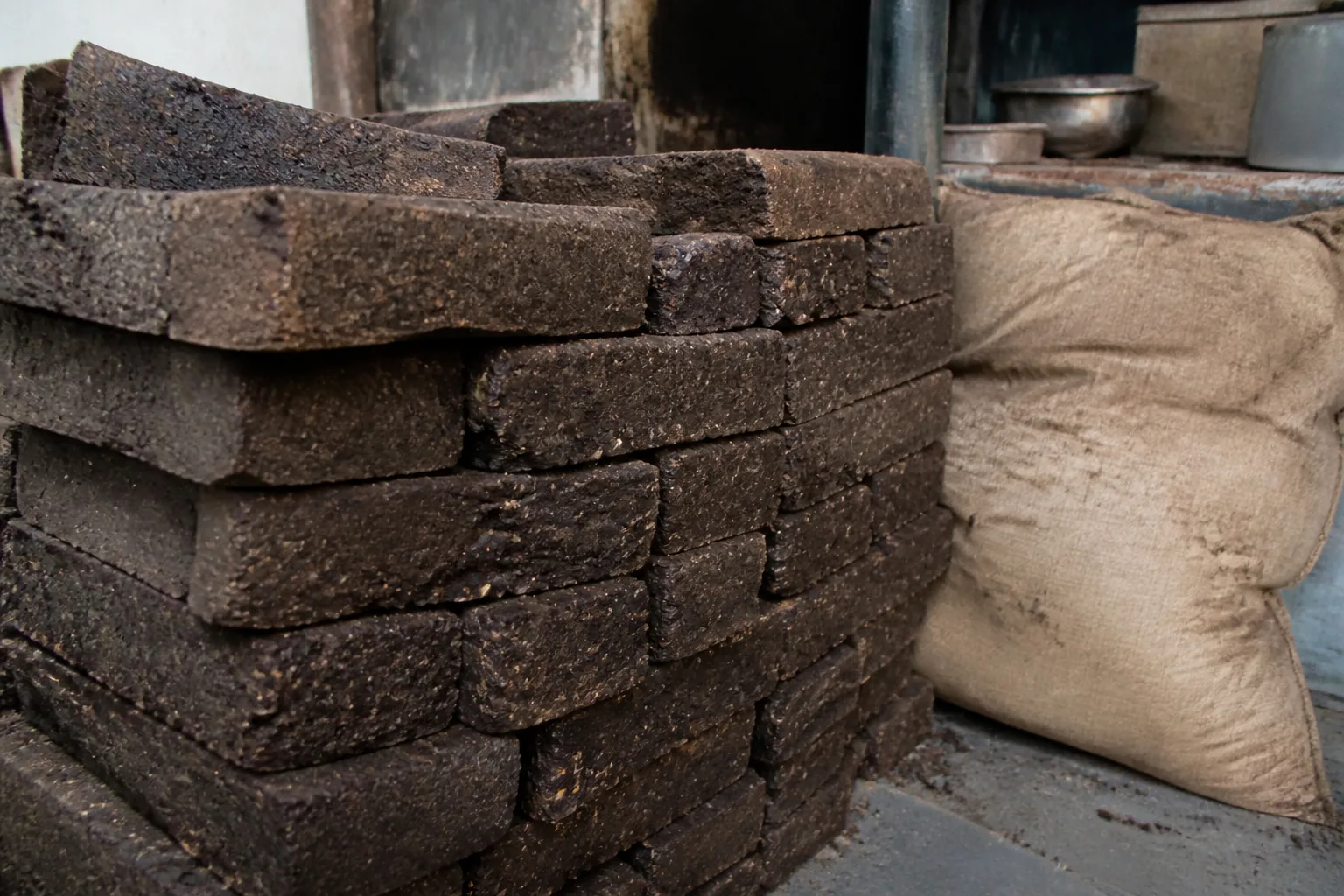
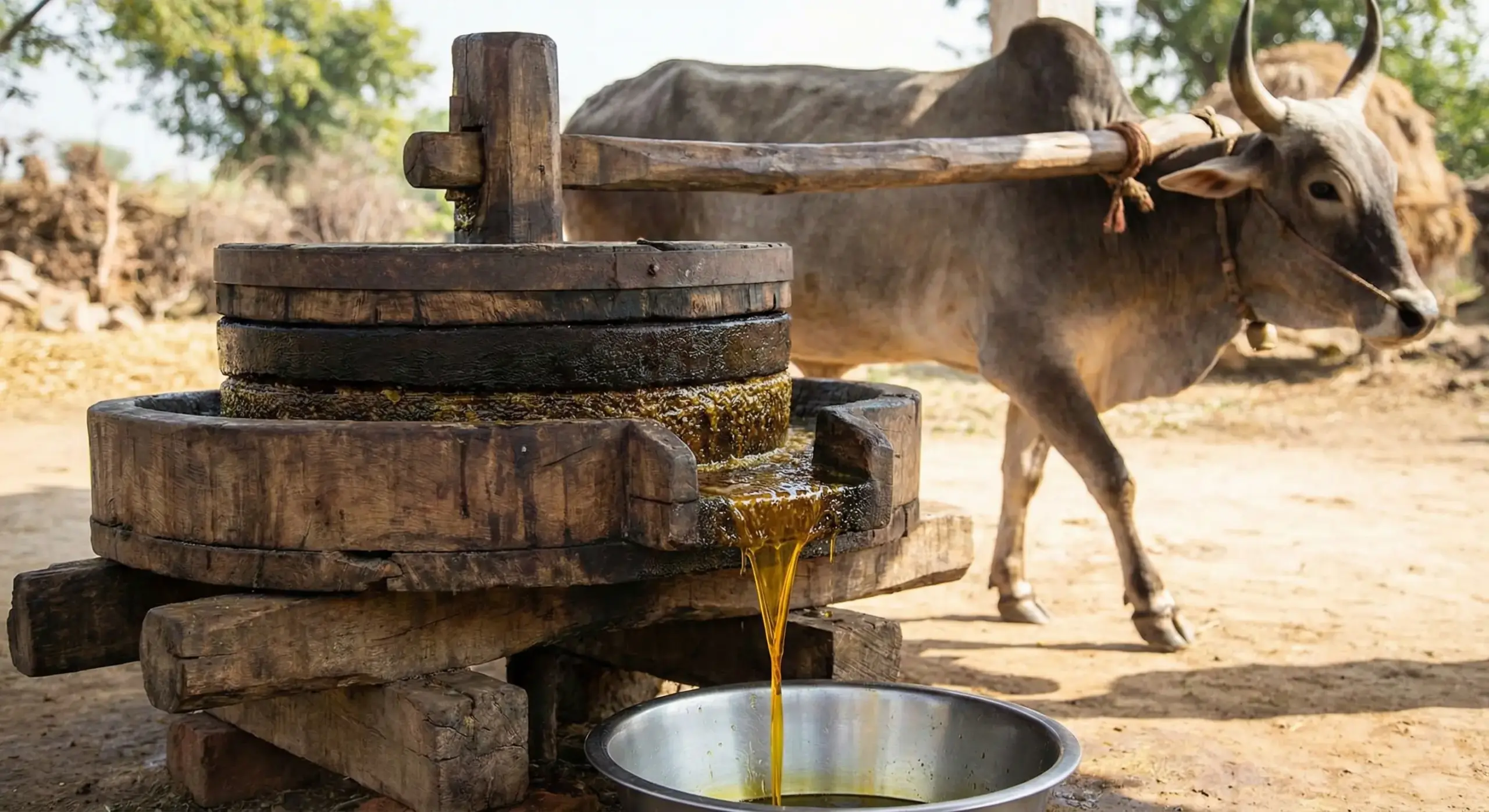
The traditional press is the kolhu or kacchi ghani, a heavy wooden mortar turned by a bullock or, now, by a motor. The seed is crushed at low temperature, and the Consumer Voice report on kachi ghani oils describes the method as crushing seeds at low temperature so that natural properties, antioxidants and essential oils are retained. Modern “kachi ghani” oil uses steel presses but follows the same idea.
Why it smells and tastes the way it does
The pungency of mustard oil comes from allyl isothiocyanate, which Wikipedia describes as a phytochemical of plants in the mustard family and the compound that gives mustard its sharp taste by activating a pain-and-irritation receptor in sensory neurons. The same compound is behind the sting of wasabi and horseradish. In cold-pressed mustard oil it is present in measurable quantity, which is why the FSSAI uses it as the test for a “kachi ghani” label.
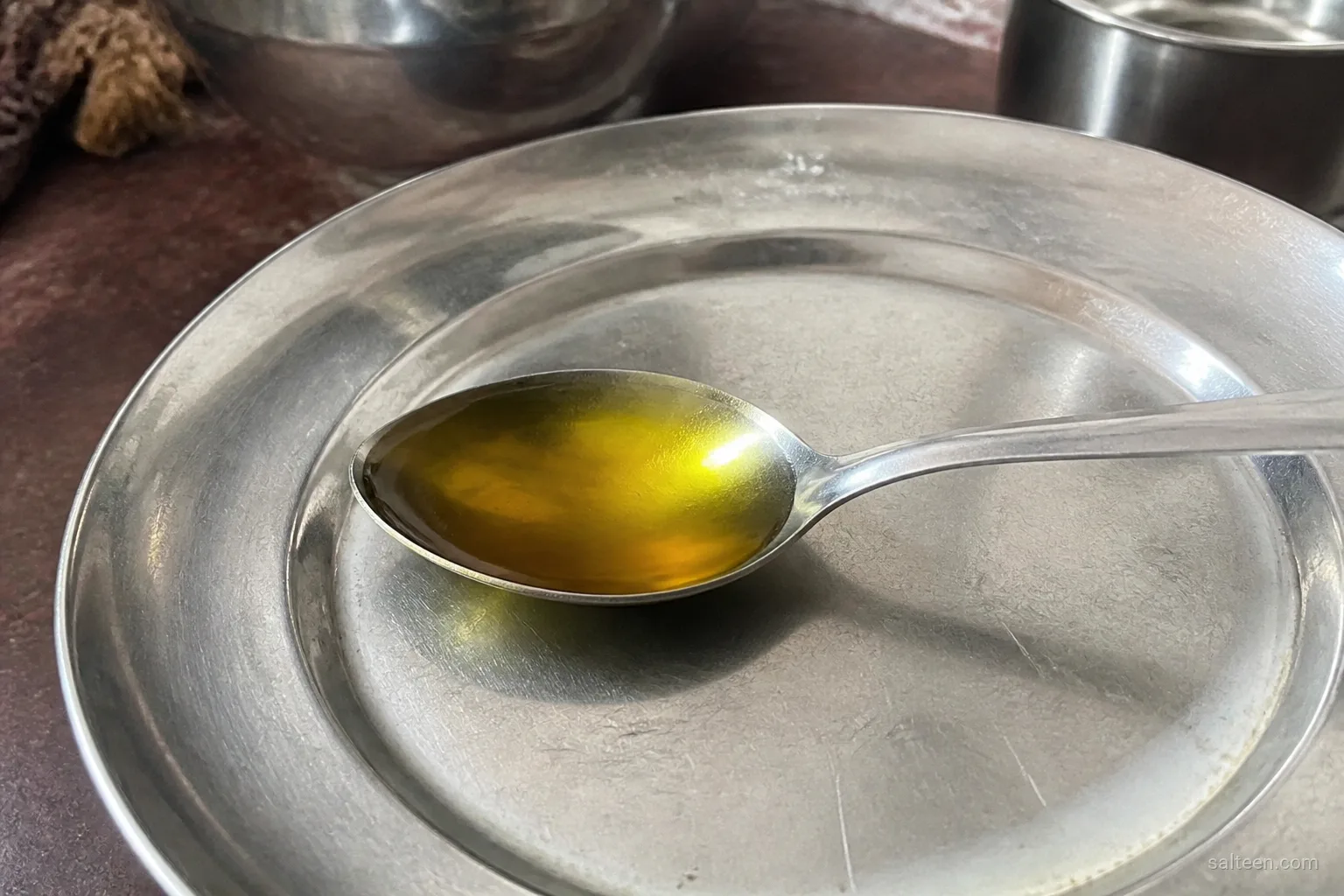
For a cook, the point is practical. Raw mustard oil is harsh. It smells sharp, it can sting the nose, and it tastes raw when eaten unheated. The traditional answer is a step every Banaras cook knows.
Heating the oil: the step that defines the technique
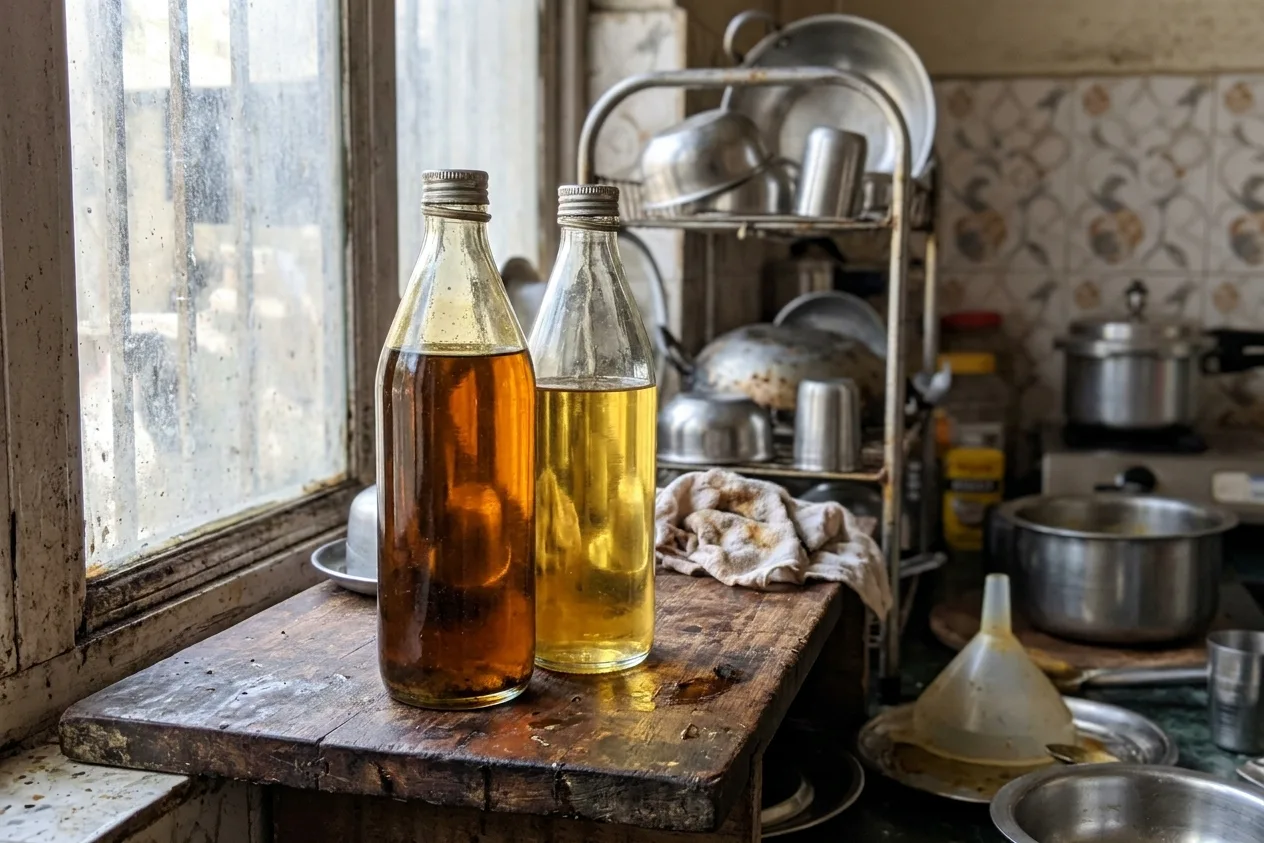
Before it is used for a sabzi or a tempering, mustard oil is usually heated until it just begins to smoke. The method:
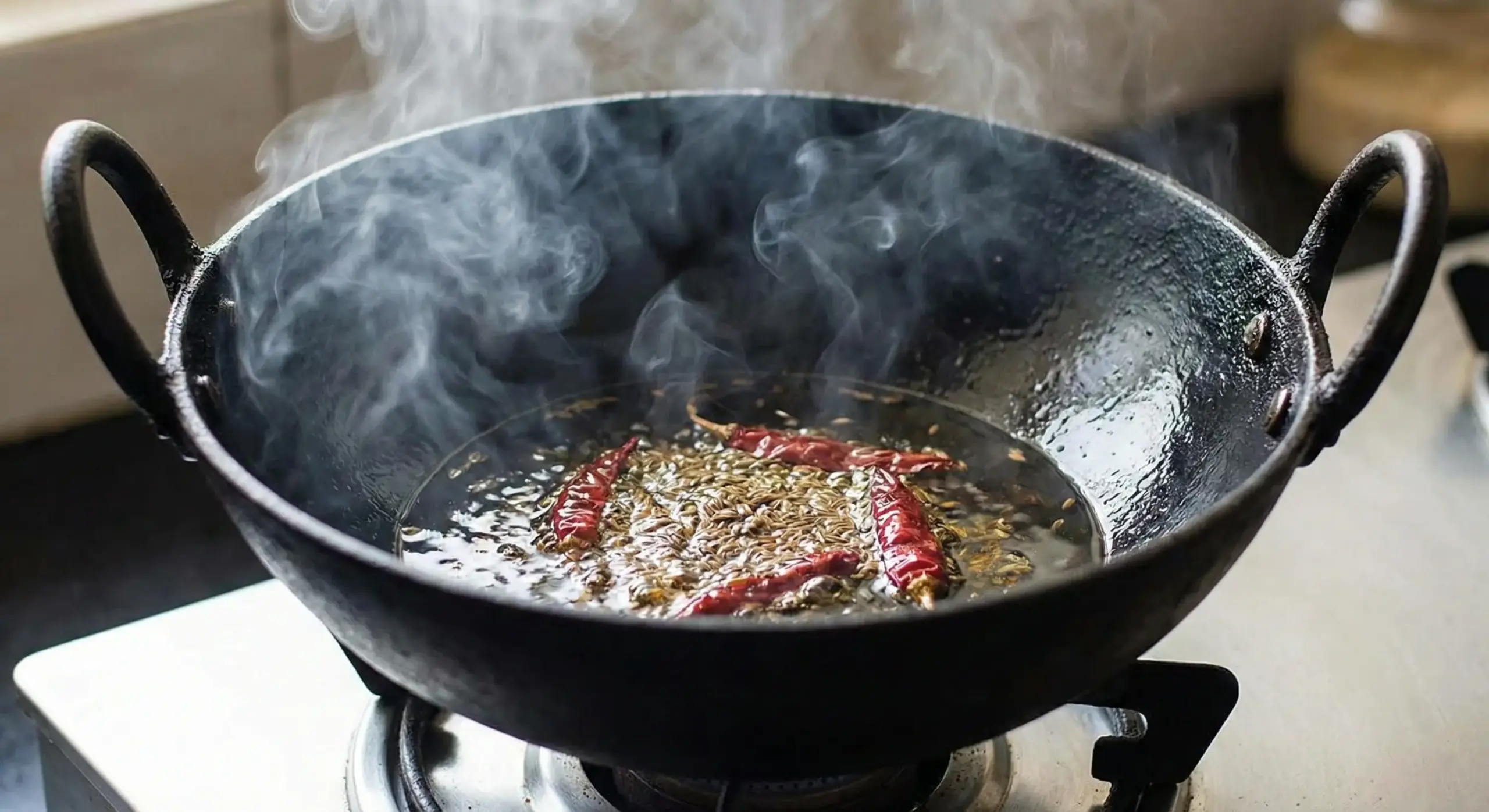
- Pour the oil into a heavy iron kadhai over medium heat.
- Wait until the colour lightens a little and thin wisps of white smoke rise from the surface.
- Take the pan off the heat for a short moment and let it cool slightly.
- Add whole spices, such as cumin, fenugreek seeds or a dried chilli, and then the vegetable.
Cooks say this takes away the raw bite while keeping the character of the oil. Some add a pinch of salt or a small piece of tamarind to the oil as it heats, which family tradition says reduces splatter and the raw smell. We record these as kitchen practice and not as tested technique. One retail guide gives the smoke point of cold-pressed mustard oil as about 250 degrees Celsius. The visual cue (a light haze and a milder smell) is more reliable than any thermometer in a home kitchen.
Heating also explains why a Banaras dish cooked in mustard oil does not taste like raw mustard. The sharpness is gone, and what remains is a nutty, warm flavour that suits potatoes, pumpkin, peas and fenugreek greens.
Where mustard oil sits in the Banaras kitchen
Banaras cooking uses two main fats, and the split between them tells you a lot.
| Fat | Where it is used | Character |
|---|---|---|
| Ghee | Kachori and puri frying, dal tempering, sweets, temple offerings, finishing a phulka | Nutty, rich, associated with festivity and purity |
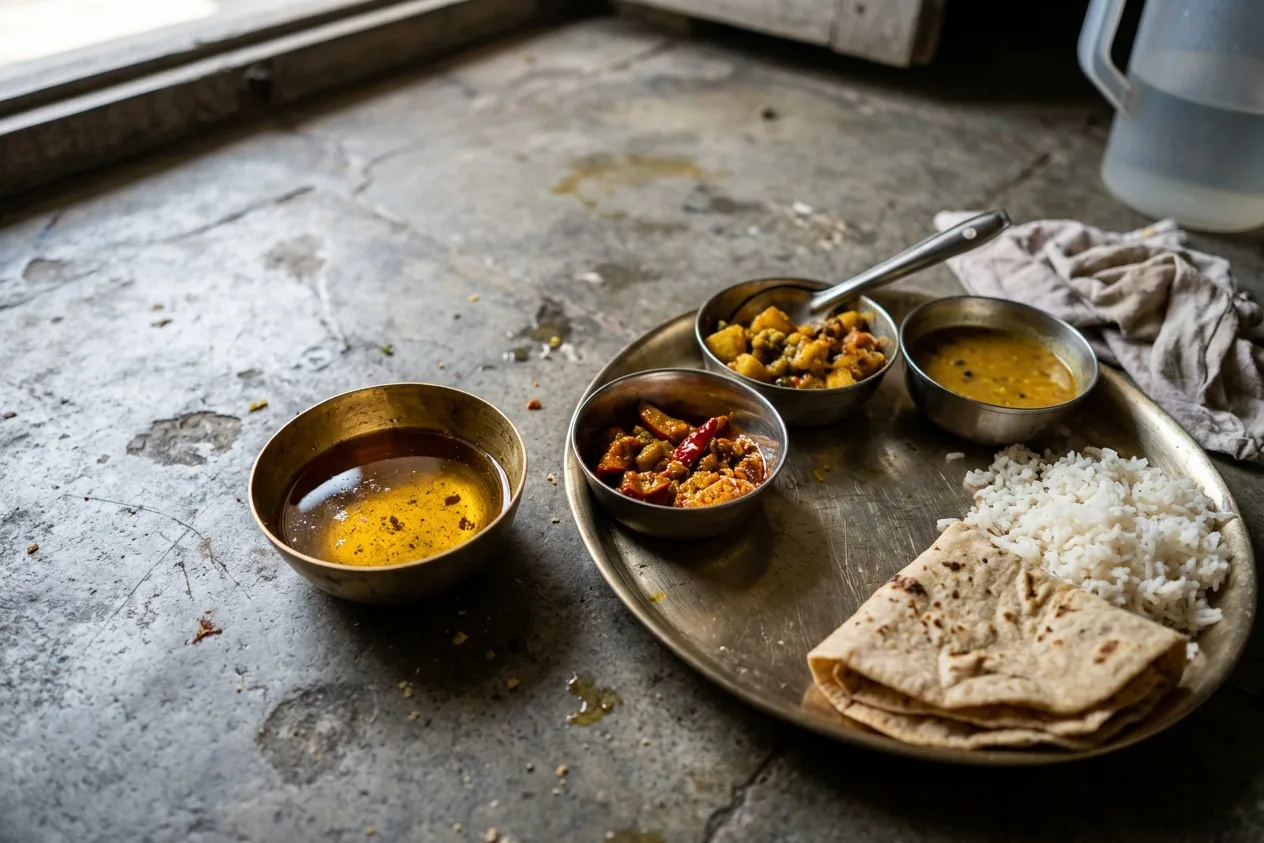
| Mustard oil | Everyday sabzi, winter cooking, pickles, some street snacks | Sharp, warm, associated with the household |
Writers on Varanasi street food note that the city’s snacks are made with either mustard oil or desi ghee, which gives the regional food its two voices. The home table uses mustard oil for the daily vegetable and ghee for the roti and dal, and festival food moves to ghee. The older pucca and kachcha distinction (see from ghats to homes) sits behind part of this, because ghee is the fat that traditionally makes food suitable for sharing and offering.
Winter and summer
Traditional households use more mustard oil in the cold months and less in the hottest weeks. Ayurveda describes the oil as heating in effect, so the winter table suits it and the summer table leans on lighter fats and cooling foods. This is a traditional classification and not medical advice, and our post on seasonal eating practices in Kashi shows how the rest of the year’s food follows the same logic.
In the temple and the shrine
Temple food in Banaras is cooked in ghee, and ghee lamps are standard, which is part of why ghee stays the fat of offerings while mustard oil stays the fat of the household kitchen.
Mustard oil and pickles
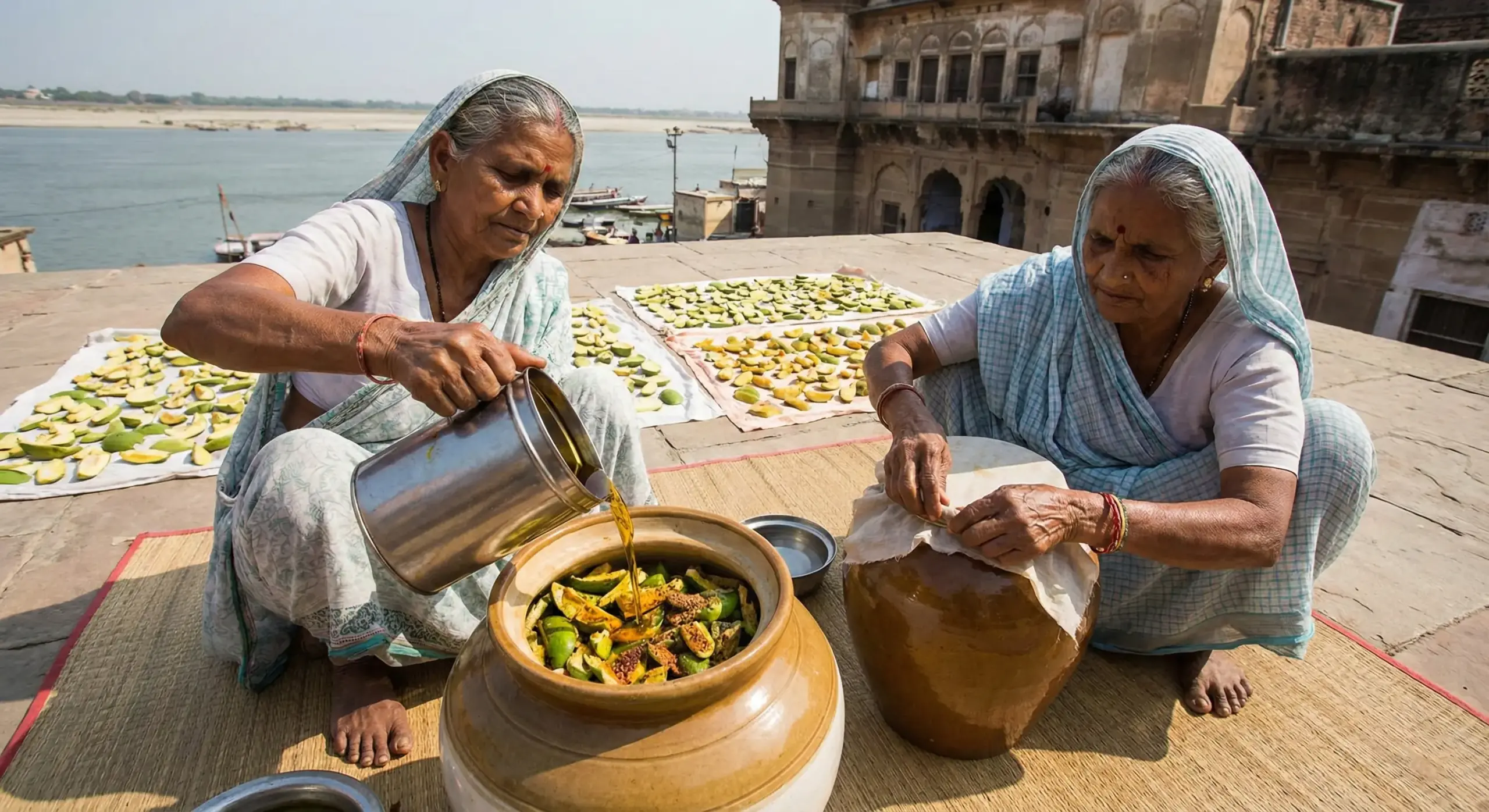
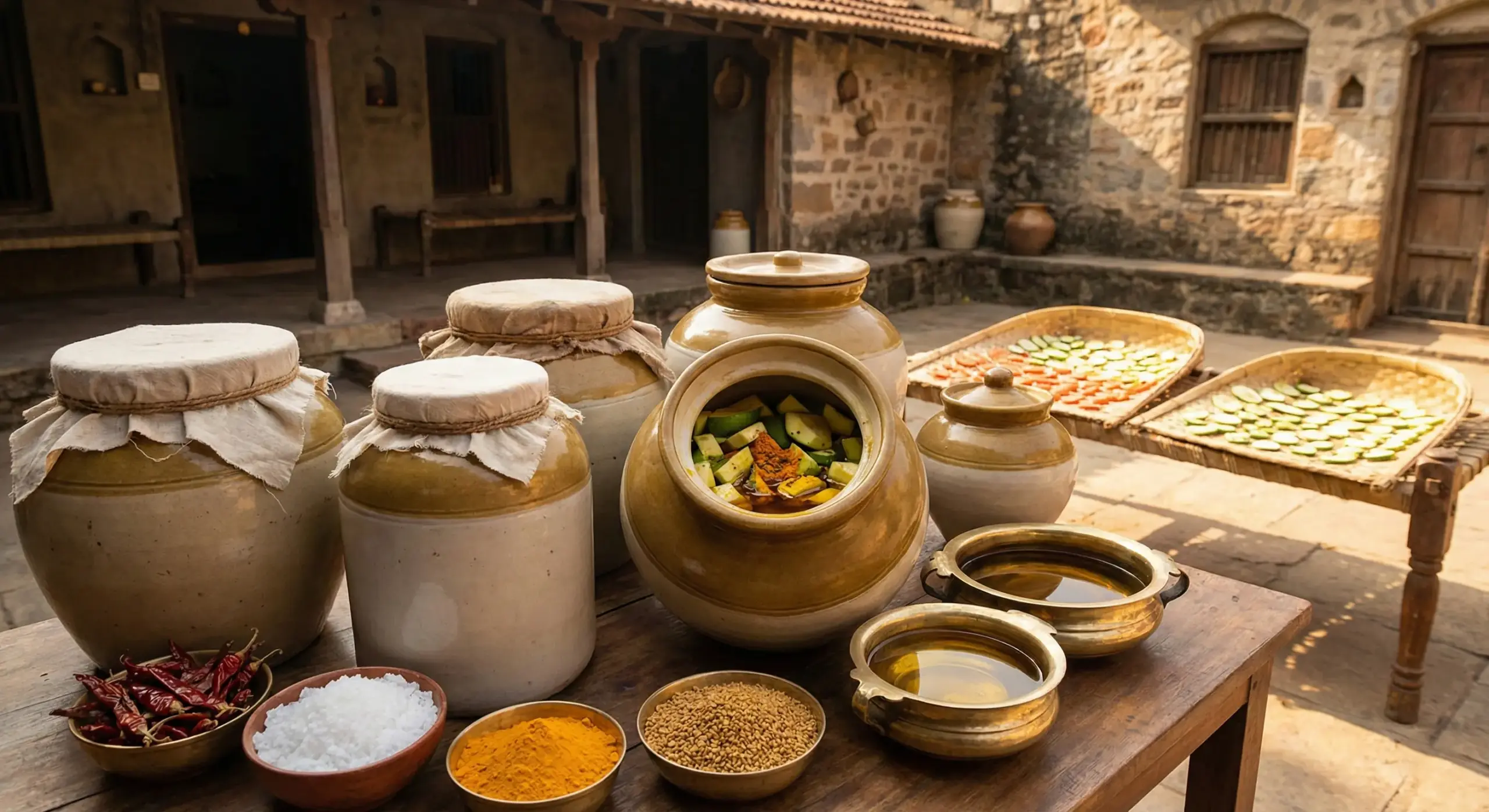
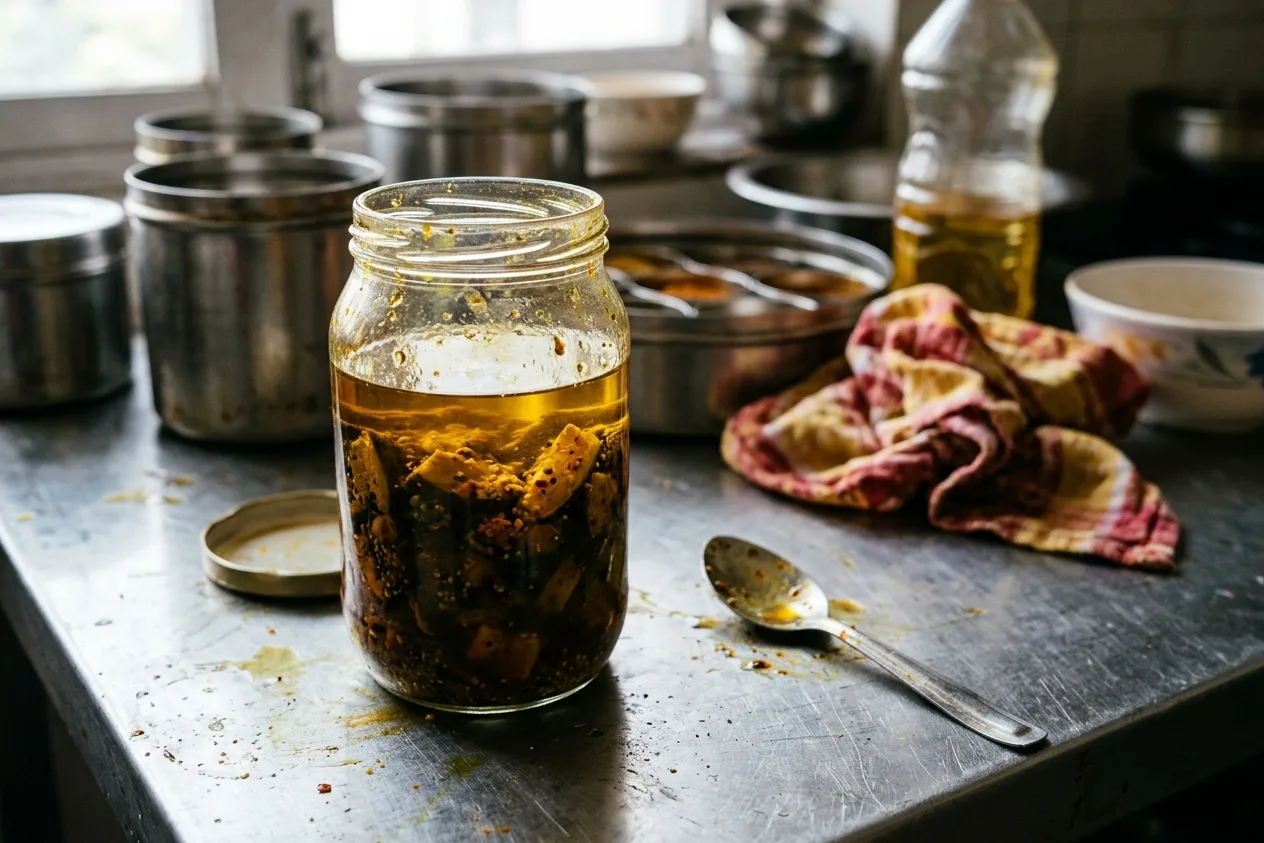
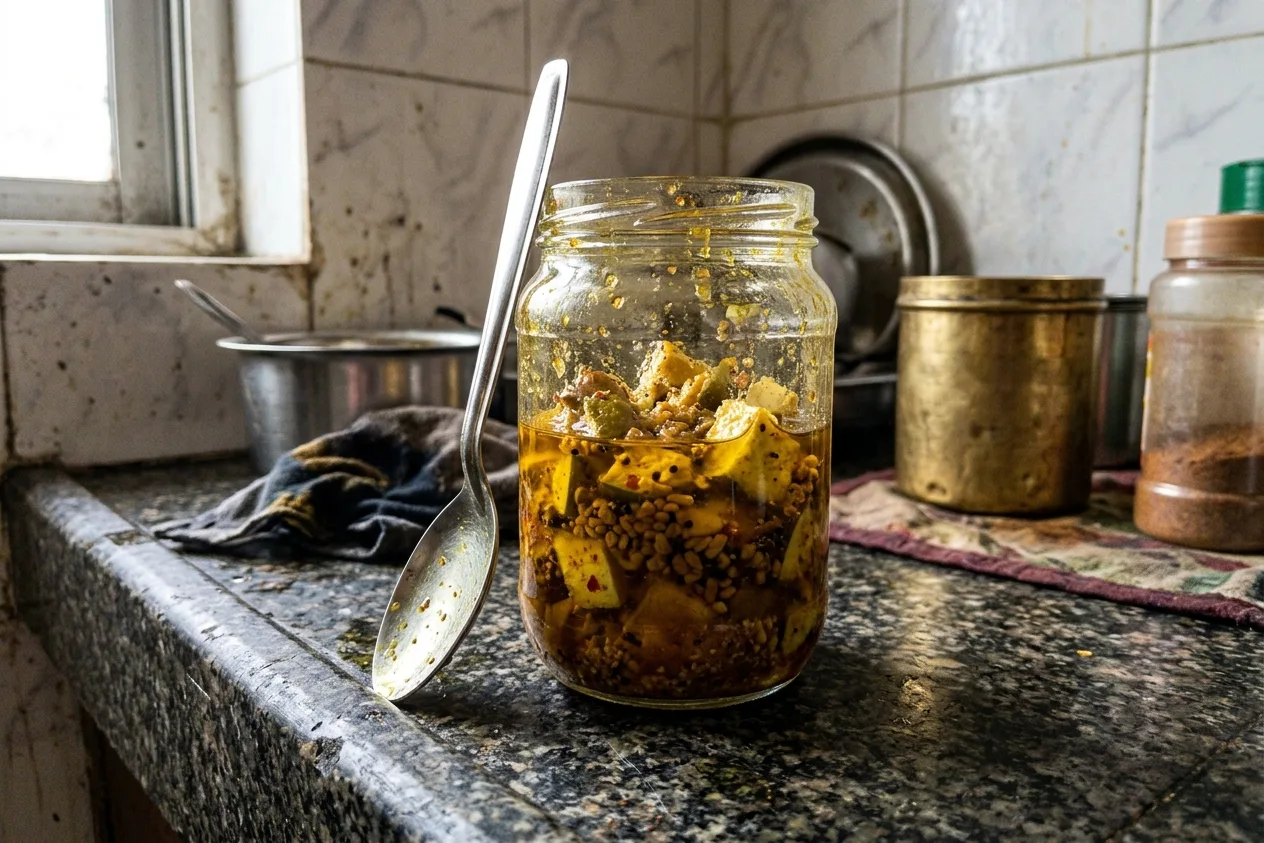
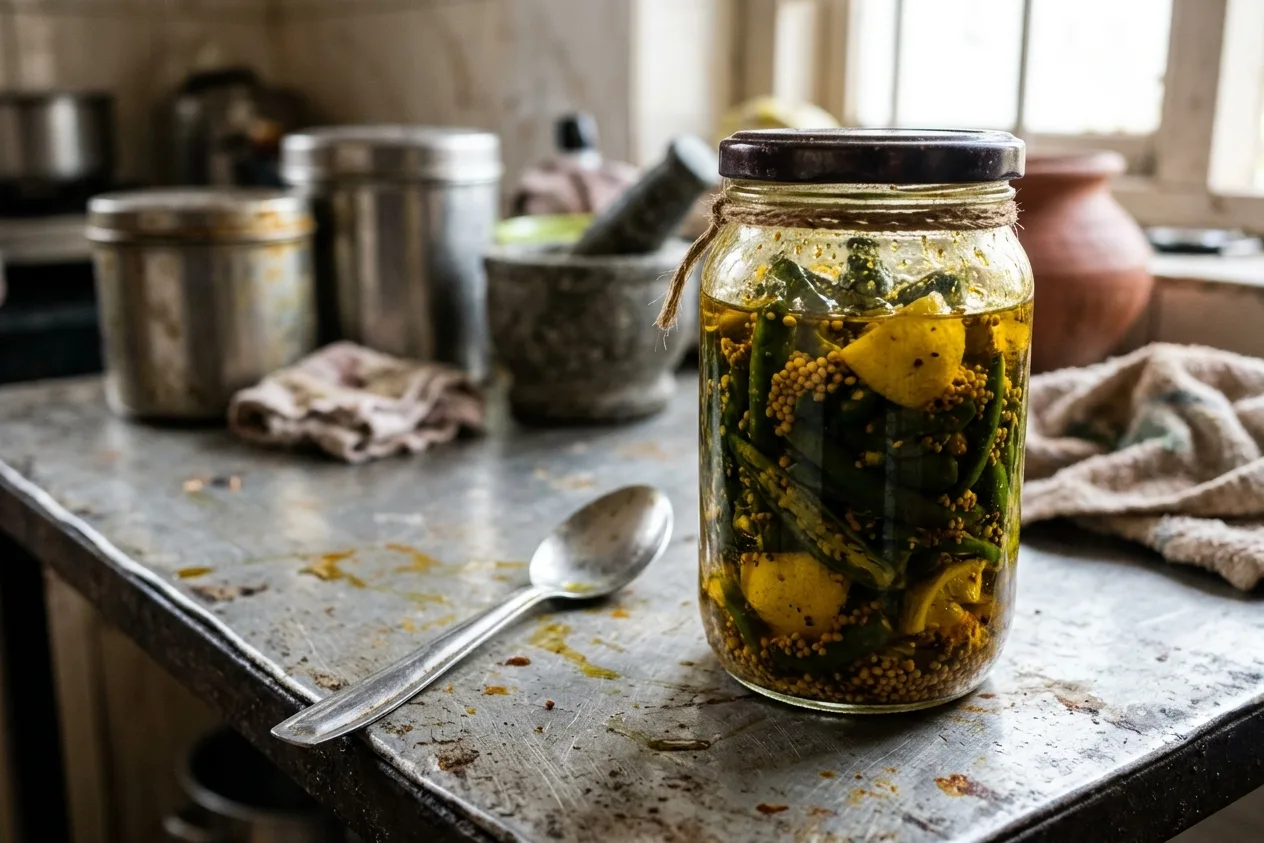
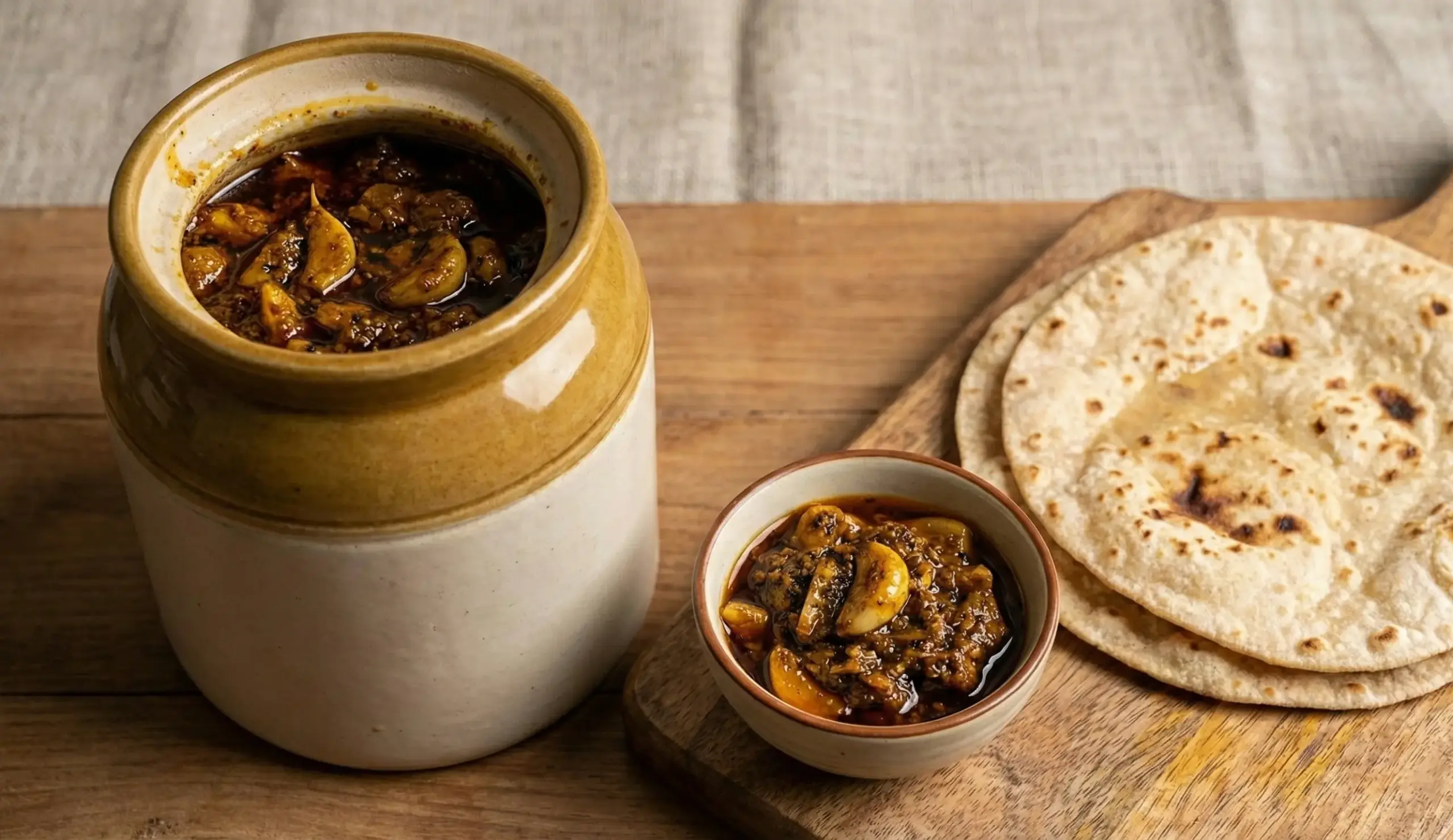
Mustard oil is the traditional pickling oil of northern India. It does three jobs.
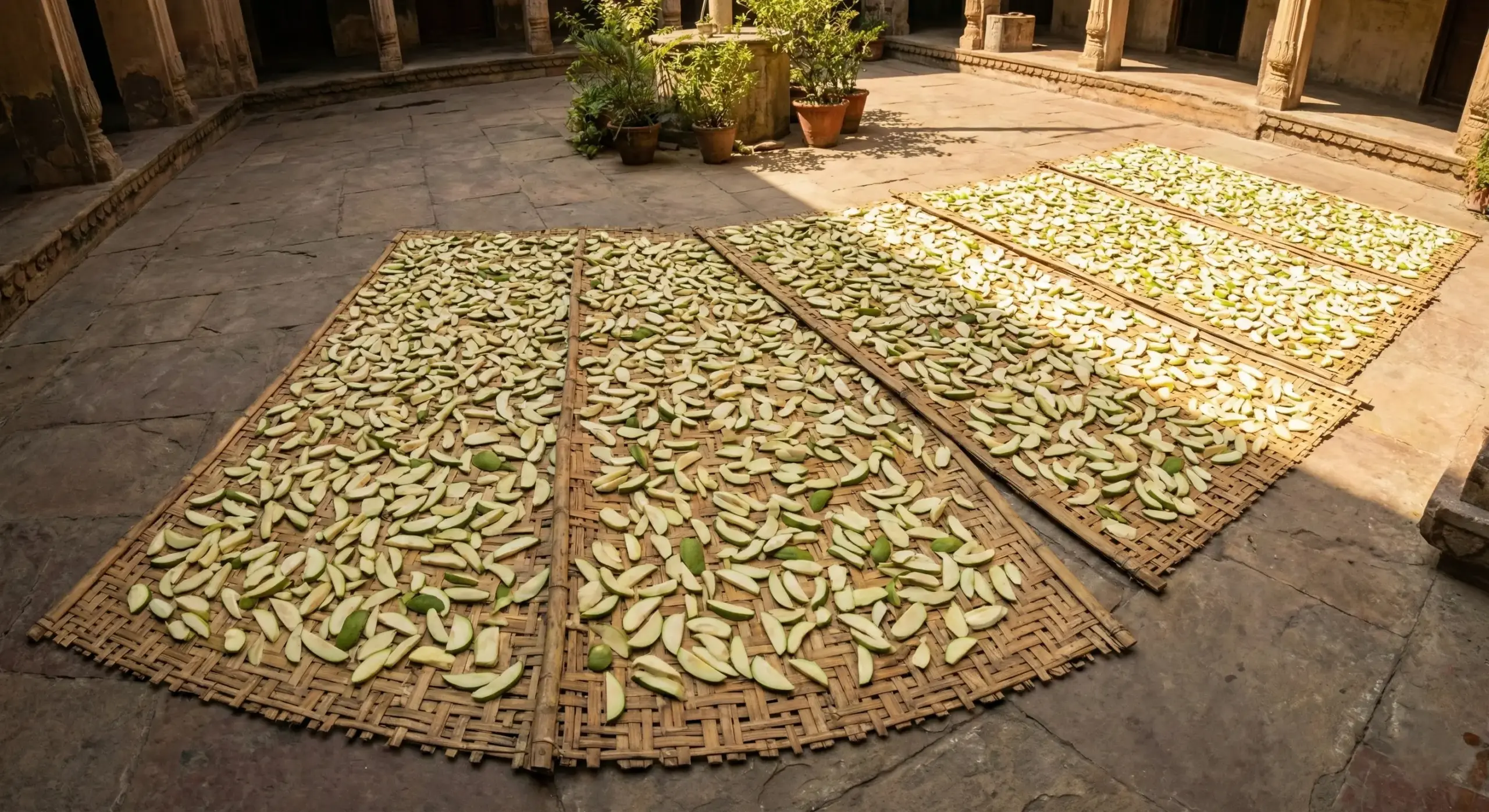
- It seals. A layer of oil over salted, sun-dried pieces keeps air and moisture away from the surface, which is how pickles stay good for months.
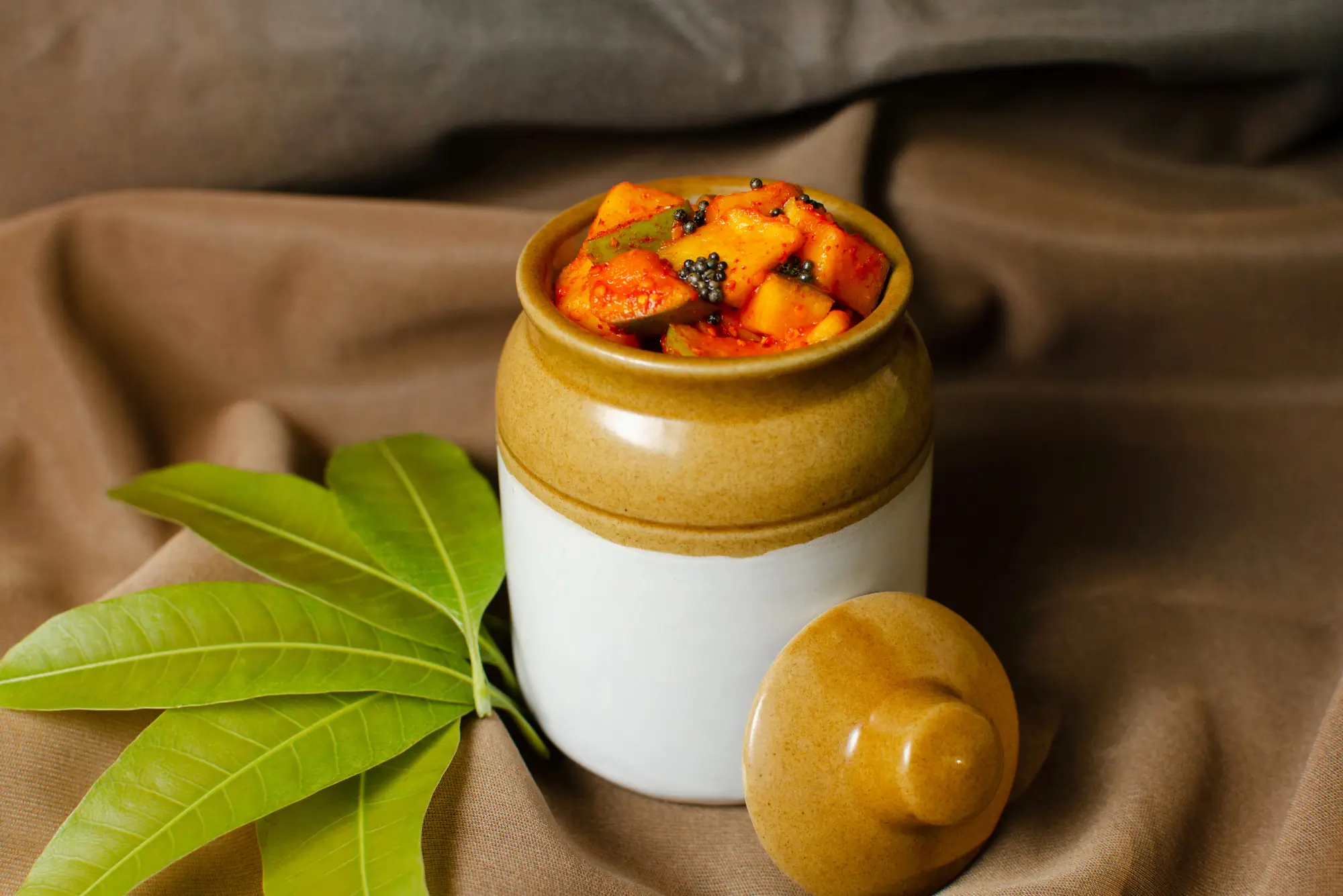
- It flavours. The sharpness suits mango, lemon, chilli and amla, and it carries the fat-soluble flavours of fennel, fenugreek, nigella and mustard seed.
- It is traditionally heated first. For pickles the oil is commonly heated to smoking, cooled fully and then poured over the dried produce.
Retail and food-writing sources often say the allyl isothiocyanate in mustard oil is antimicrobial and helps pickles stay shelf-stable, and that is one reason mustard oil is chosen. We treat the claim as a general explanation and not a guarantee, since a good pickle depends just as much on dry produce, enough salt and clean tools. The mechanisms are covered in how oil preserves food in Indian kitchens, and the drying step in why sun-drying is essential for Indian pickles. For why a Banaras pickle carries so much oil, see why Banaras pickles are oil-rich.
The rules: what the FSSAI requires
Because mustard oil is expensive and strongly coloured, it has long been a target for adulteration. Two regulatory points are useful for any reader who buys it.
Blending is banned. The FSSAI banned the blending of mustard oil with other oils, effective 8 June 2021, according to a reply in the Rajya Sabha. Before that, companies were allowed to mix up to 20 percent of another edible oil. FoodNavigator reports the industry welcomed the ban as a way to prevent adulteration, since mustard oil’s pungency and colour make it easy to disguise other oils.
Labelling has a test. The FSSAI standard says the oil may be labelled “Kachi Ghani” or “Cold Pressed” only if natural allyl isothiocyanate is not less than 0.20 percent by weight, and the test for argemone oil must be negative.
A debate on erucic acid. Mustard oil from most Indian varieties is high in erucic acid, which Down To Earth notes, and one summary puts the Indian range at 40 to 54 percent against under 5 percent in some international standards. That has prompted regulatory argument, including over low-erucic varieties and blending, and India’s regulators have taken a different line from some other countries. We do not weigh in on it and we make no health claim. Anyone with a health concern should speak to a doctor or dietitian.
How to choose and keep mustard oil
- Look for the label and the smell. Genuine kachi ghani oil has a strong, sharp smell. A faint smell with a pale colour suggests a refined or diluted oil.
- Buy from a source you trust. A 2019 Consumer Voice study of 13 kachi ghani brands tested for adulteration among other parameters, which shows the issue is real.
- Store it cool and dark. Keep it in a tightly closed container away from the stove.
- Heat it before use. Use the smoking step above for sabzi and pickle oil.
Common mistakes
- Adding cold oil to a pickle without cooling it properly after heating. Hot oil poured over damp produce traps moisture.
- Skipping the heating step in a sabzi. The dish tastes raw and sharp.
- Heating oil to a heavy smoke. The goal is a light haze, not a burnt smell.
- Mixing up ghee-style and mustard-style dishes. Each fat suits different food.
Frequently asked questions
What is kachi ghani mustard oil?
Oil pressed from mustard seed at low temperature. Under the FSSAI standard, it may carry the label only if its natural allyl isothiocyanate is at least 0.20 percent by weight.
Why is mustard oil heated before cooking?
Cooks heat it until it just smokes to take away the raw sharpness. This is a traditional practice.
Is blended mustard oil allowed in India?
No. The FSSAI prohibited the blending of mustard oil with other oils from 8 June 2021.
Why do pickles use mustard oil?
It seals the surface, carries the flavour of the spices and has a sharp taste that suits sour and salty produce.
What is the difference between ghee and mustard oil in Banaras cooking?
Ghee is for rich, festive, temple and finishing uses. Mustard oil is for everyday vegetables, winter cooking and pickles.
Does mustard oil contain erucic acid?
Most Indian mustard oil does, at levels higher than some international limits. It is a matter of ongoing regulatory discussion, and we offer no health advice.
Where is the oil pressed?
In the traditional kolhu or kacchi ghani, a wooden press, and now often in steel presses that follow the cold-press method.
Sources used for this post: FSSAI, standard for fats and oils (Kachi Ghani label rule); Rajya Sabha reply on blending (11 February 2025); FoodNavigator and DNA India (blending ban); Consumer Voice (kachi ghani brand study); Down To Earth and Vision IAS summary of The Hindu (erucic acid debate); Wikipedia, allyl isothiocyanate; 30 Stades (Varanasi street food fats); Organic Mandya (smoke point figure, quoted as given). Traditional and Ayurvedic ideas are described as such.