Blog
Traditional Spice Blends Used in Banaras: Hing, Amchoor, Kala Namak and the Silbatta

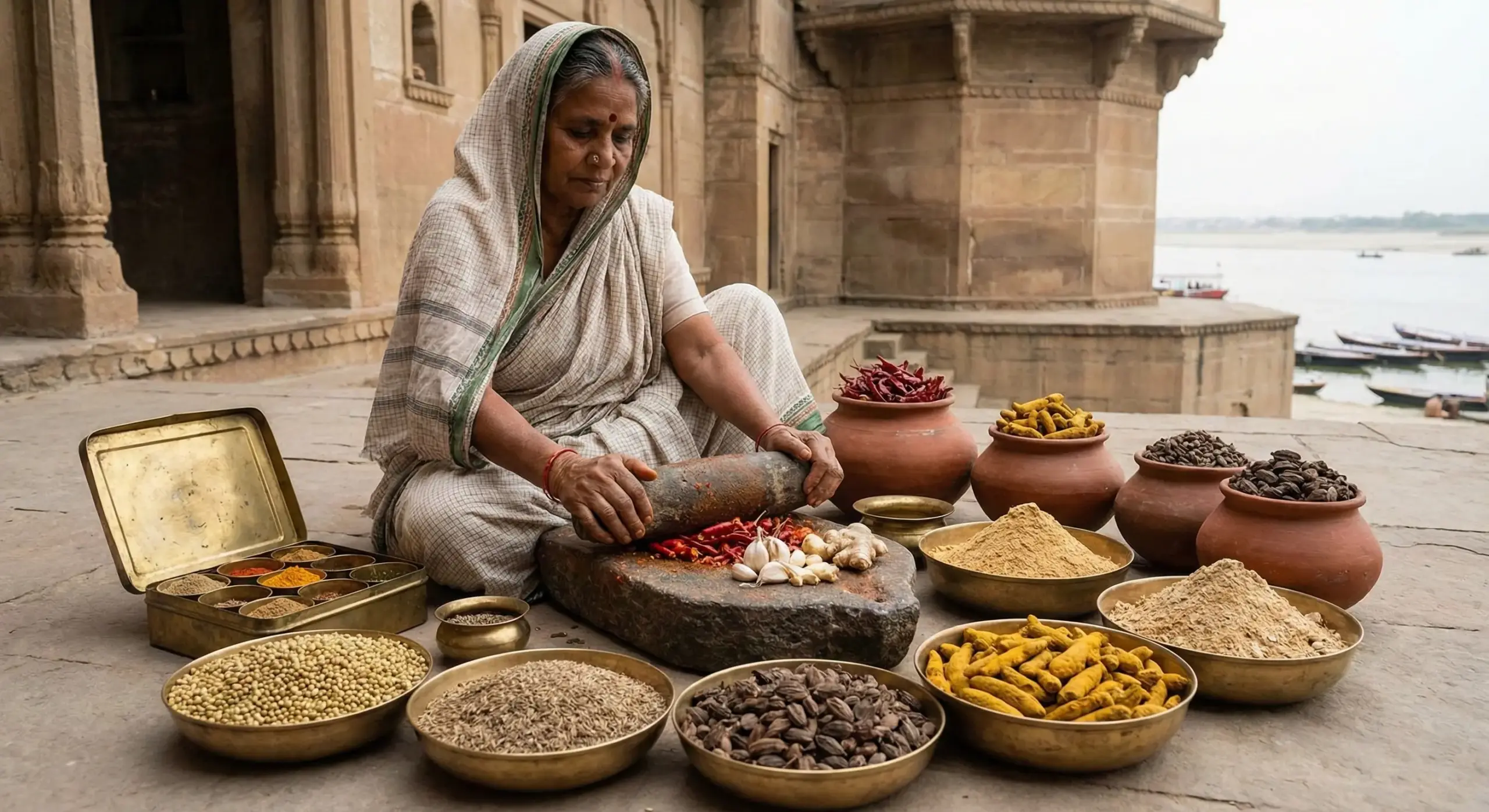
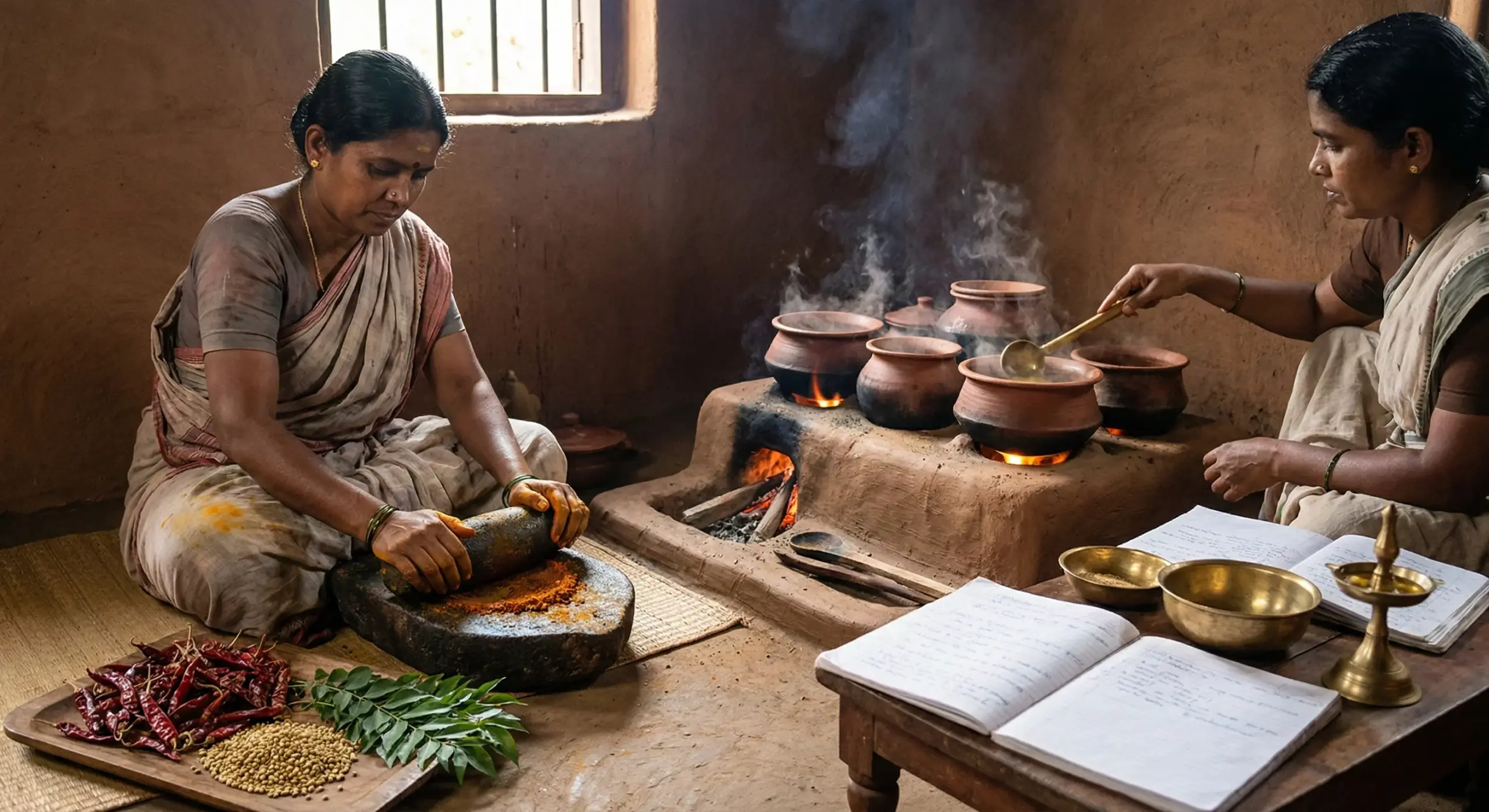
Salt that arrived in rock or block form had to be ground before it could be used, and the tool for that job was the silbatta, the same grinding stone that crushed the household’s spices. Al Jazeera’s feature on pisyu loon, the flavoured salt of Uttarakhand, records exactly this: because salt was sold in rocks or blocks, it needed to be ground with a silbatta, and spices also required grinding. A Banaras kitchen runs on the same logic. Spices and salt go through a stone before they go into a pan or a jar, and a handful of ingredients does most of the flavouring.
This guide covers those ingredients: hing, amchoor, kala namak, the chaat masala that combines them, and the silbatta that turns whole spices into the texture a Banarasi cook expects. It also explains why the same spices show up in a pickle jar.
The short answer
In short
The spices most associated with Banaras kitchens are hing (asafoetida), which stands in for onion and garlic in satvik cooking, amchoor (dried raw mango powder) for sourness, kala namak (black salt) for a sulphurous savoury edge, and cumin, coriander, fennel and mustard for the base. They are usually ground on a silbatta or bought as fresh powders in small quantities. The same ingredients appear in chaat masala and in Banarasi pickle masalas.
Hing: the spice that replaces garlic and onion
Hing is the dried resin of a plant that does not grow wild in most of India. The Oxford Symposium paper on asafoetida in Indian food traces its history from Greek and Roman kitchens, where it arrived as a replacement for the once-revered herb silphium, into the kitchens of India. Some scholars credit Alexander the Great with first bringing it to India, a claim reported in a feature on the spice’s history, though the origin story remains debated.
What matters for a Banaras kitchen is the role hing plays. The Tribune India notes that Jain and Marwari communities have traditionally avoided garlic, which they regard as tamasik, and that hing is indispensable in everyday cooking across the south. The same logic applies in satvik households (see Banarasi satvik cooking and garlic in Banaras cuisine) and temple kitchens in Varanasi, where onion and garlic are avoided for religious reasons. A pinch of hing in hot oil or ghee supplies the savoury, allium-like depth that the missing ingredients would have provided.
Hing is almost never used raw. A guide to asafoetida powder notes that in traditional Indian cooking it is usually sauteed first to temper its intense flavour, and a spice-trade guide describes the standard tadka method: heat oil or ghee, add a pinch of hing, and let it sizzle for ten to fifteen seconds before the other ingredients go in. That brief fry changes the smell from sharp and sulphurous to rounded and savoury.
The hing sold in most shops is compounded. A buying guide explains that the dark resin lump is blended with rice flour or gum arabic in the common commercial form, and SBS describes brown asafoetida (ground with a starch such as rice powder) and yellow asafoetida (mixed with flour and other spices such as turmeric). Compounded hing is weaker than pure resin, so quantities in a recipe depend on which kind is in the jar.
Amchoor: the sour backbone
Amchoor (also spelled amchur) is raw green mango, sliced, dried in the sun and ground to a pale tan powder. It gives sourness without liquid, which makes it useful in dry vegetable dishes, stuffed parathas and spice blends where tamarind or lemon would add moisture. In the Al Jazeera piece on pisyu loon, amchur blended with salts is sprinkled on oranges, guava and papaya in winter, a small illustration of how the powder travels from pickle jar to fruit plate.
The connection to pickling is direct. Both amchoor and raw-mango achar start with the same fruit, harvested while still green and sour, and both rely on salt and sun to keep it. If you want to see how the sun does the preserving work, why sun-drying is essential for Indian pickles walks through it step by step.
Kala namak and the chaat masala triangle
Kala namak, or black salt, is a kiln-fired rock salt with a pungent, sulphurous aroma. It is the ingredient that makes chaat taste like chaat. A standard chaat masala recipe published by Chili Pepper Madness lists dried mango powder, black salt and a small amount of asafoetida, with chilli and other spices added to taste. The Tribune India makes the same point from the street-food side: chaat loses its seductive power without hing, pani puri turns insipid, and chutneys and sprinklers miss their zing.
Banaras is known for its chaat, and the three-way balance in a chaat masala (sour from amchoor, savoury-sulphurous from kala namak, pungent from hing) is a useful way to understand the local palate. Which proportions a specific Banaras chaat shop uses is not something we can state; those recipes are guarded, and a vendor will say only that the blend is made in house.
The base spices: cumin, coriander, fennel and mustard
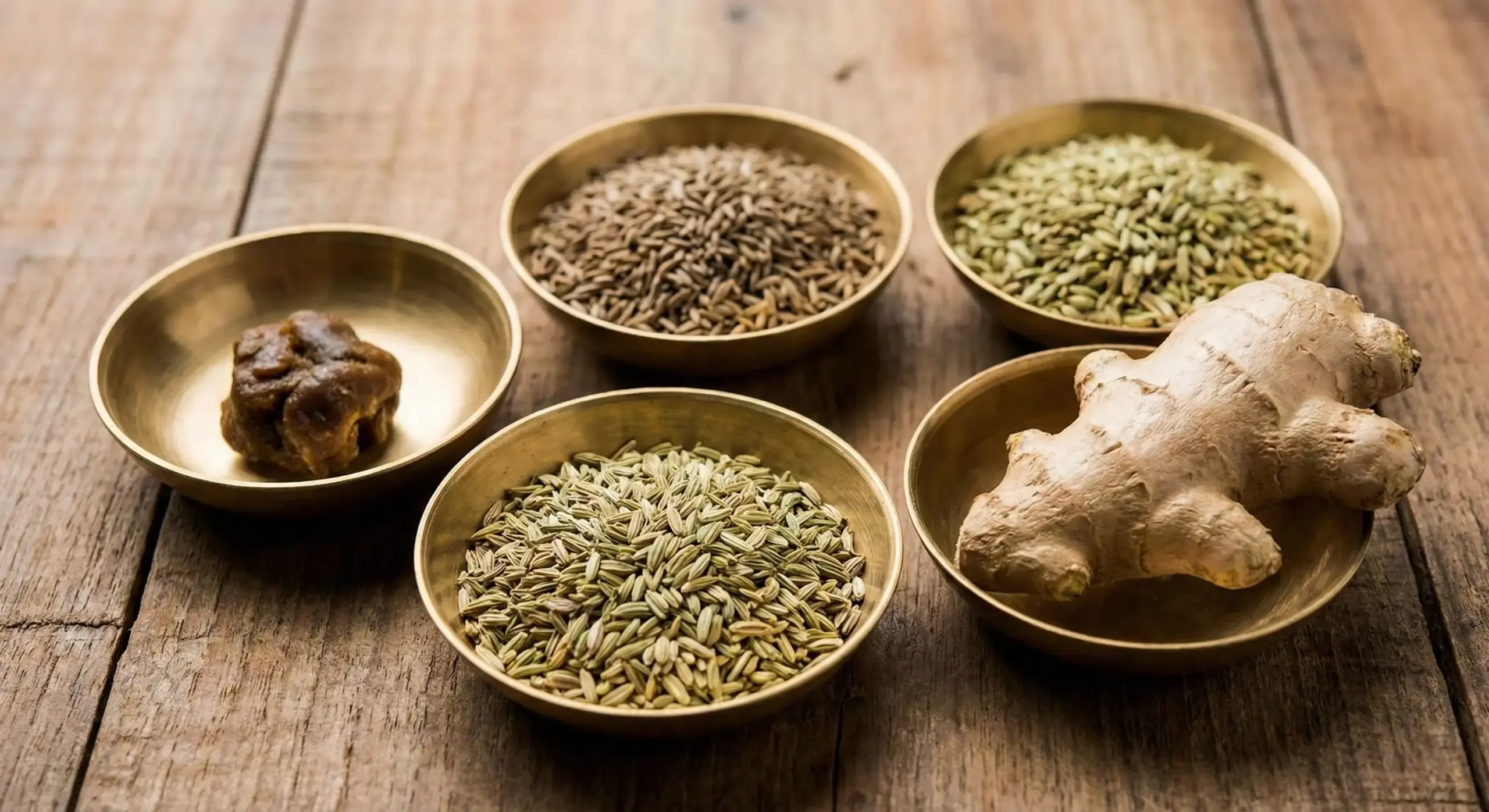
Beneath the three distinctive ingredients sits an everyday base. Cumin, coriander, fennel and mustard seed are common across north Indian cooking, and a Banaras kitchen uses them in the ways the rest of the Gangetic plain does: cumin and mustard seeds in a hot tadka, coriander as a ground base, fennel for sweetness in dry masalas and for the aroma in pickle masala. Fennel and mustard matter in particular for achar, where mustard seed and fennel are among the spices that coat the fruit before it goes into oil. We cover the oil side of that story in why Banarasi pickles are made with mustard oil.
The silbatta: why the stone matters
The silbatta is a flat grinding slab (sil) with a stone roller (batta). Al Jazeera’s pisyu loon feature records that the stone served for both salt and spices in the hill kitchens it describes, and the same tool is found across the north. Cooks who still use one describe the result as a coarse, slightly uneven grind that releases oils as the spice is crushed rather than cut, which is the main reason many people prefer it for chutneys and fresh masalas. The flavour difference is a matter of cook opinion; we are not aware of a controlled comparison.
Mechanised grinding changed the pattern. Packaged powders made it possible to buy a blend instead of grinding one, and the old routine of grinding once or twice a week gave way in many homes to a monthly shop. The tools around it are covered in the Banarasi kitchen tools guide. Whether a particular Banaras household still uses the stone daily is a personal question, and the answer varies by family and by generation.
How the same spices end up in a pickle jar
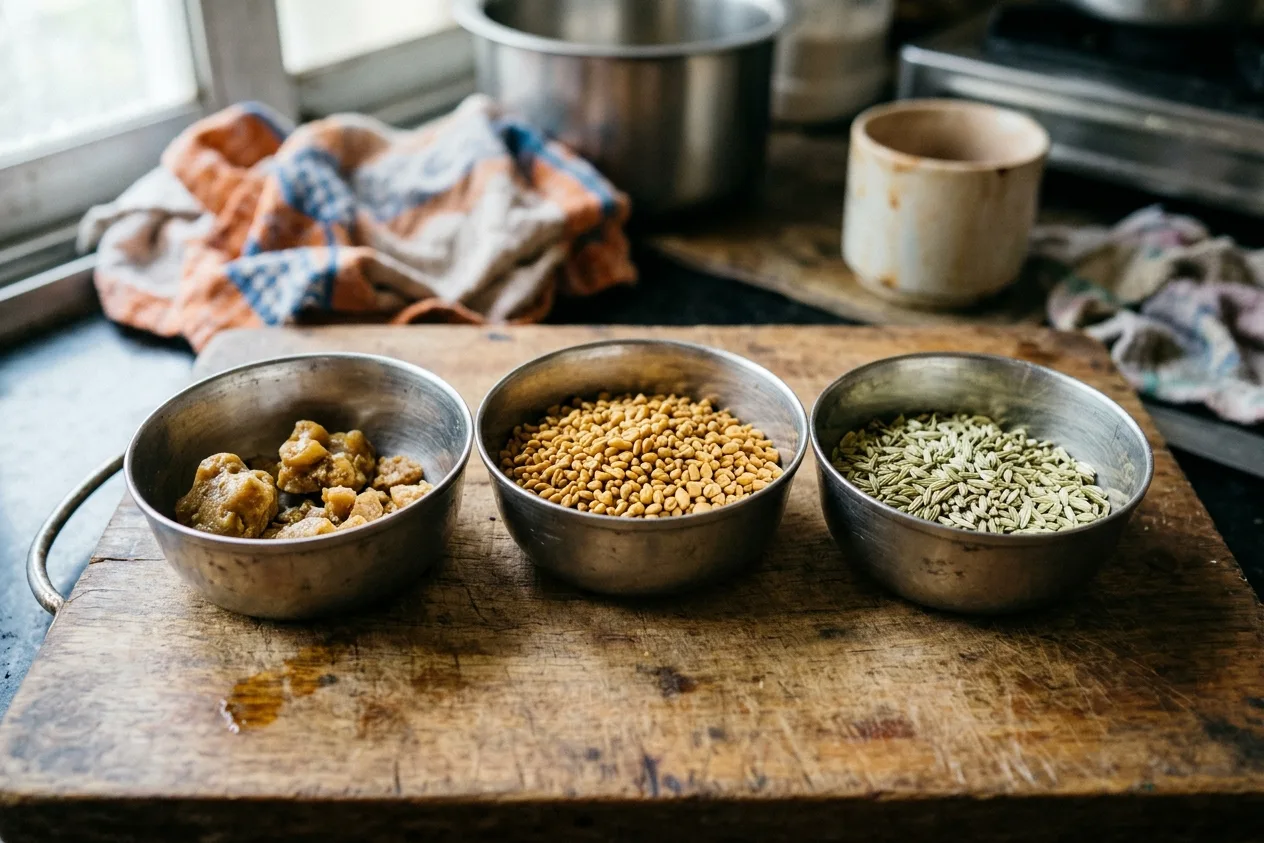
Pickle masala is a dry spice mix, and its ingredients overlap heavily with the kitchen spices above: mustard seed, fennel, fenugreek, turmeric, red chilli, salt, and often hing. The traditional belief is that spices have a protective effect on the jar, and some laboratory work supports a mild antimicrobial effect from certain spices, but no spice replaces salt, dryness and a clean jar. The reasoning behind that is laid out in why traditional pickles last longer. Our guide to hing, methi and saunf in Banarasi achar goes through the jar-side details. Our own position is simple: spices give a pickle its flavour and identity, and the preserving work is done by the other layers.
Buying and storing spices for a Banaras-style kitchen
A few practical points follow from the sources above.
- Whole spices keep their aroma longer than powders, so buying whole cumin, coriander and fennel and grinding small amounts gives the freshest result.
- Hing powder is usually stored in an airtight container because of its pungent smell, as NPR notes.
- Check whether the hing is pure or compounded, since the strength differs.
- Amchoor and kala namak are shelf-stable but absorb moisture, so keep them dry and tightly closed.
What this means for your cooking
If you want the taste of a Banaras kitchen without onion or garlic, start with a hot tadka of hing and cumin in oil or ghee, add amchoor near the end for sourness, and finish with kala namak where a savoury lift is wanted. These are the same notes that structure chaat, and they are the same notes you taste, in a different register, in a good raw-mango pickle.
Frequently asked questions
What spices are commonly used in Banaras cooking?
Hing, amchoor, kala namak, cumin, coriander, fennel and mustard seed are the ingredients most often named for the region’s home and street cooking. Exact blends vary by family.
Why is hing used instead of garlic and onion?
In satvik and many temple-adjacent households, garlic and onion are avoided for religious reasons, and hing supplies a similar savoury depth. The Tribune India notes the same pattern among Jain and Marwari communities.
Is hing always added at the start of cooking?
Usually, yes. Traditional practice is to fry a pinch in hot oil or ghee for ten to fifteen seconds before adding other ingredients, which tempers its raw smell.
What is the difference between amchoor and tamarind?
Amchoor is dried raw mango powder, dry and pale, and adds sourness without liquid. Tamarind is a fruit pulp that adds both sourness and moisture.
What is kala namak and how is it different from table salt?
Kala namak is a kiln-fired rock salt with a sulphurous aroma, used for flavour in chaat, raitas and drinks. Table salt has no such aroma. They are not interchangeable in taste.
Do Banaras kitchens still use the silbatta?
Many do, especially for chutneys and fresh masalas, while others rely on packaged powders. Practice varies by household.
Are these spices used in Banarasi pickles?
Yes. Mustard seed, fennel, fenugreek, turmeric, red chilli and often hing appear in pickle masala, alongside salt and oil.
Sources used for this post:
– Oxford Symposium, Vaidyanathan, paper on asafoetida in Indian food
– “Devil’s dung or dinner delight? The story behind hing” (AOL)
– The Tribune India, “There is no zing without hing”
– The Tribune India, “Hing, favourite spice we never grew”
– Sous Chef, “What is Asafoetida Powder?”
– Alibaba spice guide, “Asafoetida (Hing)”
– SBS Food, “What is asafoetida?”
– Al Jazeera, “Pisyu loon, the legendary flavoured ground salt from India”
– Chili Pepper Madness, Chaat Masala Recipe
– NPR, “Meet hing, the secret weapon spice of Indian cuisine”