Blog
Dev Deepawali in Kashi: A Night of Lakhs of Lamps and What Is Eaten After

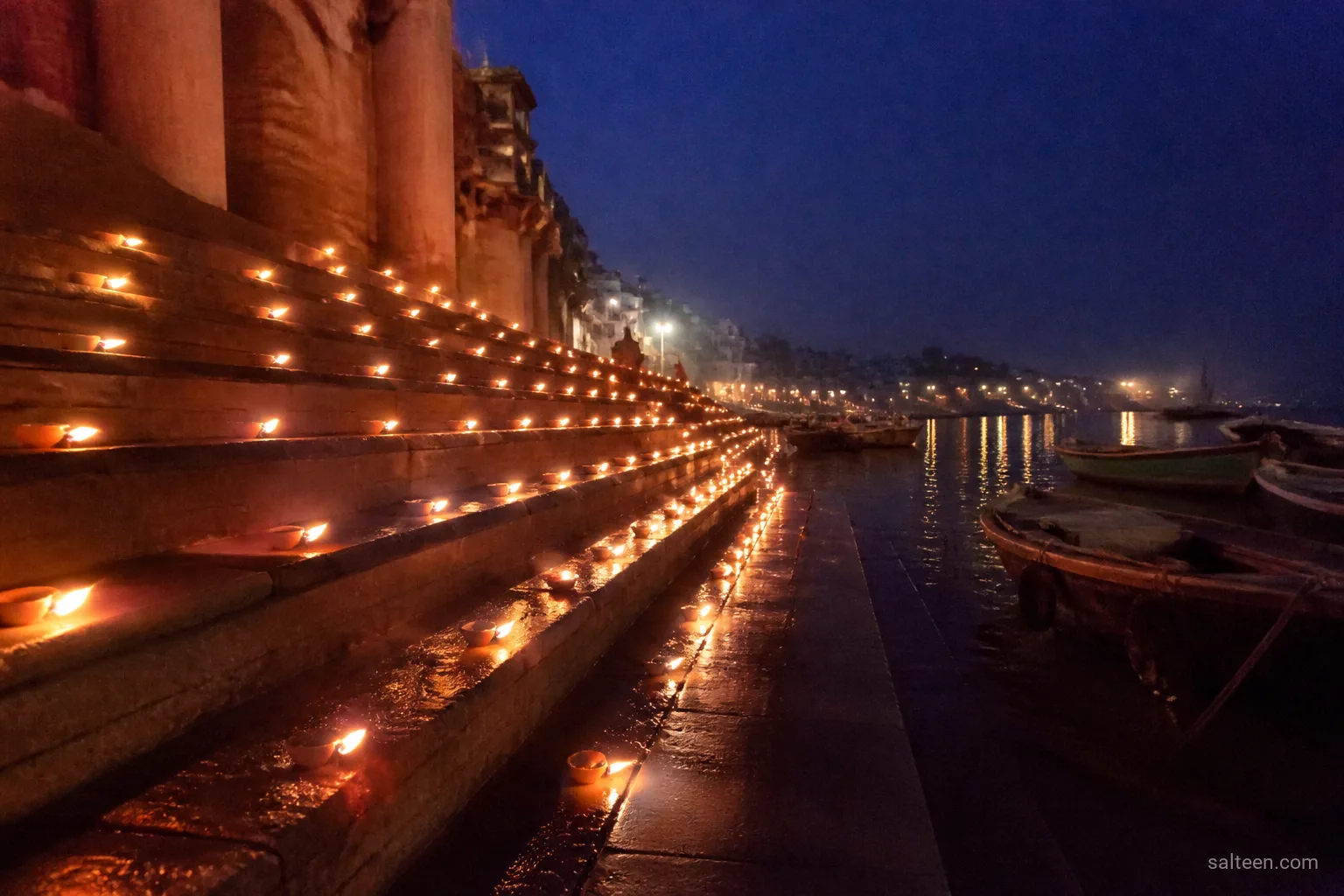
On 5 November 2025, the Uttar Pradesh government had set a target of 10 lakh diyas for the ghats of Kashi. By the evening the count was above 15 lakh, and some estimates went as high as 25 lakh. That is a very big number for a river bank that is only a few kilometres long, and it explains why people travel from every state to stand on a boat or a stone step for a few hours on one night of the year. The night is Dev Deepawali, the Diwali of the gods, and in 2026 it falls on Tuesday, 24 November.
This post is about what the festival is, how the evening works on the ghats, and what people eat once the lamps are lit. The food part is the one that gets left out of most guides, so we have given it proper space.
In short
Dev Deepawali is on Tuesday, 24 November 2026, the full moon of the month of Kartik. Lamps are lit on every ghat of Kashi at dusk, the main Ganga Aarti is held at Dashashwamedh Ghat, and the night ends with simple hot food.
What Dev Deepawali is and why it comes after Diwali
Dev Deepawali is celebrated on Kartik Purnima, the full moon day of the Hindu month of Kartik. In 2026 Diwali itself was on 8 November, so the festival of the gods comes sixteen days later, when the lamps in most homes have already been put away and the cold weather has started to settle in.
The story behind the date is the victory of Shiva over the demon Tripurasura. According to the tradition, Tripurasura had taken control of three flying cities and troubled the gods, the sages and ordinary people. Shiva destroyed him on Kartik Purnima, and that is why the day is also called Tripurari Purnima, after the name Tripurari given to Shiva as the destroyer of the three cities. The gods were so happy that they came down to Kashi to bathe in the Ganga and light lamps.
The lamps on the ghats today are offered in that same spirit, as a welcome for the visiting gods.
Kashi is the place for this festival because the city is believed to belong to Shiva himself. The ghats are the steps that run down to the river, and on this night every one of them is used. That is why you will see Dev Deepawali written about as a Varanasi festival more than a national one. Other cities light lamps on Kartik Purnima as well, but the full ghat front of Kashi is what the name has come to mean.
The date and timings for 2026
Dev Deepawali 2026 at a glance
- Date: Tuesday, 24 November 2026 (Kartik Purnima)
- Purnima tithi: 11:42 PM on 23 November to 8:23 PM on 24 November
- Lamp lighting window in Varanasi: roughly 5:08 PM to 7:47 PM (check a local panchang, timings can shift)
- Main ceremony: Maha Aarti at Dashashwamedh Ghat
Dev Deepawali 2026 is on Tuesday, 24 November. The Purnima tithi begins late on the night of 23 November at 11:42 PM and ends on 24 November at 8:23 PM, so the full moon is present at sunset on the 24th, and that is why the evening rituals are held that day. Panchang sources list the lamp lighting window in Varanasi as roughly 5:08 PM to 7:47 PM. Sunset in Varanasi at this time of year is early, so the lighting starts by dusk and the ghats are fully lit well before 7 PM. Please check a local panchang or the Varanasi tourism notices closer to the day, because timings can shift by a few minutes between sources.
The day starts much earlier than the evening. Before sunrise on Kartik Purnima, devotees go down to the ghats for the Kartik Snan, a dip in the Ganga that is believed to carry the merit of bathing through the whole month. The Ganga Mahotsav, a cultural festival of music and dance, runs in the days before and finishes around this same time.
How the evening looks on the ghats
By late afternoon the stone steps are covered with rows of clay diyas set out by families, temple committees and volunteers. Wicks are put in and oil or ghee is poured one by one. When the light goes, the lamps are lit, and within a short time the whole crescent of the river bank, from Assi in the south to Adi Keshav in the north, turns orange. Boats that carry visitors move slowly along the water, and the flames show up again in the river itself.
The main ceremony is the Maha Aarti at Dashashwamedh Ghat. In 2025 it was performed by 21 priests and 42 young women called Dev Kanyas, in front of 51,000 lamps and around 21 quintals of flowers. Reports said more than one lakh people attended. Eight major ghats held a synchronised Ganga Aarti that evening, including Dashashwamedh, Namo Ghat, Assi, Panchganga and Tulsi Ghat. Along with this, there were chants, conch shells and bells, and a fireworks show set to music.
Lamps are not only on the ghats. Temples, ponds, wells and the narrow lanes of the old city also carry diyas, and the sand on the far bank of the river is lit as well. In 2025, around one lakh of the diyas were made of cow dung instead of clay, as a move to reduce waste. Clay diyas are small and cheap, and the work of making and selling them keeps many potter families in and around Varanasi busy through the whole Kartik month.
Why the number of diyas keeps changing
If you read news from different years, you will see numbers like 10 lakh, 15 lakh, 17 lakh, 21 lakh and 25 lakh. These are not mistakes so much as different ways of counting. Some figures count only the lamps arranged by the tourism department on the ghats. Some add the ones put by local committees, temples and families, and some count the whole city and the sands across the river. In 2025 the tourism department arranged around 15 lakh lamps and committees and residents added about another 10 lakh, which is how the total reached the 25 lakh figure in some reports. When you plan a visit, it helps to think of the number as a rough size of the event and not as a record that is measured the same way every year.
What is eaten around Dev Deepawali
Now to the food. A festival of this size feeds a lot of people, and the food around it has two sides. One is what families eat at home on the day, and the other is what is available in the lanes and on the roads near the ghats.
At home, Kartik is a month in which many families keep to satvik food, without onion and garlic, and the day of Purnima is usually kept simple. The first meal after the snan and the evening puja is often a light one, with kheer, puri and a dry potato sabzi, or khichdi with ghee, depending on the family. A spoonful of achar on the side is common in eastern Uttar Pradesh whatever the meal is. We would not say there is one fixed Dev Deepawali menu, because it changes from house to house, and we do not want to claim a rule that does not exist.
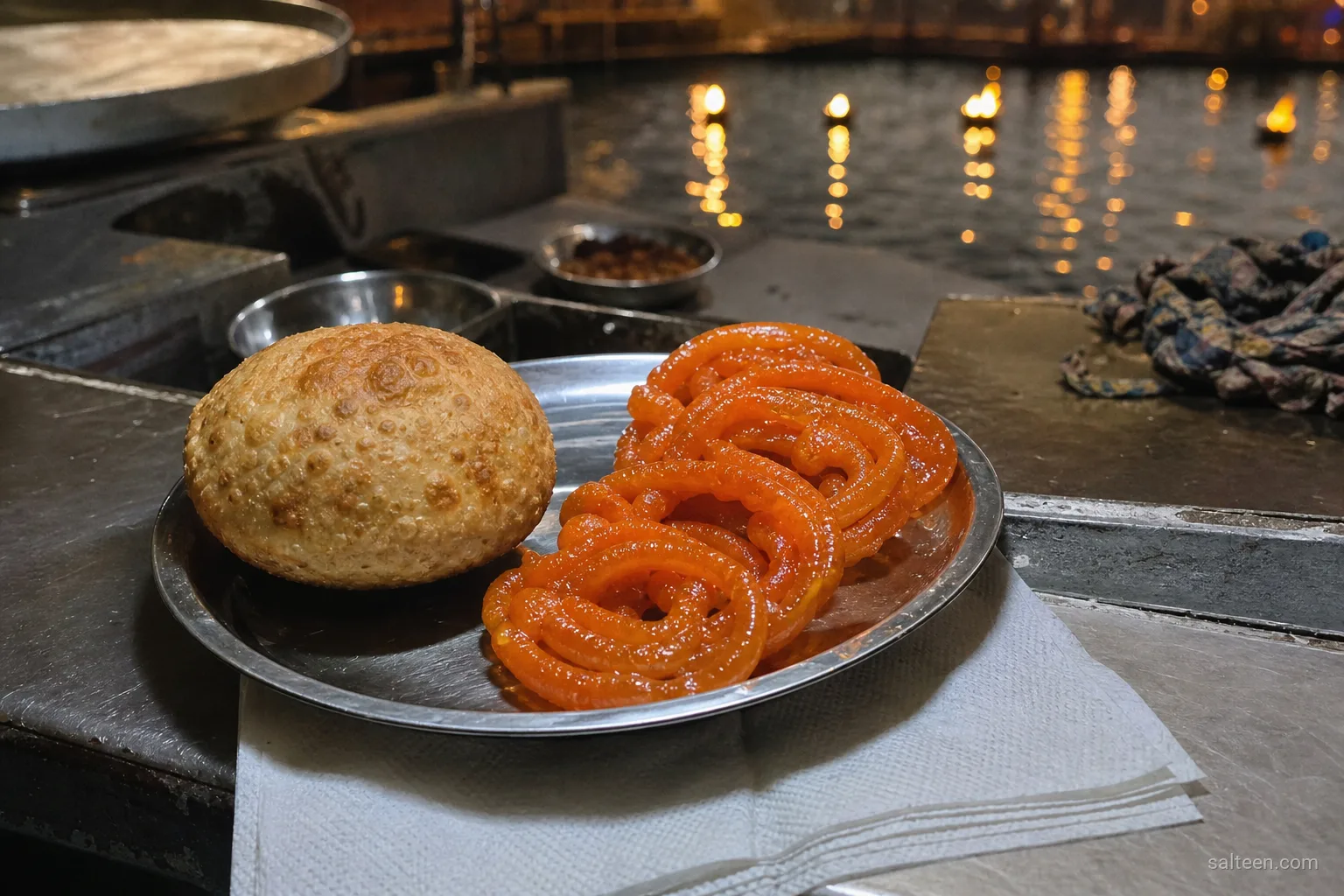
Near the ghats, the food is what Banaras eats on any winter evening, only in much larger quantity. Hot kachori with potato sabzi, jalebi from a wide kadhai, tamatar chaat and kulhad chai are usually sold from stalls in the lanes that lead down to the water. These are the same dishes we describe in our posts on a Banarasi breakfast of kachori, sabzi and jalebi and on why Banaras still drinks from clay cups. The clay cup belongs on this night as much as the clay diya, and both are used once and then thrown away. As the nights get colder, the winter sweet of the city, malaiyo, also starts to appear in the early mornings after the festival, though it is gone from the stalls by noon.
The season itself also puts things in the market that you will see in the baskets of vendors in November: singhara (water chestnut), sweet potato, fresh amla and the first of the winter vegetables. The sugarcane crushing season has started too, so new gud is easier to find. None of this is tied to the festival by any rule, but it is what the food of the festival season looks like in the markets of eastern Uttar Pradesh. For a wider view of what to eat across the year, our seasonal pantry calendar for North India lists the foods month by month.
Tips if you are visiting Kashi on 24 November
The city is very crowded on this day, and the crowds start early in the afternoon. Reach the ghat area well before sunset, and plan how you will leave, because some roads are closed to vehicles and the walk from the main road to the ghats can be long. Boats are in high demand and the rates go up, so it is better to agree the price and the time before you step in, and to book a place if you can. Wear light cotton or woollens depending on the hour, and carry water and a power bank. Keep your valuables close, and follow the instructions of police and volunteers on the steps, as the stairs near the river are narrow and wet. If you want to light a diya yourself, buy it from a vendor near the ghat and put it in the river or on the steps the way the volunteers show you. Do not throw plastic into the water. Please check the local administration’s notices a day before, since route and boat rules can change.
Frequently asked questions
What is Dev Deepawali?
Dev Deepawali, also called Dev Diwali or Tripurari Purnima, is the festival of lights held on Kartik Purnima. It marks the victory of Shiva over the demon Tripurasura, and in Varanasi the ghats of the Ganga are lit with lakhs of diyas in welcome of the gods.
When is Dev Deepawali in 2026?
Dev Deepawali 2026 is on Tuesday, 24 November. The Purnima tithi runs from 11:42 PM on 23 November to 8:23 PM on 24 November, and the lamps are lit at sunset on the 24th.
Why do people light diyas on the ghats?
The lamps are an offering to the Ganga and a welcome to the gods who, according to the tradition, come down to Kashi on this night. They also close the Kartik month, which is known for lamp offerings.
What do people eat after Dev Deepawali?
There is no single fixed menu. Many families eat a simple satvik meal such as kheer, puri and sabzi or khichdi with ghee, and stalls near the ghats sell kachori sabzi, jalebi, chaat and tea in clay cups.
How many diyas are lit in Varanasi on Dev Deepawali?
Counts differ by source. In 2025 the government target was 10 lakh, reports put the actual number above 15 lakh, and some estimates went up to 25 lakh when the whole city was included.
Salteen makes Banarasi pickles and namkeen in small batches in Varanasi. We write about the festivals of Kashi because the food of this city is tied to them.