Blog
Why Achar Makers Heat Mustard Oil First

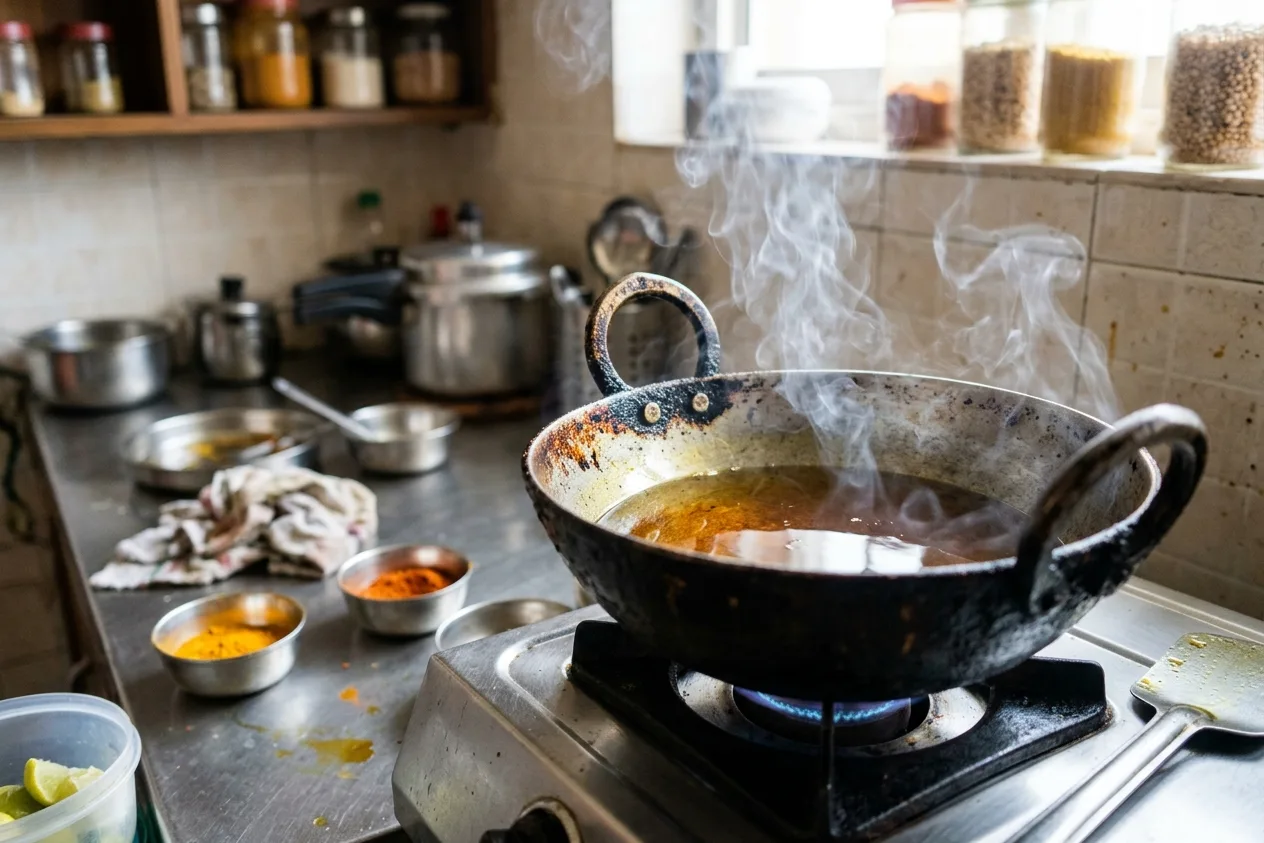
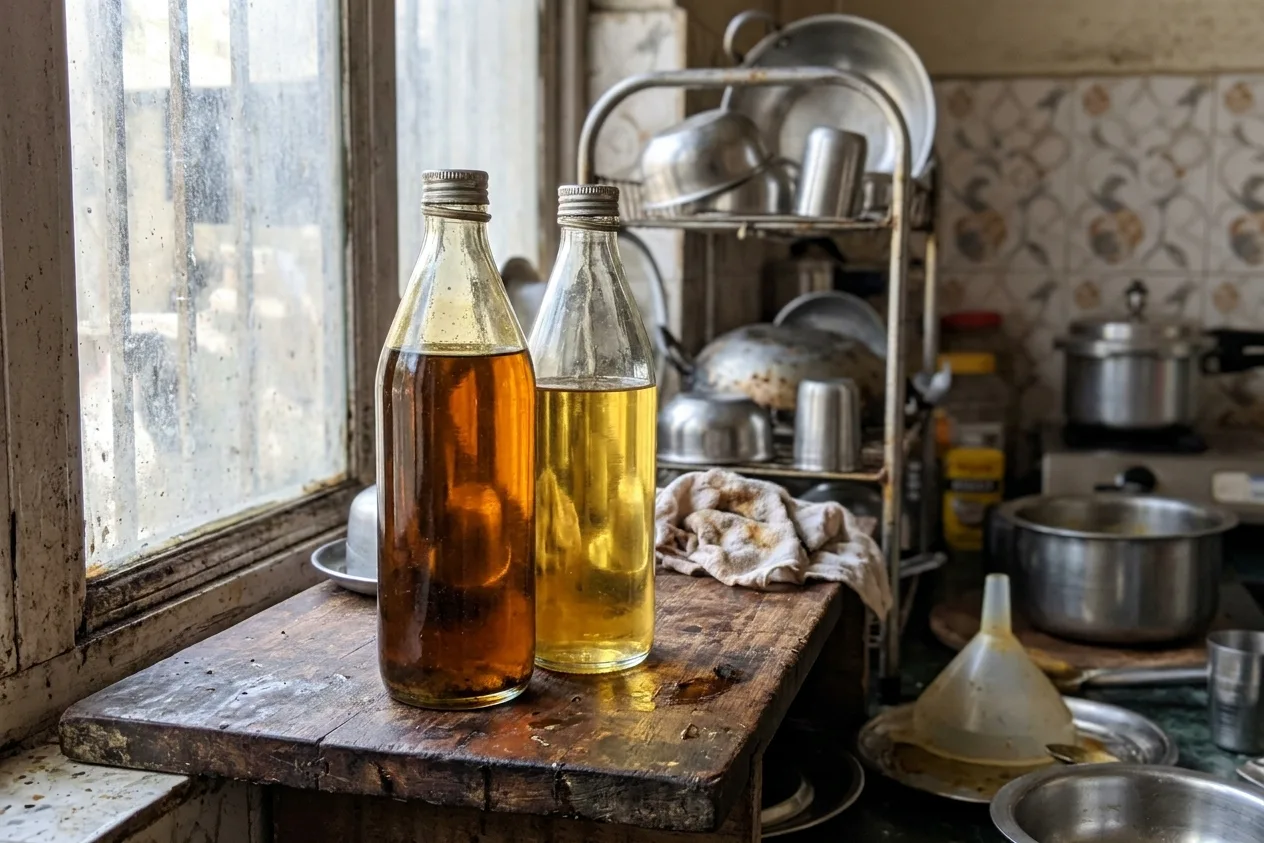
About 250 degrees Celsius is the figure that recipe writers and oil guides quote for the smoke point of mustard oil, which is about 480 degrees Fahrenheit. At that point the first wisps of smoke rise from the pan, and in a pickle kitchen the cook takes the pan off the flame. The oil is then left to cool before it goes anywhere near the vegetables.
This post explains what heating does to mustard oil, why recipes call for it before pickling, how it is done, and what the safety limits are.
Why mustard oil is heated first
In short
Raw mustard oil is sharply pungent because of a compound called allyl isothiocyanate. Heating it until it first smokes and then cooling it mellows the taste, which is why most pickle and cooking recipes call for it.
The pungency that makes mustard oil unmistakable comes from allyl isothiocyanate, the same compound found in horseradish and wasabi. It is the reason raw mustard oil can sting the nose and make the eyes water. Cooksinfo, a food reference, says that the oil becomes mellower and milder when heated. A glossary entry from Tarla Dalal says the oil’s pungency is often tempered by heating it to its smoking point before other ingredients are added, which helps to mellow its sharpness while retaining its characteristic taste.
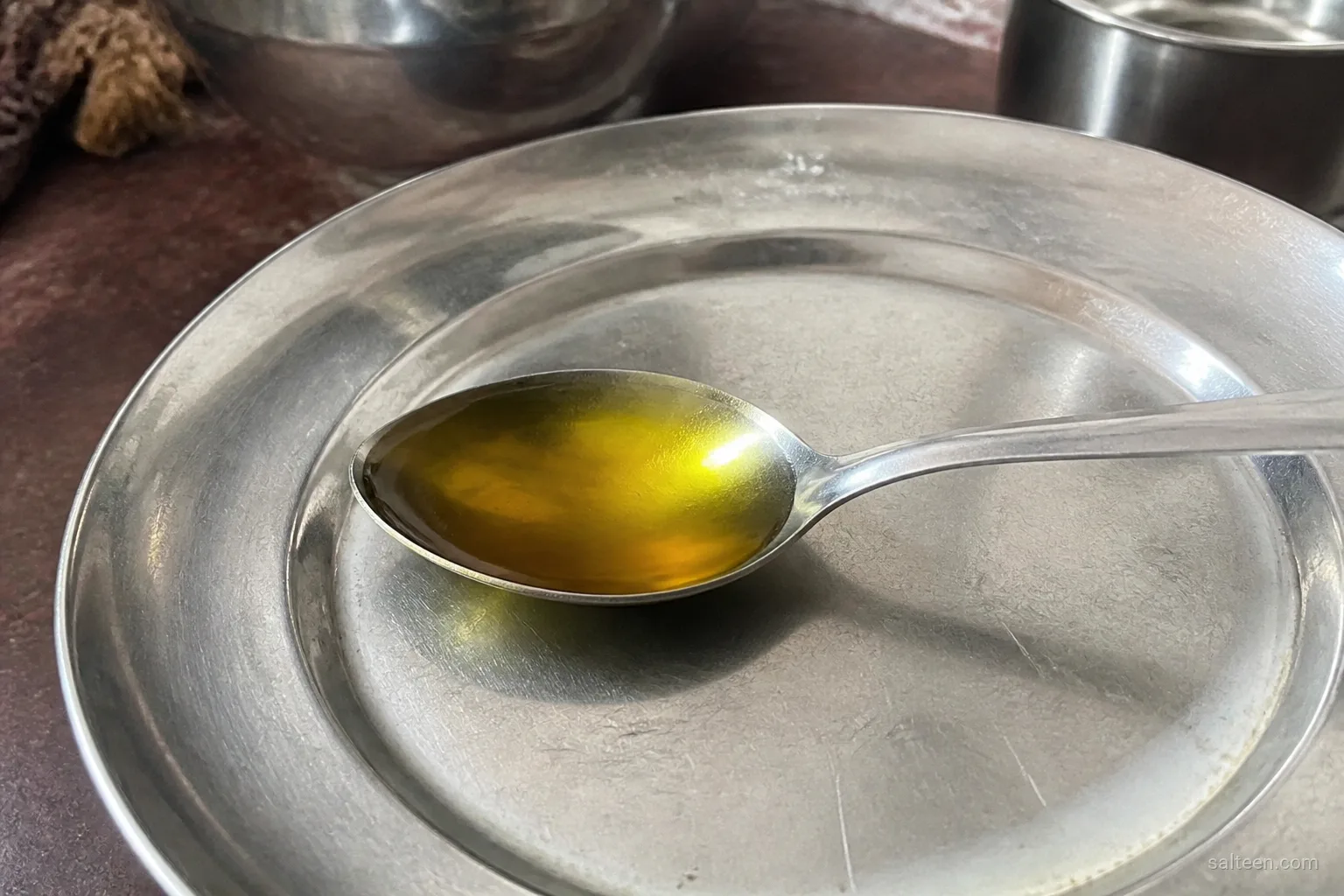
A well known ingredient reference, the Clove Garden, describes the procedure in one line. The oil is heated in a pan with no other ingredients until the first wisps of smoke appear, at about 250 degrees Celsius. It is then taken off the heat immediately and allowed to cool to a more reasonable temperature, around 180 degrees Celsius, before other ingredients go in. The source says that this procedure removes the acrid taste of the raw oil and makes it quite pleasant.
What happens to the pungency
Heat changes the character of the oil. A food reference that discusses the safety of mustard oil says that the allyl isothiocyanate in it is destroyed during cooking. Anyone who has stood near a pan of mustard oil on the flame knows the sharp vapour that rises from it, and that is the pungency leaving the oil.
None of this removes the character of the oil. A pickle made with mustard oil still tastes of mustard. What changes is the rawness at the front of the taste. How much mellowing a cook wants is a matter of taste.
How the oil is heated in a pickle recipe
Pickle recipes that we read are consistent about the order.
The usual order
- Heat the oil in a heavy pan over medium or medium high heat until it starts to smoke or fume.
- Take it off the flame once it fumes. One recipe says to remove it as soon as it starts to fume and set it aside.
- Let it cool. Recipes say to cool it slightly, then more fully, before it touches the vegetables or spices.
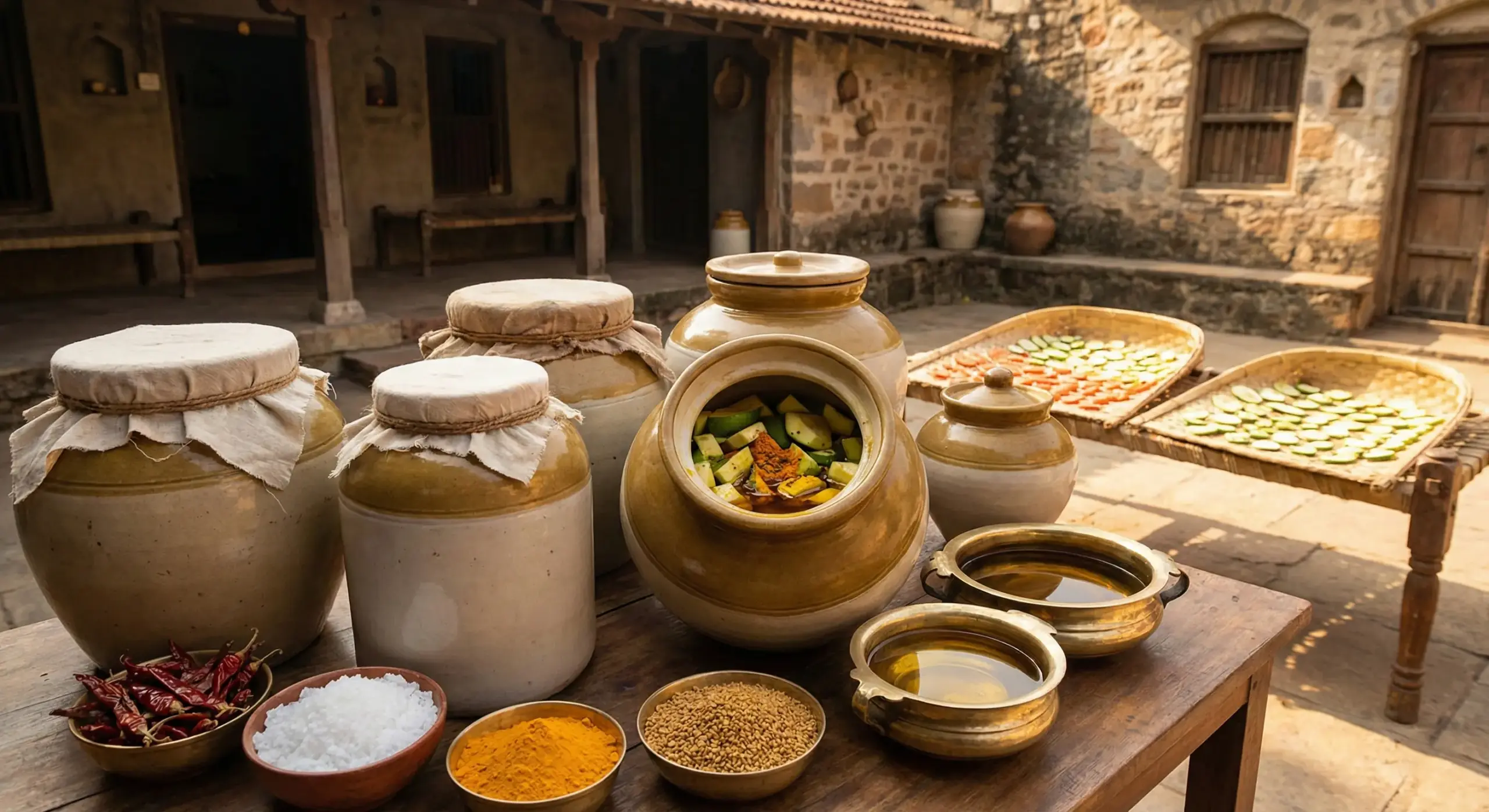
- Mix and pack. The cooled oil is combined with the pieces and the spices. One recipe says the pickle should cool completely, covered with a cloth, before it is moved into a jar.
Whisk Affair’s recipe for a winter mixed pickle heats 300 ml of mustard oil over medium high heat until it starts to smoke. Ruchi’s Kitchen says to cook the oil until it starts to fume, remove it from the heat, and let it cool slightly. The detail differs, but the pattern repeats: smoke, flame off, cool.
Why the oil must cool
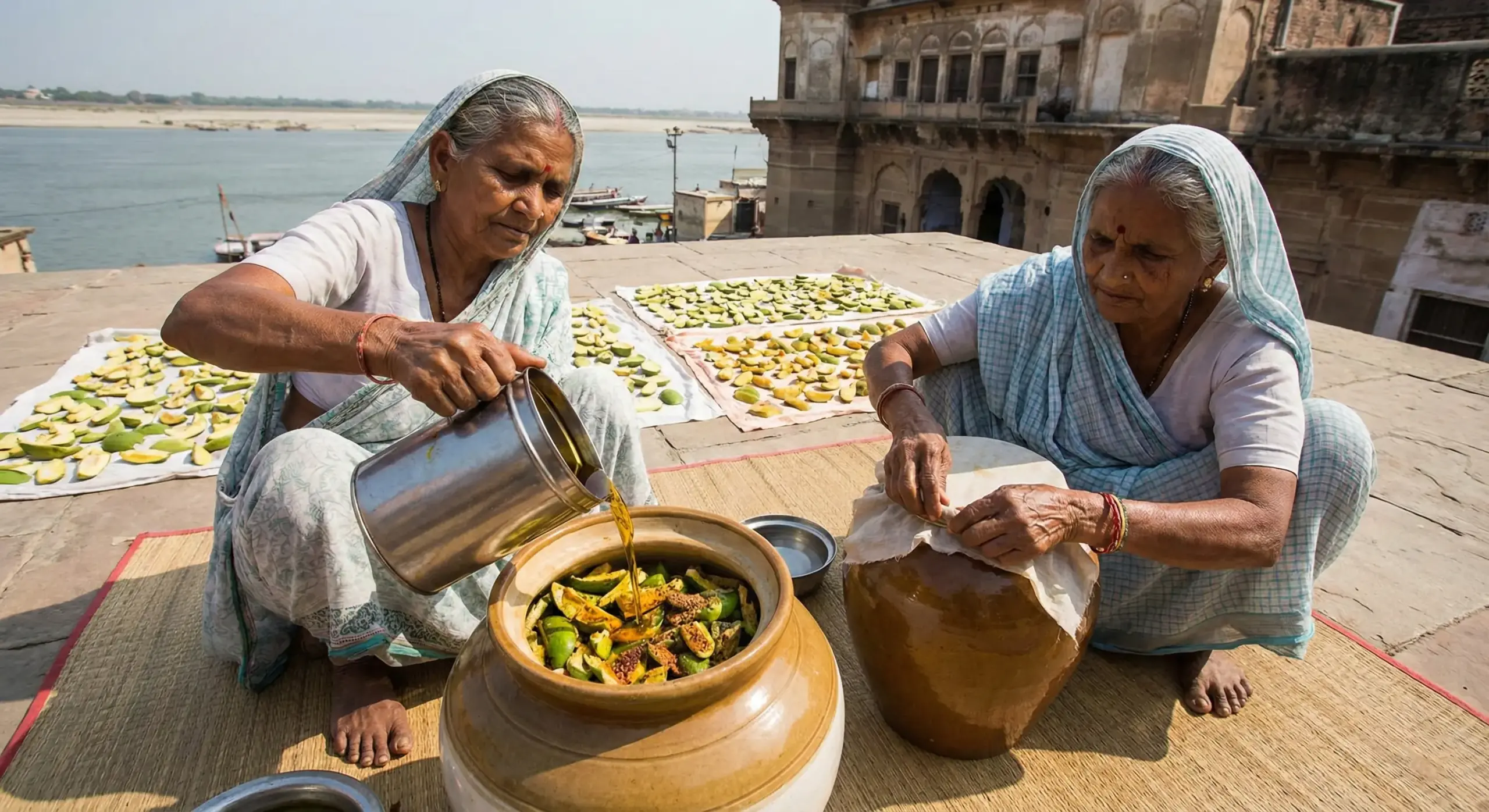
Hot oil is not a seasoning. If it were poured over fresh pieces it would start to cook them, soften them and make them release water. Water in the jar is what a pickle maker is trying to avoid, because it dilutes the salt and invites spoilage. We have explained this in the post on the white layer on achar. There is also a plain safety point. Oil at or near its smoke point is dangerously hot, and splashing it onto skin or into a wet jar can cause serious burns or a spatter.
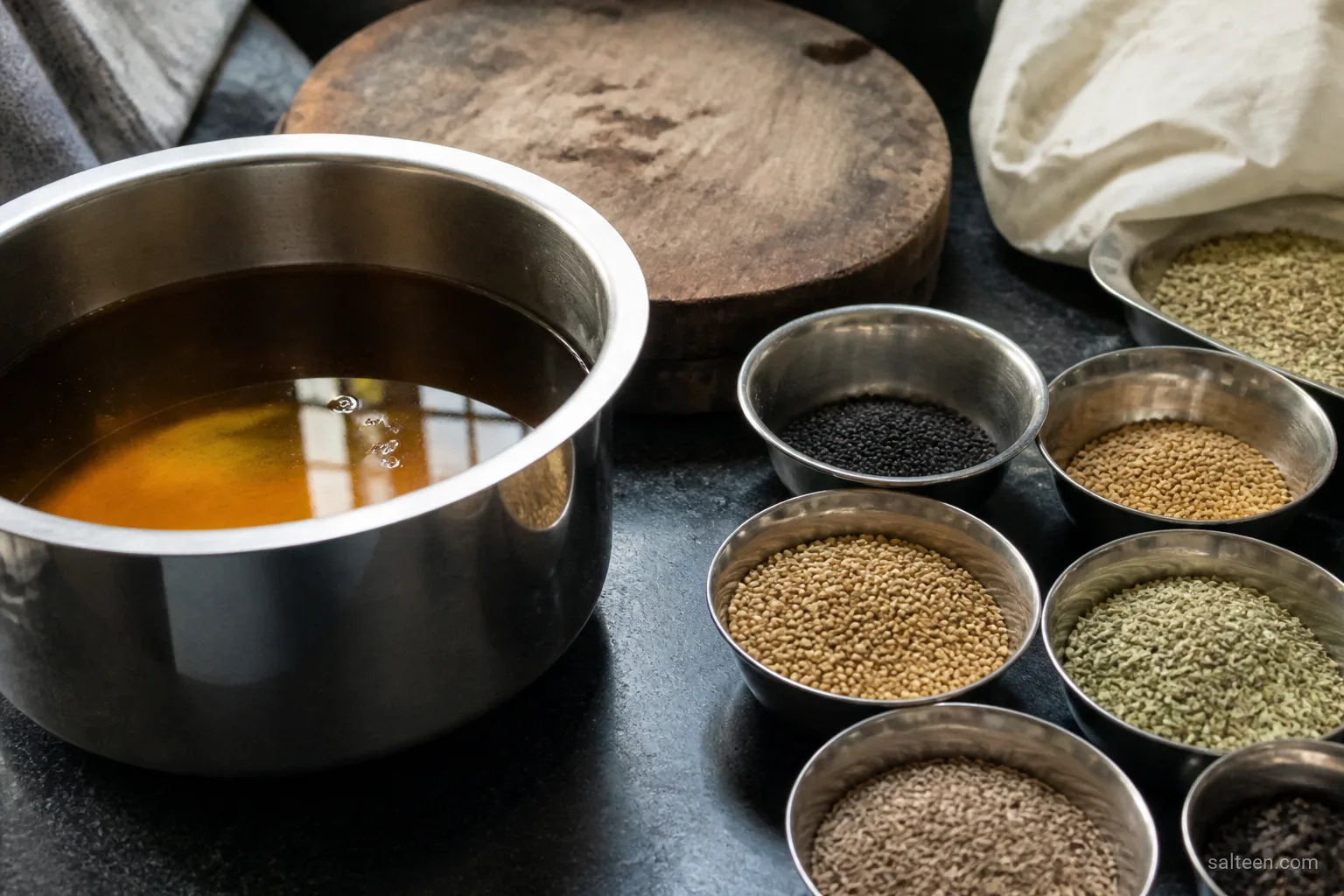
Recipes say to let it cool slightly, and some say the whole pickle should cool completely before it goes into a jar. The exact temperature depends on the recipe, and we do not give one number.
Safety when you heat mustard oil at home
- Use a heavy, dry pan, ideally with high sides. Any water in the pan will spatter.
- Keep the flame steady and do not walk away. Mustard oil can pass from fuming to smoking quickly.
- Take it off the flame as soon as the first smoke appears.
- Keep children and pets out of the kitchen while the oil is hot.
- Do not pour hot oil into glass. A hot oil jar can crack. Let the oil cool first.
- Ventilate the kitchen. The vapour is sharp and irritates the eyes and nose.
The smoke point is not the same for every bottle. Figures quoted for mustard oil vary a little between sources, and the real figure depends on the quality of the oil and how it was pressed.
A note on the label
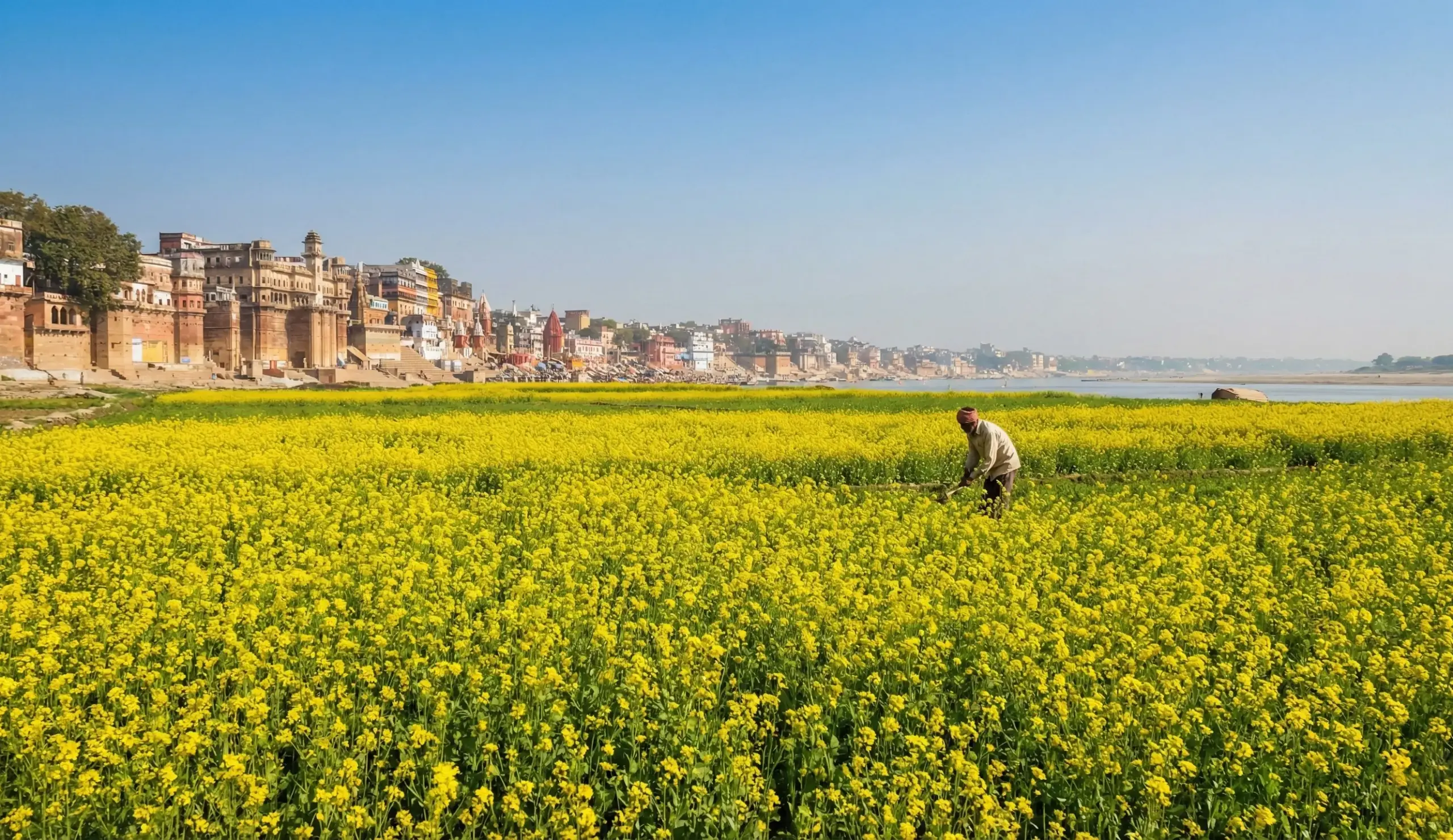
In the United States, mustard oil has to be labelled as being for external use only, and a food reference links that rule to the oil’s levels of allyl isothiocyanate. That is a rule about American labelling. In India, mustard oil is the traditional cooking oil of Punjab, Haryana, Uttar Pradesh, Bihar and Bengal, and it has been used in pickles for centuries. Our kacchi ghani mustard oil guide explains the oil itself.
How we handle the oil
- Do we heat the oil before it goes into the pickle? Until it smokes, or less?
- In what pan, on what flame, and for how long?
- How long does it cool before it is used?
- Does the oil change between pickles (mango, lemon, chilli, amla)?
- One memory of the smell of the unit when the oil is on the flame.
If a line cannot be confirmed, this section stays out of the post.
Where to go next
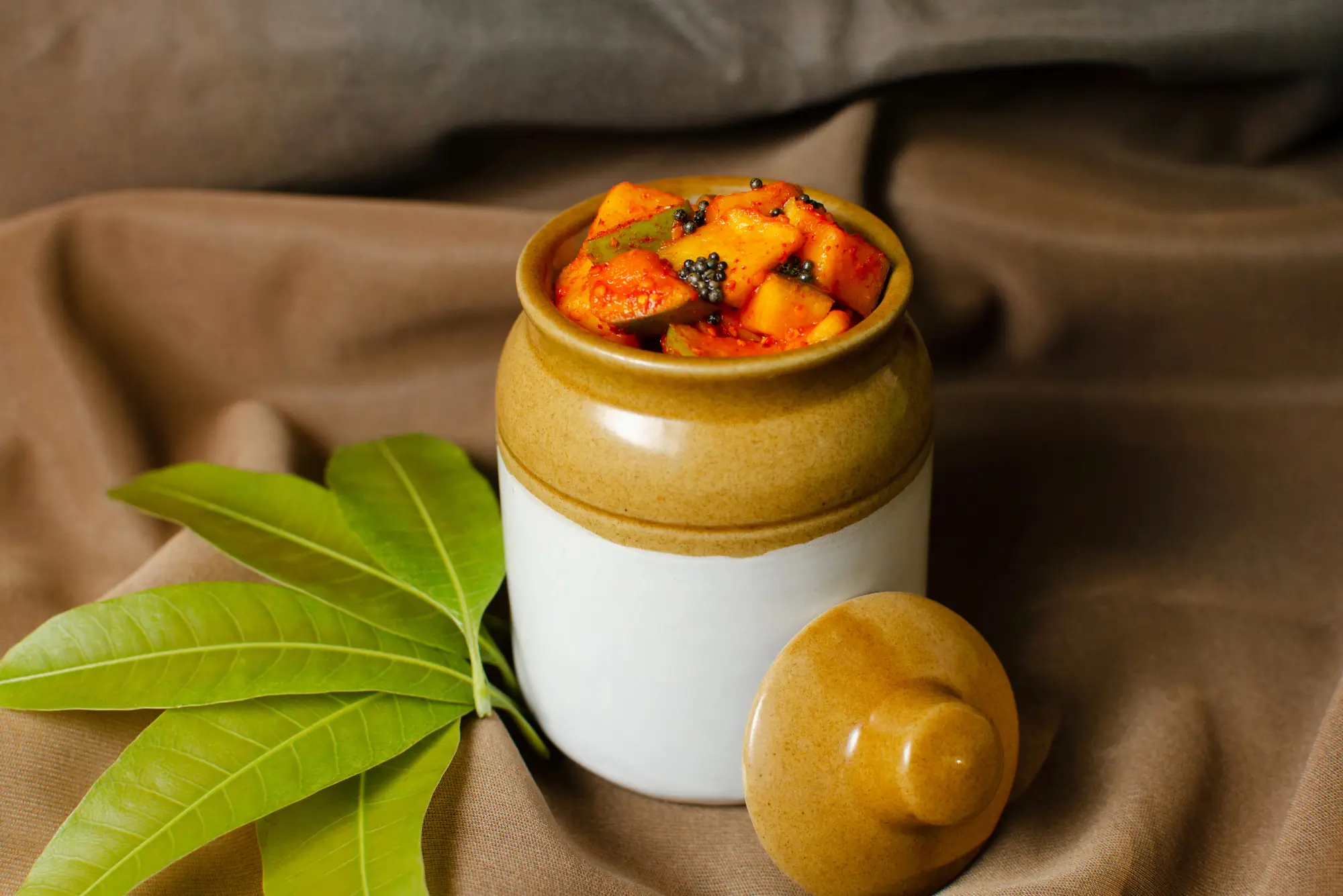
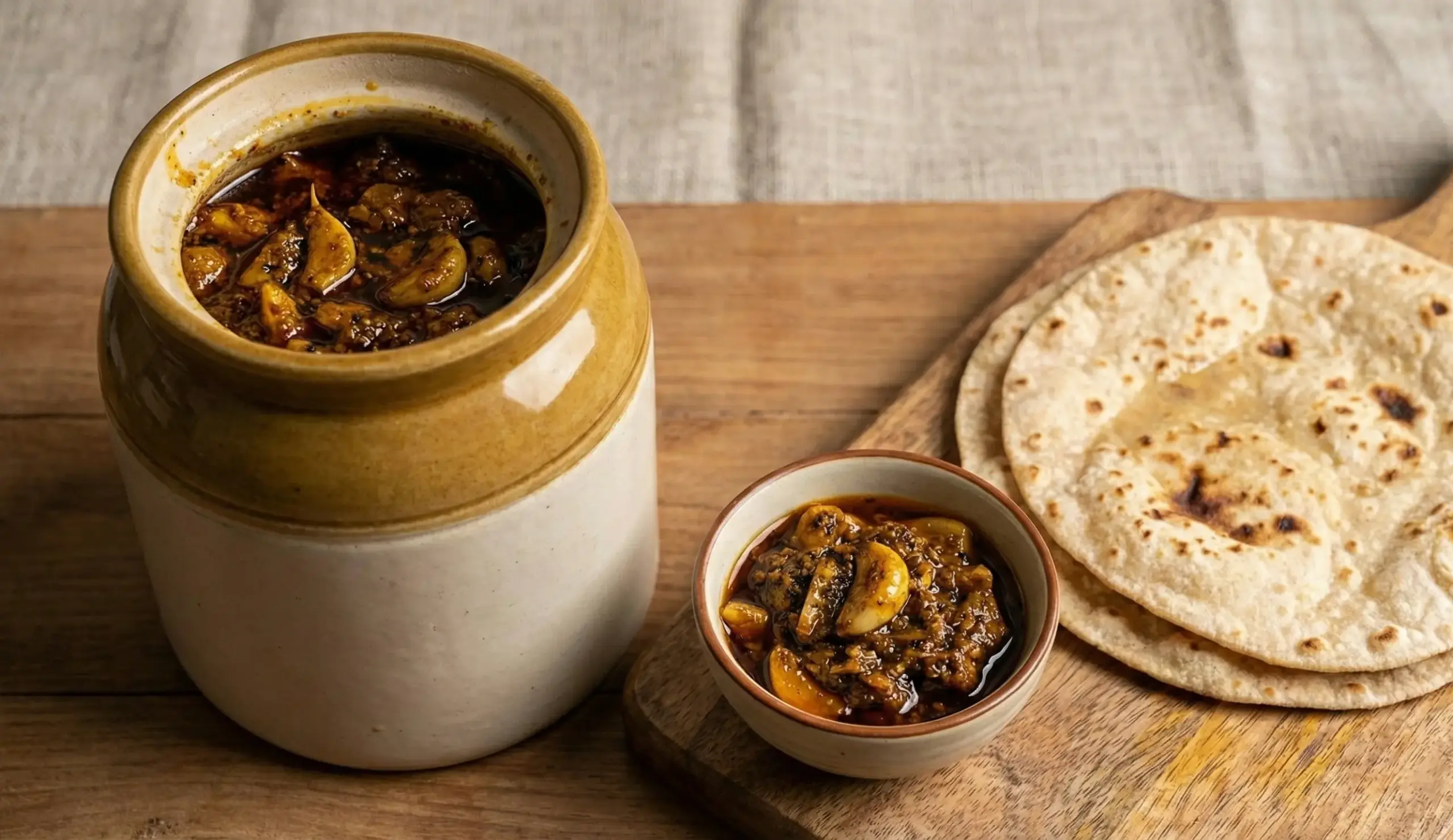
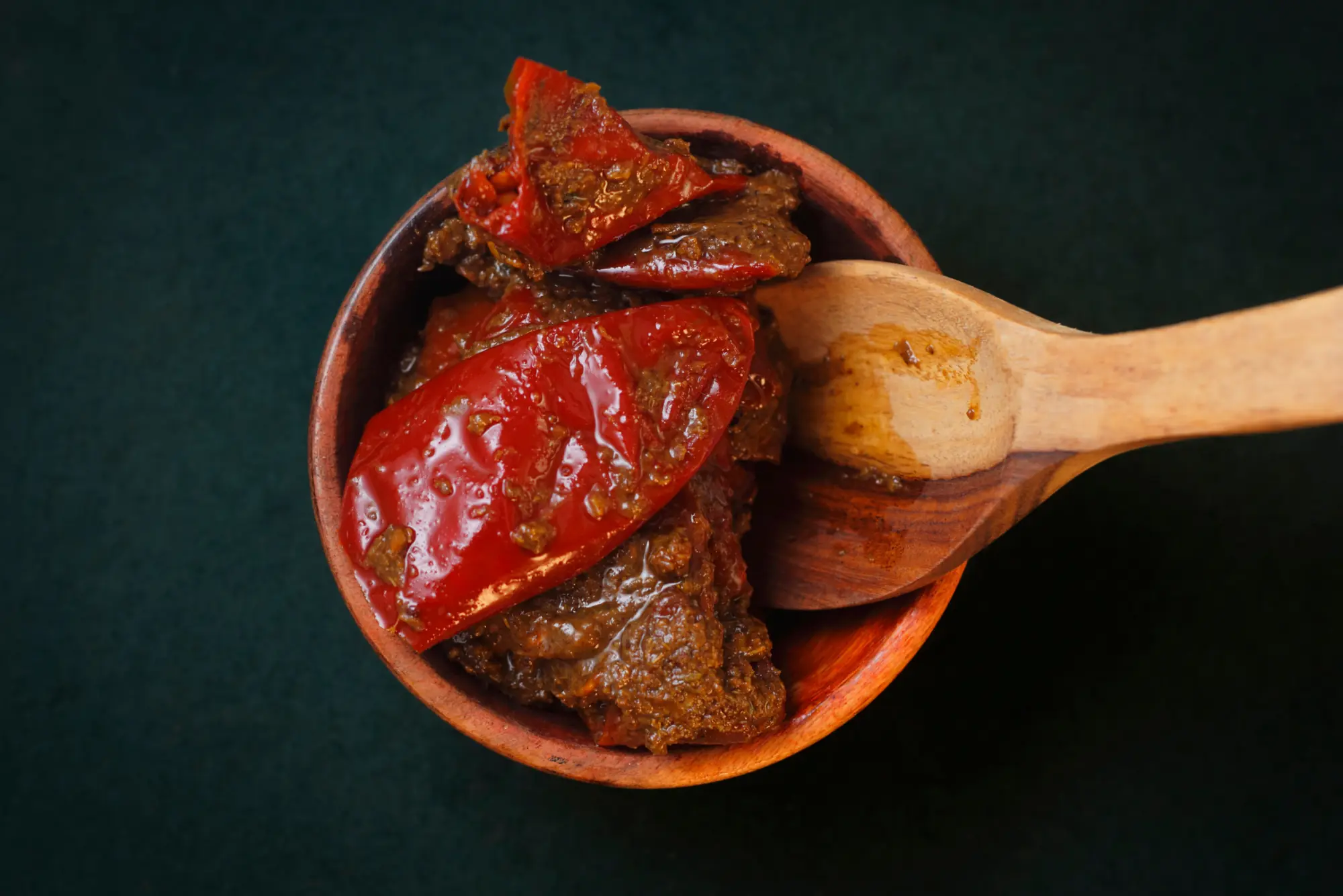
The wider tradition is in our guide to Banarasi achar. A pickle that uses this method is described in our post on gajar gobhi shalgam achar. The range from our kitchen is in the pickle and achar collection.
Frequently asked questions
Why do you heat mustard oil before making pickle?
To mellow the sharp raw pungency of the oil. Recipes heat it until it first smokes, take it off the flame and let it cool before it meets the pickle.
Does heating remove the raw smell?
Largely, yes. Recipe references say that heating to the smoking point and cooling removes the acrid taste of the raw oil, though the mustard character remains.
What is the smoke point of mustard oil?
Common figures are about 250 degrees Celsius or 480 degrees Fahrenheit. The real figure depends on the oil.
What is allyl isothiocyanate?
The compound that gives mustard oil its pungent bite. It is also found in horseradish and wasabi.
Can I add hot oil straight to the pickle?
No. Recipes cool the oil first, because hot oil would cook the pieces and can crack a glass jar.
Sources used for this post: Clove Garden entry on mustard seed oil; Cooksinfo entry on mustard oil; Tarla Dalal glossary entry on mustard oil; Wikipedia entry on mustard oil.; Ruchi’s Kitchen and Whisk Affair gajar gobhi shalgam achar recipes; Organic Mandya mustard oil guides (smoke point figures); Healthline (as quoted by Tasting Table) on mustard oil’s smoke point. Smoke point figures vary by source and are quoted as given.