Blog
Summer Food Preservation in the Gangetic Plain: Badi, Papad, Achar and the Rooftop

“Most women would be up on their terraces drying papad in the summer,” chef Kunal Kapur recalls in a feature on how papads used to be made. “Harvesting the harsh summer sun to make papad was a common occurrence.” That memory describes a season in which the whole north Indian home turned into a drying yard: badi and papad on the roof, mango pieces in salt in the courtyard, and the first jars of achar settling in the shade.
This guide follows that season across the Gangetic plain. It covers what is made, why it is made in summer, how the sun does the preserving work, and what is changing as the terrace tradition thins out.
The short answer
In short
Families on the Gangetic plain preserve food in the hottest months because the sun and low humidity dry things quickly and reliably before the monsoon arrives. Badi (sun-dried lentil nuggets), papad, raw-mango achar and aam papad are the staples, all dried or salted on rooftops and in courtyards. The work is seasonal, shared and mostly done by women in a family. Preserved food then feeds the household through the months when fresh produce is harder to get.
Why summer is the preservation season
Preservation depends on removing water, and summer removes it for free. The sun’s heat and the dry air of April, May and June do in two or three days what the same food could not do in the humid weeks that follow. A BigBasket guide to papad notes drying times of two to four days for home-made versions, and those figures assume bright sun.
The second reason is timing of fruit. Raw mango arrives in the same weeks that the heat peaks, and a family that wants a year’s pickle has to make it while the fruit is sour and green. We follow that ritual in the raw mango ritual of summer. For the wider calendar of what is made when, see the seasonal pantry calendar for north India and how climate shaped Banaras food habits.
The third reason is the rains. When monsoon humidity returns, uncovered dried food can take on moisture again, so what is made in summer has to be fully dry and tightly stored before then. The food is meant to carry the household through the months when vegetables are harder to buy and prepare, a belief that is widely held in traditional households.
Badi: lentil nuggets from the terrace
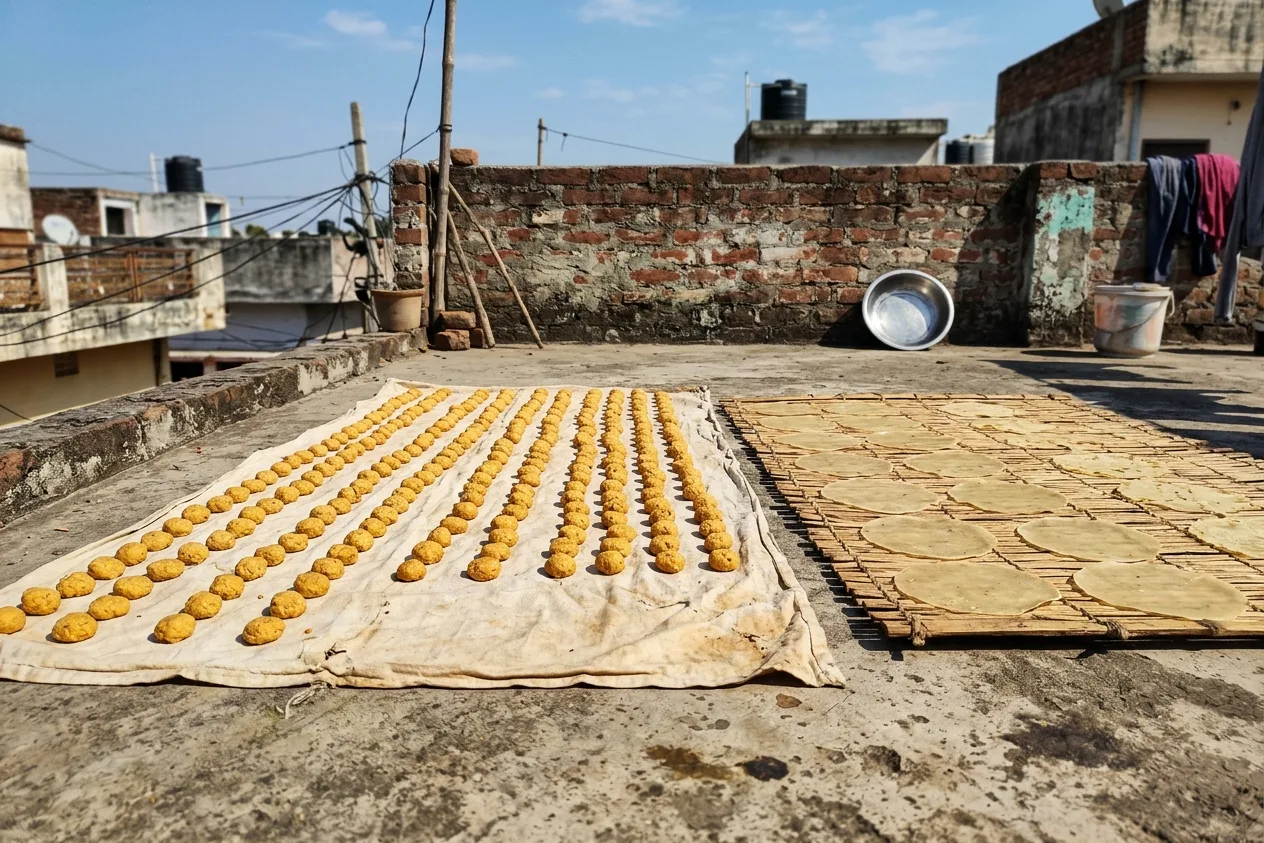
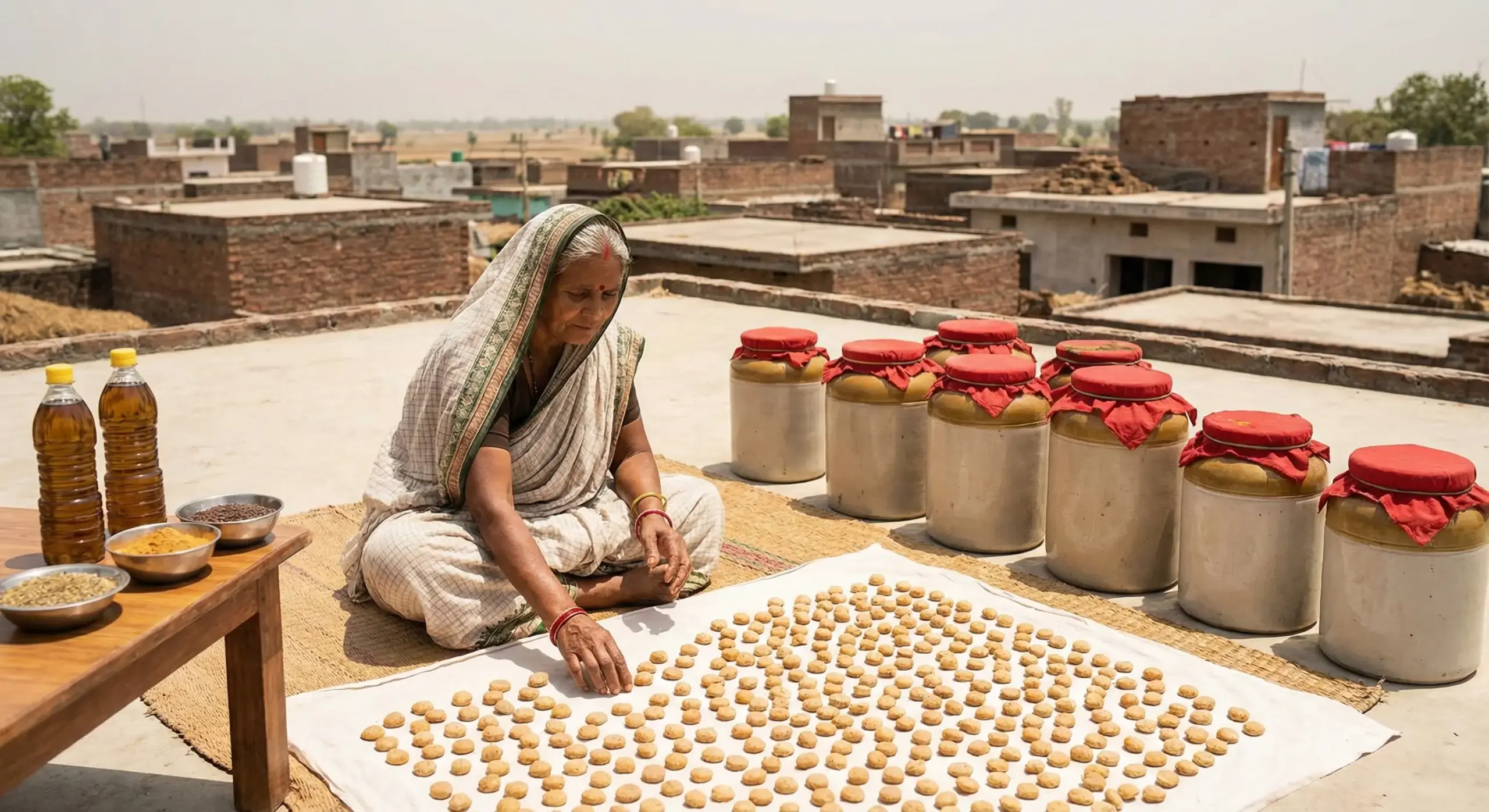
Badi, also called vadi, wadi, wadiyan or mungodi depending on region and dal, is a small dumpling of ground lentil paste, spiced and dried in the sun. The recipe site Indian Khanna describes wadi as a summer essential in most north Indian houses, prepared with different dals and spices, with the basic concept of grinding dal, spices and sun-drying unchanged over generations. In central India, plain vadi made with moong dal is called mungodi, as Down To Earth reports.
Urad dal is the usual base in the north. A NIFTEM processing note on urad bean says it is consumed in forms including dal, papad, badi and namkeen, and that Uttar Pradesh is India’s largest producer, with 17.88 percent of the national total according to the figures it cites. That makes UP an obvious home for urad-based preservation, and the connection between the local crop and the local pantry is a good way to see why badi is so common here.
A Down To Earth article on Himalayan vadis adds a detail about what happens during drying. In the Uttarakhand version, a paste of urad dal is mixed with grated ripe pahadi kheera and spices and dried, and the urad dal ferments in the first three to four hours of sun-drying. That description is of a hill recipe, not a Banaras one, and we cite it only to show that a short fermentation can be part of the drying stage in some badis.
The making is communal. The Kumaoni badi tradition, described by a food blogger, treats each year’s batch as a yearly ritual, with every household making a small amount. Our own post on terrace drying of vadi and papad in Banaras looks at the same practice in the city.
Papad: thin discs, hot sun
Papad is a thin disc of dough, rolled out and dried. Slurrp’s piece on valvan, the Gujarati and Maharashtrian tradition of sun-dried items made from rice, pulses and cereals, notes that papads are often made from urad or moong dal, rolled thin and sun-dried until they become crisp. An Elle Decor piece on papad’s regional variety places aloo papad in Uttar Pradesh, alongside Gujarat’s rice flour khichiya, Rajasthan’s moong papad, Maharashtra’s sabudana papad and Kerala’s urad dal pappadams.
Papad-making is hard work, and the language reflects it. A food-history piece on papad mentions the Hindi idiom papad belna, which means going through fire and water to get a task done.
Lijjat Papad, founded in 1959 by seven Gujarati women and now a cooperative employing over 43,000 women, is the best-known example of how a household craft became an industry. It also explains part of the shift: many families now buy papad instead of making it.
Achar and aam papad: the fruit side of the season
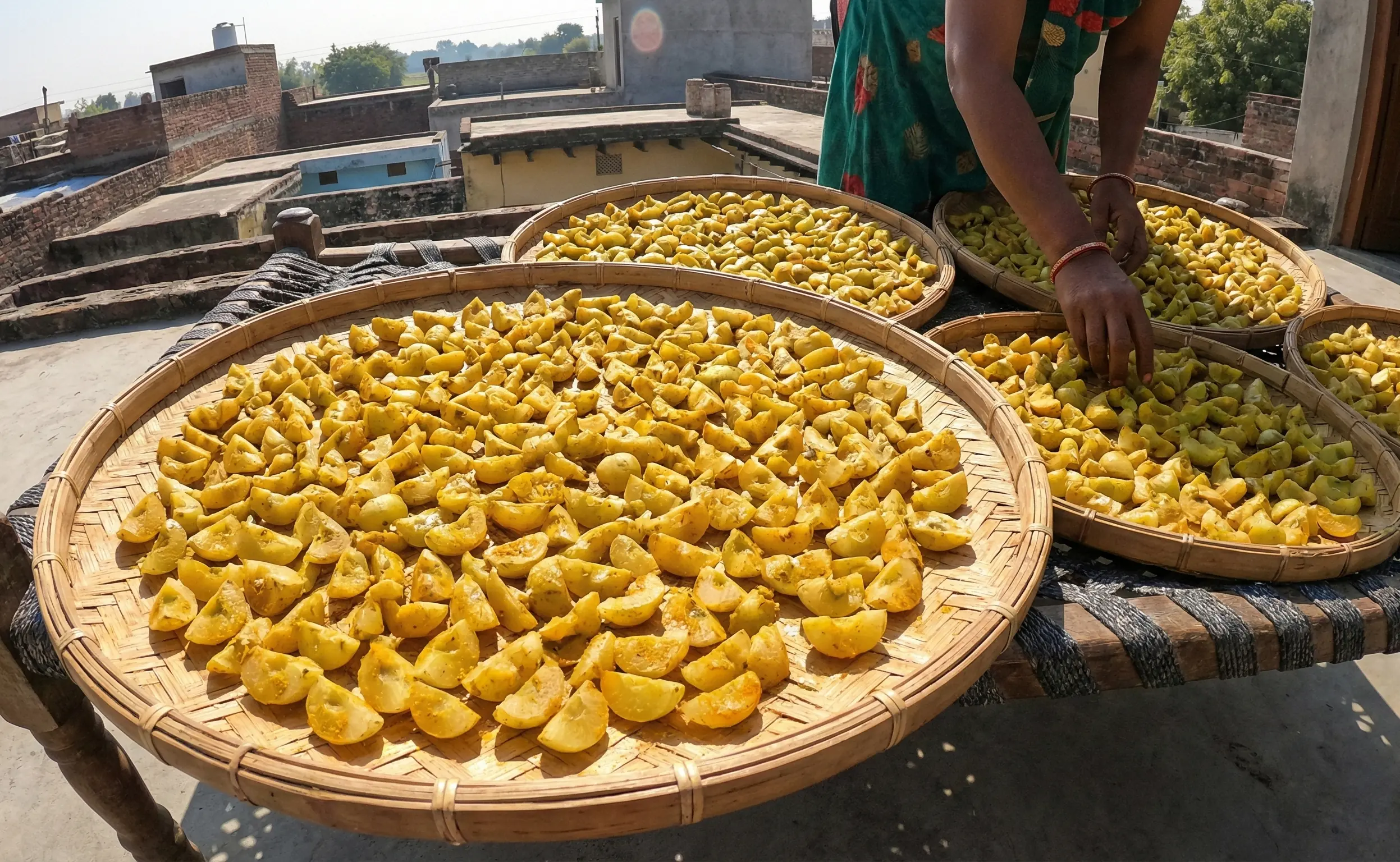
Salted and sun-cured mango pieces are the third pillar of the summer pantry. Aam papad, a sun-dried fruit leather made from mango pulp, is a related preservation method, described by Slurrp as a traditional way of preserving mango pulp during summer, turning it into a chewy, tangy fruit leather. The achar side of the story, from salting to oil, is in how sun-curing works for achar and why sun-drying is essential for Indian pickles.
The rooftop as a workplace
The terrace, or chhat, is the practical centre of this season. A flat roof catches the sun for most of the day and sits above the street. Spread out on clean cloth or sheets, badi and papad dry in the open air and can be turned.
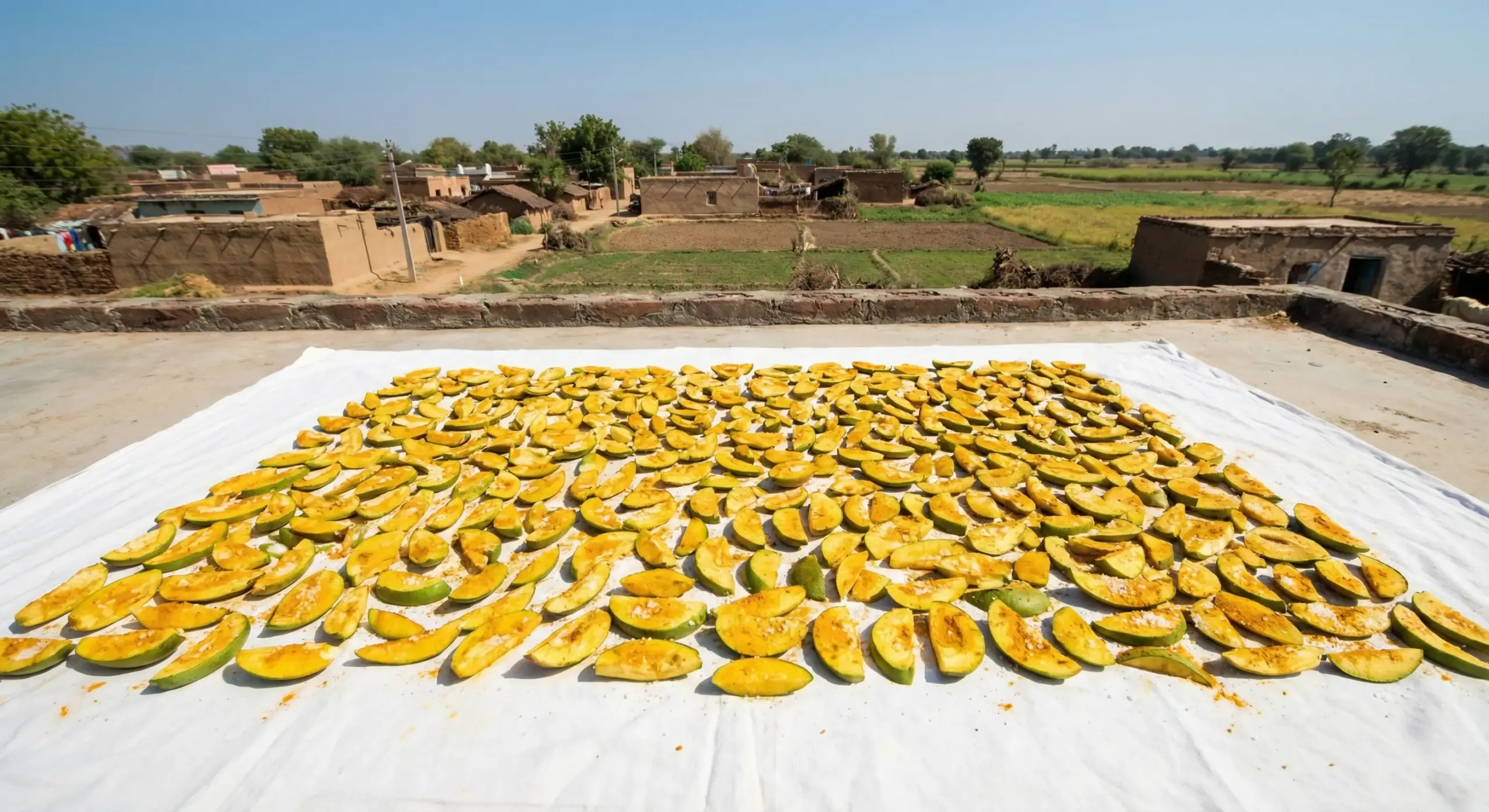
The courtyard (aangan) does a similar job in older homes. Because the work needs many hands, it has long been a shared activity among women of a household or a neighbourhood. That is a social observation rather than a documented rule, and Banaras families will describe it in their own terms.
What is changing
Three trends show up in the sources and in everyday observation.
- Buying replaces making. The zeezest piece on papad notes that while papad-making was commonplace in the past, it has now become a memory for many.
- Flats replace courtyards. A home without a terrace has nowhere to spread the food.
- Packaged products fill the gap. Ready-made badi, papad and pickles are sold year-round, which reduces the need to make a year’s supply in two months.
None of this makes the old method obsolete. It remains the way many families get a flavour they prefer, and it is the source of most of what shops now sell.
A practical note on drying at home
If you dry food outdoors, a few cautions follow from basic food safety. Dry food fully before storage, since residual moisture can support mould. Cover it against birds and insects during the day. Bring it in at night so dew does not wet it. Store dried food in a clean, dry airtight container, and discard anything that smells off or shows mould. Dried foods do not support the growth of food-poisoning bacteria when properly dried, but they can still grow yeasts and moulds, according to CSIRO’s guidance on dried vegetables and herbs.
Frequently asked questions
Why do families in Uttar Pradesh preserve food in summer?
Summer heat and dry air make drying fast and reliable, and the season coincides with raw mango. Food made now is meant to last into the monsoon and beyond.
What is badi?
Badi, also called vadi or wadi, is a small sun-dried dumpling made from ground lentil paste and spices, usually urad or moong dal. It is cooked later in curries and sabzis.
What is the difference between badi and papad?
Badi is a small nugget cooked in a dish. Papad is a thin disc, usually roasted or fried and eaten as an accompaniment.
Why is urad dal so common in UP?
Uttar Pradesh is India’s largest urad producer, according to a NIFTEM processing note, so it is the local pulse of choice.
How long does papad take to dry?
A BigBasket recipe gives two to four days for home-made papad, depending on the sun and the thickness.
Is it safe to dry food on a rooftop?
It works when the food is covered against birds and insects, brought in at night, and stored fully dry. Anything damp, mouldy or off-smelling should be discarded.
Are these traditions disappearing?
They are less common than before, because many families now buy ready-made badi and papad and live in flats without terraces, but they continue in many homes.
Sources used for this post:
– Zeezest, “The Pop of the Papad” (Kunal Kapur on terraces; papad belna; Lijjat)
– NIFTEM, urad processing note (UP as largest urad producer)
– Slurrp, “The Story of Valvan: When the Sun Did the Preserving”
– Elle Decor India, papad regional varieties
– Down To Earth, “Variety comes home” (vadiyaan)
– Indian Khanna, “Masala Urad Dal Wadi”
– Fun Food Frolic, Kumaoni badi
– BigBasket, “Papad Yatra”
– Slurrp, aam papad with sun-drying
– CSIRO, “Vegetable preservation”