Blog
Banarasi Achar Varieties: Stuffed Red Chilli, Amla, Lemon, Garlic and Mixed Vegetable

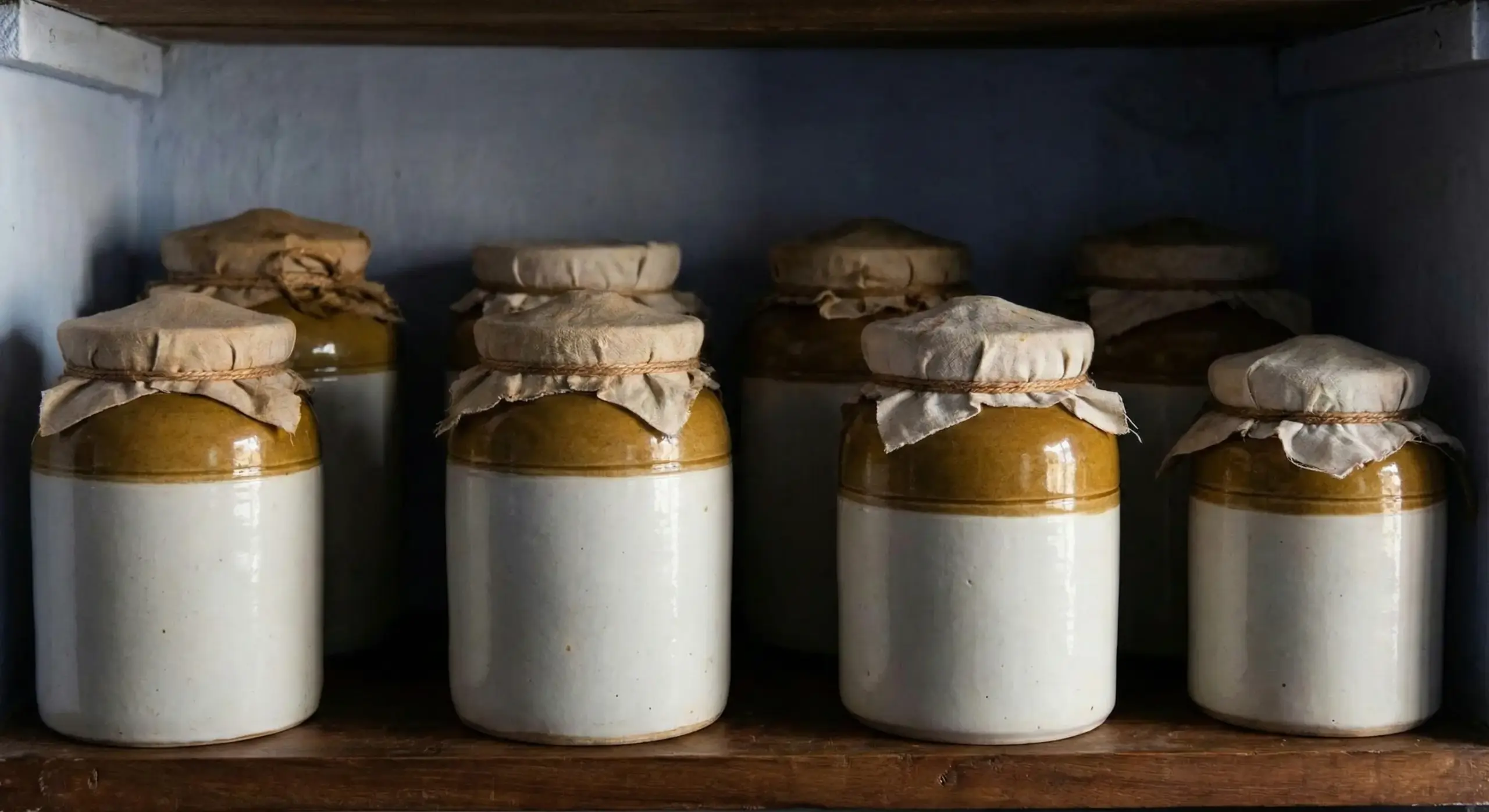
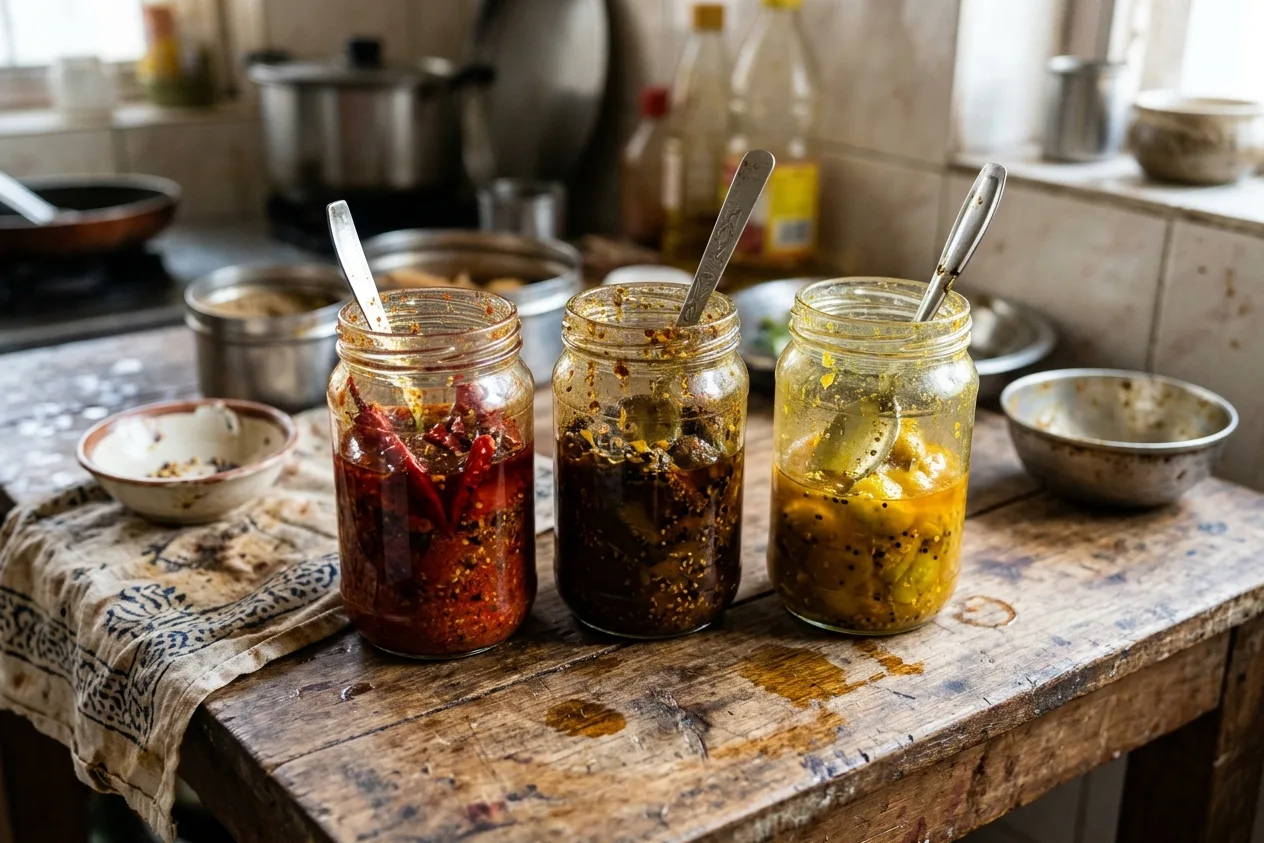
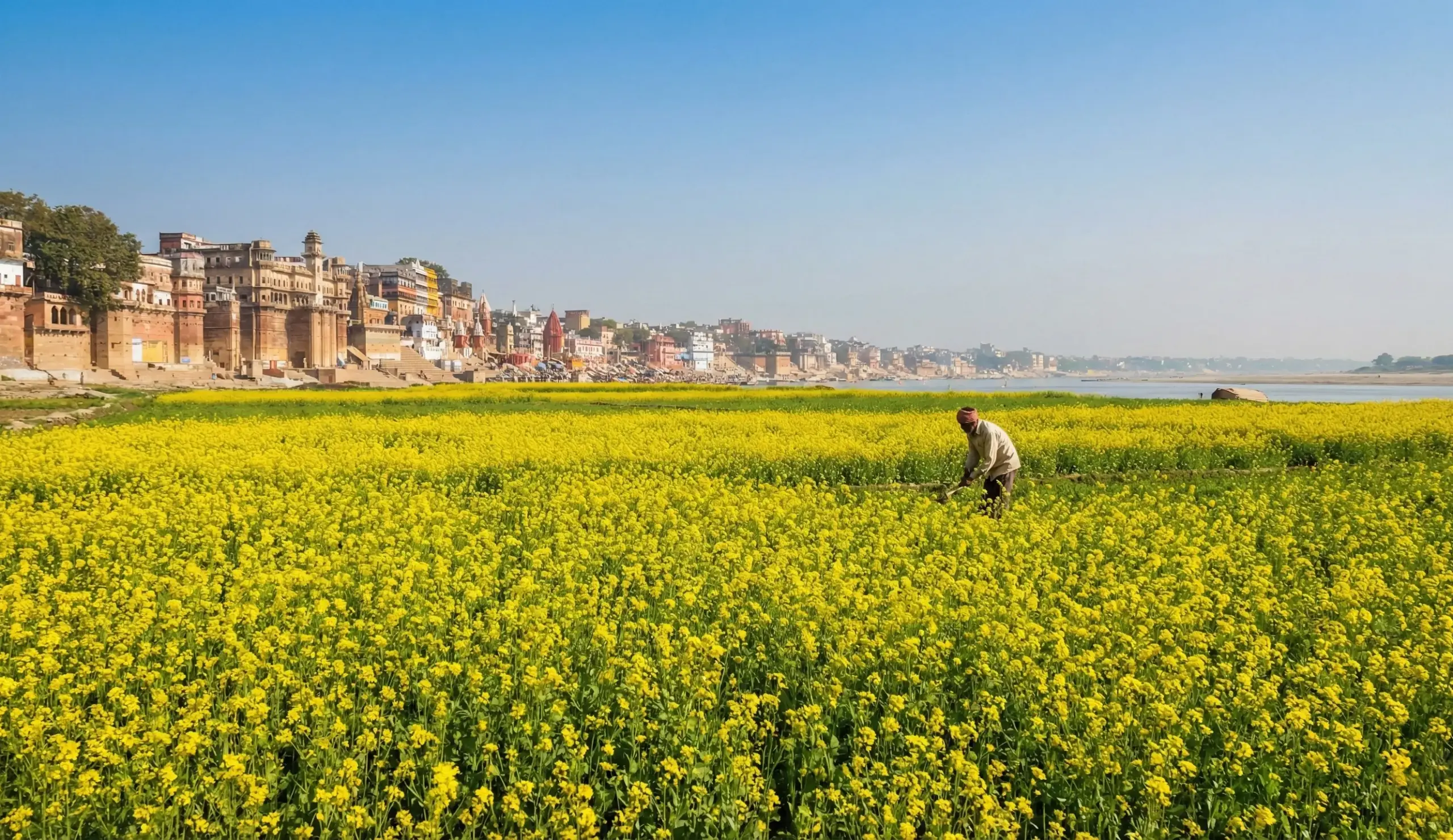
Banarasi achar is the name given to pickles associated with Varanasi, also called Banaras or Kashi, in Uttar Pradesh. The style leans on mustard oil, coarsely ground whole spices and sun exposure, and it covers a handful of pickles that most Banaras households make in some form: stuffed red chilli, amla, lemon, green chilli, garlic, mixed vegetable and raw mango.
This guide goes through each of them: what it is made from, the season it belongs to, how it is prepared in most kitchens, how it is eaten and how to keep a jar. Where a point rests on a published source, the source is named in the text and listed at the end. Where it reflects household practice, the text says so.
The short answer
In short
The main varieties of Banarasi achar are stuffed red chilli (the best known, with a GI-tagged chilli), amla (winter), lemon, green chilli, garlic, mixed winter vegetable and raw mango (summer). All use mustard oil as the traditional oil, a fennel and mustard spice base and sun maturing. The seasons run from raw mango in summer to red chilli and amla in winter.
At a glance
| Variety | Season | Main ingredients | Character |
|---|---|---|---|
| Stuffed red chilli (bharwa lal mirch) | Winter | Red chilli, fennel, mustard, fenugreek, mango powder, mustard oil | Mild to medium heat, aromatic, tangy |
| Amla | Winter | Indian gooseberry, mustard oil, spices | Sour, astringent, softening with time |
| Lemon | Summer, then through the year | Lemon, salt, turmeric, chilli | Sour, salty, mellows with age |
| Green chilli | Through the year | Slit green chilli, mustard, fennel, salt | Hot, quick to mature |
| Garlic | Winter | Peeled garlic, mustard oil, spices | Pungent, best kept cool |
| Mixed vegetable | Winter | Carrot, cauliflower, turnip, mustard oil, spices | Crunchy, spiced |
| Raw mango | Summer | Raw mango, mustard oil, fennel, fenugreek, nigella | Sharp, sour, hot |
Stuffed red chilli (bharwa lal mirch)
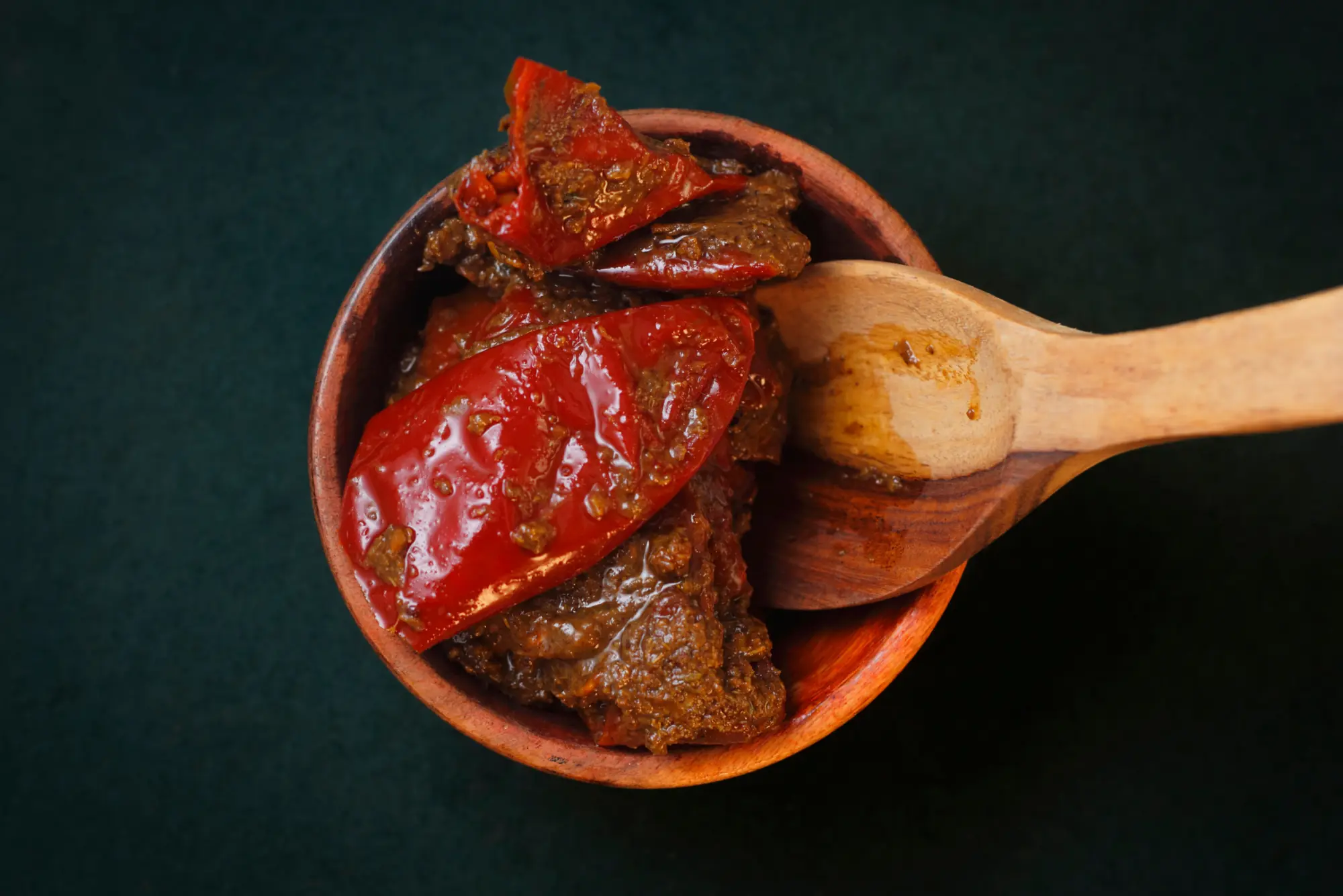
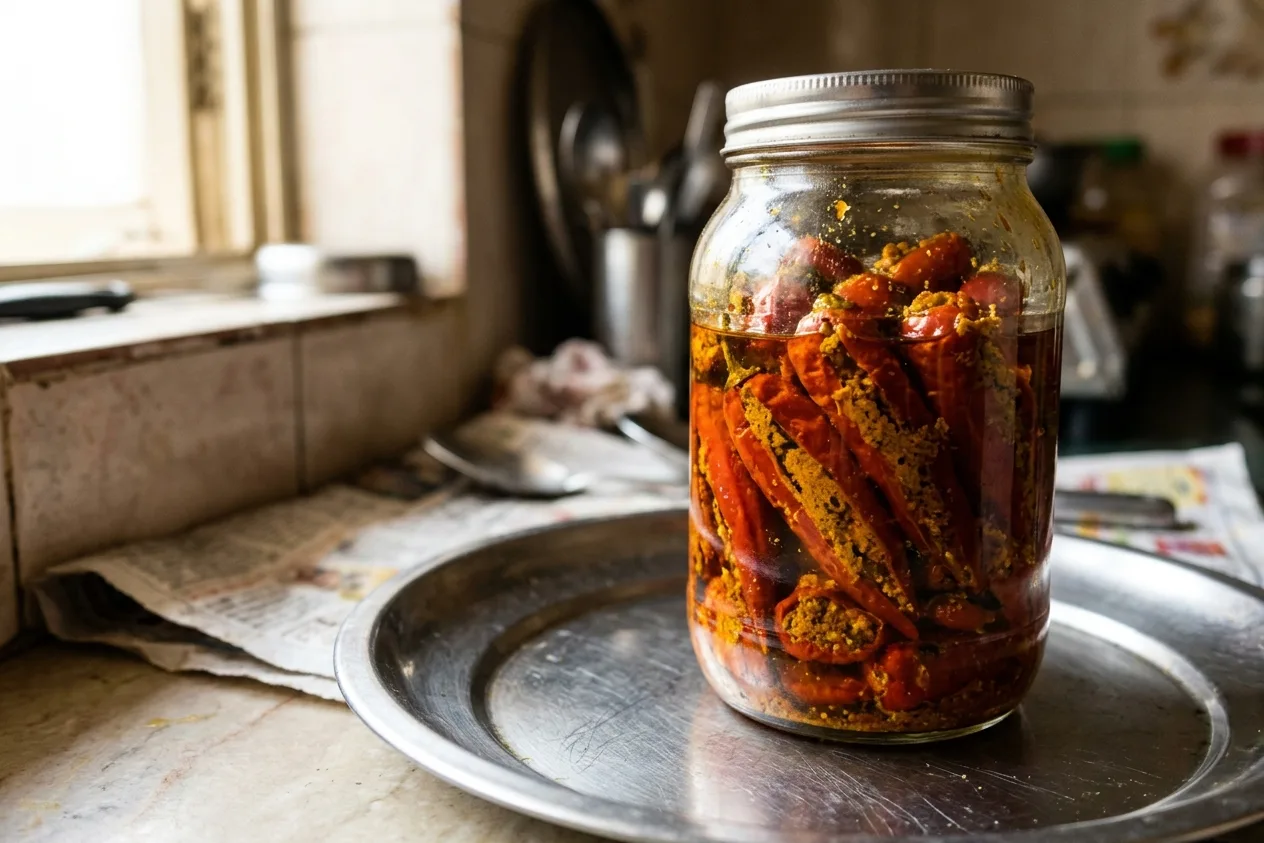
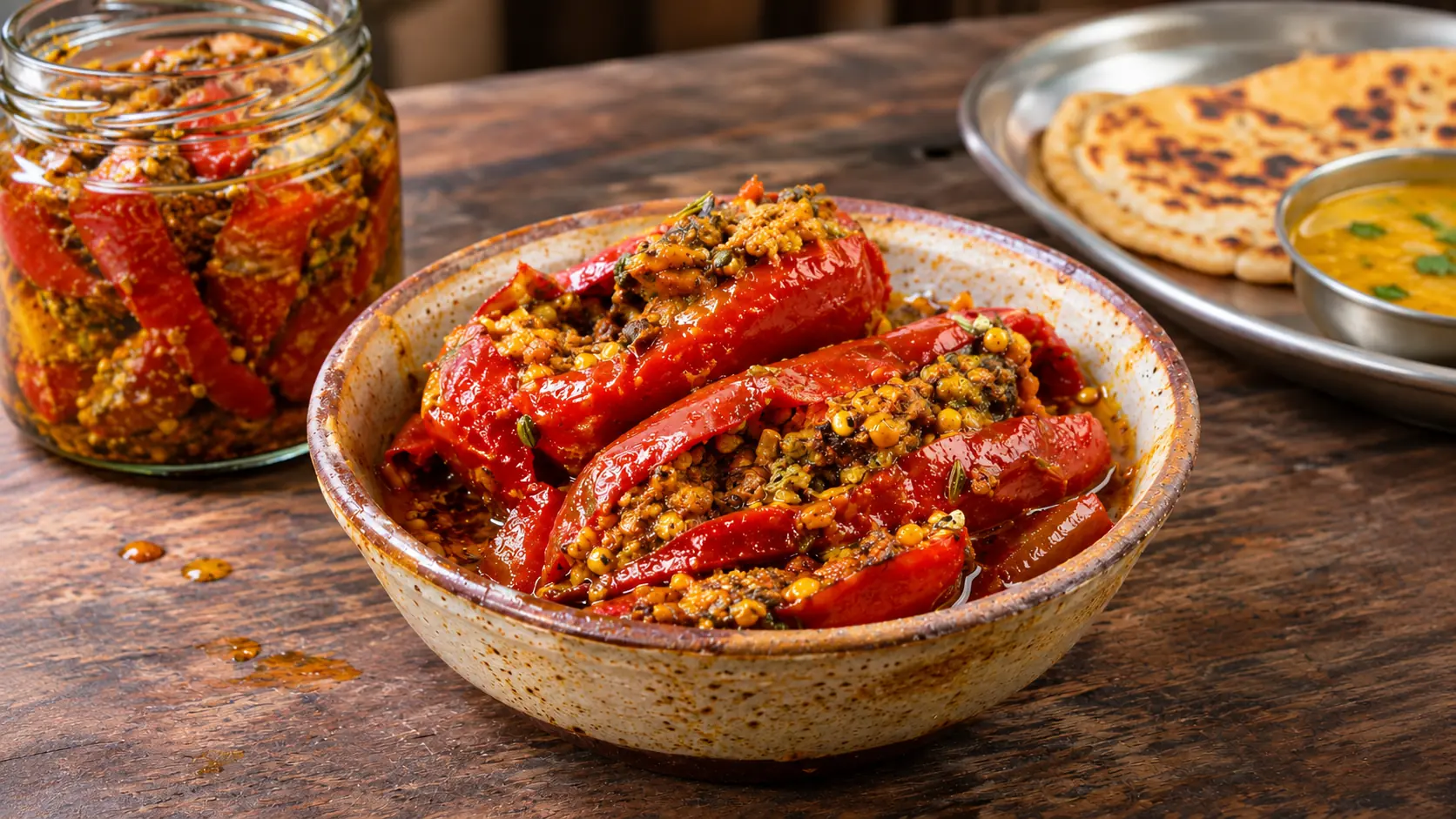
The best-known pickle of Banaras. Fat, thick-walled red chillies are slit along one side, filled with a dry spice mixture and packed in a jar under mustard oil. The common stuffing, as recipe writers describe it, is mustard seed, fennel, fenugreek, dry mango powder, turmeric and asafoetida with salt and a little oil to bind it.
The chilli. The Banaras Lal Bharwamirch was granted a Geographical Indication in 2024, according to Wikipedia, on an application filed on 3 February 2022 and published in the GI Journal in November 2023. Wikipedia’s entry calls it mildly spicy, notes that the unripe chilli is non-bitter and that it becomes bitter as it ripens, and says it is used mainly for the stuffed pickle. The GI application says that very good quality chillies are available in winter. The Hindu reported in 2024 that the chilli was among a record 60 Indian products to receive a GI tag.
The method. Wash and dry the chillies thoroughly, slit each one, prepare the masala and press it in. Pack the chillies in a clean, completely dry jar. Heat mustard oil until it lightly smokes, cool it fully and pour it over the chillies until they are covered. Cover the mouth with a cotton cloth and give the jar a few days of sun, turning it gently each day and bringing it in at night. Recipes describe sun curing of a few days, and one recipe source says the pickle stays good for about a year while another says two to three months at room temperature, so treat any single figure as a range.
Our post on bharwa lal mirch achar goes through the method step by step.
Amla pickle
Amla, the Indian gooseberry, is firm, sour and astringent. Wikipedia’s list of Indian pickles describes amla pickle as a popular spicy pickle across South Asia and says that a typical method tempers mustard seeds in oil and cooks the gooseberries in it. In Banaras the pickle belongs to the winter, when the fruit is in the market. The cooking softens the amla and the oil carries the spice through the fruit.
Because amla is acidic, the pickle is more forgiving than garlic or mushrooms, though a dry jar, a dry spoon and an oil layer still matter. Our post on amla achar in winter describes the season and the method.
Lemon pickle
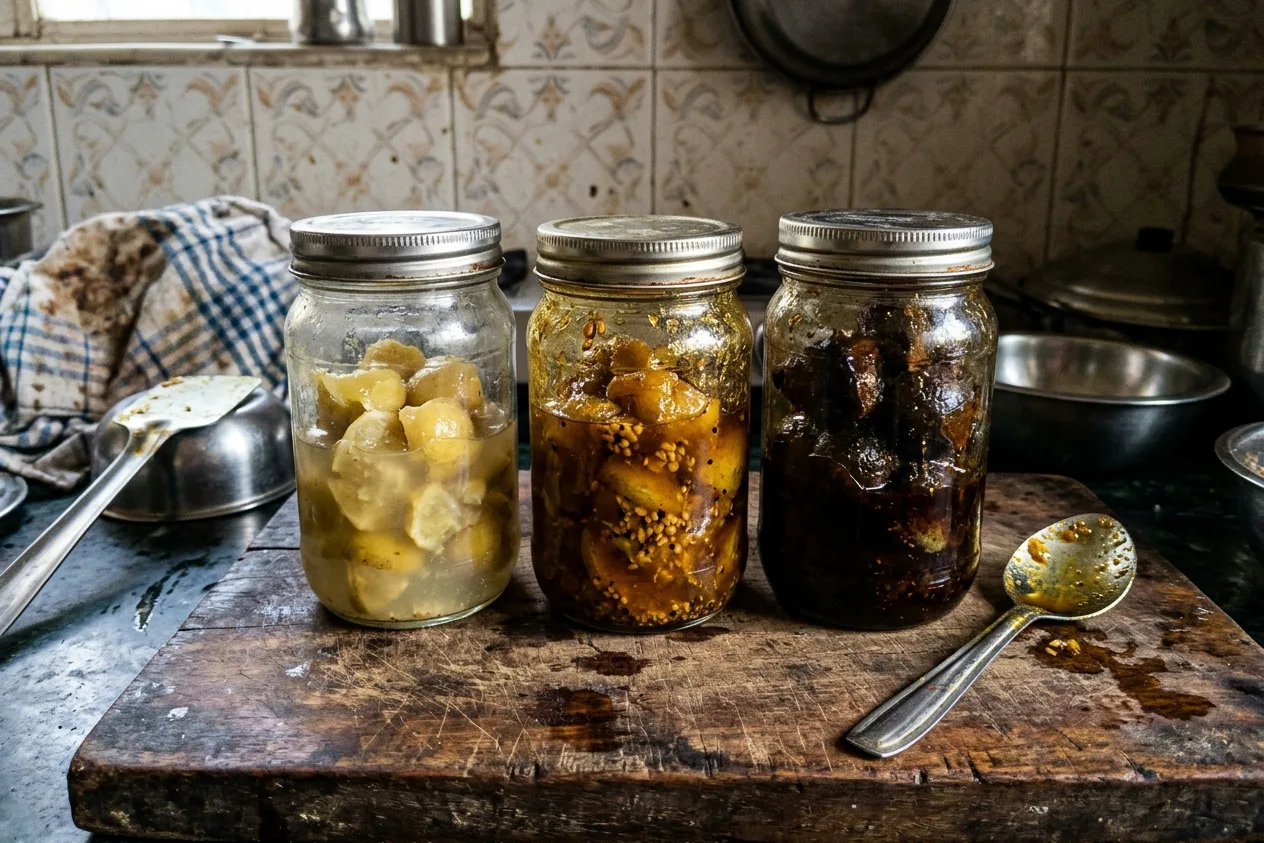
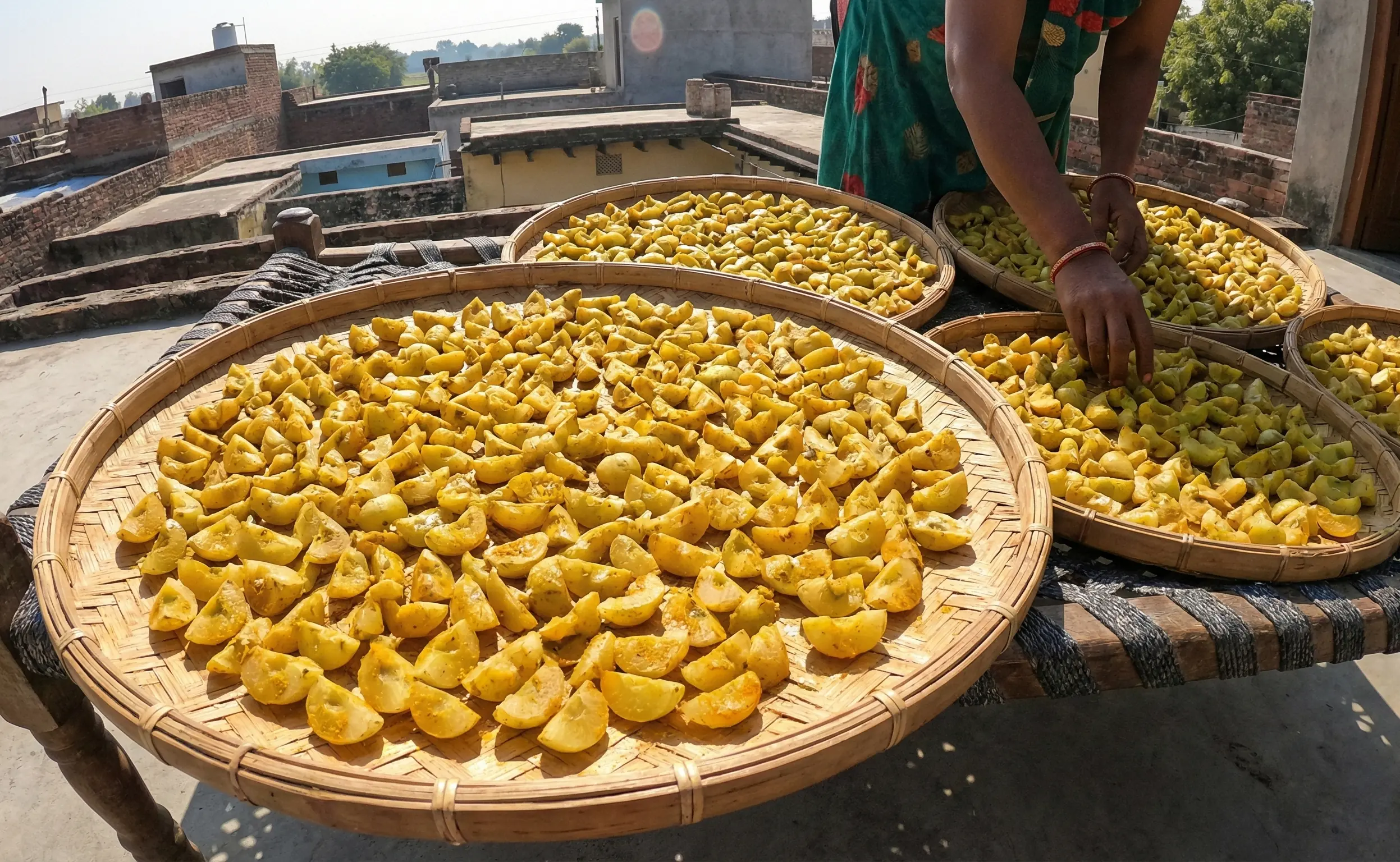
Lemon pickle comes in two families. In the salted version, whole or quartered lemons are packed with salt and turmeric and left, often in the sun, for weeks until the peel softens and darkens. This is a brine pickle and is the one in which fermentation plays the biggest part. In the spiced version, the lemons are cut and mixed with salt, chilli and sometimes fenugreek and mustard oil, and eaten sooner. Both are sour and salty. Our post on lemon pickle types compared explains the difference.
Green chilli pickle
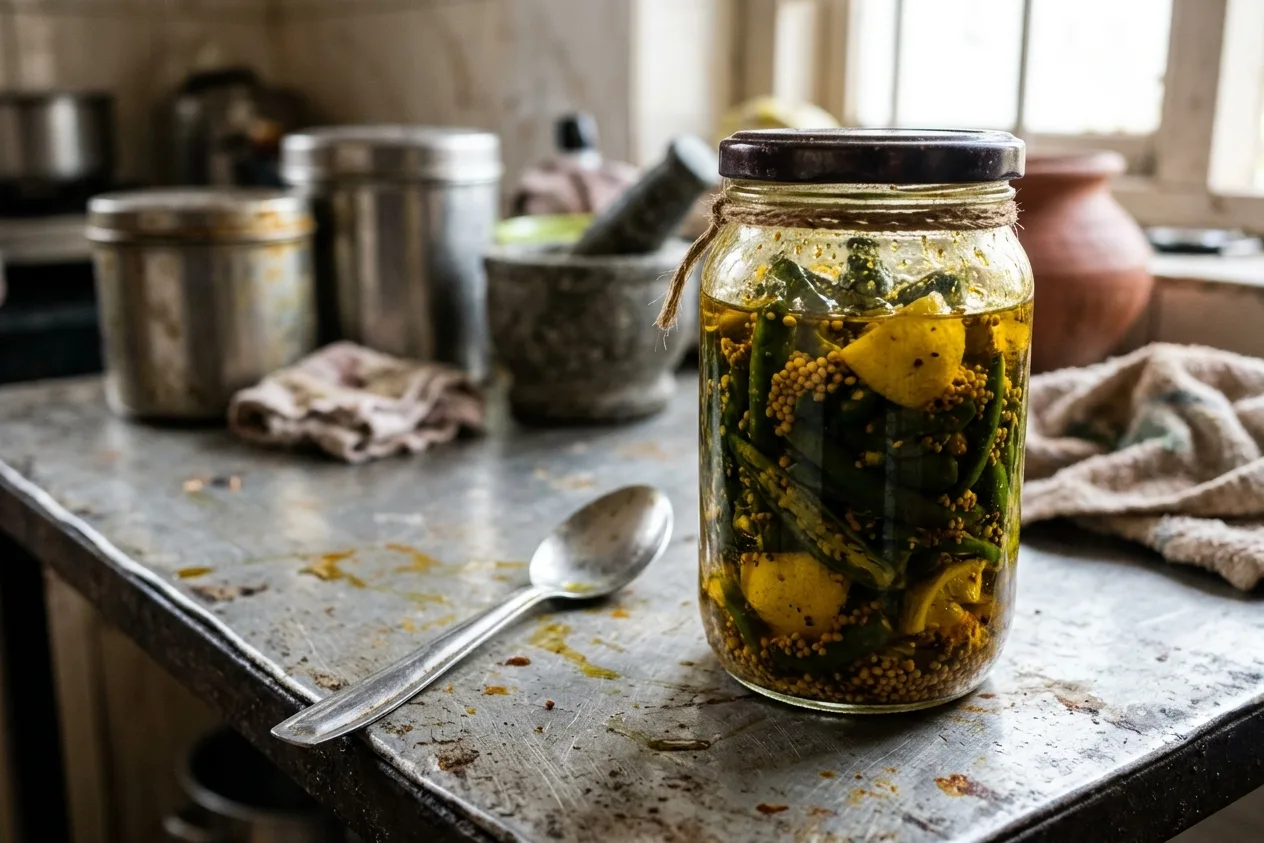
Slit green chillies mixed with mustard, fennel and salt, sometimes with lemon juice, and left to mature in the sun for a short time. It is the quickest of the Banarasi pickles and, since the chillies are fresh, the most pungent. See hari mirch achar, Banarasi style.
Garlic pickle
Peeled garlic cloves in mustard oil with mustard seed, chilli and turmeric. The garlic pickle is popular in winter and has a place in many Banaras meals. It is also the pickle where the food safety guidance in our guides applies most strongly. A 2011 review by Nummer and colleagues in Food Protection Trends documents botulism outbreaks linked to home-prepared garlic in oil, and Health Canada’s guidance on plant products stored in oil recommends refrigeration with an added hurdle such as acidification. In practice this means keeping a garlic pickle in the refrigerator, making small batches and discarding a jar that bubbles or smells off. Our post on Indian pickles explains the safety reasoning.
Winter mixed vegetable pickle
Carrot, cauliflower and turnip, cut into chunks, dried briefly in the sun and mixed with mustard oil and a spice mix of fenugreek, nigella, mustard and chilli. The masterclass guide to achaar lists vegetables such as lotus stem and chickpeas pickled in mustard oil with whole spices such as fenugreek and nigella. The pickle is crunchy when fresh and softens over the weeks. See gajar, gobhi, shalgam achar.
Raw mango pickle
The summer pickle of every north Indian household. Raw mango pieces are salted and dried, mixed with fennel, fenugreek, nigella, mustard and chilli, covered with mustard oil and matured in the sun. Our posts on choosing mango for pickle and regional mango pickle styles cover this pickle.
Ingredients common to all of them
Mustard oil. The traditional oil of the region. Its pungency comes from allyl isothiocyanate, according to the University of Bristol, and the usual practice is to heat it and cool it before use. See heating mustard oil for achar.
Spices. Fennel, mustard, fenugreek, nigella, turmeric, red chilli and asafoetida in different proportions. See achar masala spices.
Salt. For flavour and preservation. See sendha namak in achar for the rock salt variation.
Sun. A few days to a couple of weeks of gentle sun for maturing, covered with a cloth. Wikipedia’s entry on South Asian pickles says homemade pickles may be matured in sunlight for up to two weeks under muslin.
The pickling year
| Months | What is pickled |
|---|---|
| March to June | Raw mango, lemon, raw jackfruit |
| July to September | Little new pickling, existing jars checked often |
| October to February | Red chilli, amla, carrot, cauliflower, turnip, garlic |
Our posts on seasonal pickles of Uttar Pradesh and the seasonal pantry calendar lay out the year in more detail.
How Banarasi pickle is eaten
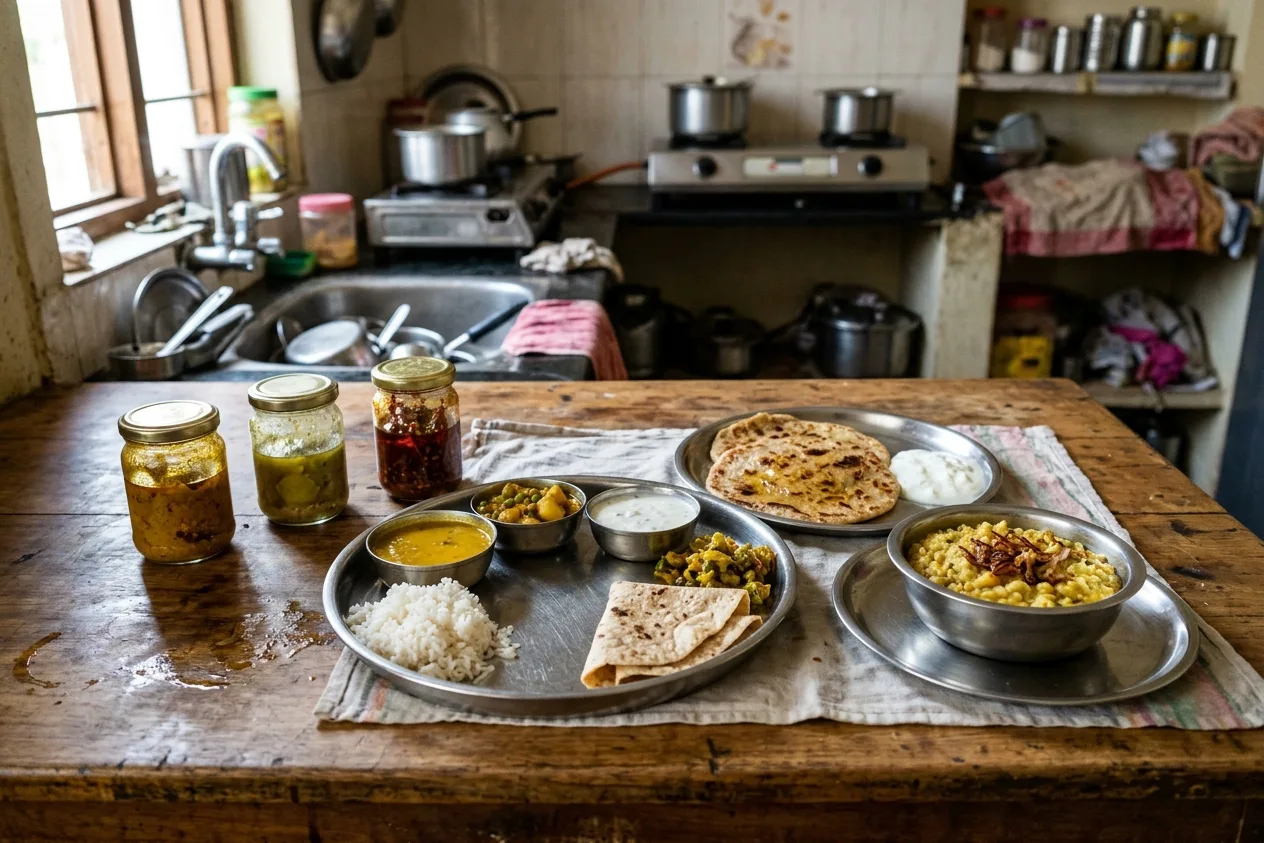
A spoonful sits on the side of the plate. Common pairings are kachori and sabzi in the morning, dal, rice and roti at lunch, parathas and puris at any time, and khichdi on a cold evening. Our guide to what to eat with achar lists more, and the post on which achar for which meal matches each pickle to a dish.
Storing a jar
Keep the jar in a cool, dry place out of direct heat. Use a dry spoon every time. Keep the pieces under oil. Close the jar after use, or cover the mouth with a clean dry cloth. In the monsoon, check the jar more often. Discard a jar that shows fuzzy mould, bubbles, an off smell or a slimy texture. Garlic pickle and other low-acid vegetable pickles are better kept in the refrigerator. Our posts on how long achar lasts and monsoon fungus prevention go through the details.
Frequently asked questions
Which is the most famous Banarasi pickle?
Stuffed red chilli, made from the Banaras Lal Bharwamirch, a chilli with a Geographical Indication.
Is Banarasi achar very hot?
The red chilli is described as mildly spicy. Green chilli pickle is the hottest of the group, and individual jars differ.
Which Banarasi pickles are made in winter?
Stuffed red chilli, amla, garlic and mixed vegetable pickle.
Does Banarasi achar use vinegar?
Traditional recipes do not rely on vinegar. They use salt, sun, acidic ingredients such as mango powder and lemon, and mustard oil.
Can I eat Banarasi pickle every day?
A spoonful alongside a meal is common. Pickles are salty, so people on salt-restricted diets should check with their doctor.
How do I know if the pickle has gone bad?
Fuzzy mould, bubbling, a sour or rotten smell different from the usual tang, or a slimy texture are all reasons to discard it.
A note on Salteen
Salteen is a Banarasi food brand, and Sanju Yadav, our co-founder and head of management, oversees manufacturing from Varanasi. Our pickle collection is made in the Banaras style described here. The sources below are linked so that you can check each statement for yourself.
Sources used for this post:
- Wikipedia, “Banaras Lal Bharwamirch”
- Uttar Pradesh Krishi Vipran, GI application for Banaras Lal Bharwamirch (GI Journal No. 185, 29 November 2023)
- The Hindu, report on GI tags granted in 2024
- Wikipedia, “List of Indian pickles” (amla pickle)
- Wikipedia, “South Asian pickle”
- MasterClass, “All About Achaar”
- University of Bristol, “Allyl isothiocyanate” (Molecule of the Month)
- Veg Recipes of India, Red Chilli Pickle
- Aahaaram, UP Style Bharwan Lal Mirch ka Achaar
- Nummer, Schaffner, Fraser and Andress, “Current Food Safety Issues of Home-prepared Vegetables and Herbs Stored in Oil,” Food Protection Trends, June 2011
- Health Canada, “Guidance on Mitigating the Health Risk Associated with Clostridium botulinum in Plant and Mushroom Products Stored in Oil”