Blog
Gajar, Gobhi, Shalgam: The Winter Mixed Pickle

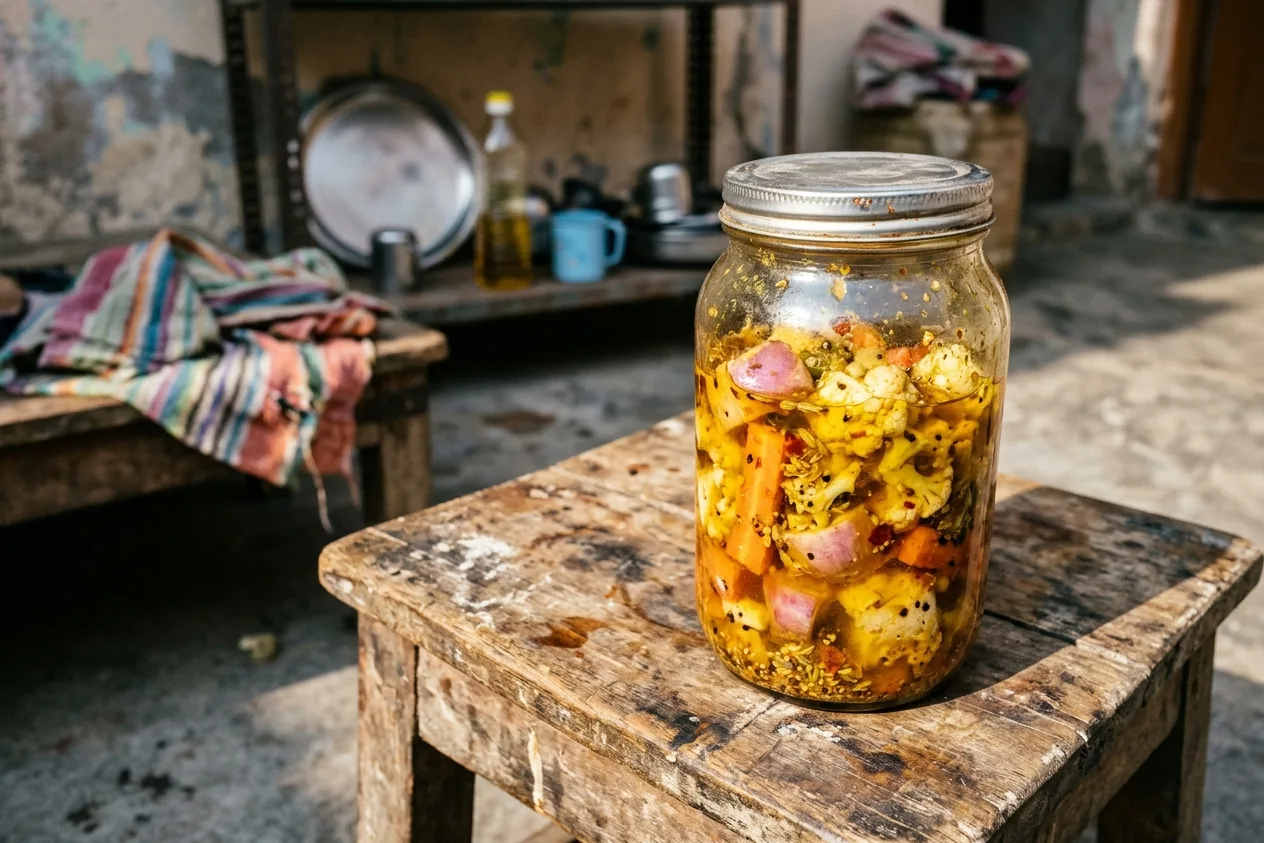
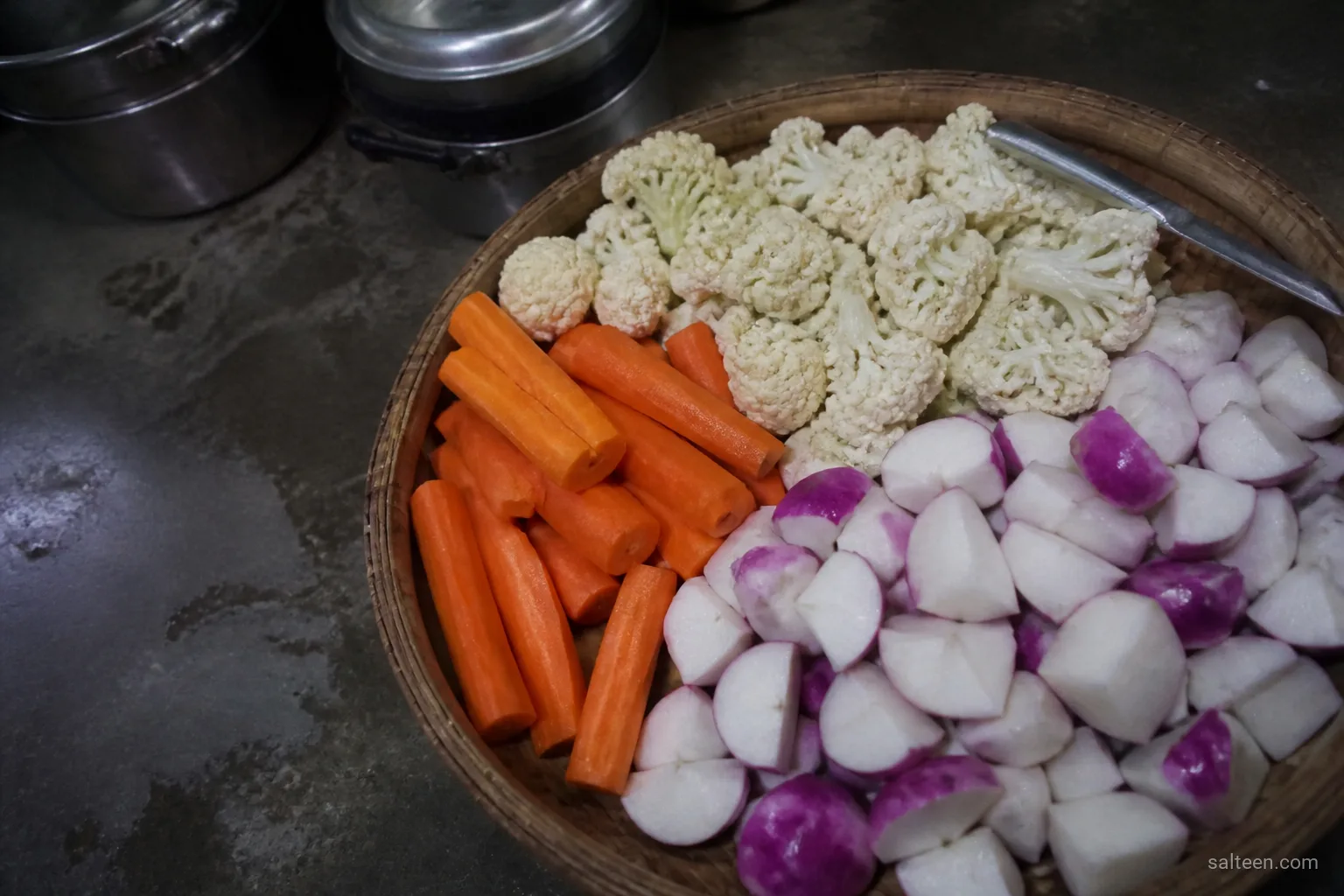
Three vegetables, one jar, and a season that runs from November to February. That is the whole idea behind gajar gobhi shalgam achar, a mixed pickle of carrots, cauliflower and turnips that a food writer from north India describes as a condiment made at every home in the region through the winter months. Carrot gives sweetness and colour, cauliflower gives a firm bite, and turnip gives a mild sharpness, and mustard oil and spices tie the three together.
This guide explains what the pickle is, why the vegetables are dried in the sun before they go into the jar, how the oil is used, and how long a jar can be expected to last. Recipes differ from house to house, so where sources disagree we say so.
What is gajar gobhi shalgam achar
In short
Gajar gobhi shalgam achar is a winter mixed vegetable pickle of carrot, cauliflower and turnip, made in mustard oil with salt and spices. It is closely linked with Punjab and is eaten with parathas, makki ki roti and sarson ka saag.
The name is a list of ingredients. Gajar is carrot, gobhi is cauliflower, shalgam is turnip, and achar is pickle. The National Virtual Library of India, which keeps a collection of traditional recipes, calls it a winter specialty of Punjab and says it is enjoyed with various kinds of stuffed parathas. One recipe writer who grew up eating it says her family served it with makki ki roti and sarson ka saag, which is the classic Punjabi winter meal.
You will also see it called gobhi gajar mooli ka achar, because some cooks use white radish in place of turnip, and winter mixed pickle or mixed vegetable achar in English. Two broad styles exist. The first is a sharp, spicy pickle in mustard oil with mustard seeds, red chilli and salt. The second is a sweet and sour version in which a sugar syrup and vinegar go into the jar along with the spices, which gives the khatta meetha taste that many Delhi and Punjab households prefer. Both are called by the same name, and both belong to the cold months.
Why winter is the season
Carrots, cauliflower and turnips are all at their best in the cold. They are firm, they are cheap, and there are plenty of them in the market, which is why home cooks have always pickled them in these months. One recipe site describes how its author’s mother started a batch as soon as the local vegetable seller began stocking them at the start of winter. A pickle made from watery, out of season vegetables would not hold its crunch, and it would not keep.
There is a second reason that has nothing to do with the vegetables. A pickle jar needs warm, dry sun for a few days, and the winter sun of north India is mild and steady. It is strong enough to dry the vegetables and warm the jar without cooking the contents.
Drying the vegetables: the step that decides the jar
How the pickle is built
- Cut: carrots and turnips are peeled and sliced or cut into batons, cauliflower into small florets.
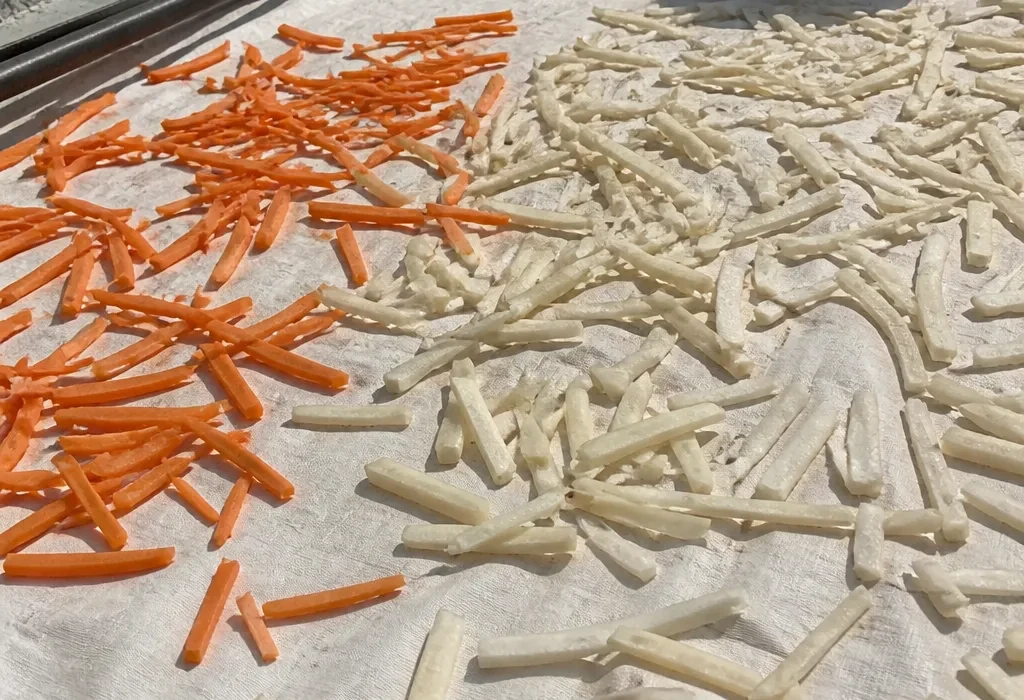
- Dry: the pieces are spread in the sun until the surface moisture is gone.
- Oil: mustard oil is heated until it fumes, then cooled.
- Mix: vegetables, spices and cooled oil are combined and left to cool completely.
- Rest: the jar is kept for a few days before it is eaten.
Every careful recipe we read treats drying as the most important step. One writer calls drying the vegetables in the sun the essential step in making the pickle. Another says that sunlight helps the spices penetrate the vegetables, softly ferments the flavours and extends the shelf life.
The reasoning is simple. Water is what lets spoilage organisms grow. Fresh cauliflower and turnip carry a great deal of it, and if it stays in the jar it dilutes the salt and the oil cover. Sun drying removes the surface water, so the salt and spices can do their work. A food writer quoted by Al Jazeera in a story about India’s pickle makers put it in one line: for a pickle to last years, it has to be dry.
A pickle made from wet vegetables is a pickle that will not last.
Vegetables are usually washed first and then dried completely before any spice touches them. Methods and timings vary from recipe to recipe, but the aim is the same everywhere: dry pieces, a dry jar and a dry spoon.
The role of mustard oil
Mustard oil is the preservative and the flavour in this pickle. A recipe writer from Punjab says it helps in preservation and adds the pungency that Indian pickles are known for. Another says there is no substitute for it in this pickle.
The oil is usually heated first. One recipe says to heat it in a heavy pan until it starts to fume, then take it off the heat and let it cool slightly. Another says to heat it until it starts to smoke. Both then let the mixture cool before it goes into the jar, and one is firm that the pickle must cool completely before it is transferred, with the bowl covered by a cloth. Hot oil poured over fresh pieces would start to cook them, and cooked, softened vegetables do not keep as well as dry, firm ones. We explain why the oil is heated in a separate post on heating mustard oil for achar, and the oil itself is covered in our kacchi ghani mustard oil guide.
The spices that go in
The spice mix in most versions is made from a short list: mustard seeds, which are often coarsely crushed, red chilli powder, turmeric, salt, and fennel or fenugreek in some homes. Sweeter versions add cinnamon and a sugar syrup. One popular recipe lists 300 grams each of turnip, cauliflower and carrot, with crushed garlic and a good measure of mustard seeds. Quantities in published recipes differ a lot, so treat any single list as one family’s habit and not a rule.
How long until it is ready
This depends on the method. A recipe that uses thin slices says the pickle is ready in two to three days, and that the short time leaves the vegetables with a little bite, which gives a lovely texture. Another recipe says the achar will be ready in four to five days. A long, slow pickle is a different thing, and it needs weeks.
How long a jar lasts after that is a matter of salt, oil and storage. One recipe site says to keep it for about three months in a cool, dry place, or four to five months in the fridge. That is a conservative figure for a pickle made with fresh vegetables, and it is a good example of why we do not give one number for all achar. Our full guide to how long achar lasts sets out the ranges by type.
How we make it at Salteen
- Do we make a gajar gobhi shalgam achar at all, and in which months?
- Where do the vegetables come from, and how fresh are they when they reach the unit?
- Who cuts them, and how are they dried? How many hours or days in the sun?
- Which oil and which spices, and are they ground in the unit?
- How long does the jar rest before it is packed?
- One real memory of the winter batch: the smell, the colour, the hands.
If a line cannot be confirmed, this section stays out of the post.
How to serve it
It is usually eaten with a parantha. Some families eat a spoonful beside dal and rice, or alongside khichdi, which is one of the pairings a recipe writer suggests. In Punjab it sits next to a plate of saag and makki ki roti. We have built a full menu around that plate in our winter thali plan.
Where to go next
For the wider picture, start with our guide to Banarasi achar. A winter fruit pickle from the same season is covered in our amla achar post. The range from our kitchen is in the pickle and achar collection.
Frequently asked questions
How is winter mixed vegetable pickle made?
Carrot, cauliflower and turnip are cut, dried in the sun, and mixed with spices and cooled mustard oil. The mixture is left to cool completely, packed into a clean dry jar and rested for a few days.
How long does mixed pickle last?
It depends on the salt, the oil cover and the storage. One recipe site suggests about three months in a cool, dry place and four to five months in the fridge for a pickle made with fresh vegetables. See our guide to shelf life for a wider range.
Can I use radish instead of turnip?
Yes, some cooks do, and the pickle is then called gobhi gajar mooli ka achar. The taste is a little sharper.
Why must the vegetables be dried?
Water on the pieces dilutes the salt and the oil cover, and that is when spoilage begins. Sun drying removes it.
Is the pickle sweet or spicy?
Both styles exist. A Punjabi khatta meetha version uses a sugar syrup and vinegar, while the sharper version relies on mustard seeds, chilli and salt.
Sources used for this post: National Virtual Library of India recipe on gajar gobhi shalgam ka achaar; Ruchi’s Kitchen gajar gobhi shalgam achar; Whisk Affair gajar gobhi shalgam achar; Archana’s Kitchen shalgam gajar aur gobhi ka achar; Sinfully Spicy gobhi gajar shalgam ka achar; Fun Food Frolic gobhi gajar ka achar; Slurrp gobhi gajar shalgam ka aachar; Al Jazeera, India’s pickle people (2023). Recipes differ and quantities are quoted as each source gives them.