Blog
Traditional Storage Methods for Pickles: Ceramic Jars, Cloth Lids and Dry Hands

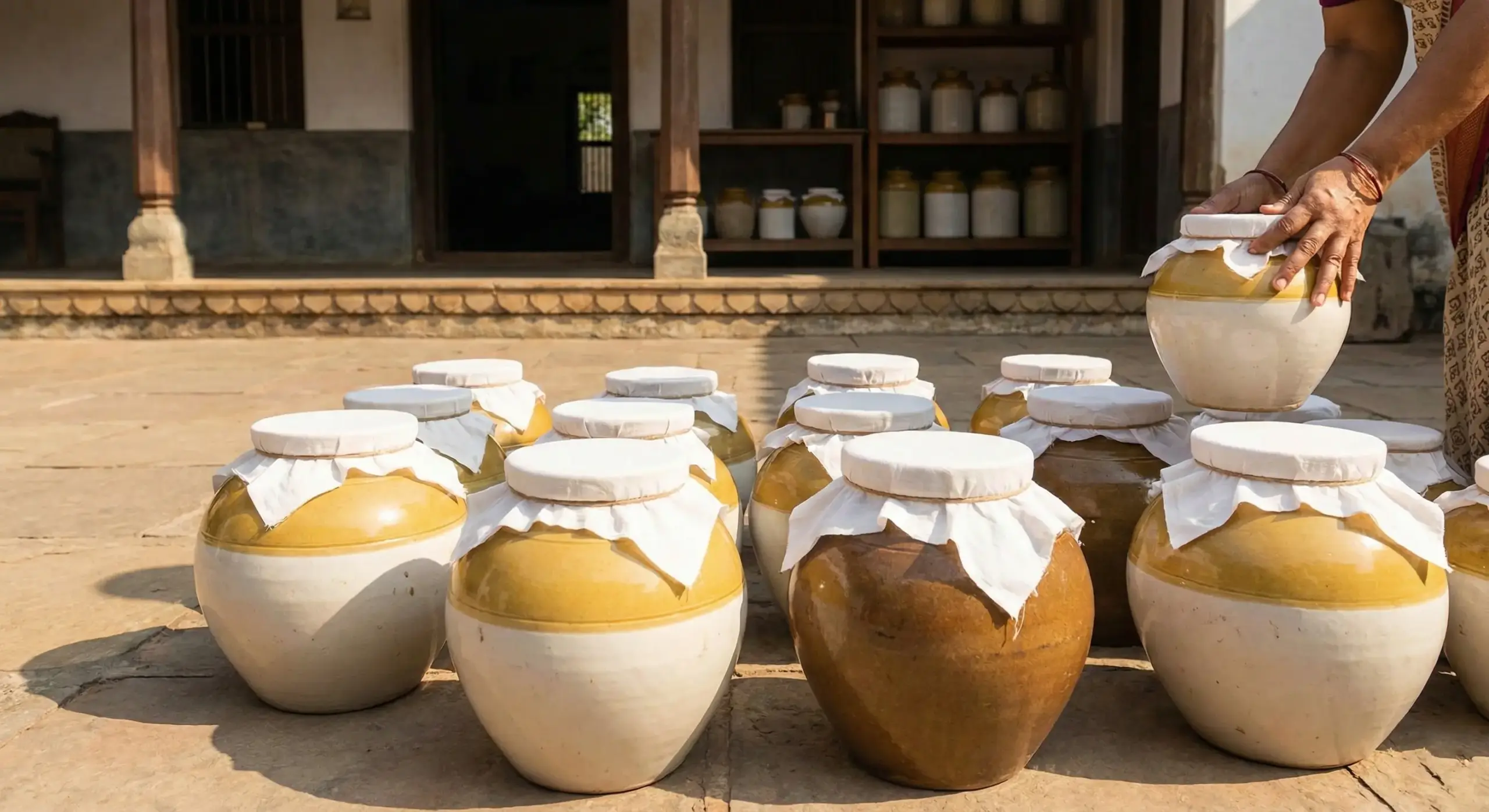
A glazed ceramic barni that comes down from a family shelf is worth using only if the glaze is sound. InstaCuppa’s guide to storing pickles in ceramic, glass and steel gives that conditional plainly: an old-style glazed barni works well if the glaze is sound, a poor glaze can hold lead, and the buyer should choose a maker they trust. That caution belongs at the start of a guide to traditional storage, because the tradition and the safety checks both matter when you decide what to put a year’s pickle in.
This guide covers the traditional storage routine in order: the jar, the cloth cover, the sunning, the shelf, the oil layer and the spoon. It states where the advice is custom and where it has a clear practical reason.
The short answer
In short
Traditional pickle storage uses a clean, completely dry, non-reactive jar (glazed ceramic or glass), a cloth cover while the pickle is sunned, a cool dry shelf, a layer of oil over the fruit and a dry spoon every time the jar is opened. Water, air and metal are the three things to keep away from the pickle. None of this guarantees a shelf life, and a cracked glaze or a wet utensil can undo the rest.
The jar: ceramic, glass or steel
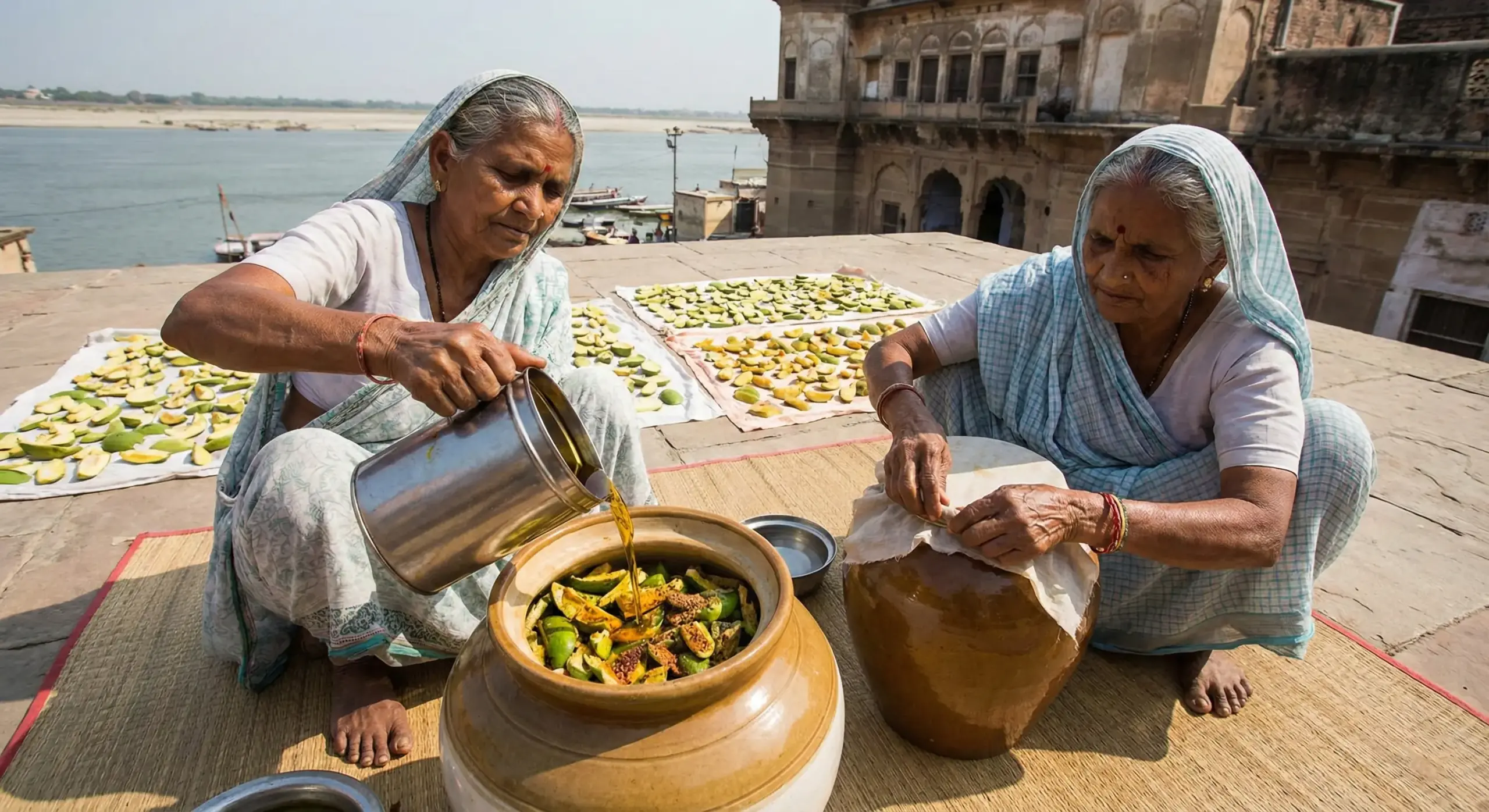
Before glass jars were common, pickle was kept in ceramic. The Leaf Bud, a ceramics maker, describes the traditional barni as a ceramic jar with a narrow neck, and says the shape of the jar controls air exposure, an important feature for a product meant to age and develop character over weeks and months. It adds that a glazed ceramic jar will not acquire any smell or taste from its former contents. Regional names differ: a Better India writer from Kerala recalls traditional monsoon pickles stored in round ceramic jars called bharanis.
InstaCuppa ranks the options. Its comparison puts glass as the best option, glazed ceramic next, stainless steel as fine for weeks but not years because salt can slowly pit steel, and plastic for short-term use only. Its monsoon guide rates a glazed barni as good if the glaze has no cracks and the lid is tight, and an unglazed clay pot as the worst, because porous walls can soak up oil and moisture. These are one retailer’s assessments and not a standard, but they match the practical logic: the vessel must not react with salt and acid, and must not absorb water or oil.
Our own advice on choosing is in the best jar for achar. The main points for traditional jars are these.
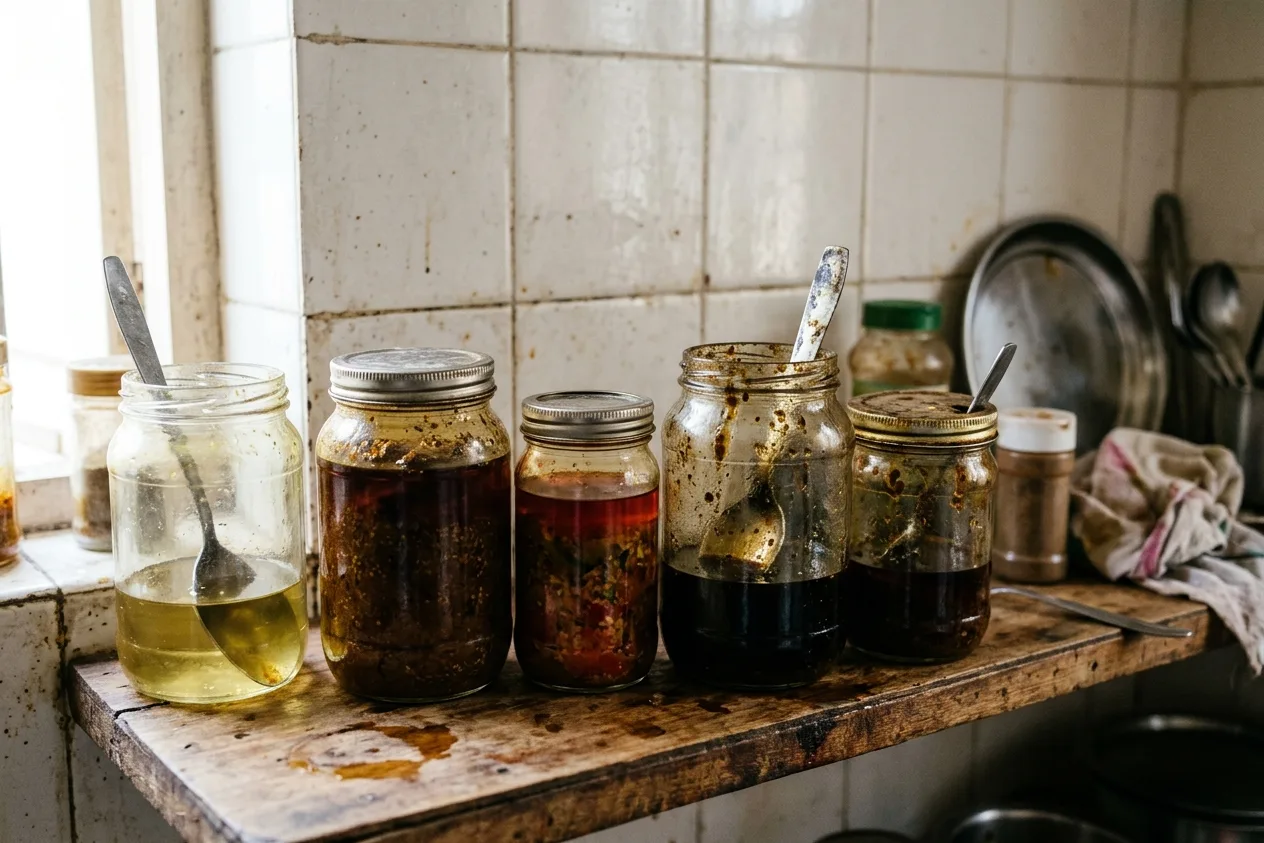
- Check the glaze for cracks and chips before every season.
- Be cautious with old or unmarked ceramic, because a poor glaze can contain lead.
- Skip unglazed clay for a long-kept oil pickle.
- Wash the jar and let it dry completely, in the sun if possible, before filling. The Deccan Herald notes that traditional recipes insist that jars be completely dry before use.
The cloth cover and the sun
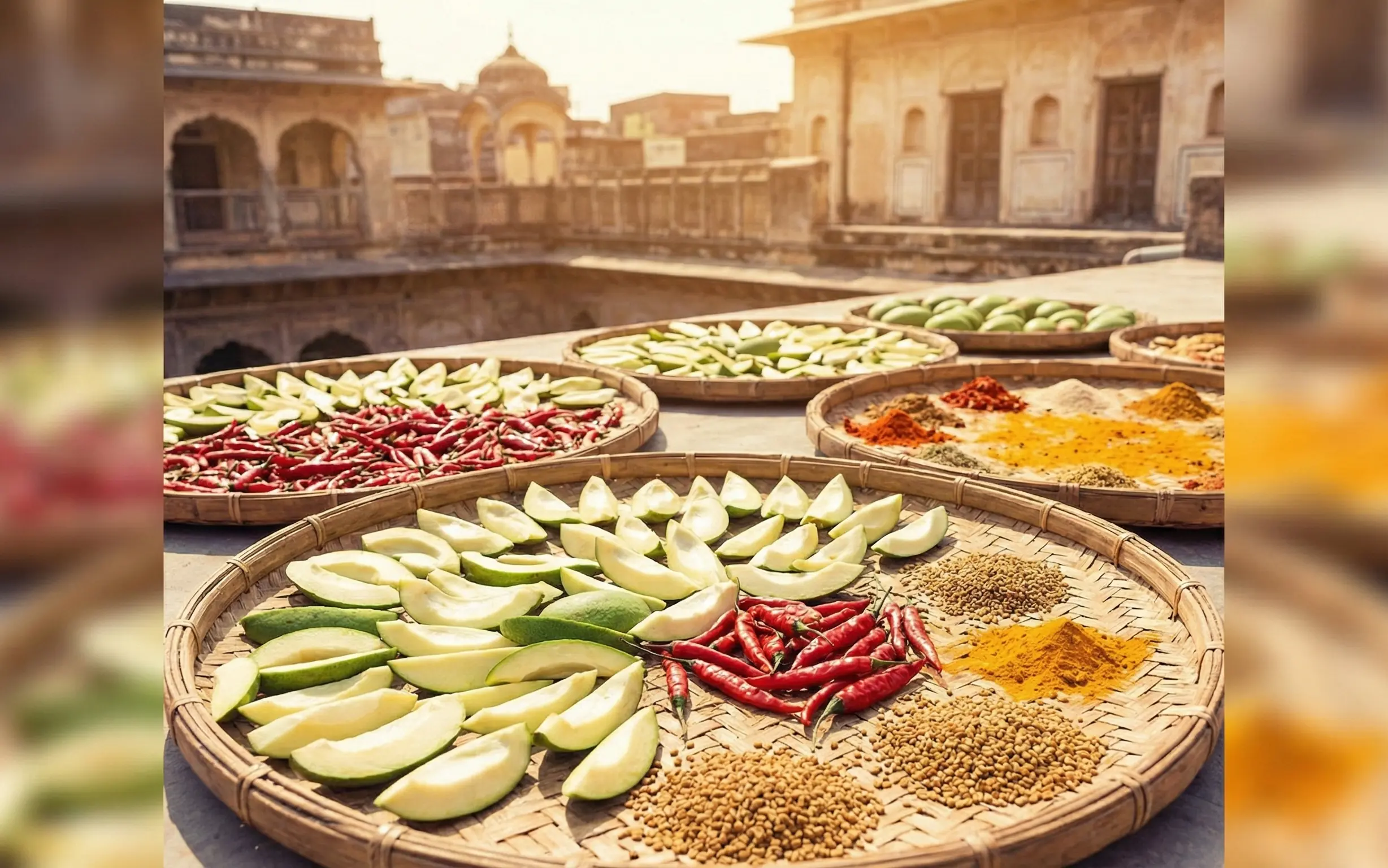
When a fresh pickle is being sun-cured, the jar mouth is covered with cloth and not a lid. The Masterclass guide to achar describes spiced fruit or vegetables left to mature in the sun for three to four days in a muslin-covered jar. A cloth keeps flies and dust out while letting moisture leave the jar, which a closed lid would trap. An InstaCuppa recipe makes the same distinction for drying the cut fruit: cover with a thin muslin cloth to keep flies away, and do not cover with a lid, because moisture needs to escape.
The Deccan Herald adds a detail of routine: families may carefully move the jars into the sun each morning and bring them indoors every evening, a daily migration that takes effort. Once the sun-curing period is over, the cloth gives way to a tight lid. How long the sun phase runs, and why, is in the sun-curing guide.
The shelf: cool, dry and apart
The usual advice is to keep a finished pickle in a cool, dry place. A Slurrp guide to pickle storage says to store jars in a cool, dry place, ideally with no other items on the shelf that could contaminate the pickles.
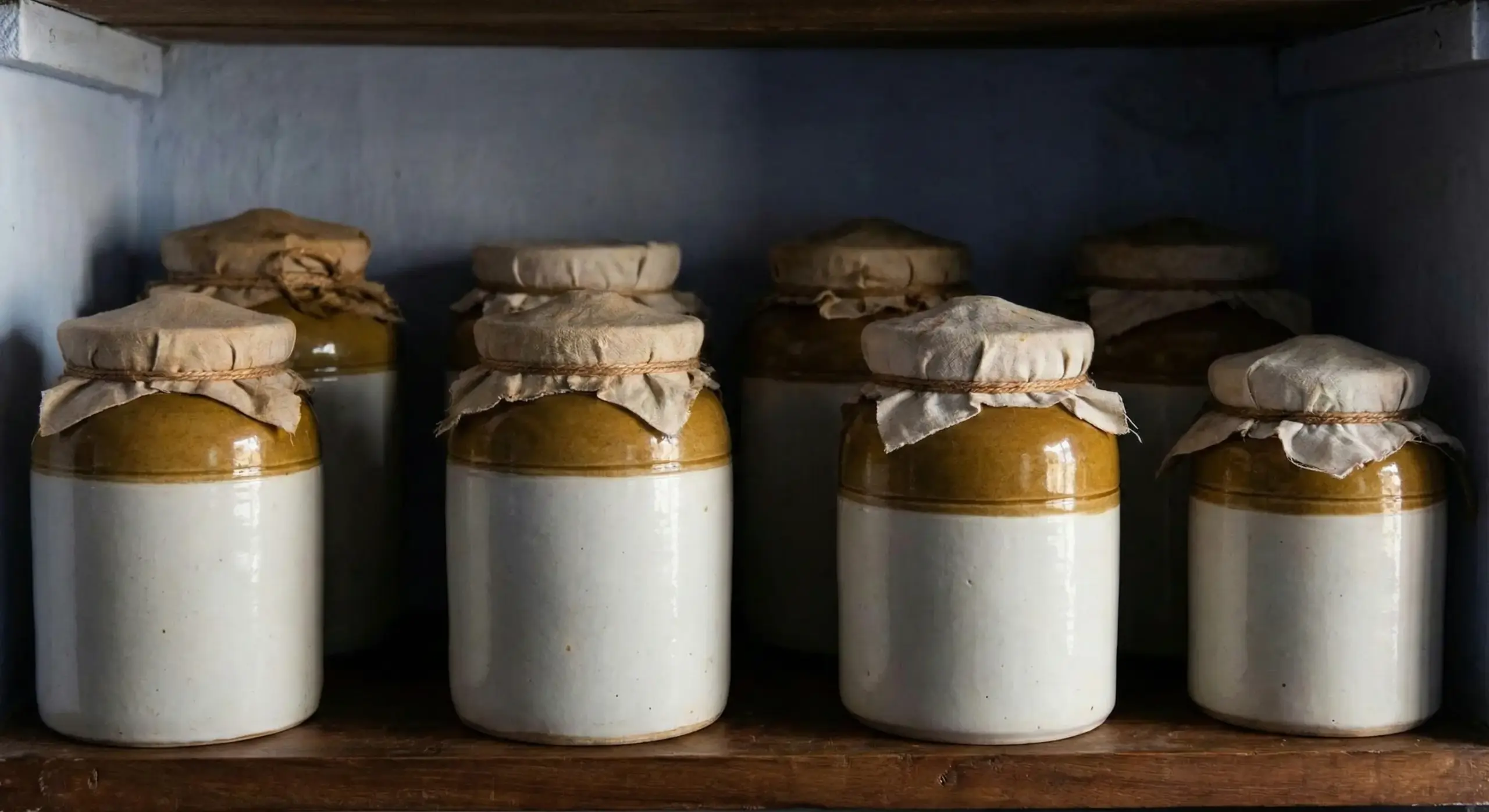
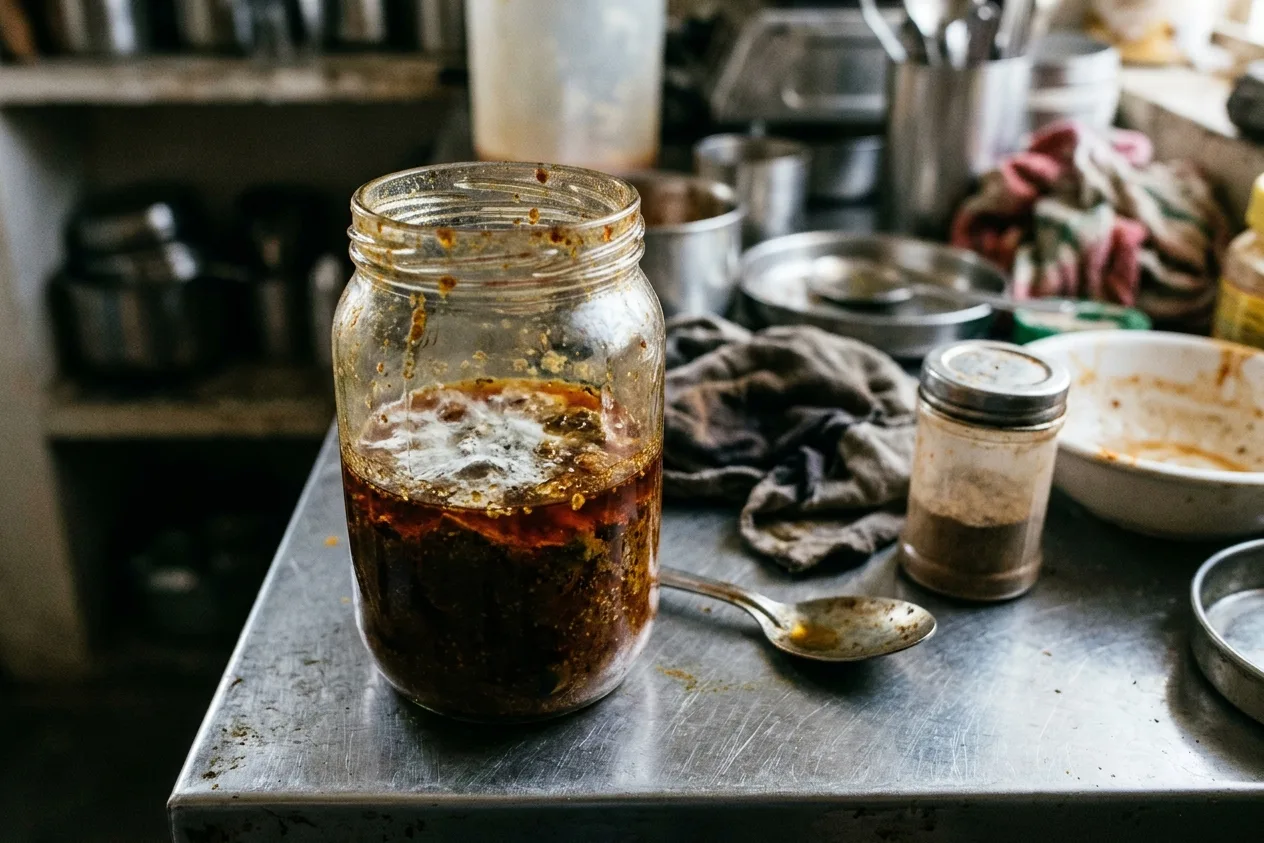
In a humid season the shelf is not always enough. InstaCuppa says an opened jar or a low-salt pickle is safer in the fridge during the monsoon, while a well-made achar with plenty of salt and oil over every piece can stay in a sealed jar on a cool, dark shelf. The fridge slows mould but does not stop it. Our monsoon routine is in preventing fungus in achar.
The oil layer
Oil is the seal. The Deccan Herald describes the oil blanket simply: a layer of oil helps keep air away from the pickle. Keep the fruit under it, and top up the oil if it drops. The reasons, and the safety limits of storing fresh vegetables in oil, are in why the oil layer on achar matters and how oil preserves food in Indian kitchens.
The spoon: the one firm rule
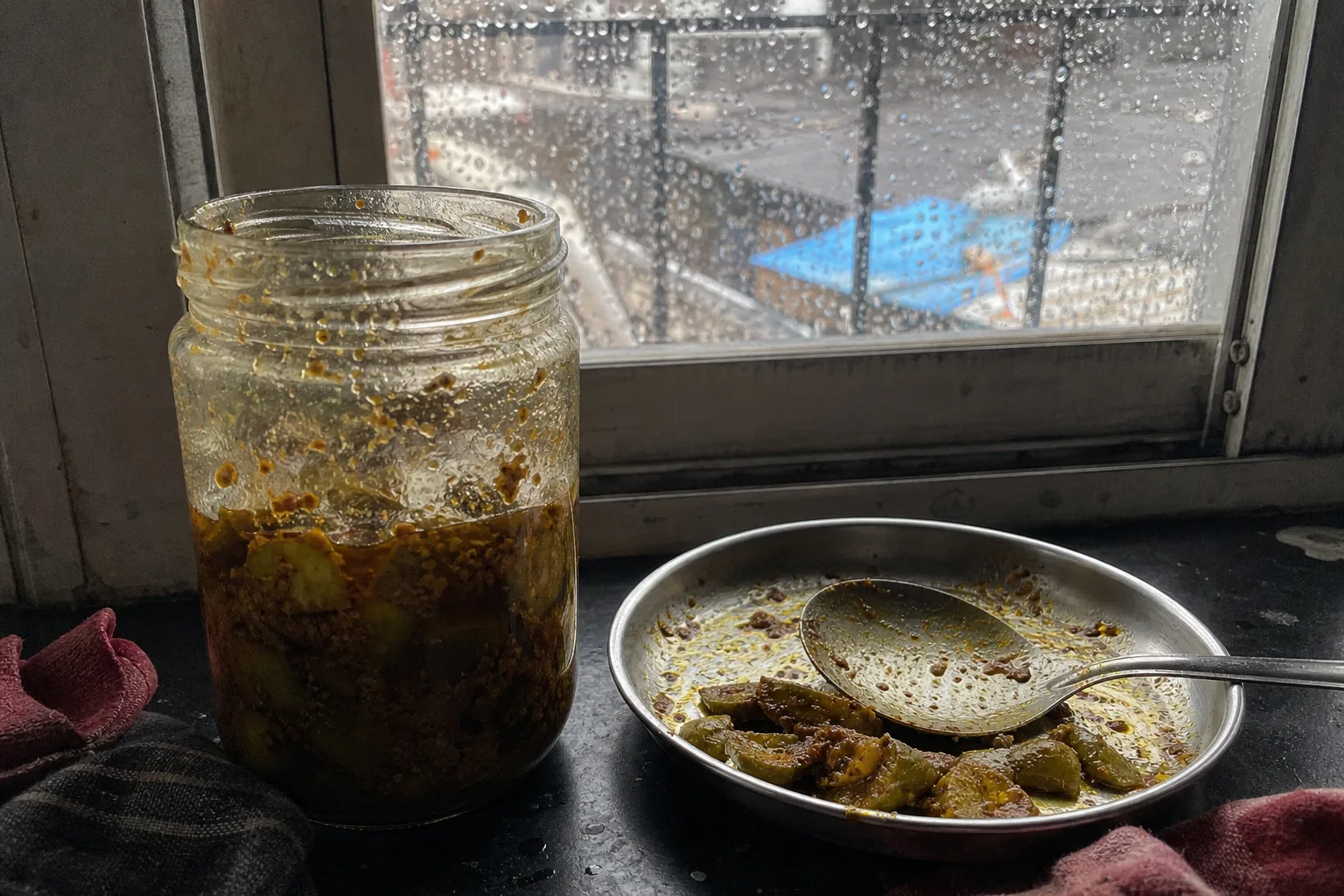
Every source agrees on this point. The Slurrp monsoon guide says pickle should always be served with a clean, dry spoon, never your hands. The InstaCuppa fungus guide calls a wet spoon the classic mistake, since one damp spoon carries water straight into the jar. An InstaCuppa recipe table lists a wet spoon in the jar as leading to fungus within a week.
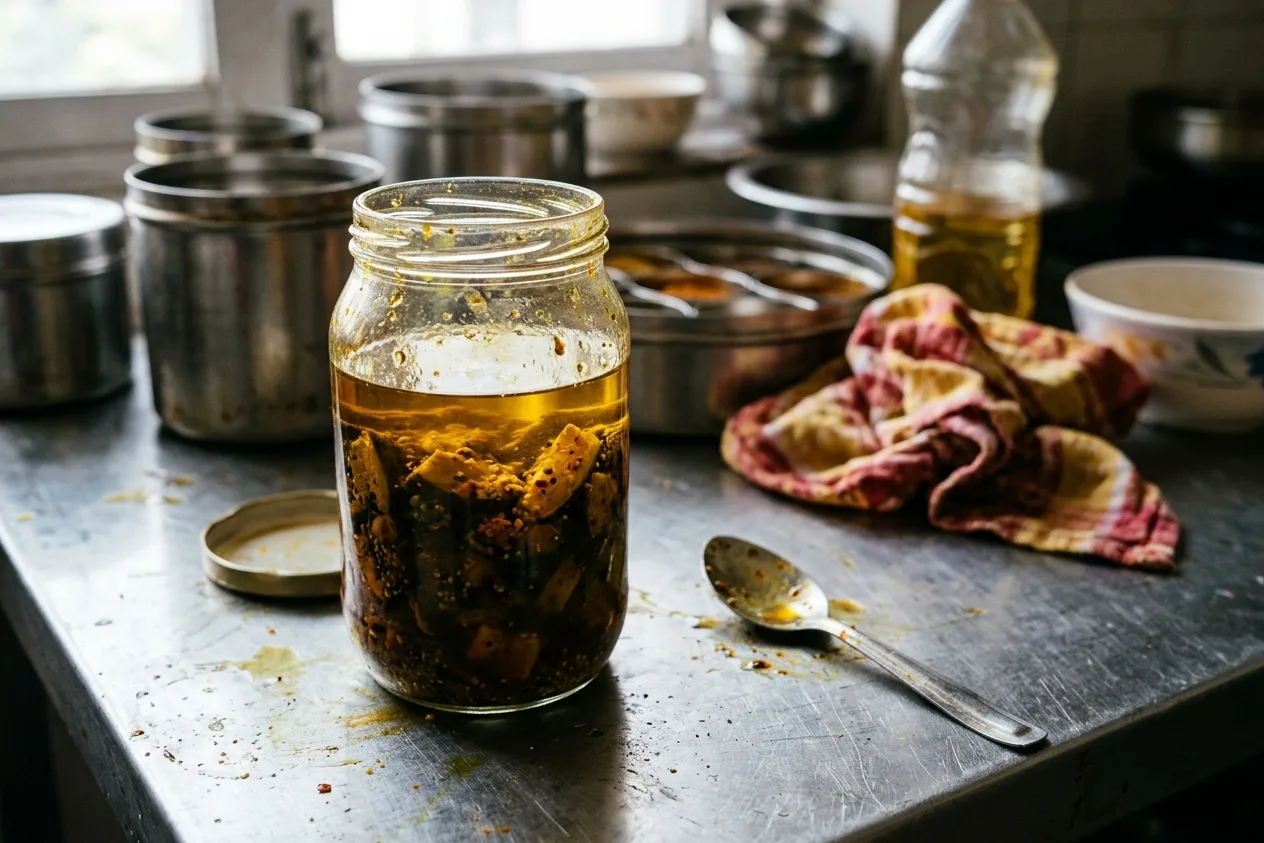
The material of the spoon is debated. Slurrp advises a clean, dry wooden spoon and says never to use a metal spoon, while InstaCuppa’s own images show a dry steel spoon. We would put the weight on dry and clean, and we would not leave any spoon sitting in the jar.
Small jars and fewer openings
Every opening lets in air and, in humid weather, moisture. A Slurrp guide suggests that if you have a large quantity, you keep the pickle in smaller containers, because the jar will be opened less often and spoilage is reduced. Many families do this by keeping a small working jar for the table, topped up from the large store, and only opening the large jar to refill. It is a simple habit with a clear reason.
A simple routine for the jar you have
Whatever the jar is made of, the routine that protects a pickle is short. Wash the jar and lid, then dry them completely, in the sun or with a clean dry cloth, because water left in a jar is the most common reason a pickle spoils. Fill it so the pieces sit below the oil, press them down after every use, and top up with clean oil if the layer thins. Close the lid firmly, wipe the rim, and keep the jar away from steam, direct heat and damp corners of the kitchen. A cool, dark shelf is better than the top of the stove. Opening the jar less often helps too, which is why many households decant a small amount into a spare jar for daily use and keep the main jar closed. None of this needs special equipment, and all of it can be done in any kitchen, old or new.
Frequently asked questions
What is the best container to store pickle?
Glass is the safest all-round choice by one retailer’s ranking, and glazed ceramic with an intact glaze is a good traditional alternative. Avoid unglazed clay for long storage.
Why is pickle stored in ceramic jars?
Glazed ceramic does not react with salt and acid, does not take on odours, and a narrow neck limits air exposure. The glaze must be sound.
Can pickle be stored in a steel container?
Stainless steel is fine for weeks but not for long storage, because salt can slowly pit it, according to InstaCuppa.
Why is a cloth tied over the jar?
During sun-curing a cloth keeps out flies and dust while letting moisture escape. A tight lid replaces it afterwards.
Why must the spoon be dry?
Water on the spoon carries moisture into the jar, which is the most common cause of fungus.
Should pickle go in the fridge?
In the monsoon an opened or low-salt pickle is safer there, according to InstaCuppa. A salty, well-oiled traditional pickle can stay on a cool, dark shelf in a sealed jar.
How long will stored pickle last?
It depends on the recipe, the dryness, the oil layer and the handling. We do not promise a shelf life.
Sources used for this post:
– InstaCuppa, “How to Store Pickles: Ceramic, Glass and Steel”
– InstaCuppa, “How to Store Pickles in Monsoon”
– InstaCuppa, “White fungus on homemade pickle”
– InstaCuppa, grandmother’s mango achaar method
– The Leaf Bud, “Why Pickle Is Stored in Ceramic Jars”
– The Better India, “Monsoon pickles from across India”
– Deccan Herald, “How India’s pickles tell stories of climate”
– Masterclass, “All About Achaar”
– Slurrp, “Pickle Storing Tips Every Indian Needs to Know”
– Slurrp, “Monsoon Tip: Preserving Your Pickles From Spoilage”
– Slurrp, “5 Tips to Keep the Pickles Stay Fresh Even During Monsoons”