Blog
Why Sun-Drying Is Essential in Indian Pickles

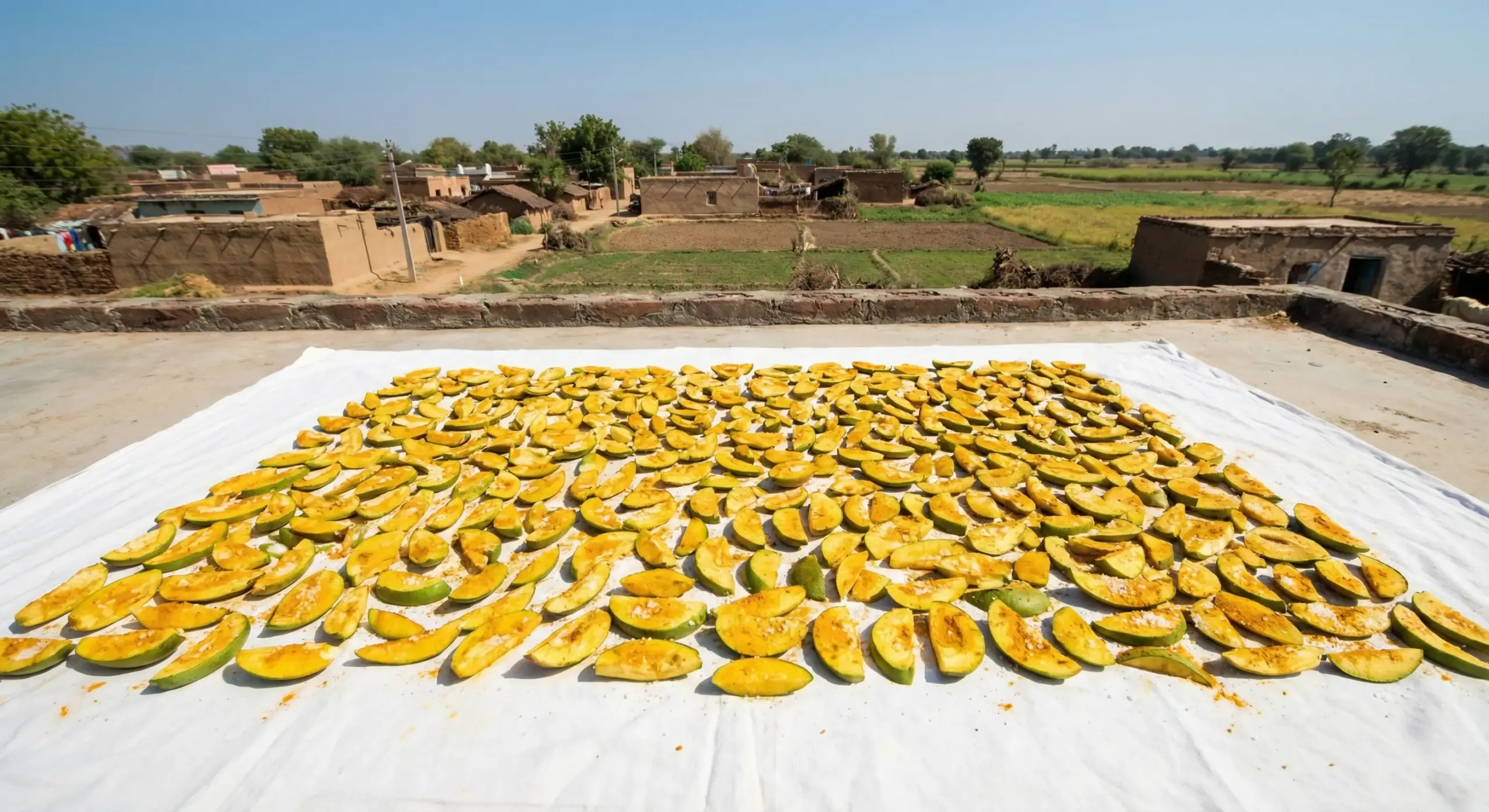
A Varanasi roof in the second week of May can send the air temperature past 40 degrees Celsius, and records show peaks of 47 degrees in May 1998 and June 2005, according to Climates to Travel. For most of the year that heat is a problem for the household. For a few weeks it becomes the most useful tool in the kitchen, because it is what dries a tray of cut raw mango into something that will keep for a year.
This guide explains what sun-drying does for an Indian pickle, why it comes before the oil and spice go in, what can go wrong, and why the step is hard to replace. It is written for readers who want the reasoning and not a recipe.
The short answer
In short
Sun-drying removes water from cut produce after it has been salted. Less water leaves less room for mould, yeast and bacteria, so the finished pickle keeps. The dried pieces then take up oil and spice instead of watering them down. The practice fits the calendar too, since raw mangoes and lemons arrive in the hottest, driest months, just before the monsoon makes drying impossible.
Why water is the enemy
The reason sun-drying matters comes down to one idea: spoilage needs water. The Food and Agriculture Organization of the United Nations puts it simply in its guidance on drying fruit, noting that drying removes water from foods so that the growth of micro-organisms is inhibited, and that it is one of the oldest methods of food preservation, still used widely for foods eaten at home and for sale.
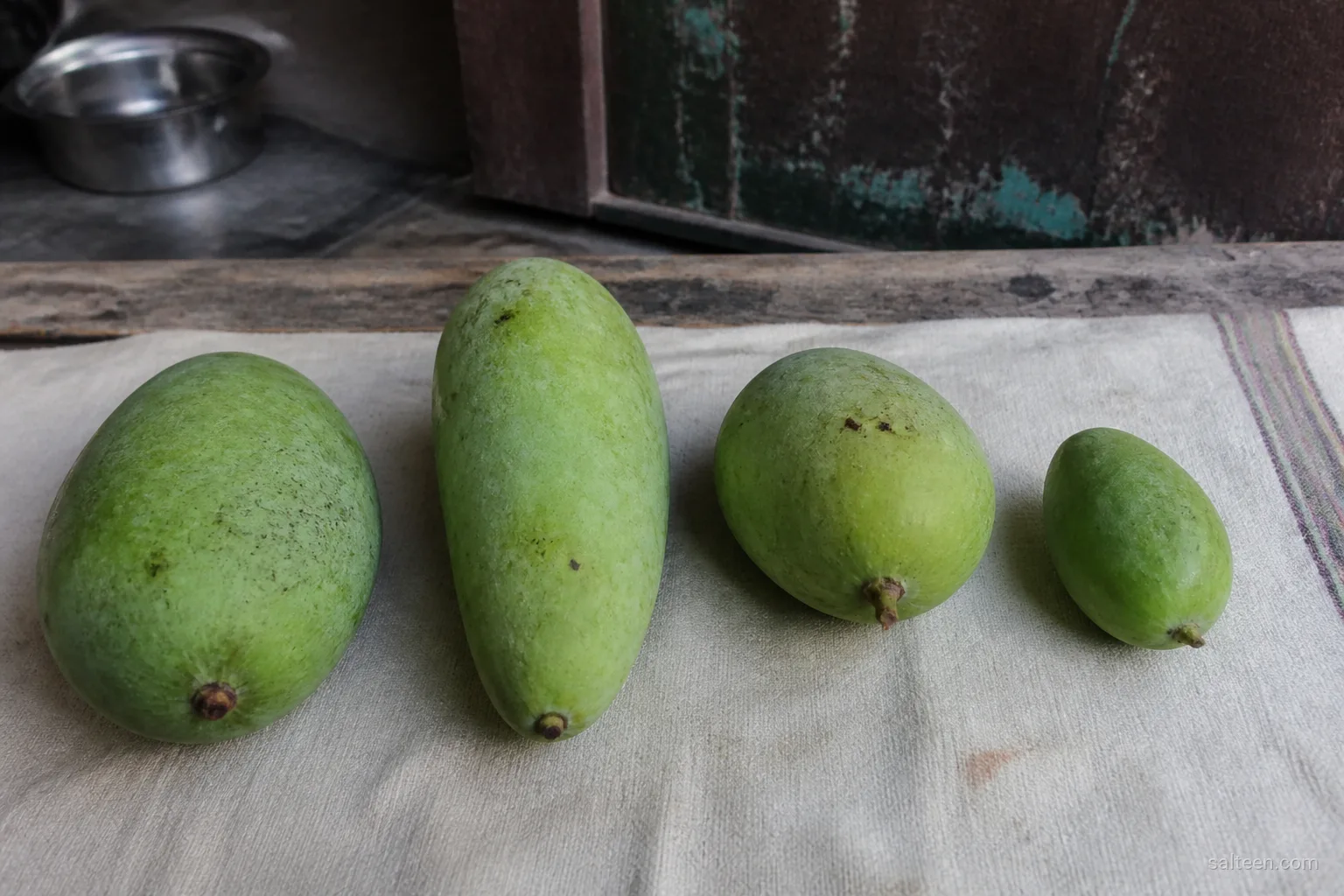
Fresh raw mango, lemon, carrot or chilli is mostly water. If you cut the fruit and pour oil and spice straight over it, the water leaks out of the pieces and collects at the bottom of the jar. That watery layer is where mould and yeast grow, and the pickle spoils from the bottom up.
Food scientists describe the amount of available water with a measure called water activity. The lower it is, the fewer organisms can grow. Fresh meat and fish sit around 0.99, bread around 0.95, honey at 0.5 to 0.7, and biscuits near 0.3. Teaching material on food preservation quotes a figure of about 0.86 to 0.89 for a finished mango pickle, which is low enough to discourage most spoilage organisms though not all. A good pickle gets to that range through three actions that stack: salt, drying and oil.
1. Salt draws water out
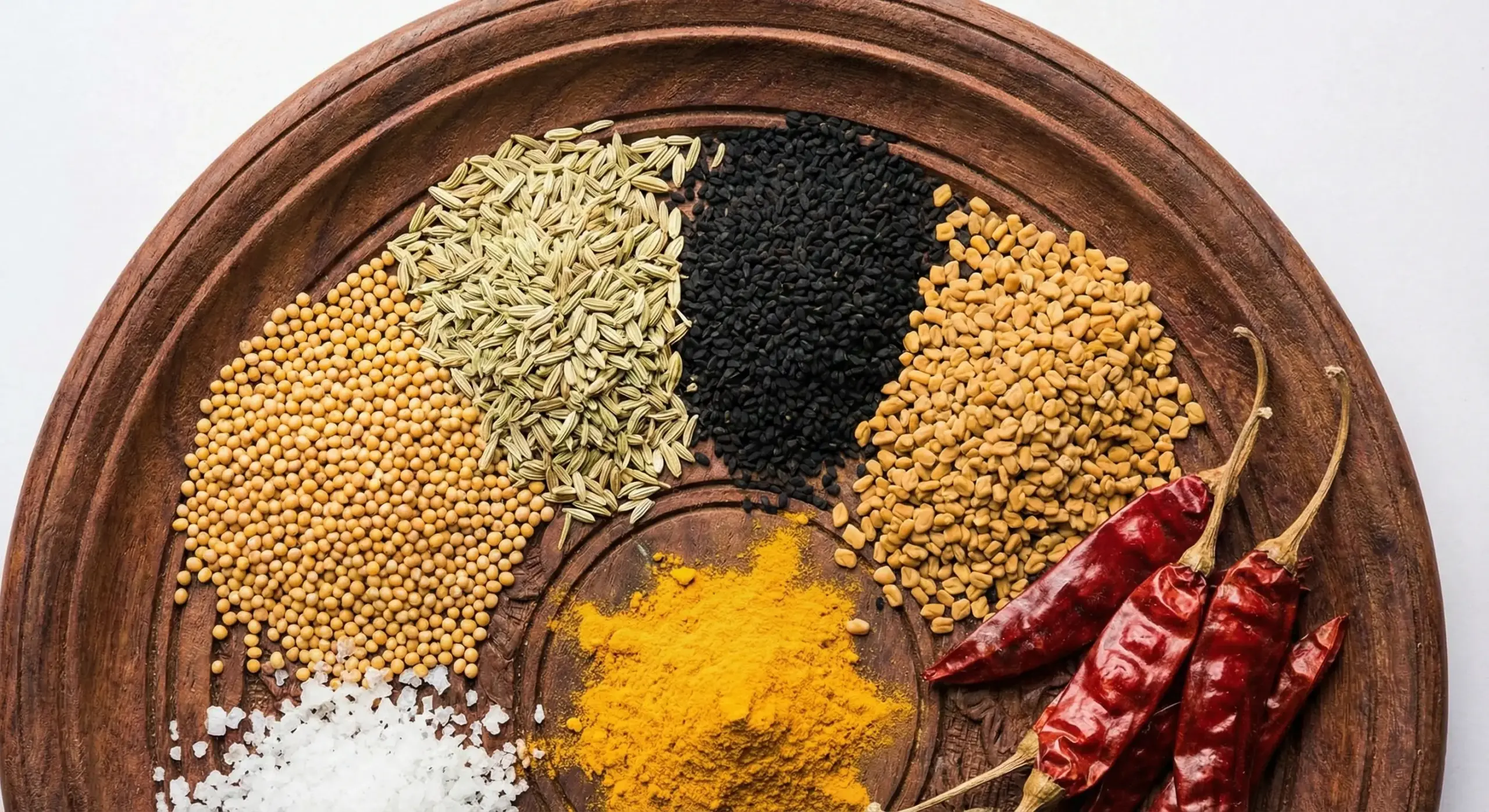
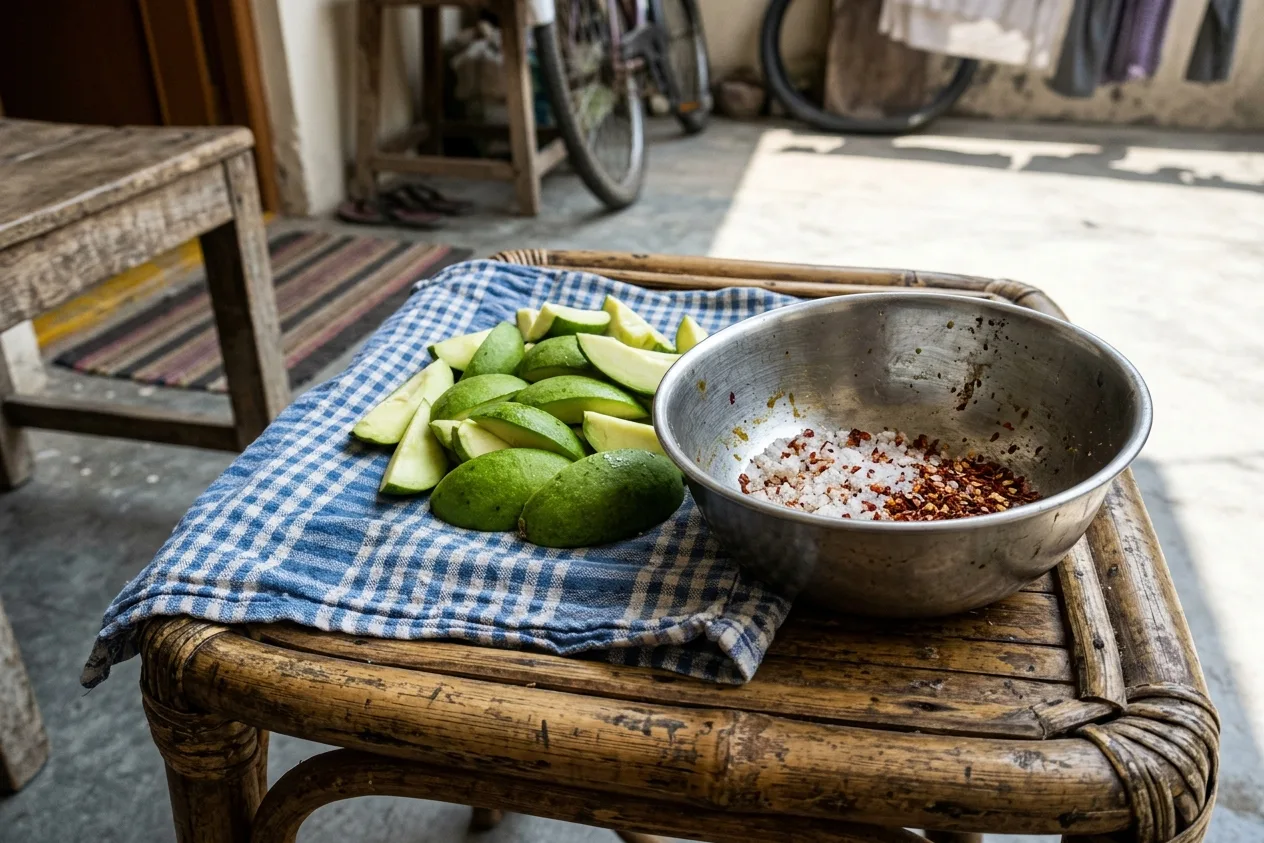
The cut pieces are tossed with salt, usually with turmeric as well. Salt pulls water out of the plant cells by osmosis and also makes the surface hostile to many organisms. One published home guide suggests rock salt at roughly 80 to 100 grams per kilogram of mango as a starting point, spread out for a day or two. Treat that as an example and not a rule, since the right amount depends on the fruit, the weather and the recipe.
2. The sun finishes the drying
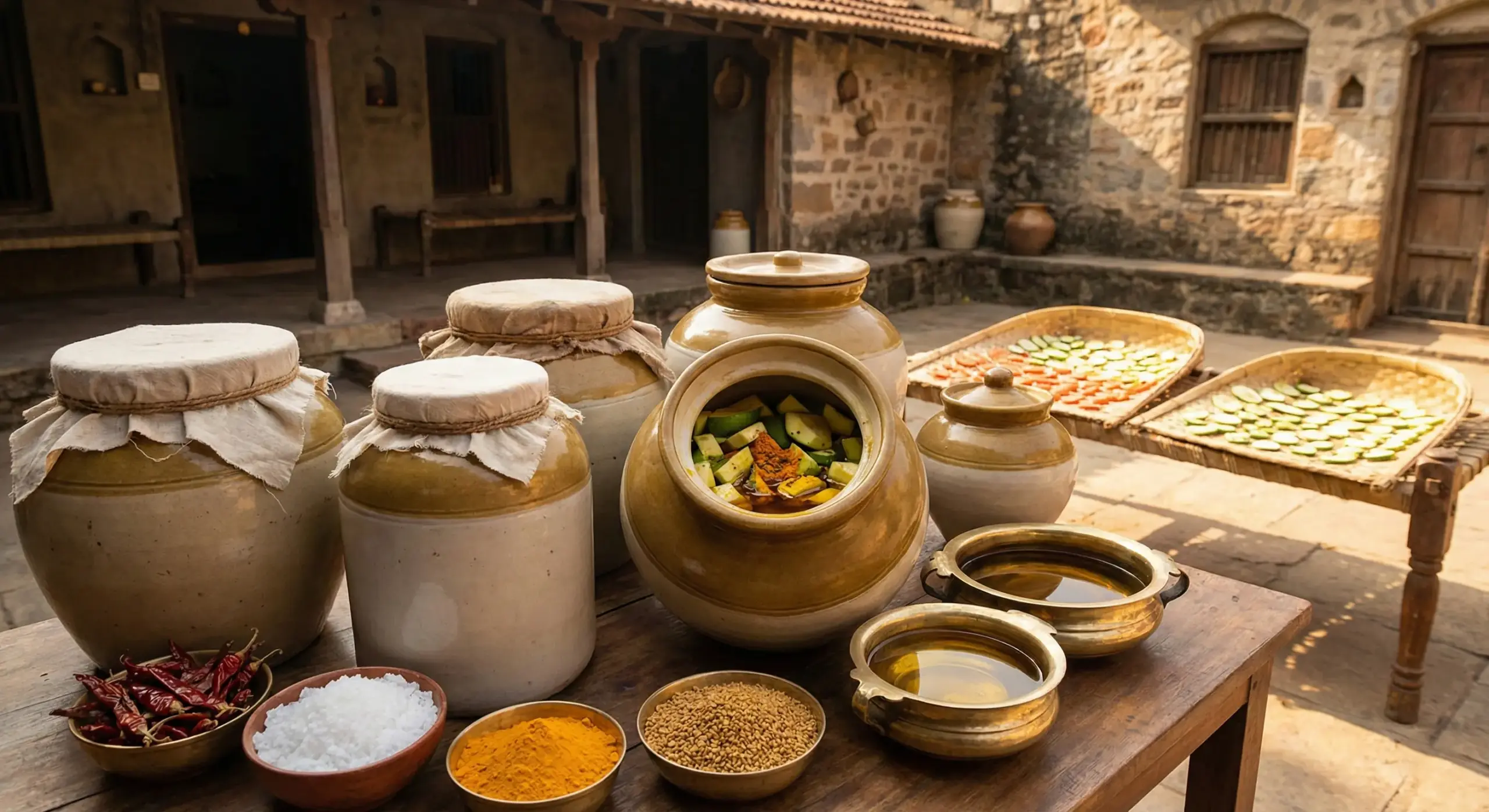
Spread on a clean cloth, tray or terrace in direct sun, the salted pieces lose far more water than they would indoors. A published home guide describes one or two days of four to six hours of sun a day for mango pieces. The sun also warms the fruit, which speeds the evaporation, and the hot dry air carries moisture away. The FAO notes that sun drying is the simplest and cheapest way to dry food, with a catch: the processor has very little control over the drying conditions.
That catch matters. Cloud, dew, a sudden shower or a humid evening can undo a day of work, which is why pickling happens in the dry months and why households watch the sky closely.
3. Oil and spice seal the result
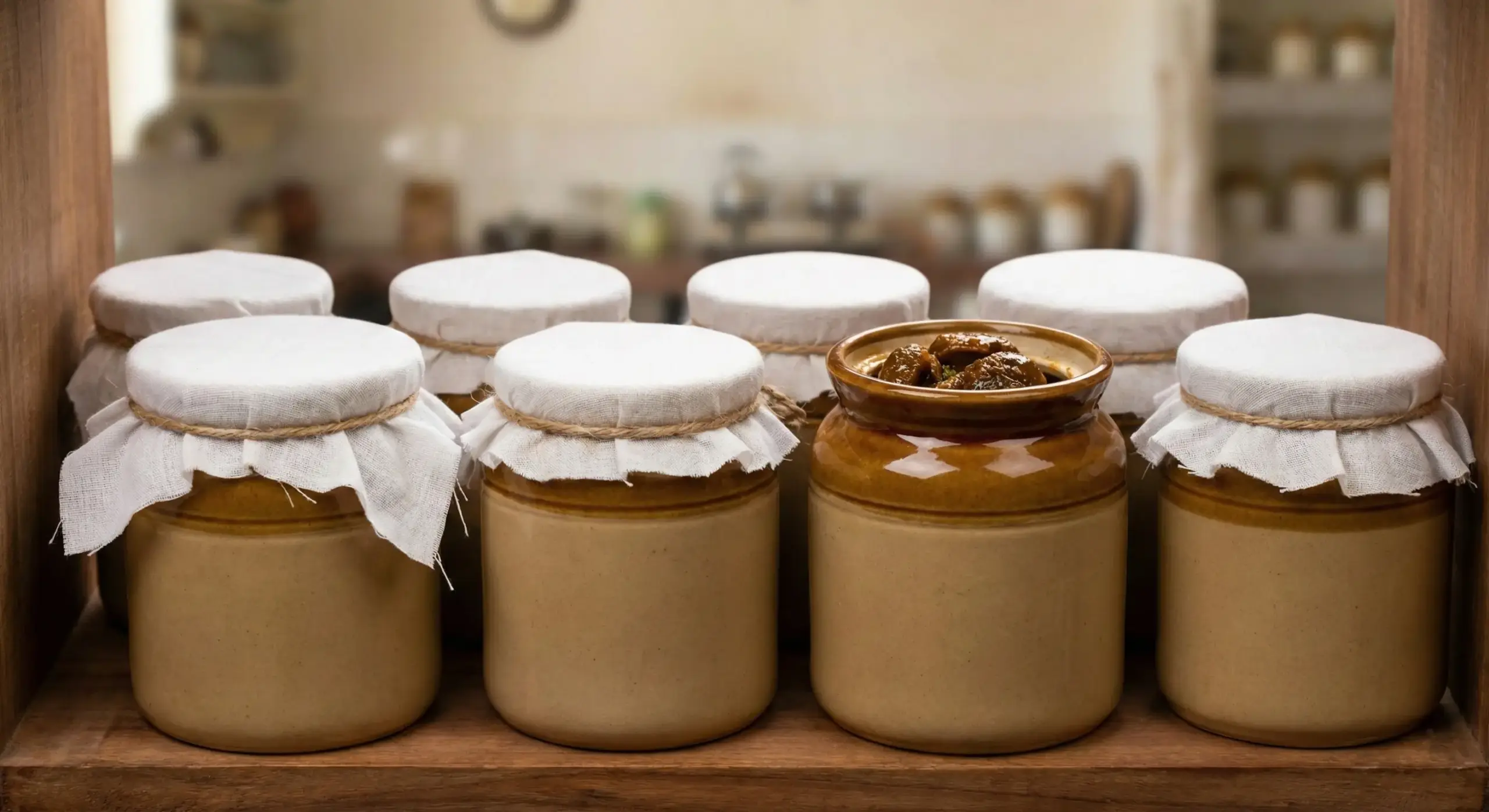
Once the pieces are dry, they are mixed with spices and covered in mustard oil, or in some regions sesame or groundnut oil. The dried fruit does not water the oil down, and the oil covers the surface so air and moisture stay out. See how oil preserves food in Indian kitchens and mustard oil in Banaras cooking.
What else the sun may do
Home cooks and food writers often credit the sun with more than drying. One pickle writer says the hot sun gives “low temperature pasteurization” and that ultraviolet rays kill unwanted bacteria. Wikipedia’s entry on pickling notes the practice of maturing filled jars in the sun, saying the sun’s heat destroys moulds and microbes that could spoil the pickle. For jars left in the sun for weeks, as with sweet mango chhundo, the heat also concentrates the sugar and helps the flavours blend.
We treat these as common explanations, not as measured facts for every recipe. The part we are confident about is the drying. Whether UV exposure adds a real extra margin is less well established, and no home cook should rely on it to rescue a damp batch.
Why the pickling calendar looks the way it does
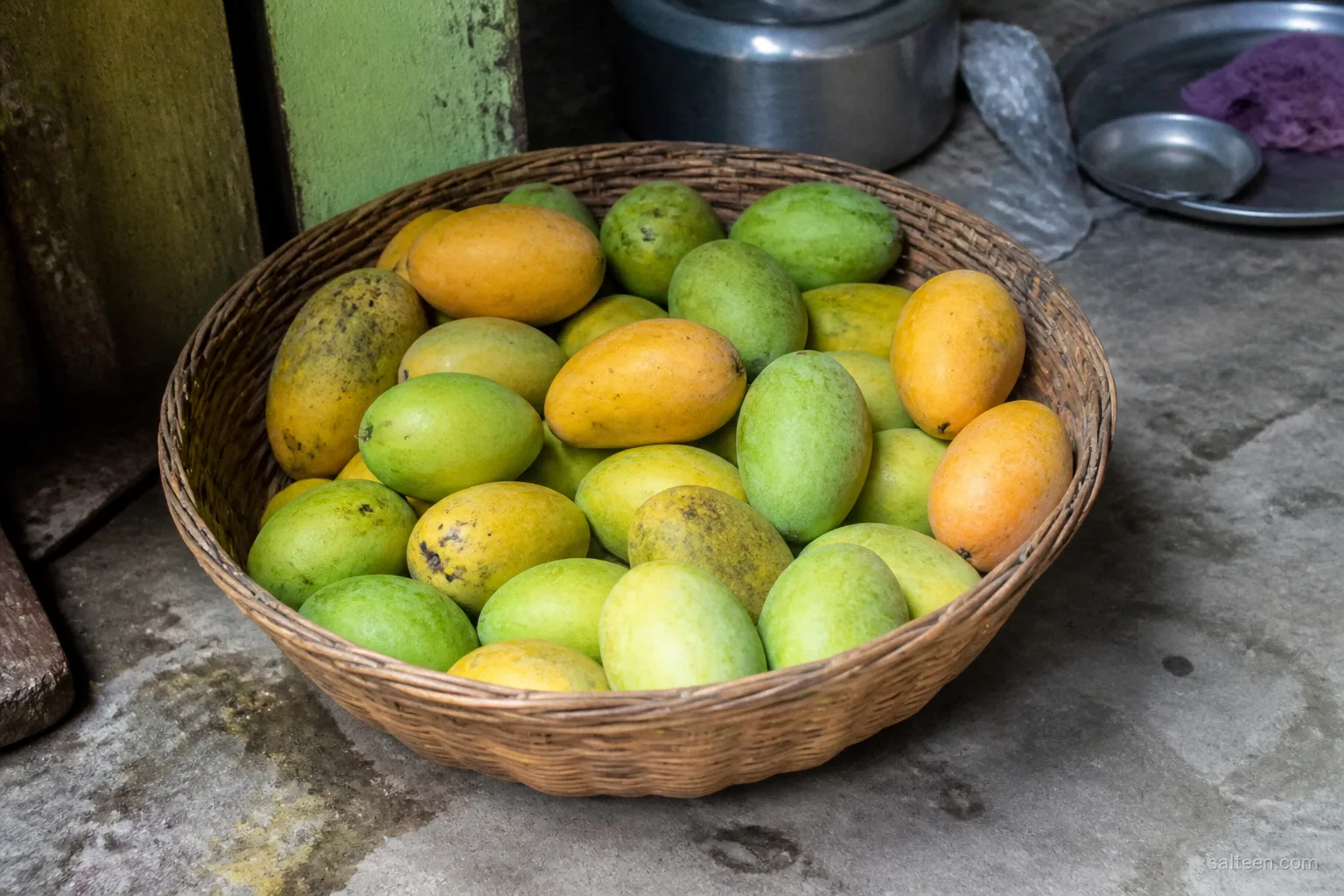
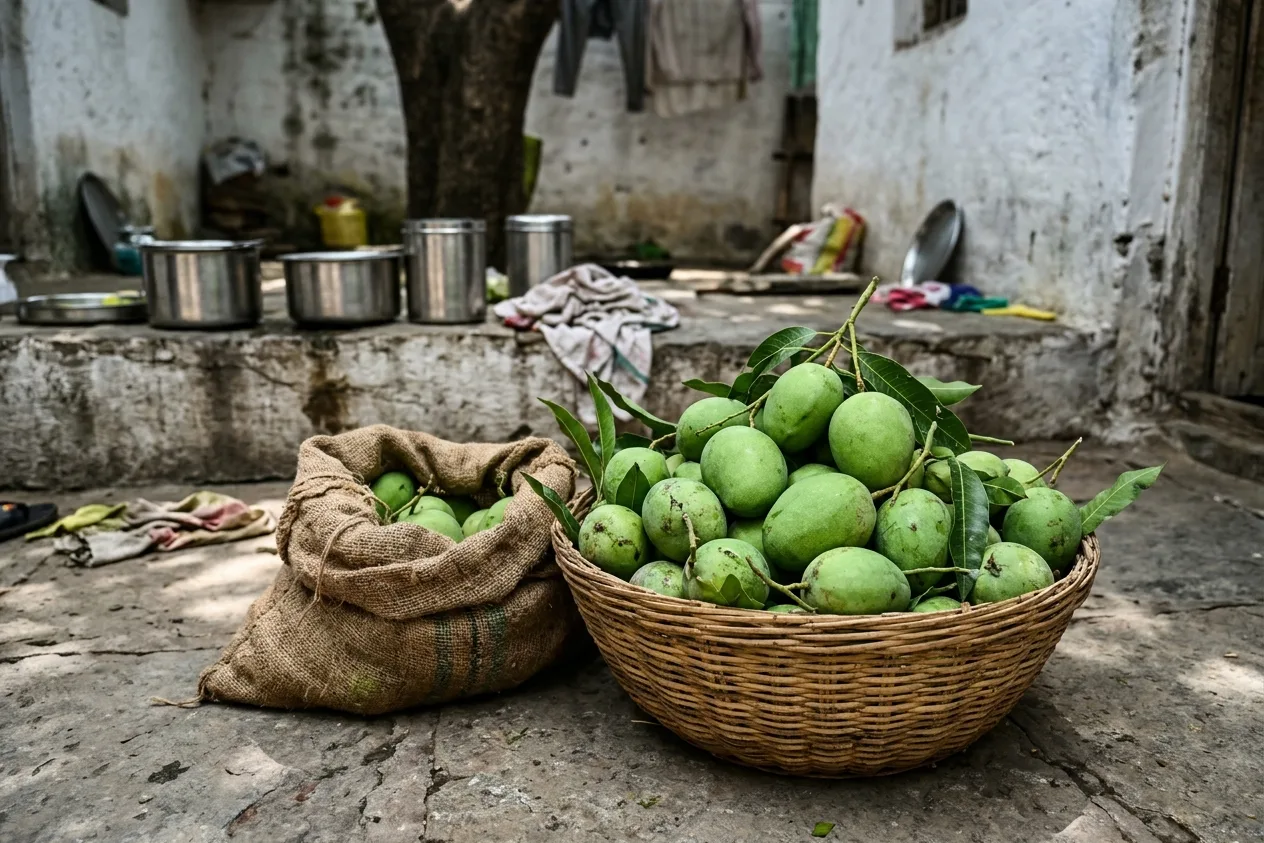
Indian pickling follows the sun. Raw mangoes, lemons and green chillies arrive in the pre-monsoon months, from about March to June, when the sun is strongest and the air is driest. That is no accident of the calendar. A household that pickles in these weeks has strong drying weather and a harvest at its best, and once the rains come the same job would be much harder.
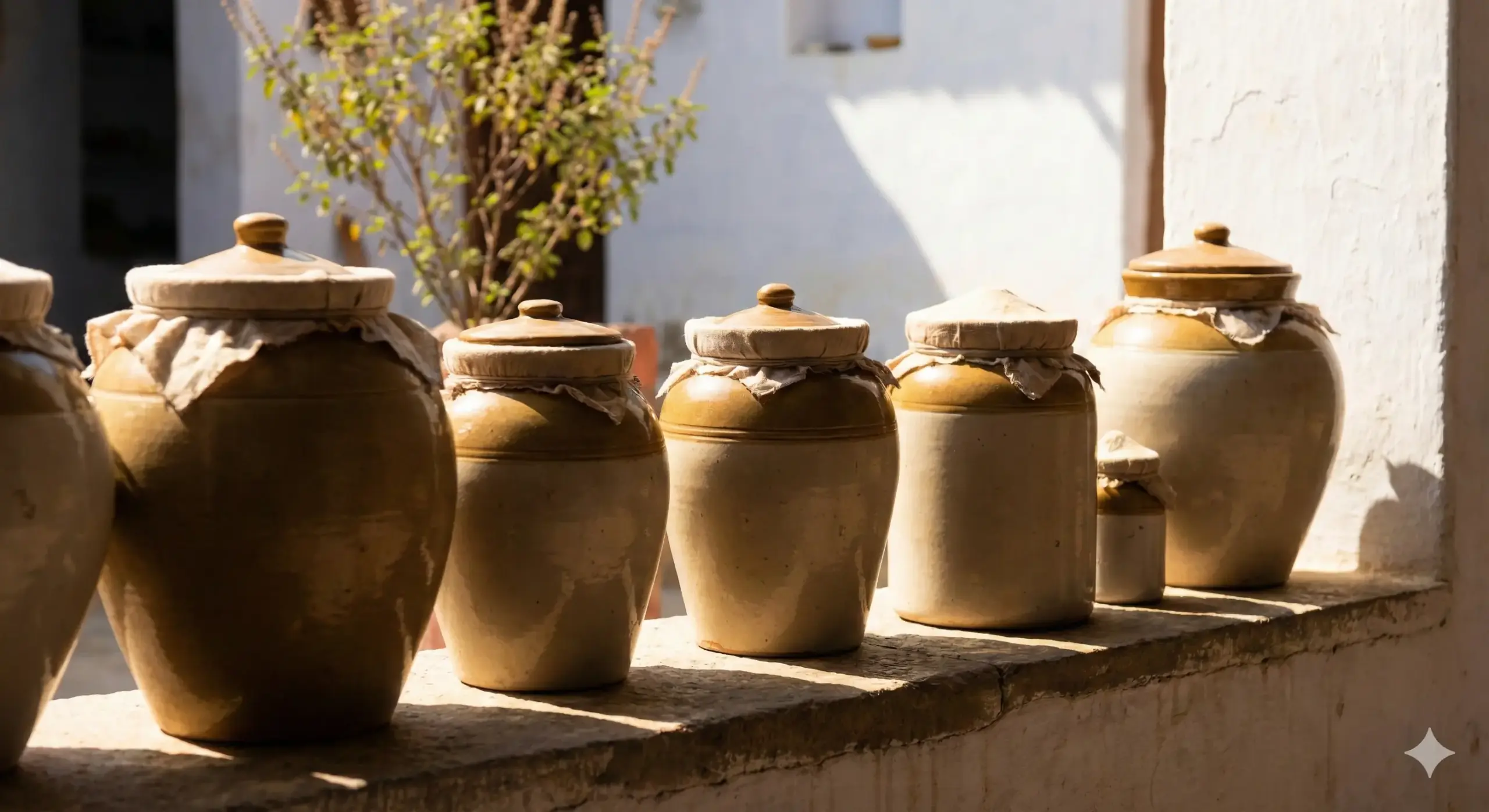
Banaras shows the pattern clearly. Summer is the season for mango, and winter, with its clear skies and shorter days, suits amla, carrot, radish and the stuffed red chilli. In the monsoon, sealed jars made earlier carry the table, a point we explore in seasonal eating practices in Kashi and how climate shaped Banaras food habits.
Pickling is also old. Slurrp’s history of mango pickle notes that by the 14th century travellers such as Ibn Battuta were already documenting the salting and preservation of green mangoes, and that in some households mango pickles are kept for decades, darkening and deepening in flavour. One of the oldest surviving Indian texts with extensive recipes, the Manasollasa, dates to the early 12th century, though we do not claim it describes pickles.
A correction on chilli: it is a New World crop that reached India after the 16th century, so the red chilli pickle of today is a later development. The sharpness of an earlier pickle came from other spices such as black pepper and mustard.
What can go wrong
Most spoiled pickles trace back to a few causes, and the sun is involved in several of them.
| Problem | Likely cause | What households do |
|---|---|---|
| White or green mould | Pieces still damp when oiled | Dry longer, never rush on a cloudy day |
| Soft, mushy fruit | Too little salt or too much moisture | Re-salt and re-dry, or start again |
| Sour, fizzy smell | Water in the jar or a wet spoon | Keep tools dry, avoid water entirely |
| Pieces dried to leather | Left in the sun too long | Judge by feel, pieces should be firm, not brittle |
| Dew re-wetting | Trays left out at night | Bring everything inside before dusk |
The most important household rule is to keep water out of the pickle once the process begins. Washing the mango, drying it fully, using a dry knife and a dry jar all serve the same aim.
Can you replace the sun?
People in flats without terraces make pickle with a few changes, and many of them work well. A warm, airy window, a ceiling fan, a low oven and a food dehydrator can all remove water. The FAO’s guidance on drying recognises that sun drying gives little control, and that controlled dryers give better consistency, though it also notes the extra cost. The catch is that an indoor method needs more attention to temperature, because too much heat will cook the fruit instead of drying it.
The traditional taste is harder to replace. Sun-dried produce takes up oil and spice differently from oven-dried produce, and the pickle ages in a particular way.
Small-batch pickling and the sun
For a small brand or a family, sun-drying scales poorly. It depends on weather, space and labour, and it cannot be hurried. That is a reason small-batch pickling keeps a seasonal rhythm, and a reason a good jar costs what it does. We cover that in why small-batch food tastes better.
Frequently asked questions
Why are Indian pickles put in the sun?
The sun dries salted fruit and vegetables so there is less water for mould and bacteria to grow in. It also warms the produce so it takes in oil and spice more evenly.
How long should mango pieces be sun-dried?
It depends on the fruit and the weather. One published home guide suggests one or two days of four to six hours of sun, but the real test is firm pieces with no wet surface.
Does sun-drying kill bacteria?
Drying lowers the water that bacteria need to grow. Claims that ultraviolet light kills bacteria in pickle are common in folk and home-cooking writing but are not established for every recipe.
Why is pickling done before the monsoon?
Raw mangoes and lemons arrive then, and the dry, sunny weather makes drying easy. Once the rains arrive, drying becomes hard.
Can I make pickle without sun?
Yes, with a warm airy room, a fan or an oven on very low heat. The result differs from a sun-dried one, and you need to be careful about both heat and moisture.
Why must pickle jars and spoons be dry?
Water spoils pickle. A wet spoon or a damp jar is a common reason a good batch goes bad.
Do all Indian pickles need sun?
Many oil pickles and sweet pickles do. Some brine and fermented pickles use less drying, and quick pickles use none.
Sources used for this post: FAO, drying and sun drying guidance; Climates to Travel, Varanasi temperatures; Wikipedia, pickling; Slurrp, “The Long Summer of Achaar”; Organic Mandya home guide (example quantities and drying times). Practices and folk explanations are labelled as such.