Blog
Green Chilli Pickle: Heat and Balance in a Banarasi Jar

A Slurrp winter recipe for hari mirch ka achaar, published in January 2026, opens with a seasonal rule: winter is the best time to make it, when green chillies are thick-skinned, juicier and less bitter. The line is a useful way into the whole subject. A green chilli pickle is judged on balance, and balance starts with choosing the right chilli at the right time of year, then surrounding its heat with enough sour, sweet, salty and aromatic notes to make it a pickle and not a dare.
This guide goes through those pieces: the chilli, the stuffing or coating, the oil, the sun and the table. It draws on published recipes and flags where Banaras practice needs checking.
The short answer
In short
North Indian green chilli pickle balances heat with sourness (amchoor or lemon juice), sweetness and aroma (fennel), pungency (mustard) and bitterness (fenugreek), bound with mustard oil. Thick-skinned, medium-hot winter chillies are preferred, either slit and stuffed with dry spice or chopped and mixed. Some versions are cured in the sun, and some are made instantly and kept in the fridge. Recipes differ widely, and none is the single Banarasi standard.
Choosing the chilli
The Slurrp recipe’s rule, thick-skinned, juicier and less bitter in winter, matches Maayeka’s instructions for stuffed green chilli pickle, which calls for 350 grams of thick green chillies (serrano peppers). A Veg Recipes of India guide to green chilli pickle tells cooks to choose a less hot or medium-hot variety, and Madhur Jaffrey’s pickled green chilli recipe, hosted by Masterclass, is described as a favourite pairing for stuffed parathas and chole bhature.
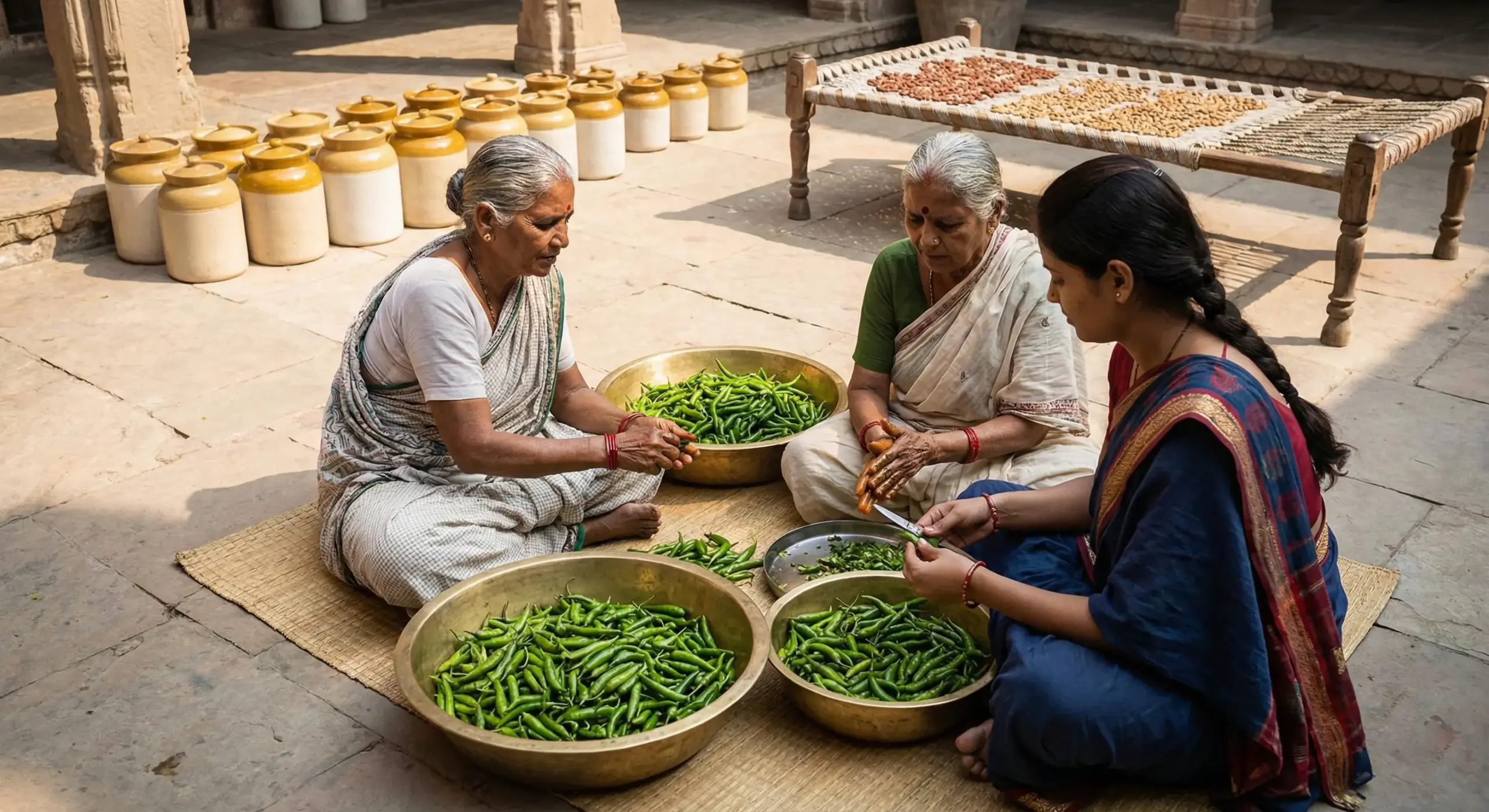
The point of a thick wall is practical. It holds a stuffing, and it keeps some bite after weeks in oil. How hot the finished pickle tastes depends on the variety and the batch, so a cook who wants a milder jar picks a milder chilli, as the Veg Recipes of India advice suggests, and does not rely on the spices to tame it.
The stuffing: where the balance is built
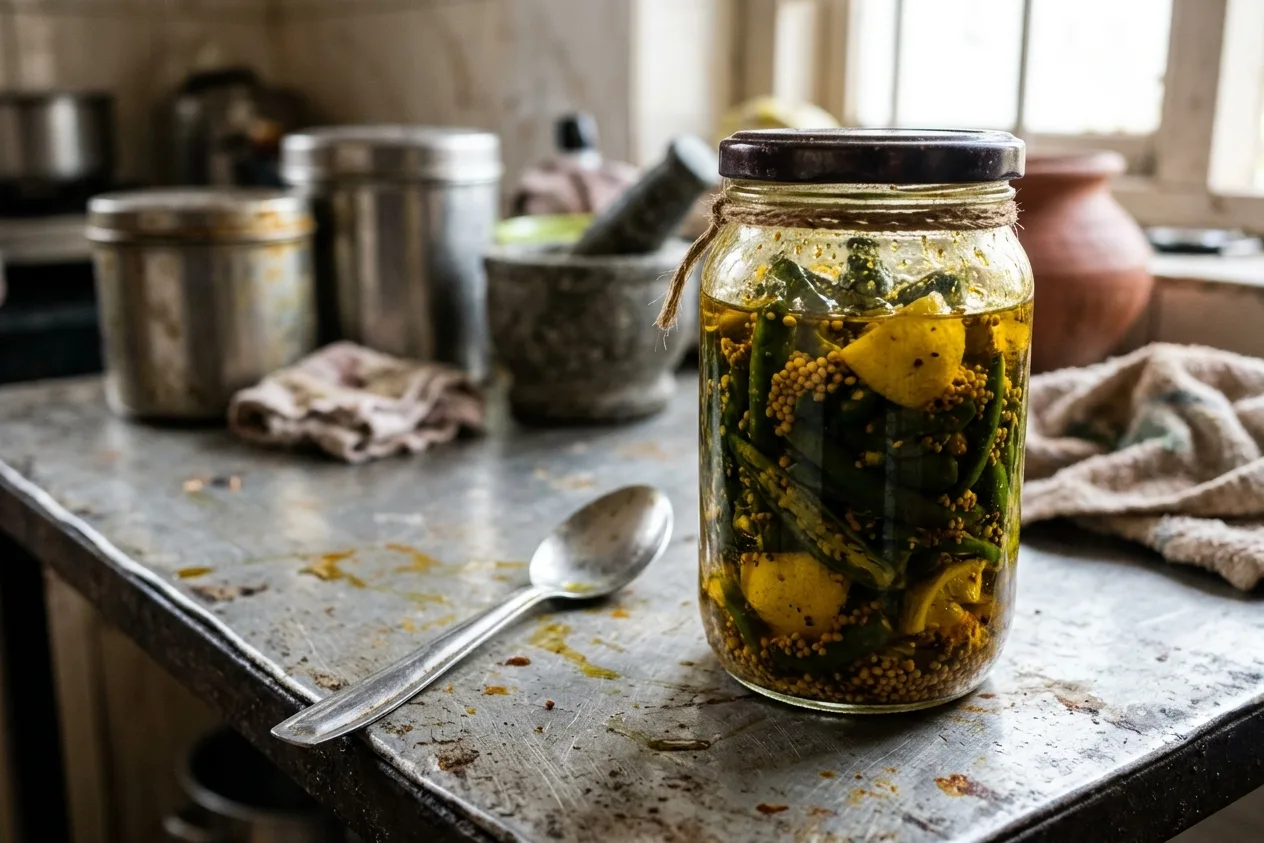
A stuffed chilli carries its own seasoning. Maayeka’s stuffed green chilli recipe lists coarsely crushed fennel seed (2.5 tablespoons), coriander powder (3 tablespoons) and mango powder (amchoor, 2 tablespoons) for 200 grams of chillies, and says that dry-roasted gram flour can be added to the stuffing. The recipe is tagged as Uttar Pradesh cuisine. The Aahaaram recipe for the red chilli version lists powdered mustard, powdered fennel and powdered fenugreek in large quantities, with the filled chillies packed in a completely dry glass or ceramic container.
The roles of the ingredients are consistent across recipes:
| Ingredient | What it brings |
|---|---|
| Amchoor or lemon juice | Sourness |
| Fennel (saunf) | Sweet, aromatic note |
| Mustard (rai) | Pungency |
| Fenugreek (methi) | Bitterness and depth |
| Turmeric and salt | Colour, salting, curing |
| Mustard oil | Binds and seals |
A Veg Recipes of India hari mirch ka achar made with ground mustard seeds, turmeric and lemon juice is described by its writer as having a sure spicy kick, and the Slurrp mirchi pickle lists coarse mustard seeds, fennel, turmeric, lemon juice, mustard oil and salt. So acid and aromatic seeds are the normal partners of the chilli. The spice-by-spice detail is in hing, methi and saunf in Banarasi achar, and the style of chilli pickle most tied to Banaras is in Banarasi hari mirch achar and bharwa lal mirch achar.
The oil
Mustard oil is the usual binder. Mustard oil’s sharp pungency comes from allyl isothiocyanate, as Wikipedia explains, a compound shared with horseradish and wasabi. Chilli pickle with mustard oil therefore combines two kinds of heat, the burn of capsaicin from the chilli and the nasal sharpness of the oil. Many cooks heat and cool the oil before use to mellow that sharpness, a step we explain in why mustard oil is heated for achar.
Not every recipe uses a lot of oil, or any. Maayeka publishes a rai wali mirch ka achar as an oil-free green chilli pickle, and Chili Pepper Madness describes the pickle as made with oil, vinegar and lots of seasonings. For the oil layer’s role and limits see why the oil layer on achar matters.
Sun-curing, or not
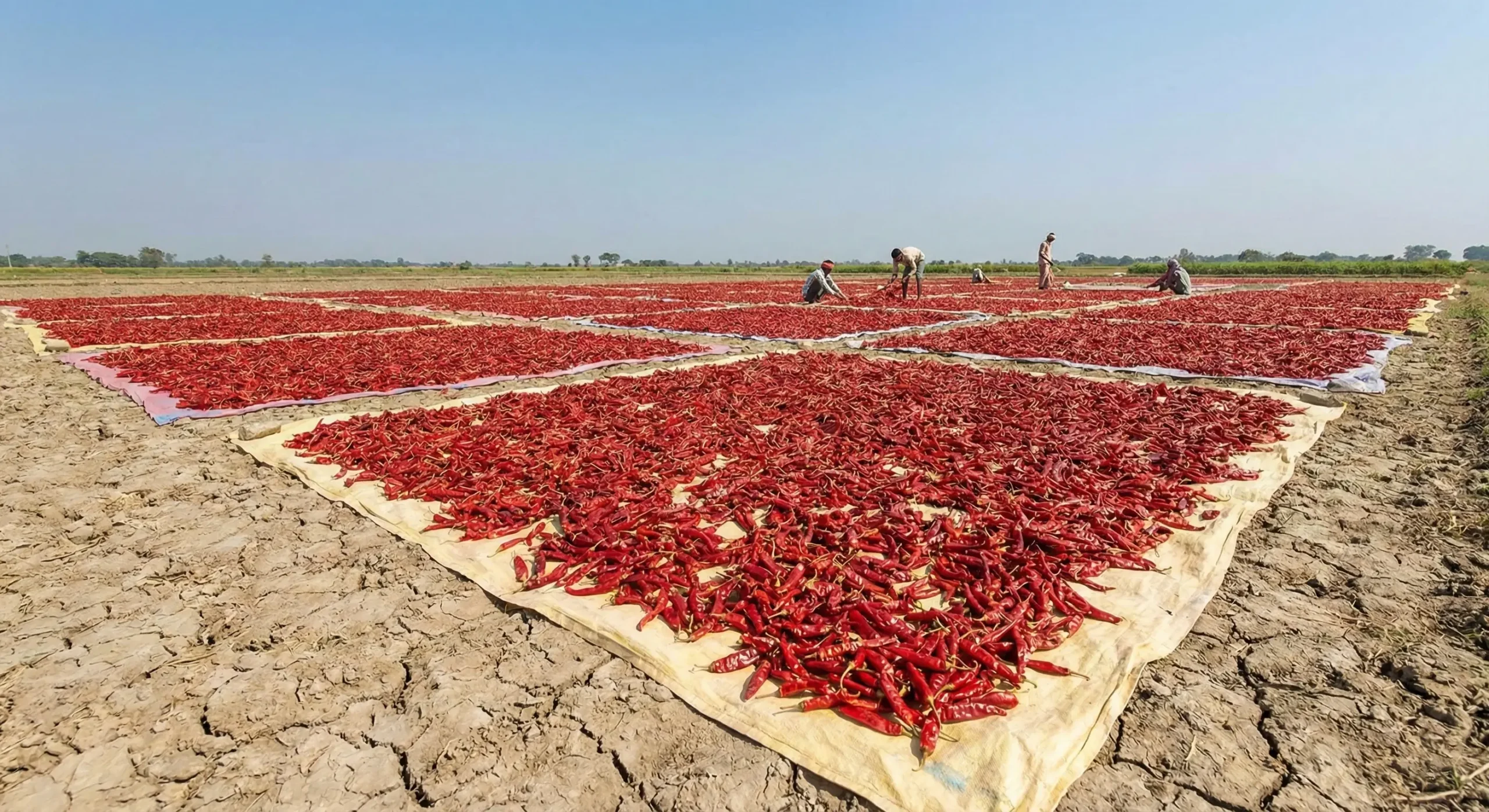
Sun-curing is one route. The Veg Recipes of India red chilli recipe says its pickle matures in about five to seven days after it is slow-cooked in the natural heat of sunlight, and that good sunlight is needed. Aahaaram says to place the chillies in sunlight for three to four days if possible.
An instant version exists too. Maayeka’s easy green chilli pickle is a two-minute-cook recipe, and Veg Recipes of India says its hari mirch ka achar keeps for three to four months in the refrigerator. These are recipe-writers’ own figures and we cite them only to show that there are two families of chilli pickle: the matured, sun-cured kind, and the quick, refrigerated kind. We do not give a shelf life for either.
Moisture is the enemy of both. The Aahaaram recipe insists on a completely dry glass or ceramic container, and traditional storage methods for pickles covers the handling rules.
A handling note
Chillies burn skin and eyes. We did not find a source for that, and we would suggest the plainer precautions of gloves, avoiding touching the face, and washing hands thoroughly. We mention it because it is a real part of the work that recipe writers rarely discuss.
On the table
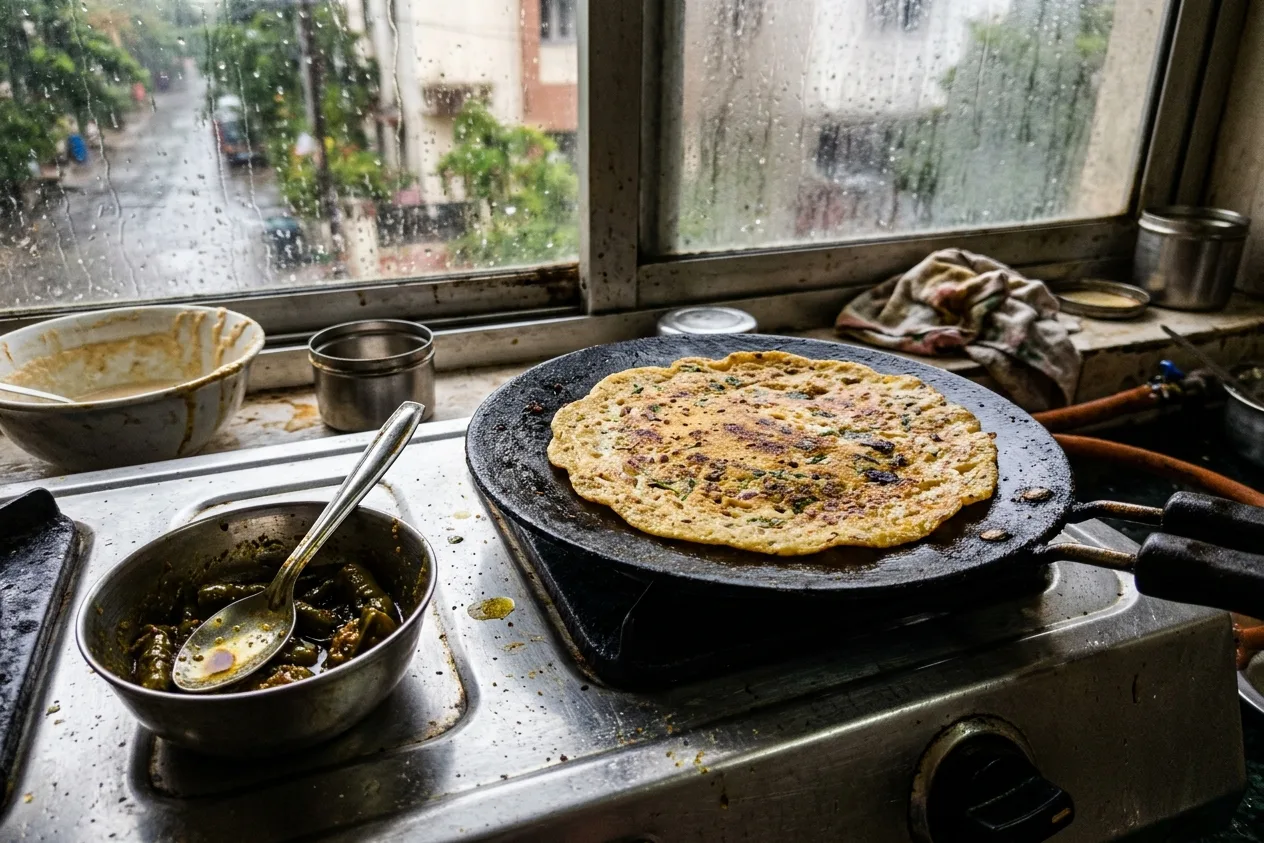
Chilli pickle is a side. Masterclass places pickled green chillies with stuffed parathas and chole bhature, and Veg Recipes of India suggests dal-rice, curd-rice and parathas. Slurrp pairs it with dal-chawal. A tiny piece is enough for a plate.
Choosing, handling and serving green chillies
The best green chilli pickle starts with firm, glossy chillies without soft spots, washed and dried completely before they are cut or slit. Water on the chilli is the same enemy as water in the jar. When you handle a large batch, wash your hands after, keep them away from your eyes, and wear gloves if your skin is sensitive, because the heat stays on the fingers for hours. At the table, serve a small amount on the side and let each person decide how much to take, since heat tolerance differs from one person to the next. A spoonful of curd, a slice of paratha or a plain khichdi softens the bite. Between meals, keep the jar closed, use a dry spoon, and keep the chillies below the oil or brine.
Frequently asked questions
Which chilli is best for green chilli pickle?
Recipes prefer thick-skinned, medium-hot chillies, and winter chillies are described as juicier and less bitter. Choose a milder variety for a milder pickle.
How do you balance the heat in chilli pickle?
With sourness from amchoor or lemon juice, sweetness and aroma from fennel, and pungency and bitterness from mustard and fenugreek, all bound in oil.
Do green chilli pickles need oil?
Usually, but not always. Oil-free versions with mustard seeds and lemon juice exist.
How long do you sun-cure chilli pickle?
Recipes range from three or four days to about a week, and some skip the sun and go straight to the fridge.
What is the difference between bharwa and chopped chilli pickle?
Bharwa chillies are slit and stuffed with dry spice. Chopped versions are mixed with spice and oil.
Can I keep chilli pickle at room temperature?
Some recipes keep it at room temperature and others in the fridge. We give no shelf life, and a dry jar and dry spoon matter in every case.
What do you eat green chilli pickle with?
Parathas, dal-rice, curd-rice and chole bhature, among others.
Sources used for this post:
– Slurrp, “Winter Special Hari Mirch Ka Achaar”
– Slurrp, “Nothing Beats Mirchi Pickle”
– Maayeka, Stuffed Green Chili Pickle
– Maayeka, Easy Green Chili Pickle
– Maayeka, Rai wali Mirch ka Achar
– Veg Recipes of India, Green Chilli Pickle
– Veg Recipes of India, Red Chili Pickle
– Aahaaram, UP Style Bharwan Lal Mirch ka Achaar
– Masterclass, Madhur Jaffrey’s green chilli pickle
– Chili Pepper Madness, Green Chilli Pickle
– Wikipedia, “Mustard oil”