Blog
Vadi, Papad and the Terrace Calendar: How a Banarasi Roof Becomes a Pantry

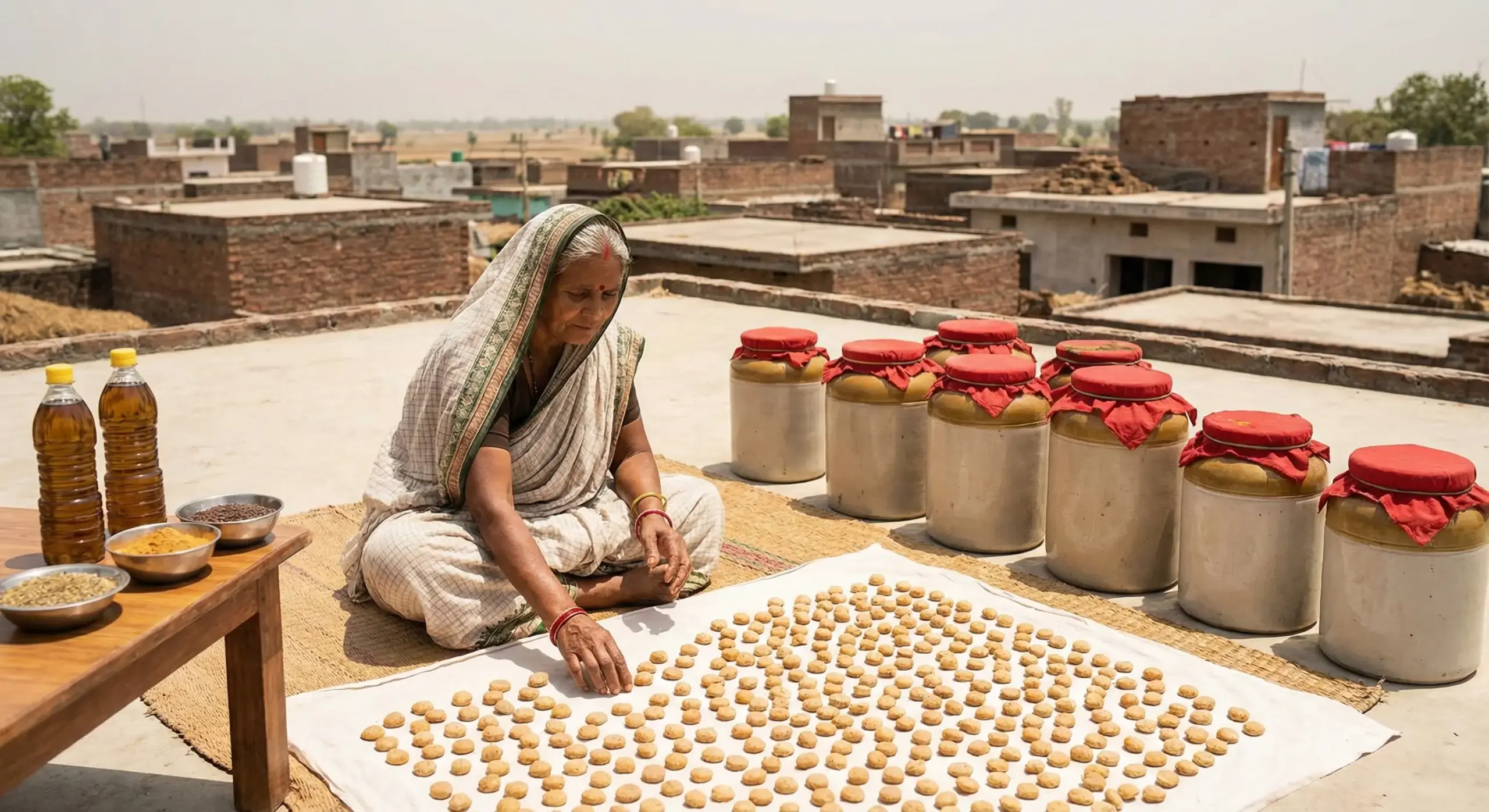
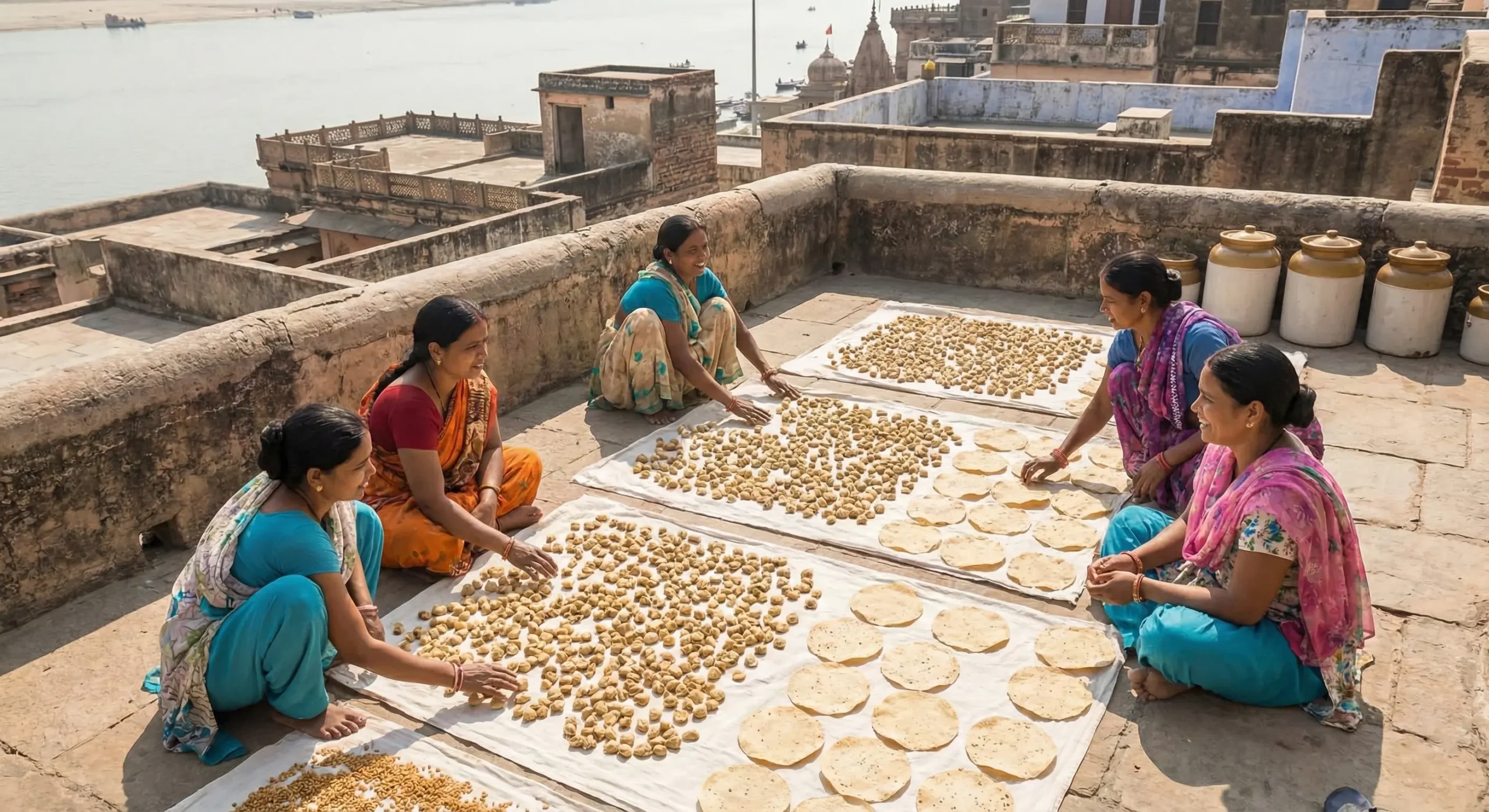
Slurrp’s story of valvan, the Gujarati practice of sun-preserved foods, says it relied entirely on the summer sun to create foods that would last throughout the year. Papads from urad or moong dal were rolled thin and dried until crisp. In North India, the same work goes on terraces, and Banaras is no exception.
This post covers how vadi and papad are made and why the roof is part of the kitchen. The Banaras details are Sanju Yadav’s.
The short answer
In short
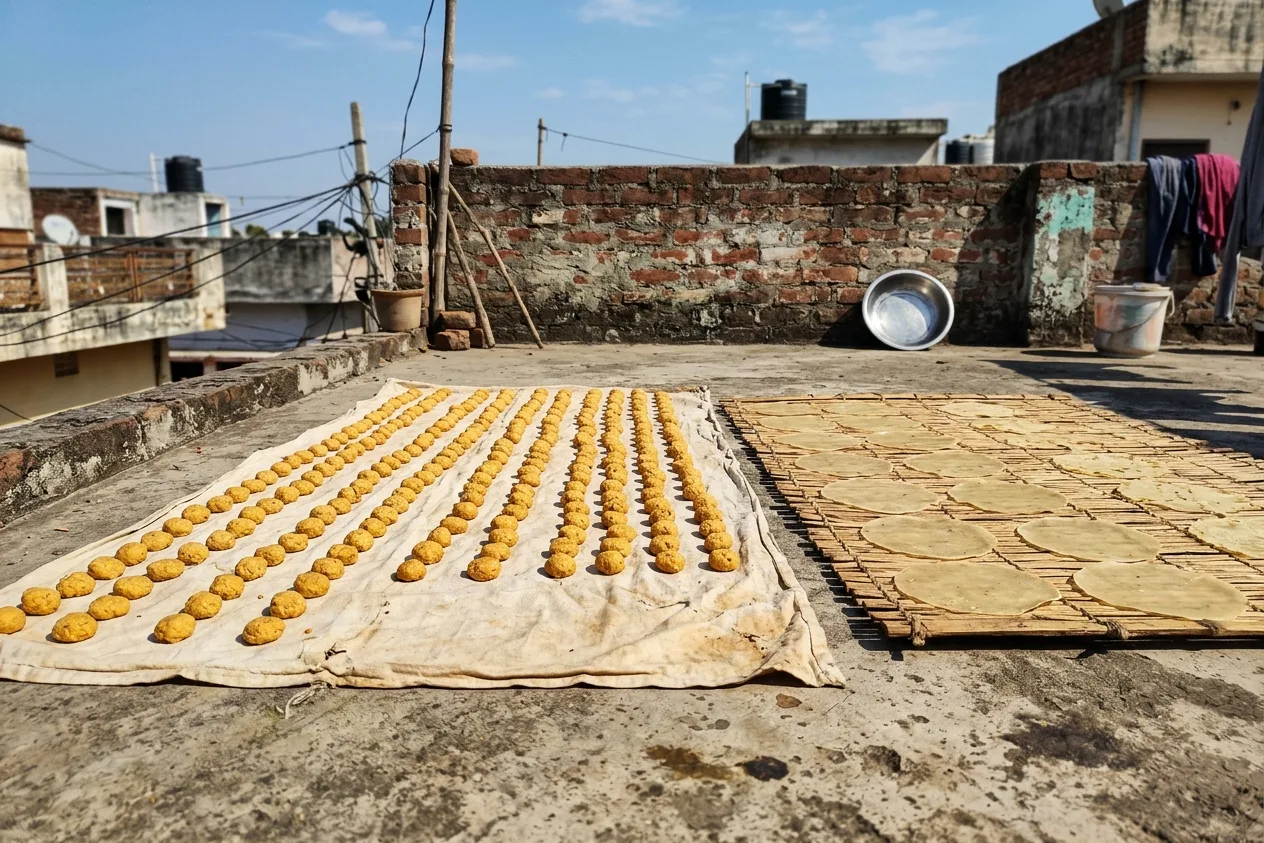
Vadi (badi) are dumplings of ground dal, spiced and dried in the sun, and papad are thin dal discs rolled and sun-dried until crisp. Both are made in the hot, dry months, when the terrace does the work and the pieces keep for the year.
What vadi and papad are
Urad dal, as a NIFTEM guide on its processing notes, is consumed as dal, papad, badi and namkeen. The same guide lists the steps for papad as grinding, mixing, kneading, shaping and drying. Uttar Pradesh is the largest producer of urad in India, it adds.
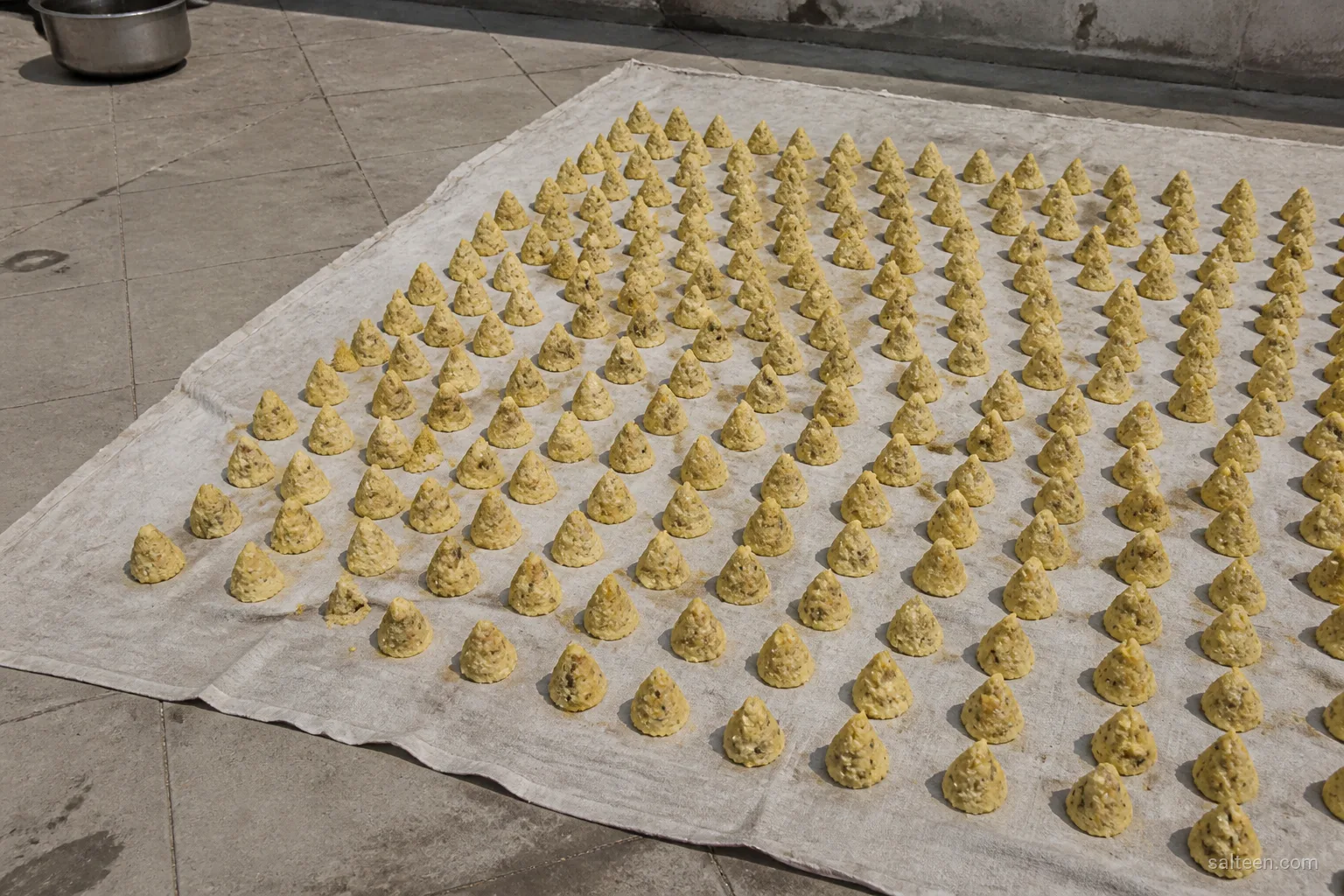
Vadi
Nisha Madhulika’s urad dal badi recipe tells cooks to take advantage of the hot summer days. It soaks the dal for four to five hours and grinds a coarse powder of coriander, fennel and black pepper, with ginger and asafoetida in the mix. A Down To Earth piece on Himalayan vadiyan says the urad ferments in the first three to four hours of sun drying.
Papad
Maayeka says the ideal season for aloo papad is before Holi, as the potatoes are right and the weather is dry and sunny. The rolled papads are spread on a cloth or polythene and left to dry in the sun for one to two days, depending on the heat, and then stored in a tight container.
Why the terrace
A summer terrace is hot, dry and open. A Himalayan food seller notes that the practice of drying badi continues even among city dwellers, on narrow verandas or a shared apartment terrace. Zee Zest writes that as cities grow taller, age old terrace rituals fade, and sun-dried papads, vadis, pickles and spices are leaving Indian homes. See also our posts on terrace drying and haldi and sun curing achar.
Frequently asked questions
How are vadi and papad dried at home?
Dal is ground, spiced and shaped, then laid on a cloth or sheet in the sun until dry, over one or more days.
Why are they dried on the terrace?
It is hot, dry and open in summer, and the sun preserves them for the year.
When is the season?
The hot, dry months. Maayeka places aloo papad before Holi.
Sources used for this post: Slurrp, the story of valvan; NIFTEM, urad bean processing; Nisha Madhulika, urad dal badi; Down To Earth, vadiyan; Maayeka, aloo papad; Zee Zest, sun-dried papad and pickles; The Pahari Life, badi product page.