Blog
How Oil Preserves Food in Indian Kitchens: The Science and the Tradition

Home-bottled garlic in oil was linked to botulism in California in 1991, in Florida in 1999 and in Denmark in 2003, according to a 2011 review of home-prepared vegetables stored in oil published in Food Protection Trends. That review sits at the centre of any honest answer to a common question: does oil preserve food?
The answer has two halves. Oil does something useful in an Indian pickle jar, and oil on its own is not a preservative. This guide explains both, where the Indian method gets its safety from, and why copying the jar without copying the rest of the recipe is risky.
The short answer
In short
Oil keeps air away from the food and slows surface spoilage, but it does not kill microbes, and it can create the oxygen-free conditions that some dangerous bacteria like. Traditional Indian pickles stay stable because salt, sun-drying, acid and spices bring the food into a safe state first, and the oil then protects that state. Fresh, low-acid vegetables stored in oil at room temperature are a known food-safety hazard.
What the oil layer actually does
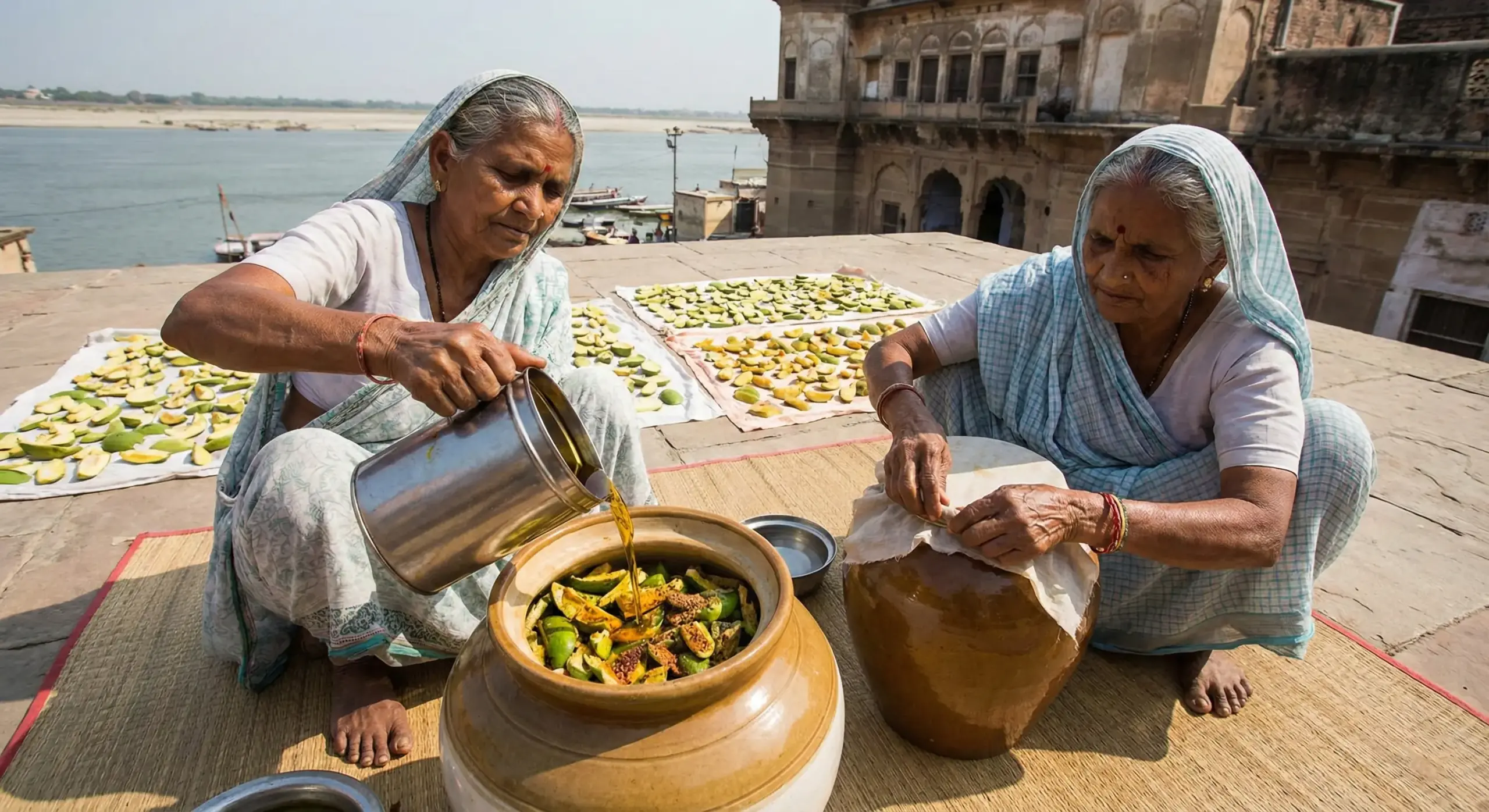
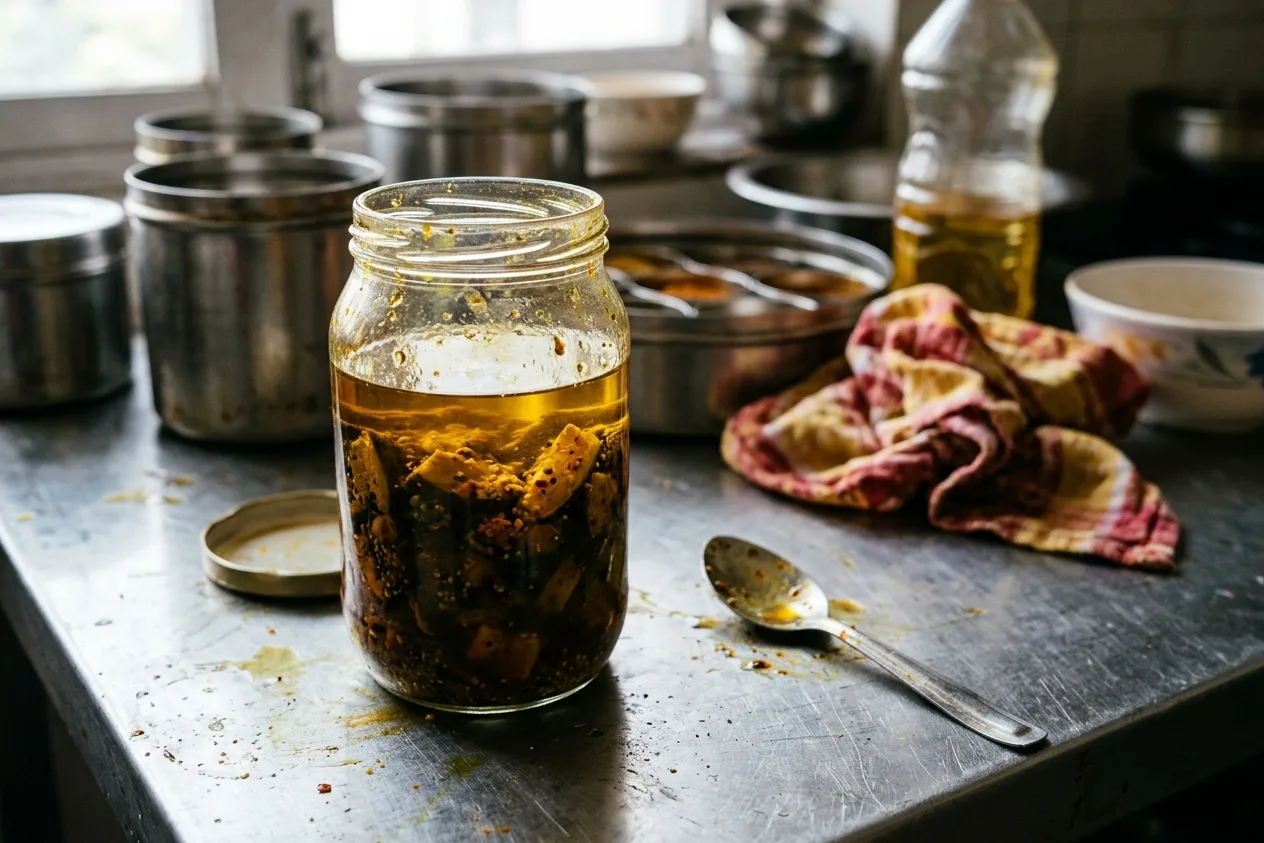
The traditional pickle works by stacking protections, which we describe in why traditional pickles last longer. The oil is the top layer of that stack. When fruit that has already been salted and sun-dried is submerged in oil, the oil forms a barrier against air at the surface, where moulds and yeasts would otherwise grow, and it slows the fruit from drying out further or absorbing moisture from the room.
A short guide on how the layer is maintained is in why the oil layer on achar matters. The key point for this article is what the oil does not do. It is not a strong antimicrobial by itself. The CSIRO, Australia’s national science agency, states the issue directly in its guidance on preserving vegetables in herbs and oil: by excluding air from the surface of the vegetable, oil establishes anaerobic conditions which actually favour the growth of some types of bacteria, and unfortunately Clostridium botulinum is one of them.
The risk that explains the rules
Clostridium botulinum is found in soil, water and air, according to Oregon State University Extension, and its spores can grow into toxin-producing cells in a low-acid, oxygen-free, moist environment. Oil supplies the oxygen-free part. Oregon State’s guidance calls oil’s oxygen-free environment “perfect for growth of the bacteria”.
The Food Protection Trends review finds that documented botulism outbreaks have identified vegetables and herbs in oil as the food source, with most outbreaks traced to home-prepared versions. Implicated foods include peppers, garlic, mushrooms and eggplant. After a second outbreak linked to garlic in oil in 1989, the US FDA ordered the removal of commercial garlic-in-oil products, and home-bottled garlic in oil was later associated with botulism in California in 1991, Florida in 1999 and Denmark in 2003.
CSIRO adds that the preservative effect of garlic and similar plants is slight and inconsistent, as the botulism incidents in Canada and the United States prove. In other words, the belief that a pungent ingredient makes the jar safe is not a safe assumption for fresh, low-acid food.
Why the traditional pickle is a different thing
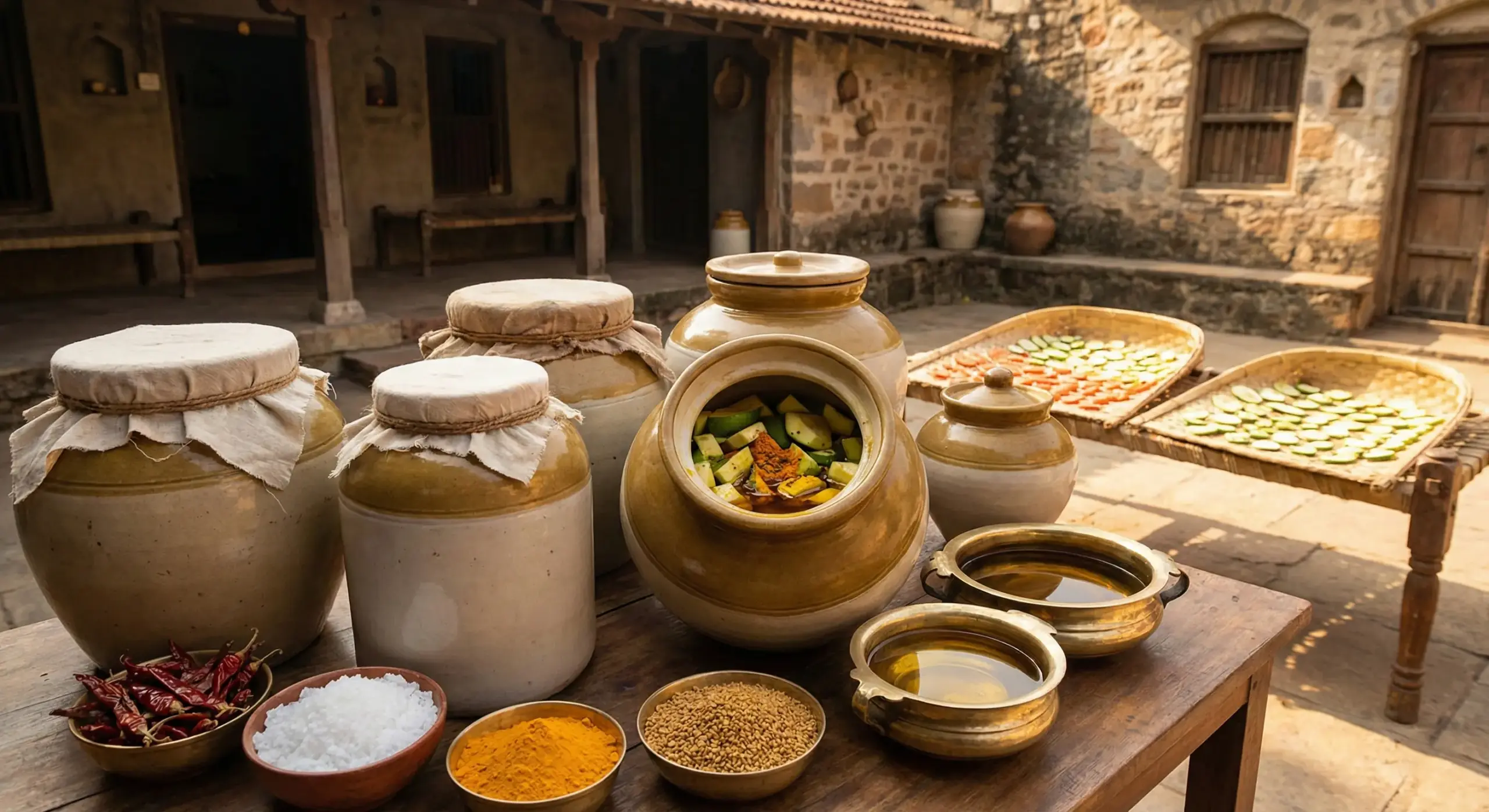
None of this describes a well-made Indian achar, and the reason is order of operations. A traditional pickle does not put fresh vegetables into oil. It first changes the food.
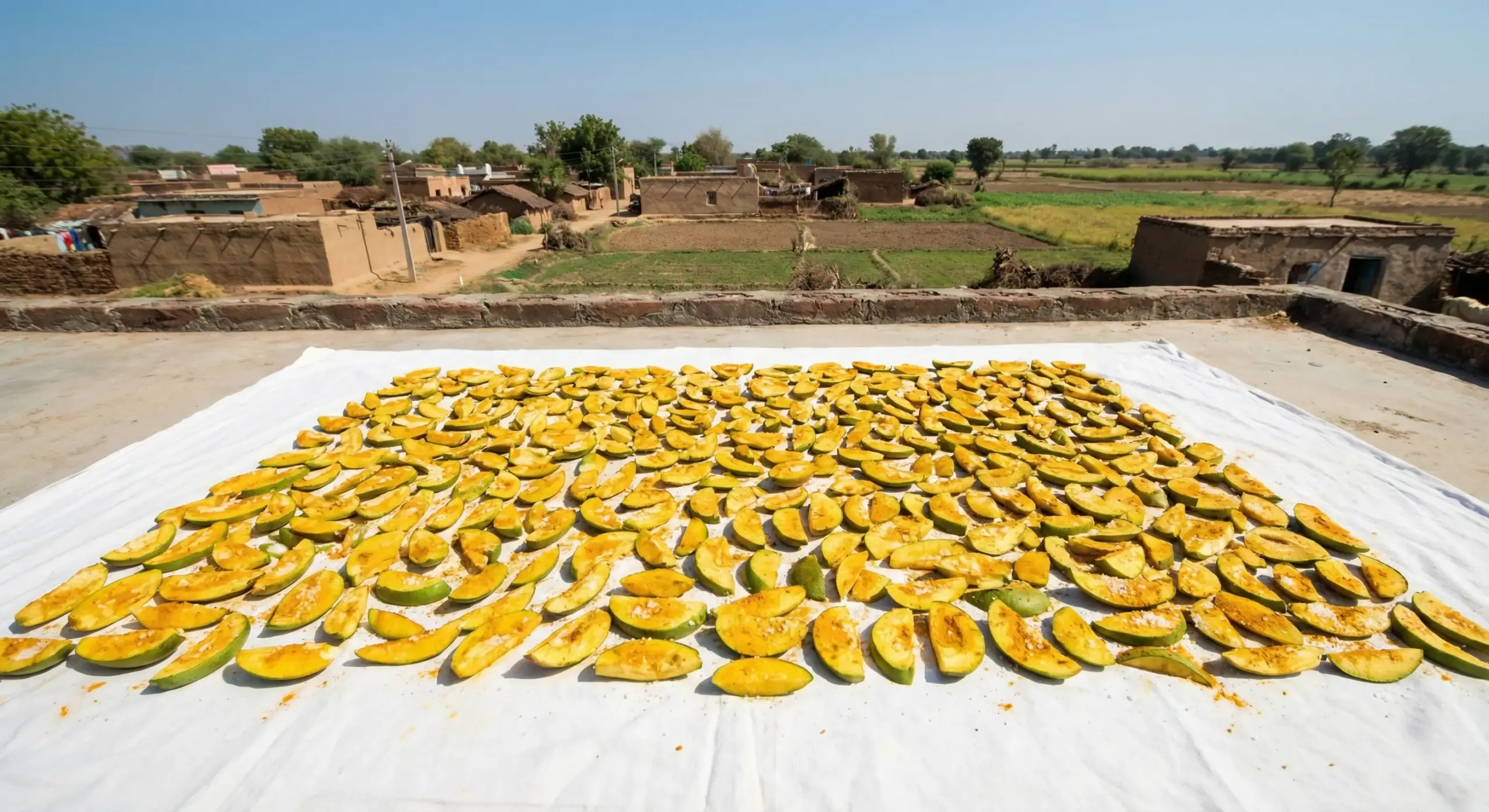
- Salt draws water out. Dry salting pulls moisture from the cut fruit and creates a brine, which lowers the water available to microbes.
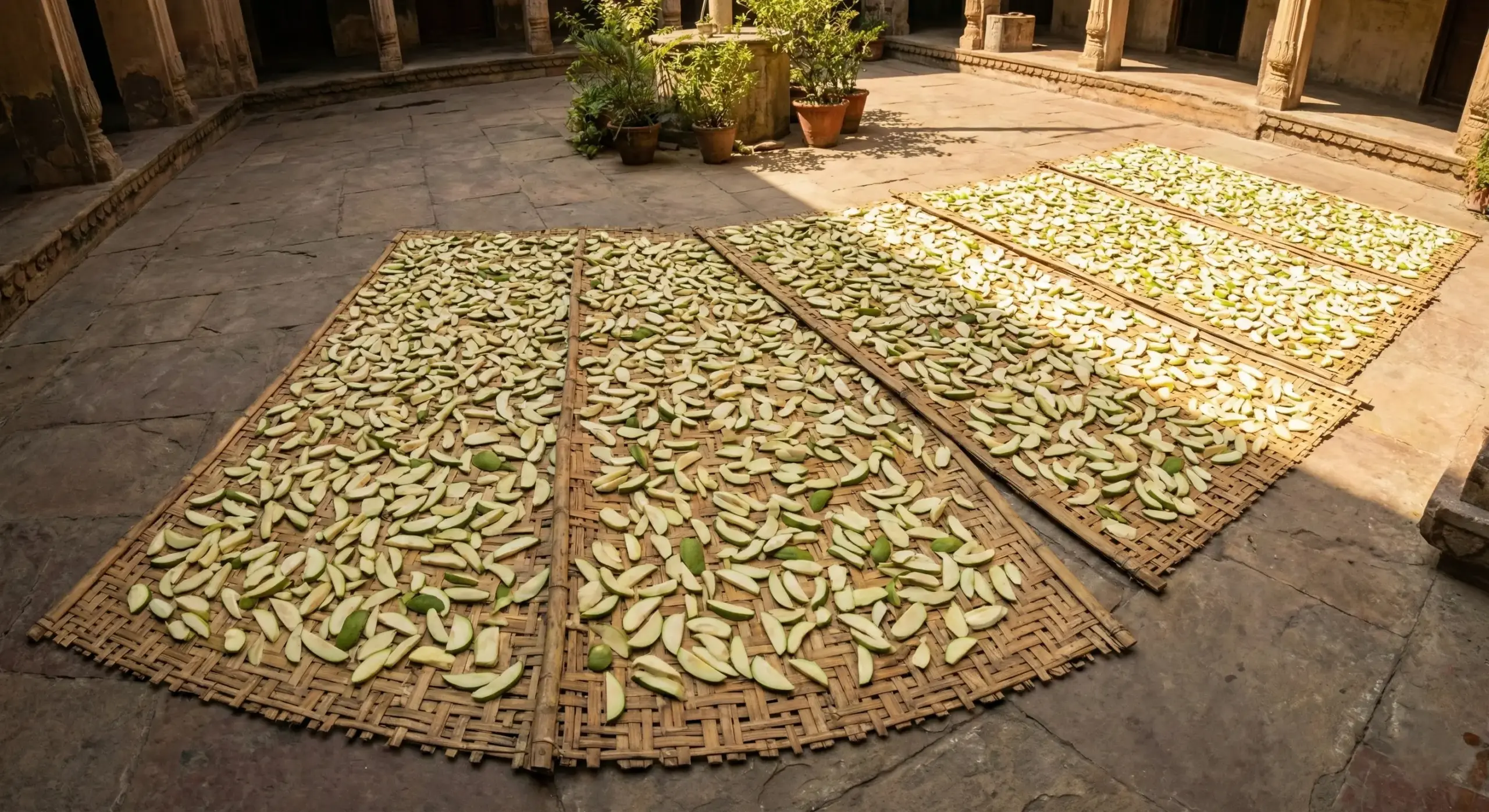
- Sun-drying removes more water. The fruit is dried in the sun before it goes into the jar. Why sun-drying is essential for Indian pickles covers the step.
- Acid does the rest. Raw mango, lemon and amla are naturally sour, and an acidic food is a hostile place for botulinum. Penn State Extension notes that C. botulinum spores do not grow in an acid environment or at cool temperatures.
- The oil then covers a food that is already salty, dry and acidic.
This is also why the FAO’s description of lime pickle, which is salted and fermented before it is packed in oil and spices, ends with the observation that, due to the high acid level of the final product, the risk of food poisoning is low.
The corollary matters for anyone adapting a recipe at home. A pickle made from a low-acid vegetable (garlic, mushroom, capsicum, eggplant) that has not been acidified, salted and dried adequately does not get the same protection. Health Canada, Penn State and Oregon State all give the same practical guidance: acidify, or refrigerate, or do not make it. Home refrigerators are also often not cold enough for long storage, an Oregon State survey found. We do not give a home recipe for garlic in oil for this reason.
Why mustard oil, and why the oil changes by region
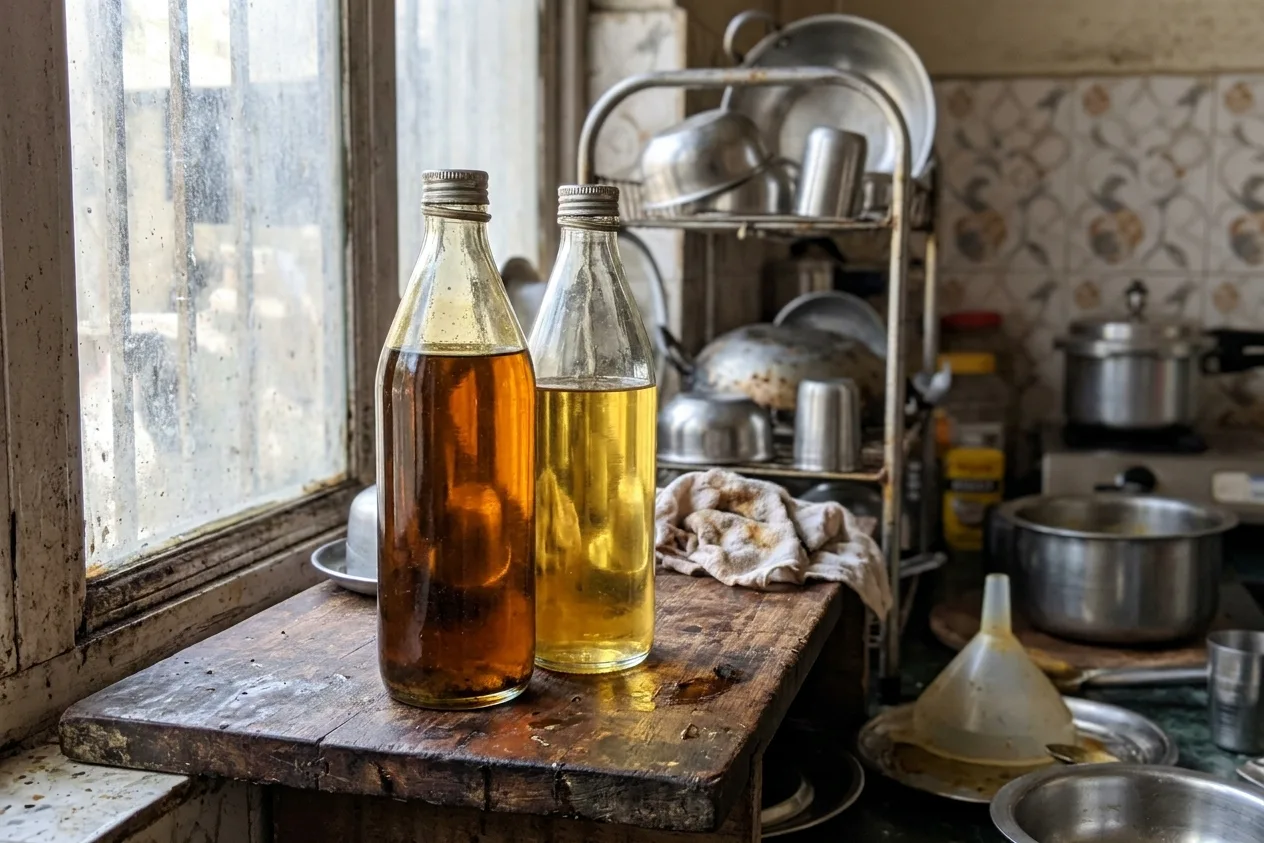
In the Gangetic plain, mustard oil is the usual medium, and a long agricultural history of mustard cultivation in the region is the simple explanation. Mustard oil’s sharp aroma comes from a pungent compound, and cooks traditionally heat it until it stops smelling raw before it is poured over the pickle. We explain the pungency and the heating step in why mustard oil is heated for achar and in what kacchi ghani mustard oil means.
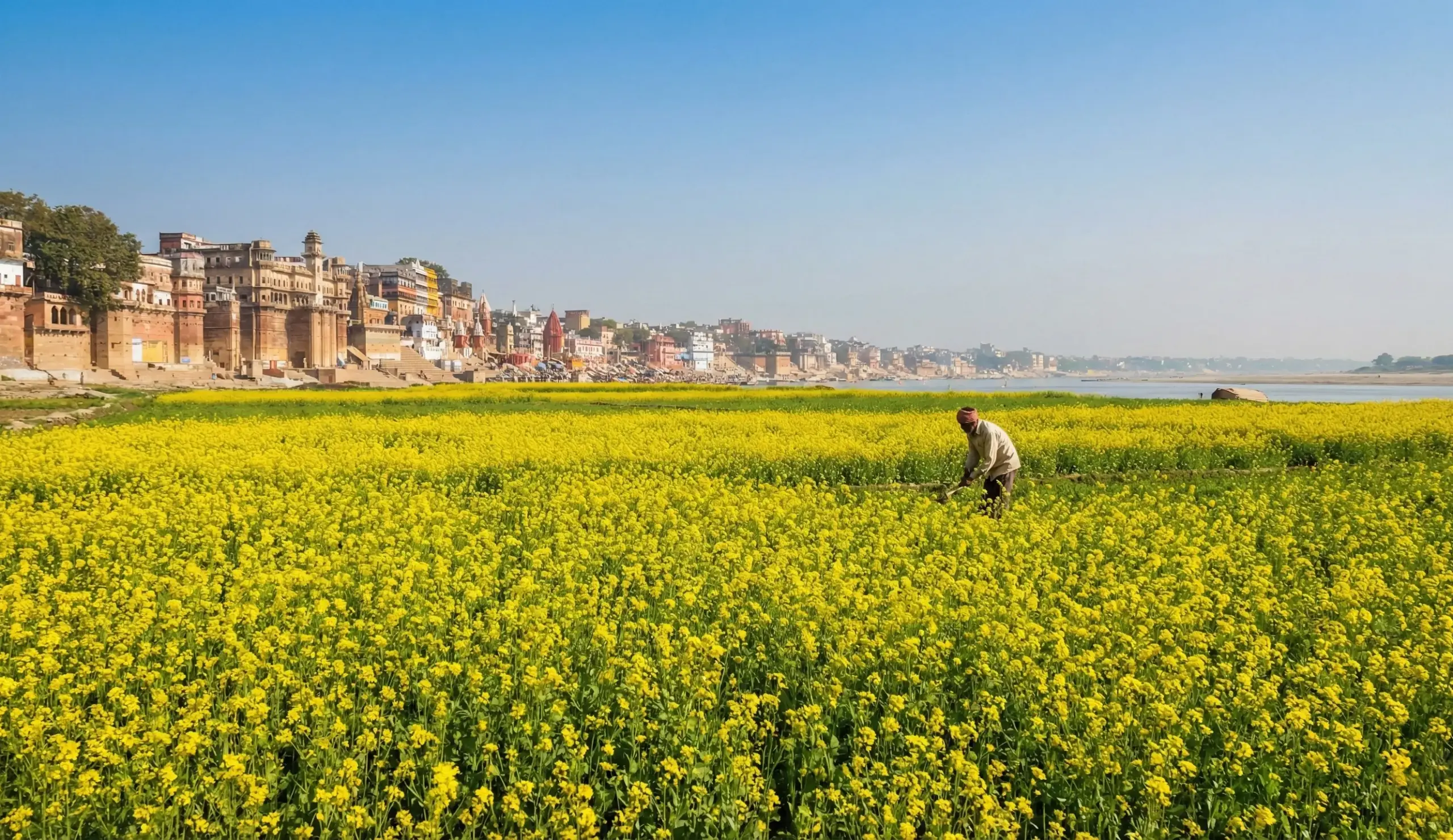
Elsewhere in India, other oils take over. Sesame oil is a common pickle oil in the south, and groundnut oil is used in some regions too, which is the subject of groundnut oil pickles.
The choice of oil affects flavour more than safety. The safety comes from the state of the food under the oil and the way the jar is handled, a point that matters more than any oil label.
Keeping the oil layer working
The jar stays protected only while the oil stays in place. Three habits follow from the physics.
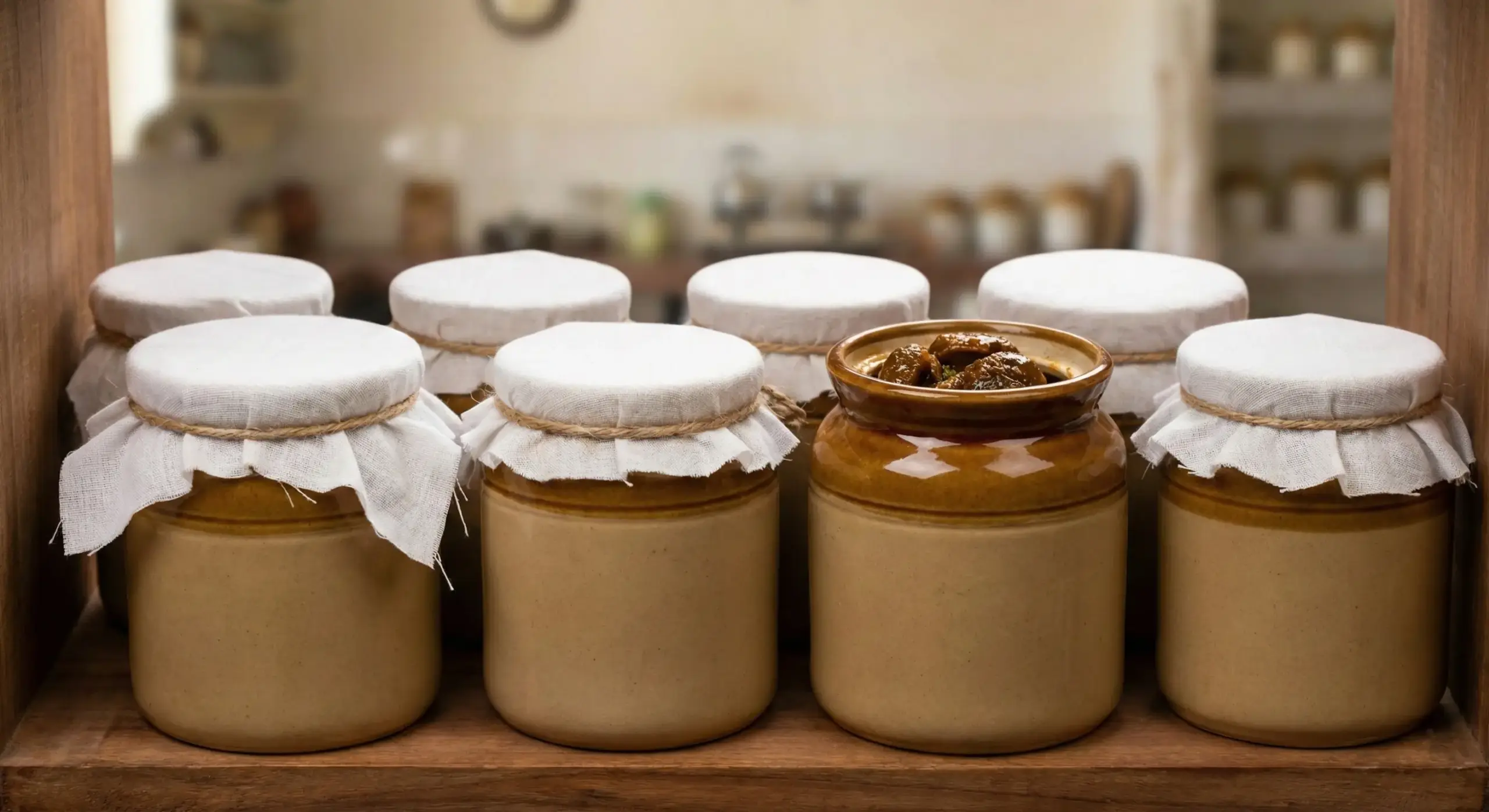
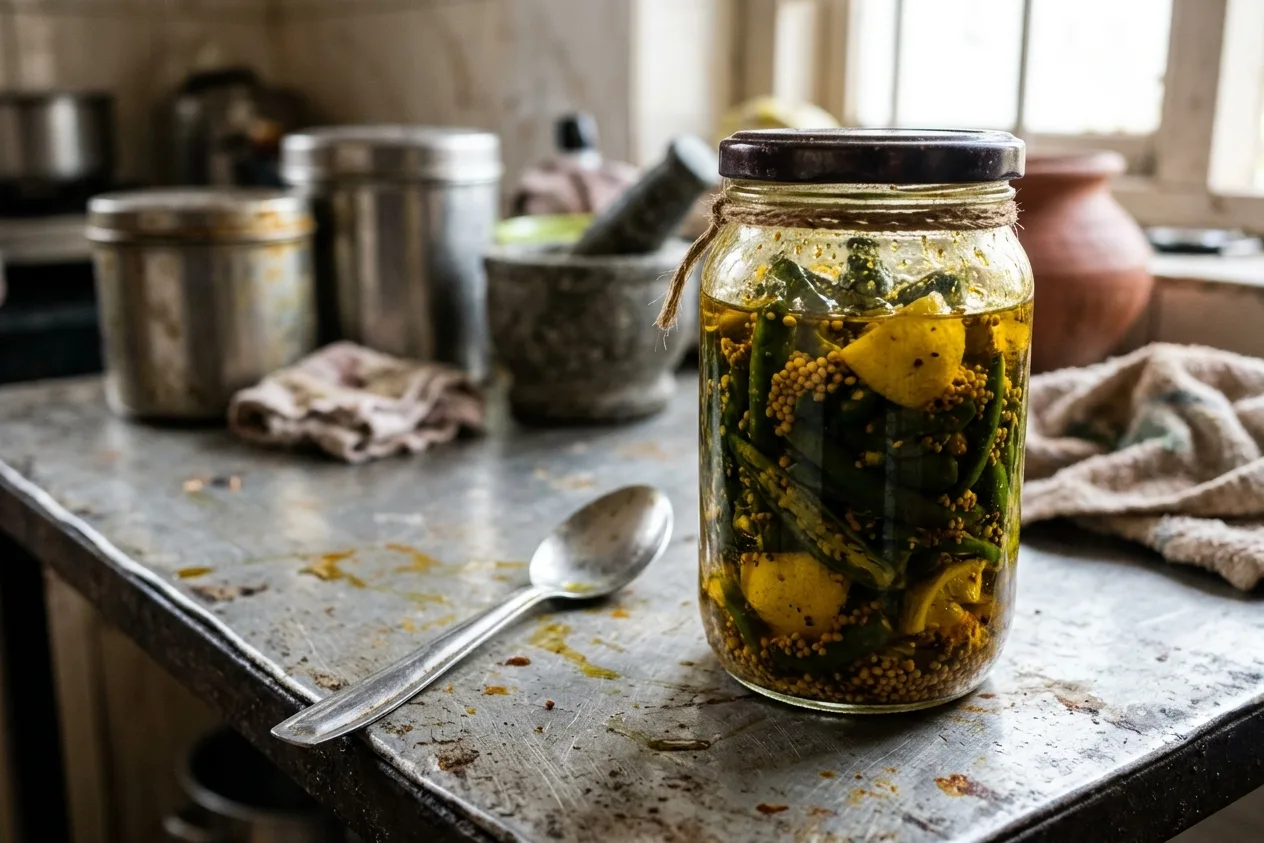
- Keep the fruit submerged. Pieces that stick out above the oil are exposed to air and can grow mould.
- Use a dry spoon. Water carried into the jar on a wet utensil is the standard way for a good pickle to spoil, and the reason is covered in the best jar for achar.
- Top up the oil when the level drops. Fruit absorbs oil over weeks, and a layer that was generous in June can look thin by August. Warm, cooled oil of the same kind is the usual fix.
None of these steps makes a pickle immortal, and we do not claim any number of months or years for any jar.
Common questions about oil and preservation at home
Can I store fresh garlic or chillies in oil at room temperature?
Authorities including Health Canada, Oregon State Extension and the FDA advise against it, because oil creates oxygen-free conditions for botulinum. Refrigeration and acidification are the usual safety measures, and even then storage time is limited.
Does hot oil sterilise the food?
Heating mustard oil until it stops smelling raw is a flavour step in the Indian method. We are not aware of evidence that it makes the jar’s contents sterile, and we would not rely on it for safety.
Is a pickle safe because it contains mustard?
Traditional belief says spices help the jar, and laboratory work suggests some spices have mild antimicrobial properties. CSIRO’s warning that the preservative effect of garlic is slight and inconsistent applies as a reminder not to lean on spices alone.
Frequently asked questions
Does oil preserve food by itself?
No. Oil keeps air away from the surface, but it does not kill microbes, and it can favour oxygen-averse bacteria such as Clostridium botulinum if the food is low in acid and moist.
Why do Indian pickles last so long if oil is not a preservative?
Because salt, sun-drying, acid and spices stabilise the food before the oil goes on. The oil protects an already stable product.
Is it safe to store garlic in oil at home?
Food-safety agencies advise against room-temperature storage of fresh garlic in oil, because botulism outbreaks have been linked to it. Acidification and refrigeration are the recommended safeguards.
Which oil is best for pickles?
Mustard oil is the traditional choice in the Gangetic plain, and sesame and groundnut oils are used elsewhere. The oil decides flavour; the preparation of the food decides safety.
Why must the fruit stay under the oil?
Fruit above the surface is exposed to air and can grow mould or yeast.
Should I top up the oil in an old jar?
Many families do when the level drops, using the same kind of oil, heated and cooled. Keep the utensil and jar dry.
How long will an oil pickle keep?
It depends on the recipe, the dryness, the acid level and handling. We do not promise a shelf life.
Sources used for this post:
– Nummer, Schaffner, Fraser and Andress, “Current Food Safety Issues of Home-prepared Vegetables and Herbs Stored in Oil,” Food Protection Trends, June 2011
– CSIRO, “Vegetable preservation” (preserving vegetables in herbs and oil)
– Cornell Cooperative Extension, “Herbs and Vegetables in Oil” (SP 50-701, revised 2014)
– Health Canada, “Food safety tips for vegetables and herbs in oil”
– Penn State Extension, “How to safely make infused oils”
– FAO, “Fruit and vegetable processing,” section on pickles (dry salted lime pickle)