
Blog
A Mustard Season on Our Family Farm Near Varanasi

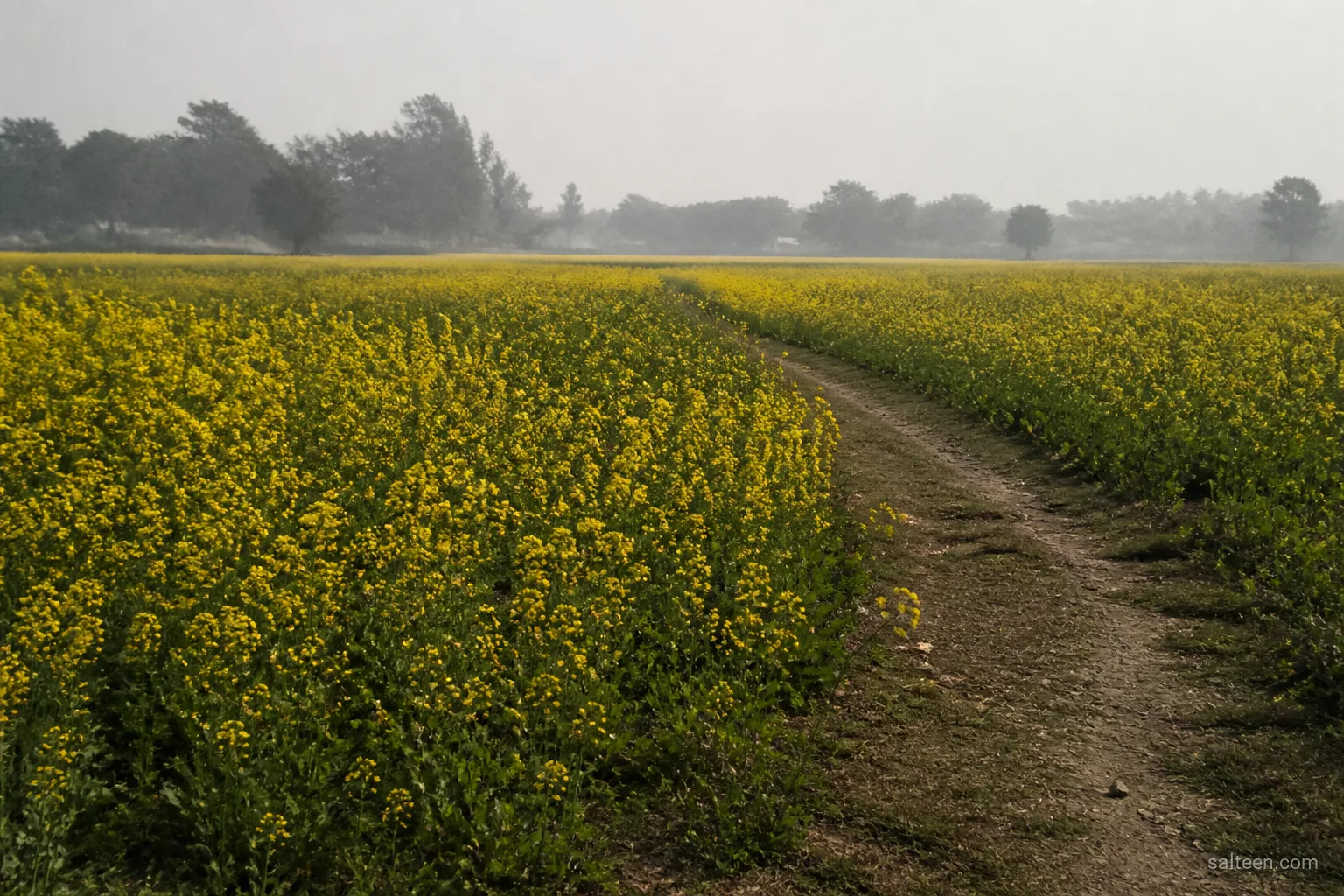
In the cold weeks of December and January, the mustard fields of North India turn a yellow so bright that it looks lit from below. The crop that makes this colour is the same one that becomes the oil in the pickle jar, and it spends about four months in the soil to get there. Most of what we eat from it, the oil and the seed in our masalas, begins in these weeks.
This post follows the mustard crop through its season, from sowing to harvest, using what agricultural sources say about Uttar Pradesh, and leaves room for Sanju to describe the family’s own fields.
In short
Mustard is a rabi (winter) crop in North India. It is sown from late September to November (October is the usual window), flowers in December and January, and is harvested in February and March. The whole crop takes about 110 to 140 days.
Mustard is a winter crop
Indian farming has two main seasons. Kharif crops such as rice are sown with the monsoon, and rabi crops are sown after it withdraws. Mustard belongs to the rabi group. Agricultural references describe rapeseed and mustard as the major rabi oilseed crop in India, grown mainly in Rajasthan, Uttar Pradesh, Haryana and Madhya Pradesh.
It is a crop that likes cool weather. Early sowing can fail in high temperatures, and delayed sowing shortens the vegetative phase and brings flowering forward, which reduces the yield. That is why farmers watch the weather in October closely.
The calendar of one crop
Mustard season in North India
- Late September to October: the field is prepared and sown. A farm science source gives 10 to 25 October as the most favourable window, and other references allow sowing to continue into early November.
- Germination: about 5 to 7 days after sowing.
- Vegetative growth: about 30 to 40 days of leaf and stem.
- Flowering: around 60 to 70 days after sowing, in December and the first week of January in Uttar Pradesh. The flowering stage lasts about 50 to 60 days.
- Harvest: late February to March, once the leaves turn yellow and the pods dry.
A farmer from Kanpur quoted by Gaon Connection describes the same pattern: sowing between 1 and 20 October, flowering at about 60 to 70 days, and harvest by the end of February and the beginning of March. Calendars from agricultural universities show mustard in the field from late October to about the end of February in the Kanpur region.
What the fields look like in December
By December the plants are covered with small yellow flowers. The flowering period is long, because mustard is an indeterminate crop, which means it keeps producing flowers and pods over many weeks.
This is also a delicate time. Farmers are advised to avoid irrigating during peak flowering, roughly late December to mid January, because excess moisture can bring stem rot. Unseasonal rain or a sudden warm spell can hurt the crop, and farmers in Uttar Pradesh reported exactly this in 2023, when rain during flowering and an early heat wave in February reduced the yield.
From flower to pod to seed
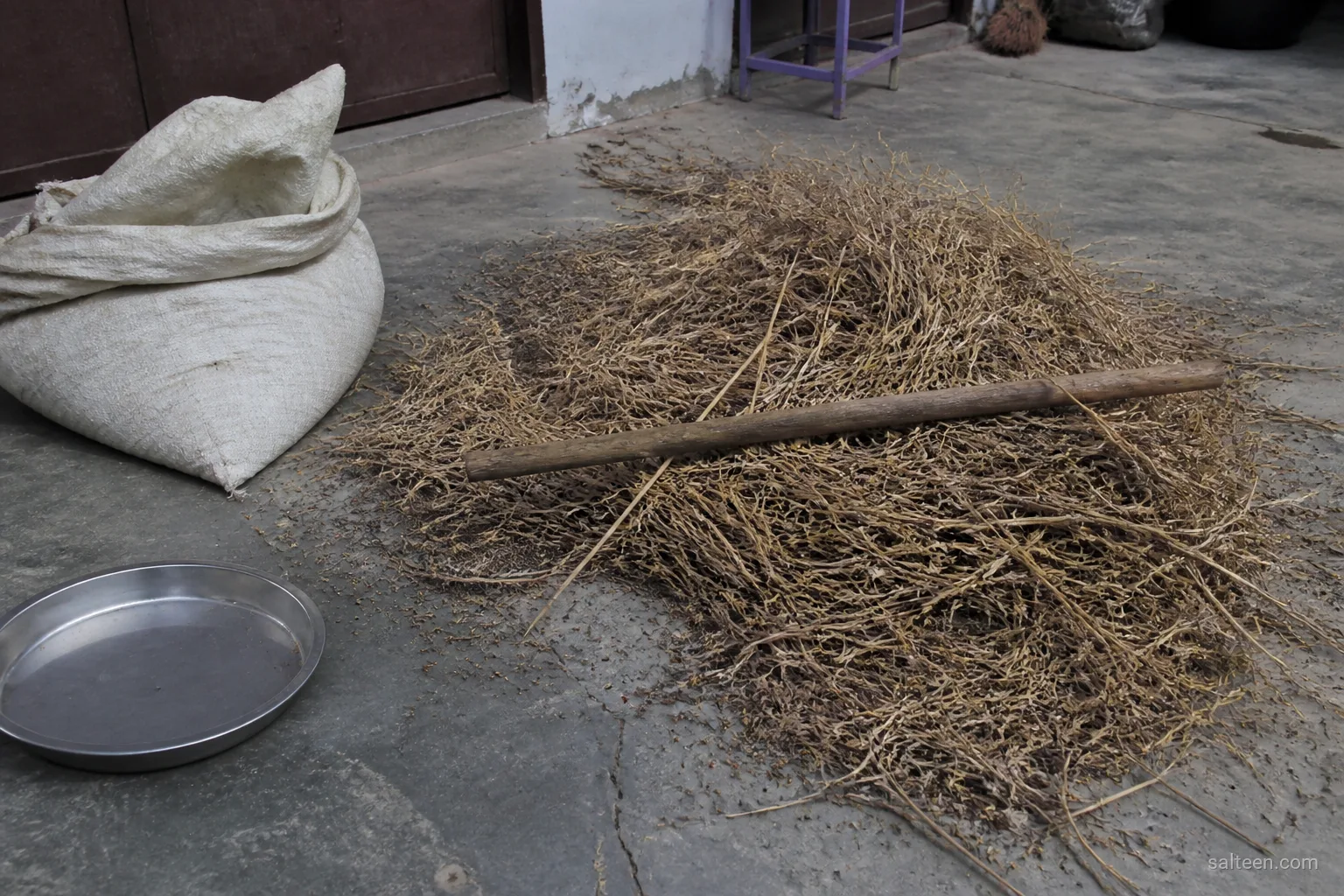
After the petals fall, thin green pods called siliquae form along the stem. Each pod holds several small round seeds. The pods fill through January and February and turn from green to yellowish brown as they dry. When most of the pods have changed colour, the crop is cut, laid out to dry and threshed to release the seed.
Mustard seed contains a good share of oil. Agricultural sources for Uttar Pradesh put the oil content at around 38 to 42 percent, depending on the variety.
From seed to oil
The dried seed is cleaned, and then it goes to the press. We have explained that step in our guide to kacchi ghani mustard oil. What matters here is that the oil in the bottle is the result of one season of weather: the October temperature, the December cold and the February sun all show up in the seed.
Our family farm
- Where the farm is, how many bigha or acres are under mustard, and who farms it.
- The variety sown this year, and the date it was sown.
- How the field looks today: height, flowers, any problems with weather or pests.
- Whether the seed from this farm goes into Salteen’s oil, or whether the oil seed is bought from other farms.
- A few photographs of the field with the date, which we will use as real photos.
- One honest memory of the mustard season from childhood or from this year.
If we cannot confirm the farm, this section is left out and the post describes the season in general.
What a mustard season means for a pickle kitchen
For a kitchen that makes pickles, the mustard season matters twice. The seed becomes the oil that covers every jar, and the whole seed, ground or whole, is part of many masalas. In a year when the crop does well, seed is plentiful and the oil is good. In a year when the weather goes wrong, prices move and quality is harder to find. A pickle maker watches the field in the same way as the farmer does.
Where to go next
For how the seed becomes oil, read the kacchi ghani mustard oil guide. For what the oil does in a pickle, see our post on bharwa lal mirch achar.
Frequently asked questions
When does mustard bloom in India?
In North India mustard flowers in December and January, about 60 to 70 days after sowing.
When is mustard sown and harvested?
It is sown from late September to November, with October the usual window, and harvested in February and March.
How is mustard grown?
It is a rabi crop that needs cool weather. The field is ploughed and levelled, seed is sown in rows in October, the crop gets limited irrigation, and it is cut when the pods turn yellowish brown.
How long does mustard take to grow?
About 110 to 140 days from sowing to harvest, depending on the variety and the sowing date.
Why is mustard oil called kacchi ghani?
Because the seed is pressed raw in a slow press. See our guide for the full explanation.
Sources used for this post: Indian Farming (ICAR) articles on rapeseed and mustard sowing; BigHaat mustard package of practice; Gaon Connection ground report from Kanpur (2023); agricultural university crop calendars for Kanpur; Agridots rabi crop notes for Uttar Pradesh; Agriculture Institute notes on mustard. Sowing windows vary by variety and region, and the post gives ranges.
