Blog
The Role of Pickles in the Traditional Banaras Thali

A thali in a Banaras home carries roti, rice, dal and a vegetable or two, and at its edge sits a spoonful of pickle no larger than a thumbnail. It is the smallest item on the plate, and it is the one that most families will not let a meal go without.
This guide looks at what that spoonful does: how it fits the traditional idea of a balanced meal, how it keeps the household fed through the year, which pickles appear in which season, and how the jar it comes from is stored and handled. It is a cultural explainer, so health ideas appear as tradition and not as advice.
The short answer
In short
Pickle sits on the Banaras thali because it supplies sour, salty and pungent tastes that roti, rice and dal lack, which fits the Ayurvedic idea of a meal with six tastes. It is also a way of storing seasonal produce, usually in mustard oil and salt after sun-curing. Mango, lemon, amla, garlic and stuffed red chilli appear in turn through the year, and the jar is kept in a ceramic martaban under the care of an elder woman of the house.
What is on a traditional Banaras thali
A daily meal in the region commonly includes roti or phulka, rice, dal, a dry or rasedar sabzi, curd in summer, and a small side of pickle or chutney. Zee Zest’s guide to eating in Varanasi describes a thali with a chaat item, local curries, dal, a small selection of breads, salad, pickle, chutney, khichdi and desserts. The main dishes are mild, earthy and a little sweet. Cooking leans on ghee, mustard oil, hing and cumin, and the satvik habit of leaving out onion and garlic keeps the sharpness low.
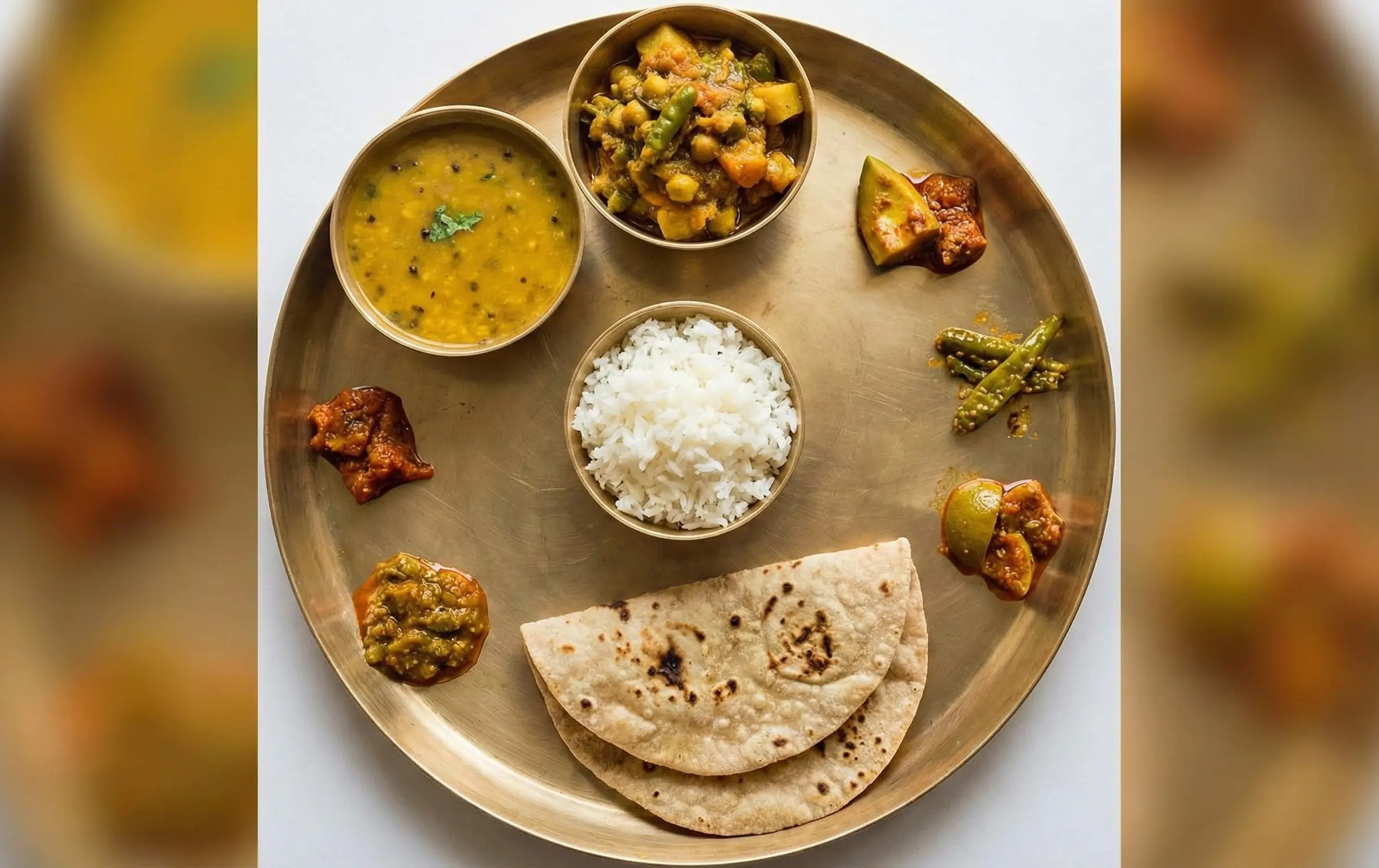
That is exactly the gap a pickle fills. We covered the logic of this restraint in why Banaras food is simple yet flavorful, and the pickle is the counterweight: strong, sour, salty and oily on a plate that is deliberately plain.
The six tastes and the pickle
Ayurveda lists six tastes, called rasas: sweet (madhura), sour (amla), salty (lavana), pungent (katu), bitter (tikta) and astringent (kashaya). The traditional ideal is a meal that touches all six, sometimes called the principle of shadrasa.
On a thali, grain and dal bring sweet and astringent notes, and bitter appears through greens, karela or fenugreek. Sour, salty and pungent are the ones that tend to be missing, and the pickle supplies all three at once:
| Taste | Typical source on the thali |
|---|---|
| Sweet | Rice, roti, milk, jaggery |
| Sour | Pickle, curd, lemon, amchur |
| Salty | Pickle, salt in the dal |
| Pungent | Pickle spices, green chilli, ginger |
| Bitter | Fenugreek, karela, greens |
| Astringent | Dal, some vegetables |
Families describe the effect in plain terms. A small bite of sharp pickle makes the next mouthful of roti taste better, and a plain meal feels complete. Traditional belief adds that the sourness wakes up the appetite and the “digestive fire”. That is a cultural idea, and we offer no claim that it treats or prevents anything.
A pickle is also a store
The second reason is practical. Before refrigerators, a Gangetic plain household had to hold on to a harvest that arrived in a rush and then disappeared. Summer brings raw mango, winter brings amla, radish, carrot and large red chillies, and the monsoon months limit what can be bought fresh and trusted.
The traditional Banaras method has three steps that reinforce each other:
- Salt draws out water. Cut produce is rubbed with salt, which pulls out moisture and slows spoilage.
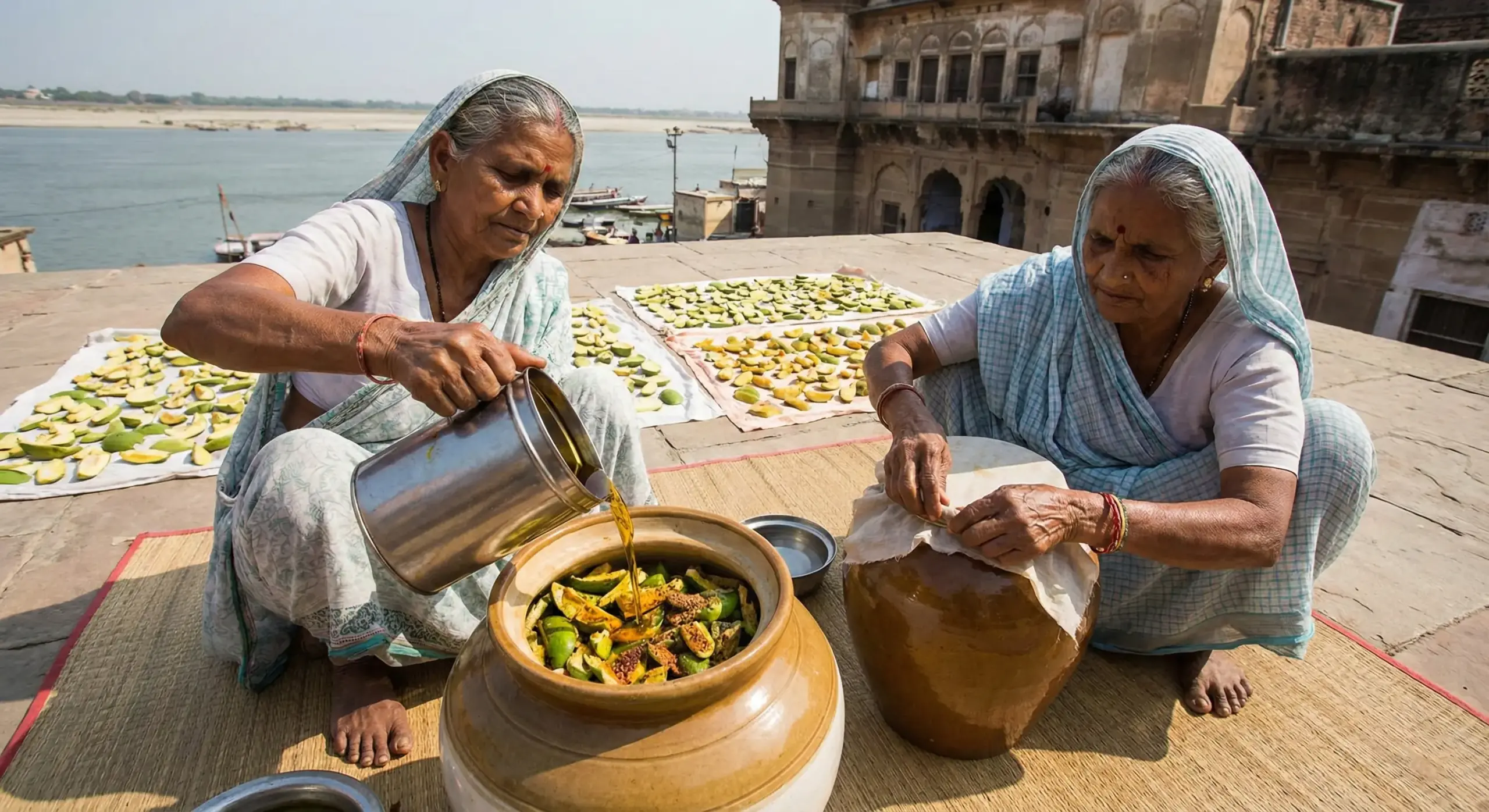
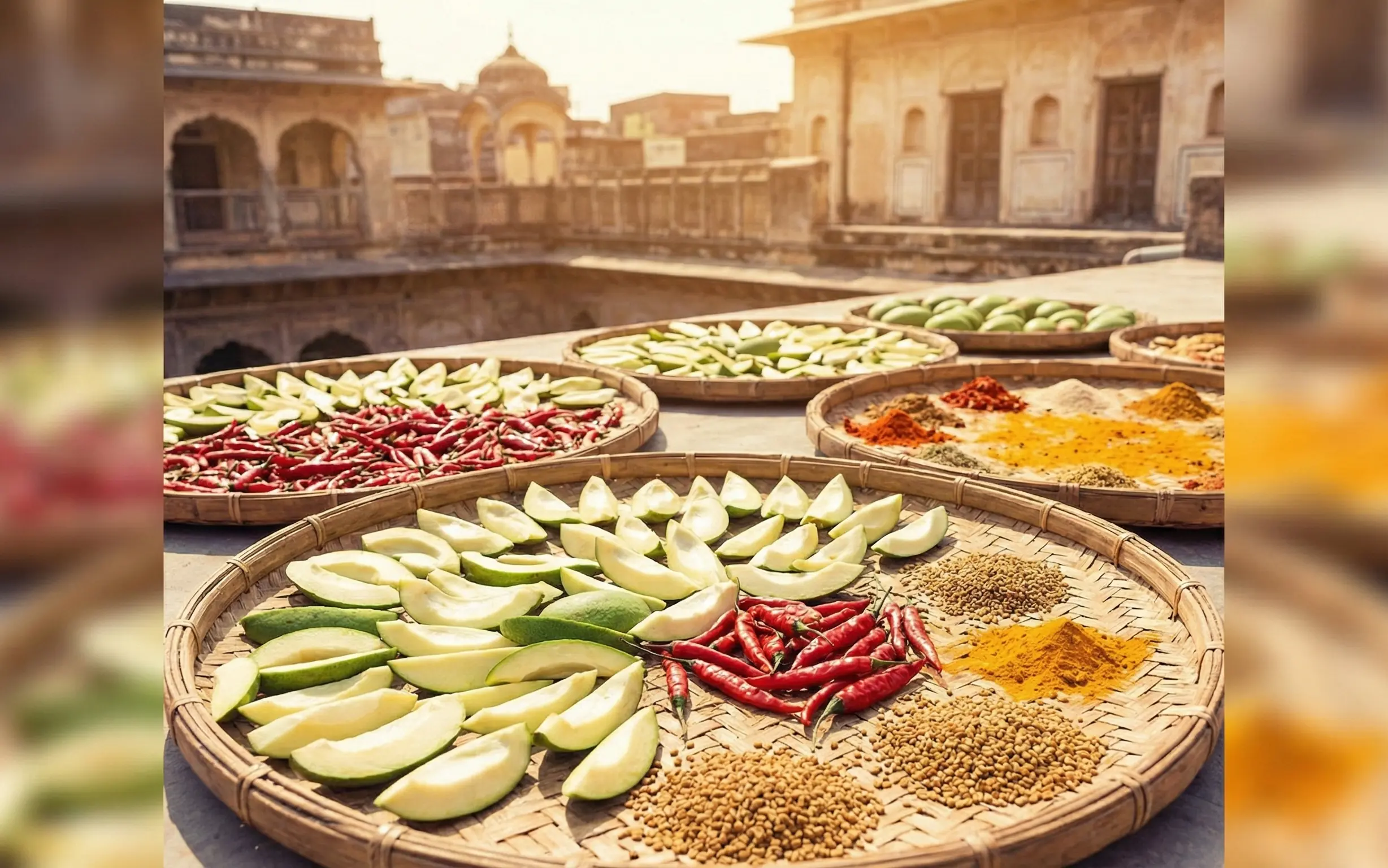
- Sun dries it further. Spread on cloth or trays under strong sun, the pieces lose more water. We explain why this step is hard to replace in why sun-drying is essential for Indian pickles.
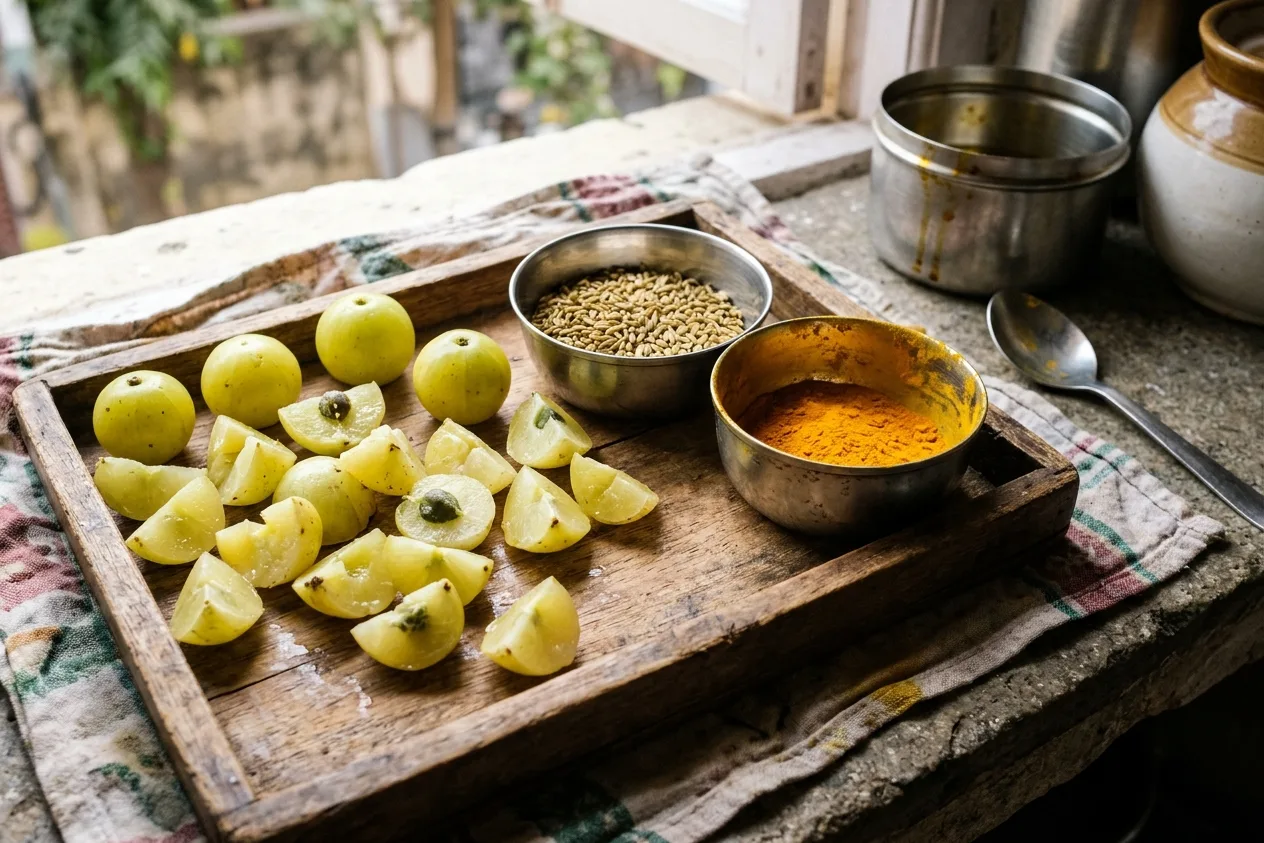
- Oil seals it. Mustard oil, with spices such as fenugreek, fennel, nigella, turmeric and coriander, covers the pieces and keeps air away. Our post on how oil preserves food in Indian kitchens goes into the mechanism.
Mustard oil is also credited, in general food writing, with antimicrobial properties, but we treat that as a general explanation and not as a guarantee. Good pickling depends on dry produce, clean utensils and enough salt and oil.
A very old practice
Preserving food in salt, sour and oil is old in the Indian subcontinent, and the classical texts show a long interest in food and seasons. The Manasollasa, an early 12th-century Sanskrit encyclopedia by the Chalukya king Someshvara III, is considered one of the oldest surviving works with extensive food recipes, with some 20 chapters on food. We do not claim its recipes include any specific pickle.
One correction is worth making. Chilli peppers are a New World crop that reached India after the 16th century, so older texts could not have listed them. The sourness and heat of an early Indian pickle would have come from lemon, raw mango, ginger and long pepper or black pepper. The fiery red chilli pickle that Banaras knows today is a later development.
The year in pickles
The thali’s pickle changes with the season, and so does the work in the kitchen.
| Season | Typical pickle | Note |
|---|---|---|
| Summer | Raw mango (kairi), lemon, jackfruit | Sun-cured in April to June |
| Monsoon | Last of the summer jars, garlic, dried items | Jars stay sealed, stocks are used |
| Winter | Amla, carrot, radish, green chilli, bhari lal mirch | Short sunny days, good for curing |
| Festivals | Sweet and sour mango (murabba, chhunda) | Served as a sweet side |
Bhari lal mirch, red chillies slit and packed with a tart spice mixture, is the most distinctive winter pickle in the region’s repertoire. Garlic pickle, amla pickle and lemon pickle each have their own place, and we cover them in later posts, starting with mango pickle traditions in Banaras and amla pickle in traditional diets.
The martaban and the way a jar is handled
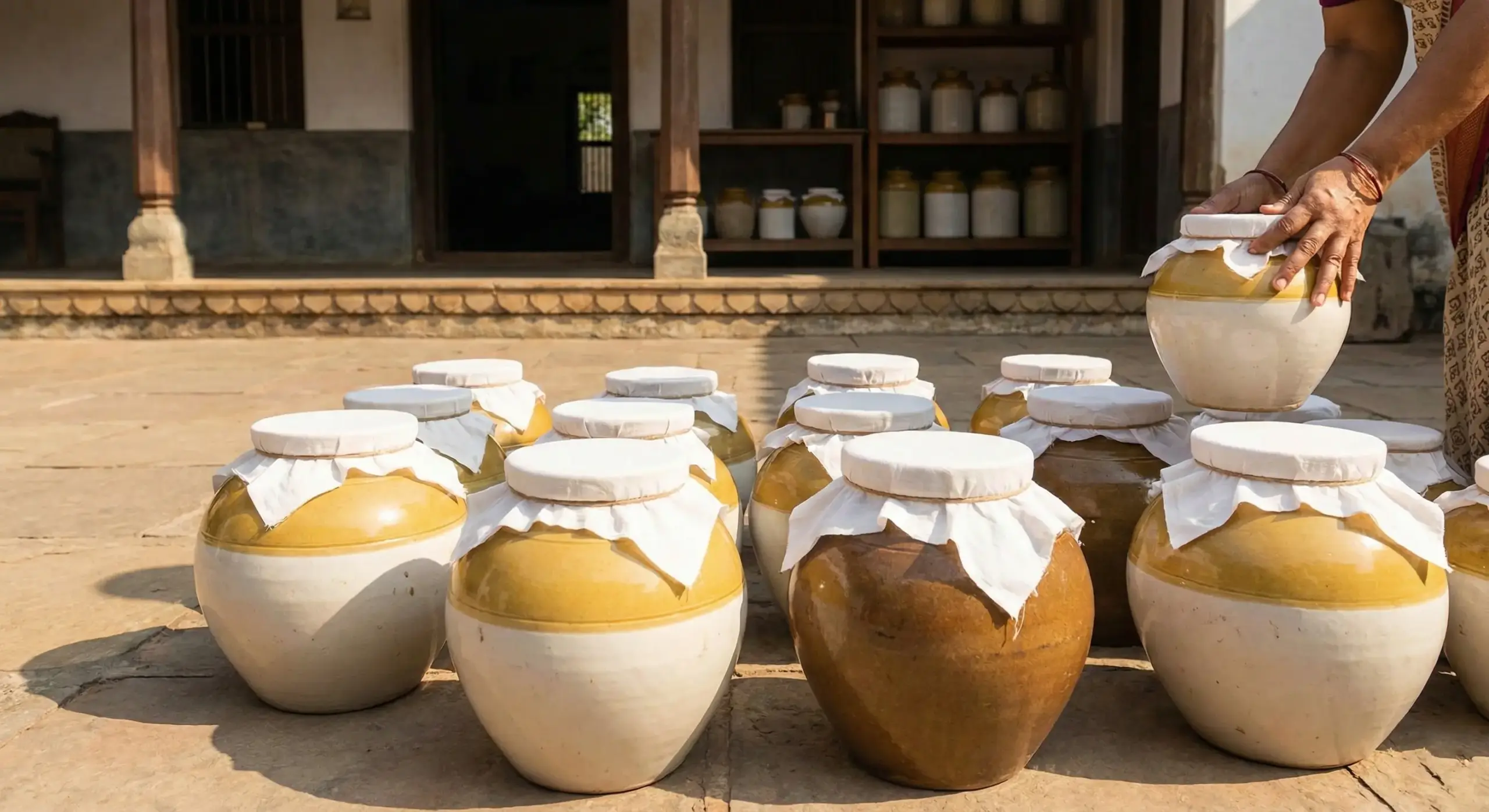
The classic storage vessel is the martaban, a glazed ceramic jar with a wide belly and a narrow mouth, usually brown and cream, covered with cloth and a lid. It keeps the contents cool, stays non-reactive against acid and salt, and ages well. Our guide to traditional storage methods for pickles explains the rest.
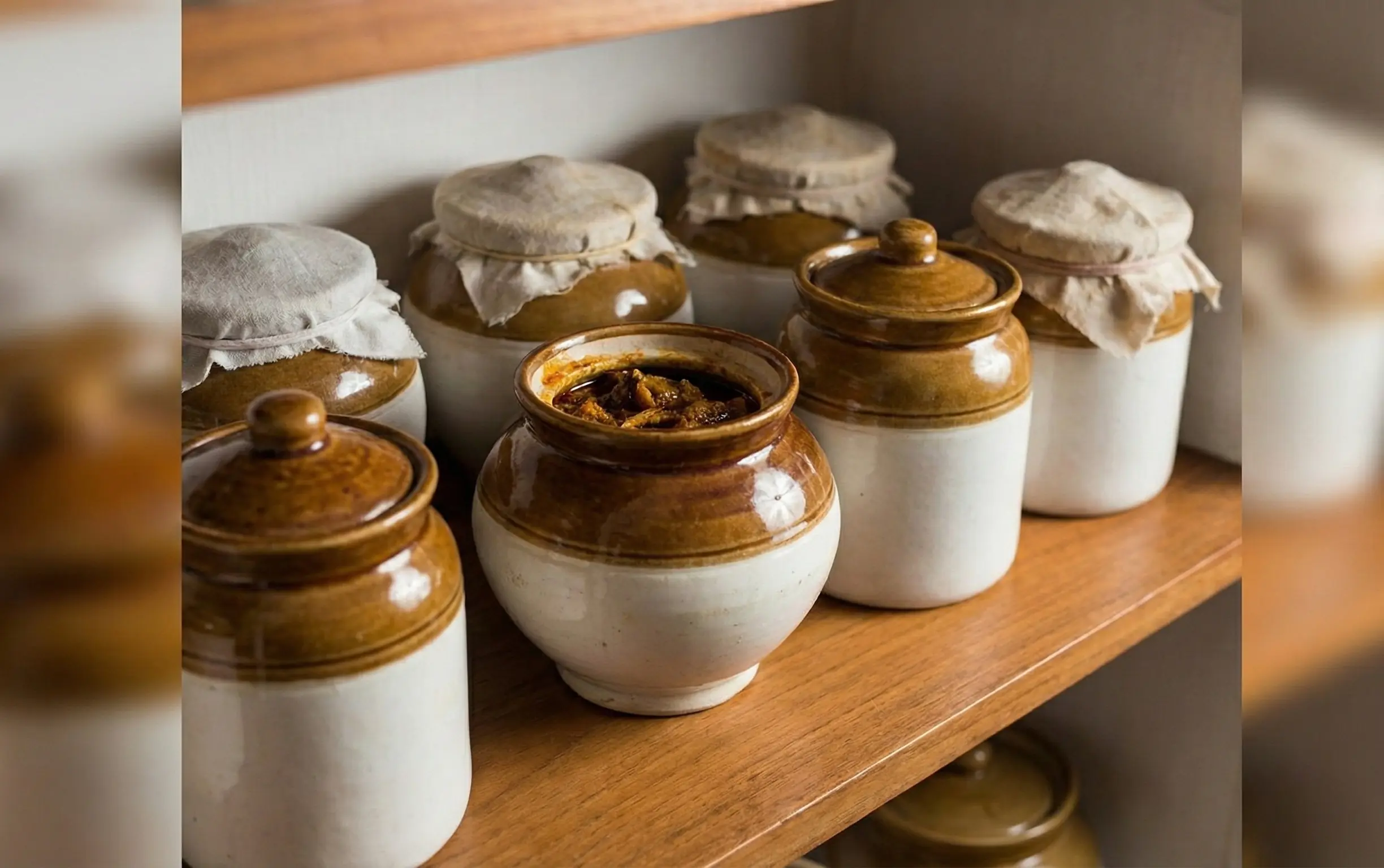
The way the jar is handled follows a few strict habits:
- The main jar is opened rarely, and a small portion is moved to a serving bowl for daily use.
- The spoon is dry, clean and often wooden. A wet spoon is the quickest way to spoil a jar.
- Hands are washed before touching it, and a used spoon never returns to the jar.
- The jar stays in a cool, dry corner, often under the care of the senior woman of the house.
The care has a social side. In traditional households, food that has been touched by a mouth or a used plate is called jhoota, and keeping a pickle jar away from it is both a hygiene habit and a purity custom. Both lead to the same behaviour at the jar.
Pickle and the idea of the household
Recipes for pickle are rarely written. They are passed from mother to daughter and aunt to niece, by watching and helping through the pickling days, and the proportions of oil, salt and spice are judged by eye and by smell. A household’s pickle therefore becomes a signature. Guests remember it, neighbours exchange jars, and a married daughter takes a jar from her mother’s kitchen to her new home. We tell more of this in pickle-making traditions in Banaras homes.
What a pickle is not
- It is not a main dish. A teaspoon is a normal serving, and the point is contrast.
- It is not interchangeable with a sweet chutney. The sourness and heat do a specific job on the plate.
- It does not replace fresh food. In Banaras the pickle is eaten beside dal and sabzi, never in place of them.
Frequently asked questions
Why is pickle served with every meal in Banaras?
It adds sour, salty and pungent tastes that a plain thali lacks, and it is a way of storing seasonal produce for the year.
What are the six tastes in Ayurveda?
Sweet, sour, salty, pungent, bitter and astringent. A traditional meal tries to include all six.
What oil is used in Banaras pickles?
Mustard oil is the traditional choice, often with whole spices such as fenugreek, fennel and nigella.
What is a martaban?
A glazed ceramic storage jar with a narrow neck, used for pickles because it is cool, non-reactive and easy to seal.
Which pickle is made in winter in Banaras?
Amla, carrot, radish, green chilli and the stuffed red chilli, bhari lal mirch.
Why use a dry spoon for pickle?
Moisture brings spoilage, so a wet or used spoon is the most common way a jar goes bad.
Is pickle part of every traditional meal?
Most households place a small amount on the plate at lunch and dinner, though practice varies with family and season.
Sources used for this post: Zee Zest (Varanasi thali); Wikipedia and Live History India (Manasollasa dating and food chapters). Ayurvedic ideas are described as tradition, with no health claim.