Blog
Pungency in Mustard Oil: Why the Sharp Smell Is Normal and What a Mild Oil Suggests

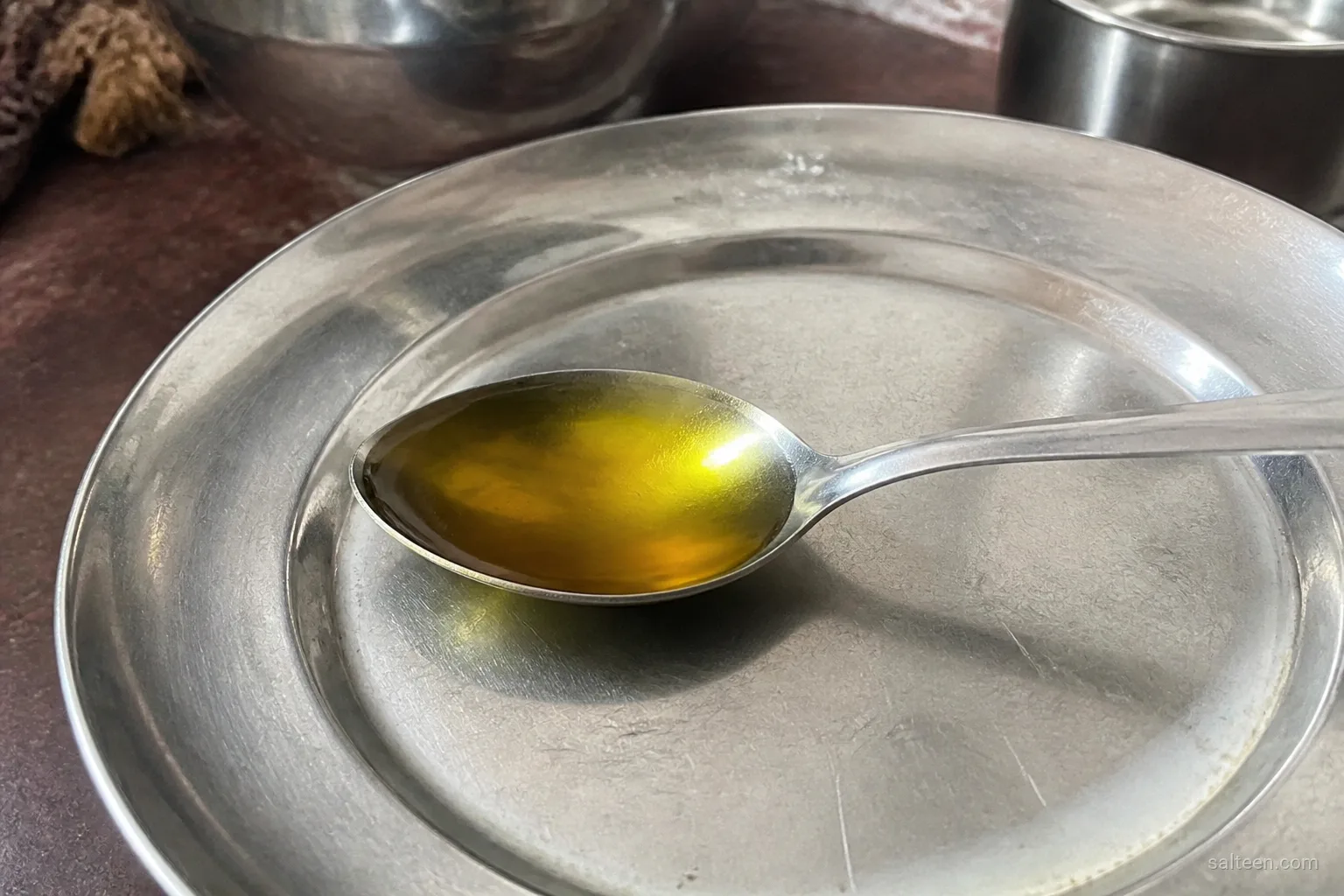
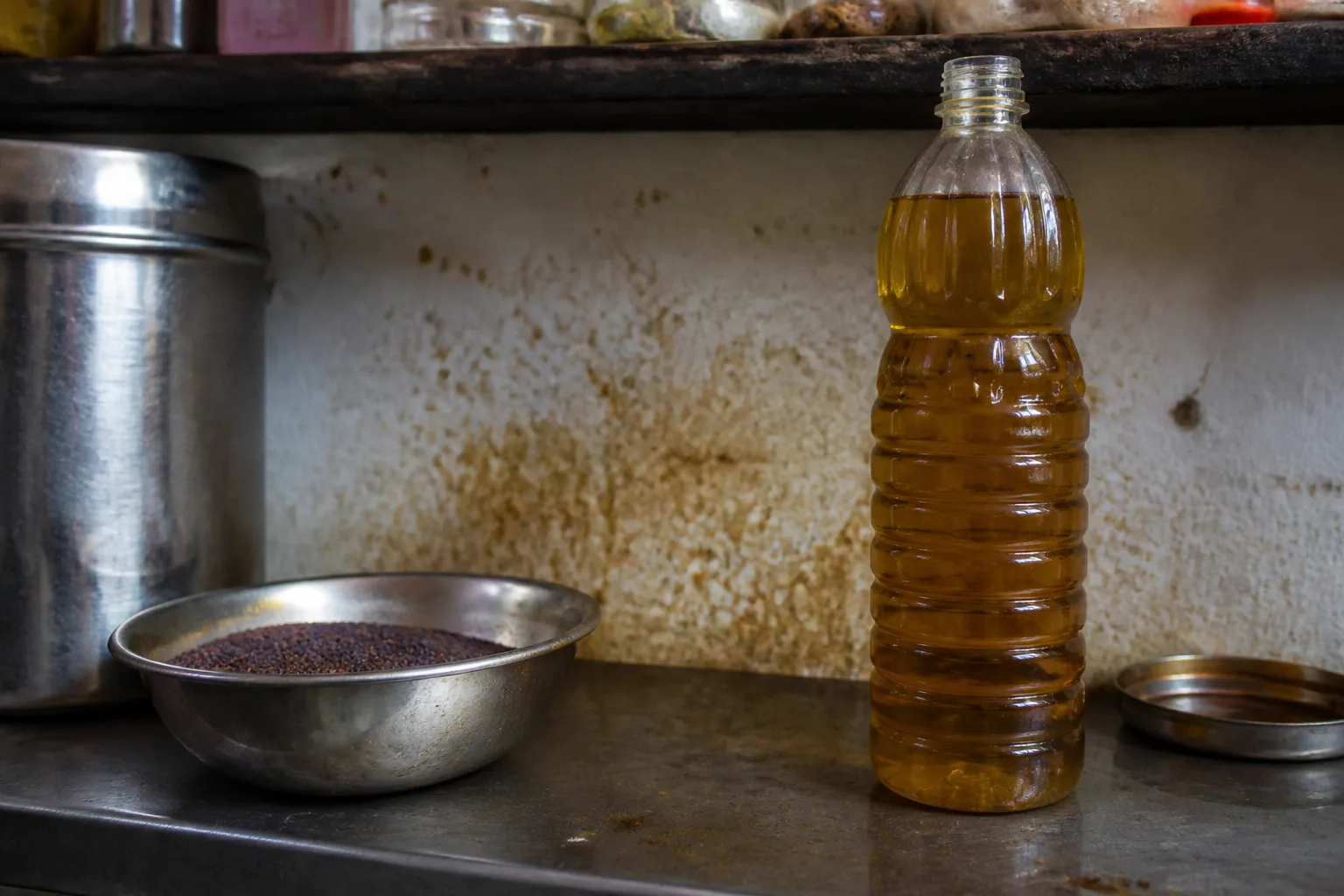
Open a fresh bottle of kachi ghani mustard oil and the nose tells you straight away. The smell is sharp, and it can make the eyes water. Wikipedia attributes that pungency to a single compound, allyl isothiocyanate, found in plants of the mustard family, which also includes cabbage, horseradish and wasabi.
This guide explains where the sharpness comes from, why it is normal, and what to make of a mild oil.
The short answer
In short
The sharp smell of mustard oil comes from allyl isothiocyanate, formed when an enzyme in the seed meets a compound called sinigrin. A strong smell is normal for kachi ghani oil. A mild oil may simply be refined, or made from another seed variety, and is not by itself a sign of fault.
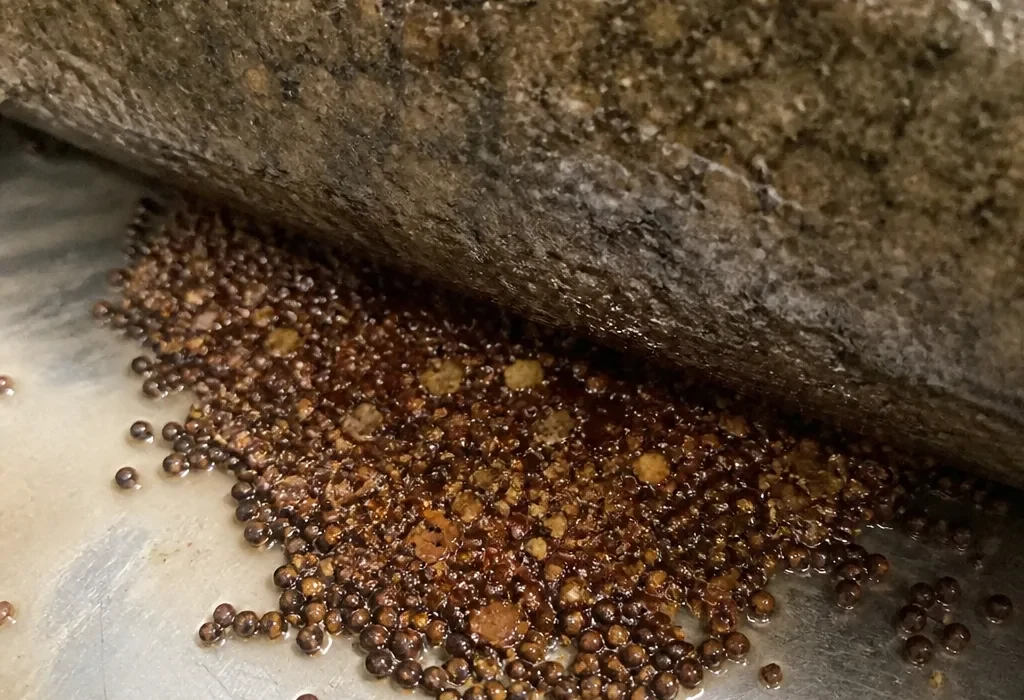
Where the pungency comes from
Wikipedia explains the chemistry. When mustard seeds are crushed, an enzyme called myrosinase meets a glucosinolate called sinigrin, found in black mustard and brown Indian mustard, and the reaction produces allyl isothiocyanate. The sting you feel comes from this compound activating a sensory channel called TRPA1 in the nerves. The same channel explains why wasabi stings the nose. For the plant, this compound works as a defence against grazing animals.
White mustard behaves differently. It does not yield allyl isothiocyanate, but a milder compound.
Why cold pressing keeps it
A producer’s article explains that when seeds are crushed in cold pressing, the enzyme is released, and it reacts with sinigrin to give the compound that makes mustard oil pungent. It describes good kachi ghani oil as having an unmistakable pungency that is warm and aromatic. This is a producer’s view, but it matches the chemistry above. See our guide to cold-pressed vs refined mustard oil for how the process differs.
Why achar cooks want it
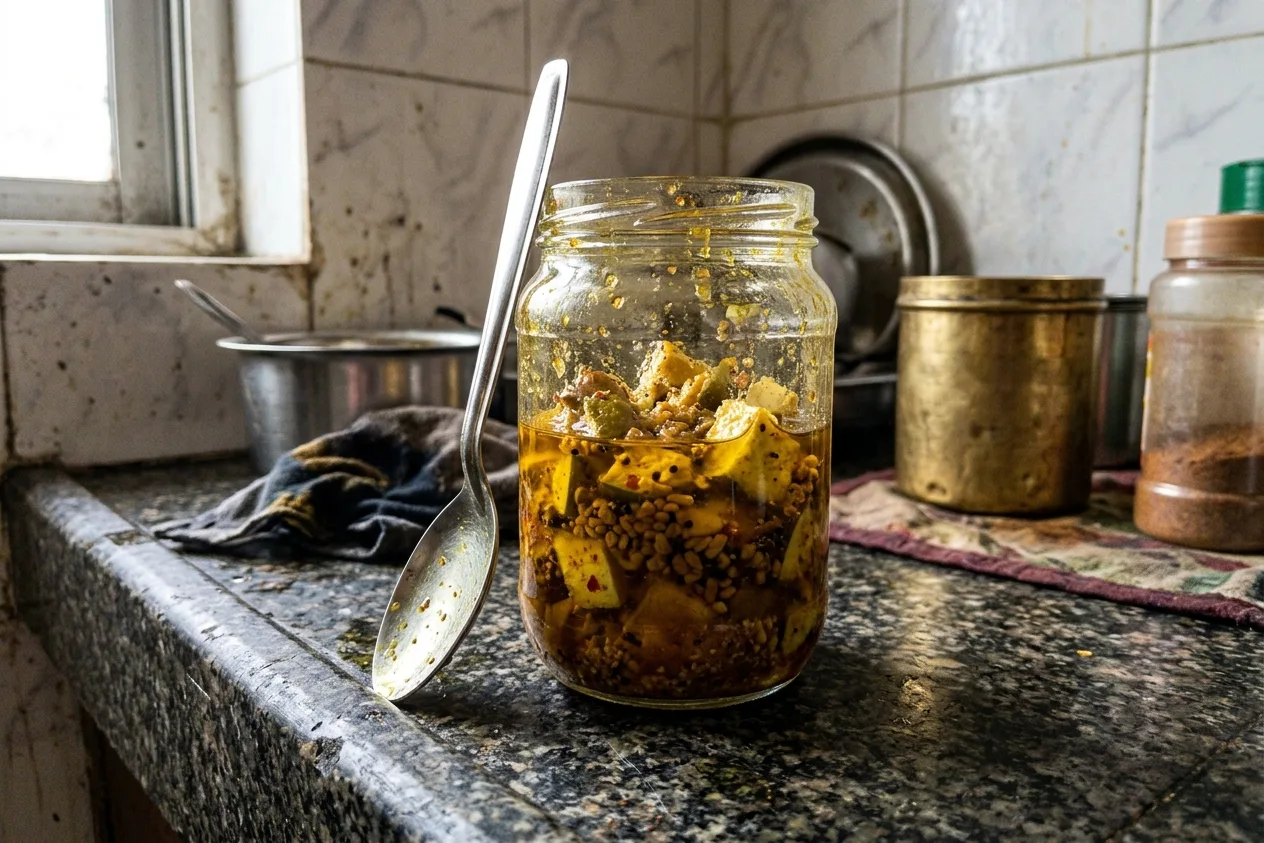
In pickle, the sharp note is part of the taste, and it carries the spices through the jar. Cooks then often heat the oil until it smokes lightly and cool it, which softens the rawness, as we describe in heating mustard oil for achar.
What a mild oil suggests
A mild oil is not necessarily a bad oil. There are a few plain explanations:
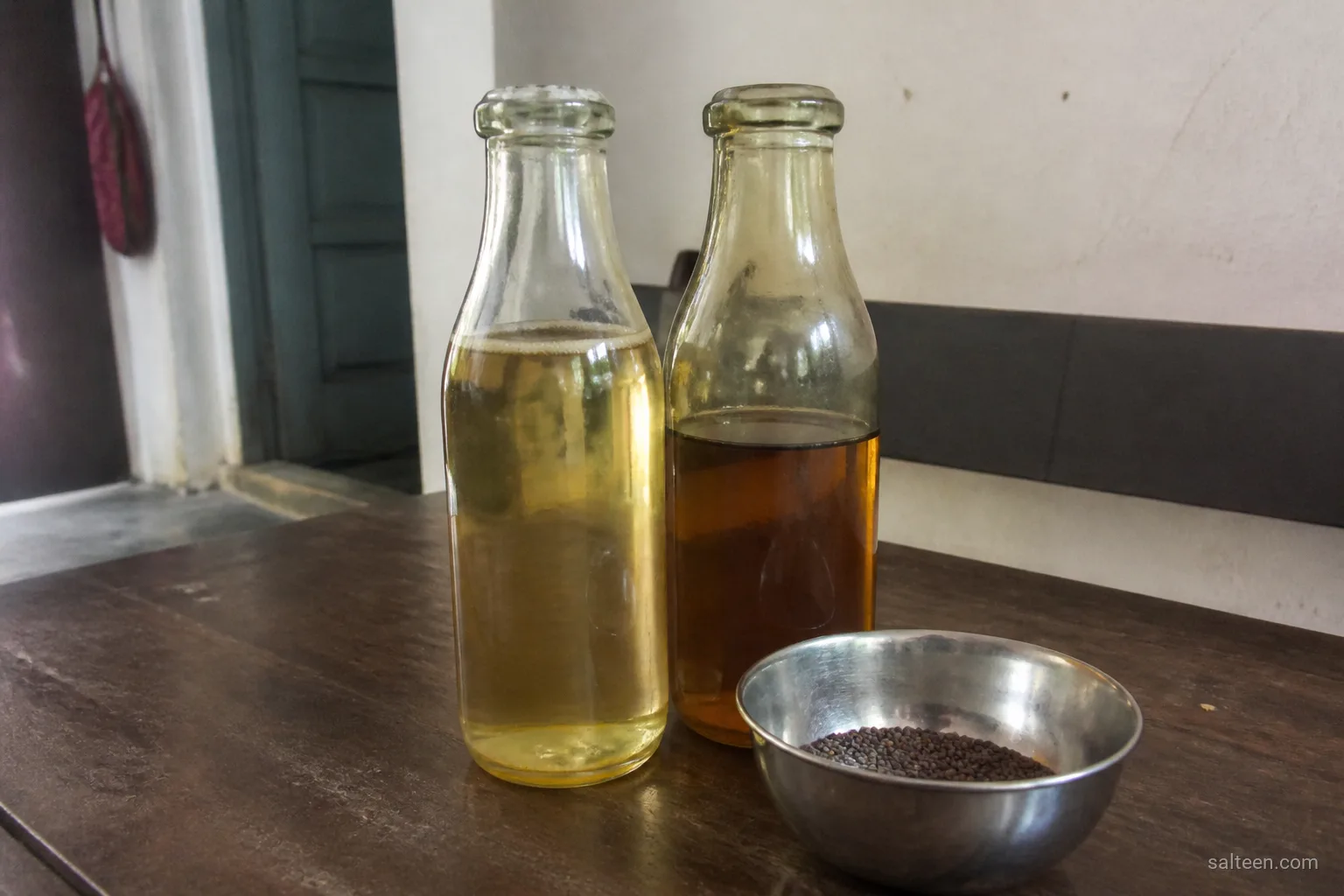
Why an oil may smell mild
- It is refined, which is processed further and made milder.
- Another seed or variety was used, since white mustard does not give the same compound.
- Age or storage may have reduced the smell. [CHECK: add a source before keeping this line.]
A producer’s article goes further and says low pungency can mean something has been given up in the oil. That is a view from one seller and should be read as such. If the smell matters to you, ask the maker how the oil was extracted and from which seed.
Frequently asked questions
Why does mustard oil smell strong?
Because crushed mustard seeds form allyl isothiocyanate, the compound responsible for its sharp smell and sting.
Is a mild mustard oil normal?
It can be. Refined oils and some seed varieties are milder. Ask the maker about the process.
Why does mustard oil make my eyes water?
The compound acts on sensory nerves, the same way it does in wasabi.
Does heating reduce the sharpness?
Cooks heat the oil to soften the raw smell before using it in pickle.
Sources used for this post: Wikipedia, Mustard oil.; Kashmir Observer, article on kachi ghani pungency (a producer’s view); Chromatography Online, on allyl isothiocyanate in mustard and wasabi. Peer reviewed or government source to be added.