Blog
A Hundred Kilos of Raw Mango, Fifty Ripe on Arrival: The May We Had to Reorder

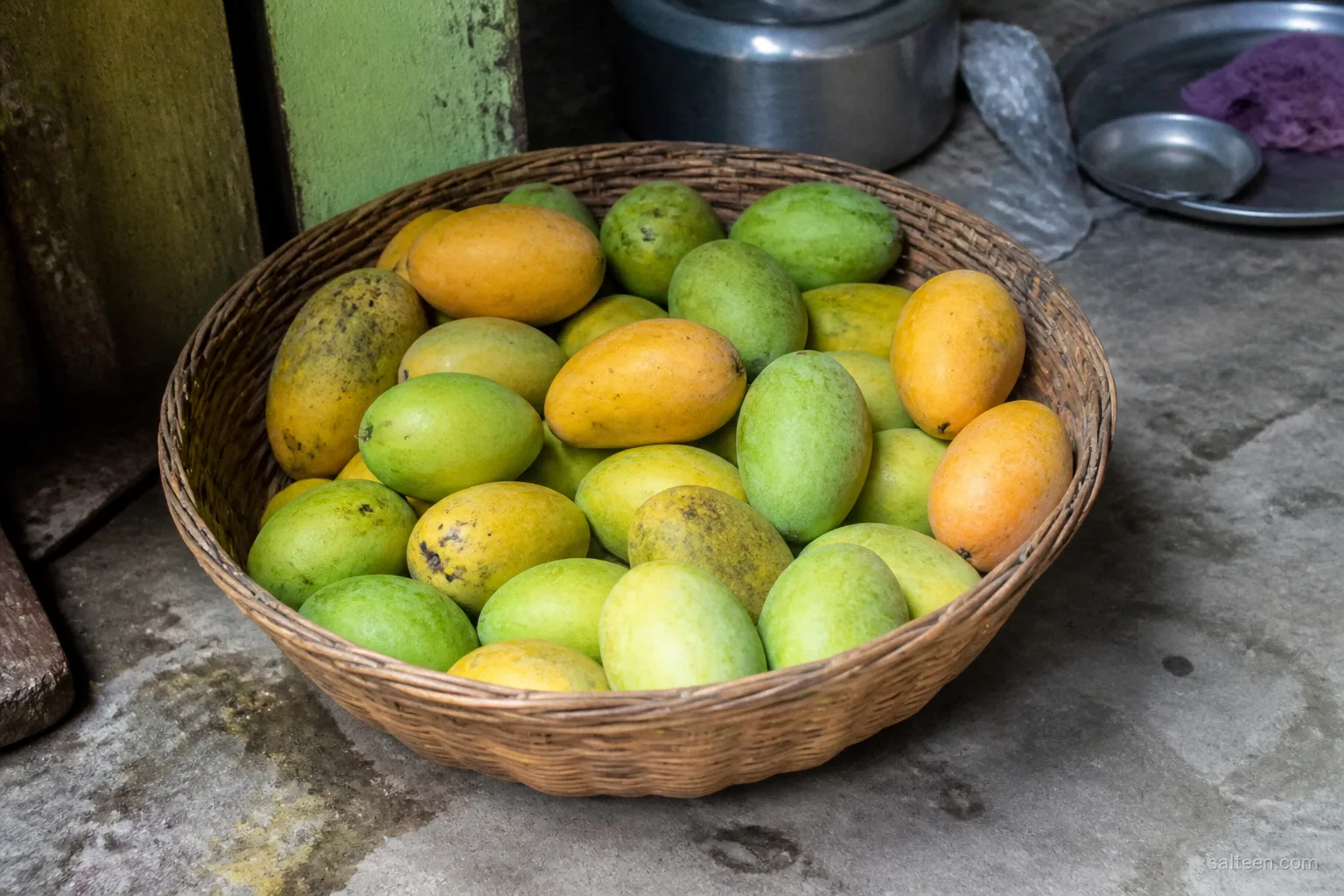
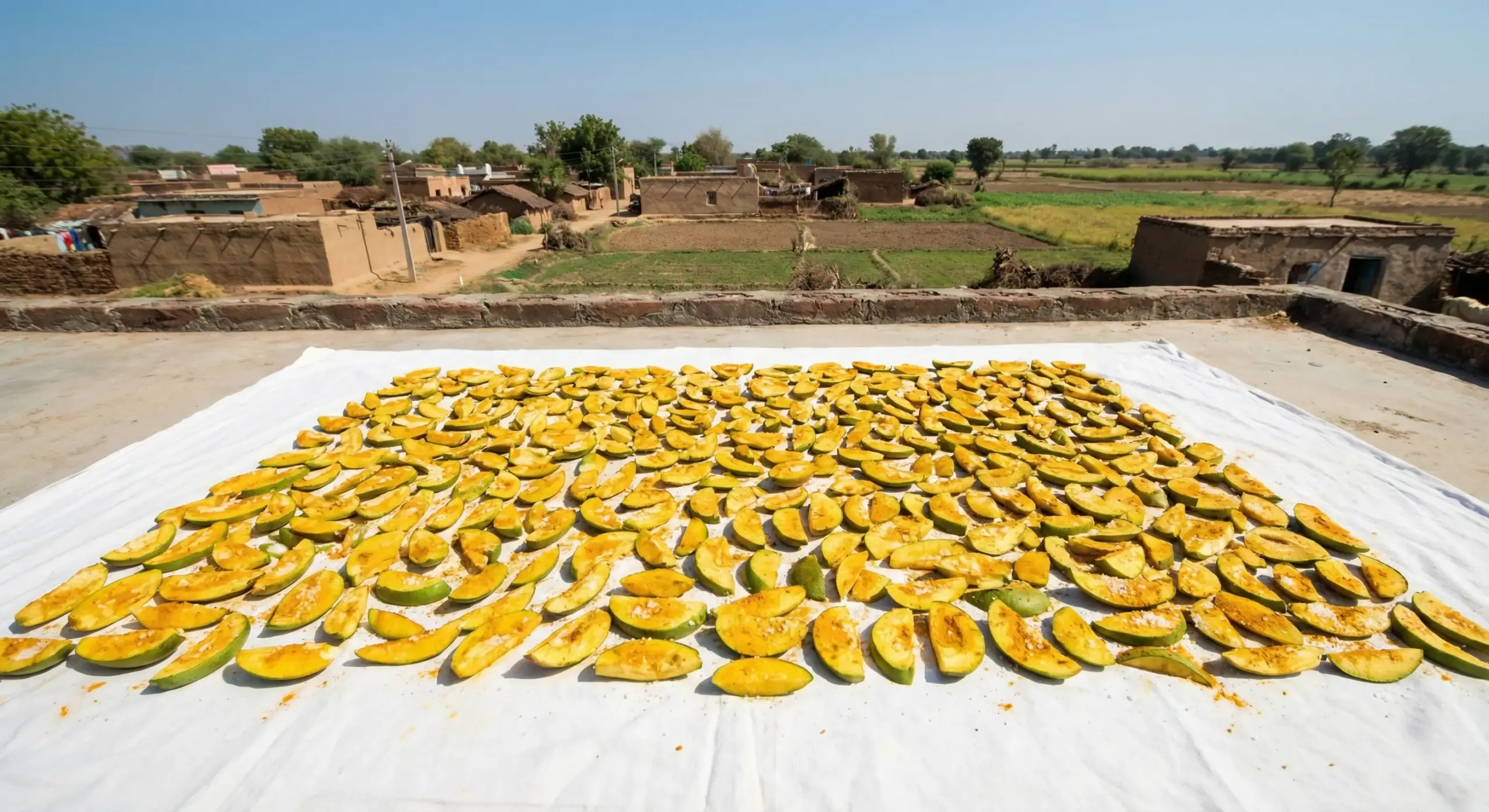
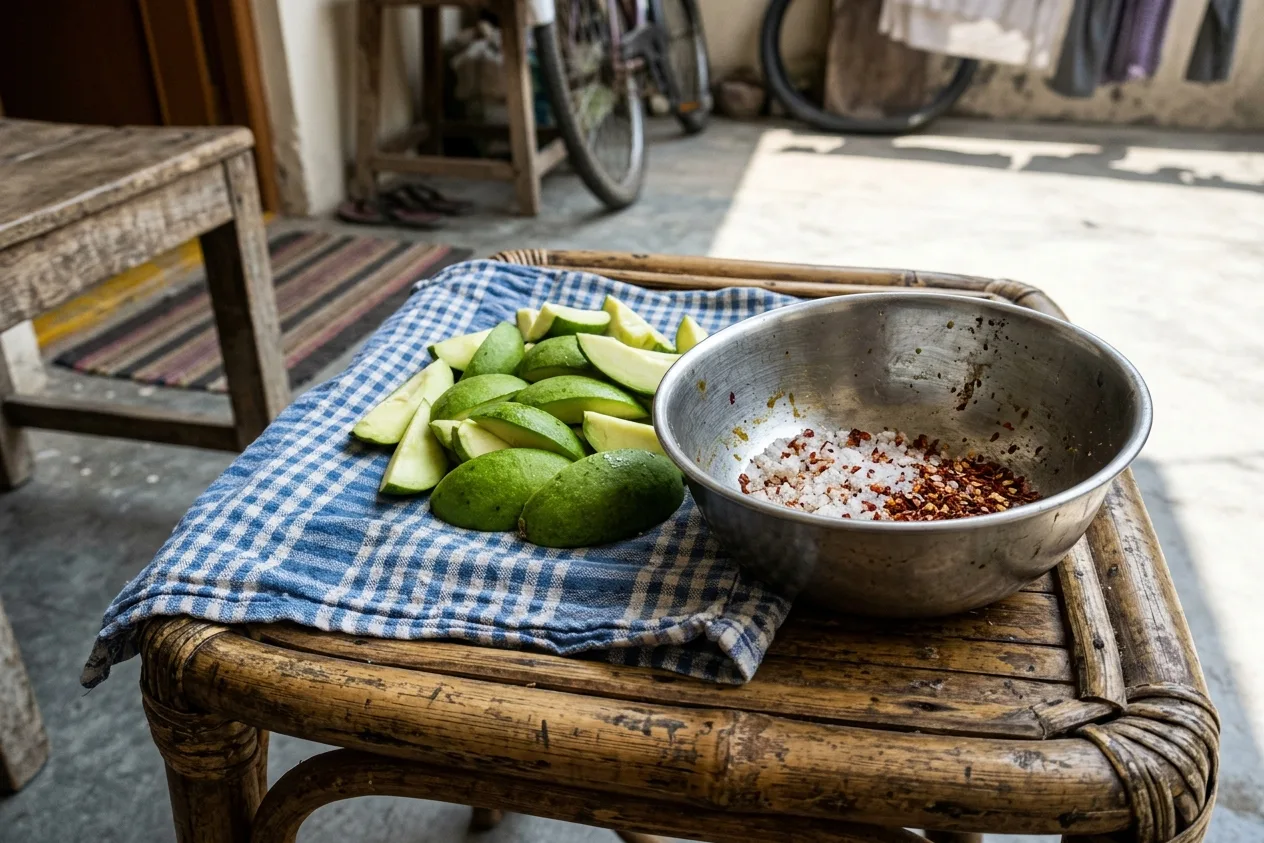
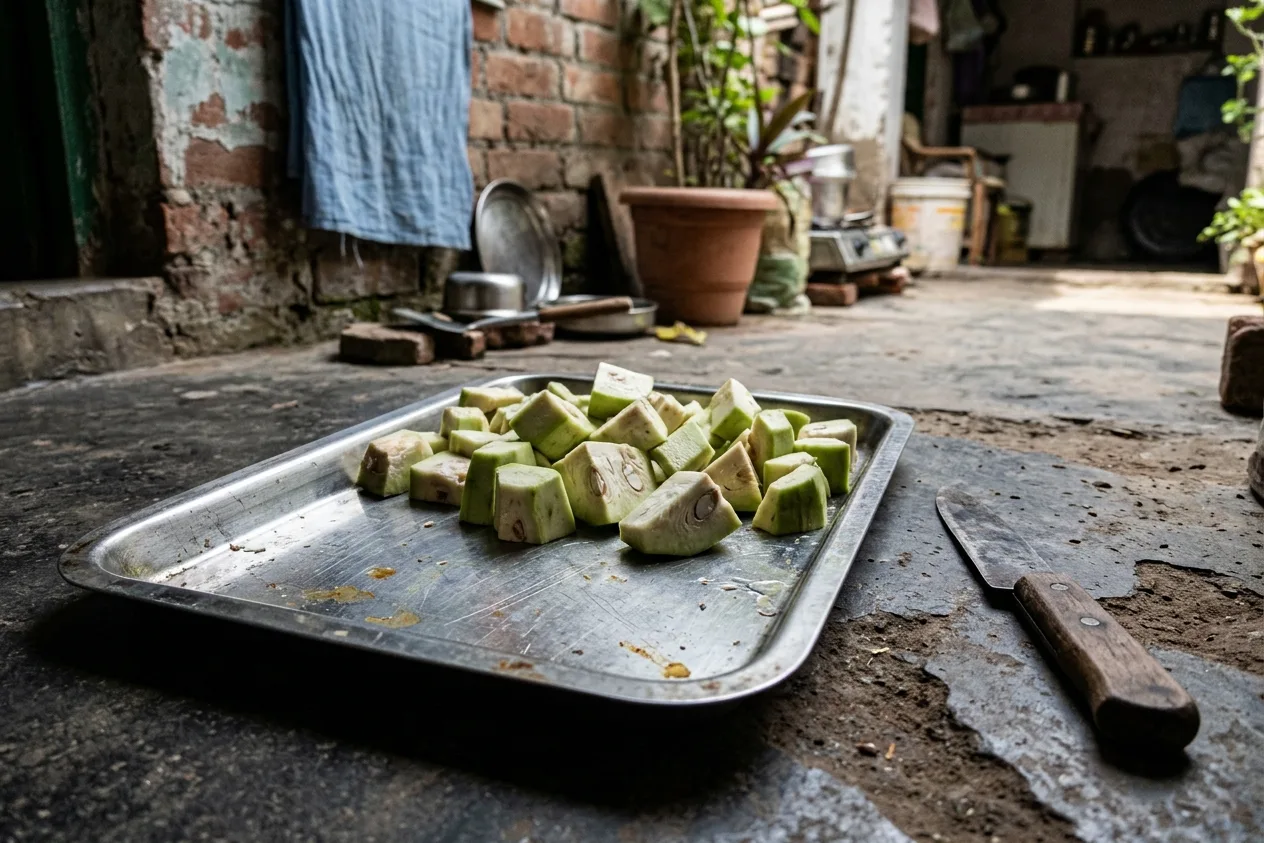
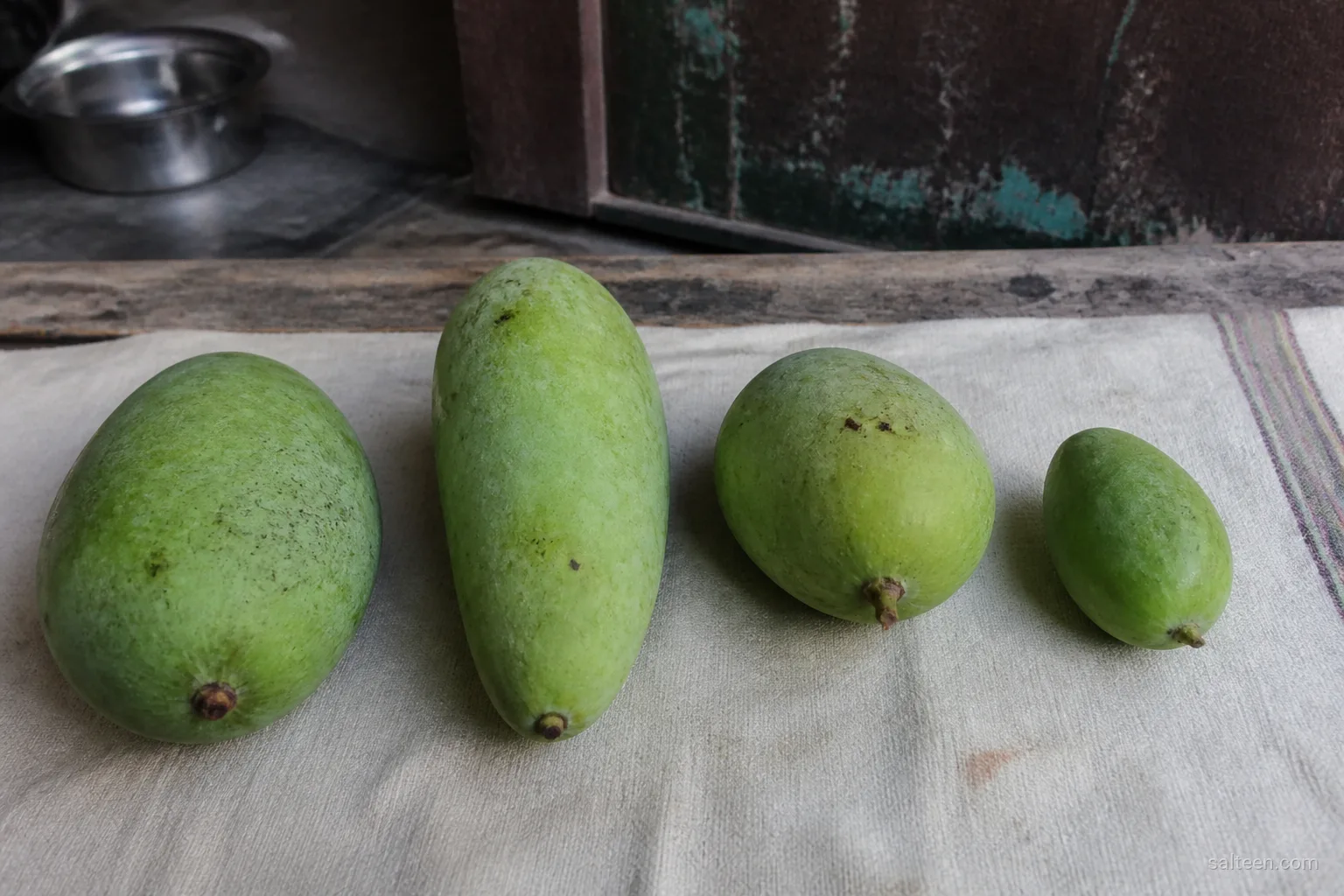
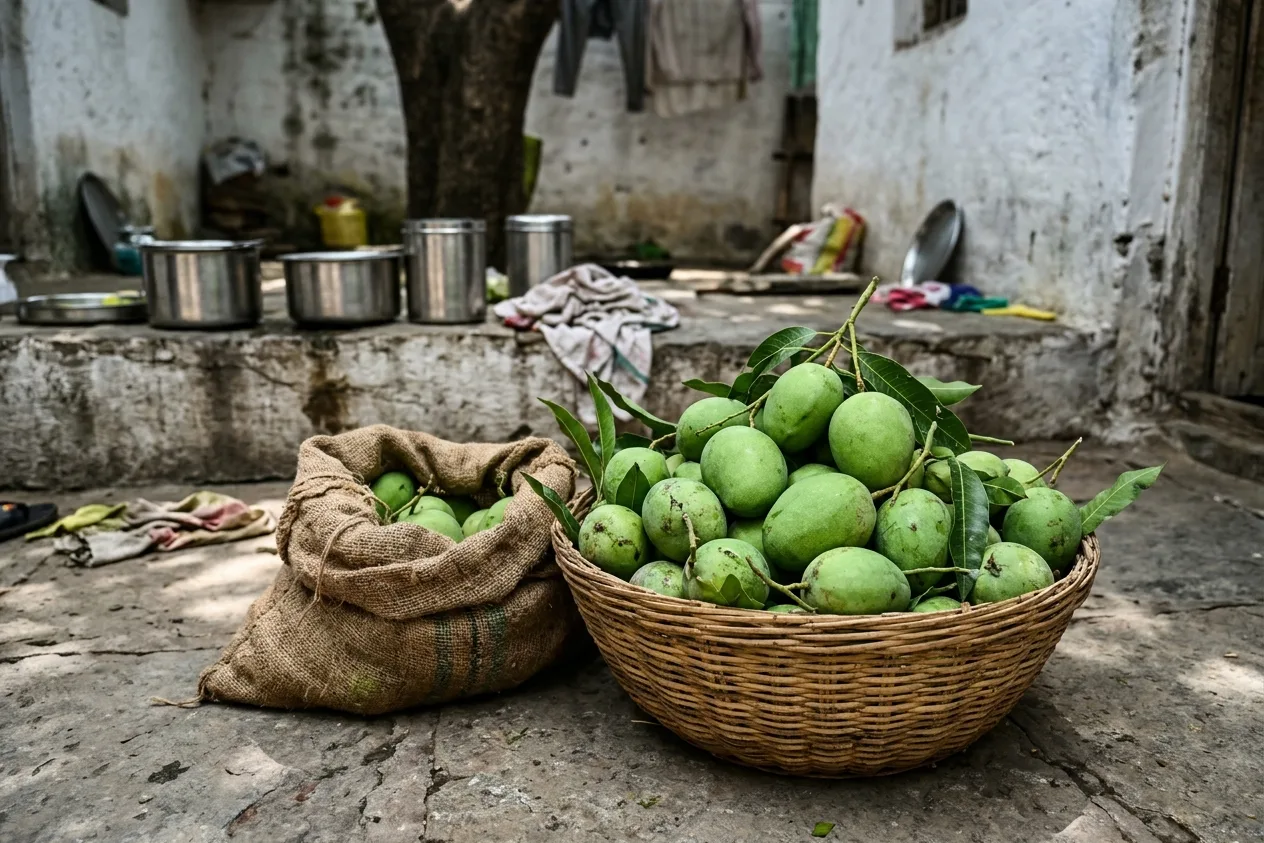
In May 2026, a lot of one hundred kilograms of raw mango reached the Salteen kitchen in Varanasi. About fifty kilograms of it had already begun to ripen. That is the mango that goes soft in a jar, so it could not be used for pickle, and the order had to be placed again.
This is Sanju Yadav’s account of that May, followed by what fruit handling research says about why it happens.
The short answer
In short
About half of a 100 kg lot of raw mango had ripened on the way in May 2026. Mangoes keep ripening after harvest, and warmth and ethylene speed it up, so a long, warm trip can finish what the tree started.
Why raw mango ripens in transit
Fruit handling research gives the plain reasons.
- Ripening is a process that continues after picking. A Queensland government guide on ripening mangoes says ethylene triggers ripening and a rise in respiration.
- Neighbouring fruit adds ethylene. A thesis on shipped mangoes, published on eScholarship, notes that mature mangoes may already be producing ethylene, or be exposed to ethylene from other mangoes during handling and transportation.
- Temperature decides the pace. A National Mango Board paper says temperature management is the most critical factor in managing ripening in mature green mangoes. In an Australian transport trial, air temperatures typically rose to about 20°C during the trip.
- Cool is not cold. UC Davis lists 13°C as the storage temperature for mature green mangoes, and the Hawaii extension service says storage at 10 to 13°C gives a shelf life of 14 to 28 days for mature green fruit. Colder than that risks chilling injury.
These figures come from export and research settings with controlled cold chains, and a small brand moving fruit by road in an Indian May cannot copy them. They show why heat and time matter.
What this means for your jar
A raw mango that is firm on arrival and used promptly behaves differently in the jar from one that is already turning. Our checklist is in how to choose raw mango for pickle.
Frequently asked questions
Why does raw mango ripen during transport?
Mangoes keep ripening after harvest, and heat and ethylene from nearby fruit speed it up. A long, warm journey can ripen a lot.
How do you stop it?
Research settings use cool storage and ethylene control. For a small brand,
Can ripe mango be used for pickle?
It softens in the jar, so a sweet or cooked preparation suits it better.
Sources used for this post: Queensland Government, handling and ripening mangoes in the export supply chain; thesis on ethylene and shipping temperature of mangoes (eScholarship); National Mango Board, methods for management of ripening; UC Davis Postharvest, mango; University of Hawaii CTAHR, mango postharvest guidelines; ISHS, in-transit ripening of mango.