Blog
Seven Achar Myths, Checked

A Homegrown piece on Indian pickles notes that achaar has its own set of myths, and Slurrp ran a whole list. Some of them are partly true, and a few are argued over by cooks. Here are seven, with what the sources say.
The short answer
In short
Pickle does not strictly need sunlight, oil is not the only thing keeping it, and no jar lasts forever. Regions use different oils, and a glossy jar is no proof of quality. Sources disagree on a few points, and we say which.
Myth 1: Pickle must be dried in the sun
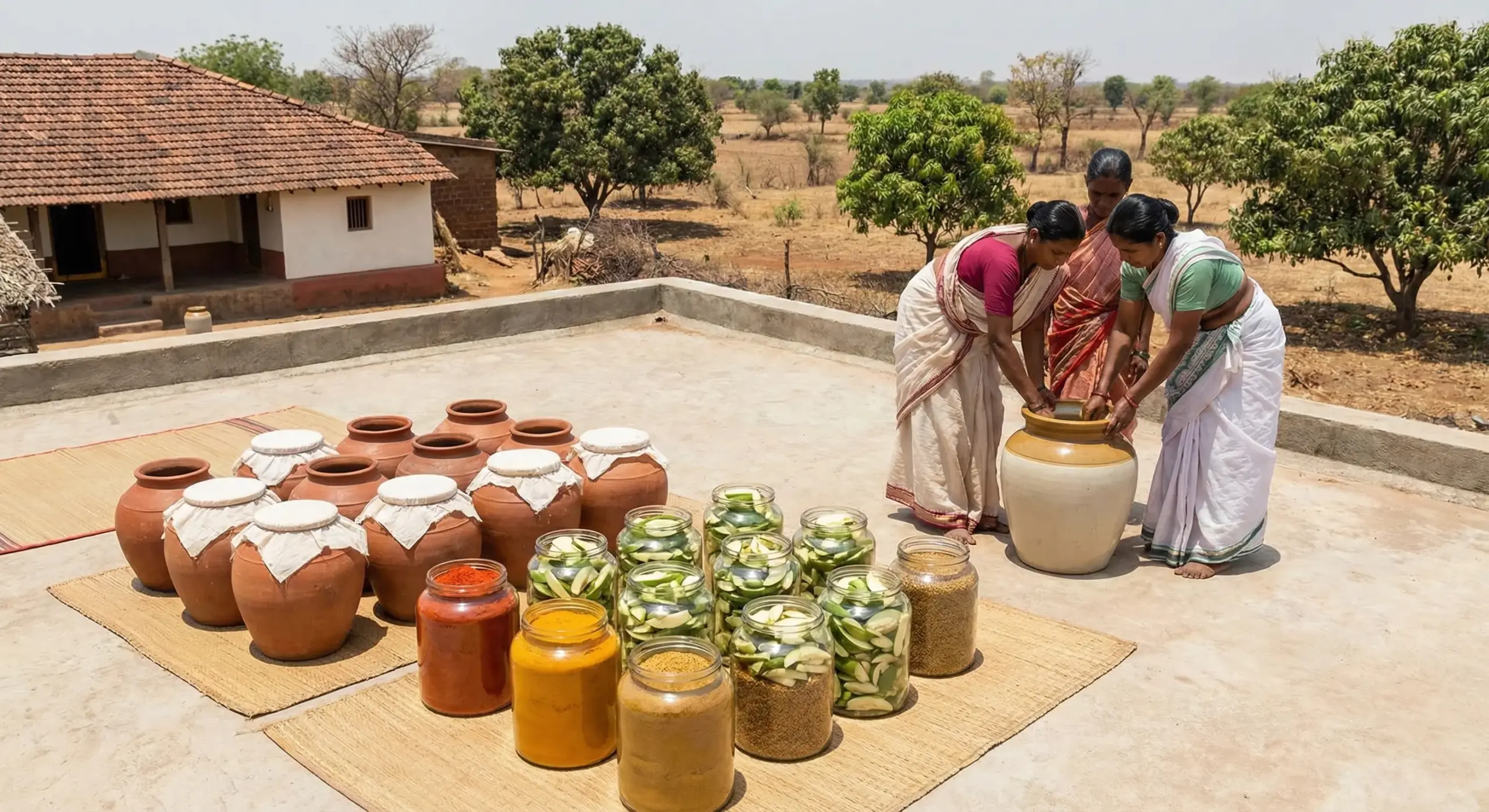
Partly true. Slurrp says most Indian pickles need seven to ten days of sunlight for flavours to mix, and that if sun is not possible the jar can be kept at room temperature. MasterClass says you do not need sun, but should use it if you have it. Our post on sun curing covers the method.
Myth 2: Oil is what preserves pickle
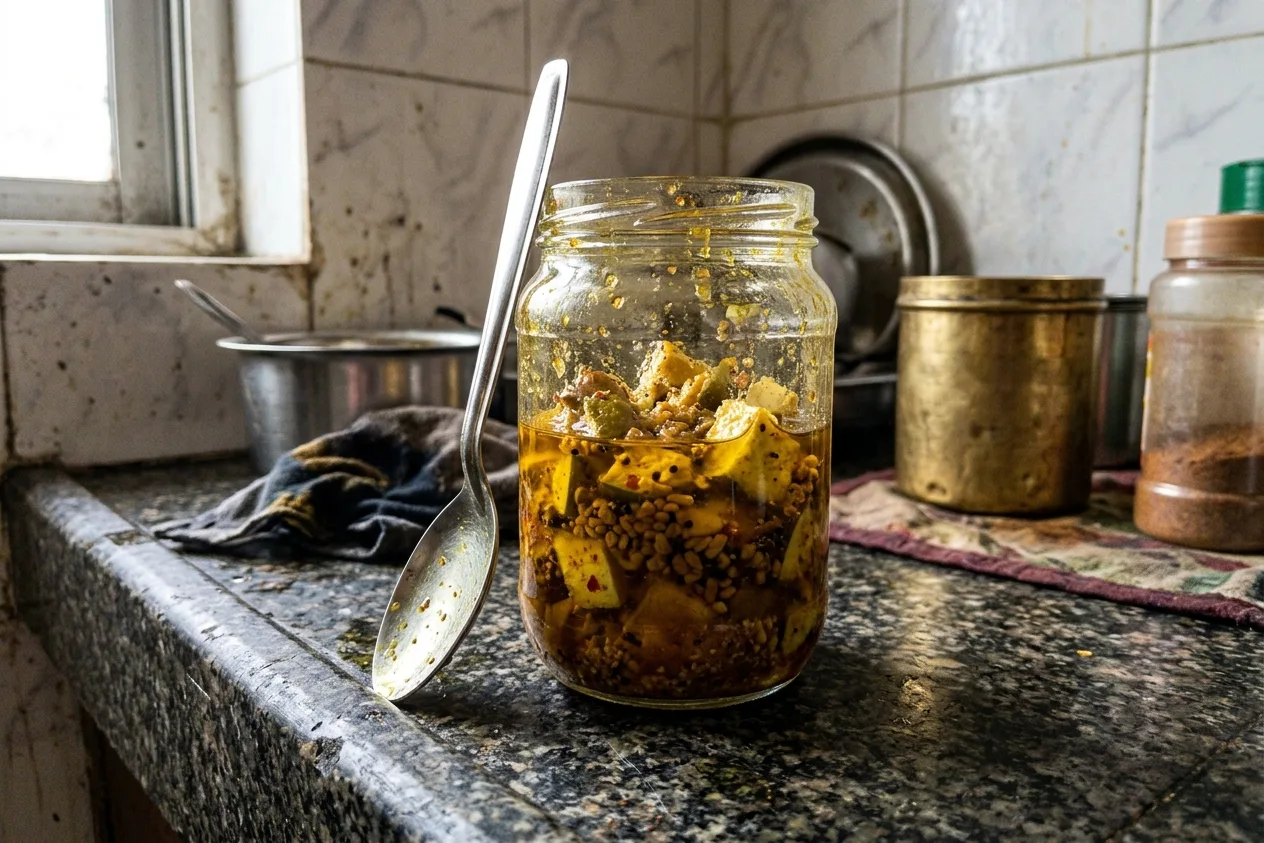
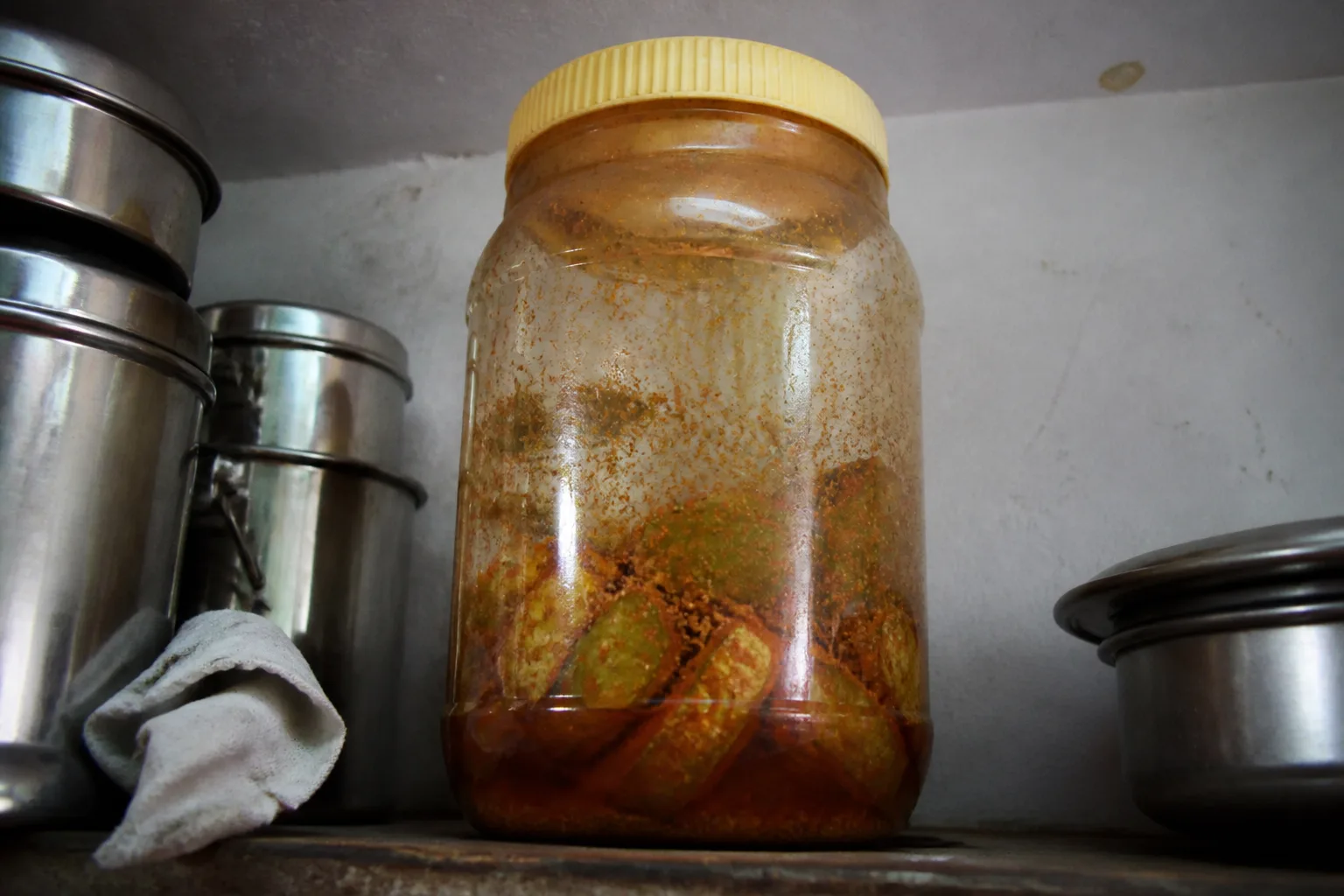
Sources disagree. MasterClass says oil and spices prevent bacterial growth. Organic Mandya, a seller, says oil forms an oxygen free barrier that prevents mould growth. Slurrp says plainly that oil itself is not a preservative. Salt, acidity and dryness do the work together with oil. See the oil layer on achar.
Myth 3: Achar lasts forever
False. Mashed lists “pickles last forever” among its false facts, and the Al Jazeera piece on heirloom pickles describes people proud of very old jars, which are exceptions kept with care. Slurrp says that if stored right, there is very little chance of Indian pickles going bad. Our post on how long achar lasts sets out the ranges.
Myth 4: Keep the jar in the sun on the shelf
False. Priya Foods, a seller, says direct sunlight, high temperature and humidity increase oxidation and fermentation, and advises a cool dry place away from the stove. Sun is for the curing stage, not the pantry.
Myth 5: A glossy, uniform jar is a better jar
Not proven. Slurrp, writing about unsafe pickle seized in Rajasthan, notes that many store pickles look flawless, bright and glossy, with the same taste every batch, while real pickles smell layered, spicy, sour and warm. A homemade jar varies. A good ingredient list says more than shine. See how to buy achar online.
Myth 6: Once sealed, a jar needs no checking
False. Slurrp’s monsoon piece says regular inspection catches problems early. Achar in monsoon lists the habits, and batch checks before sealing covers our side.
Myth 7: All Indian pickles use the same oil
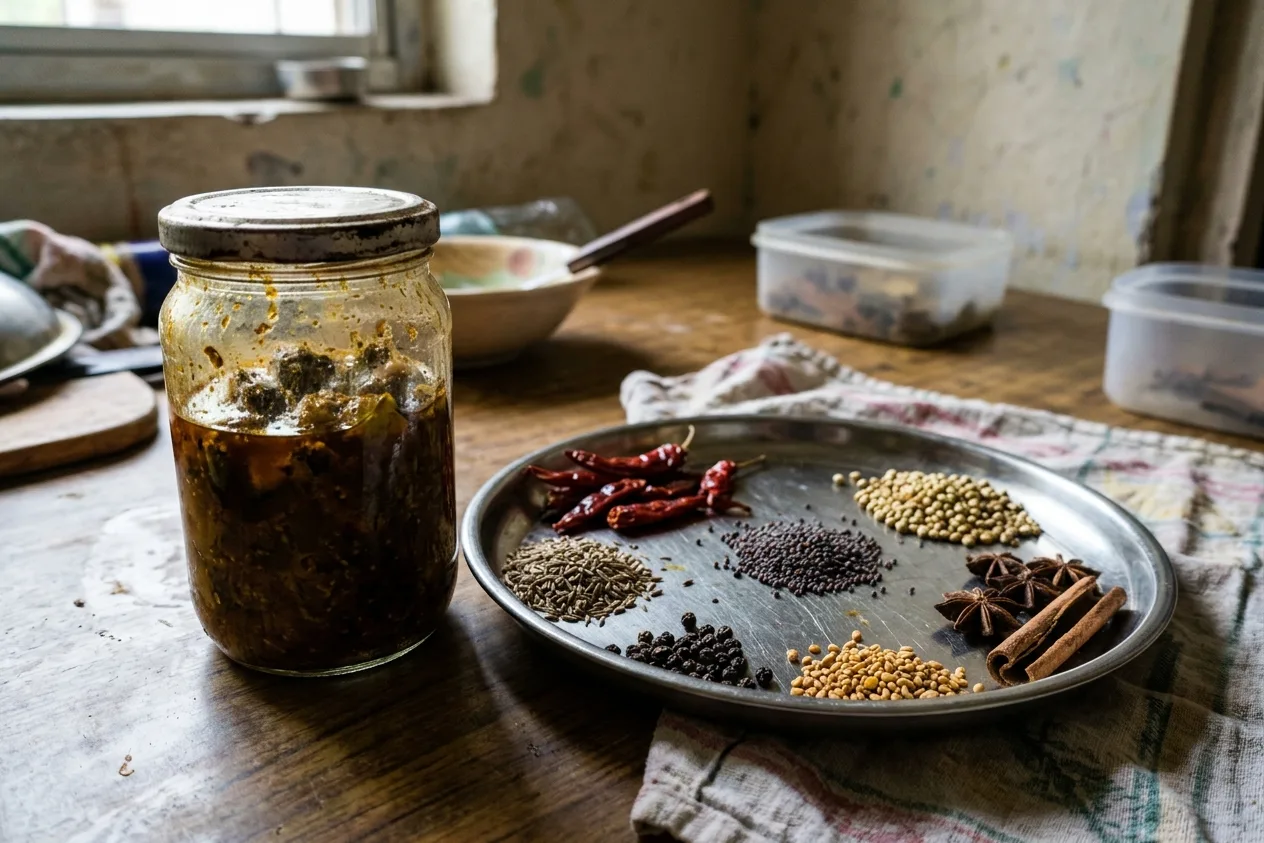
False. Homegrown says oil, which varies from region to region, and salt are the two primary ingredients, with some using mustard oil and others sesame. MasterClass says mustard oil is common in the north and sesame oil in the south. See Banarasi vs Punjabi vs Rajasthani achar.
Myths we left out
Slurrp’s myths piece includes several about salt, oil and health. We do not make health claims, so those are not on this list.
Frequently asked questions
Does pickle need sunlight?
Many recipes call for it for several days, while others say it is optional.
Does achar have to be oily?
Sources say to keep the pieces covered with oil, and advise topping up when it dries.
Does pickle last forever?
No. Storage and care decide how long it lasts.
Sources used for this post: Slurrp, pickling tips, storing tips and tips to last longer, monsoon tip, and 5 safety checks before buying achaar; MasterClass, all about achaar; Organic Mandya, pickle (seller); Priya Foods, pickle storage (seller); Homegrown, the tangy tradition of Indian pickles; Mashed, false facts about pickles; Al Jazeera, India’s pickle people