
Blog
Sun-Curing Achar: How Many Days, Which Months and What Changes in the Jar

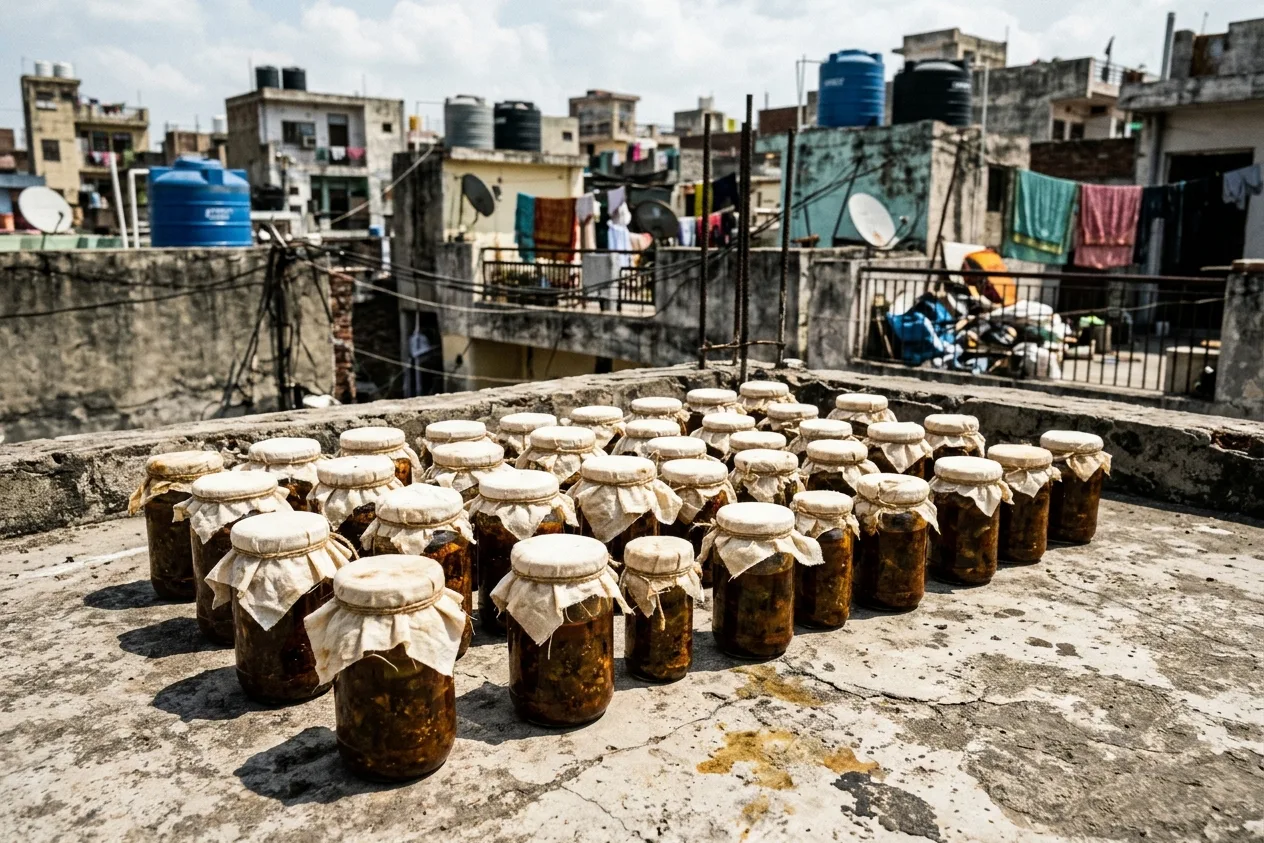
Recipes for mango pickle disagree on how long the jar should sit in the sun. One keeps it out for two to four days, another says four to five, a third says five to seven, and one recipe writer says eight to twelve, depending on the strength of the sun where you live. Nothing is wrong with any of them. The range is the main thing to know about sun curing, and the rest of this guide explains what causes it.
We cover why the jar goes into the sun, how it is covered and handled each day, how to tell when the pickle is done, and what to do when there is no sun.
What sun curing is
In short
Sun curing means keeping a jar of salted, spiced pickle in direct sunlight for several days, covered with muslin, so that the warmth draws out moisture and spreads the flavour. Recipes range from 2 to 12 days, and the right time depends on the strength of the sun.
Sun curing is a stage of making oil pickles, and it comes after the pieces have been salted, spiced and packed. Two different sun steps are often confused. The first is a short sun drying of the raw pieces, a few hours to two days, which removes surface moisture. The second is the longer sun curing of the packed jar, which is the subject of this guide.
The two sun steps
For a raw mango pickle, the first step is drying. One recipe tosses the mango pieces with turmeric and salt and keeps them on a sieve, covered with muslin, in the sun for 4 to 6 hours. Another keeps them out for one to two days until the edges dry and the skin turns pale, to remove moisture and concentrate the sourness before spices and oil go in. A guide from a retailer says salted pieces go into direct sun for one to two days, 4 to 6 hours a day, and are brought indoors at night to avoid dew.
The second step is the jar. A guide says to keep the jar in sunlight for 5 to 7 days, for 4 to 6 hours a day, shaking or stirring with a dry spoon once a day. It adds that the warmth speeds up the infusion of spices into the fruit.
How many days
The table collects what recipe sources say. They are different recipes and different pickles, so the numbers are not in conflict.
| Pickle | Days in the sun | Source note |
|---|---|---|
| Sweet mango pickle, no oil | 2 to 4 days | Veg Recipes of India |
| Punjabi mango pickle | 3 to 4 days | Veg Recipes of India |
| Punjabi mango pickle | 4 to 5 days | Tarla Dalal |
| Mango pickle, grandmother’s method | 5 to 7 days | A recipe site, with a full taste after 3 to 4 weeks |
| Mango pickle | 8 to 12 days | Sinfully Spicy, depending on the sun |
| Stuffed red chilli pickle | 5 to 7 days, or 3 to 4 if the sun is intense | Veg Recipes of India |
| General rule for pickles | 3 to 4 days in a muslin covered jar | MasterClass |
For the chilli pickle, the recipe says cloudy weather is a big no, and that intense sun can get it done in three to four days. Sun curing is therefore not a fixed number of days. It is a number of good sunny days.
Which months
MasterClass says pickles are traditionally prepared in summertime, making the most of the heat of the pre monsoon season in India. Mango, lemon and chilli pickles are made in these months. Winter pickles, such as the carrot, cauliflower and turnip mix, are made in the milder sun of November to February, and we explain that in our post on gajar gobhi shalgam achar.
The daily routine
A jar in the sun
- Clean and dry the jar. No moisture or dirt should remain, as one recipe insists.
- Cover the mouth with muslin tied with a string or rubber band. Leave the lid off so that moisture can escape.
- Put the jar in direct sun in the morning on a terrace, a ledge or a window with strong light.
- Shake or stir once a day with a clean, dry spoon, not with the hands.
- Bring it in at night and keep it in a cool, dry place. Put it out again the next morning.
- Check the oil. The pieces should stay covered.
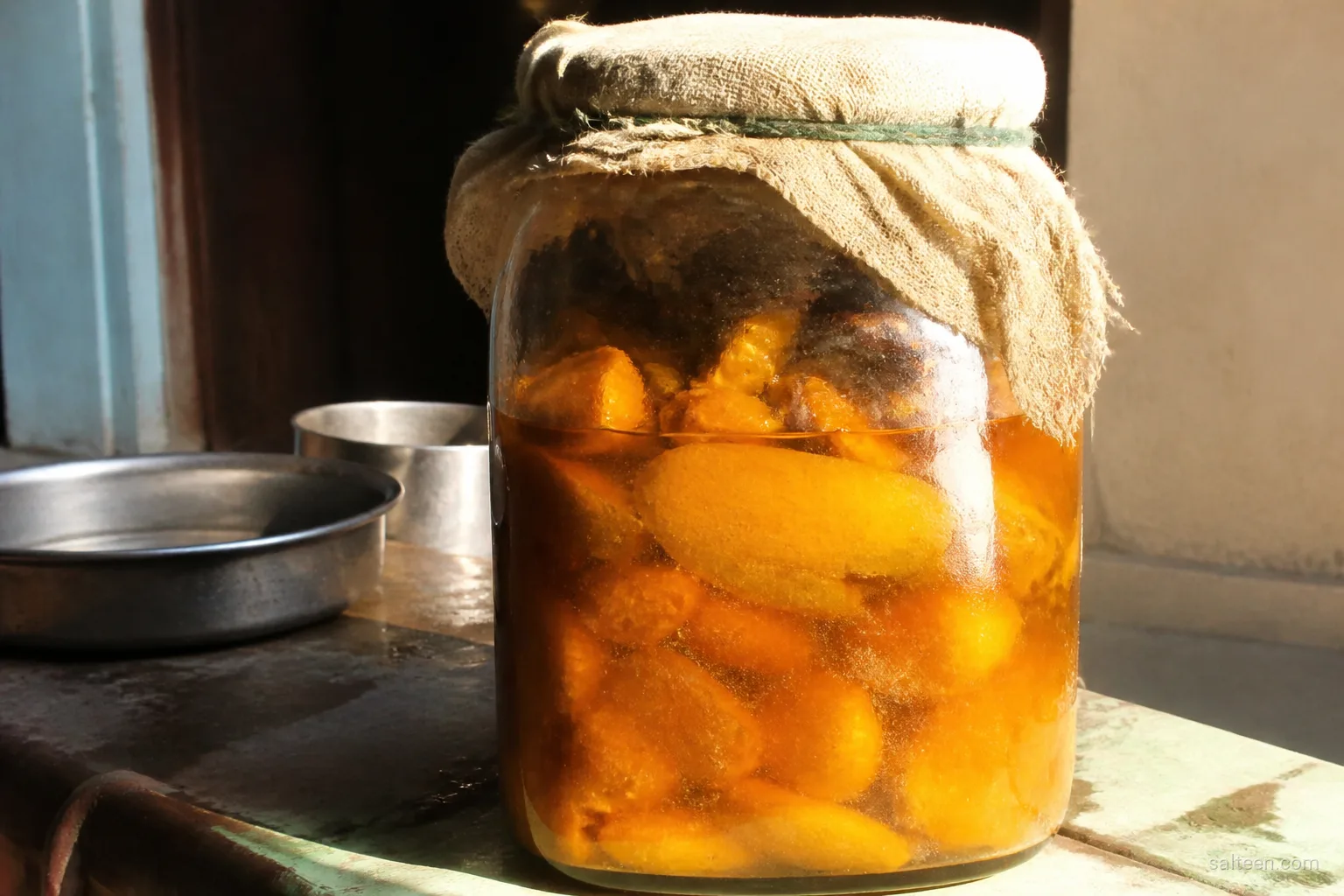
The muslin does two jobs. It keeps dust and insects out, and it lets moisture leave. A recipe writer says not to put the lid on during this stage, because the moisture of the fruit must escape. Another says to use a fine sieve or a thin muslin cloth over the bowl for the same reason. Bringing the jar in at night matters, because a guide notes that dew would add moisture.
What changes in the jar
A retailer’s guide says the sun’s warmth speeds up the infusion of spices into the fruit. A chilli pickle recipe says the chillies soften from the heat of the sun. One recipe site notes that a mango pickle is ready to eat at about a week, when the mango is still firm and sharp, and that the full taste arrives after three to four weeks, so the jar keeps changing after the sun is over.
How to tell it is done
Recipes use taste and touch and not the calendar. For the stuffed red chilli pickle, one recipe says to taste the chillies. If they are still crunchy, more days are needed, and the chillies should soften from the heat of the sun. The cook goes by the look and the taste of the pieces, more than by the calendar.
No sun, no problem
A recipe writer notes that while sunlight is, in her words, paramount for any traditional pickle, she developed a Punjabi mango pickle that can be made without the sun. A sweet mango pickle recipe offers a second route: cook everything together until the water evaporates and eat it immediately. Our guide to how long achar lasts sets out the ranges.
How we sun cure
- How many days does each pickle stay in the sun, and in which months?
- Where are the jars kept: terrace, courtyard, a roof in the unit?
- What covers them, and who stirs them each day?
- What do you do when a monsoon cloud or a cold spell comes?
- How do you decide the jar is done?
- One memory of the terrace in pickle season.
If a line cannot be confirmed, this section stays out of the post.
Where to go next
For the full tradition, read our guide to Banarasi achar. The oil is covered in heating mustard oil for achar, and the range from our kitchen is in the pickle and achar collection.
Frequently asked questions
How many days should achar sit in the sun?
Recipes range from about 2 days to 12 days. A common figure for mango pickle is 3 to 7 days, and it depends on the strength of the sun.
Why is pickle kept in sunlight?
The warmth draws out moisture and helps the spices infuse into the fruit. One writer also says it ferments the flavours and extends shelf life.
Should the jar be closed during sun curing?
Recipes cover the mouth with muslin and leave the lid off so that moisture can escape. The lid goes on afterwards.
Can achar be made without sun?
Yes, some recipes are written for it, but the result is different, and the shelf life may be shorter.
Why bring the jar in at night?
To keep dew and damp from adding moisture to the jar.
Sources used for this post: Veg Recipes of India, sweet mango pickle, Punjabi mango pickle and red chilli pickle; Tarla Dalal, aam ka achaar; Sinfully Spicy, raw mango pickle; Fun Food Frolic, Punjabi aam ka achaar; InstaCuppa, aam ka achaar; Organic Mandya, preparation of mango pickle; MasterClass, all about achaar; Whisk Affair, gajar gobhi shalgam achar. Recipes differ and numbers are quoted as each source gives them.
