Blog
How to Buy Authentic Achar Online: Eight Label Checks Before You Pay

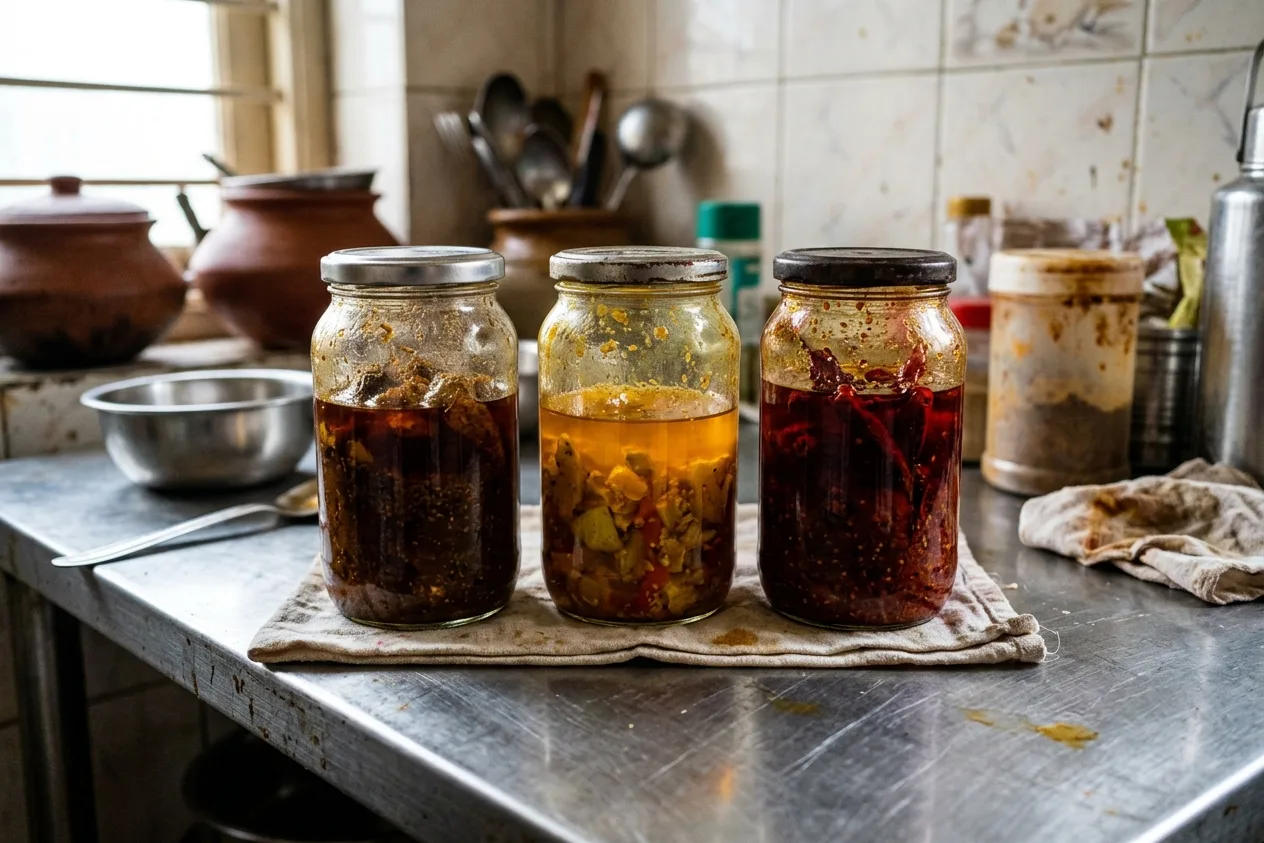
FSSAI’s own consumer FAQ gives the first instruction: whichever channel you buy from, look for the licence on the label and verify that the business is licensed for that product category on the Food Safety Connect portal. Online, you cannot sniff the jar, so the label and the listing carry the proof.
The short answer
In short
There is no legal definition of “authentic” for achar. What a buyer can check is eight things: the FSSAI number, a short ingredient list, the named oil, both dates, the seal, label photos from all sides, shelf life on delivery and a record of the purchase.
1. The FSSAI number
Look for a licence or registration number on the label and verify it on Food Safety Connect, as FSSAI advises. See what the licence means. The JioMart guide says the number sits near the logo and is 14 digits. A listing with no number gives you nothing to check.
2. A short ingredient list
Slurrp says the ingredients should read like something you would cook with at home: oil, salt, spices, raw fruit or vegetable. The longer the list, it adds, the more likely the pickle is not naturally made.
3. Preservatives and colour
Organic Mandya, a seller, lists sodium benzoate (E211), artificial colour and synthetic vinegar as red flags in commercial pickle. That is one seller’s view, so read the label for what it actually lists.
4. The oil is named
The label should say which oil. Our guide to reading a mustard oil label explains the terms, and Slurrp says to check the oil.
5. Both dates
JioMart’s guide says to check the licence number, ingredients, both dates and that the jar is full. FarmDidi, a pickle maker, warns that an expiry date that makes your head spin may mean a pickle that is trying too hard to stay alive.
6. The seal and the jar
Slurrp says to always look for proper sealing and FSSAI certification. On arrival, check the seal before you accept the parcel. See packing glass jars.
7. Label photos from every side
CAG, a consumer group, says an online store may upload images of the package from all sides so customers can read the declarations, and that the declarations must be shown before the sale. It also says FSSAI expects delivered food to have 30 percent of its shelf life, or 45 days, left.
8. Keep records
Business Today’s label checklist says to keep the receipt, seller details and photographs of the label and batch number, and that Food Safety Connect supports filing complaints. Those records help if a problem arises.
What the checks cannot tell you
A tidy label does not prove how a jar was made. Ask how it was cured and which oil went in. For how we answer, see batch checks before sealing and sun curing.
Price
FarmDidi says a good pickle should cost a little more because quality ingredients and traditional methods are not cheap. A very low price is worth a second look at the label.
Frequently asked questions
How can I tell if an online pickle is authentic?
“Authentic” is not a legal term. Check the licence number, ingredients, oil, dates, seal and label photos.
What should be on a pickle label?
Licence number, ingredients, oil, quantity, dates, and the maker’s address.
Can I verify an FSSAI number?
Yes, on FSSAI’s Food Safety Connect portal.
Sources used for this post: FSSAI FAQ, verifying a licence; JioMart, pantry pickling preservation guide; Slurrp, 1,600 kg unsafe pickle seized, 5 safety checks; Organic Mandya, pickle (seller); FarmDidi, how to choose the best pickle to buy online; Business Today, six label checks (Oct 2026); CAG, food safety in the era of online shopping.