Blog
Achar in Monsoon: Seven Habits That Keep a Jar Safe From Fungus

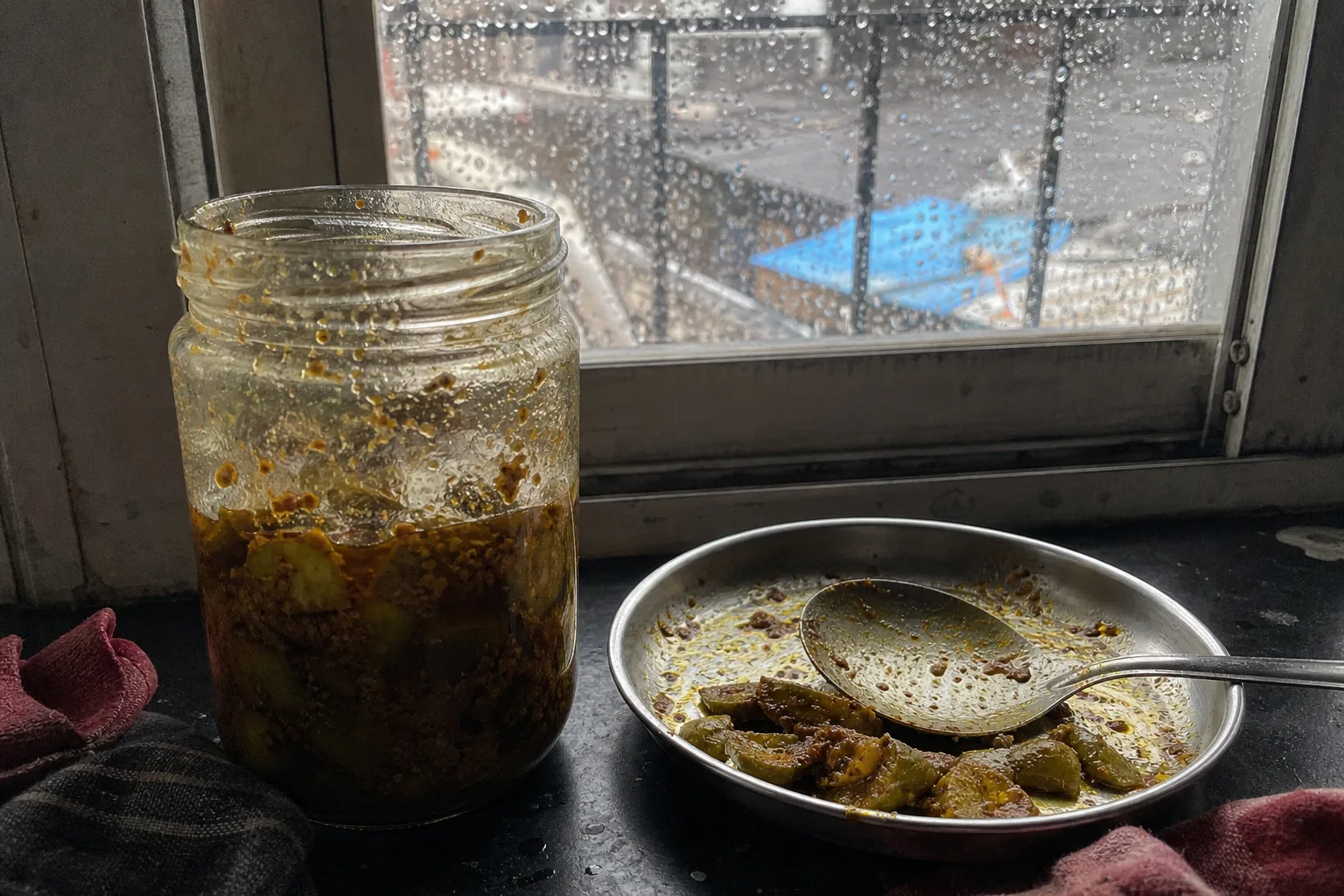
An essay on homemade pickle in the monsoon from allblogs.in puts the season in one sentence: the air is wet, jars stay damp longer, sunlight plays hide and seek, and one careless wet spoon can ruin a whole batch of mango achaar. Its author’s rule is shorter: dry ingredients, dry jar, dry spoon, enough salt, enough oil or acid.
This guide turns that into seven habits.
The short answer
In short
Keep everything that touches the jar dry, keep the oil over every piece, keep the lid tight and the jar on a cool, dark shelf, and check it often. The fridge slows mould but does not stop it. If you see fuzzy or coloured growth, throw the jar out.
The seven habits
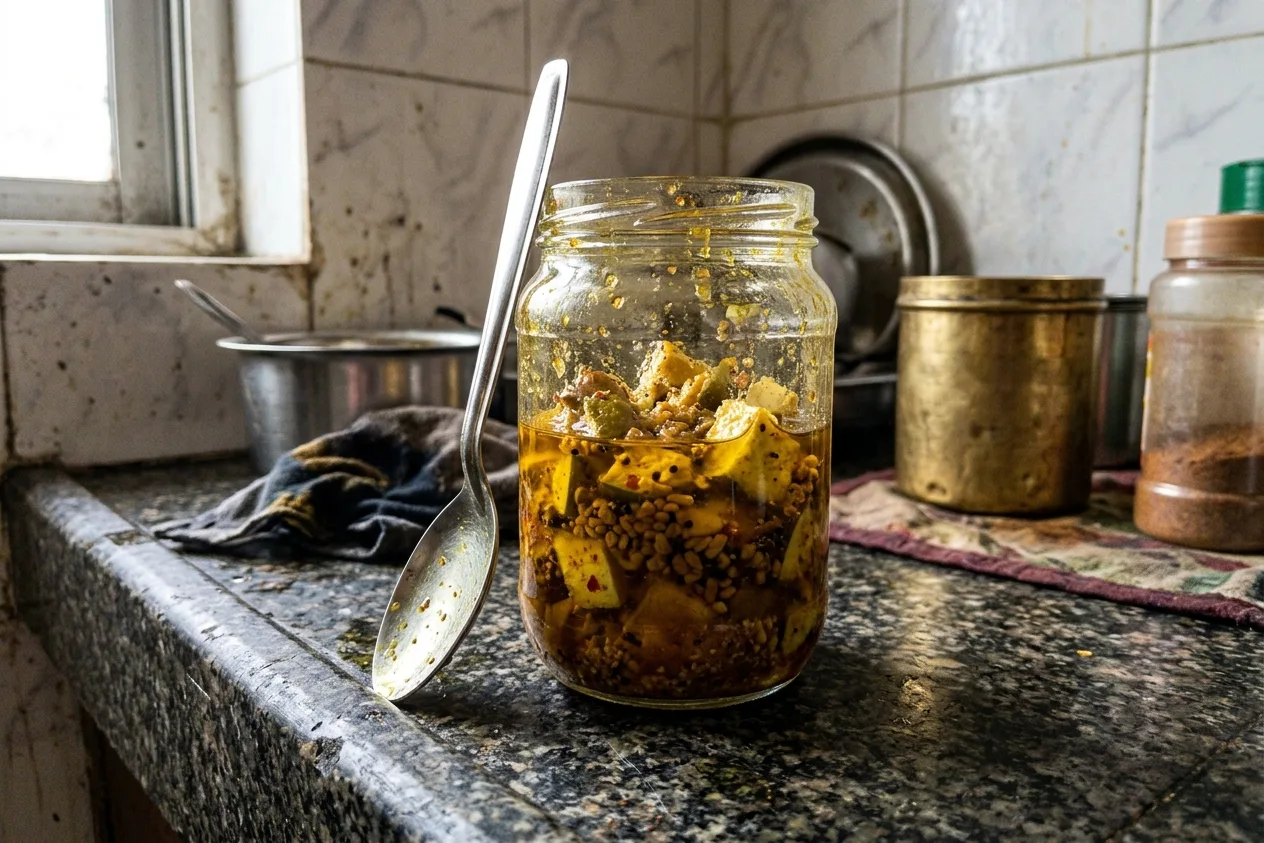
1. A dry spoon, every time. Slurrp says to use dry and clean utensils, because moisture brought in by wet spoons or ladles can lead to fungal contamination. Asianet News adds not to touch the pickle with wet hands, and not to leave the spoon inside the jar.
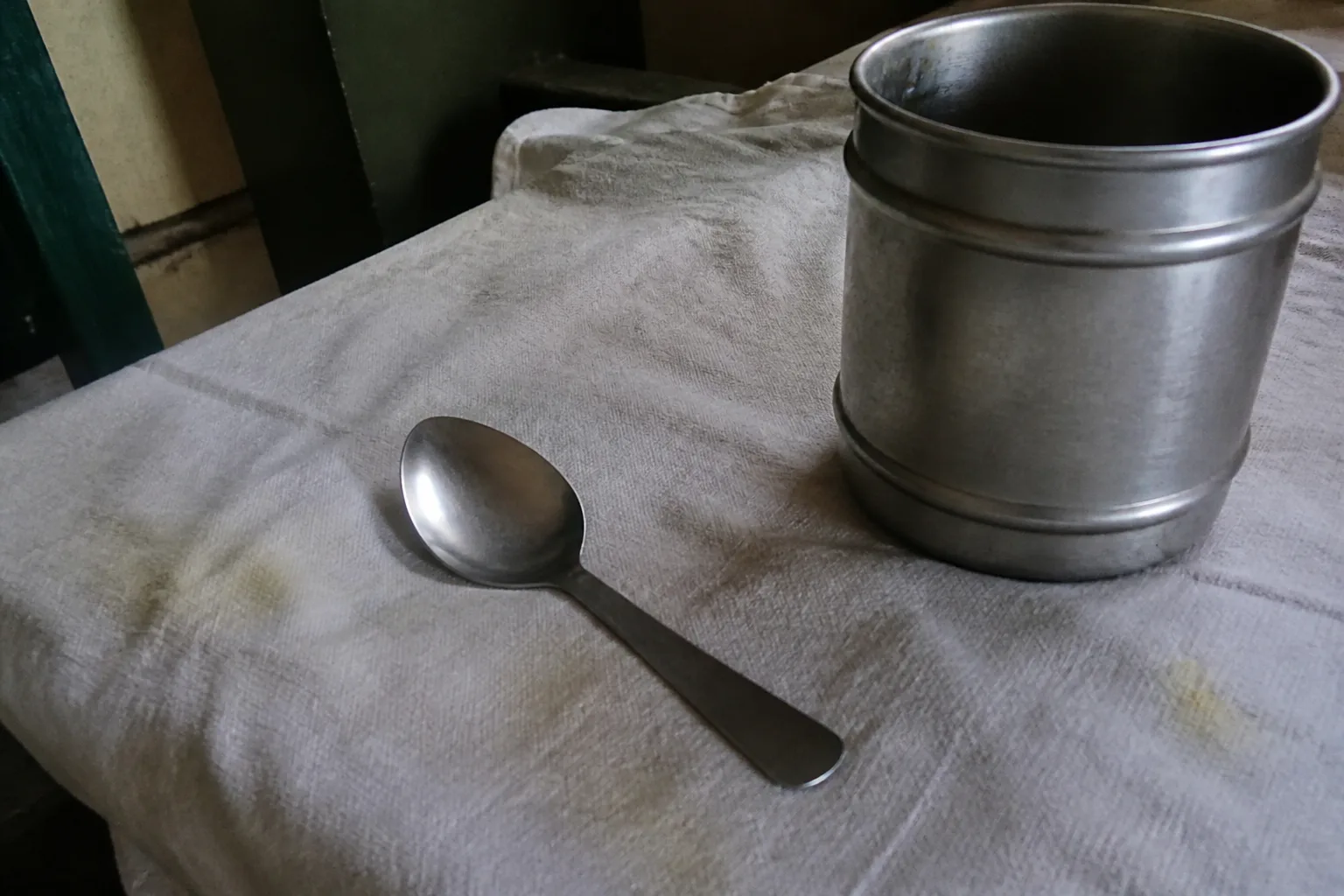
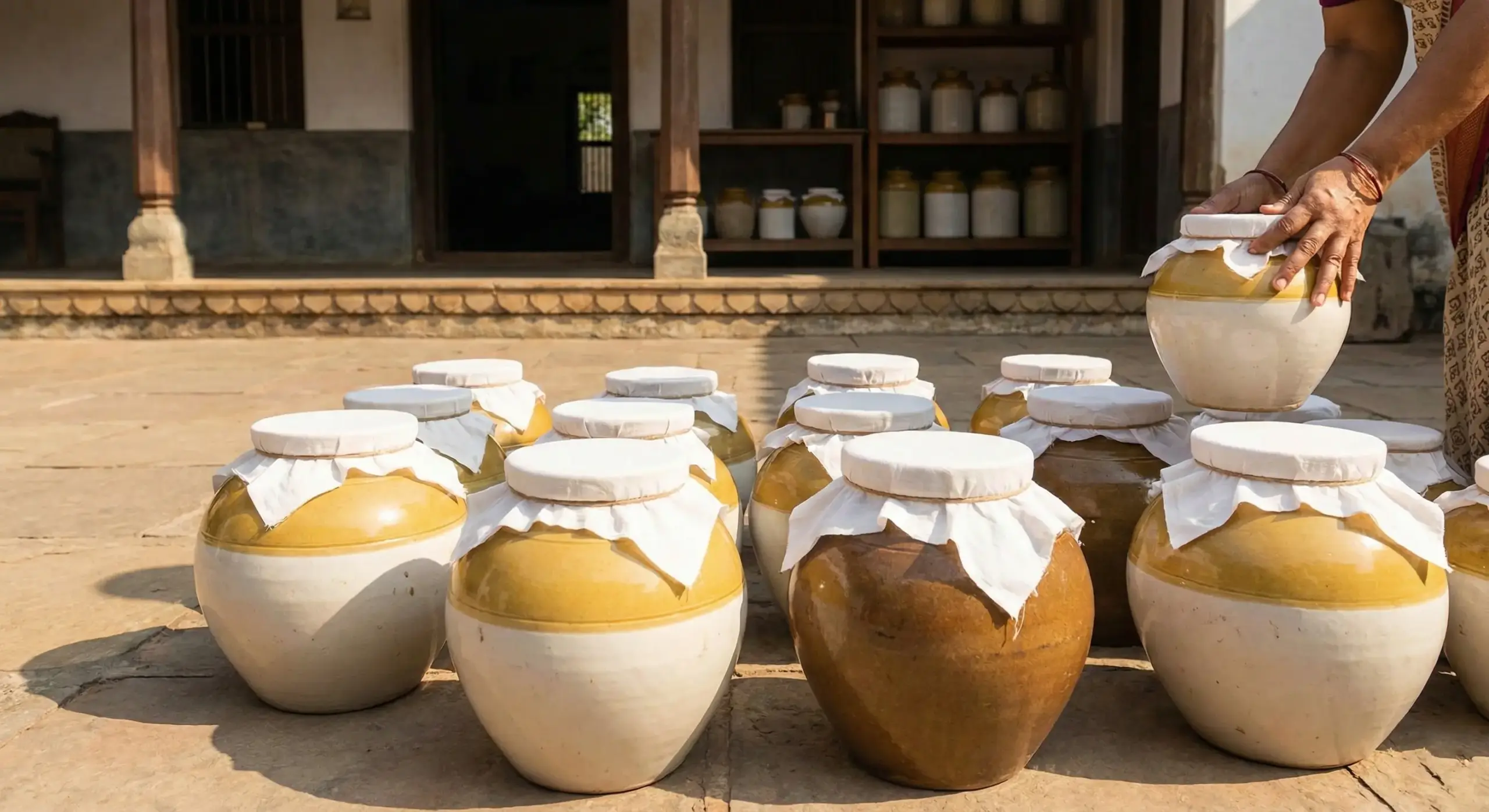
2. A dry jar. Dainik Jagran’s English edition advises glass or porcelain utensils, dried thoroughly in the sun before the pickle goes in, since even a little moisture can make the pickle mouldy. For which jar, see glass, ceramic or plastic.
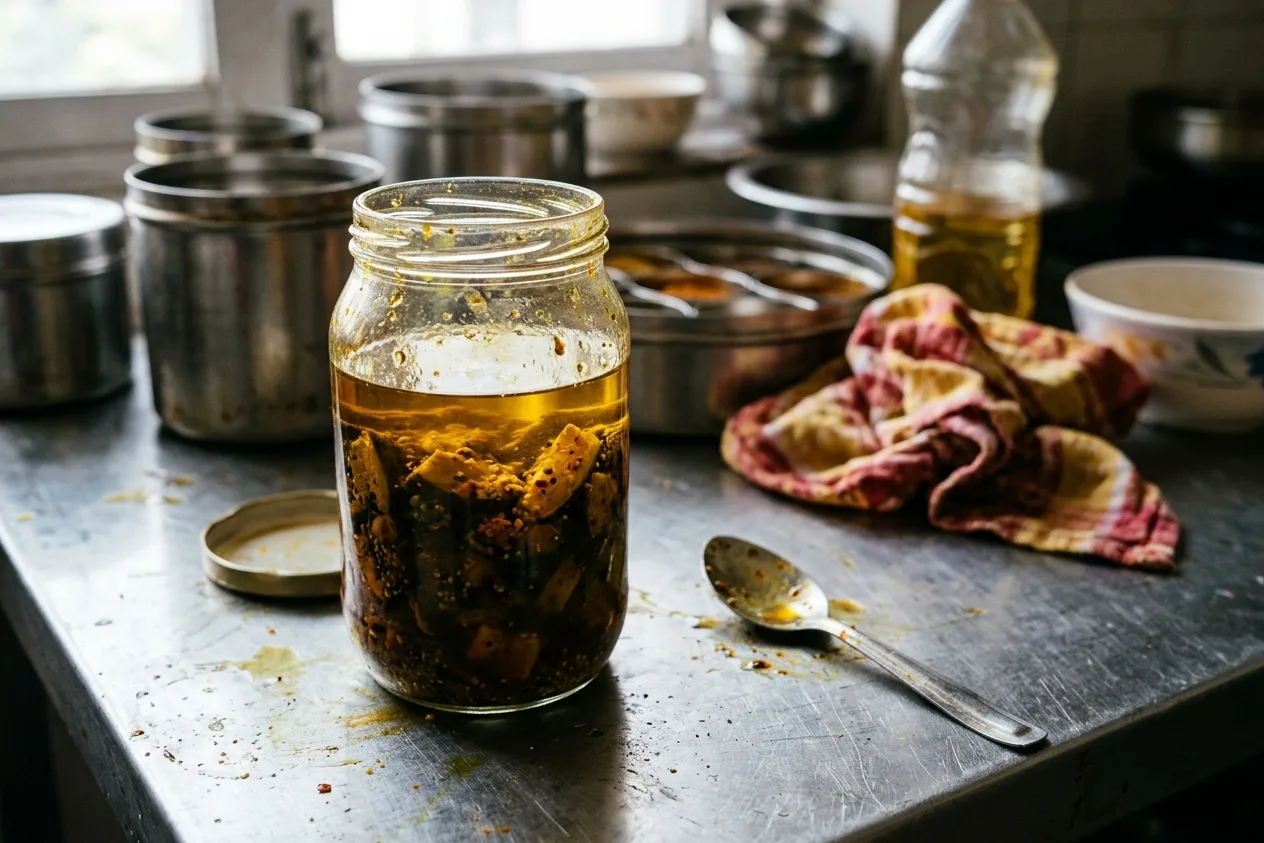
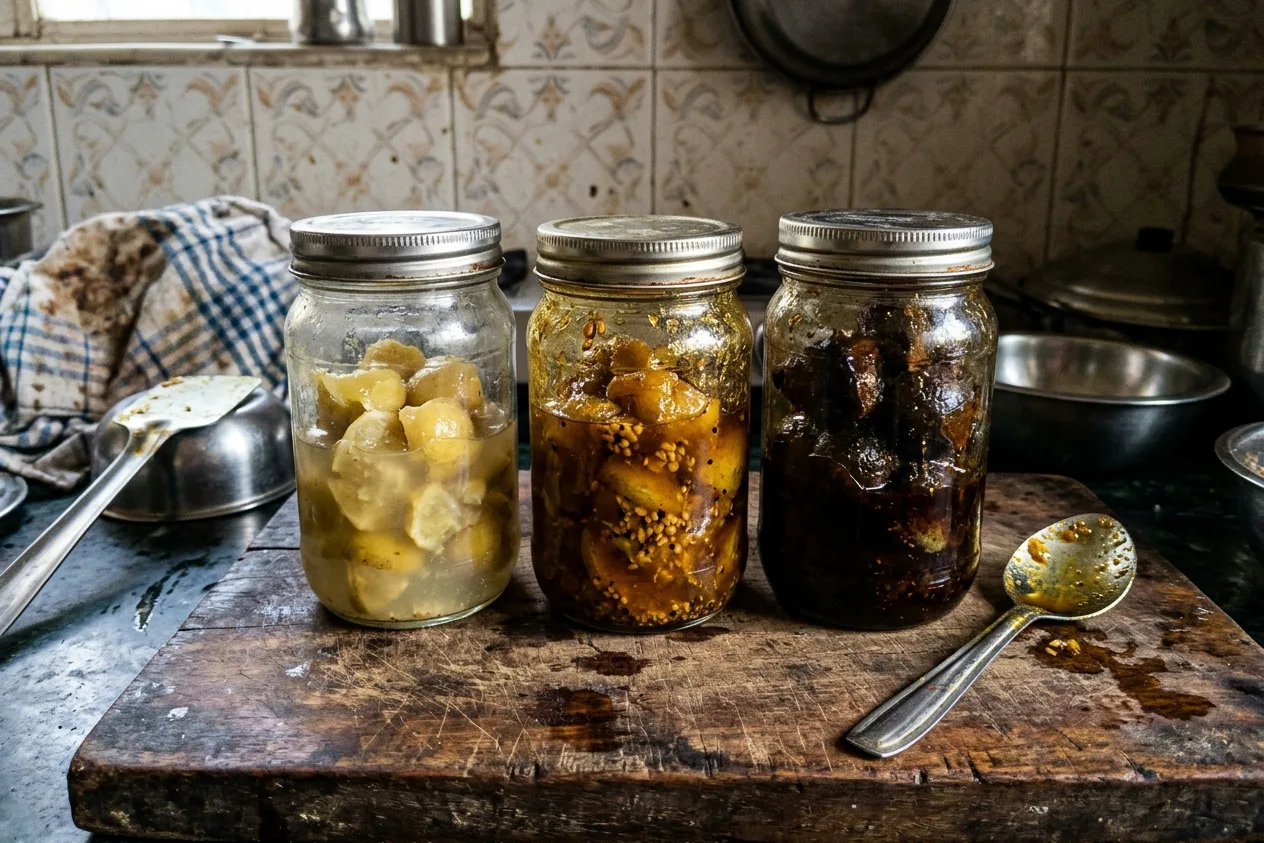
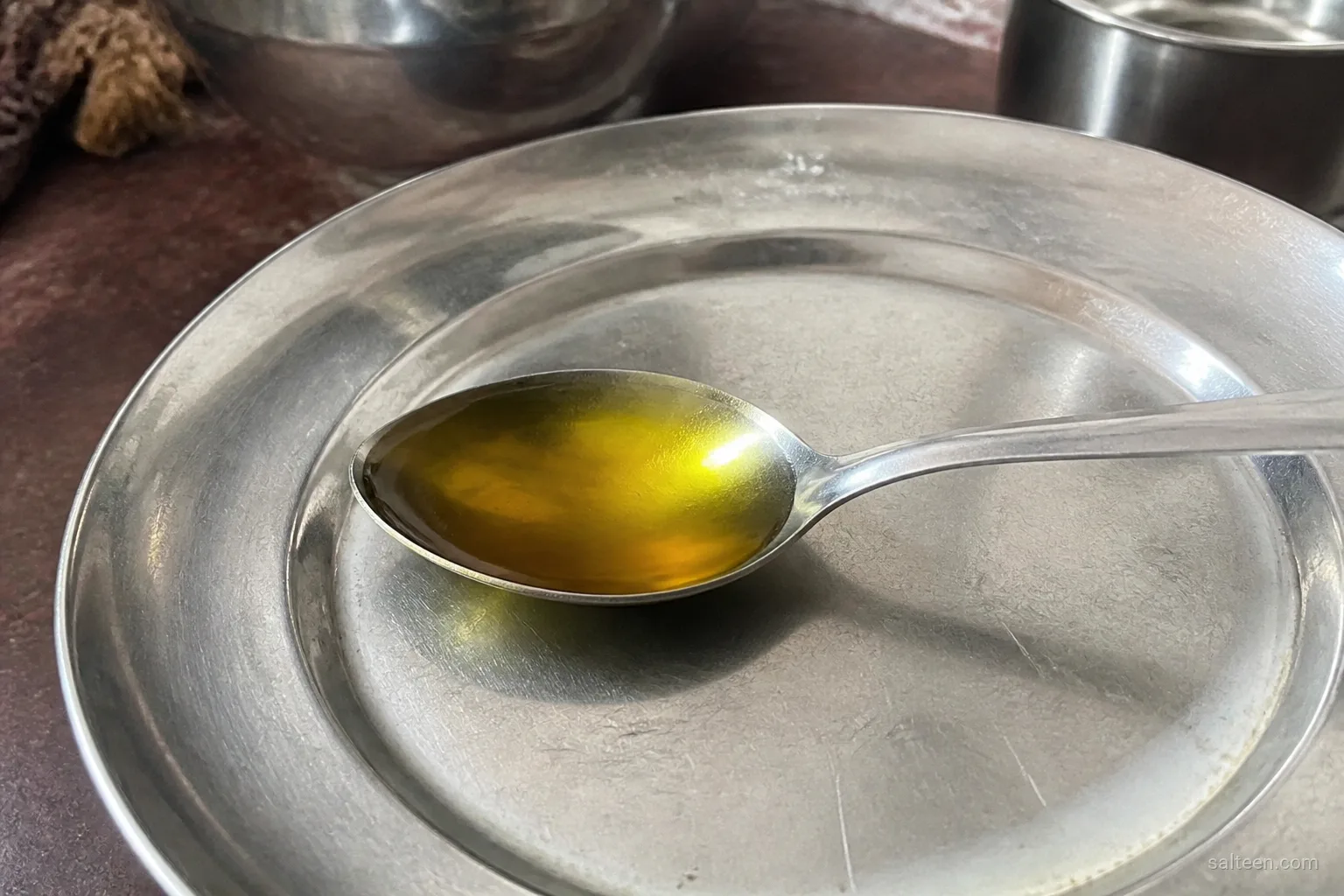
3. Oil over every piece. The same piece says the oil, mustard oil or the oil the pickle was made in, should be enough to cover the pickle, and that the layer protects it from moisture and air. InstaCuppa says to keep the oil above the pickle level. Our guide to the oil layer on achar explains it.
4. A tight lid. InstaCuppa’s monsoon guide rates an airtight glass jar best and a screw lid good, with the warning that a lid may loosen and let air seep in. Check it shuts fully after each use.
5. A cool, dark shelf. Slurrp advises a cool, dry area away from direct sunlight, such as a dark cupboard or pantry. InstaCuppa says to keep jars away from the heat of the gas stove. A well made achar with plenty of salt and oil over every piece can stay in a sealed jar on a cool, dark shelf, according to the same guide.
6. A small working jar. Slurrp’s pickle storage advice describes the common Indian practice of a small jar for daily use and the main jar left undisturbed. Every opening of the big jar is a chance for damp air to get in. See also the raw mango ritual.
7. Check it regularly. The allblogs author looks at the oil layer every few days in the monsoon, and says that if a jar smells wrong, looks wrong or tastes fizzy in a strange way, they do not argue with it.
Where the advice disagrees
- Sunlight. Slurrp has one piece that says to put the jar in direct sunlight for a few hours to reduce moisture, and another that says to keep it away from direct sunlight in a dark cupboard. The first suits a jar that is sealed and traditional, the second a jar already opened, but the sources do not say so. Our post on sun curing achar covers the sun in the making.
- The fridge. InstaCuppa says the fridge slows mould but does not stop it, and rates a fridge and airtight glass jar best for store bought, low salt pickles, while a traditional high salt, high oil achar can keep on a cool shelf. Oil may cloud and thicken in the cold, so let the jar come to room temperature before use.
If something looks wrong
InstaCuppa’s guide to white film on pickle says a thin, flat, chalky white film is usually kahm yeast, and that anything fuzzy, raised or green, blue, black or pink is mould, in which case the batch should go. It adds that mould threads grow below what you can see, so scooping the top off does not make the pickle safe. This is one seller’s guidance, so if you are unsure, do not eat it.
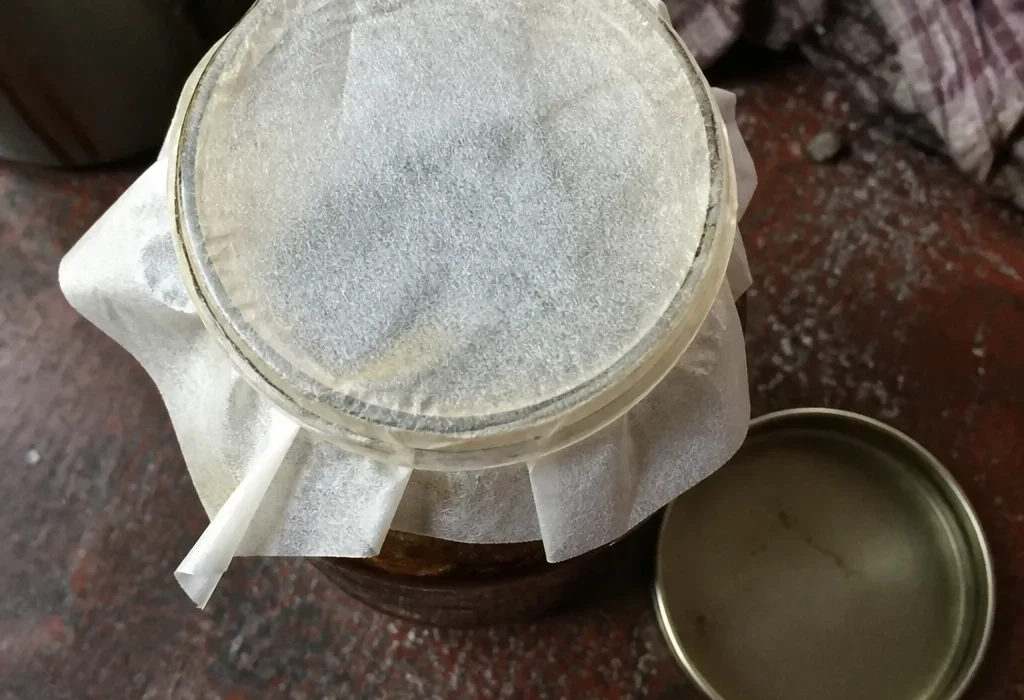
For how long a jar lasts in general, see how long achar lasts.
Frequently asked questions
How do you stop achar from getting fungus in monsoon?
Dry spoon, dry jar, oil over every piece, a tight lid, a cool dark shelf, a small working jar and regular checks.
Should achar be refrigerated in the rainy season?
It slows mould but does not stop it. A well made traditional achar can stay on a cool shelf in a sealed jar.
Is the white layer on pickle safe?
A flat chalky film may be yeast. Fuzzy or coloured growth is mould and the jar should be thrown away.
Sources used for this post: Slurrp, monsoon pickle storage tips (several pieces); Dainik Jagran English, pickles in the rain; Asianet News, pickle storage tips; InstaCuppa, how to store pickles in monsoon, and white fungus on pickle (seller blog); allblogs.in, homemade pickle in monsoon