Blog
Amla Pickle in Traditional Diets: A Winter Preserve

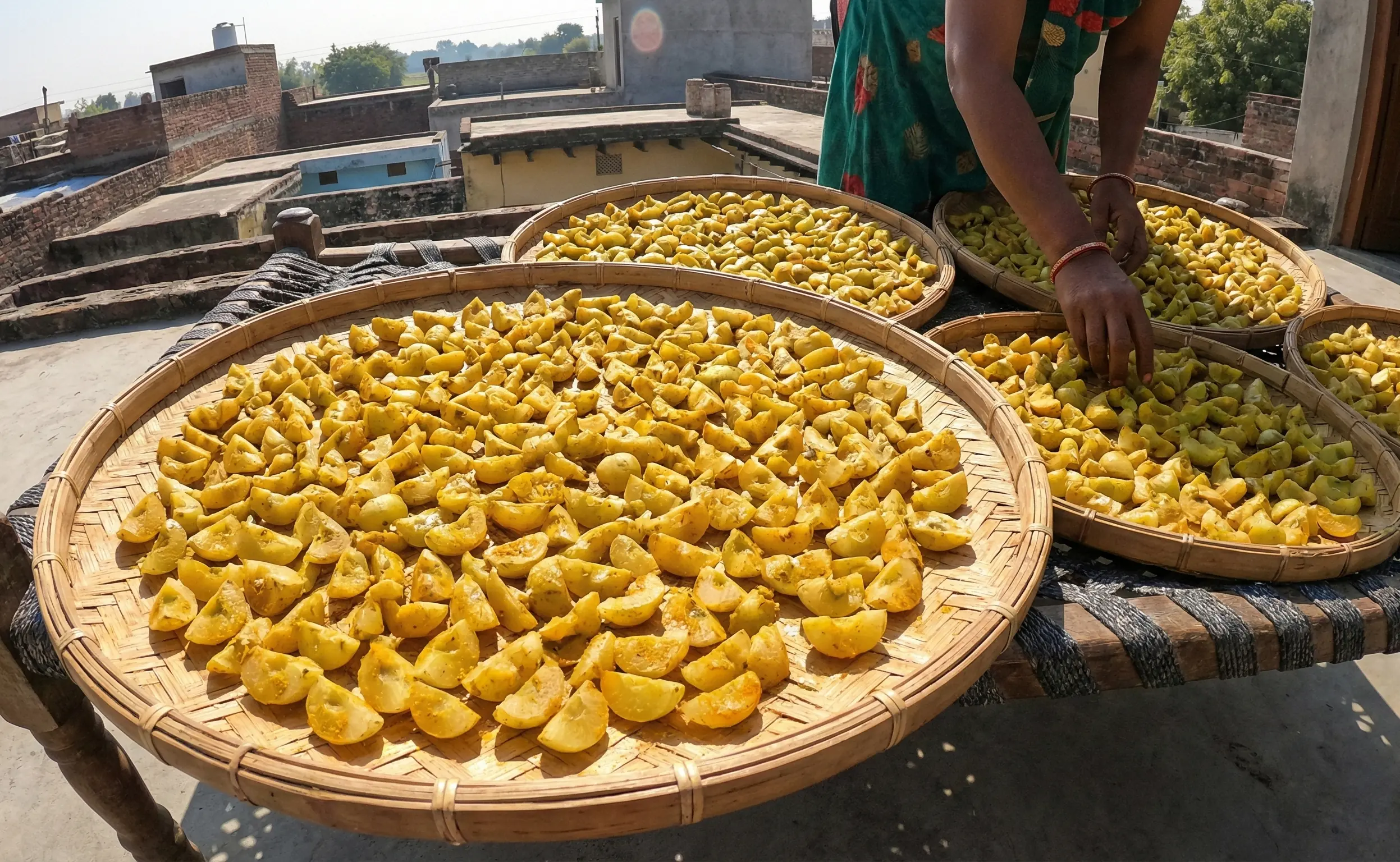
India produced 1.2 million tonnes of amla in 2021 to 2022, according to a 2023 review by food technologists at Harcourt Butler Technical University in Kanpur, which also notes that harvest losses of this fruit are as high as 30 to 40 percent. That second figure explains a good deal about amla pickle. A fruit that bruises, ripens in a rush and is lost in large numbers is a fruit that families have long had reason to turn into something that keeps.
This guide covers where amla comes from, when it arrives, how the pickle is made and why it sits in winter kitchens. It leaves aside the health claims that surround the fruit, because the question here is tradition and method.
The short answer
In short
Amla (Indian gooseberry) ripens in the winter, with fresh fruit available roughly from November to February, and Uttar Pradesh is one of India’s main amla-growing states. Households preserve it as pickle, murabba and launji, using salt, turmeric, sun-drying, spices and mustard oil. Amla pickle is a seasonal winter preserve, usually served in small amounts with dal, khichdi and curd rice. We make no health claim for it.
Where amla comes from
The 2023 Royal Society of Chemistry review says India ranks first in the world in amla production, with Madhya Pradesh in first place nationally, followed by Uttar Pradesh and Tamil Nadu, in the figures it cites for 2021 to 2022. A Food Marketing and Technology India article, citing 2017 National Horticultural Board data, put Uttar Pradesh first, followed by Madhya Pradesh and Tamil Nadu. The ranking between states shifts by year and source, and we state only that Uttar Pradesh is among the top producers.
Pratapgarh in Uttar Pradesh is the best-known centre. Organic Mandya calls it the amla capital of India, and a YourStory feature explains that amla processing was identified as Pratapgarh’s product under the One District One Product programme, with value addition turning a short harvest season into year-round activity. Pratapgarh is in eastern Uttar Pradesh, the same broad region as Varanasi, though the sources do not link the two directly.
The season
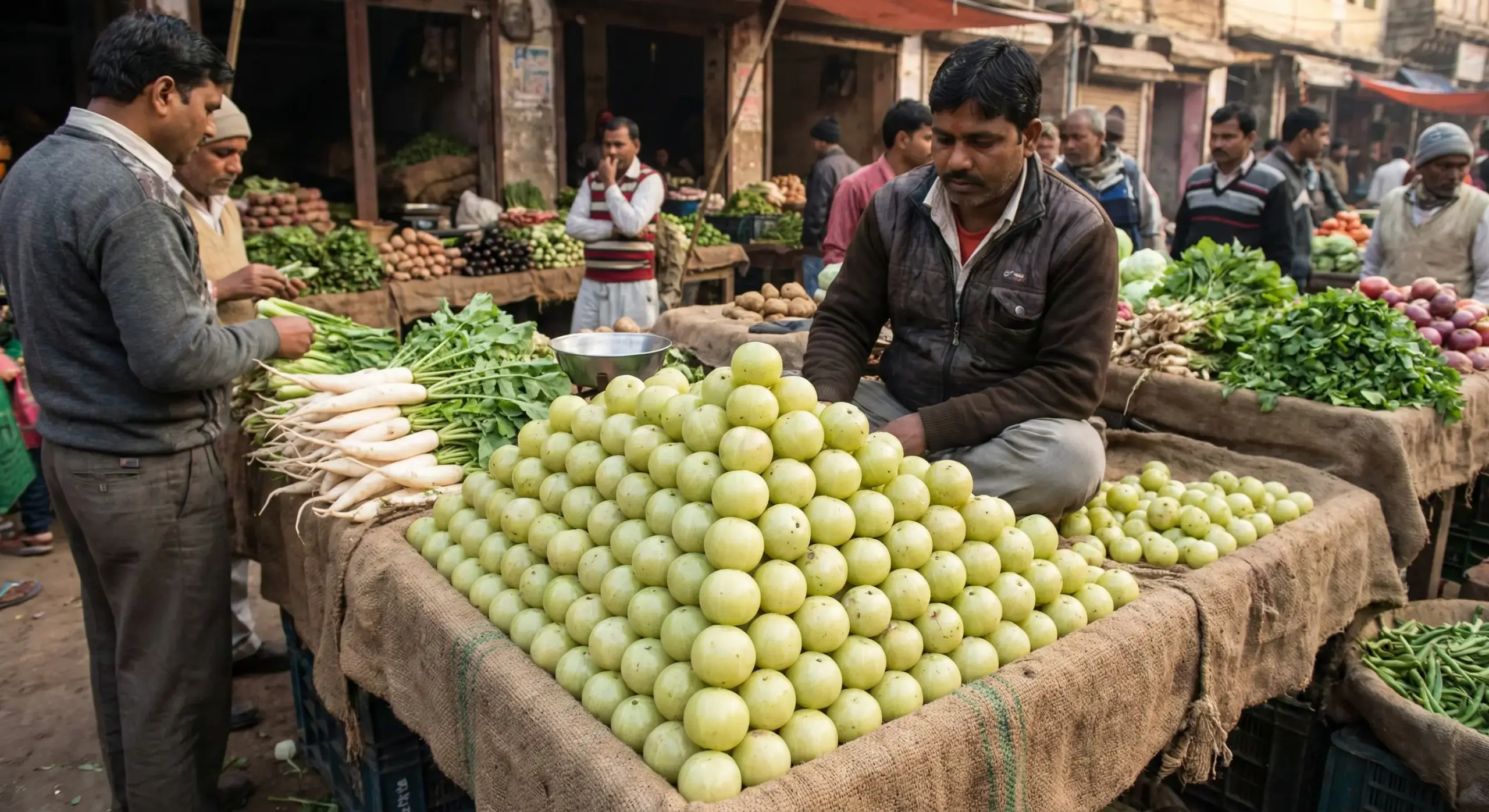
Amla is a winter fruit. Organic Mandya says fresh amla is available from November to February across India, and the Food Marketing article says the harvesting period is November to December, though fruits may remain on the tree until February. Tarla Dalal describes amlas as abundantly available during the winter months.
That timing explains the pickle’s place on the calendar. It follows the summer mango season by months, and sits with the other winter preparations described in seasonal pickles of Uttar Pradesh and amla achar in the winter season. The wider cycle is in the seasonal pantry calendar for north India.
The preparations: pickle, murabba and launji
Amla is not only pickled. Tarla Dalal’s amla murabba page describes the sweet preserve as traditional across North, Central and Western India and says that Uttar Pradesh is perhaps the most famous for it, especially in cities such as Allahabad (Prayagraj) and Varanasi, where it is a staple in many households. Homegrown’s list of unusual Indian pickles includes amle ki launji as the Uttar Pradesh entry.
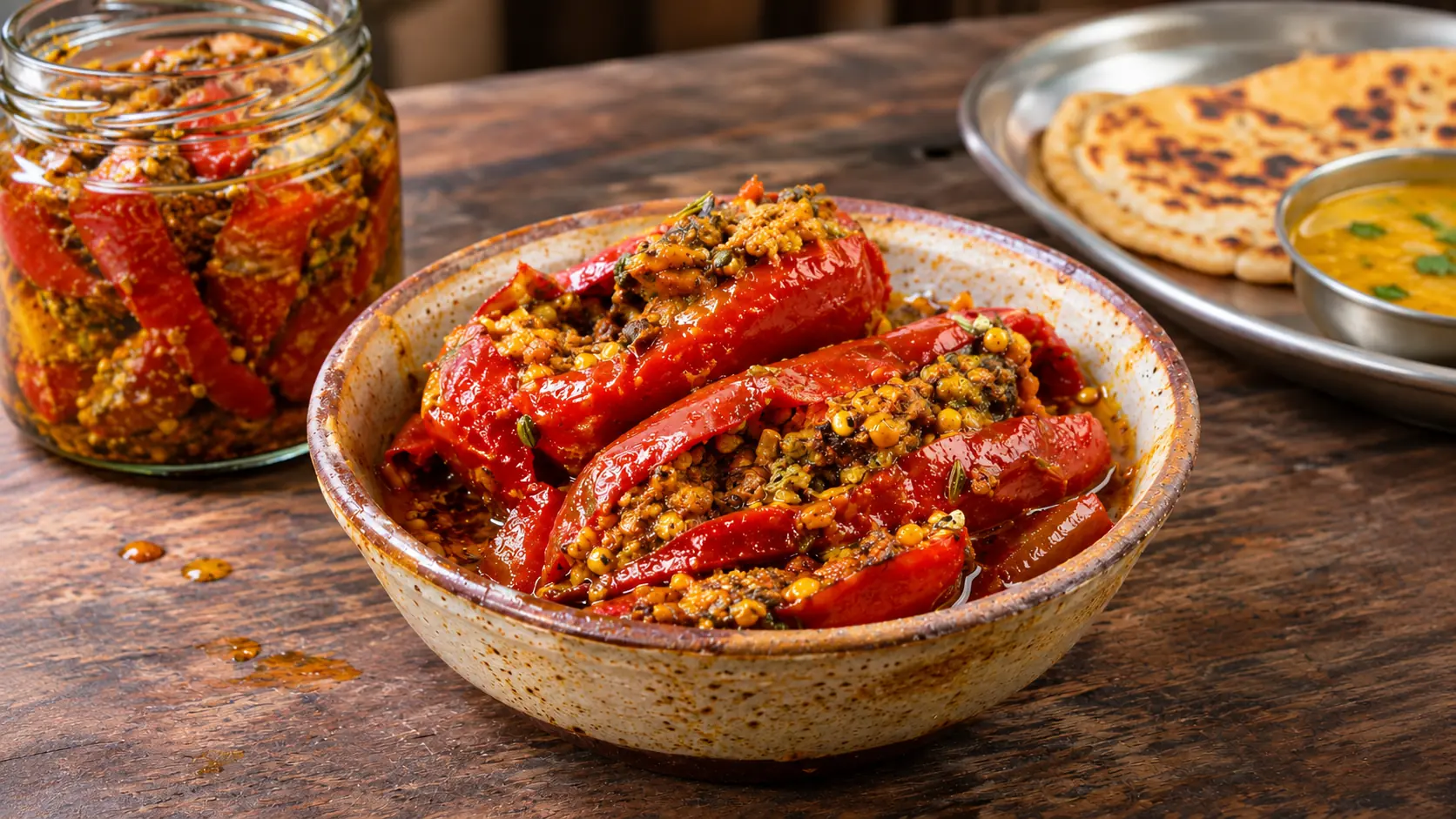
So a Banaras winter kitchen may hold three amla preparations: a sweet murabba, a sweet-and-spiced launji, and a salty, spicy oil pickle. This article is about the last.
How the pickle is made
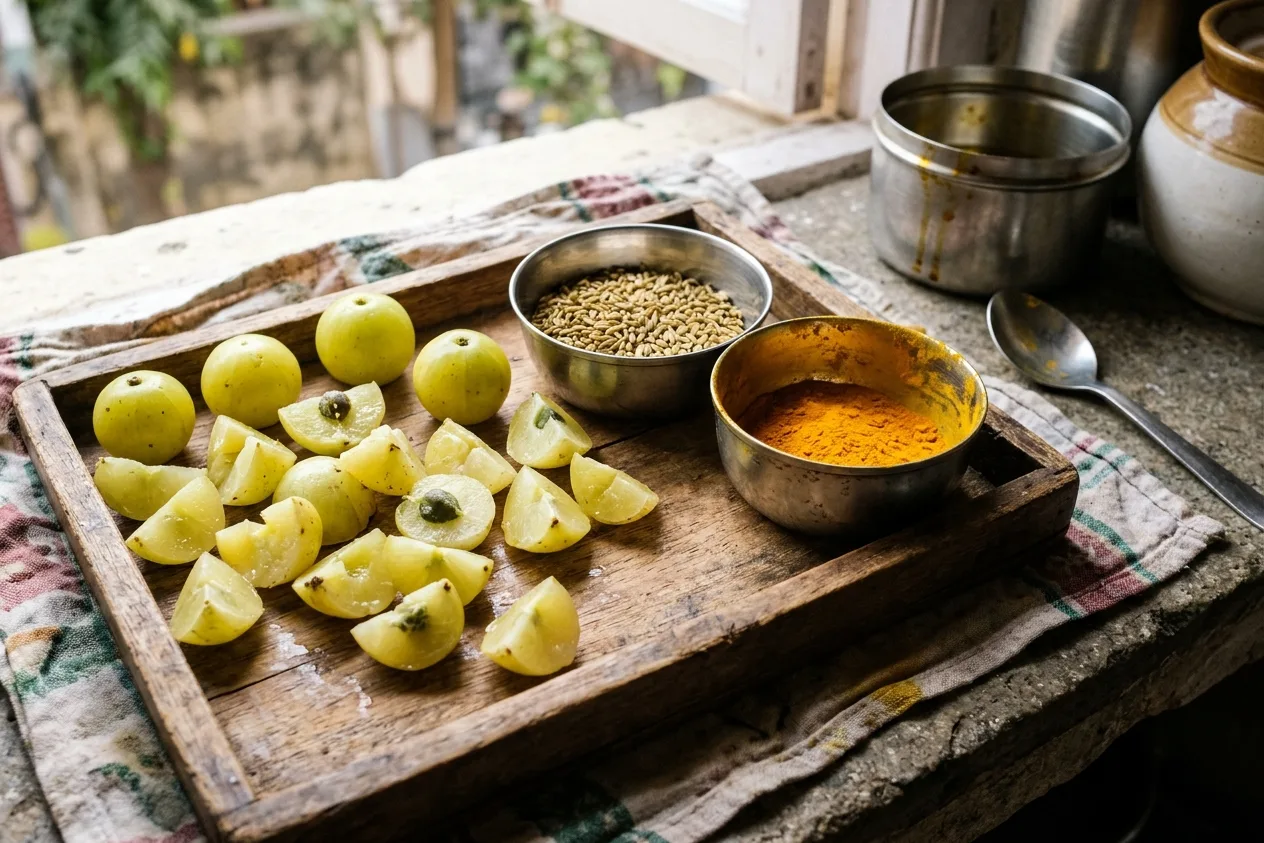
Published recipes give the outline. A Slurrp amla achar recipe from December 2025 uses 500 grams of fresh amla with a quarter cup of mustard oil, mustard seeds, fennel seeds, turmeric, red chilli powder and salt, and suggests pairing it with dal, curd rice or khichdi.
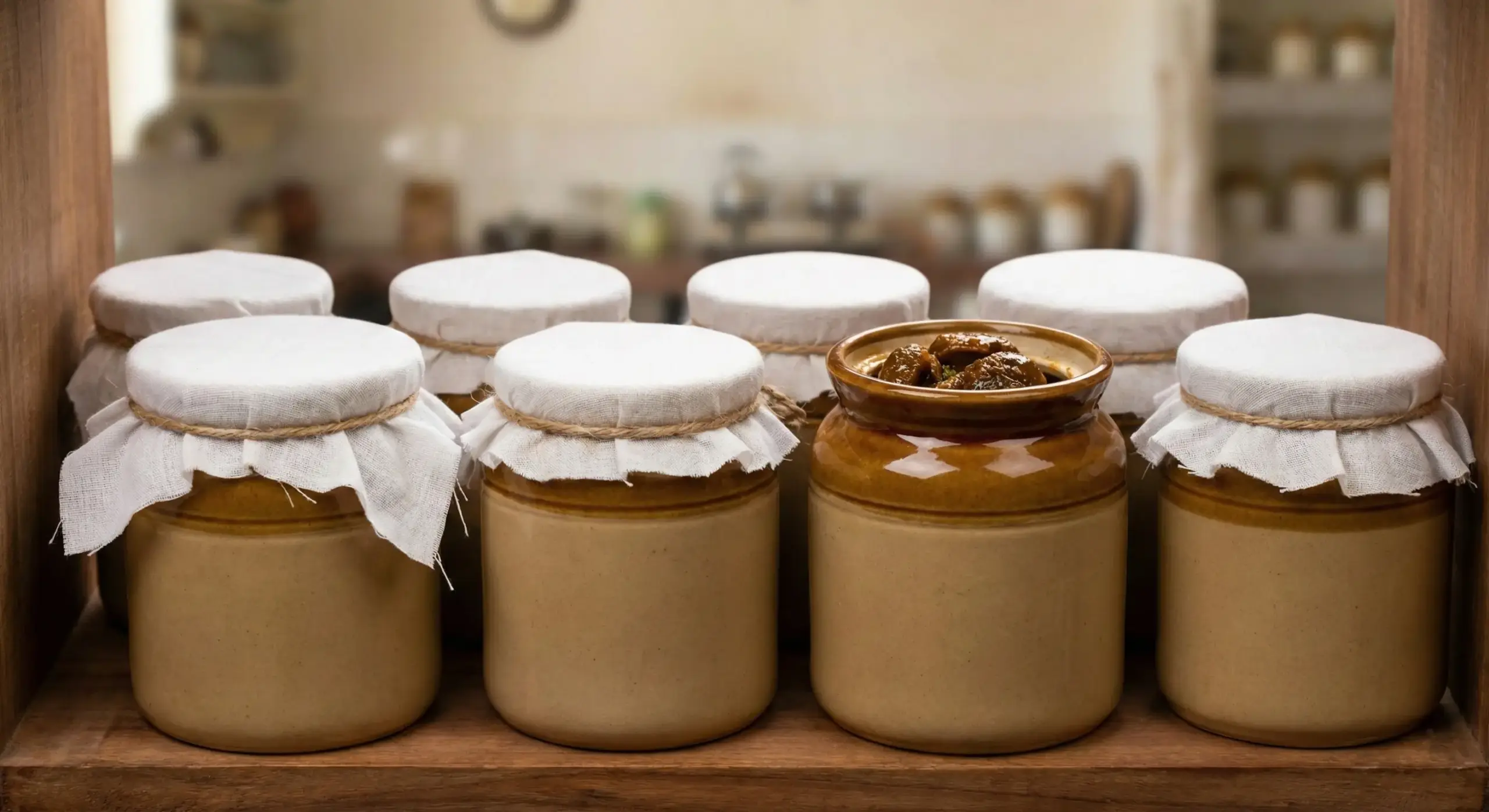
- Cure with salt and turmeric. Salt draws moisture out of the fruit, and turmeric adds colour and tradition. Why sun-drying is essential for Indian pickles explains the drying logic.
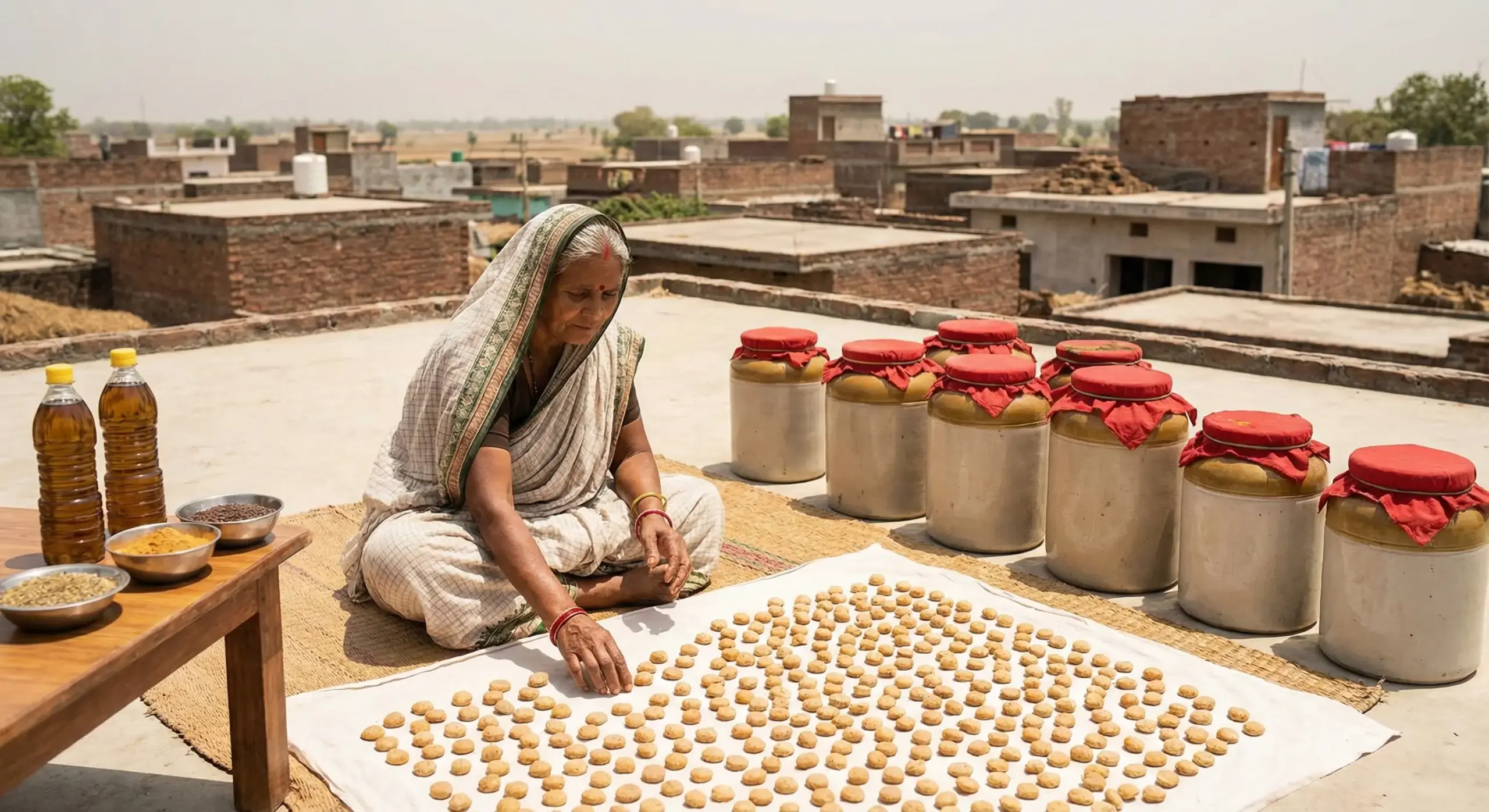
- Segment and dry. The fruit is divided and left in the sun for several days.
- Spice and oil. Mustard, fennel, fenugreek and nigella, with chilli and hing, are mixed with the pieces, which are submerged in cooled mustard oil. The oil’s role is explained in why Banaras pickles are oil-rich.
- Mature in a jar. A cloth-covered jar goes into the sun for the first weeks, as described in traditional storage methods for pickles.
Amla has an astringent, sour flavour, which pickle spices are chosen to balance. We do not give timings or quantities beyond those quoted from published recipes, and we do not promise a shelf life.
Amla in households and in belief
The RSC review calls amla undoubtedly the chief medicinal plant of the Indian Ayurvedic medicine system, a fruit that is the major ingredient of Ayurvedic preparations and health foods such as chyawanprash and triphala. It adds that amla is eaten raw, roasted or in pickle form in various regions of India. An Indian Horticulture article notes that amla finds a special mention in Ayurveda, in the work attributed to Sushruta.
Those statements describe the fruit’s standing in Ayurveda and in Indian food culture. They do not show that eating amla pickle produces any health effect, and we do not claim one. The fruit is widely described as high in vitamin C: the CIRAD journal Fruits gives a range of 500 to 1,500 milligrams per 100 grams of pulp for raw fruit, and Organic Mandya cites 600 milligrams per 100 grams. Those figures are for the fresh fruit, and a pickle that has been salted, dried and stored may differ, so we do not carry the figures over to the jar. Our broader coverage of the fruit in the home is in amla in Indian households.
Festival and sharing
The sharing of pickles is widely reported across north India, as in pickle-making traditions in Banaras homes.
Choosing and using amla pickle at home
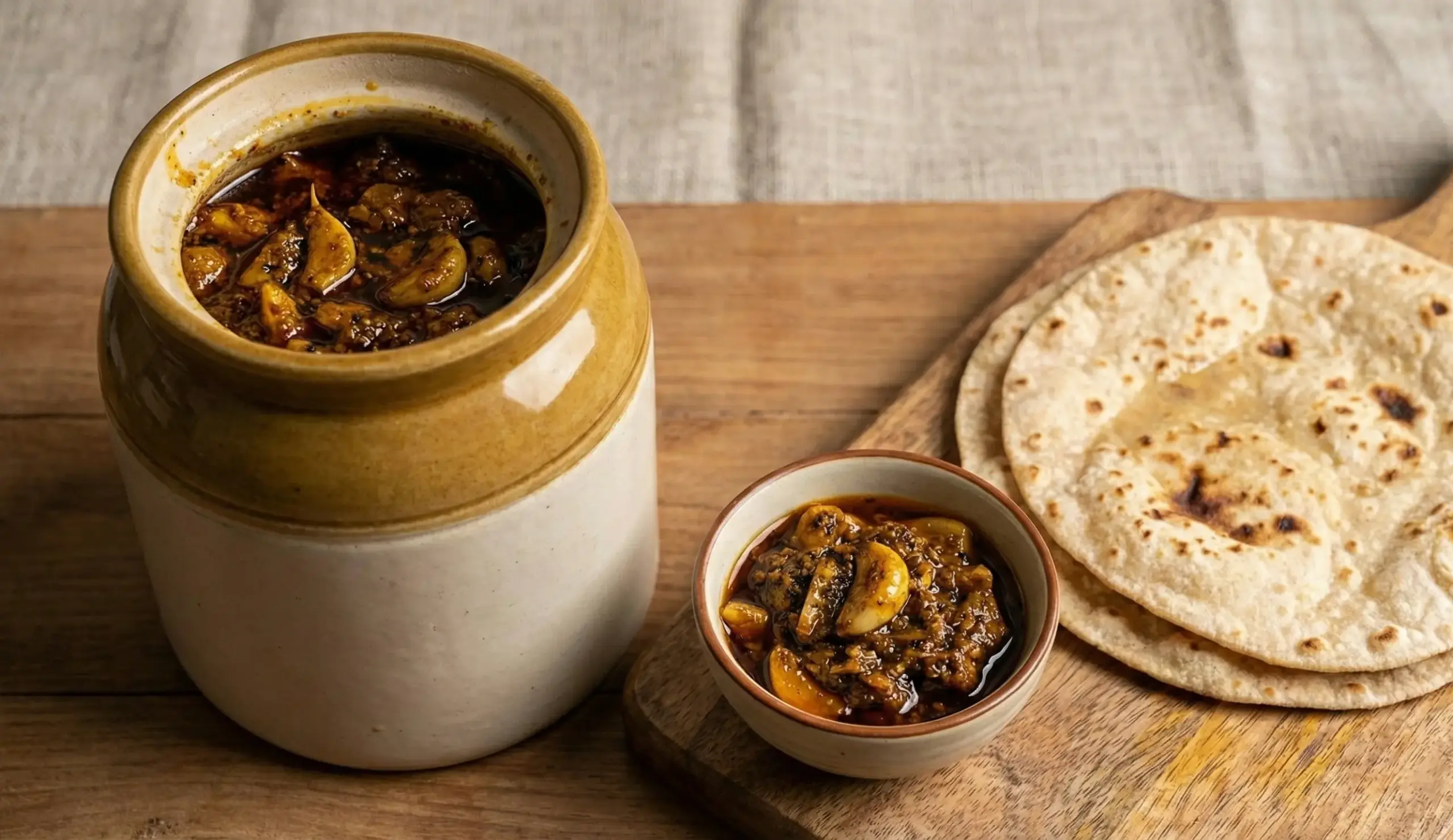
Fresh amla is firm, pale green to yellow and hard to the touch, and it should be washed and dried well before it is pickled. Amla is very sour and astringent on its own, so most home preparations soften it first by steaming, boiling or salting, and then combine it with oil, salt and spices. When you serve it, treat it as a relish: a piece or two beside dal and rice, khichdi or a plain roti is enough. Store the jar in a cool, dry place, use a clean dry spoon, keep the pieces covered by oil or brine, and follow any storage line printed on a bought jar. We describe amla pickle here as a traditional food and do not make health claims for it, so if you are eating it for a medical reason, speak to a doctor or dietitian.
Frequently asked questions
When is amla available for pickling?
Fresh amla is available roughly from November to February, with the main harvest in November and December.
Is Uttar Pradesh a major amla-growing state?
Yes. It ranks among the top producers, and Pratapgarh is known as an amla centre. The state ranking varies by year and source.
What is the difference between amla pickle and amla murabba?
Pickle is salty and spiced and kept in oil. Murabba is a sweet preserve. Both are made in Uttar Pradesh.
What spices go into amla pickle?
Mustard seed, fennel, fenugreek, turmeric and red chilli are common, with mustard oil as the binder.
Is amla pickle good for immunity?
Amla has a strong standing in Ayurveda and is a rich source of vitamin C when raw, but we make no health claim for the pickle.
How is amla pickle dried?
In the sun for several days, as in other traditional pickles, though winter sun is slower than summer sun.
How long does amla pickle last?
It depends on the recipe, dryness and handling. We do not promise a shelf life.
Sources used for this post:
– Tewari, Kumar and Sharma, “Thermal and non-thermal processing of underutilized fruit Emblica officinalis (Amla): a sustainable approach,” Royal Society of Chemistry journal article, 2023
– “Let food be your medicine: Amla Indian Gooseberry,” Food Marketing and Technology India
– YourStory, “Inside Pratapgarh’s Amla Economy”
– Organic Mandya, “Amla (Indian Gooseberry)”
– Tarla Dalal, Amla Murabba
– Homegrown, “18 of India’s Most Unique Pickles”
– Slurrp, Amla Achar recipe
– Pandey and others, “Annual crop management practices in aonla for subtropical region,” Indian Horticulture
– CIRAD, Fruits, aonla review