Blog
Amla Ka Achar: Why Winter Is the Season and How It Is Made

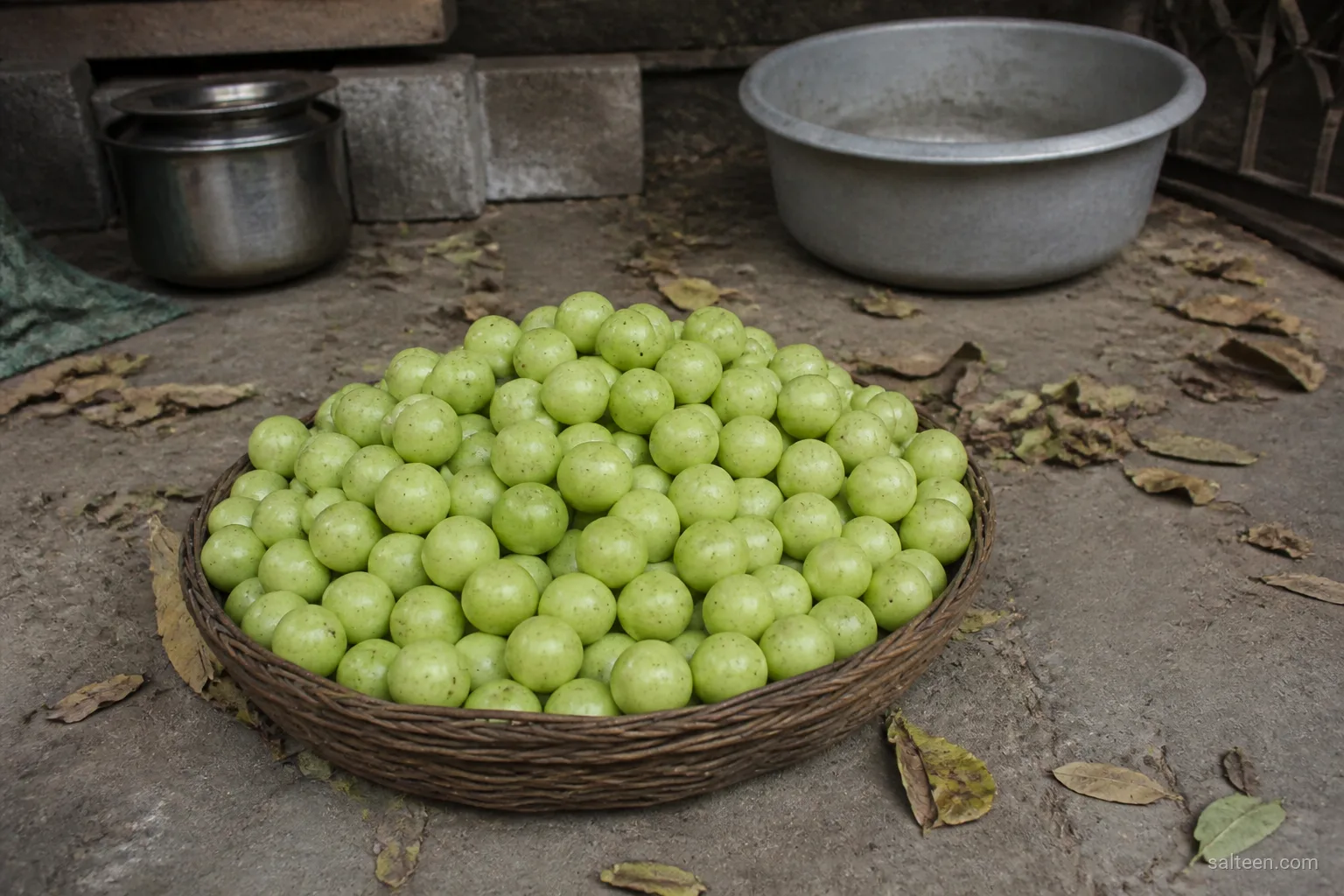
Amla is about 20 times richer in vitamin C than an orange, going by the figures some food sites quote: roughly 600 mg per 100 grams for amla against 53 mg for an orange. Estimates for amla vary a good deal between sources, but every one of them places it far above common fruit, and that is one reason Indian kitchens have treated the small green fruit with such respect for so long. In November the baskets appear in markets across north India, and within a few weeks the jars come out for amla achar.
This guide explains when the season runs, why winter is the time for this pickle, and how the pickle is made, with the details that decide whether a jar turns out well.
When is amla in season
In short
Fresh amla is in season roughly from November to February in north India. Families pickle it then, while the fruit is firm and cheap, in mustard oil with salt and spices. Steam the fruit first, dry it fully, and keep it under oil.
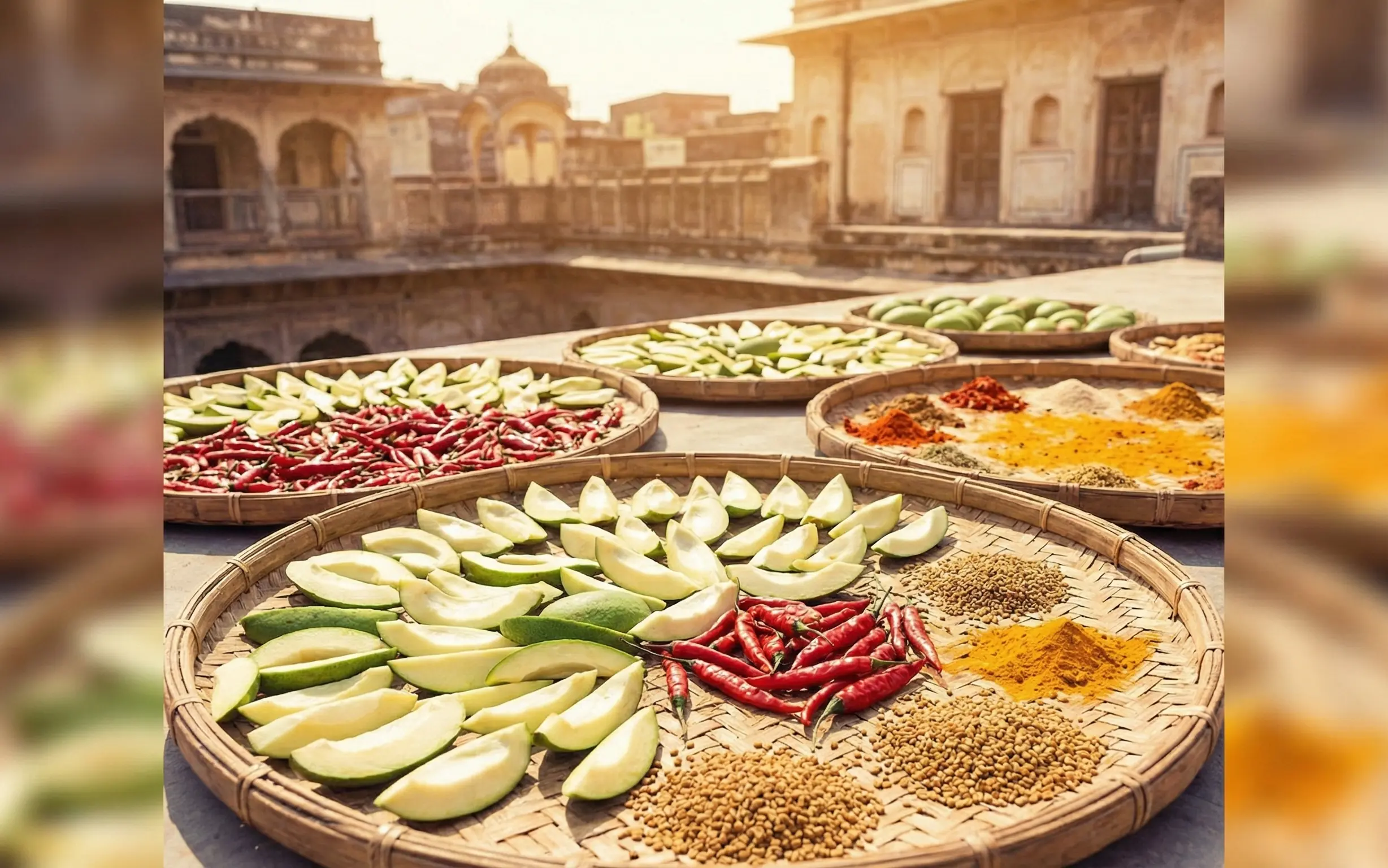
Fresh amla is generally available in winter, roughly from November to February. Sources give slightly different windows. One recipe site says fresh harvest is typically available from mid September to mid December, with the season stretching to January or February in parts of south India, and a farm brand puts it at November to February. Uttar Pradesh is a large grower, and the district of Pratapgarh is often called the amla capital of India. Rajasthan and Karnataka grow it too.
What this means in practice is that the best fruit in a north Indian market is firm and pale green in the cold months, and that is when families buy in quantity for the year’s jars. There is also a festival connection. Amla Navami, observed in the month of Kartik, is a day when the amla tree is worshipped and meals are eaten beneath it in some families, which ties the fruit to the same autumn and winter season.
Why winter is when amla achar is made
Three things come together. Supply comes first: amla grows on a tree and ripens once a year, and out of season the fresh fruit is hard to find, so the pickle is made when the fruit is cheap, firm and plentiful.
Climate comes next. In the north Indian winter the sun is mild and the air is dry. Pickle jars were traditionally left in the sun for some days to help the oil and spices work into the fruit, and a mild sun does this without cooking the fruit or sweating the jar. This is our own reasoning from how the pickle is handled, and it fits the way families have worked for generations.
Eating with the season matters too. A food writer on Slurrp observes that earlier generations connected pickles and murabbas with their season, because nothing could be had out of season. Amla comes with winter, and a sharp, salty, oily pickle with a hot meal fits the cold weather.
Amla achar and amla murabba
People often confuse the two, so it helps to separate them. Amla murabba is a sweet preserve, in which amla is cooked in sugar syrup. Amla achar is a spicy pickle in salt, spices and oil. Both are made in the same season from the same fruit, but they taste and are used differently. A piece of murabba is eaten as a sweet. A piece of achar goes on the side of a meal.
How amla achar is made
Every home has its own version, so what follows is the common method that most recipes share. Quantities differ from family to family and are not given here.
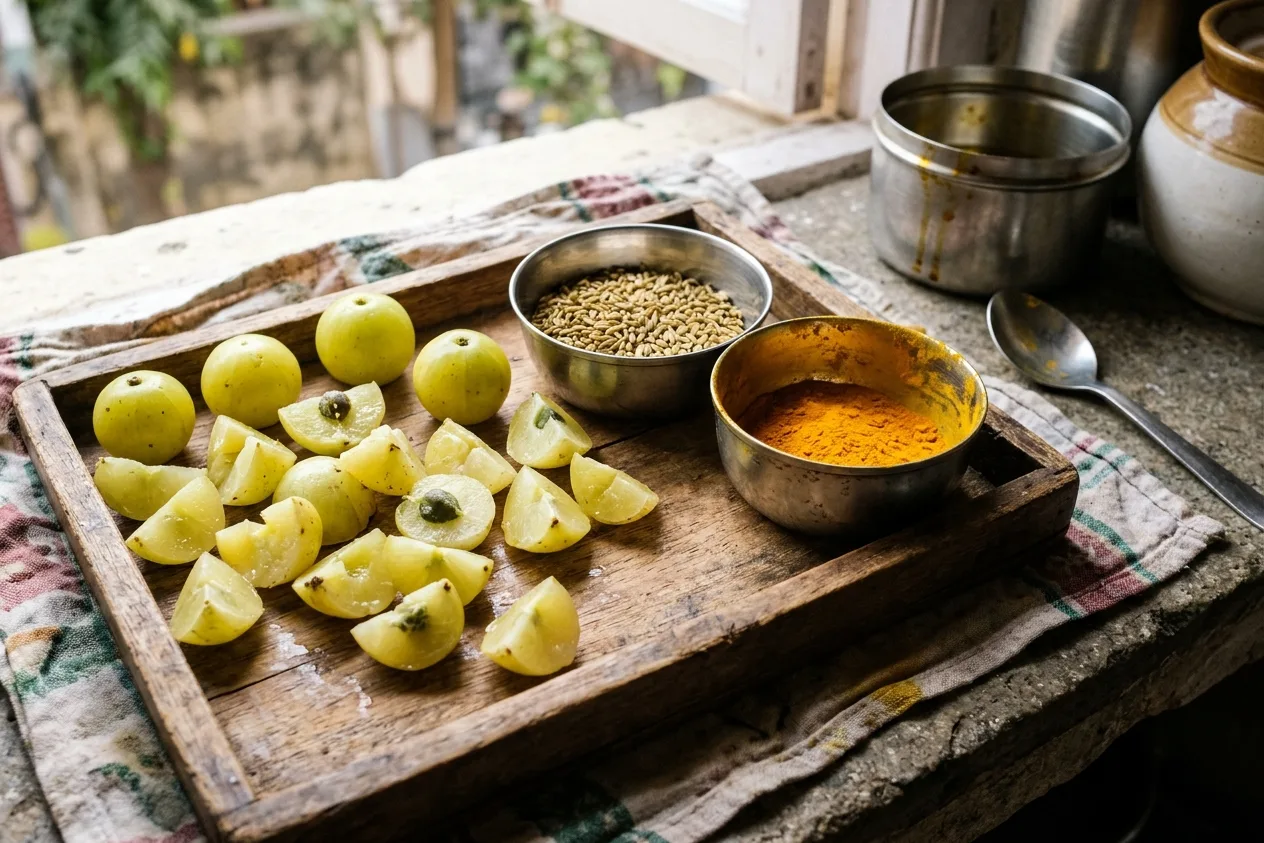
- Choose the fruit. Pick firm, unblemished, pale green amla. Soft or dark spotted fruit spoils faster in a jar.
- Wash and steam or boil. Amla is naturally sour and slightly bitter. Many recipes steam or boil it briefly until the outer skin looks changed and the segments begin to open. A farm kitchen guide notes that steaming first helps with the bitterness. Boiling too long makes the fruit mushy, so it is done only until the segments just split.
- Cool and separate. The fruit is cooled, and the segments are pulled apart or cut. The hard stone in the centre is removed.
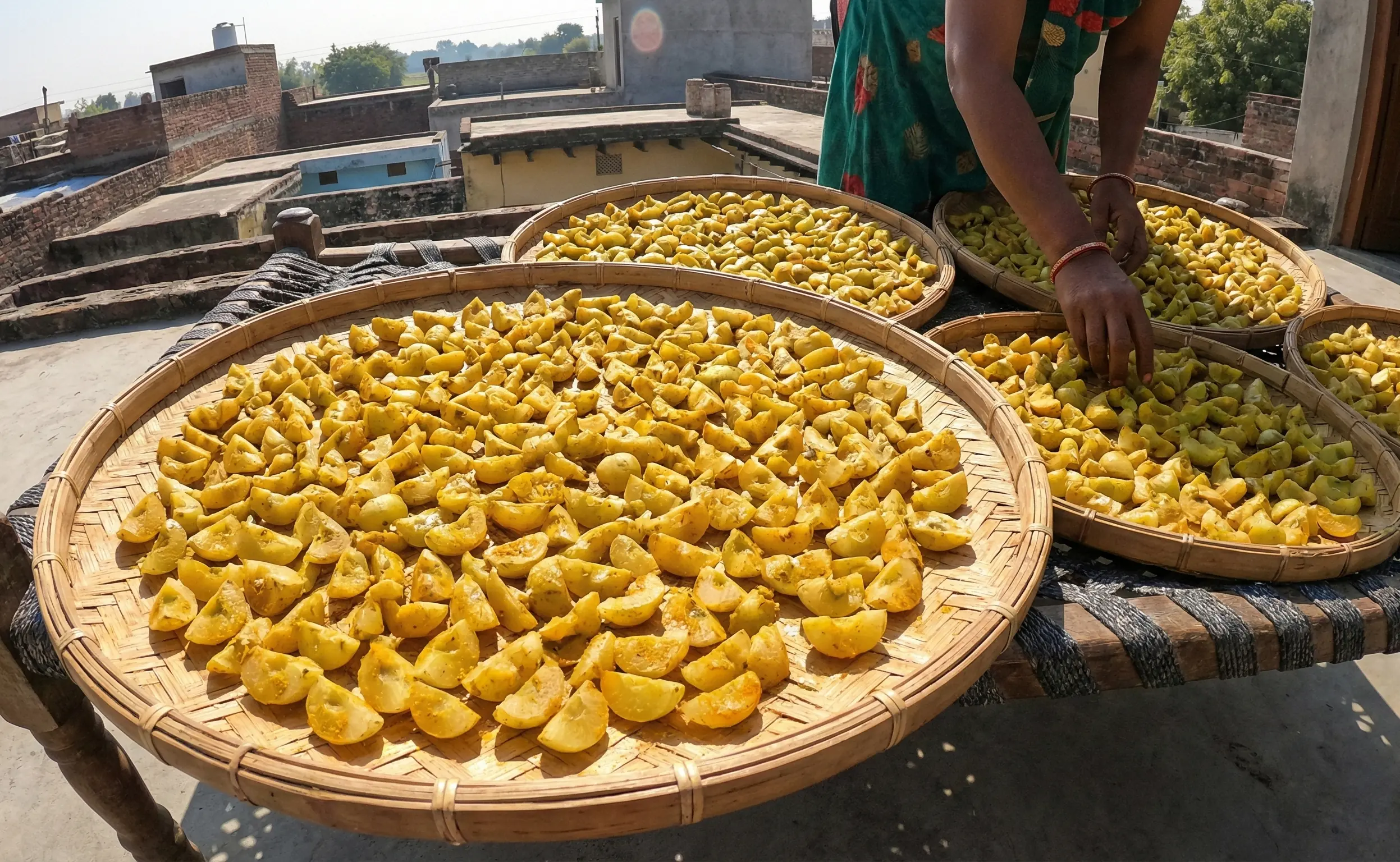
- Dry. The pieces are spread out on a clean cloth so that surface moisture goes. Wet fruit in a jar leads to mould, which is the single most common reason a pickle fails.
- Prepare the masala. The usual mix includes mustard seed, fenugreek seed, fennel, nigella, turmeric, red chilli powder and salt. Whole seeds are often coarsely ground in a mortar to release their flavour.
- Heat the oil. Mustard oil is heated until it just starts to smoke, switched off and cooled fully. Heating drives off the raw sting of the oil, and the cooling matters, because hot oil poured over the fruit will cook it and soften the pieces.
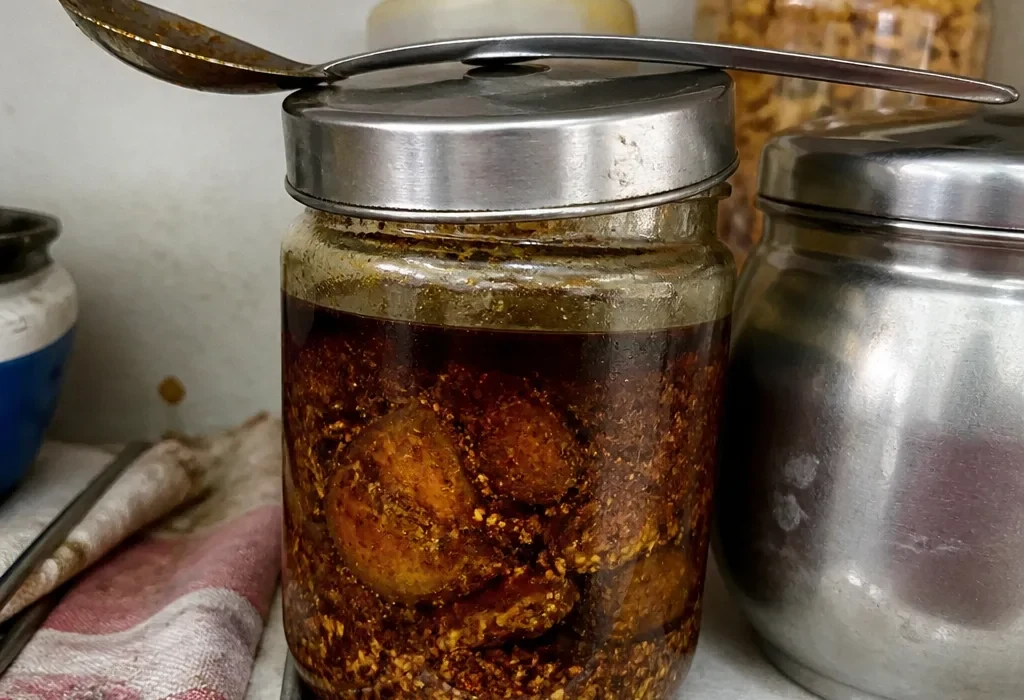
- Mix and fill. The amla is tossed with the masala and packed into a clean, completely dry jar. Cooled oil is poured on top so that the fruit is covered.
- Rest. The jar is left for a few days, in mild sun if possible, and shaken or turned gently each day. The pickle is usually good after some days and improves with time.
The kind of oil matters a great deal to the result. Our guide to kacchi ghani mustard oil explains why a sharp, cold pressed mustard oil is the traditional choice for pickles.
Why the fruit is steamed first
Raw amla is hard, tight and astringent, and it does not take up oil or masala well.
The short steam is what changes that. Raw amla is hard, tight and astringent, and it does not take up oil or masala well. A short steam or boil softens the fibre and opens the segments, so the spices and oil can reach the flesh. It also removes some of the rough astringency. A farm kitchen guide gives this as the first remedy for a bitter pickle. The trade off is that over cooked fruit turns soft, so the cooking time has to be short.
What amla achar tastes like
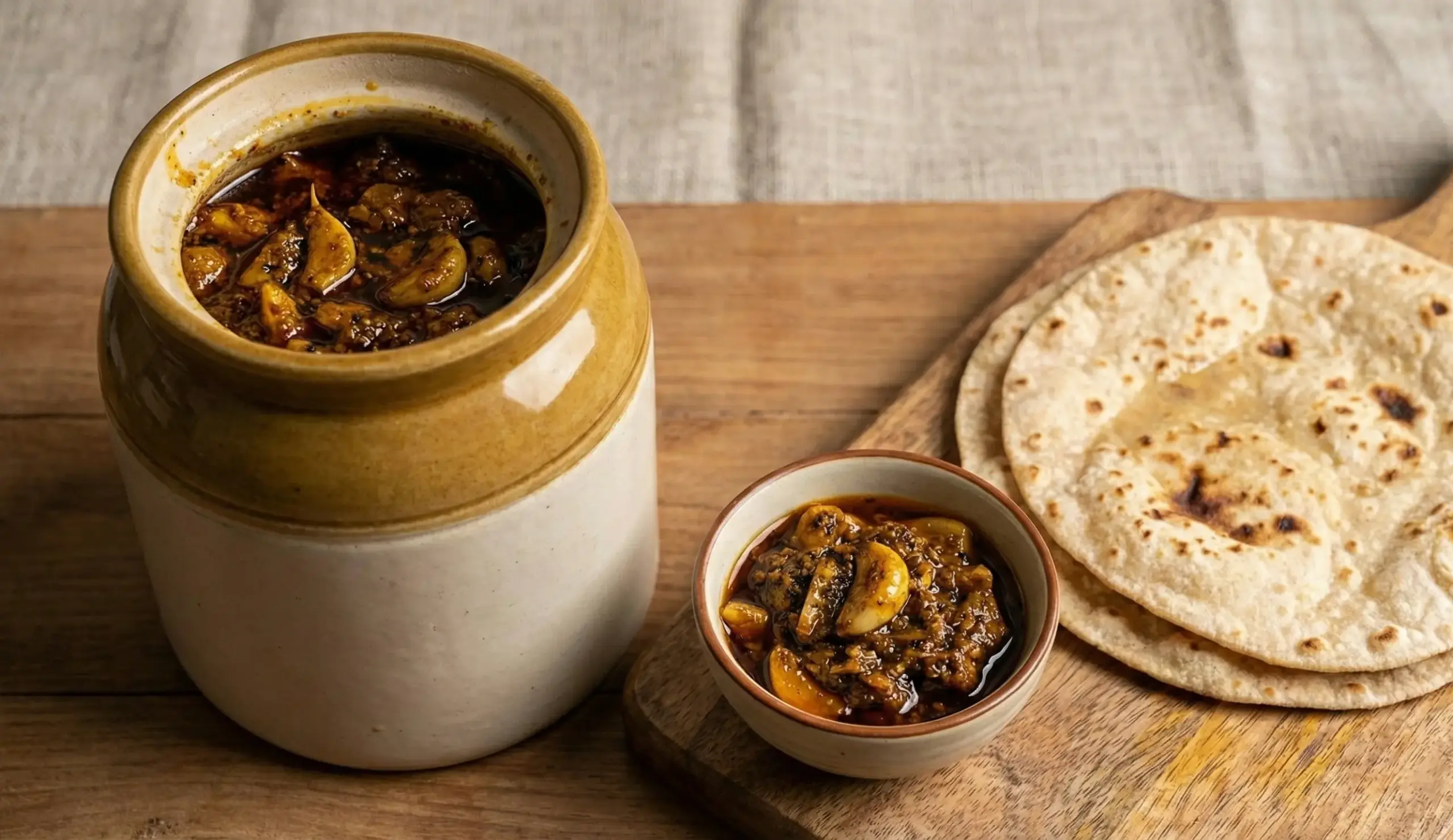
The first bite is sour and sharp. Salt and chilli come next, then the faint bitterness that is typical of amla, and finally the sweetness that lingers at the back of the mouth after you have swallowed. The sharpness mellows as the jar rests, which is why many families wait a couple of weeks before opening the first one. The pieces turn darker and softer in the oil as they mature.
How to eat it
Amla achar goes with dal and rice, parathas, khichdi and a plain roti. A small piece is enough, since the flavour is strong. Many families keep a jar on the table through the cold months and eat a piece with the main meal.
Does it have the same vitamin C as fresh amla
Fresh amla has the numbers quoted at the start of this post. Pickling changes that. Cooking, salt and long storage all reduce some nutrients. Amla is reported to hold its vitamin C better under heat than many fruits, but we have not tested our jars and we do not claim any specific figure for a pickle. A food site that publishes amla pickle recipes also advises people who watch their health to mind the oil and salt in a pickle. Pickle is a condiment, and a small portion is the right size.
How to store a jar
- Use a clean, dry glass or ceramic jar. A wet jar is the main cause of spoilage.
- Keep the fruit under a layer of oil. A farm kitchen guide says to keep amla achar covered with oil. If the oil sinks into the fruit after a few days, add more cooled oil.
- Use a dry spoon every time.
- Keep the jar in a cool, dark place, and in hot weather it is safer to store it in the fridge.
- If you see mould or a sour fermented smell that was not there before, throw the jar away.
Where to go next
If you want to understand the base ingredient behind every jar, start with our kacchi ghani mustard oil guide. For the wider tradition, see our guide to Banarasi achar. The current range from our kitchen is in the pickle and achar collection.
Frequently asked questions
When is amla in season?
Fresh amla is generally available from November to February in most of north India. Some sources place the main harvest from mid September to mid December, with the season running longer in the south.
Why is amla pickled in winter?
Because the fresh fruit arrives then, is firm and affordable, and the mild winter sun suits the pickle jar. Families have also long linked pickles to the season.
What is the difference between amla achar and amla murabba?
Murabba is a sweet preserve in sugar syrup. Achar is a spicy pickle in salt, spices and oil.
Why is my amla pickle bitter?
Amla is naturally a little bitter. Steaming or boiling it first, and letting the jar rest for a couple of weeks, reduces it.
How long can amla achar be kept?
That depends on the salt, the oil cover and the storage, so we do not give a single number. Keep the fruit covered in oil, use a dry spoon and refrigerate in hot weather.
Sources used for this post: Tarla Dalal amla pickle and amla murabba recipes; Organic Mandya amla guide; FarmDidi amla achar and murabba guide; Slurrp pieces on amla achaar and murabba; Maayeka amla pickle. Vitamin C figures vary by source and are quoted as given.