Blog
Lal Mirch Ka Bharwa Achar: How Stuffed Red Chilli Pickle Is Made

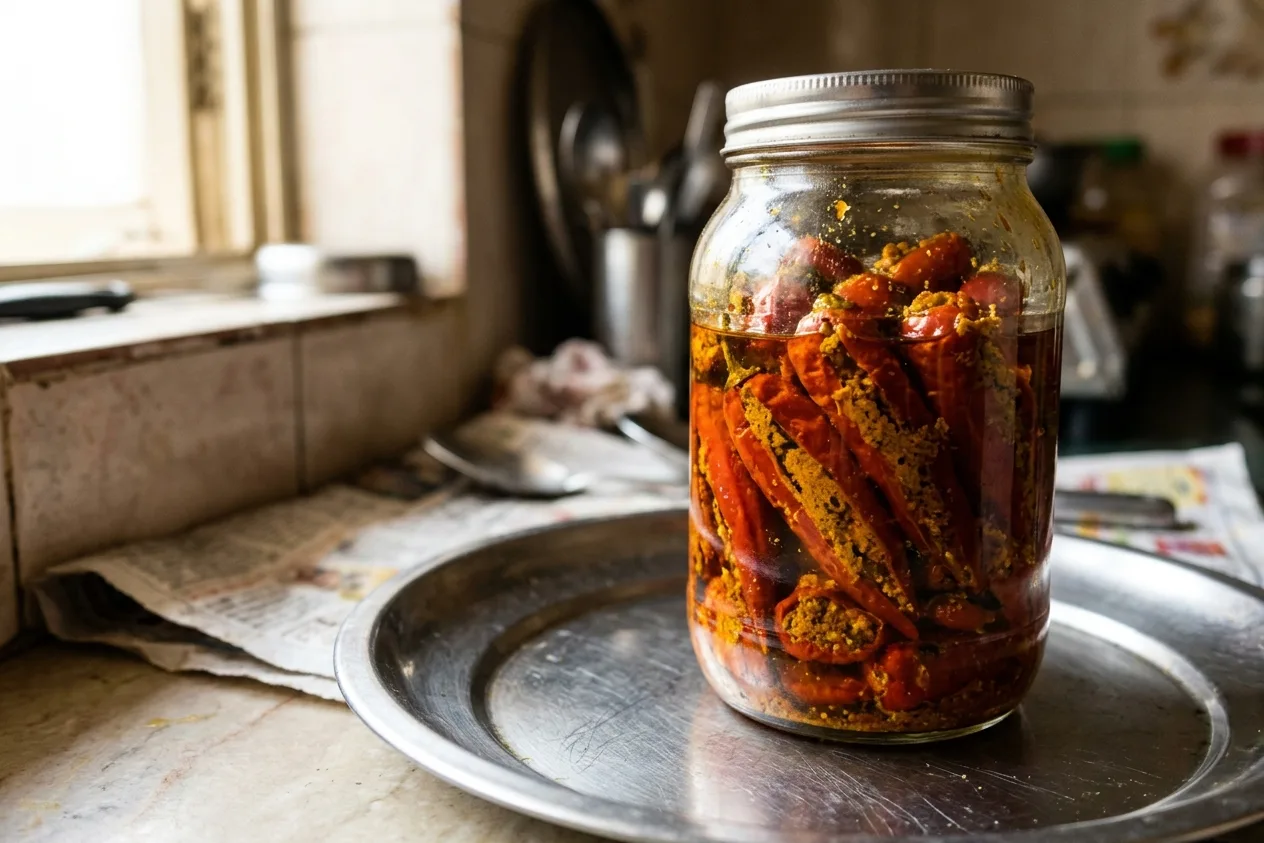
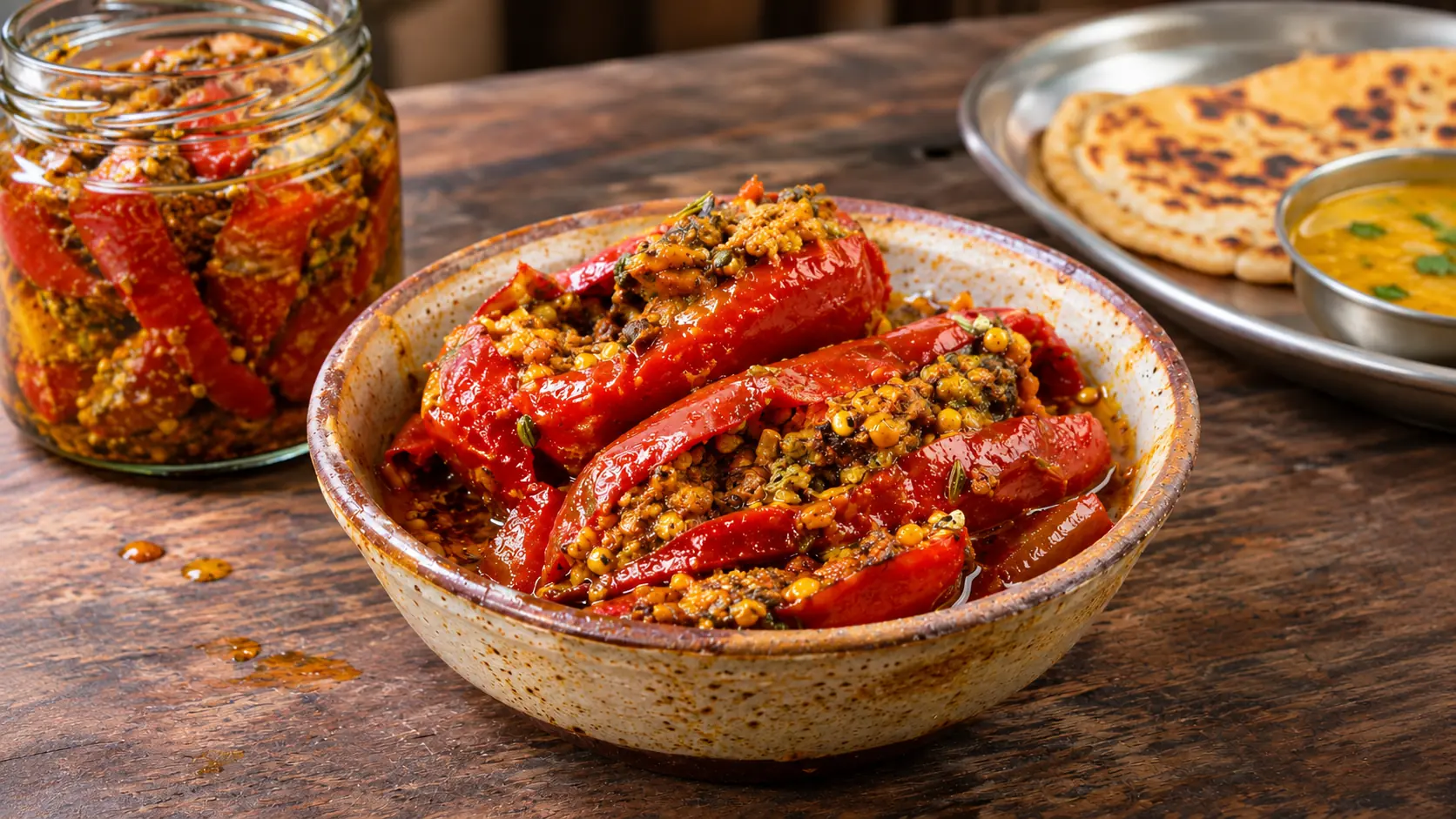
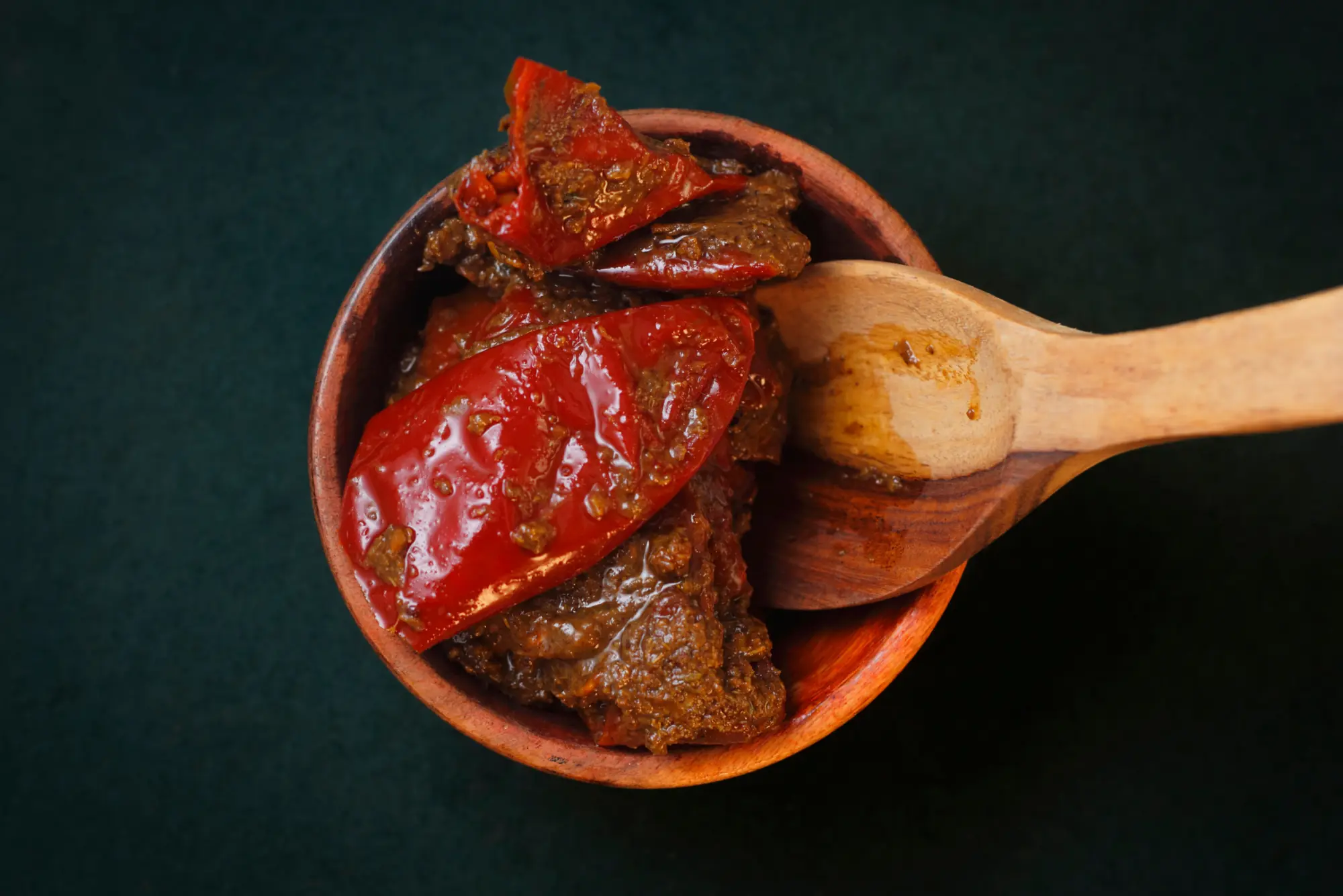
A bharwa lal mirch is a fat red chilli with a long slit down one side and a spoonful of ground spice pressed into it, and it is one of the best known pickles of Banaras. It looks simple. The stuffing is a short list of spices, the chilli is not cooked, and the whole jar is finished by sun and mustard oil. Yet every kitchen has an opinion about how much fennel, which chilli and how many days in the sun, which is why one jar can taste quite different from another.
This guide covers what the pickle is, how it is made in most North Indian kitchens, why mustard oil is the only oil that works, and how to keep a jar well.
In short
Bharwa lal mirch achar is thick red chillies, slit and stuffed with a dry masala of saunf (fennel), rai (mustard), methi (fenugreek), amchur and turmeric, packed in a jar, covered with mustard oil and cured in the sun for 3 to 4 days. It keeps for months when the jar is dry and the chillies stay under oil.
What bharwa lal mirch achar is
Bharwa means stuffed, lal mirch means red chilli, and achar is pickle. Home cooks across North India make it, and food writers describe it as hot, tangy and slightly sweet. It is popular in Rajasthan and Uttar Pradesh, and the Banarasi version has a standing of its own: Banaras Lal Bharwa Mirch is among the products from the Kashi region that were granted a Geographical Indication (GI) tag. The Hindu reported in 2024 that it was one of a record 60 Indian products given the tag. A GI tag marks a product as belonging to a place, which is why its name now points to Banaras.
Which chilli is used
The recipes agree on one thing: the chilli has to be large and thick walled, with enough room for the stuffing. Many recipes call for about 250 grams, or roughly 20 large red chillies, for a small jar. Thin, very hot chillies do not hold the masala and make the pickle harsh.
The stuffing
A bharwa masala is a dry mix, ground coarse or fine. The common ingredients across recipes are:
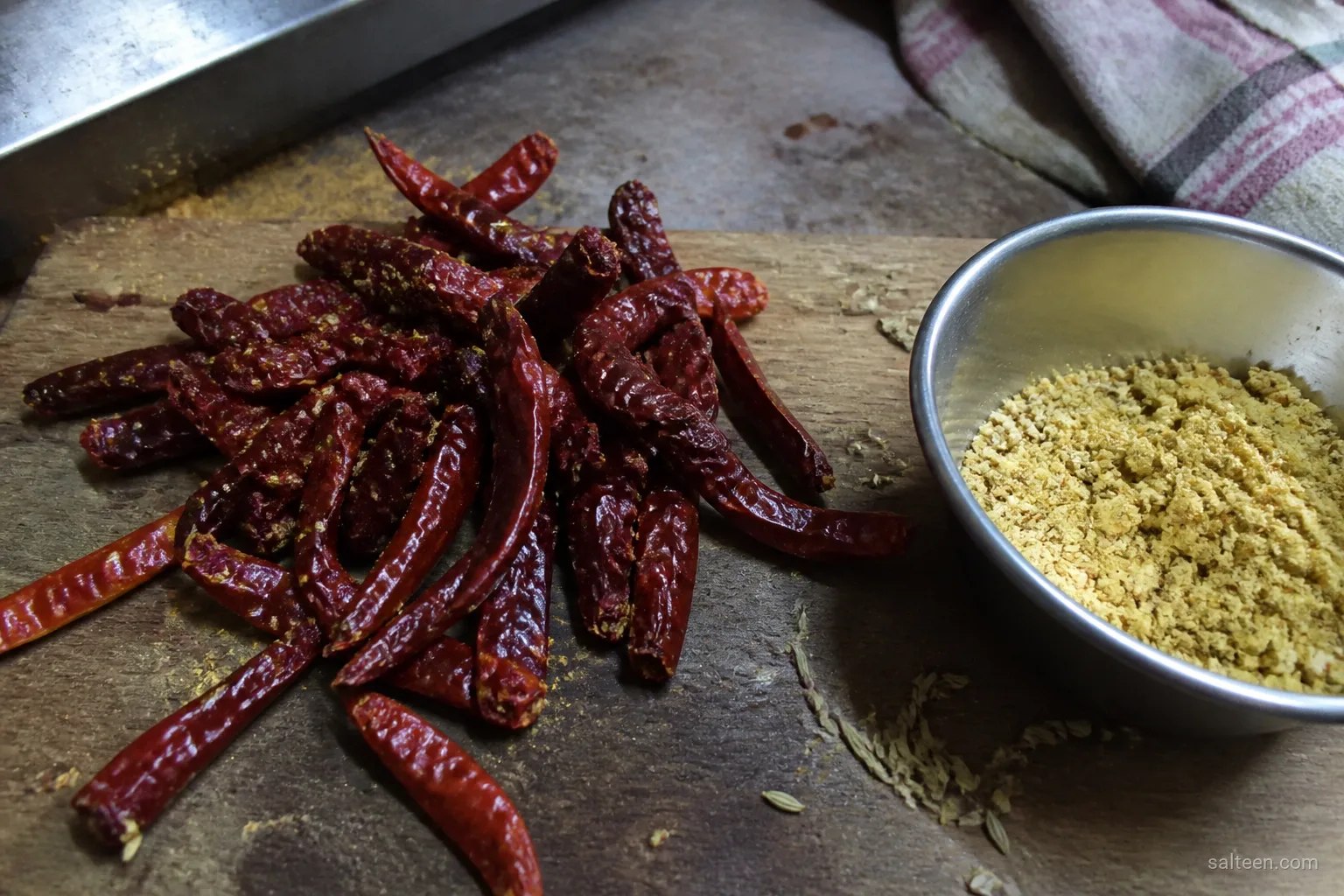
- Rai (mustard seed), powdered
- Saunf (fennel), powdered
- Methi dana (fenugreek seeds), powdered
- Amchur (dried mango powder), which gives the tang
- Haldi (turmeric)
- Hing (asafoetida)
- Salt
- A little mustard oil, enough to moisten the mix so that it sticks
Some recipes add kalonji (nigella seeds), cumin or black peppercorns, and a Rajasthani version adds a spoon of vinegar. Quantities differ between kitchens, so this post gives the ingredients and not a single formula.
How bharwa lal mirch achar is made
- Wash and dry the chillies. Water is the enemy of any pickle. Chillies are washed, wiped and left to dry completely, often in the sun for a short while.
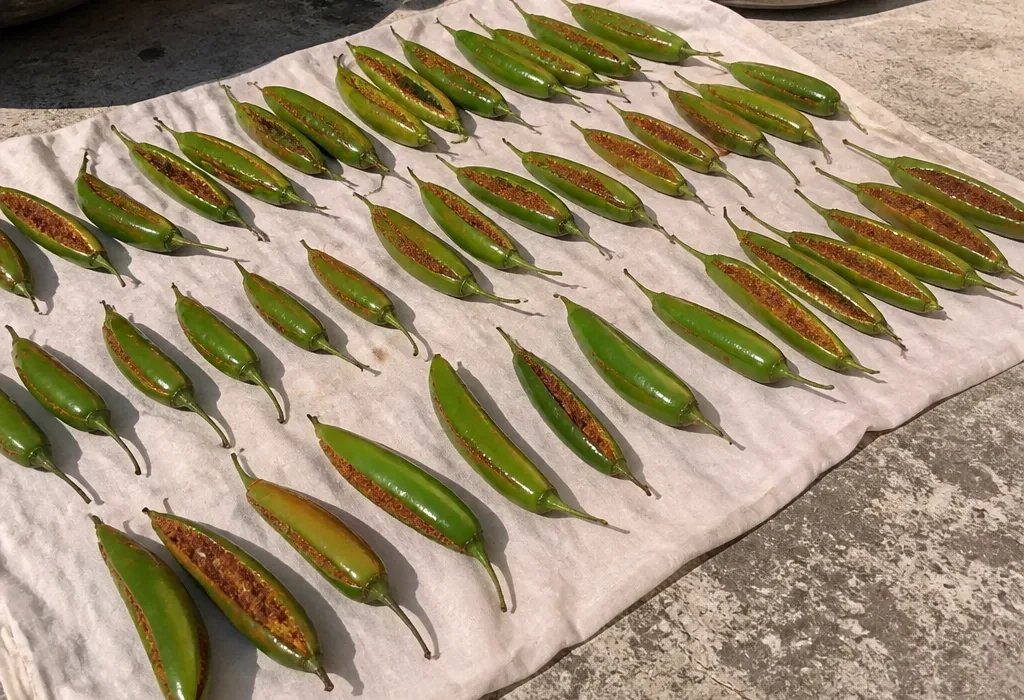
- Slit them. A long vertical slit is cut from near the stem to near the tip, stopping short of the end so that the chilli keeps its shape. Some recipes remove the seeds, and others leave them in for extra heat.
- Prepare the masala. The spices are dry roasted lightly if needed, ground and mixed with salt, amchur, turmeric and hing. A few spoons of mustard oil are added to bring the mix together.
- Stuff. The masala is pressed into each slit with a small spoon or a finger until the chilli is full.
- Pack the jar. The stuffed chillies are laid in a clean, completely dry glass or ceramic jar. Any leftover masala goes in between.
- Heat and cool the oil. Mustard oil is heated until it just smokes and then cooled fully. This takes the raw sting off the oil. The cooling matters, because hot oil poured over the chillies cooks them and softens the pickle.
- Cover with oil. Cooled oil is poured over the chillies until they are submerged.
- Cure in the sun. The jar, covered with a breathable cloth, is kept in the warm sun for 3 to 4 days and shaken or turned gently every day. It is brought inside after sunset.
One recipe source notes the pickle is ready to eat after those days in the sun and stays good for about a year, while another says 2 to 3 months at room temperature, and longer if the chillies stay fully under oil. Shelf life depends on the salt, the dryness of the jar and the oil cover, so treat these as ranges and not guarantees.
Why mustard oil, and nothing else
Two popular recipe sites say this pickle tastes best only when it is made with mustard oil, and one adds that there is no alternative to it. Mustard oil is sharp and pungent, and that sharpness is the natural counterpart to the heat of the chilli and the sourness of amchur. It also forms a protective layer on top of the pickle. Our guide to kacchi ghani mustard oil explains why a cold pressed oil with a strong smell is the traditional choice.
For this pickle, recipe writers say there is no substitute for mustard oil.
How we make it
- Which chilli, and when do the chillies arrive in the unit?
- Who stuffs them, and how many chillies does one person finish in a day?
- Whole spices ground in the unit, or bought ground? (The product page says whole spices and no preservatives.)
- How many days of sun, and where is the jar kept?
- One real memory of a day in the season: the colour, the smell, the hands.
If a line cannot be confirmed, this section stays out of the post.
Variations you will meet
Because every family keeps its own recipe, you will meet more than one version of the pickle.
- Rajasthani style. One popular Rajasthani recipe adds a spoon or two of vinegar to the masala and dries the filled chillies in the sun for about a week.
- Uttar Pradesh style. The version described by UP recipe writers keeps to powdered mustard, fennel and fenugreek with amchur, turmeric, hing and salt, and covers the chillies completely in mustard oil.
- With extra spices. Some cooks add kalonji, cumin or black peppercorns to the stuffing.
Common mistakes
Most failed jars come from the same few causes.
- A wet jar or a wet chilli. Even a single drop of water can spoil a pickle. Dry everything fully.
- Hot oil. Oil poured on while still hot cooks the chilli and makes the pickle soft and dull. Let it cool completely.
- Too little oil. The chillies must stay under the oil. Chillies sticking out above it can grow mould.
- Thin chillies. They split, hold little stuffing and turn bitter. Choose thick walled ones.
- A rushed cure. A few good days in the sun are what bring the flavours together. Cutting the time short leaves the stuffing raw.
How to eat it
Bharwa lal mirch achar is a pickle for dal, rice, parathas, khichdi and a plain roti. Most people eat a small piece at a time, since the heat is real. The chilli can be broken and mixed with a spoon of curd or ghee to soften it, and some families eat the stuffing off the chilli and leave the skin. A drop of the oil from the jar over hot dal is also common.
How to store it
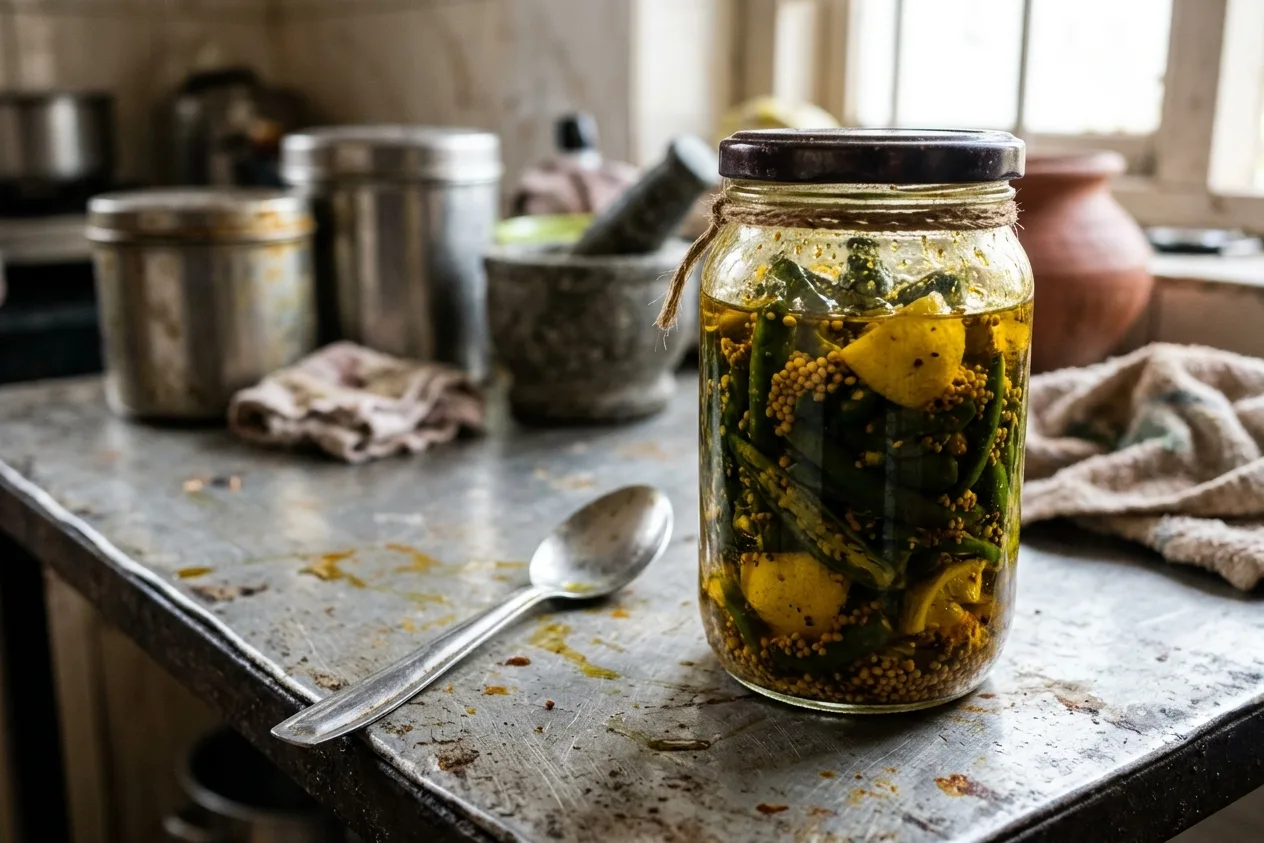
- Use a clean, completely dry jar and a dry spoon each time.
- Keep the chillies covered with oil. If the oil level drops, add more cooled mustard oil.
- Store in a cool, dark place. In hot weather, a refrigerator is safer.
- If you see mould or smell something sour that was not there before, throw the jar away.
Where to go next
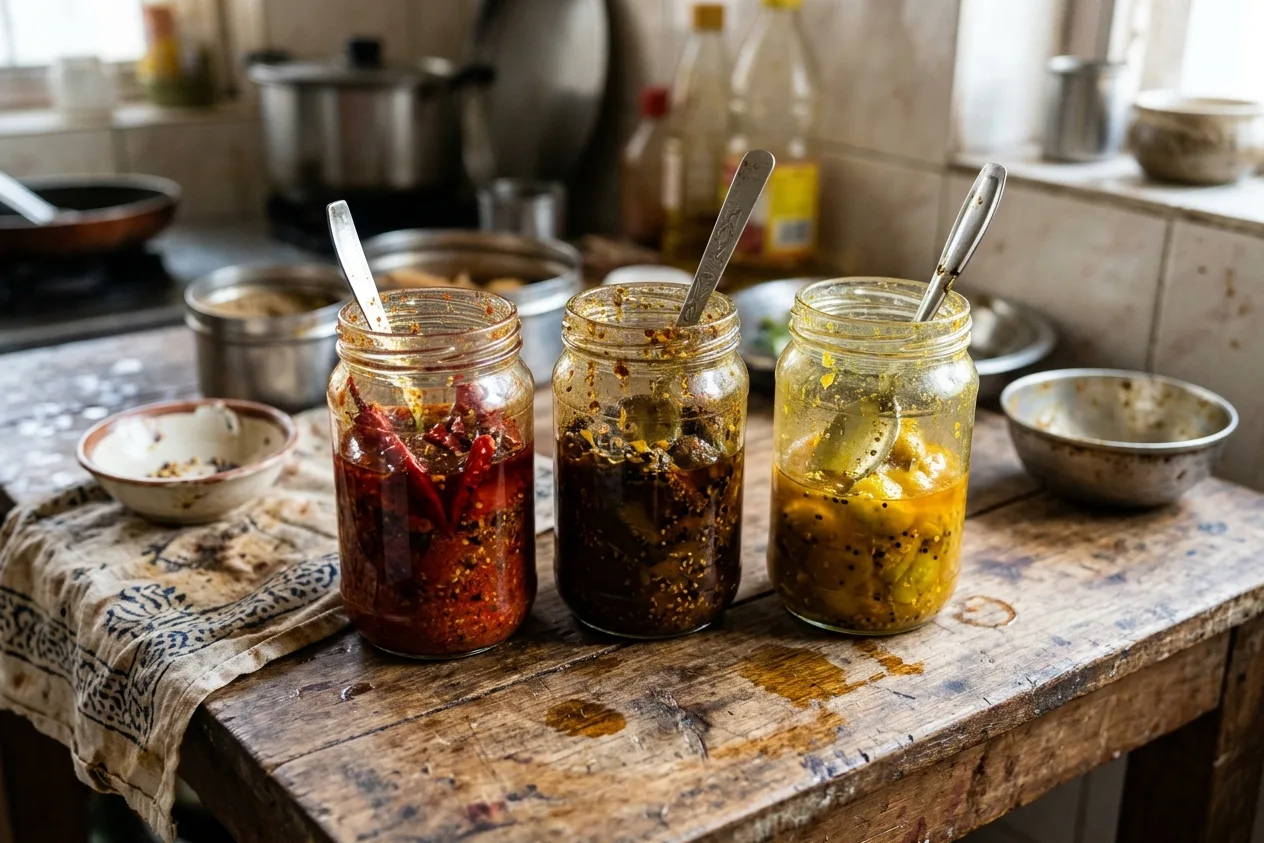
This post is part of the Achar Academy series. For the winter pickle, read our guide to amla achar, and for the wider tradition, see the Banarasi achar guide. For the food of the city this pickle comes from, start with the Banaras food guide. Our stuffed red chilli pickle is listed in the pickle and achar collection.
Frequently asked questions
How is stuffed red chilli pickle made?
Thick red chillies are slit, stuffed with a dry masala of fennel, mustard, fenugreek, amchur, turmeric, hing and salt, packed in a dry jar, covered with cooled mustard oil and cured in the sun for 3 to 4 days.
Which chilli is used in bharwa mirch achar?
A large, thick walled red chilli that has room for stuffing. Thin, very hot chillies do not suit the pickle.
Is bharwa lal mirch achar a Banarasi pickle?
It is made across North India. Banaras Lal Bharwa Mirch carries a GI tag as a product of the Kashi region.
Why is the jar kept in the sun?
Sun helps the spices and oil work into the chilli and dries out surface moisture. A few days of mild sun are enough.
How long does it last?
Recipes quote anything from a few months to about a year, depending on the salt, the dryness of the jar and whether the chillies stay under oil.
Sources used for this post: The Hindu (GI tags, 2024); Vegetarian recipes sites and Indian recipe writers (Veg Recipes of India, Hebbar’s Kitchen, Aahaaram, Fun Food Frolic, Yummy Tummy, Nisha Madhulika, Ranveer Brar, Sanjeev Kapoor) for the method and masala; salteen.com product page. Quantities vary by source and are not given as a formula.