Blog
Choosing Raw Mango for Pickle: How to Pick Kairi That Will Not Ripen in the Jar

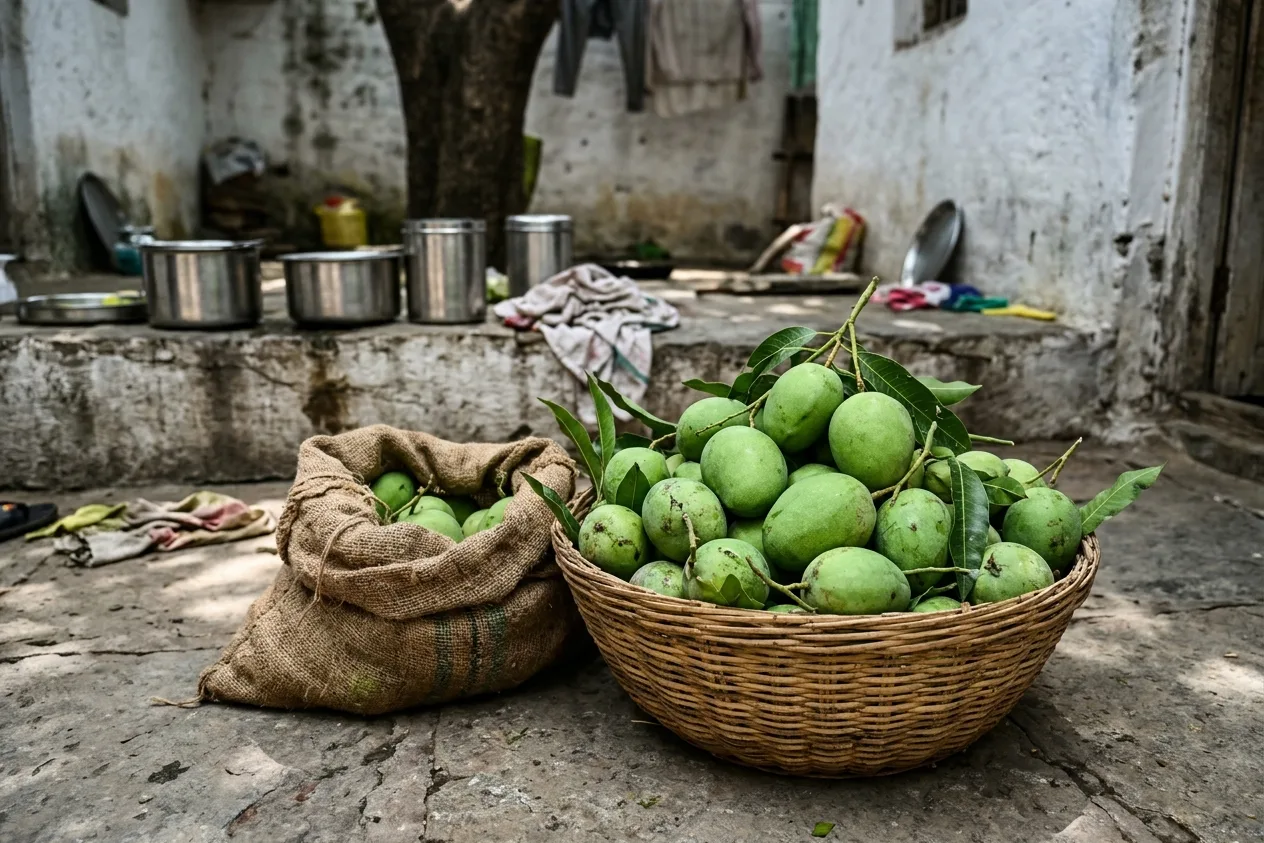
Slurrp opens its guide to picking mangoes for pickle with a point most recipes skip: the process of making mango pickle begins long before the oil, spices or jars come into view, and raw mangoes for pickling are very different from those chosen for chutney or panna. The choice of mango decides how the pickle behaves in the jar for months.
This guide is a short checklist for choosing raw mango, with Sanju Yadav’s own checks to be added.
The short answer
In short
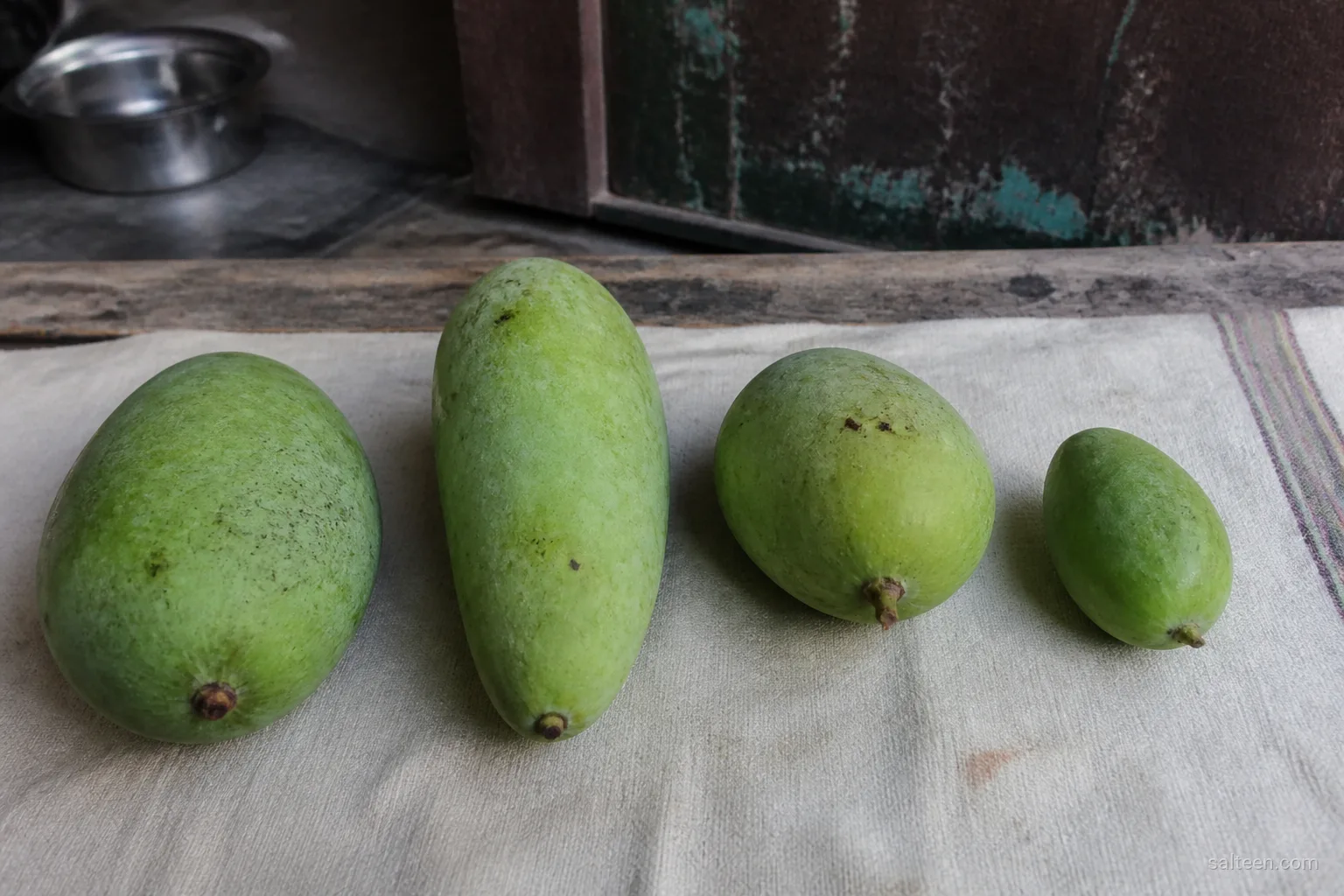
Choose raw mangoes that are very firm, heavy for their size, bright green and free of blemishes, with no soft or soggy spot at the stem. A fibrous, sour mango with a hard stone keeps its bite in pickle better than a mango that is starting to ripen.
The checklist
Before you buy
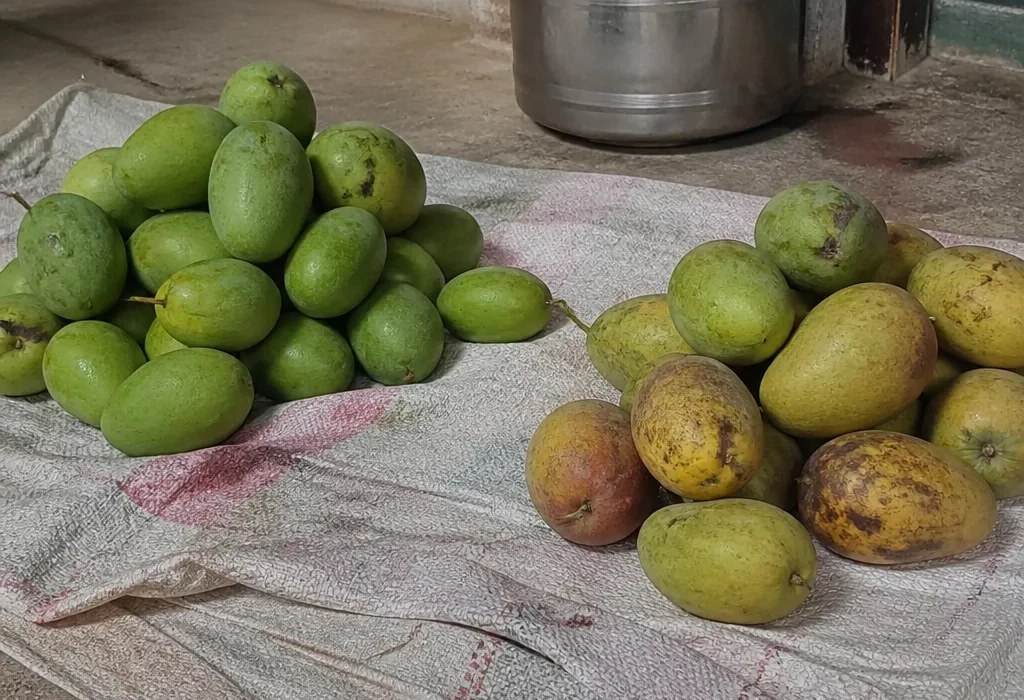
- Firm. Slurrp says a raw mango for pickle should feel solid and heavy in the hand. The National Mango Board says an unripe mango is very firm to the touch.
- Heavy. Slurrp adds that heavier mangoes usually have more pulp and moisture, and give better results.
- Bright green. Oregon State Extension advises fruit that is green and uniformly hard with no skin blemishes.
- Clean stem end. Tarla Dalal says to avoid raw mangoes that feel soggy around the stem and to check for cuts and blemishes.
- Tart smell. The same page says raw mangoes have firm skins and give off a tart smell.
Why firmness matters
Mangoes keep ripening after they are picked, and when picked they are hard, high in starch and acid and low in sugar, according to a chef quoted by Yahoo Lifestyle. A mango that is already turning will soften further in the jar. Our next post tells what happened in our kitchen when a lot ripened on the way to us: the May we had to reorder.
Colour is not enough
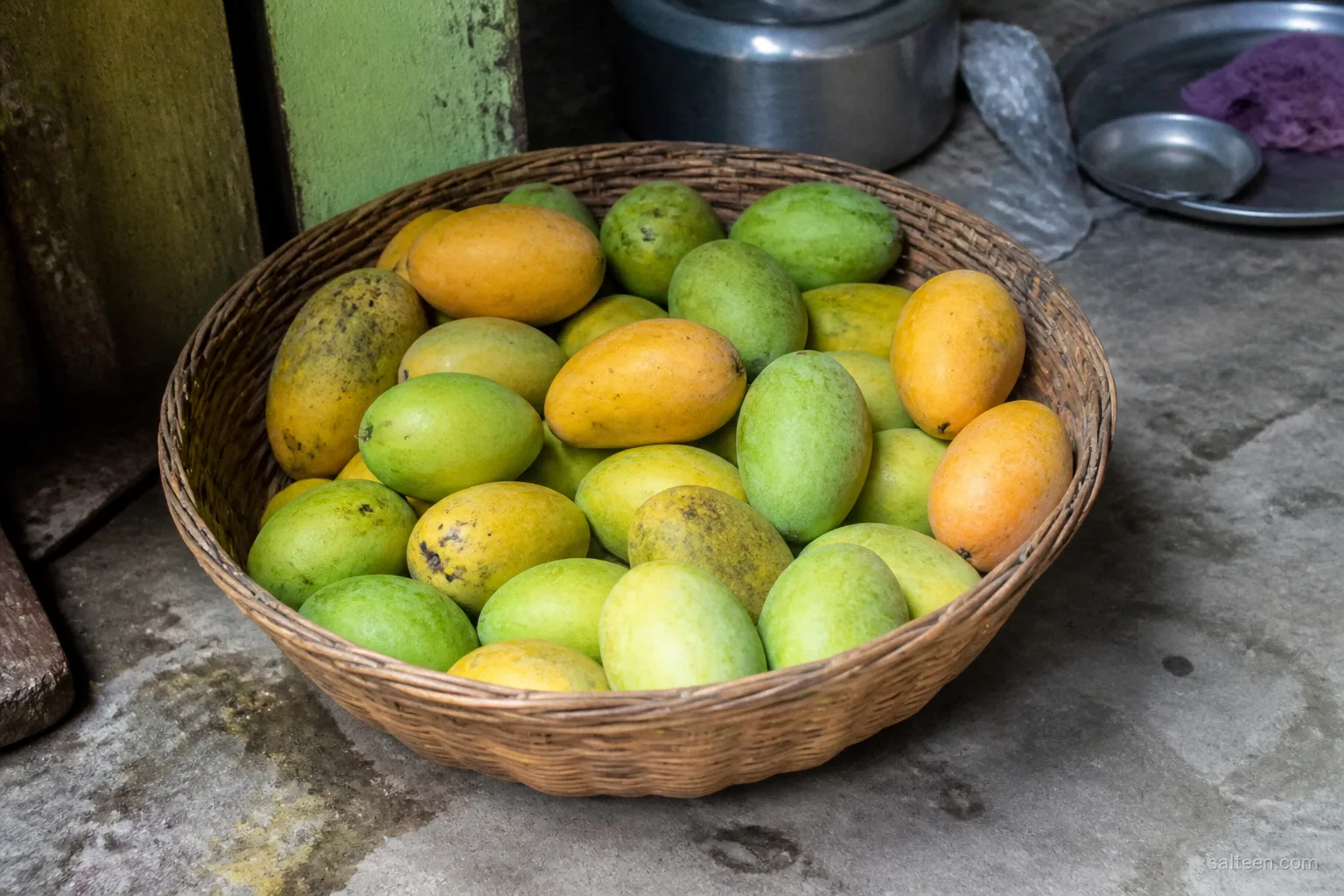
Dishoom’s guide to mangoes warns that colour can be deceptive, because some varieties stay green when ripe, while others turn golden early. It advises trusting touch, and a stem sniff: no scent means unripe, while ripe mangoes give off an aroma. The same applies to raw mango for pickle. A green skin alone does not prove the fruit is still raw.
The stone and the fibre
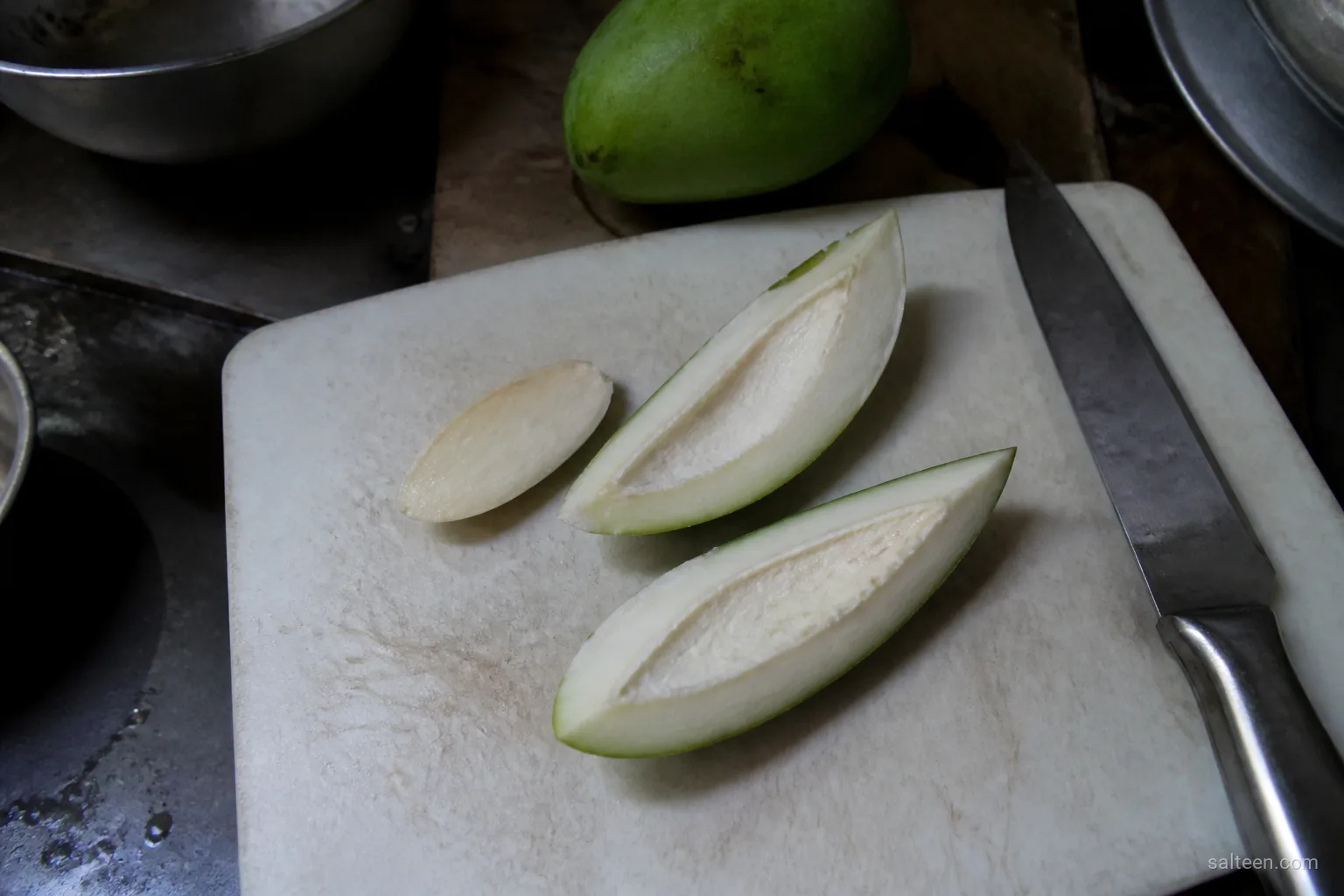
A Telugu style mango pickle recipe on Wikibooks says to choose mangoes that are fully mature yet raw, green, fibrous and very sour. It adds that a very fibrous mango will withstand pickling until the next season without going soft, and that each cut piece should contain a portion of the stone, or it softens too quickly. An Indian Institute of Technology Madras page notes that the seed of an unripe mango is soft and easily cut with a knife, while a ripe mango’s is tough and fibrous. Variety matters, so ask the seller which mango it is.
Handling
Oregon State Extension warns that raw green mangoes may irritate the skin of some people, so avoid touching the face, lips or eyes after cutting them.
Frequently asked questions
How do you know a raw mango will not ripen in the jar?
Choose very firm, heavy, bright green fruit with no soft spot, and use it soon after buying.
What size of raw mango is best for pickle?
Sources agree on firmness and fibre more than size.
Should I use mango that is turning yellow?
For pickle, no. It is softer and sweeter, and a better fit for chutney.
Sources used for this post: Slurrp, how to pick raw mangoes for pickle; Oregon State Extension, preserving mangoes; National Mango Board, how to choose a mango; Tarla Dalal, raw mango glossary; Wikibooks, pickled green mango (Aavakaaya); Dishoom, mango digest; IIT Madras NCCRD page; Yahoo Lifestyle, picking a mango.