Blog
How Long Does Achar Last: Shelf Life by Type, Oil and Storage

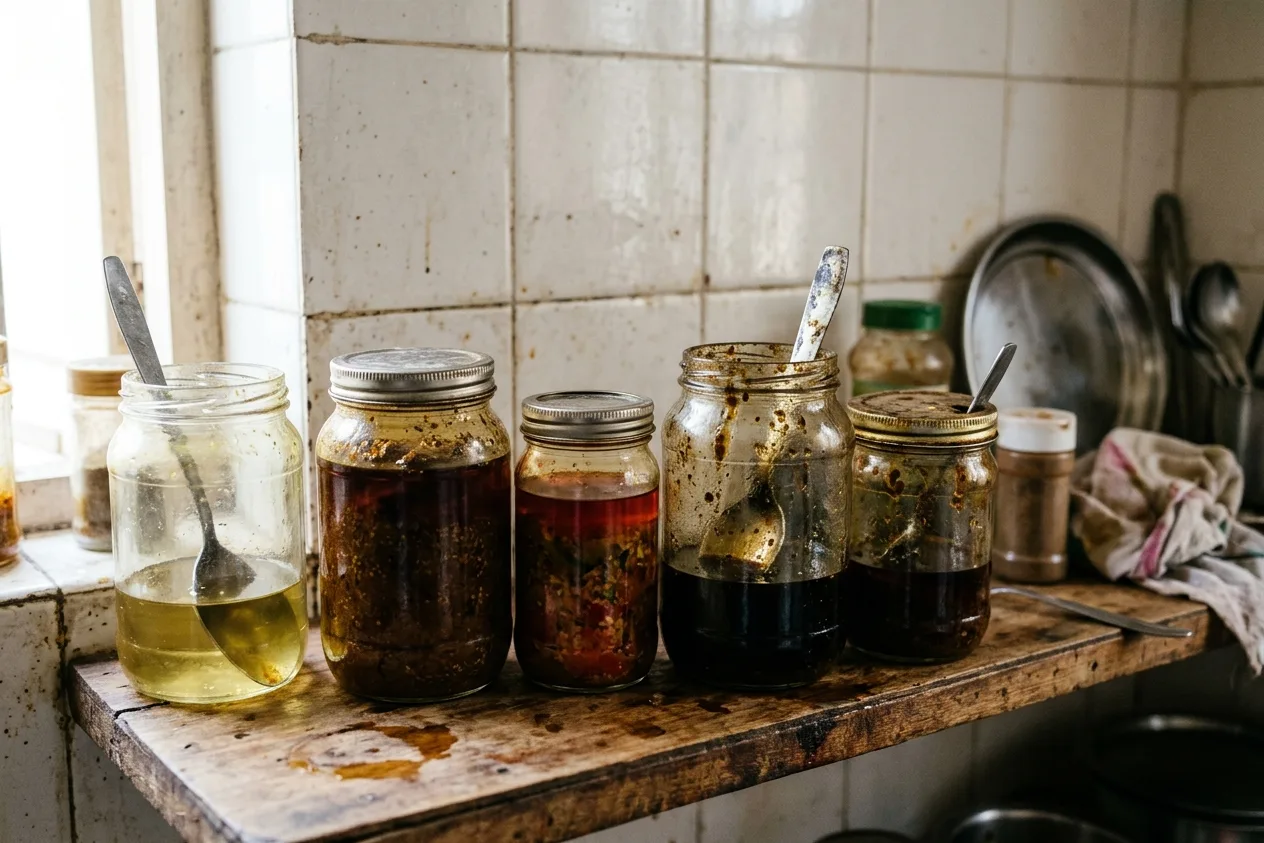
A pickle seller’s listing on a marketplace gives the best before period of a mango pickle as 24 months. A recipe site that reports typical home results says a jar kept at room temperature in a clean glass jar lasts 6 to 12 months, and the same site says a badly stored jar can spoil in 2 to 3 weeks. All three figures are about the same kind of food. The gap between them is the whole answer to the question of how long achar lasts, and this post explains where the gap comes from.
We give ranges and not promises. A jar is a product of salt, oil, dryness and handling, and no table can promise how long your own jar will last. The printed best before date on a jar you bought comes first, and it overrides anything in this post.
The short answer
In short
Most oil based achar is reported to last about 6 to 12 months in a clean, dry glass jar kept cool, and one marketplace listing shows 24 months. Pickles made from fresh vegetables or with less oil can be shorter, around 3 months or less. A badly handled jar can spoil in weeks.
Why achar lasts at all
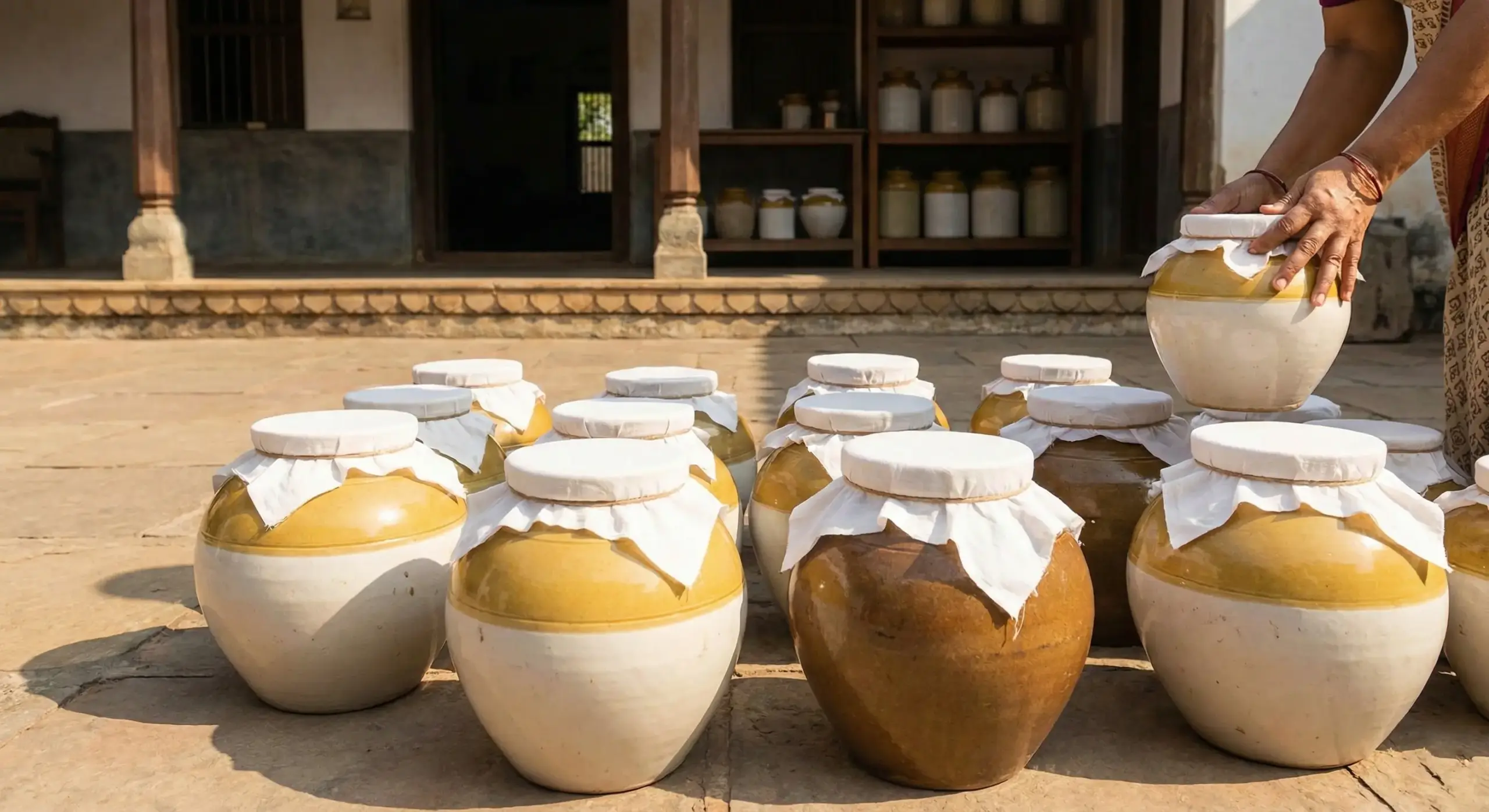
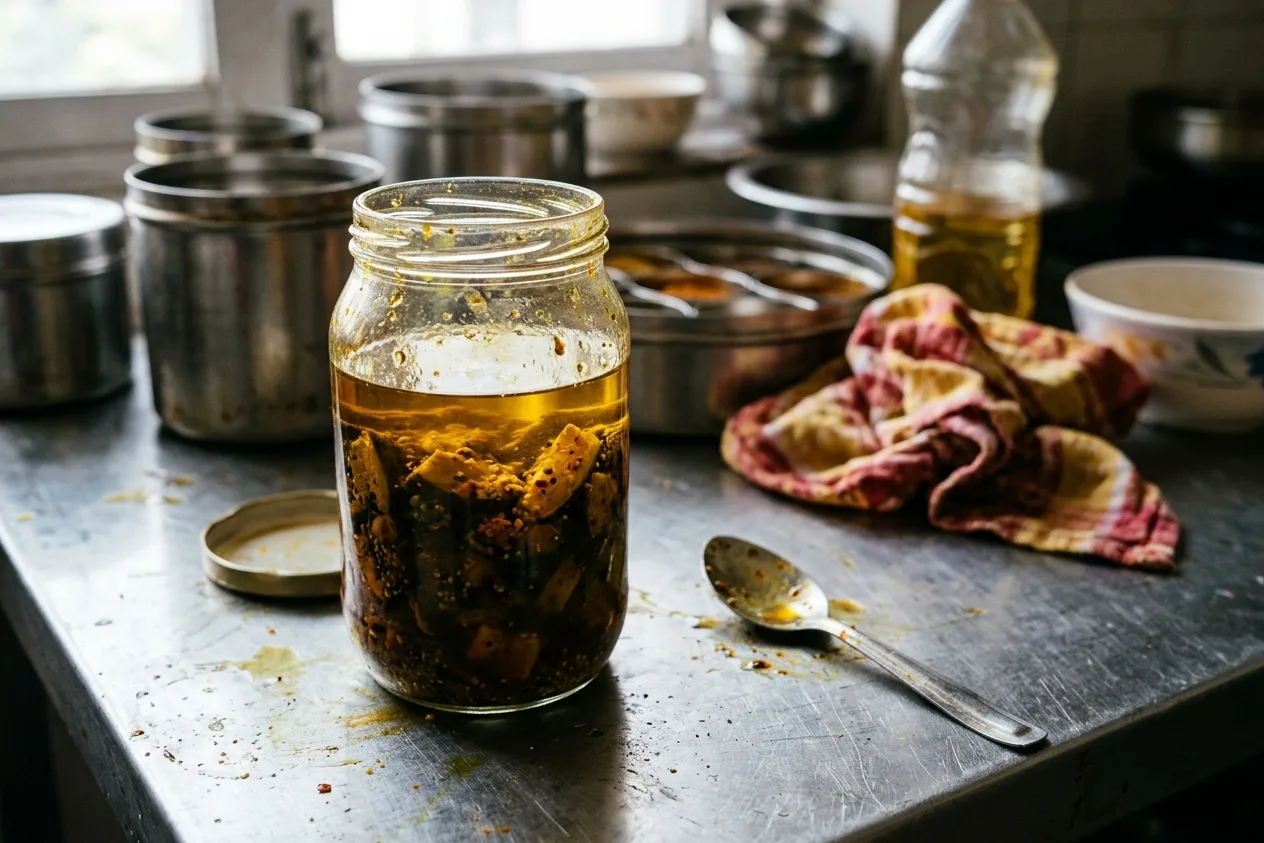
A pickle is a food held in a hostile place for microbes. Salt draws water out of the pieces, which makes life hard for many germs. The oil sits on top and keeps air off the surface. Spices add their own effect, and mustard oil in particular contains allyl isothiocyanate, the compound that gives it its sharp taste and which a retailer’s guide says has antimicrobial activity. A pickle guide that refers to the Indian food standard for pickles says that the pieces in an oil pickle should stay practically under the oil.
Dryness matters as much as salt. A writer quoted by Al Jazeera, Krish Ashok, author of Masala Lab, puts it plainly: for a pickle to last years, it has to be dry. Water in the jar is what lets spoilage begin, and we explain what that looks like in our post on the white layer on achar.
Shelf life by type of pickle
The table below collects ranges from the sources we read. They are typical figures and not guarantees. Where a source gives a different range, we say so.
| Type of pickle | Typical range reported | Notes |
|---|---|---|
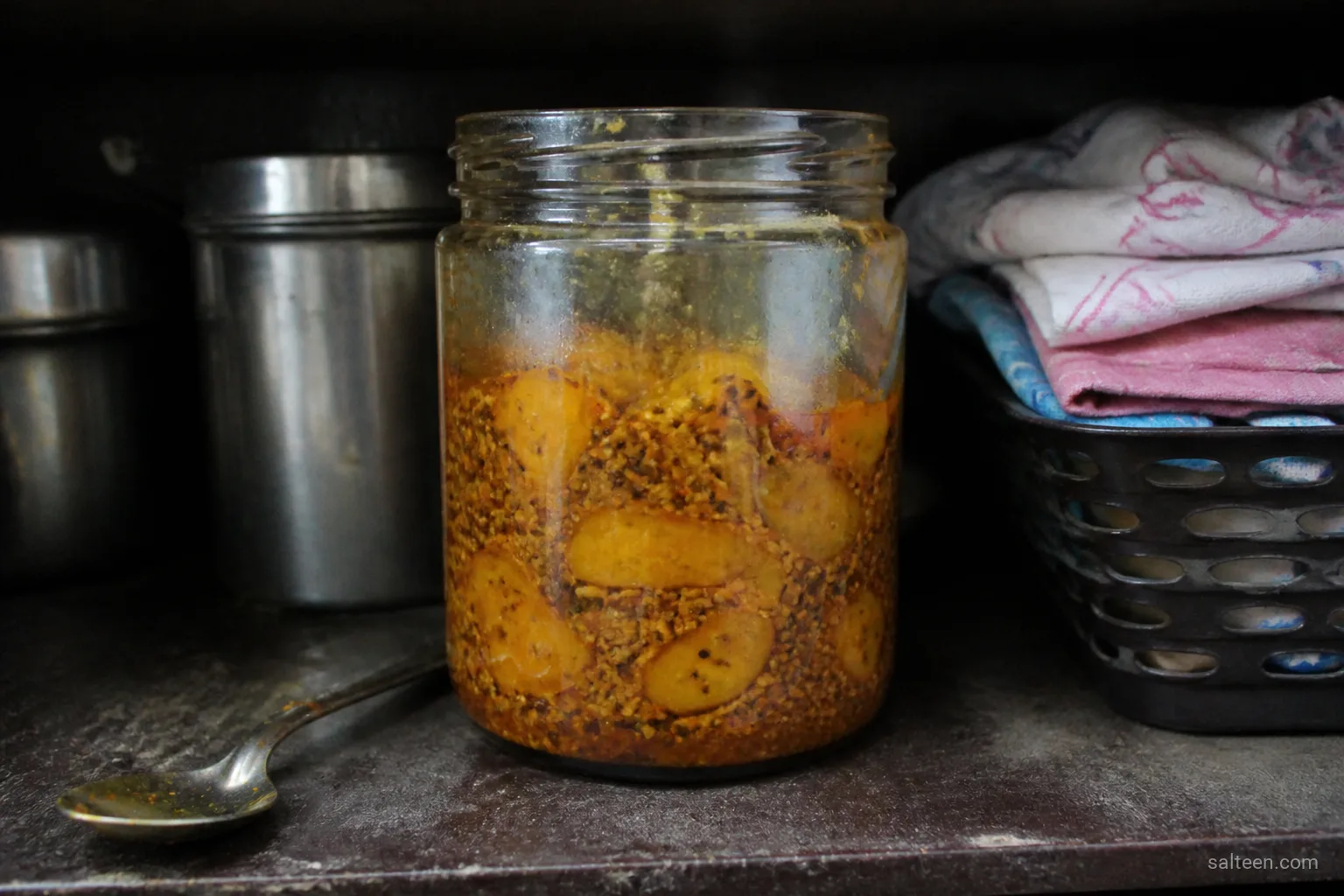
| Oil pickle (mango, mixed vegetable, garlic, green chilli) | About 6 to 24 months, sealed | One guide gives 6 to 24 months for oil based pickles. One marketplace listing shows 24 months. |
| Home batch of oil pickle, room temperature, glass jar | About 6 to 12 months | One recipe site, with the oil layer on top and a dry spoon. |
| Home batch of oil pickle, fridge | 12 months or more | Same site. The oil may solidify, which is normal. |
| Mixed vegetable pickle from fresh vegetables | About 3 months at room temperature, 4 to 5 months in the fridge | One recipe site, for a quick pickle with thin slices. |
| Brine or fermented pickle | About 1 to 6 months, refrigerate after opening | One guide. |
| Dry fruit pickle | About 6 to 12 months | One retailer’s guide, with the oil layer covering the fruit. |
| Pickled onions | About 4 to 6 weeks in the fridge | One pickle seller’s guide. |
| Poorly stored pickle (plastic, wet spoon) | As little as 2 to 3 weeks | One recipe site, with fungus likely. |
Sources disagree, and some of the longest figures come from sellers of pickle, who have a reason to give a long number. Read the table as a rough map and not as a promise.
What makes a jar last longer
Habits that matter most
- Keep the pieces under oil. If the oil level drops, top it up with the same oil the recipe used.
- Use a dry spoon, a clean one, every time. A wet spoon puts water into the jar.
- Choose glass. A kitchen guide says glass does not react, lets you see the oil layer and is easy to sterilise, while plastic soaks up oil and smell.
- Close the lid tightly and keep the jar in a cool, dark place away from damp.
- Use enough salt and oil. A traditional high salt, high oil achar can stay on a cool dark shelf, according to one storage guide, while low salt pickles do better in the fridge.
Fridge or shelf
The fridge slows the growth of mould, but it does not stop it, as the same storage guide notes. A traditional high salt and high oil achar can stay on a cool, dark shelf. A low salt pickle, or one with a lot of fresh vegetable content, is safer in the fridge. A brine or fermented pickle is better refrigerated once opened, as one guide advises.
In hot, humid weather the case for the fridge gets stronger. Monsoon air carries moisture, and every time a jar is opened some gets in. Oil can turn cloudy or solid in the fridge and this is normal, as one recipe site says.
Does pickle expire
Yes, in the sense that it can spoil, and the best before date exists for a reason. A trade site on Indian food puts it as simply as it can: achaar can go bad, however timeless it feels. A printed date is the maker’s estimate for a sealed jar stored as directed. Once a jar is opened, the date is less useful, because the way it is handled becomes the main factor.
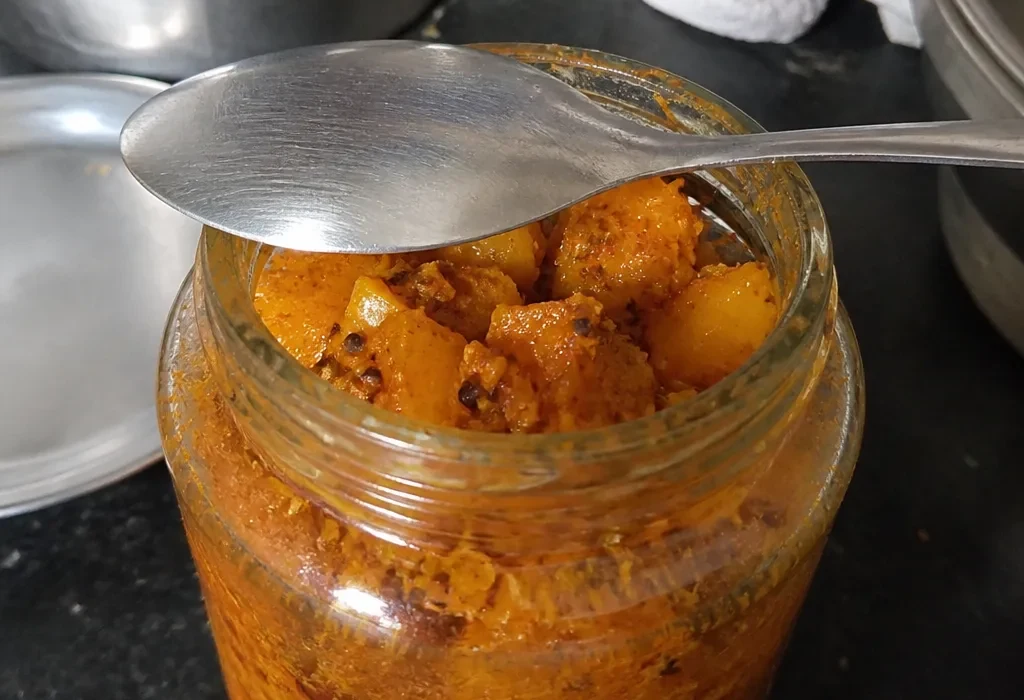
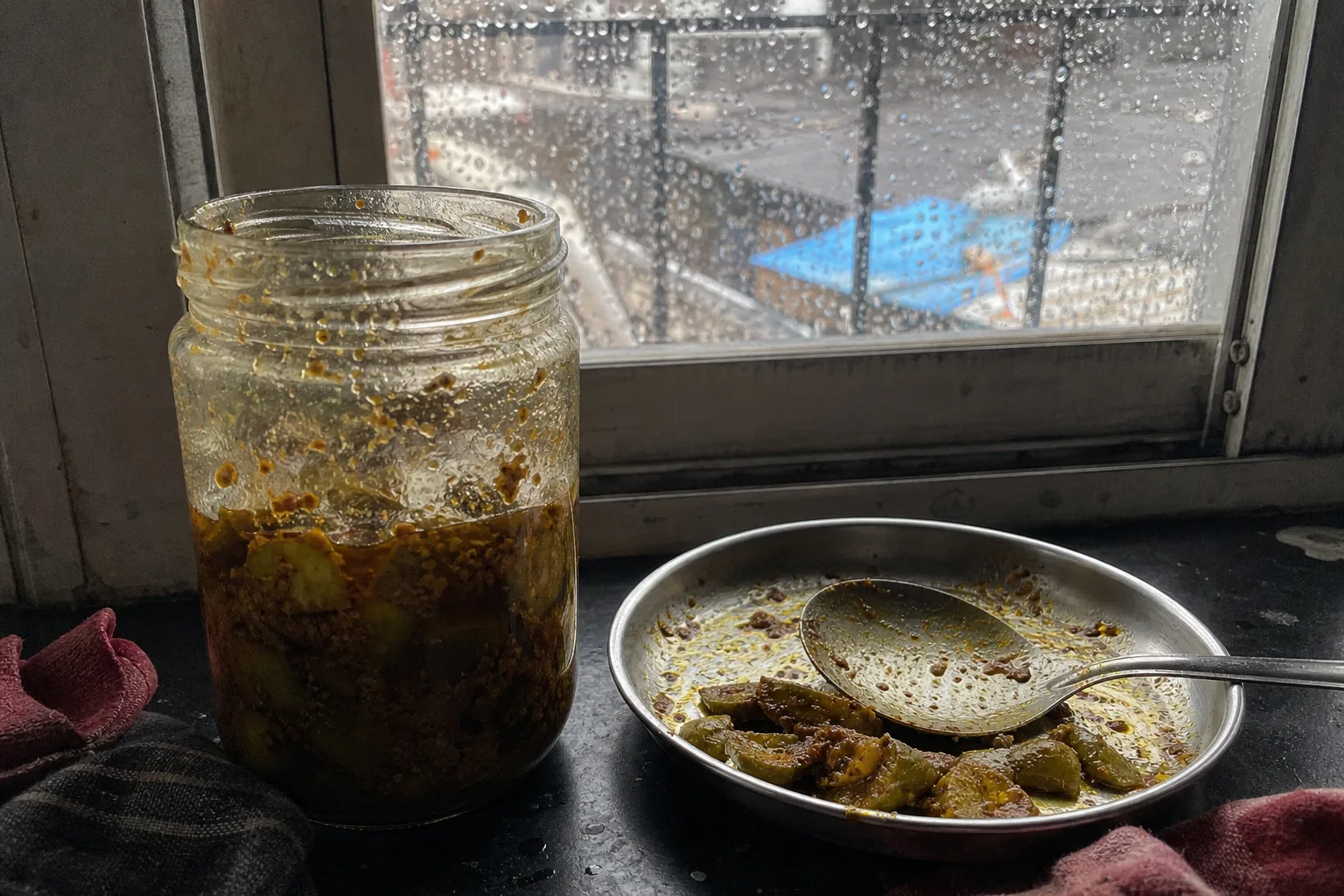
Some families keep jars for years, and Al Jazeera’s story describes pickles that are decades old. Those jars belong to families with their own methods. They are not a reason to treat a shop jar the same way, and we would not suggest eating an old jar that shows any sign of trouble. The signs are listed in our post on mould and yeast on achar. When in doubt, throw it out.
Storing homemade achar
If you have made a batch at home, three rules from the recipe sources apply most. Dry the vegetables or fruit fully before the oil goes on. Use enough salt and cover the pieces with oil, and top it up if the level drops. Keep the jar in glass and handle it with a dry spoon. For more on the first of these, see our post on gajar gobhi shalgam achar, where drying is the deciding step, and for the oil, our post on heating mustard oil for achar.
What to check on a shop jar
Shop packs carry a best before date and storage instructions on the label. One pickle seller’s guidance tells buyers to make sure the lid is still sealed when the jar is opened, to verify the best before date, and to follow the storage instructions printed on the label. We agree with all three. Use the date on the label as the guide and do not rely on a number from a blog.
Where to go next
For the full tradition of the jar, read our guide to Banarasi achar. The range from our kitchen is in the pickle and achar collection.
Frequently asked questions
How long does homemade achar last?
Sources report about 6 to 12 months for an oil pickle in a clean, dry glass jar kept cool, and longer in the fridge. A pickle made with fresh vegetables may last about 3 months at room temperature. A badly handled jar can spoil in weeks.
Does pickle expire?
Yes. Pickle can spoil, and shop jars carry a best before date. Treat the date on the label as the guide.
Should achar be kept in the fridge?
A traditional high salt, high oil achar can stay on a cool dark shelf. Low salt pickles and brine pickles are better in the fridge, and in hot humid weather the fridge is the safer choice for any jar.
Why has the oil level in my achar dropped?
If the oil level falls after a few weeks, top it up with the same oil the recipe used so the pieces stay covered.
How can I make my pickle last longer?
Keep the pieces under oil, use a dry spoon, store it in glass with a tight lid, and keep it in a cool, dark place.
Sources used for this post: Organic Mandya guides on mango pickle, types of pickles and dry fruit pickle; InstaCuppa guides on aam ka achaar, pickle storage in the monsoon and storage vessels; Archana’s Kitchen, shalgam gajar aur gobhi ka achar; SGR Foods, shelf life of homemade pickles; India Food Network, “Pickled to Perfection”; Al Jazeera, “India’s pickle people” (2023); Priya Foods storage guidance; FarmDidi shelf life note; a marketplace listing for mango pickle. Retailer figures are marketing claims as much as measurements and are quoted as given. Ranges are not promises.