Blog
Pickles and Mustard Oil in the Cooking of Eastern Uttar Pradesh and Banaras: A Reference Guide

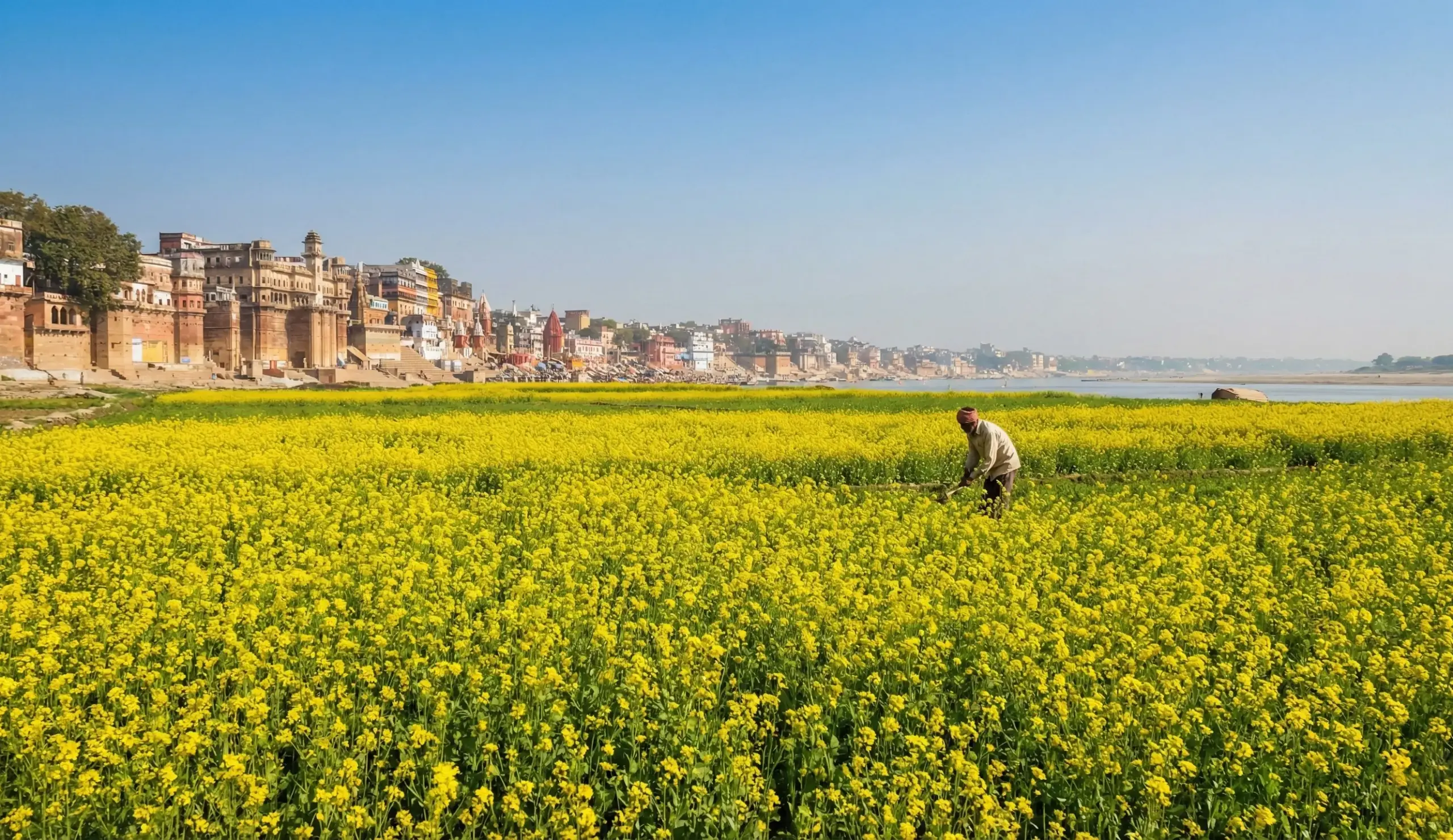
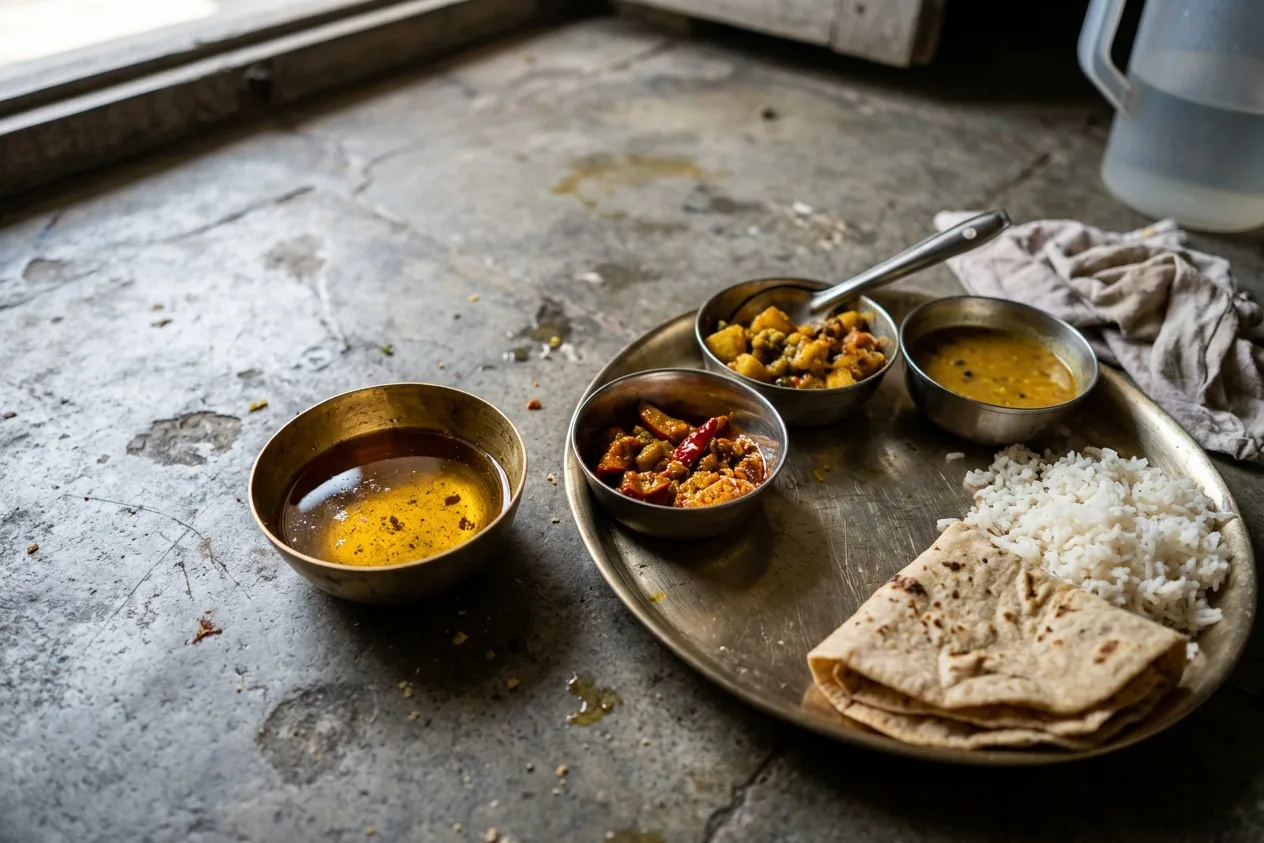
Mustard oil is described by food writers as the everyday fat of Banaras kitchens and the traditional pickling oil of northern India, and achar, the small preserved side dish, sits beside most meals in the region.
This guide gathers what published sources say about the two subjects together: mustard oil and the achar made with it. It is written as a reference. Every factual statement points to a source listed at the end, customs are described as customs, and nothing here is health advice.
Scope
“Eastern Uttar Pradesh” here means the Purvanchal and Bhojpuri-speaking districts that border Bihar, with Varanasi (Banaras) as the reference city. The sources do not draw this boundary precisely, and several describe pickling in northern India or Uttar Pradesh as a whole. Where a source speaks only for the state or for north India, this guide says so.
Mustard oil
What it is and how it is pressed
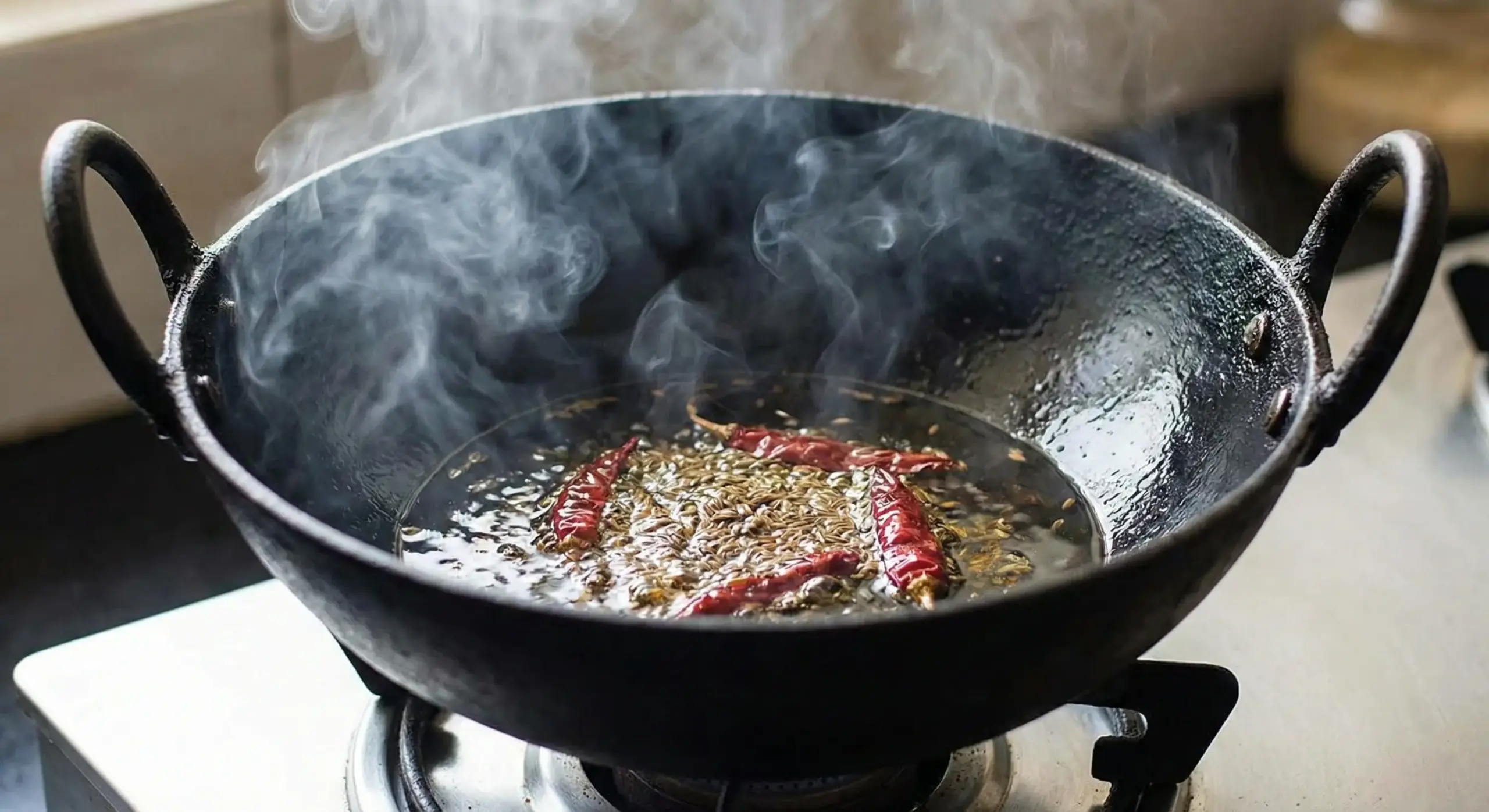
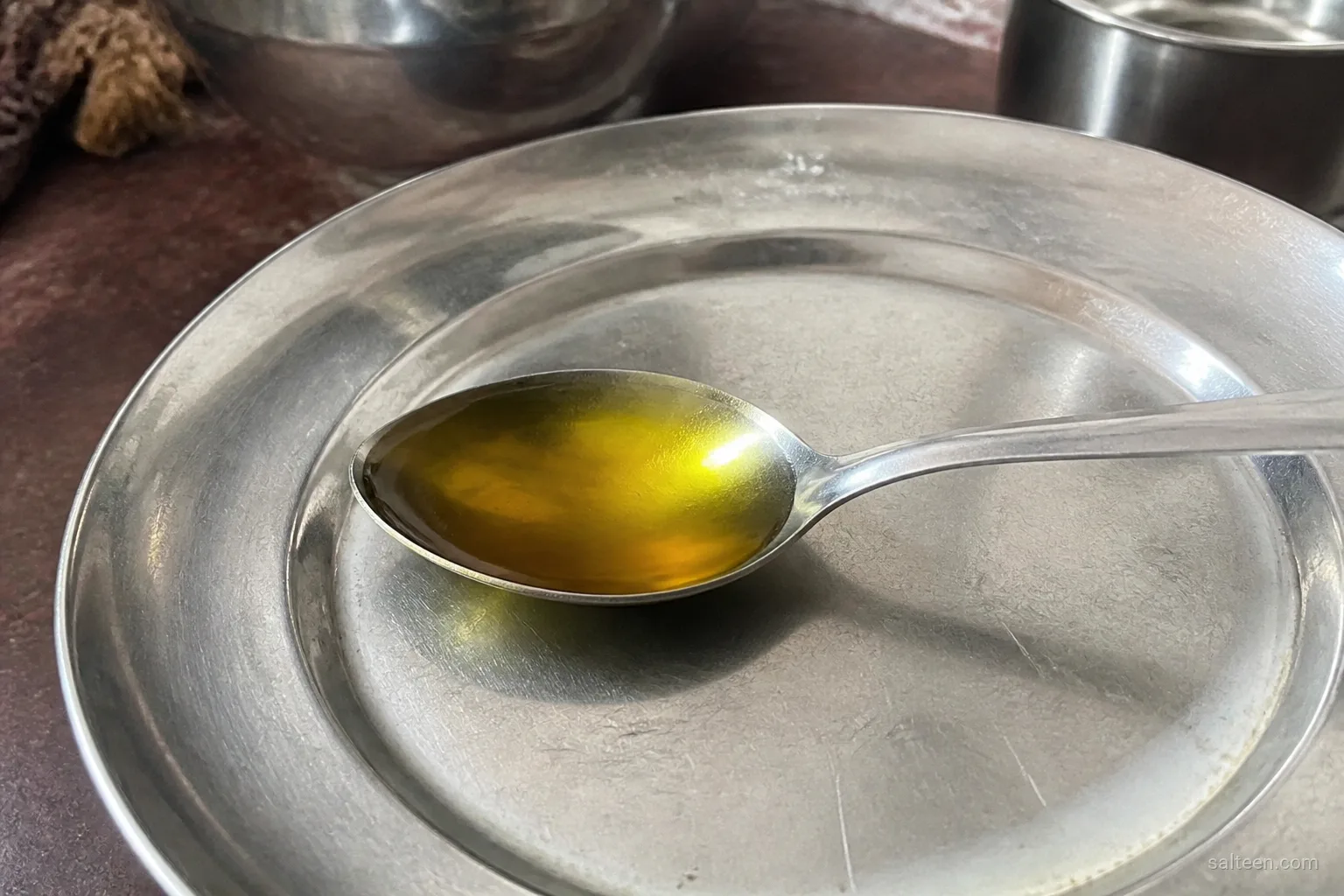
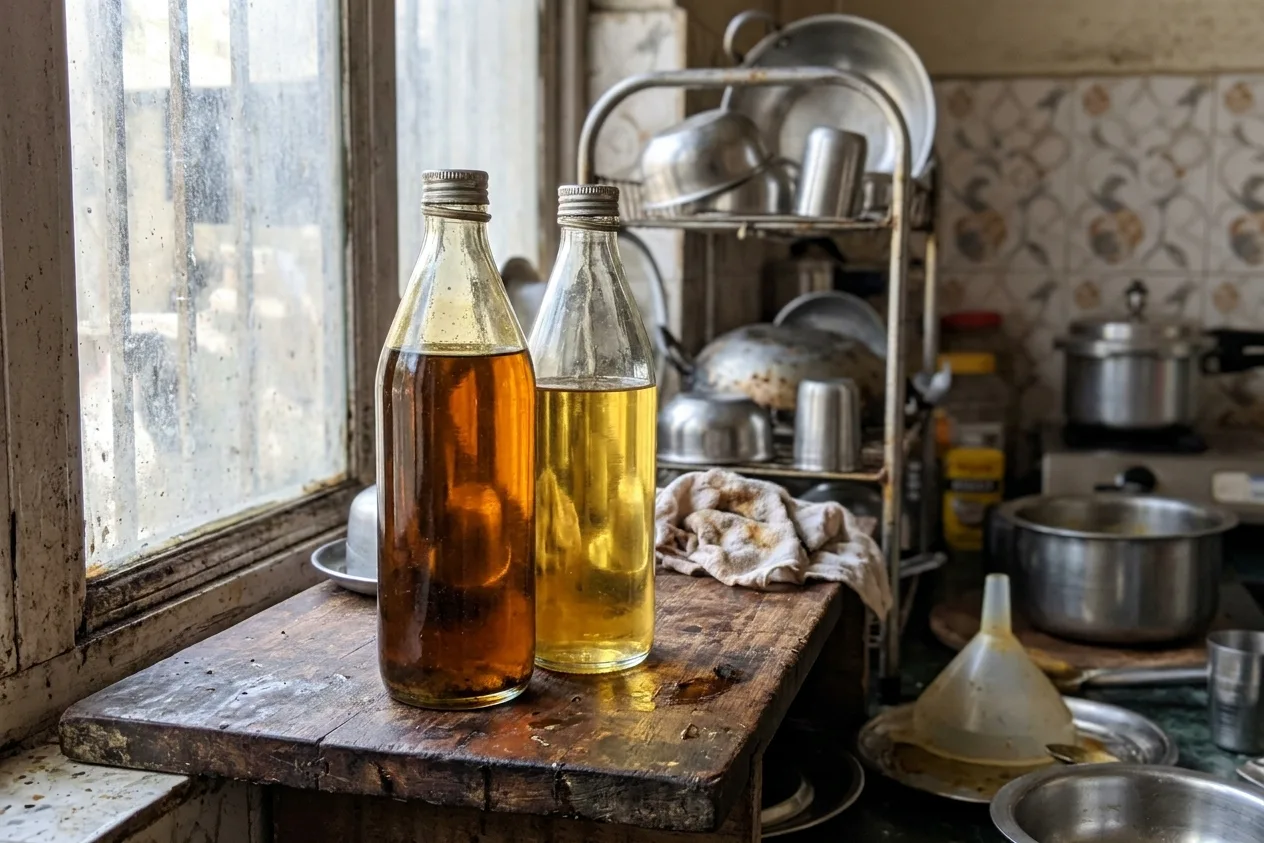
Mustard oil, called sarson ka tel, is pressed from mustard seed. Mustard is a cool-season crop of the Gangetic plain. The traditional press is the kolhu or kacchi ghani, a wooden mortar turned by a bullock and now commonly by a motor. A Consumer Voice report on kachi ghani oils describes the method as crushing the seeds at low temperature so that natural properties and essential oils are retained. Modern oils sold as kachi ghani are often pressed in steel expellers that follow the same low-temperature idea.
Why it is sharp
The pungency comes from allyl isothiocyanate. A University of Birmingham chemistry feature describes the compound, derived from sinigrin in mustard seeds, as activating receptors in the tongue that signal heat and pain, and notes that horseradish and wasabi release the same compound. In Indian regulation the compound has a legal role: the Food Safety and Standards Authority of India (FSSAI) allows an oil to be labelled “Kachi Ghani” or “Cold Pressed” only if its natural allyl isothiocyanate content is not less than 0.20 percent by weight.
The rules on blending and composition
The FSSAI prohibited the blending of mustard oil with other edible oils from 8 June 2021, according to a Rajya Sabha reply, ending an earlier allowance for mixing up to 20 percent of another oil. FoodNavigator reports that the industry welcomed the change as a way to prevent adulteration, since the oil’s pungency and colour make other oils easy to disguise.
Mustard oil from most Indian varieties is high in erucic acid, a point Down To Earth raises in its coverage of the regulatory debate. Some international standards set much lower limits. The question of low-erucic varieties and of different national limits is still argued among regulators and producers, and this guide takes no position on it.
How cooks use it
In Banaras the oil is rarely used raw. The widely described step is to heat it in an iron kadhai until a light haze of smoke rises, take it off the heat for a moment, and then add whole spices such as cumin or fenugreek seeds and the vegetable. Cooks describe this as removing the raw bite while keeping the character of the oil. The method is reported as kitchen practice, not as a laboratory-tested technique. One retail guide gives the smoke point of cold-pressed mustard oil as about 250 degrees Celsius, a figure that varies by source.
Writers on Varanasi food note that the city’s snacks are cooked in either mustard oil or desi ghee. In home kitchens the pattern commonly described is mustard oil for the everyday vegetable and winter cooking, and ghee for festive food, finishing and offerings. Mustard oil is also the traditional pickling oil of northern India, as the sections below describe. For a longer account of the cooking side, see mustard oil in Banaras cooking.
Achar: the preserved side dish
The method
A pickle in this tradition is a small portion of strongly flavoured preserved produce served beside the main meal. A widely described home method has three stages that reinforce each other:
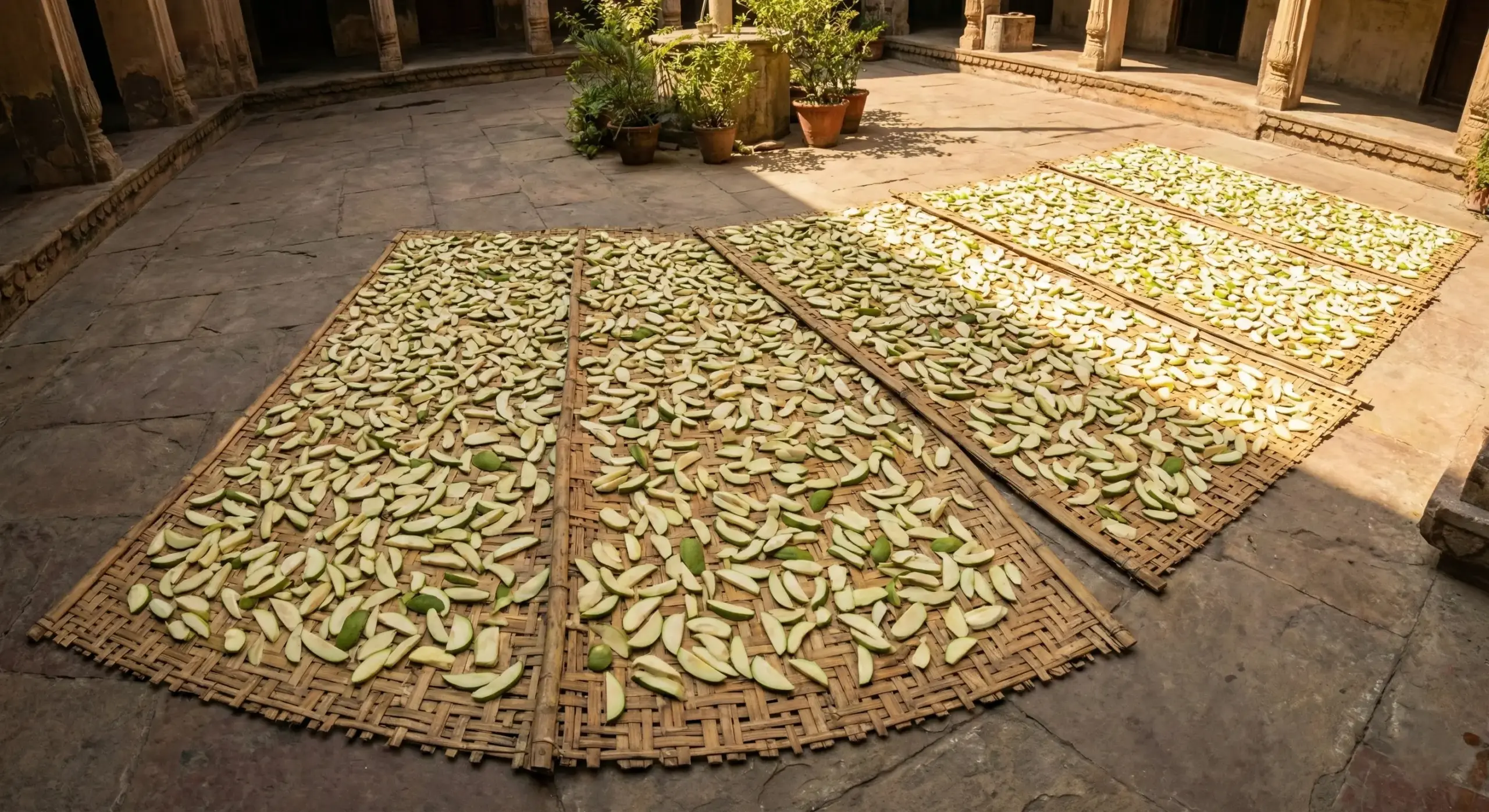
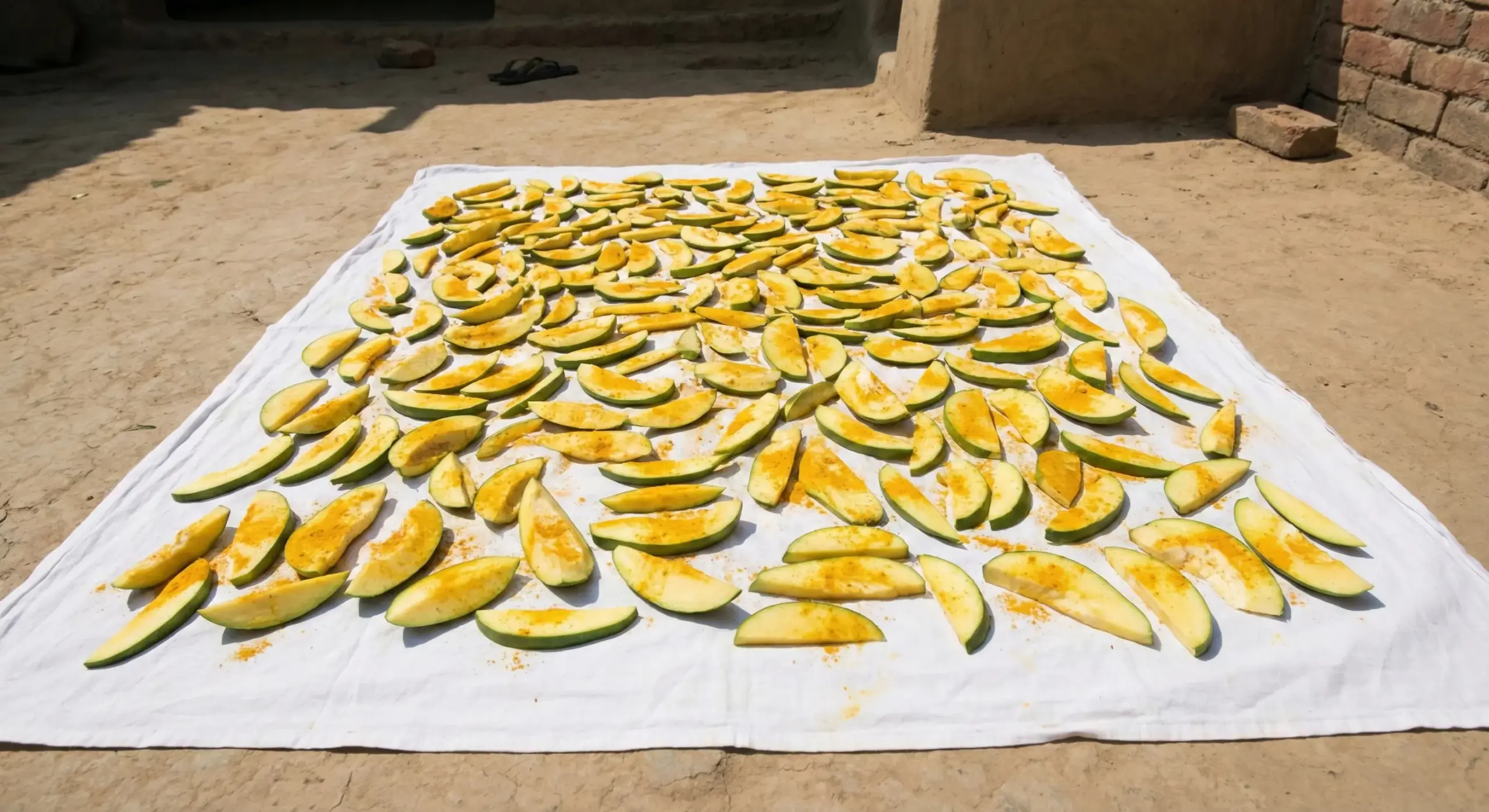
- The cut produce is rubbed with salt, which draws out moisture.
- It is spread in strong sun to dry further.
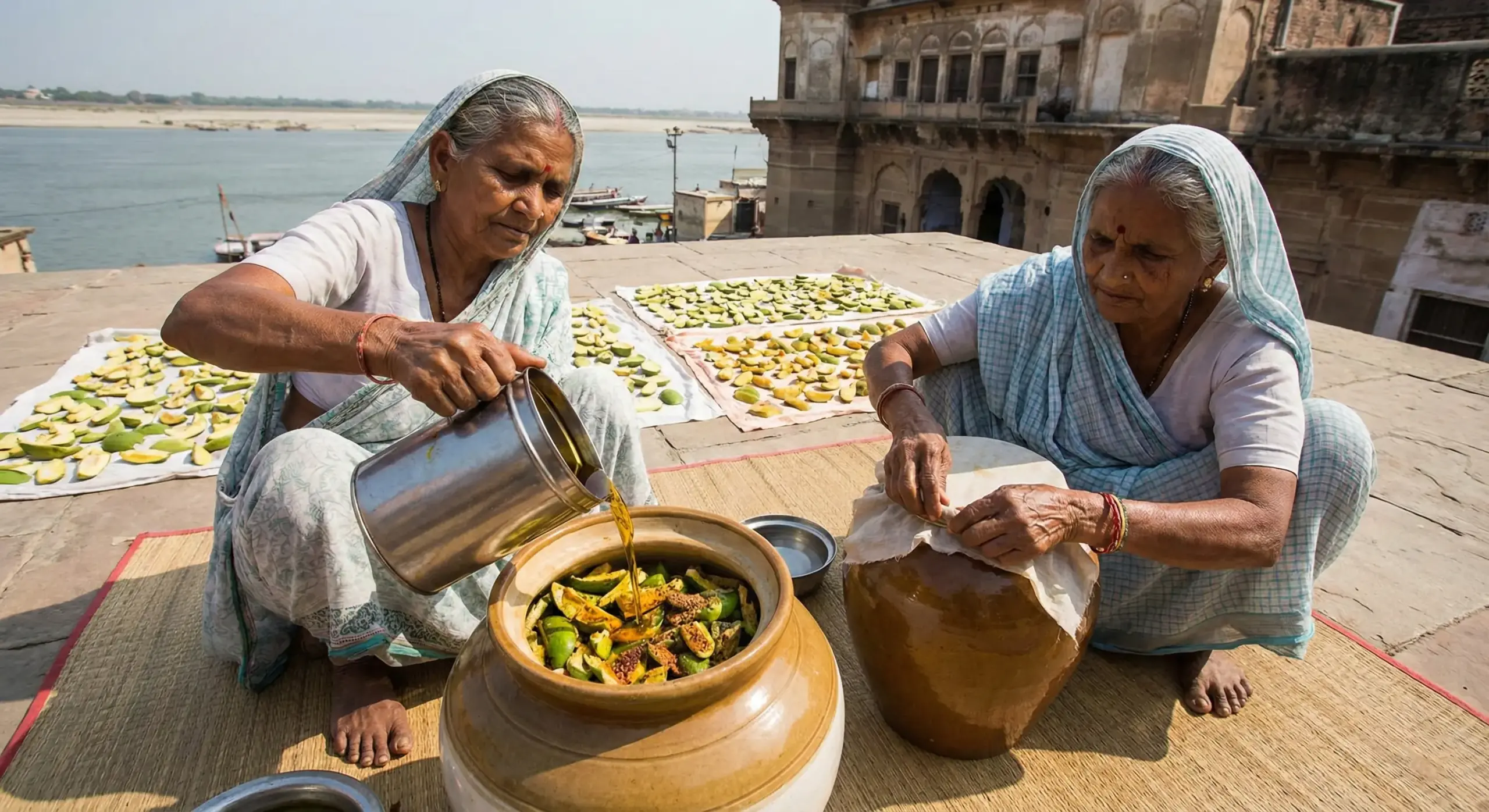
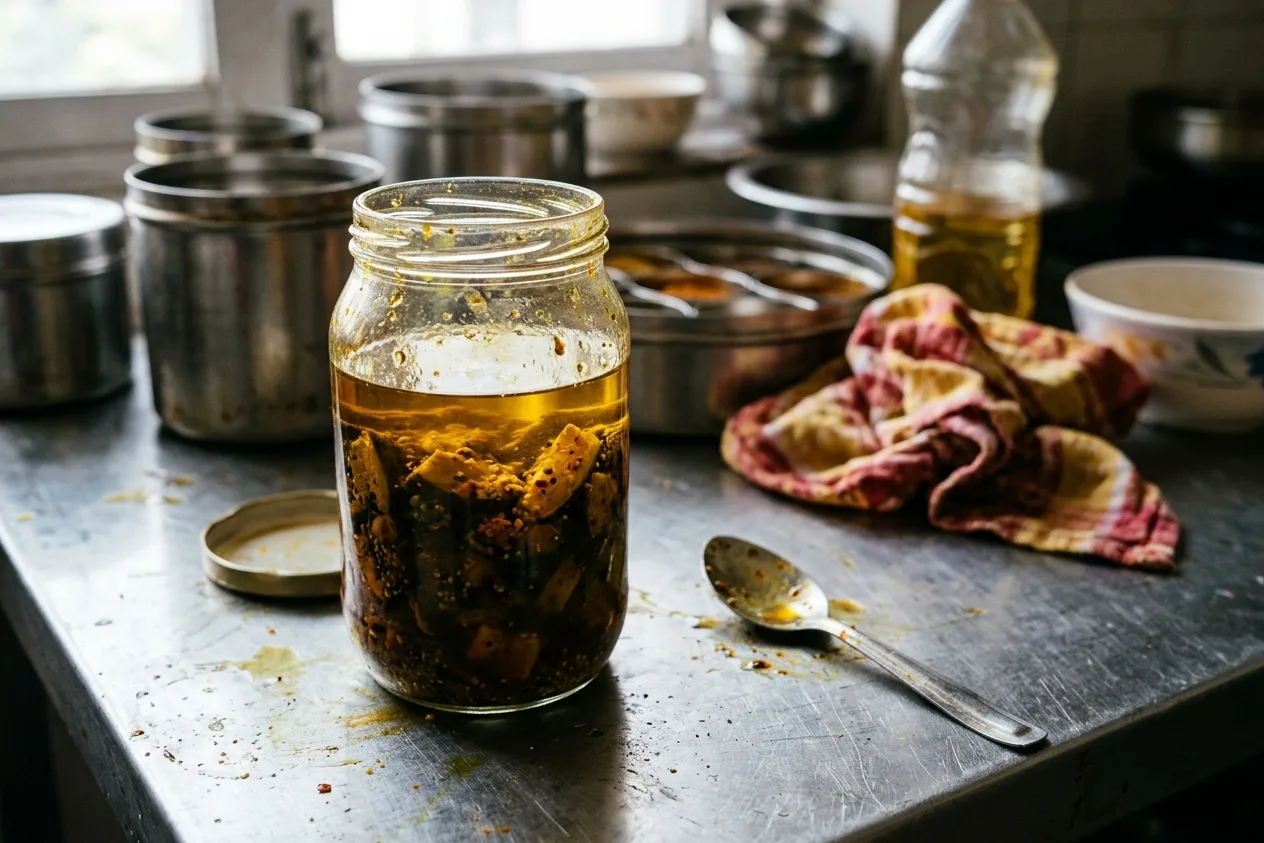
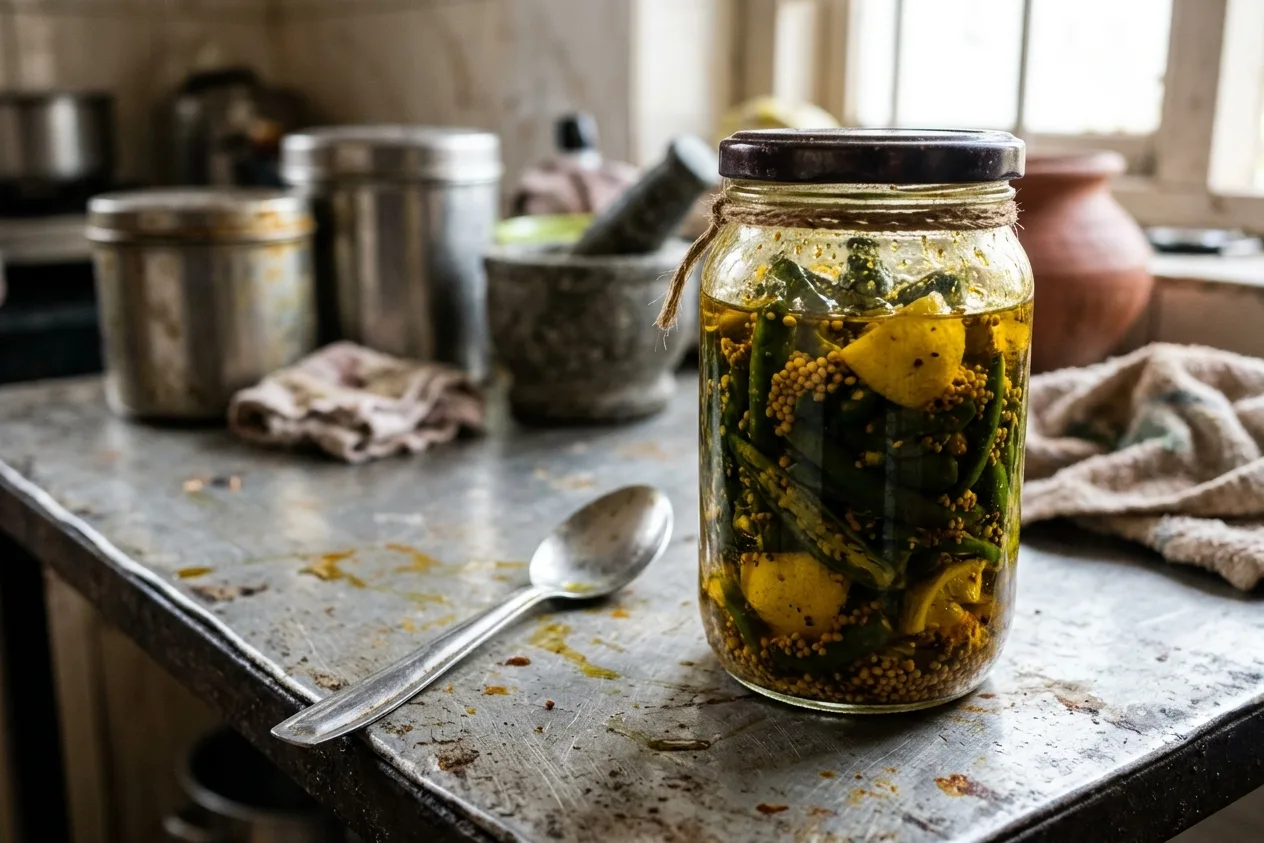
- It is mixed with spices, covered with mustard oil, and packed into a jar.
For pickles the oil is commonly heated to smoking, cooled fully and then poured over the dried produce, because hot oil on damp produce traps moisture. Pickle makers across India describe dry produce, clean dry tools and enough salt and oil as the conditions that matter. The reasons are explained in how oil preserves food in Indian kitchens.
Spices
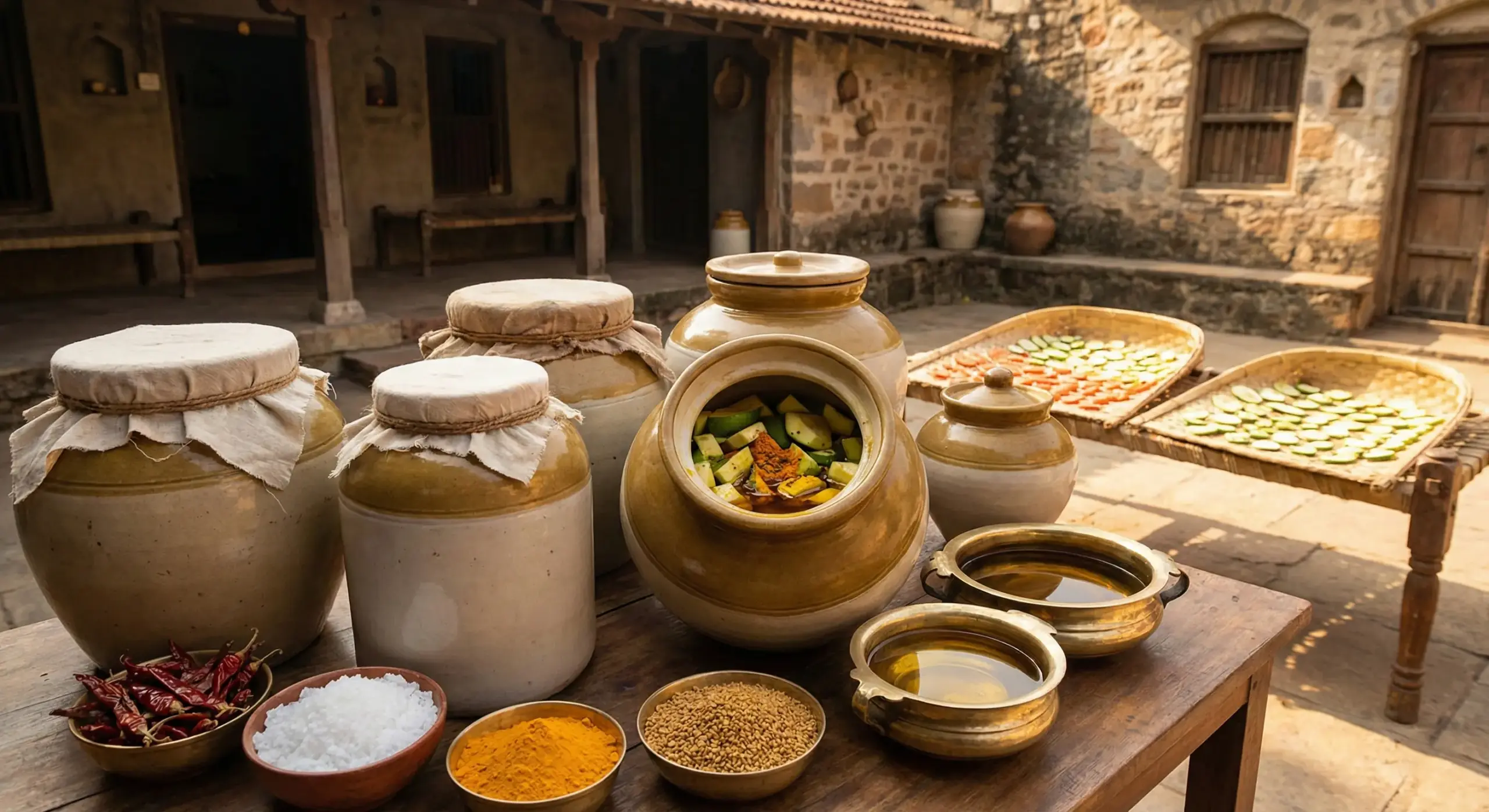
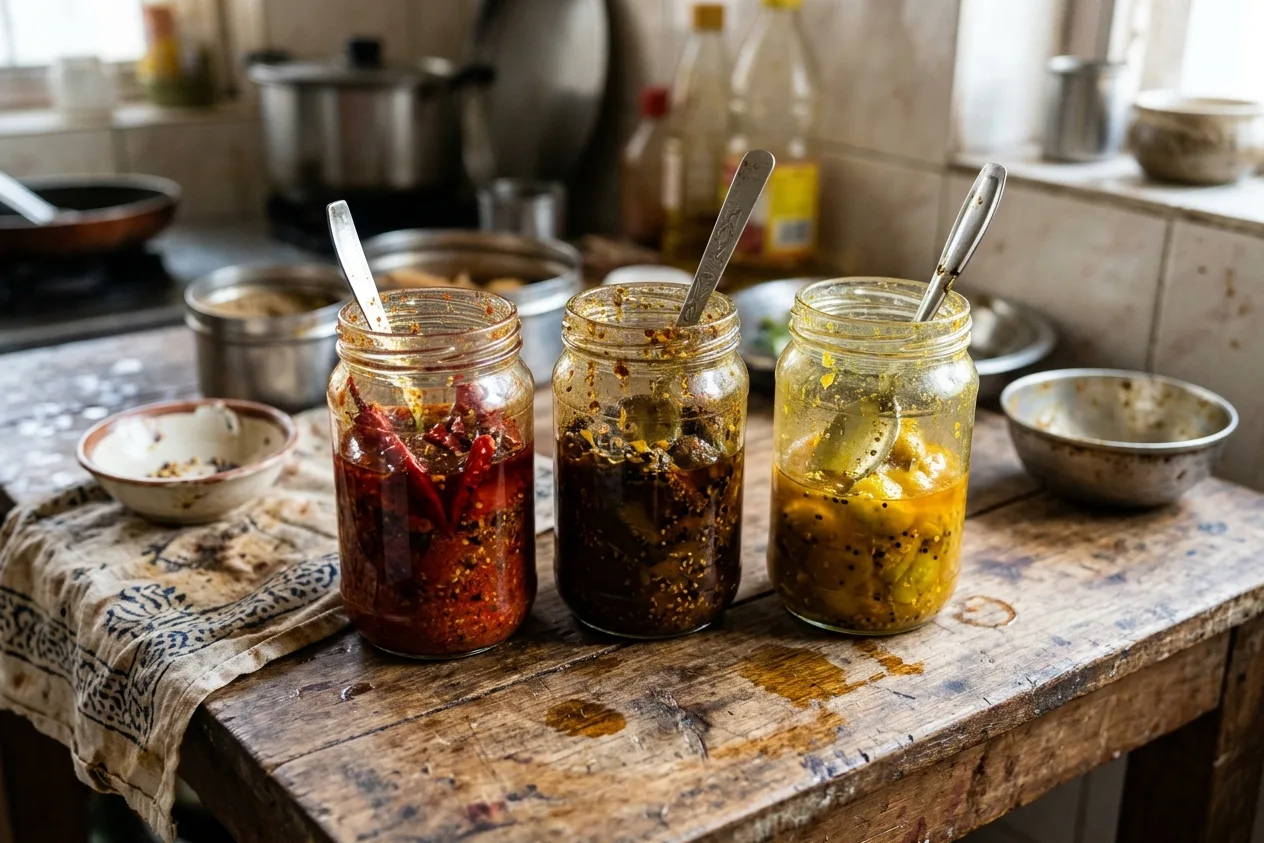
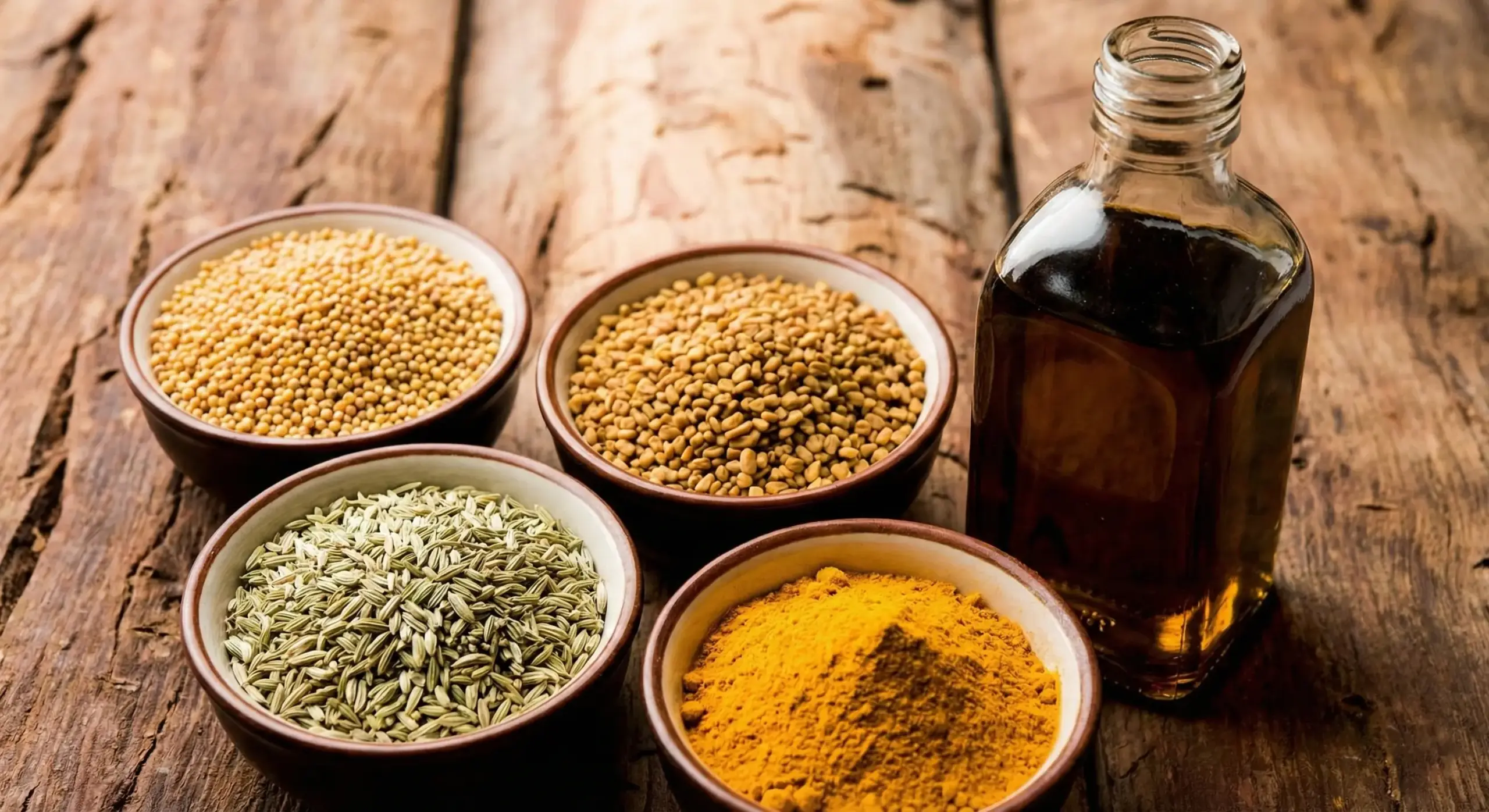
The spice mixtures named in the sources for northern Indian oil pickles include fenugreek, fennel, nigella, mustard seed, turmeric and chilli. Which of them appear, and in what proportion, differs from household to household, and published recipes disagree. A household’s mixture is often treated as its own, passed on by watching and helping through the pickling days instead of by a written recipe.
Jars and handling
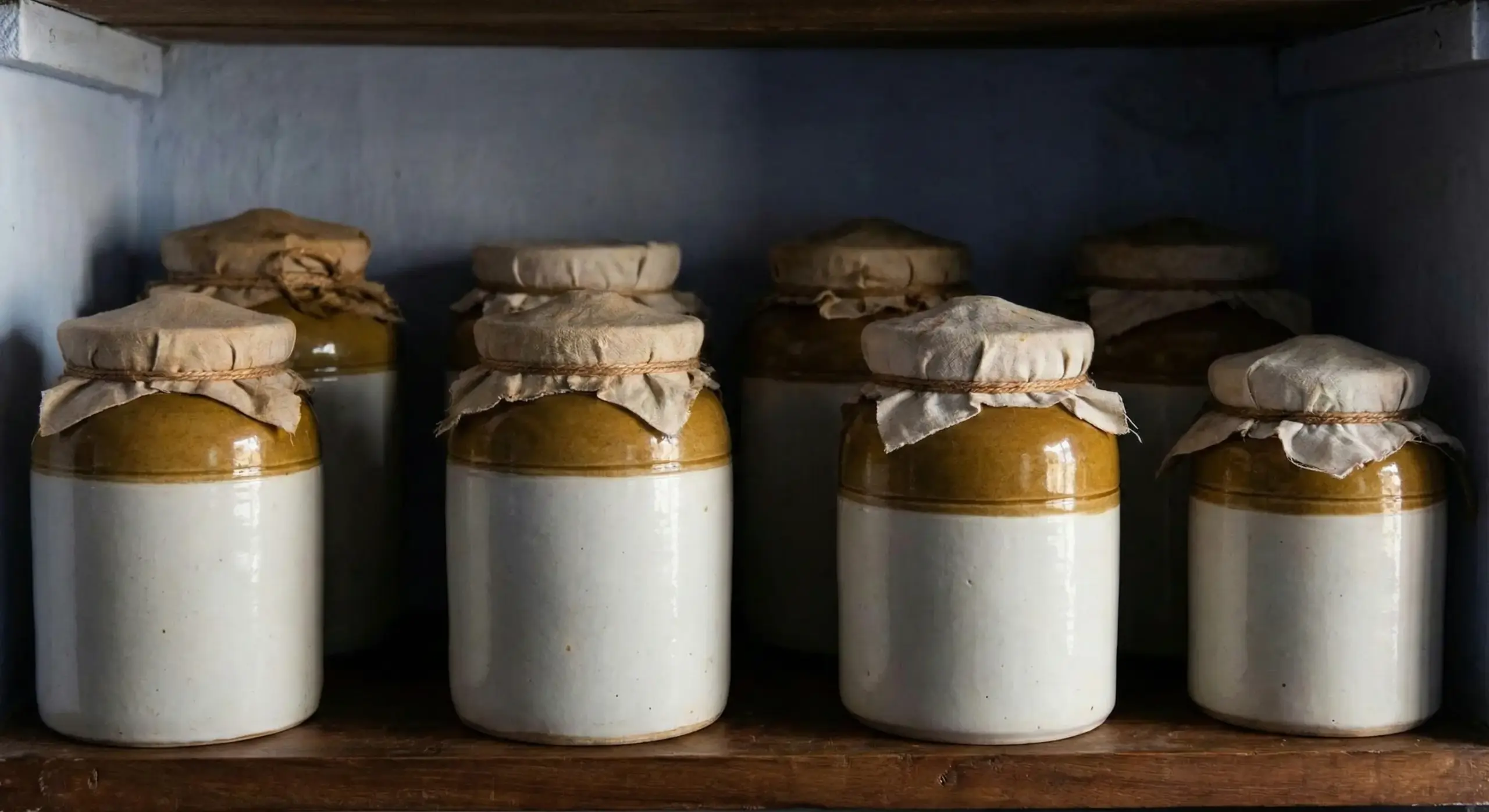
The vessel commonly described is a glazed ceramic jar with a wide belly and a narrow mouth, known as a martaban, covered with cloth and a lid. Handling habits reported by the sources include opening the main jar rarely, moving a small portion into a serving bowl, using a dry clean spoon, and keeping the jar in a cool dry place. A wet spoon is a frequently cited cause of spoilage.
The pickle calendar of Uttar Pradesh
Sources describe two peaks of pickle making, one in summer and one in winter, with smaller preparations between them.
| Season | What is pickled | Source support |
|---|---|---|
| Roughly March to June | Raw mango (kairi), tender jackfruit (kathal), mango launji, galka | Several recipe and feature sources |
| Monsoon | Little is made; stored jars are used and tended | Described as practice |
| Autumn into winter | Amla, carrot, cauliflower, turnip, black carrot kanji | Recipe and magazine sources |
| Roughly December to March | Stuffed red chilli, mixed vegetable pickle | A seller’s product page and a recipe site |
The calendar moves with weather and with local custom. For a fuller month-by-month account, see seasonal pickles of Uttar Pradesh.
The main pickles
Raw mango
Raw mango is the anchor of the summer peak. An Asia Media Centre feature on mango season says it plainly: raw Totapuri, or kairi, meant pickle season. Uttar Pradesh is a major mango-growing state, and Boldsky describes heritage mango varieties of the state. Not every raw-mango preparation is a long-keeping oil pickle. Maayeka describes aam ki launji as a sweet and sour preserve of raw mango with mild spices, popular in Uttar Pradesh, with raw mango and sugar in equal weights. It describes aam ki achari as a sweet and spicy grated mango pickle. See also mango pickle traditions in Banaras.
Galka
Curly Tales describes galka as a traditional food item of eastern Uttar Pradesh made from unripe mango, jaggery or sugar and a handful of aromatic spices. The article places it in the east of the state and does not name Banaras.
Kathal
Tender jackfruit comes into the market with raw mango. The Cuisine India Society calls kathal ka achaar a North Indian pickle made with tender raw jackfruit and mustard oil, and recipe pages describe boiling or steaming the jackfruit until just tender before drying, spicing and oiling it.
Stuffed red chilli
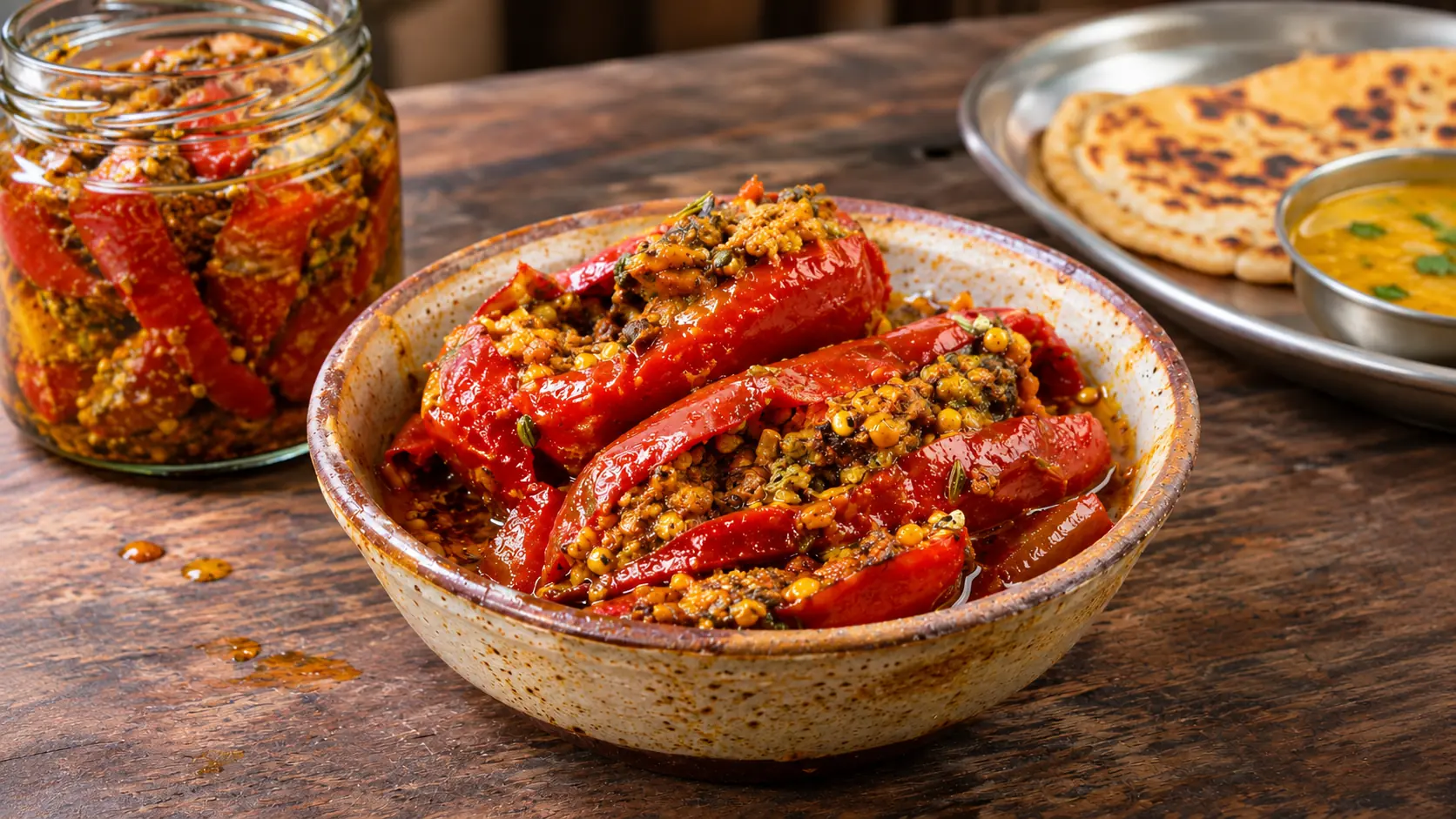
Stuffed red chilli pickle is the winter pickle most often tied to Banaras. Veg Recipes of India says the style is famed in India and describes tasting it on a trip to Kashi. Homegrown includes a stuffed red chilli pickle among Uttar Pradesh’s pickles, describing red chillies infused with powdered spices, with fennel and mustard oil inside the crisp chilli. A recipe from Aahaaram for the Uttar Pradesh style stuffs about twenty large red chillies with powdered mustard, fennel and fenugreek and packs them into a completely dry glass or ceramic container.
Winter vegetables
A Slurrp feature on winter pickles quotes a chef saying that the cauliflower, carrot and turnip pickle is found in every north Indian household. A Maayeka recipe notes that kanji, a fermented drink and pickle liquid, is made in winter when purple or fresh red carrots are available. The same Slurrp feature warns that if there is moisture in the vegetables, the pickle will spoil.
Amla
Amla appears among the pickles of Uttar Pradesh in a Homegrown list, which names amle ki launji. The sources read for this guide do not fix a month for it, so it is placed broadly in the cold season.
Safety notes
Pickles made with dried produce and plenty of salt, acid or sugar behave differently from vegetables or herbs simply stored under oil. Food safety agencies treat vegetables and herbs kept in oil as a particular concern. Cornell Cooperative Extension, Penn State Extension, Health Canada and a review in Food Protection Trends all describe the risk of the bacterium that causes botulism growing in low-acid produce stored in oil without enough salt, acid or drying, and advise following tested recipes and storage instructions. Anyone making garlic, mushroom or other low-acid vegetable preparations at home should follow that guidance. Readers buying pickles should follow the storage instruction on the label, such as refrigerating after opening where it says so.
What the sources do not settle
- Dates and origins. The sources read for this guide do not give a reliable date for when pickling in mustard oil became standard in the region.
- Banaras specifically. Many recipe and feature sources describe Uttar Pradesh or north India in general. Where a source names Banaras or Varanasi, this guide says so, and where it does not, it does not claim one.
- Proportions. Published recipes differ on salt, oil and spice quantities, and none is treated here as the standard.
- Health effects. Traditional beliefs about pickles and mustard oil exist, and this guide does not assess them.
Frequently asked questions
What is kachi ghani mustard oil?
Oil pressed from mustard seed at low temperature. Under the FSSAI standard it may carry the label only if its natural allyl isothiocyanate is at least 0.20 percent by weight.
Is blended mustard oil allowed in India?
No. The FSSAI prohibited blending mustard oil with other oils from 8 June 2021.
Why is mustard oil heated before cooking?
Cooks heat it until it just smokes to take away the raw sharpness. This is a traditional kitchen practice.
When are pickles made in Uttar Pradesh?
Sources describe a summer peak of raw mango and jackfruit and a winter peak of vegetables and stuffed red chilli.
What is galka?
A sweet and spiced preparation of unripe mango with jaggery or sugar, described by Curly Tales as a food of eastern Uttar Pradesh.
What is stuffed red chilli pickle?
Large red chillies stuffed with a spice mixture such as mustard, fennel and fenugreek and preserved in mustard oil. It is the winter pickle most often tied to Banaras.
What is a martaban?
A glazed ceramic jar with a wide belly and narrow mouth traditionally used to store pickles.
Sources used for this post:
– University of Birmingham, Molecule of the Month: Allyl Isothiocyanate
– NCBI Bookshelf, “Mustard Oil and Capsaicin as Chemical Probes for the Pain Pathway”
– FSSAI, Food Safety and Standards Authority of India (standard for fats and oils, Kachi Ghani label rule)
– FoodNavigator and DNA India (mustard oil blending ban); Rajya Sabha reply, 11 February 2025
– Consumer Voice (kachi ghani brand study)
– Down To Earth (erucic acid debate)
– 30 Stades (Varanasi street food fats)
– Organic Mandya (smoke point figure, quoted as given)
– Asia Media Centre, “The Taste of Summer: Why Mango Season Matters in India”
– Boldsky, “5 Heritage Mango Varieties of Uttar Pradesh”
– Maayeka, Aam ki Achari / Launji
– Maayeka, Kanji ka mixed vegetable pickle
– Curly Tales, “Aam Ka Galka”
– Cuisine India Society, Kathal Ka Achaar
– Veg Recipes of India, Red Chili Pickle
– Homegrown, “18 of India’s Most Unique Pickles”
– Aahaaram, UP Style Bharwan Lal Mirch ka Achaar
– Slurrp, “Winter in a Jar”
– Nummer, Schaffner, Fraser and Andress, “Current Food Safety Issues of Home-prepared Vegetables and Herbs Stored in Oil,” Food Protection Trends, 2011
– Cornell Cooperative Extension, “Herbs and Vegetables in Oil”
– Penn State Extension, “How to safely make infused oils”
– Health Canada, “Food safety tips for vegetables and herbs in oil”