Blog
The Role of Fermentation in Indian Pickles

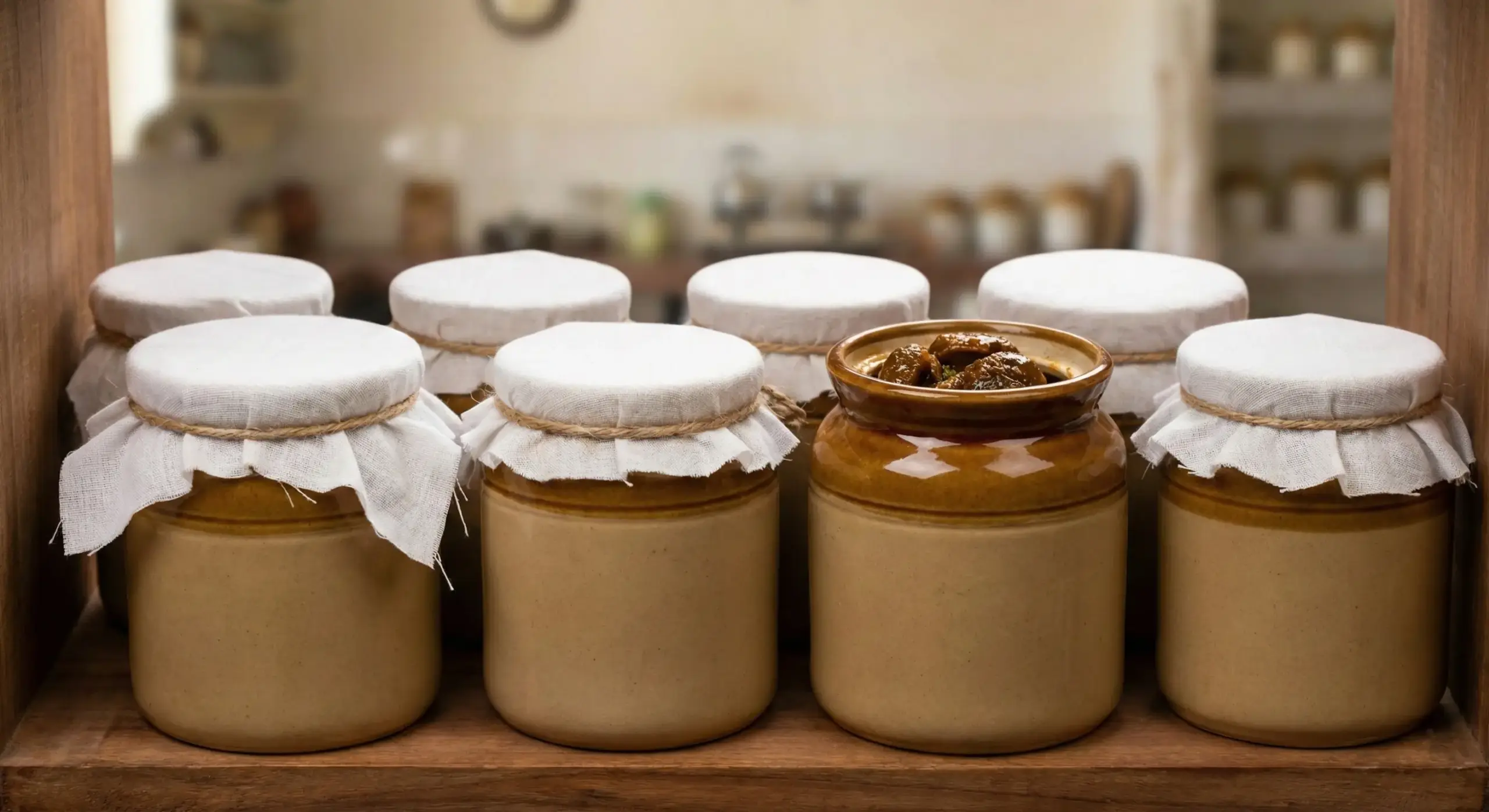
In a 2019 study published in Nutrition & Food Science, researchers prepared kanji, vegetable pickles and curd under controlled conditions, stored them at room temperature, and counted lactic acid bacteria over their shelf life. Counts ranged between 10 to the sixth and 10 to the eighth colony-forming units per gram in every product. The study is a useful starting point because it separates a question that casual writing blurs: which Indian pickles are fermented, and what that fermentation actually is.
This guide sorts Indian pickles into the ones that ferment, the ones that are mostly cured, and the ones that do a bit of both, and it explains what fermentation contributes to taste.
The short answer
In short
Some Indian pickles are genuinely fermented, such as brine pickles, kanji and dry-salted lime pickle, where lactic acid bacteria turn natural sugars into acid. Many oil-and-spice pickles, including a typical Banarasi mango achar, are better described as salt-cured, sun-matured and oil-sealed, and how much true fermentation occurs inside them varies by recipe. Fermentation adds sourness and flavour. We make no health claim for any pickle.
What fermentation is, in plain terms
Wikipedia’s entry on pickling puts the process simply. Sauerkraut and kimchi are made by salting vegetables to draw out excess water, and natural fermentation at room temperature by lactic acid bacteria produces the required acidity. The same entry notes that when salt concentration and temperature are low, Leuconostoc mesenteroides dominates and produces a mix of acids, alcohol and aroma compounds, while at higher temperatures Lactobacillus plantarum dominates and produces mostly lactic acid.
The practical result is a fruit or vegetable that turns sour, develops new aroma and becomes safer to keep as the acid level rises. A review of Himalayan pickles (PMC5897286) describes pickling as preserving food under low pH conditions using brine, vinegar or other acid. Fermentation is one route to that low pH, vinegar is another, and the natural acid in raw mango, lemon or amla is a third.
Pickles that are fermented
Three kinds of Indian pickle count as fermented in the usual sense.
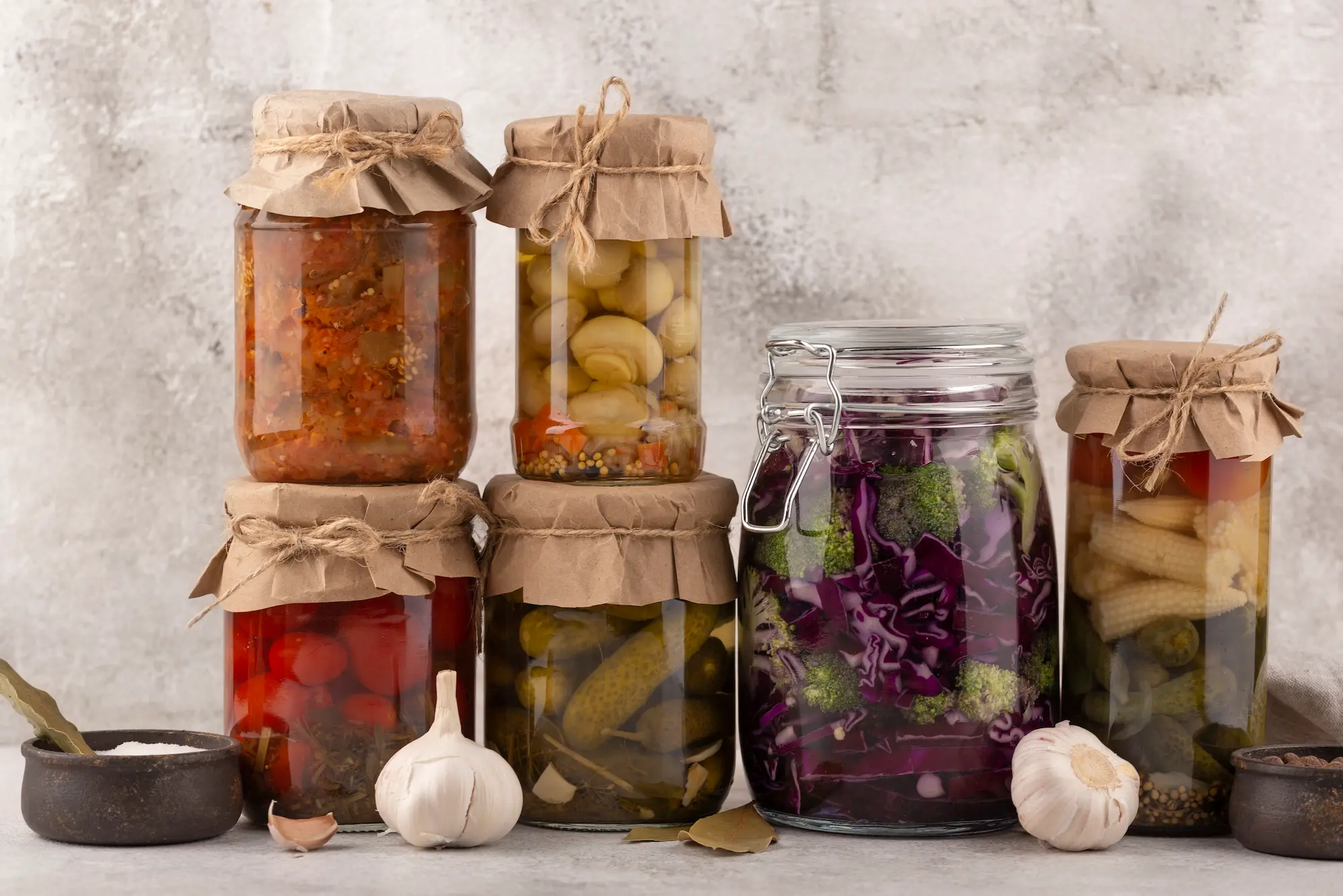
Brine pickles. Vegetables submerged in salt water, often with spices, ferment as the bacteria work. Slurrp’s piece on lacto-fermentation lists cucumber, carrots (black and orange), gooseberries, chillies and even garlic as ingredients used. It adds that unlike pickles made with oil and spices that last an entire year, lacto-fermented pickles have a shorter shelf life of four to six months, a claim it makes without citing a study, so we treat it as a rough rule rather than a guarantee.
Kanji. A traditional Indian fermented preparation. The Nutrition & Food Science study above analysed kanji alongside curd and vegetable pickles as traditional Indian fermented products.
Dry-salted lime pickle. The FAO’s description of dry-salted lime pickle is the clearest account of fermentation in an Indian-style pickle. Ripe limes are treated with dry salt, which extracts juice and creates a brine. According to the FAO, the brine forms in about 24 hours, the container is then placed in the sun for a week, and as soon as the brine is formed, fermentation starts and bubbles of carbon dioxide appear. Fermentation takes between one and four weeks depending on temperature, and is complete when no more bubbles appear. The limes can then be removed and packed in a mixture of vinegar and spices or oil and spices. The FAO notes that because of the high acid level of the final product, the risk of food poisoning is low.
That FAO sequence matters because it shows oil and fermentation working in order: first the food ferments and acidifies in brine, then it is packed in oil and spice. How oil preserves food in Indian kitchens explains why the order is important.
Pickles that are mostly cured
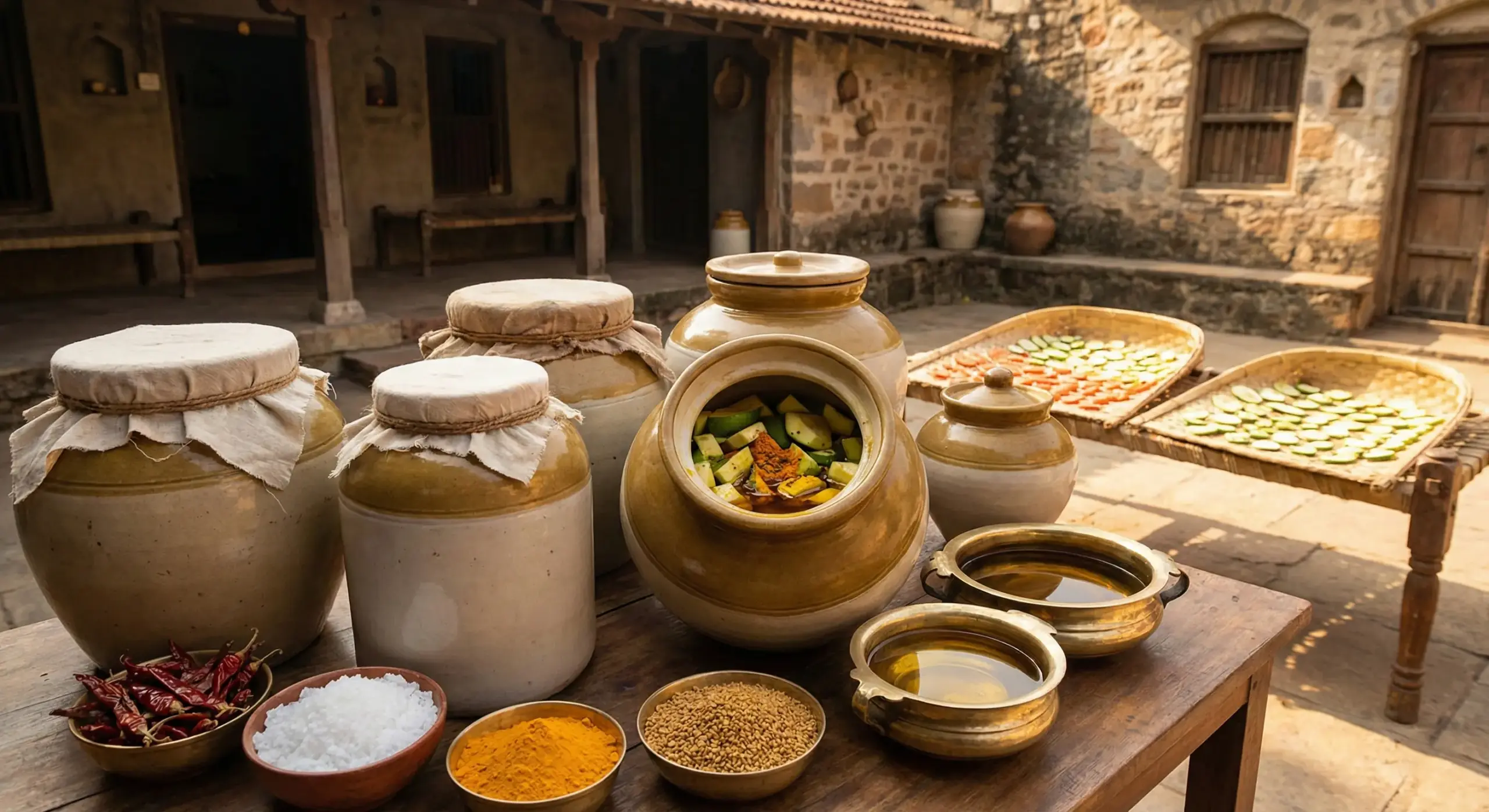
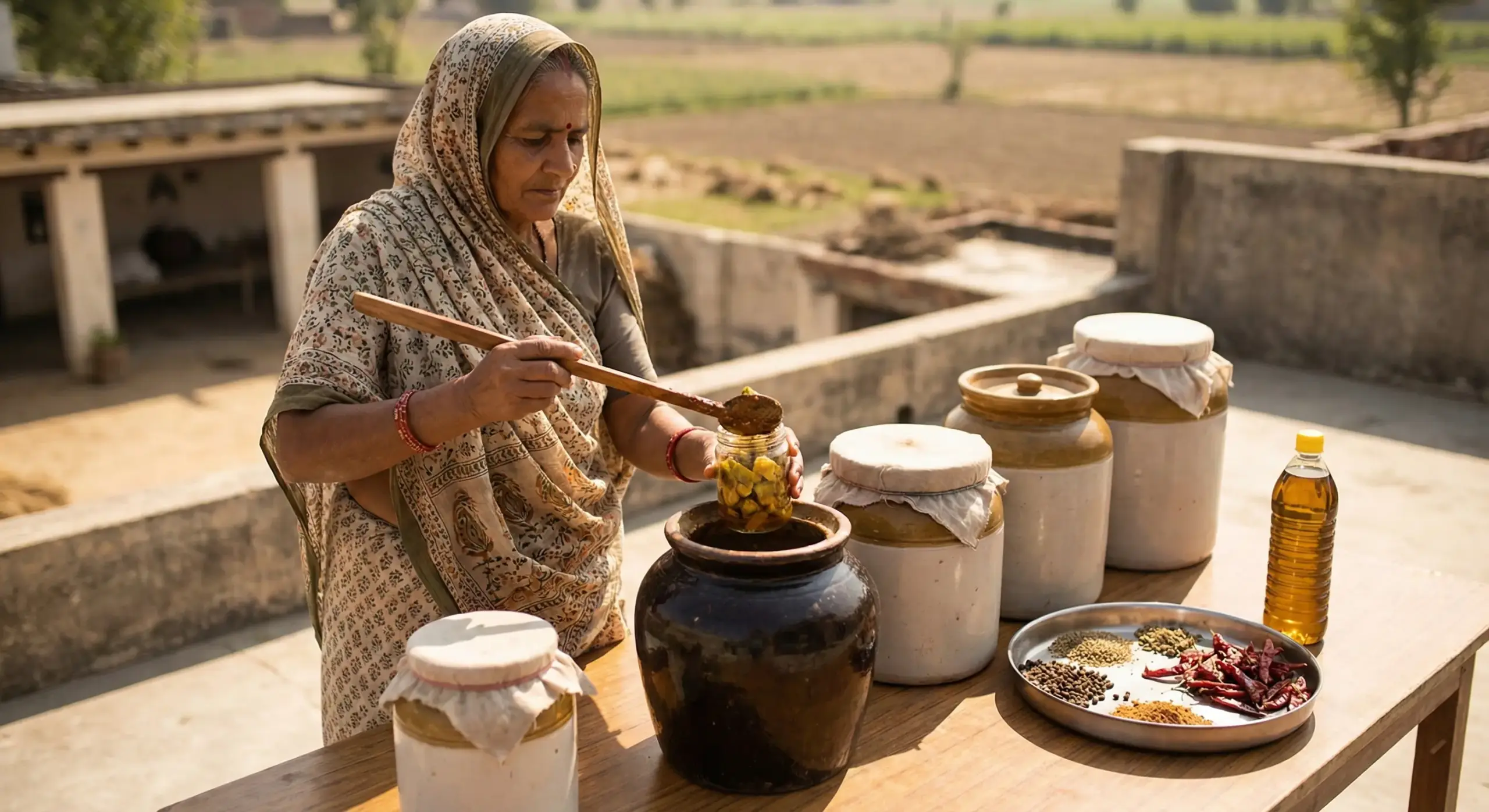
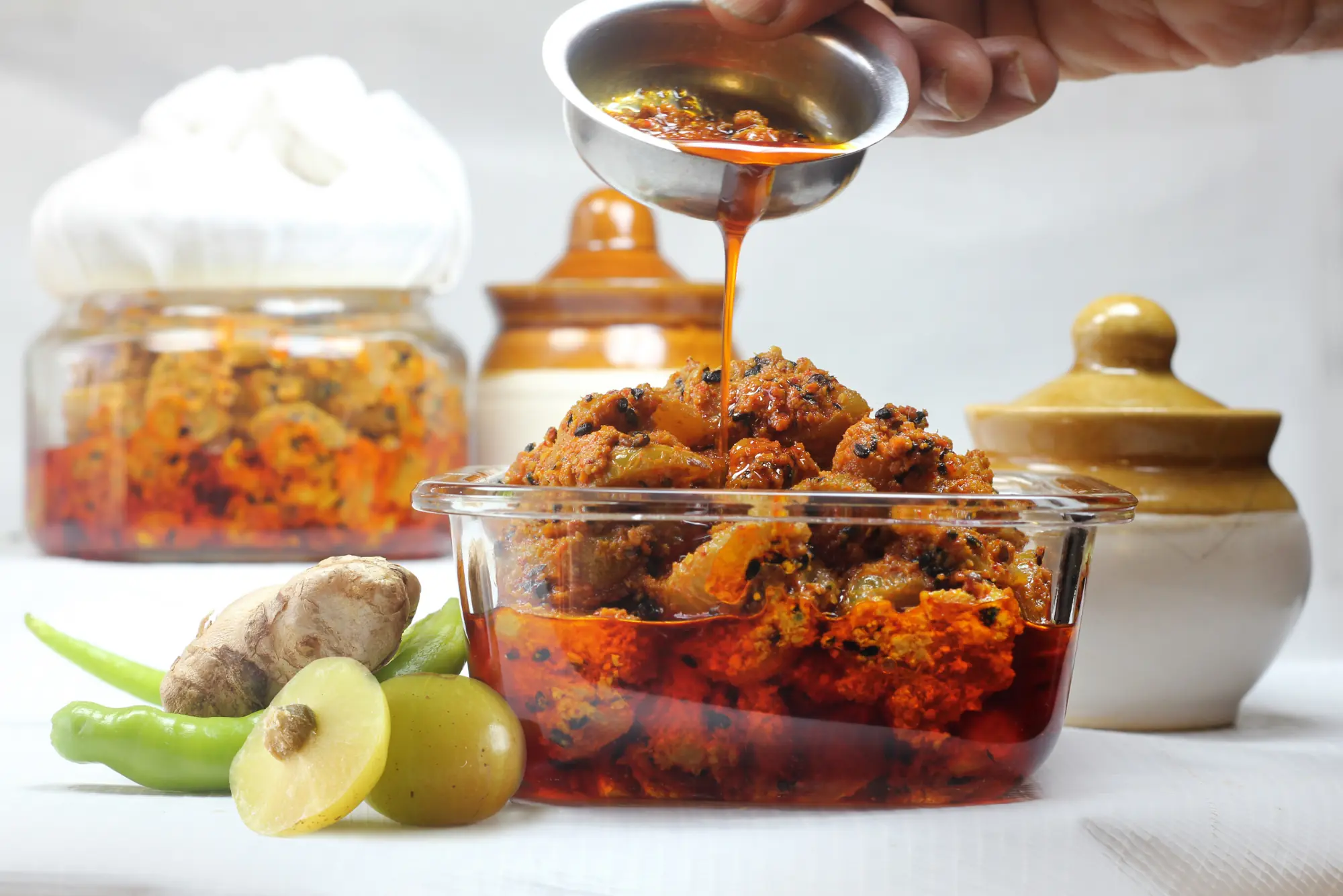
A Banarasi raw-mango achar follows a different path. Cut mango is salted, mixed with spices, dried or matured in the sun, and covered in mustard oil. The steps are laid out in sun-curing achar and the raw mango ritual of summer.
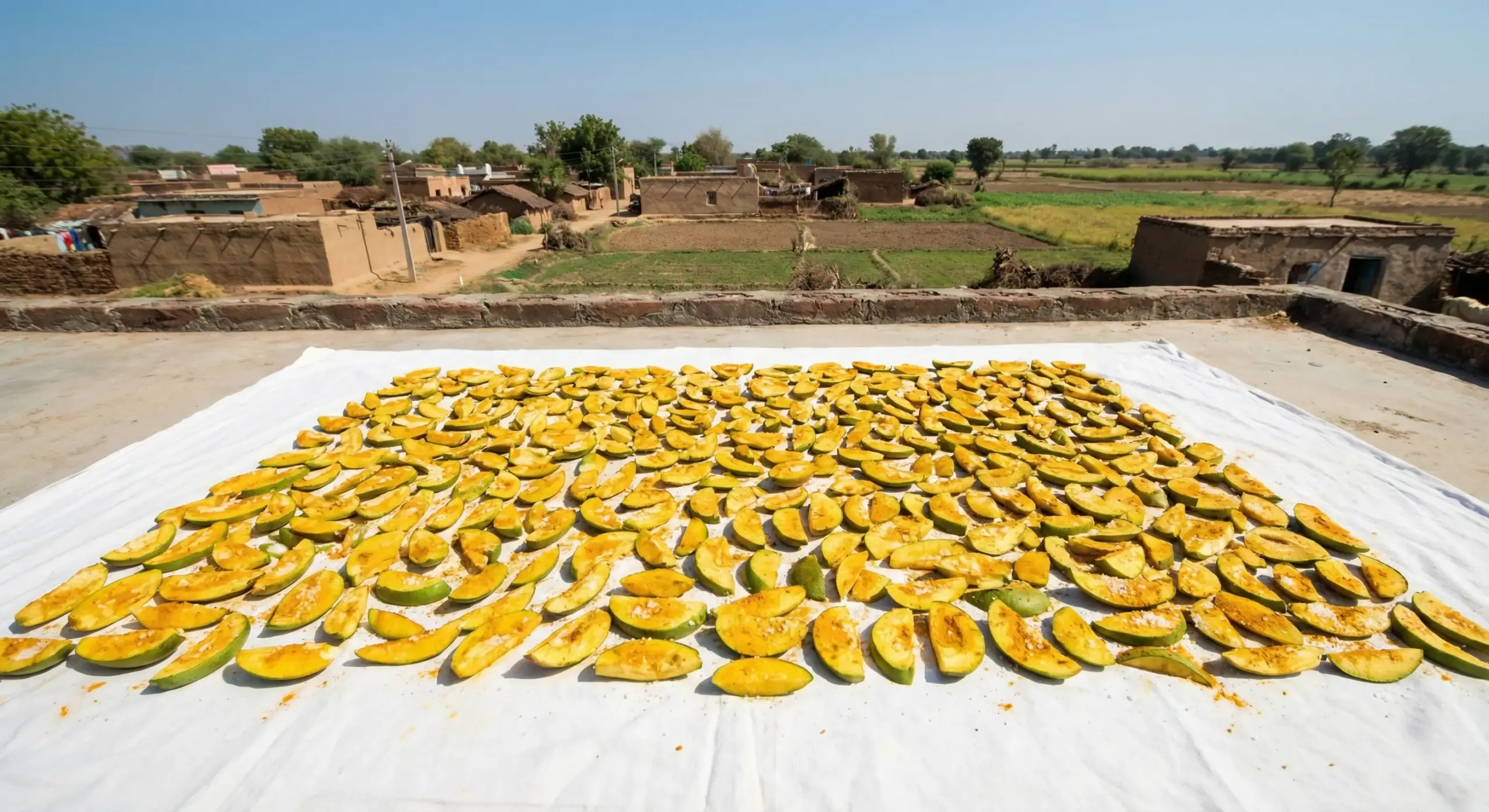
Salt draws water out of the fruit, the sun reduces it further, and the oil seals the jar. Whether lactic fermentation is a meaningful part of the process depends on how much brine forms and how long the fruit sits wet, which differs by household. We could not find a study that documents this for Banarasi oil pickles, so we describe them as cured and sun-matured, and we say that some fermentation may occur at the start.
The distinction affects how you store and judge a pickle. A fermenting brine pickle bubbles, smells sharp and changes over days. A sun-matured oil pickle changes slowly, and its flavour deepens over weeks as the spices, salt and oil meld. We describe what maturation is and is not in why traditional pickles last longer.
What fermentation adds to taste
Fermentation gives a pickle a layered sourness that fresh acid does not. Lactic acid is mellow compared with the sharp bite of vinegar, and the by-products described in the Wikipedia entry (alcohol and aroma compounds) add complexity. Cooks often say fermented pickles taste rounder than vinegar-sharp ones, though we have no study to cite for that, and preference is personal.
Time and temperature are the other levers. Warm weather speeds fermentation, which is one reason that pickle-making clusters in the hot months. A cool kitchen slows it, and the same recipe behaves differently in different cities and seasons.
What the research says about microbes in Indian pickles
Several studies have looked at the microbes in traditional Indian pickles, and they are worth reading with some care.
- The Nutrition & Food Science study found lactic acid bacteria counts in kanji, vegetable pickles and curd, and described the products as reflective of their probiotic nature. That is the authors’ interpretation of laboratory counts in controlled preparations, and it does not extend to every pickle on a shop shelf.
- A study of spontaneously fermented kohlrabi pickle in Jammu and Kashmir isolated lactic acid bacteria and identified the strains involved, noting their potential as probiotics and in biopreservation. The authors framed it as a gap in knowledge: the communities driving the spontaneous fermentation had not been studied.
- The Himalayan pickle review observes that in the Indian subcontinent, especially in the Himalayan and adjacent belts, pickle is popularly known as achar and generally no meal is complete without a smidgen of it.
These findings describe microbes in specific products made under specific conditions.
How to tell fermentation from spoilage
Fermentation and spoilage can look alike to an inexperienced eye, and the safe approach is caution.
- A fermenting brine bubbles and smells sour and sharp. Mould on the surface is spoilage, not fermentation.
- Keep the food under the brine or oil. Pieces that float above the liquid are exposed to air.
- Use a clean, dry spoon, and keep the jar covered, as we explain in the best jar for achar.
- Discard a jar with fuzzy growth, a rotten smell or a slimy texture.
Frequently asked questions
Is Indian pickle fermented?
Some are, such as brine pickles, kanji and dry-salted lime pickle. Many oil-and-spice pickles are better described as salt-cured and sun-matured, with fermentation playing a smaller and less documented part.
What bacteria ferment pickles?
Lactic acid bacteria, according to sources including the FAO and Wikipedia. Leuconostoc mesenteroides tends to dominate in cooler, lower-salt conditions and Lactobacillus plantarum at higher temperatures.
Is mango pickle fermented?
It depends on the recipe. Salt and sun-drying are the main processes in a typical Banarasi mango achar, and we could not confirm a controlled fermentation in oil pickles.
Are fermented pickles probiotic?
Some research reports lactic acid bacteria in traditional Indian fermented products and uses the word probiotic. We make no health claim, and a pickle sold in a shop may differ from a laboratory preparation.
How long does a fermented pickle last?
A Slurrp article gives four to six months for lacto-fermented pickles, compared with a year or more for oil pickles. Treat any figure as a rough guide, not a promise.
Why do pickles bubble?
Fermentation releases carbon dioxide, and the FAO notes that the process is complete when the bubbles stop.
Does oil stop fermentation?
Oil excludes air from the surface, but it is not a switch. Fermentation depends on salt, moisture and temperature, which is why the FAO method ferments the limes first and adds oil afterwards.
Sources used for this post:
– “Exploring indigenous fermented foods of India for the presence of lactic acid bacteria,” Nutrition & Food Science, 2019
– FAO, “Fruit and vegetable processing,” section on pickles (dry-salted lime pickle)
– Wikipedia, “Pickling”
– Slurrp, “How Are Indian Pickles Made With Lacto-Fermentation?”
– Review of Himalayan pickles (PMC5897286)
– “Isolation and characterization of lactic acid bacteria from spontaneously fermented kohlrabi pickle of Jammu and Kashmir, India” (open-access record)