
Blog
The Anthropology of Preservation: Why Traditional Pickles Last Longer

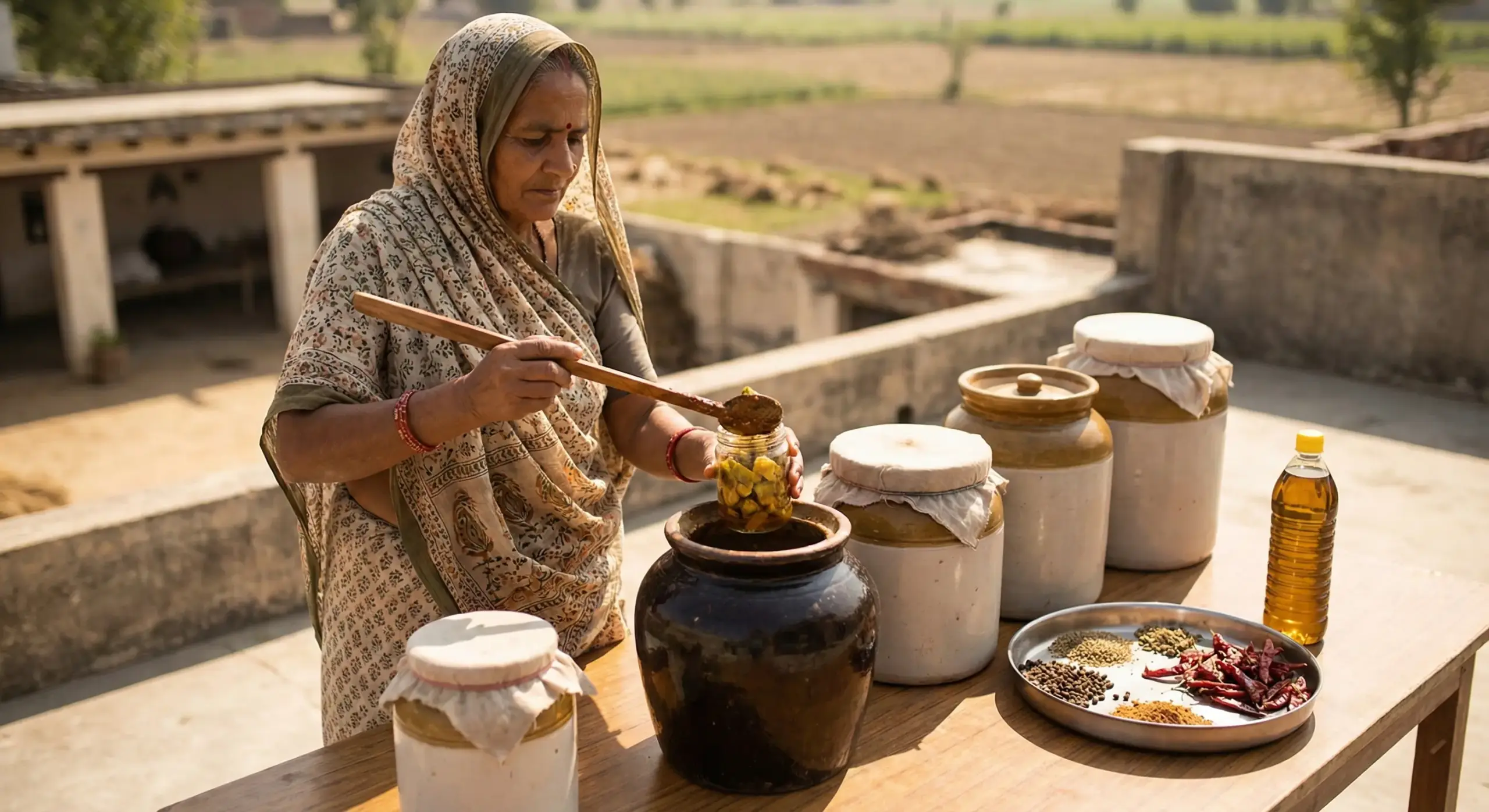
“For a pickle to last years, it has to be dry,” says Krish Ashok, author of Masala Lab: The Science of Indian Cooking, in an Al Jazeera feature on India’s decades-old pickle jars. That one sentence holds most of the science behind a grandmother’s martaban, and the rest of this guide unpacks it.
A pickle lasts because several protective things are stacked on top of each other: dry produce, salt, an oil seal, spice, and careful handling afterwards. Remove any one and the jar gets riskier. This guide explains each layer in plain terms, shows where the household customs around pickle jars have a practical reason, and states clearly what no pickle can promise.
The short answer
In short
Traditional Indian pickles last because they are low in available water (through salting and sun-drying), covered by an oil layer that keeps air off, flavoured with spices that are thought to slow microbes, and opened with dry, clean tools. The usual range is from several months to a couple of years, depending on the recipe and the care, and no pickle is guaranteed. A wet spoon is the most common way a good jar spoils.
Layer one: dryness
Spoilage organisms need water. Krish Ashok’s remark above is the working rule of the whole craft, and it is why so much of pickle-making is about getting water out: salting the cut fruit, drying it in the sun, and keeping the jar dry once it is filled. We look at the drying step in detail in why sun-drying is essential for Indian pickles.
The Deccan Herald’s piece on pickles and climate puts the principle in one line: salt removes moisture, helping preserve food naturally. By drawing water out of fruits and vegetables, it creates conditions in which many harmful microbes struggle to grow. Combined with sun, that is the foundation.
Layer two: acid and salt
Many pickle ingredients are naturally sour. Krish Ashok points to citric acid in citrus fruits as one of the reasons lemon pickle lasts, along with the salt used to cure it. Raw mango, amla and lemon bring acid, and salt adds its own protection.
The point about salt is practical. Cut the salt too far and the pickle loses a layer of defence. An instructional guide on storing pickles in the monsoon, citing the National Center for Home Food Preservation, warns against reducing the salt in a recipe. The right quantity depends on the fruit, and we do not give a universal figure.
Layer three: the oil seal
Oil does a different job from salt. Krish Ashok describes the last technique as reducing oxygen to prevent oxidation, which is where oil comes in. A layer of oil on top keeps air away from the fruit, and the India Food Network’s guide says submerging the pieces and topping up the oil if the level drops is the barrier that protects the jar. A retailer’s storage guide, citing the FSSAI standard for pickles, says the pieces in an oil pickle should stay practically under the oil.
Oil has limits, too. In the same Al Jazeera piece, Krish Ashok notes that raw mango submerged in oil lasts a few years, though not decades, because the oil itself will go rancid. A jar kept for thirty years is the exception, kept by a skilled household, and it is not a promise for any batch.
We cover the oil in detail in how oil preserves food in Indian kitchens and mustard oil in Banaras cooking. Mustard oil is often credited with antimicrobial qualities from its allyl isothiocyanate, and spices such as fenugreek, fennel and mustard seed are described as slowing microbes too. The Deccan Herald piece says many spices contain natural compounds that help slow the growth of unwanted microbes, and that mustard seeds, fenugreek, asafoetida and fennel are used across regions for flavour and more. We treat these as supporting factors, not as the main defence.
Layer four: sun and time
The sun dries the pieces before oiling, as we describe above. In some recipes, the finished jar is also left in the sun for days. The Deccan Herald piece notes that in places with long, sunny summers, jars are often placed outdoors for several days. Home cooks credit the heat with helping the oil and spice penetrate the fruit and the flavours mature.
For a salted, dried, oil-covered pickle it is much less clear, and Slurrp’s general claim that all Indian pickles are fermented is too broad. We do not rely on it.
Layer five: the container
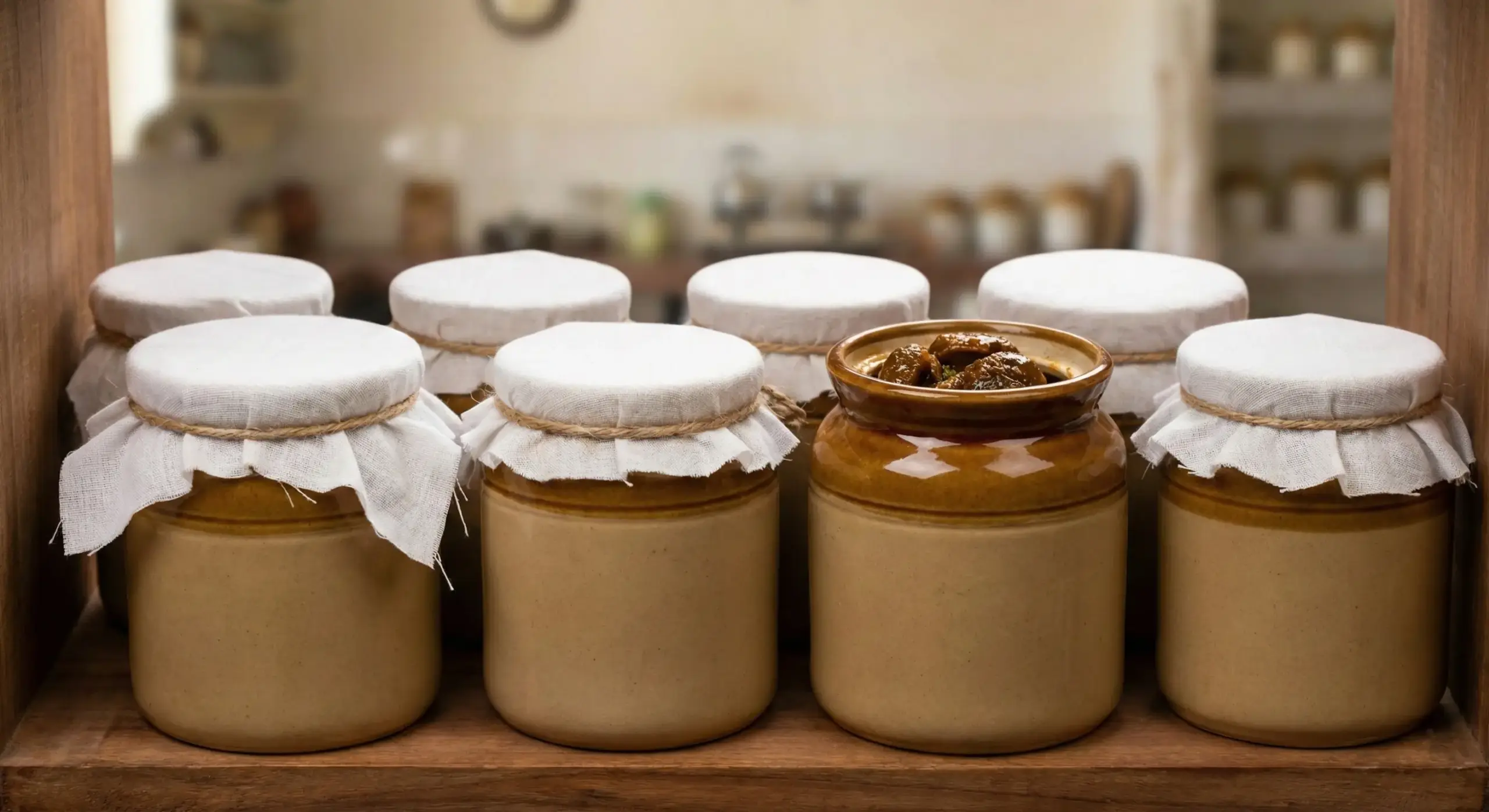
A pickle is acidic and salty, so the container should not react with it. A storage guide notes that glass does not react with the acid, salt or oil in pickles, and that university food-safety experts say not to use copper, brass, iron or galvanised metal. This is why the traditional martaban is glazed ceramic, and why glass jars are common now. See traditional storage methods for pickles for the full picture, and the post on the best jar for achar for a modern comparison.
Layer six: handling discipline
The last layer is behavioural, and it explains most of the household rules around pickle.
The wet spoon
The single most repeated rule is to use a clean, dry spoon. The InstaCuppa guide notes that every time a jar is opened, damp air gets in, and a wet spoon carries moisture and germs straight into the pickle. The India Food Network’s guide lists avoiding wet spoons among its core rules, along with keeping the pieces submerged. A tablespoon of water is enough to start a patch of mould on the surface.
Dry jars and dry produce
The same writer remembers her mother sterilising jars, drying them in the sun and making sure not a drop of water remained, and calls moisture the enemy, lesson number one. Washing fruit and then drying it completely, using a dry knife and board, and filling a jar that is fully dry are all expressions of the same principle.
Decanting
Families commonly keep a large reserve jar closed and move a small portion to a serving jar for daily use, so the main stock is opened rarely.
The ritual side
Many households attach purity customs to the pickle jar: washed hands, no used spoon returning to the jar, and limits on who handles it during preparation. What we can say is that the underlying habits of clean hands and dry tools are sound.
What no pickle can promise
- No guarantee of shelf life. The India Food Network says achar can stay good for anywhere between six months and a few years, which is a broad range, and a retailer’s guide gives 12 to 18 months at room temperature for a mango pickle, with the caveat that oil must cover the surface. Treat such figures as rough.
- Spoilage is possible. Even a traditional pickle can go bad. Look for fuzzy mould, a fizzy or off smell, a slimy texture or oil that has gone rancid, and discard the jar if you see them.
- Low-acid vegetables in oil need care. Garlic, ginger and some other low-acid vegetables stored submerged in oil can carry a food-safety risk, and households should follow current food-safety guidance for those recipes.
Why small batches and seasonal work matter
A pickle made by hand in a season, in a clean room, with sun and dry tools, has better odds than one rushed. That is part of why small-batch makers keep a seasonal calendar, a topic we pick up in why small-batch food tastes better and pickle-making traditions in Banaras homes.
A checklist for a longer-lasting jar
- Use fruit that is firm and fresh, with no bruises.
- Cure it with salt and dry it fully.
- Use clean, dry tools and jars.
- Cover the pieces with oil, and top up if the level drops.
- Store the jar in a cool, dry place.
- Open it rarely, and use a dry spoon every time.
- Check it for changes and discard if in doubt.
Frequently asked questions
Why do homemade Indian pickles last so long?
They combine low moisture, salt, acid, an oil seal and spices, and they are handled with dry, clean tools.
Does a wet spoon spoil pickle?
Yes, moisture is the most common way a jar goes bad. Always use a dry spoon.
How long does mango pickle last?
Sources give a wide range, from six months to a few years, depending on the recipe and the care. We do not promise a shelf life.
Does the oil keep pickle fresh forever?
No. The oil keeps air off but can itself go rancid with time.
Are Indian pickles fermented?
Some are, in brine. Many oil pickles rely mainly on salt, drying and oil, and the fermentation claim should not be applied to all of them.
What jar is best for pickle?
Glass or glazed ceramic, since both are non-reactive. Avoid copper, brass and iron.
How do I know a pickle has gone bad?
Fuzzy mould, a fizzy or sour-rancid smell, slimy texture or off-tasting oil are warning signs. Discard the jar if you see them.
Sources used for this post: Al Jazeera, “India’s pickle people” (Krish Ashok on dryness, acid and oil); Deccan Herald, “How India’s pickles tell stories of climate” (salt, spices, sun); India Food Network (how long achar lasts); InstaCuppa storage guides citing FSSAI and the National Center for Home Food Preservation; Slurrp (fermentation claim, treated cautiously); Organic Mandya (retailer shelf-life range). No shelf-life or safety promise is made.
