Blog
White Layer on Achar: Kahm Yeast, Mould and When to Throw the Jar Out

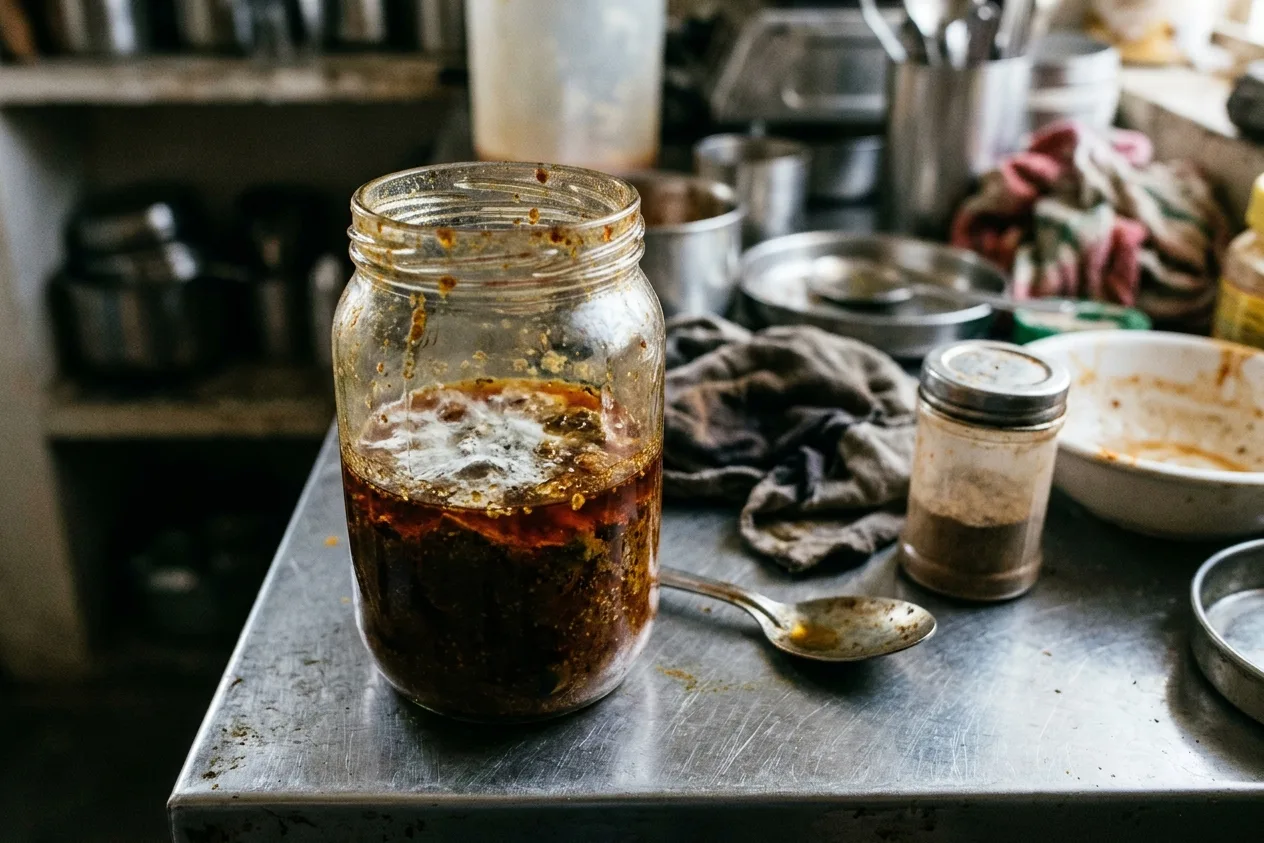
A fermentation guide from the University of California, Davis, says that white, grey or pink films may form on the surface of fermenting fruits and vegetables, and that such a film is typically yeast. The same guide shows photographs of mould growing on the surface of olive brine to make the contrast. Anyone who has opened a jar of achar and found a pale layer on the top has met this problem, and it is worth knowing what the extension services say, and what they do not.
This post explains the difference between kahm yeast and mould, what food safety sources recommend for fermented pickles, and why we cannot tell you from a description that a particular jar is safe. We are a pickle maker and not a laboratory. If you have a jar in front of you and you are unsure, the safe choice is to throw it away.
The short answer
In short
A flat, thin, white or cream film on a brine pickle is often kahm yeast. A fuzzy, raised, hairy or coloured patch (green, blue, black, pink) is mould. We cannot confirm a jar is safe to eat. When in doubt, throw it out.
That is the summary most home preserving sources agree on. The rest of this post explains where it comes from and where it stops applying.
What kahm yeast looks like
Kahm yeast is a yeast, not a mould. The Illinois Extension fermenting FAQ says that a white film that is not fuzzy or in round patches is kahm yeast, and that it is very common on vegetables. A fermentation blog describes it as a thin, flat, chalky or powdery layer that does not smell musty, and says it may look slightly wrinkled, like a skin or a spider web laid over the brine. It tends to cover the entire surface, where mould tends to grow in round patches.
One fermentation guide notes that kahm yeast is common where oxygen is present, and that it can give an unpleasant smell or taste if it grows too much.
The extension services are cautious about leaving it alone. A note from an Oregon extension office says that kahm yeast left unchecked will lower the acidity of pickles and olives, creating a food safety risk. The same note advises skimming it off. Another Oregon extension answer tells a home pickler that as long as the mould and scum are removed regularly, and the pickles do not turn mushy or smell bad, they should be safe, and it adds a warning that if pickles become soft, slimy or develop a disagreeable odour they must be discarded.
What mould looks like
Mould is usually fuzzy, hairy or raised. It may be green, black, blue, pink or orange, and it can also be white, which is where people get confused. A fermentation hobby guide says that true moulds are usually colourful and round, fluffy or puffy, but that some can be white, and that the difference is between a smooth film (kahm) and a puffy growth (mould).
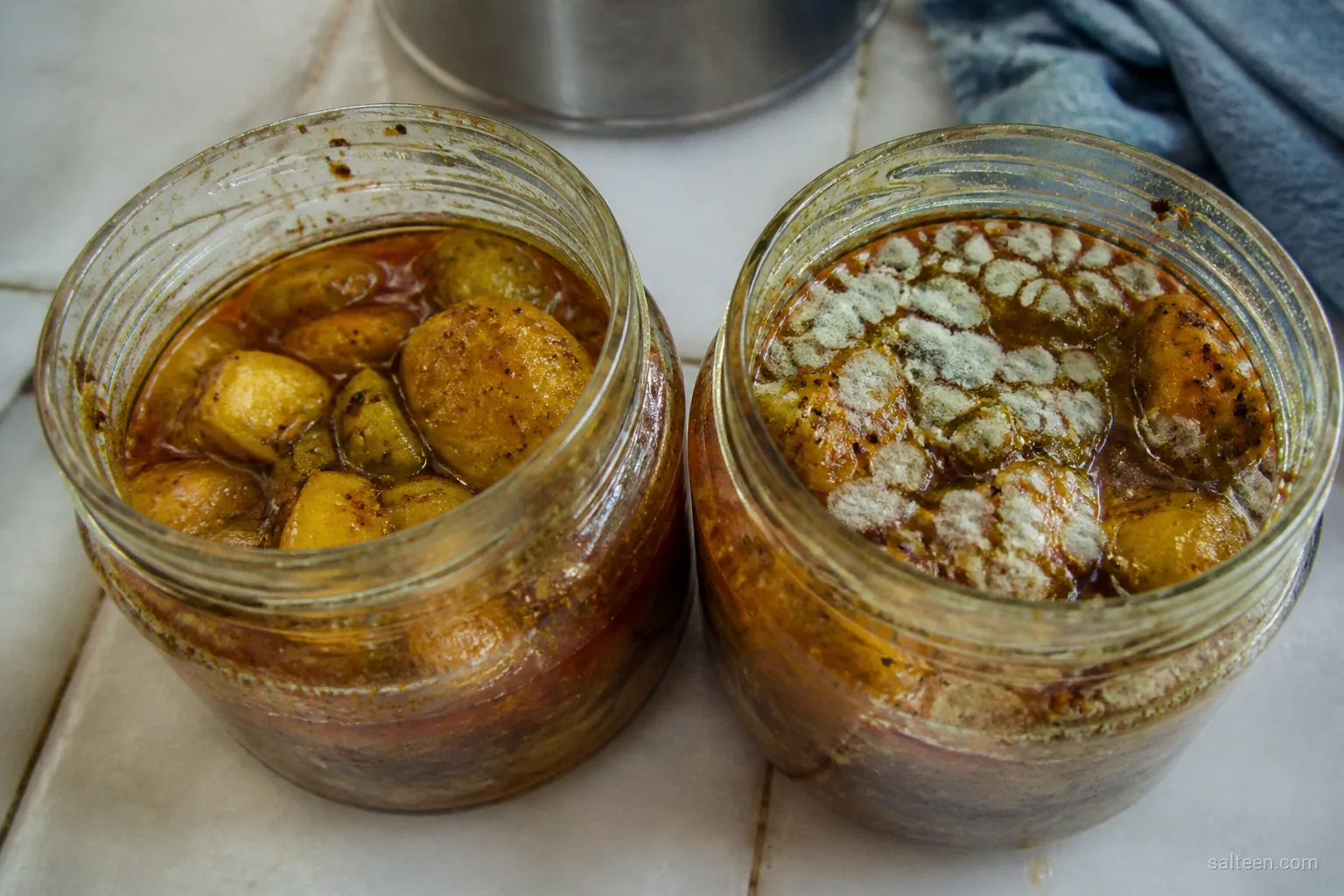
The rule from home preserving sources is simple. If the growth is fuzzy, raised or coloured, treat it as mould and discard the batch. Several home preserving guides are explicit that anything fuzzy or coloured means the whole jar goes. One guide goes further and says a fuzzy white growth is mould and not yeast, even though white yeast exists.
Brine pickle is not oil pickle
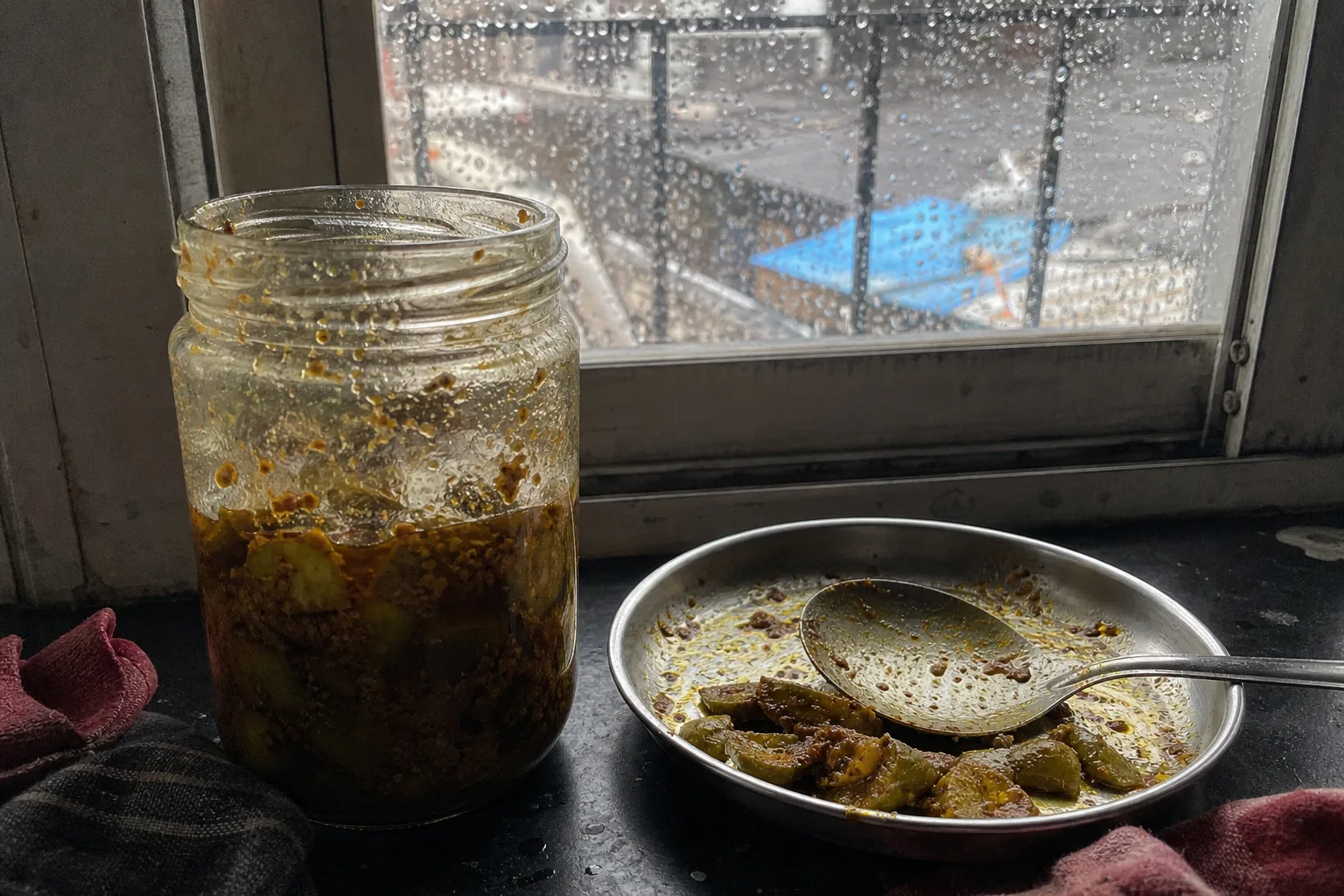
Everything above was written about pickles in brine, such as fermented cucumbers, cabbage and carrots. Most of the achar made in north Indian homes is a different product. It is a pickle of fruit or vegetable pieces in salt, spices and a layer of oil, usually mustard oil.
In an oil pickle the oil is meant to sit on top and keep the air off the fruit. A pickle guide that cites the food standard for pickles in India says that the pieces in an oil pickle should stay practically under the oil. If the oil level drops, pieces can sit exposed to air, and that is the place where growth begins. A recipe site says that poor storage, for example plastic containers and wet spoons, can lead to spoilage in two to three weeks, with fungus likely.
So the extension guidance cannot be copied straight onto a jar of mango achar. Those notes tell you about brine ferments, and they do not tell you what to do with a jar of oil pickle. We are not aware of an equivalent official guide for Indian oil pickles, and for that reason we do not tell readers that a white layer on an oil pickle can be scraped off.
Other white things that are not either
Not every pale patch is a growth. A cloudy brine is common in fermented vegetables and is not mould. A chalky sediment at the bottom of a brine pickle is generally yeast residue and harmless, according to one fermentation site. In a pickle made with a lot of salt, crystals can sometimes form on the surface or on the pieces. These look like grains or crust, not like fur or a film. If you cannot tell the difference between crystals and a growth, treat it as a growth.
What to do
When you find a white layer
- Look first. Is it flat and thin, or fuzzy and raised? Is there any colour at all?
- Smell it. A musty, rotten or yeasty smell is a warning sign.
- Check the pieces. Soft, slimy or mushy pieces mean the jar should be discarded, as the Oregon extension note says.
- Check the oil. Are the pieces covered? Is the oil clear and normal?
- If there is fuzz or colour, throw out the whole jar. Do not scrape it and eat the rest.
- If you are unsure, throw it out. A jar of pickle costs very little compared with being unwell.
We cannot see your jar, so we cannot say it is safe. If you have bought a jar from us and the contents look wrong, do not eat it, and contact us through the website.
How to avoid it
The same sources point to a short list of habits, and most are common sense.
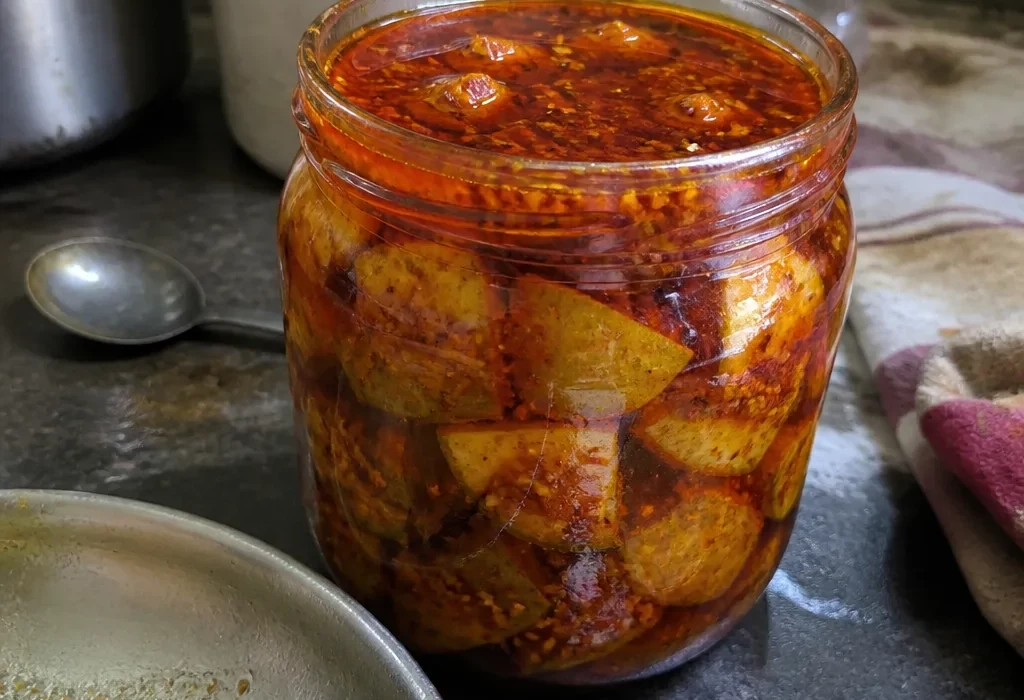
- Use a clean, completely dry jar, and a clean, dry spoon every time. A wet spoon is a common cause of trouble in a home jar.
- Keep the pieces under the oil or the brine. Top up with the oil the recipe used if the level drops.
- Use a tight lid and keep the jar away from damp and heat.
- Choose glass over plastic for long storage. A kitchen guide notes that plastic soaks up oil and smell, and that glass lets you see the oil layer.
- Be careful in the monsoon. Damp air and open jars are the usual reason for trouble.
We explain the ranges for how long a jar lasts in our post on how long achar lasts, and the role of oil in our kacchi ghani mustard oil guide.
Where to go next
For the full tradition behind the jar, read our guide to Banarasi achar. The range from our kitchen is in the pickle and achar collection.
Frequently asked questions
Is the white layer on achar safe?
We cannot say that a particular jar is safe. A flat white film on a brine ferment is often kahm yeast, which extension services describe as common, but a fuzzy, raised or coloured growth is mould and the jar should be thrown away. If you are unsure, throw it out.
How do I know if achar has gone bad?
Look for fuzzy or coloured growth, soft or slimy pieces, a rotten or musty smell, or pieces that are no longer covered by oil. Any of these is a reason to discard the jar.
What is kahm yeast?
A harmless looking, flat white film that can form on the surface of fermented vegetables in contact with air. It is a yeast and not a mould, but extension services still advise removing it and watching the pickle.
Can I scrape off the mould and eat the rest?
For a pickle, home preserving sources say to discard the whole jar if there is fuzzy or coloured growth.
Why does my pickle have white spots?
They may be salt crystals, yeast or mould. If you cannot tell which, treat it as mould.
Sources used for this post: University of California, Davis, Food Safety, “Troubleshooting fermented fruits and vegetables”; University of Illinois Extension, Fermenting FAQ; Oregon State and county extension answers on kahm yeast and pickle scum (via Ask Extension); InstaCuppa guides on white fungus on pickle and on storing pickles; Gutbasket and Melissa K. Norris guides to mould and kahm yeast. These sources write about brine ferments. None is an official guide for Indian oil pickles.