Blog
Seasonal Eating Practices in Kashi: Sattu in Summer, Malaiyo in Winter

On Makar Sankranti in January 2026, the Kashi Vishwanath temple offered Lord Vishwanath khichdi, chivda, peanut brittle and papad as bhog, according to a PTI report, and the khichdi festival was held in all the major temples of the city. That one offering carries the whole logic of seasonal eating in Kashi: a food, a date on the calendar, and a reason that goes back long before refrigeration.
This guide follows the year through the old Indian season names, shows what a Banaras household eats in each, and separates what is documented from what is family belief. Nothing here is medical advice.
The short answer
In short
Kashi eats by the season and by the Hindu calendar together. Summer brings sattu, thandai, curd and light gourds. The monsoon and Chaturmas bring simple cooked food, no leafy greens and fewer fried items. Winter brings malaiyo, chura matar, ghee-rich dishes and, at Makar Sankranti, til and gud with khichdi. Spring brings gujiya at Holi and a return to lighter food. Preserved food such as pickle fills the gaps between harvests.
The framework: ritucharya and the panchang
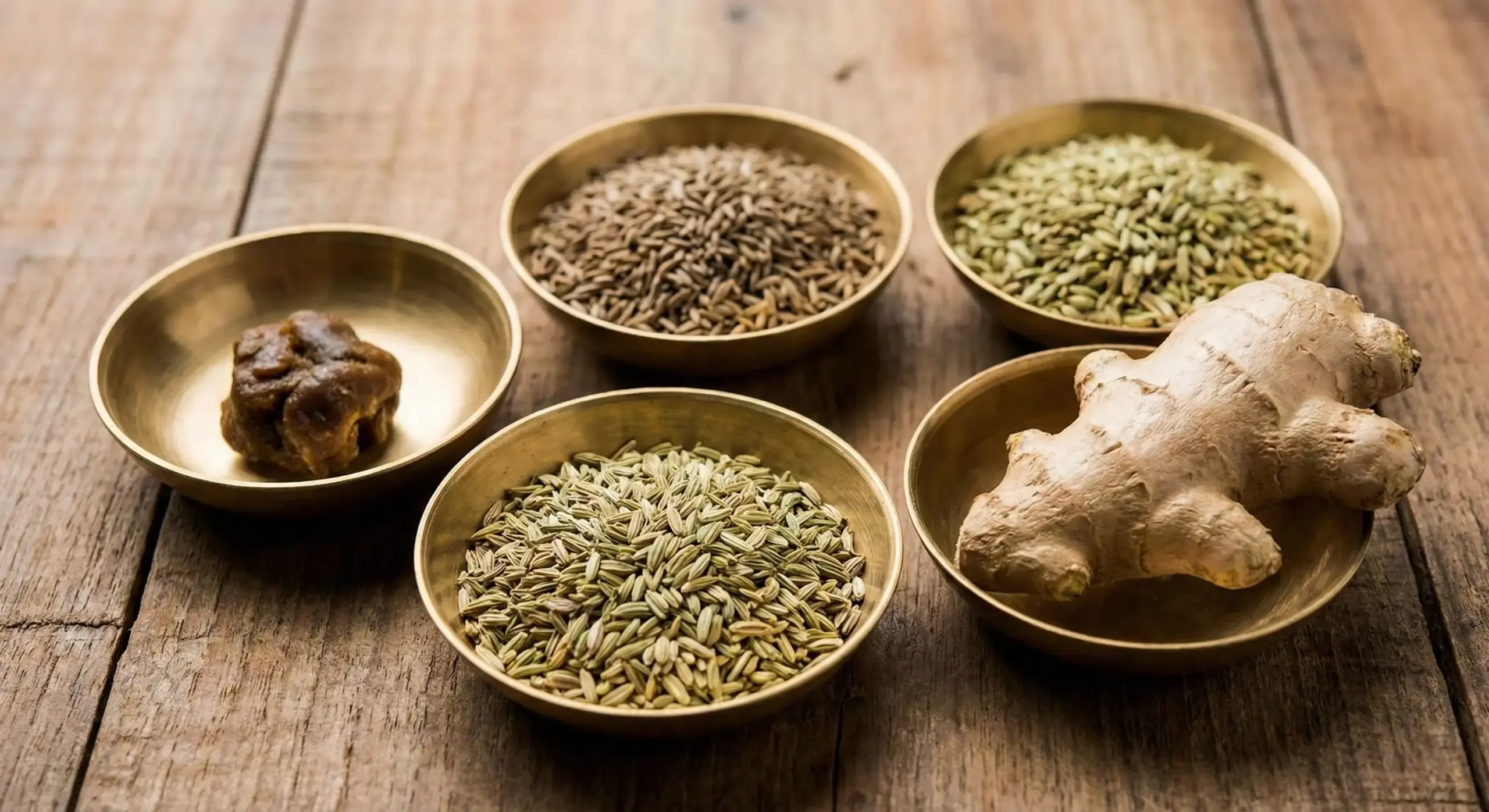
Traditional Indian medicine, Ayurveda, describes ritucharya, a seasonal regimen. The word joins ritu (season) and charya (conduct), and the idea is that diet and daily habits should change as the weather does. The classical texts the tradition draws on include the Charaka Samhita and the Sushruta Samhita.
In Kashi that medical idea sits beside the panchang, the Hindu lunisolar calendar, which sets festival dates, fast days and temple offerings. A household therefore changes its food for two overlapping reasons: the weather outside and the day on the calendar. The local belief that the goddess Annapurna looks after the city’s food gives the whole practice a devotional frame, but the underlying pattern is practical and tied to what the Gangetic plain grows in each season.
Six ritus are traditionally counted, though a Banaras household in daily life usually talks about three or four: summer, rains, winter and spring.
| Season (ritu) | Rough months | What the plate does |
|---|---|---|
| Vasant (spring) | Feb to Mar | Lighter food, Holi sweets |
| Grishma (summer) | Apr to Jun | Cooling drinks, sattu, curd, gourds |
| Varsha (rains) | Jul to Sep | Simple cooked food, no leafy greens |
| Sharad (autumn) | Oct to Nov | Festival sweets, Annakut, light grains |
| Hemant and Shishir (winter) | Dec to Jan | Dairy, ghee, til, gud, peas |
Grishma: the summer plate
Summer in Varanasi is long and hard. Temperatures regularly pass 40 degrees Celsius in April and May, the dry wind called the loo blows through the afternoon, and recorded peaks have reached 47 degrees Celsius, in May 1998 and June 2005, according to Climates to Travel. The summer food of Kashi is built to be eaten without much cooking, and to keep the body cool.
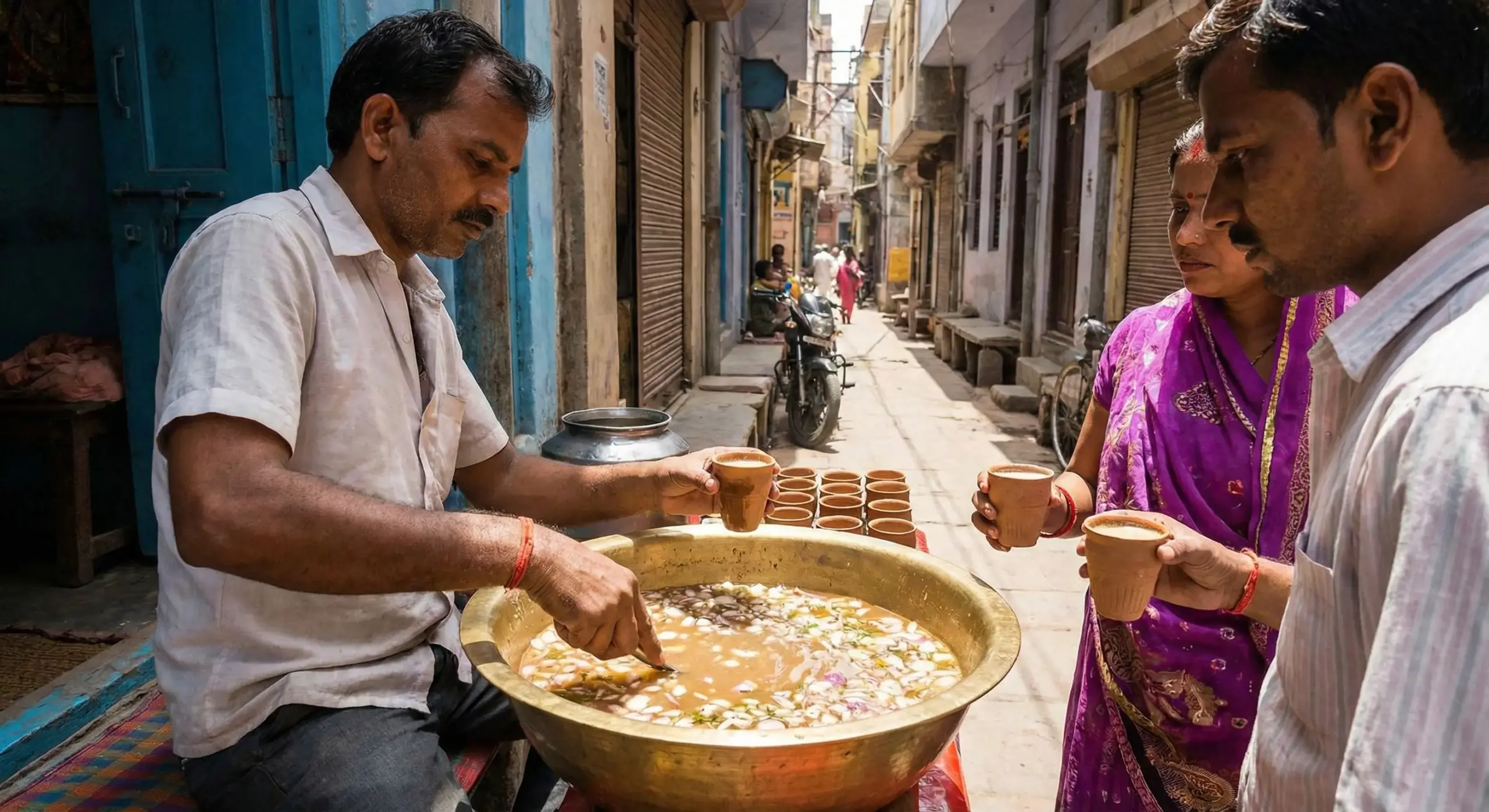
Sattu
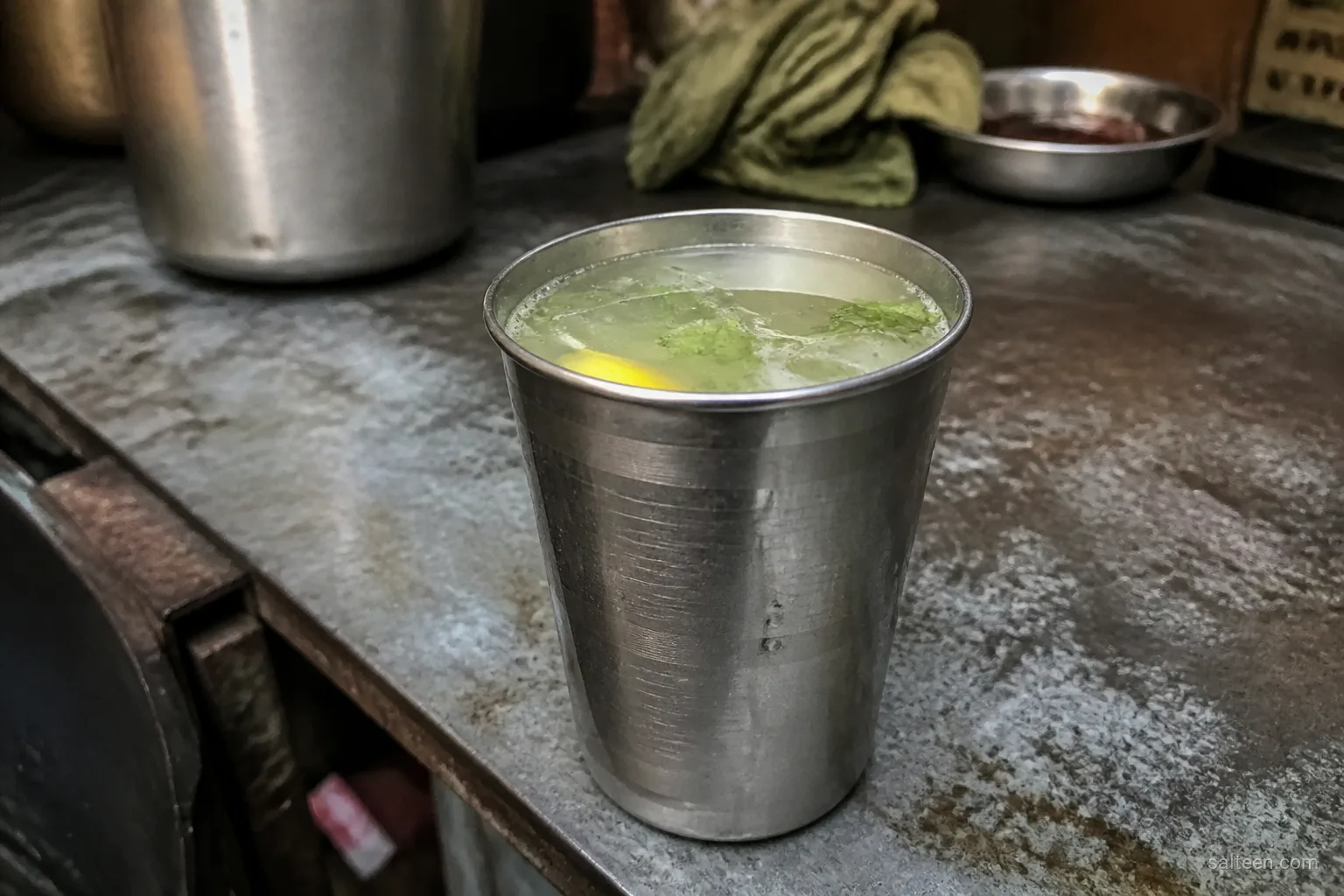
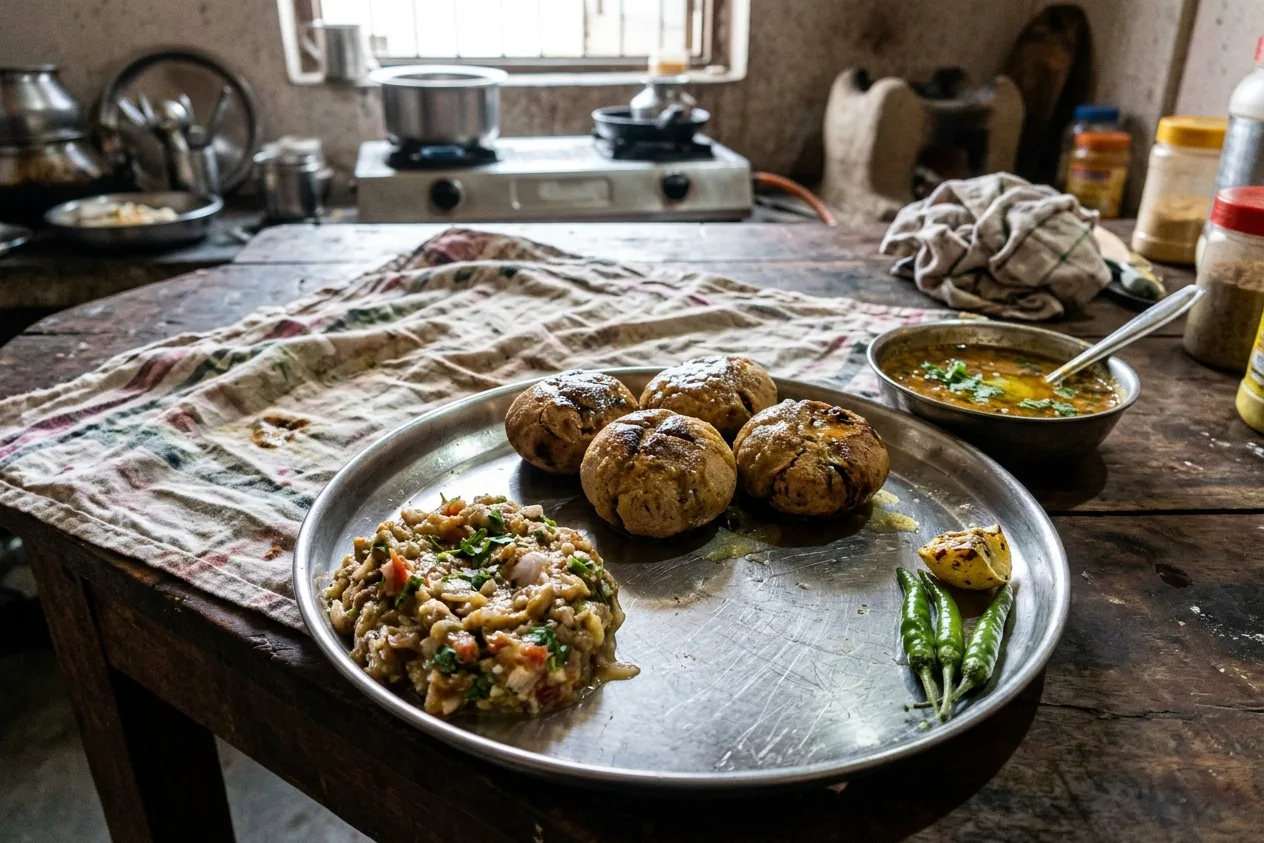
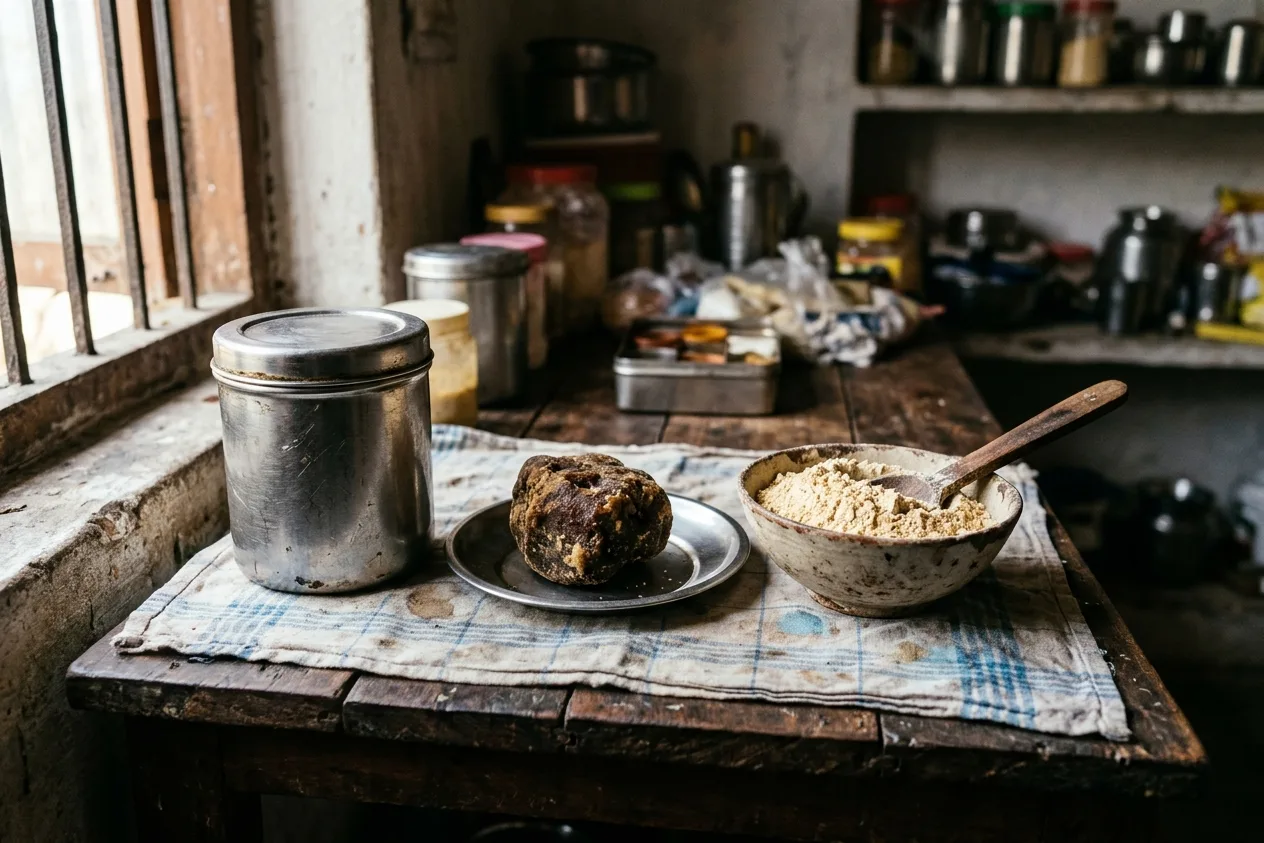
Sattu is flour made from roasted gram (and sometimes barley), and it is the signature summer food of the region. Stirred into water with roasted cumin, black salt and sometimes lemon or raw mango, it makes a thick drink, and kneaded into dough with spices it becomes the filling for baati or litti. The Incredible India description of Varanasi’s baati chokha mentions balls of unleavened bread stuffed with dal, onions, peas or sattu and baked on wood fires. Sattu keeps well, needs no fuel to prepare as a drink, and was historically food for pilgrims, labourers and travellers alike.
Thandai and lassi
Thandai means “that which cools”. It is a milk drink made from ground almonds, melon seeds, fennel, rose petals and cardamom, and in Varanasi it is sold from tiny shops in the Godowlia area, according to local guides. It is also associated with Shiva worship and the festivals of Mahashivratri and Holi, when some versions are made with bhang (cannabis), which is part of the city’s religious culture and is not something we encourage anyone to try casually. Lassi, thick curd whisked sweet or salted and served in a clay cup, fills the same cooling role.
Gourds and light vegetables
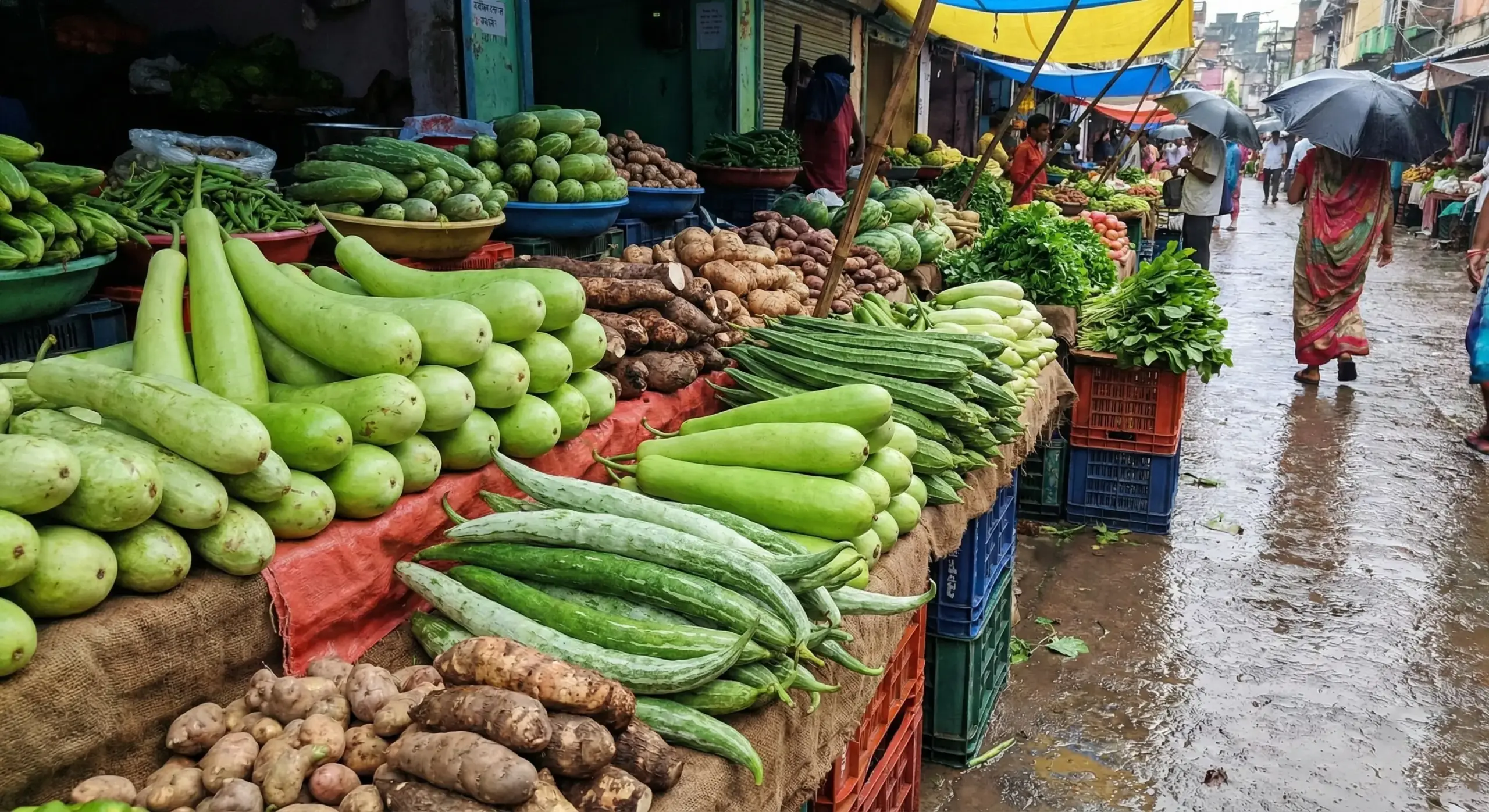
The summer sabzi is built from lauki (bottle gourd), turai (ridge gourd), parwal (pointed gourd) and tinda, cooked simply with hing, cumin and a little turmeric. These vegetables hold a lot of water and need little spice. See our post on evening meals in traditional Banarasi homes for how they appear at dinner.
Mango season and the first pickles
Raw mangoes (kairi) arrive in April and May and are turned into aam panna, chutney and the first batches of mango pickle. A Varanasi shop reviewed by Deccan Herald turns mango into pickles and murabba to carry the flavour well beyond the summer. In home kitchens, the sun that makes summer difficult is the same sun that cures the pickles, as we explain in why sun-drying is essential for Indian pickles.
Varsha and Chaturmas: the discipline of the rains
The southwest monsoon arrives in late June and runs through September, bringing heavy rain and high humidity. In the Hindu calendar the same months overlap with Chaturmas, the four-month period traditionally associated with Vishnu’s cosmic sleep, with vows, fasting and restraint.
Traditional Banaras households stop eating leafy green vegetables during this stretch. The reasoning given is practical: leaves picked in wet weather carry mud, insects and spoilage. Some families also reduce onion and garlic or give them up for the period. This is traditional practice and the reason given is household explanation, not a health claim from us.
What replaces the greens is a plainer table:
- Gourds and root vegetables, cooked well through
- Stored grains and dal, especially moong
- Dry-roasted maize on the cob with rock salt and lemon
- Fried snacks with ginger tea, in small amounts
- Pickles and dried items such as papad and wadi, which carry flavour through weeks of rain
Pickles earn their place here. Because they are preserved in oil and salt, they stay good through the damp months when fresh vegetables are harder to trust, a point we expand in why Banaras pickles are oil-rich.
Sharad: festival sweets and Annakut
After the rains comes the brief autumn, and with it the season of festivals: Navratri, Dussehra, Dhanteras, Diwali and, the day after Diwali, Annakut. Households make sweets, and the city’s temples offer mountains of food. For the details, see food offerings in Banaras temples. The food at this time is rich and celebratory, and the nights start turning cool.
Hemant and Shishir: winter
Winter in Varanasi is short but real. Night temperatures fall, fog settles over the river, and Native Planet’s weather guide notes severe fog in January. The diet turns towards warmth and density.
Malaiyo
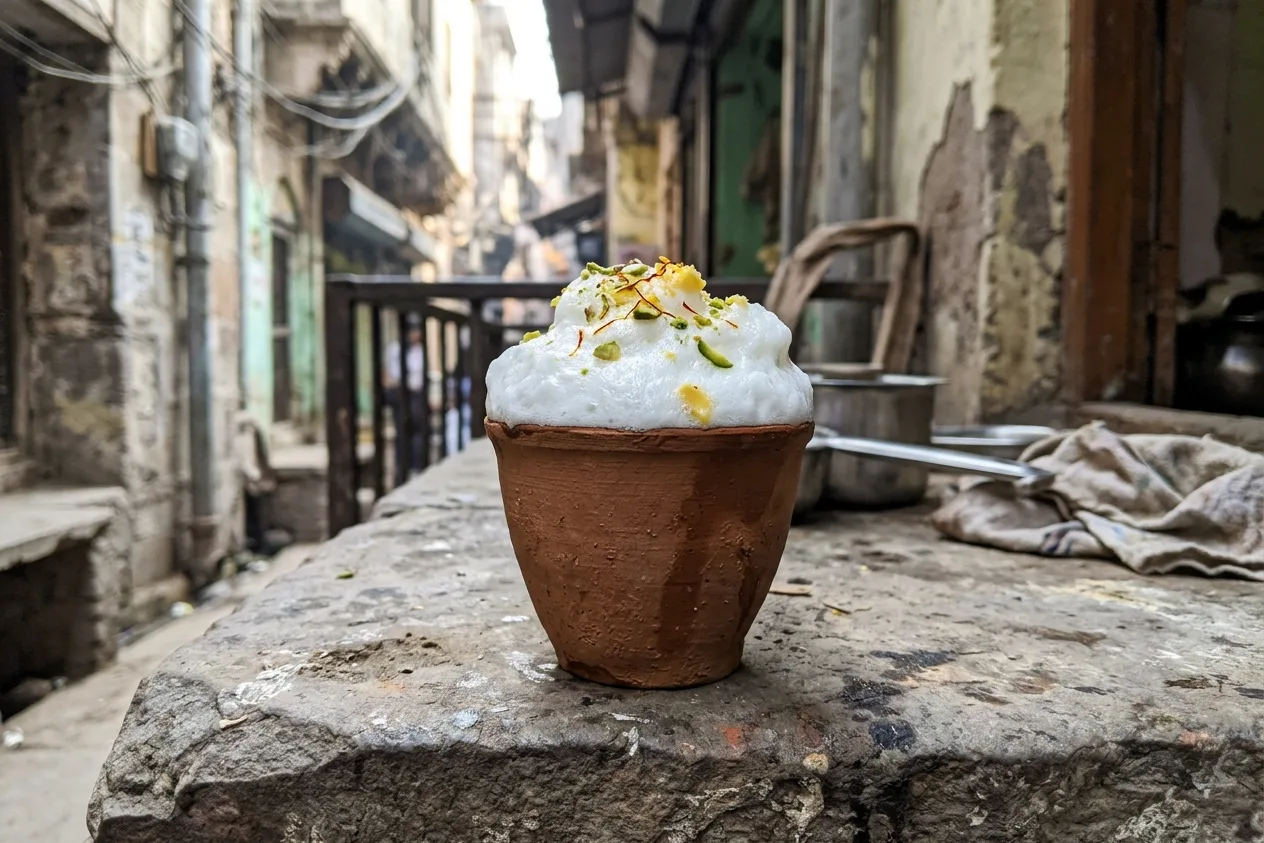
Malaiyo is the best-known winter food of Banaras and exists only in the cold months. Milk is boiled, flavoured with saffron and cardamom, left out under the open sky overnight, and whisked at dawn into a froth that is spooned into clay cups. Lonely Planet’s guide to Varanasi food shows pots of malaiyo described as chilled, aerated milk. Its dependence on dew means it can only be made in the colder weeks, usually between about November and February.
Chura matar
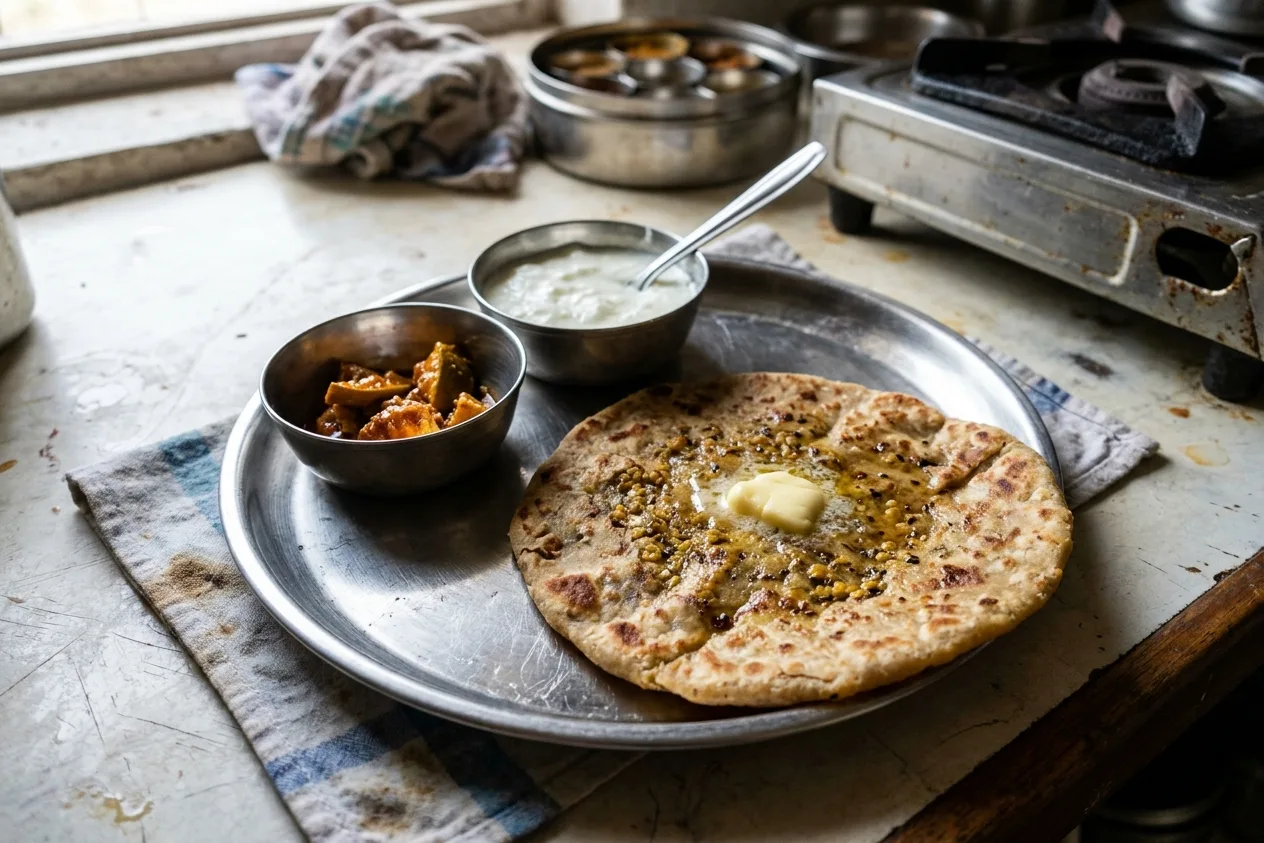
Chura matar is flattened rice cooked with fresh green peas, ghee and black pepper, with no onion or garlic. Lonely Planet calls it a signature winter snack of Varanasi. It appears on winter breakfast tables and in tea-time snack shops.
Nimona and winter vegetables
Fresh peas drive the winter menu. Nimona, the thick green-pea curry of eastern Uttar Pradesh, is cooked with mustard oil or ghee, and the Tribune’s food writer Pushpesh Pant notes that sweet peas are plentiful and comparatively cheap in this season. Cauliflower, carrot, radish and mustard greens arrive at the same time.
Til, gud and khichdi at Makar Sankranti
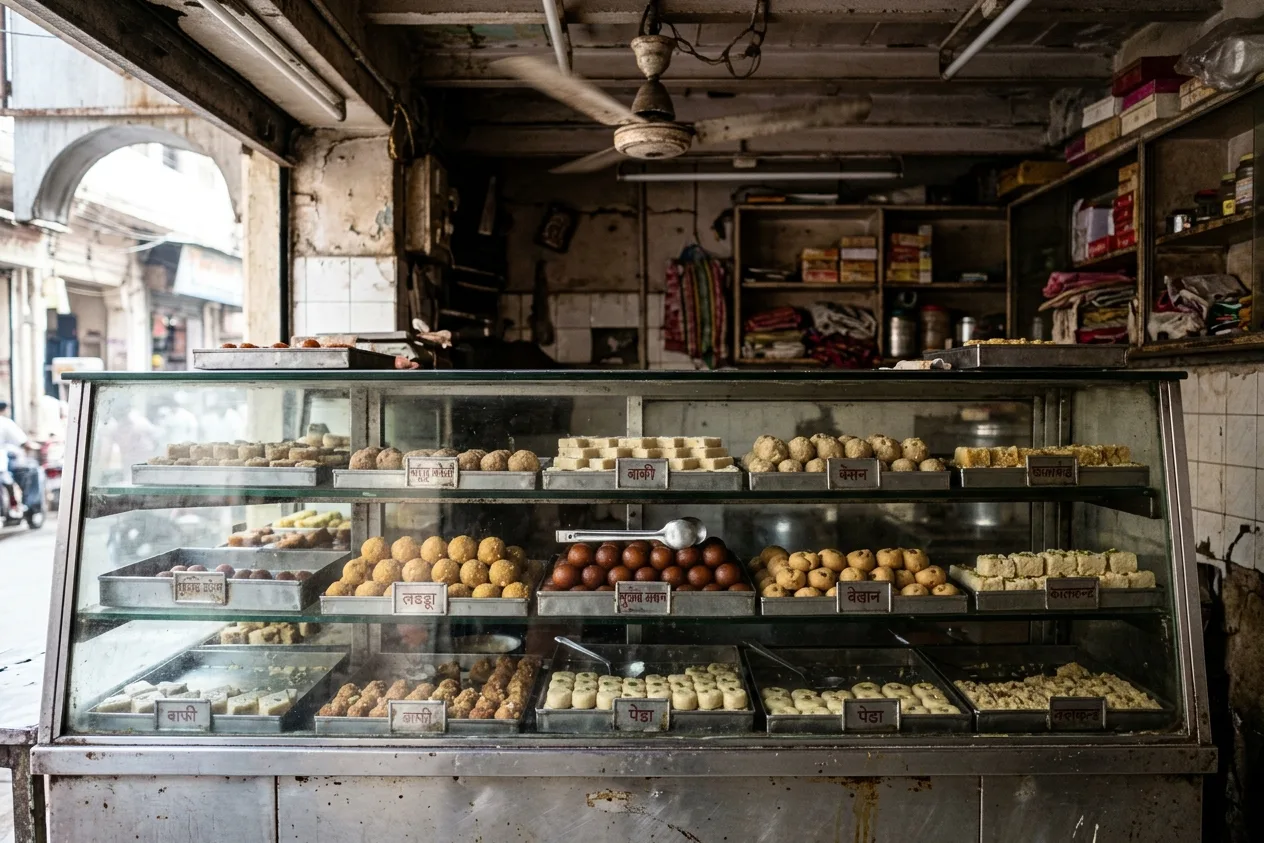
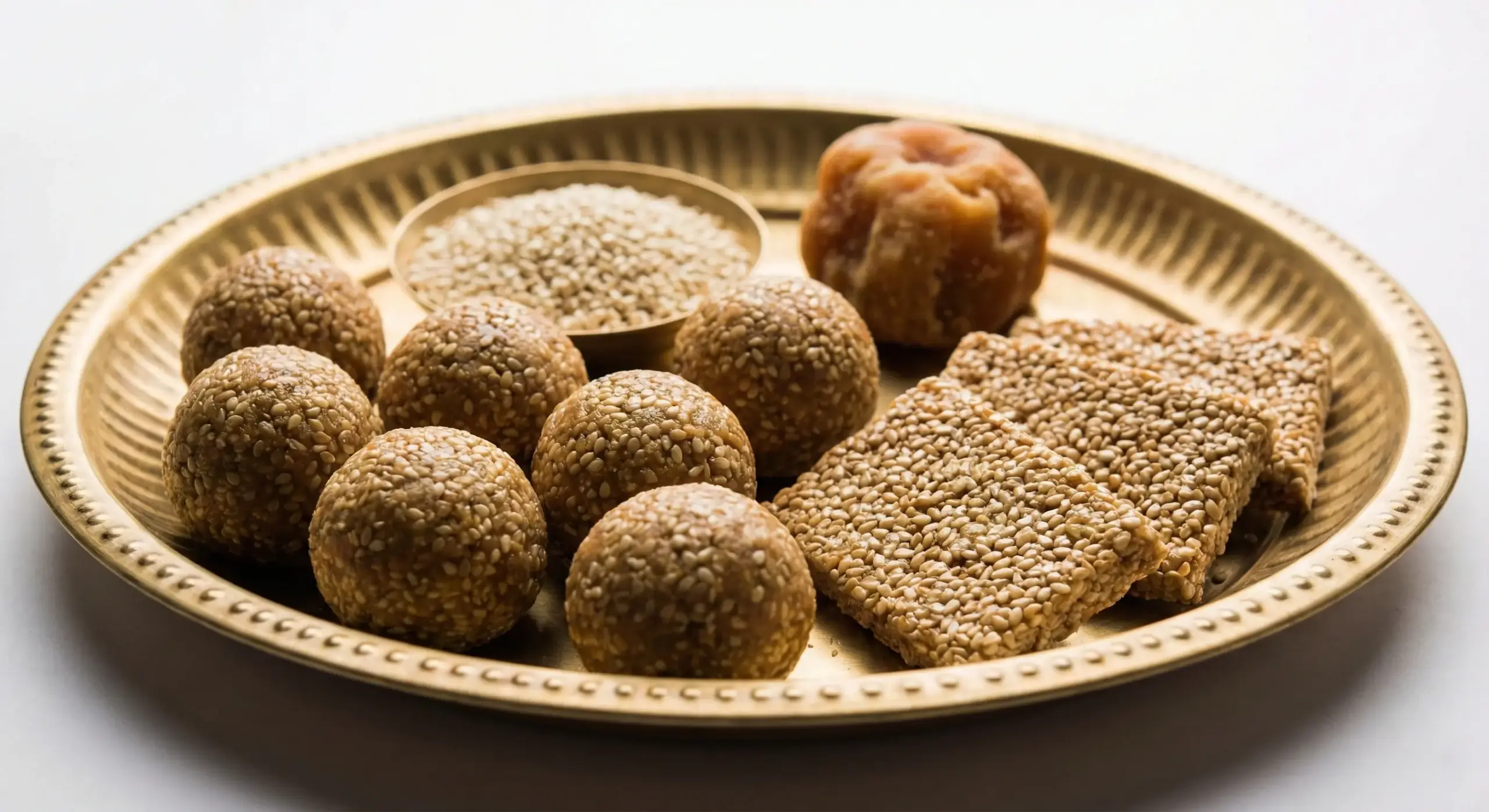
Makar Sankranti in mid-January marks the sun’s northward turn. Kashi marks it with a holy dip in the Ganga and with food. Sesame (til) and jaggery (gud) are made into laddus and chikki, and khichdi is cooked and shared in temples and homes. The PTI report mentioned at the top of this post confirms the khichdi, chivda and peanut brittle offered at Kashi Vishwanath on the day. Traditional belief treats sesame and jaggery as warming foods, which is why they are tied to the cold.
Vasant: spring and Holi
As the cold fades, the table lightens. Holi brings gujiya, a fried pastry filled with khoya and dried fruit, and thandai returns for the festival. The last stocks of winter dairy are used up before the heat arrives.
Where the public kitchens fit
The city’s seasonal rhythm does not stop at the household door. Lane vendors change what they sell through the year, a stall grinding sattu in summer may sell roasted sweet potato or malaiyo in winter, and temple kitchens follow the panchang with their own seasonal bhog. That adaptability is part of why the food in Kashi still feels tied to the weather. It also connects to the way Banaras works as a living city through its kitchens.
What this means for a home pantry
For a household that wants to follow the pattern, the seasonal logic translates into a few habits:
- Stock sattu, dried mango powder and rock salt before summer.
- Keep a good ghee and mustard oil through winter.
- Make the year’s pickles in the season each ingredient is at its best: mango in summer, lemon and amla in winter.
- Cook what grows nearby, in the month it grows.
Frequently asked questions
What is ritucharya?
The Ayurvedic idea of a seasonal regimen, which adjusts diet and habits to the six traditional seasons.
What do people in Varanasi eat in summer?
Sattu drinks and parathas, thandai and lassi, curd, light gourd vegetables and raw mango preparations.
Why are leafy greens avoided during Chaturmas?
Traditional households give the reason that leaves in the rains carry mud and insects. The practice is also part of the religious restraint of the period. It is a custom, not a medical claim.
When is malaiyo available?
In the cold months, roughly November to February, and usually only until late morning.
What is eaten at Makar Sankranti in Kashi?
Khichdi, til and gud sweets, chivda and peanut brittle, and a holy dip in the Ganga.
Is sattu eaten only in summer?
It is most associated with summer, but sattu is eaten across the year in litti and baati.
How do pickles fit into the seasons?
Each ingredient is pickled in its own season, and the jars supply flavour through the months when fresh produce is scarce or trusted less.
Sources used for this post: PTI report via ThePrint on Makar Sankranti in Varanasi (January 2026); Climates to Travel and Native Planet (Varanasi climate); Lonely Planet (Varanasi food guide); Incredible India (baati chokha); Tribune India (Pushpesh Pant on nimona); Deccan Herald (seasonal Varanasi food)