Blog
Mustard Cake and the Second Life of Pressed Seeds

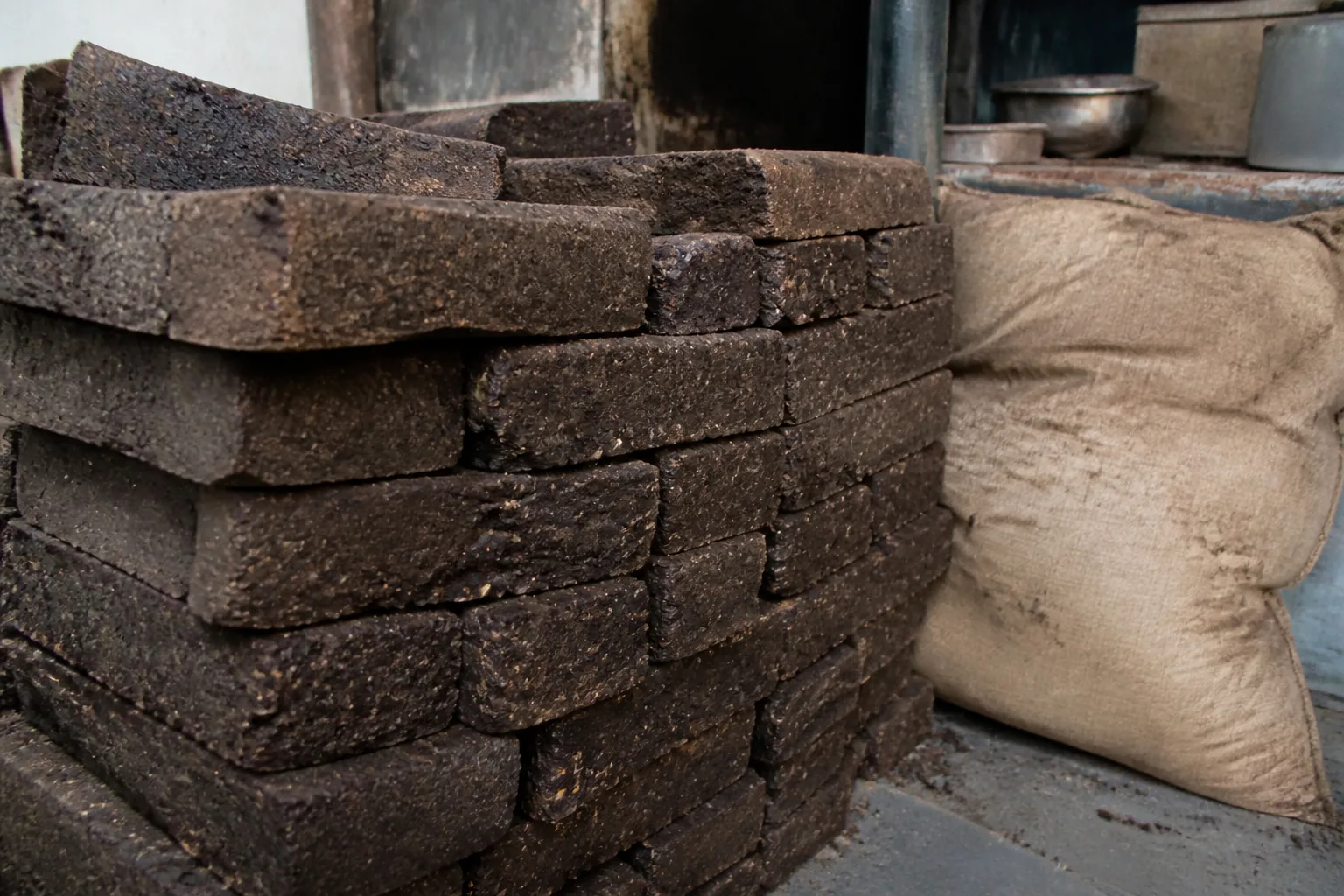
Wikipedia defines mustard cake in one line: it is the residue left after extracting the oil from mustard seeds. Press seeds for a bottle of oil and something solid is left behind, and in a village that solid has a name, sarson ki khali, and several uses.
The short answer
In short
Mustard cake, or sarson ki khali, is the solid residue after oil is pressed from mustard seed. It is used as fertiliser and as livestock feed. India’s Agmark standards grade it, including a ghani cake from oil pressed by a bullock driven kolhu.
What is left
A food science lecture on oils and fats says the oilseeds contain 30 to 48 percent oil depending on variety and climate, and that the oil cake is used as cattle feed and manure. So a large share of the seed stays behind after pressing, as cake. How much oil is taken out depends on the method. Our guide to kacchi ghani mustard oil explains the pressing.
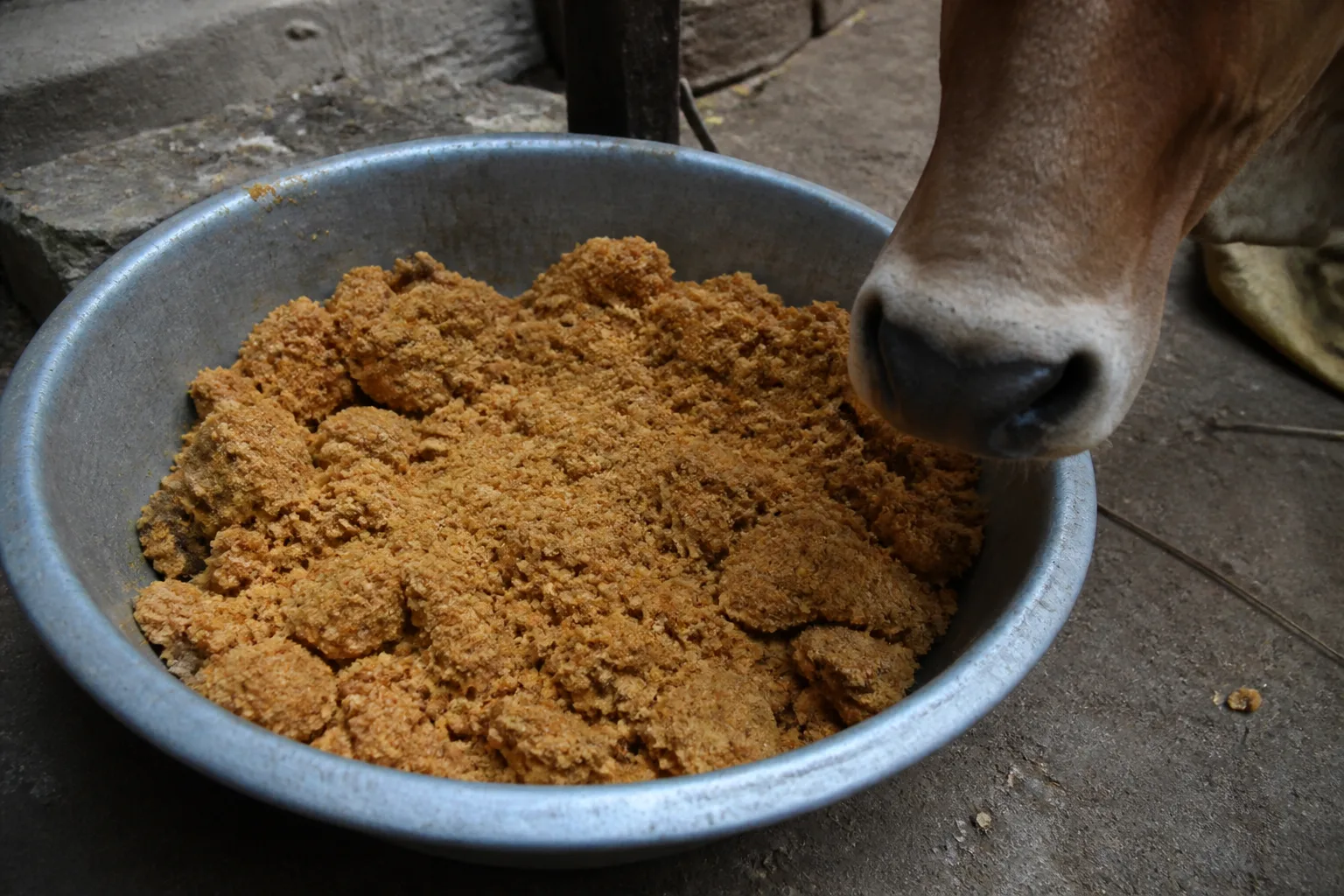
Where it goes
- Fertiliser. Wikipedia says it is used as plant fertiliser, including for fruit, flower and vegetable crops.
- Livestock feed. Wikipedia also lists use in livestock feed, and the lecture above says cattle feed.
The two uses rest on different rules. A seller’s page says that mustard cake is a valuable feed supplement when it is detoxified properly, which is a reminder that pressed mustard is not simply fed as it comes. We do not give feeding advice. If a farmer is unsure, a veterinarian is the person to ask.
The Agmark standard
The Agricultural Marketing Advisor’s office hosts a government Schedule on mustard oil cake, expressed. It sets grades with limits on moisture and other components, and it defines the cake types. Under it, oil cake of good and fair grades is the product obtained after the extraction of oil from mustard seed by power driven machinery, and ghani oil cake is the product obtained after extraction by an animal driven ghani or kolhu. The material must be free from harmful constituents including argemone and castor cake or husk, free from rancidity, adulterants, insects or fungus infestation and from fermented, musty or other objectionable odour.
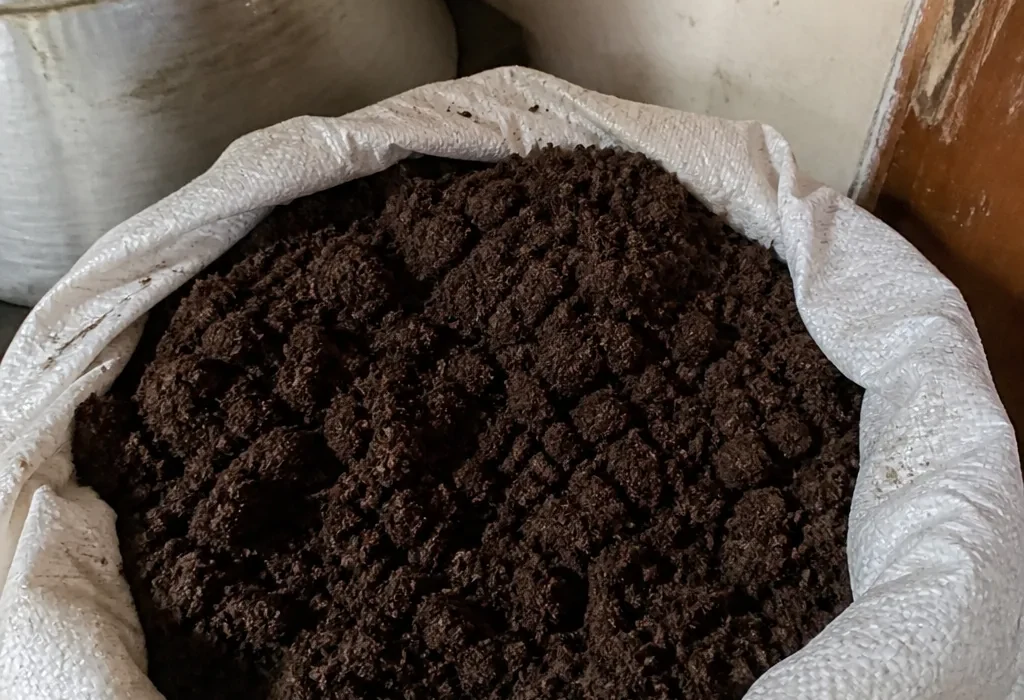
So the cake has a quality standard of its own. Seeds that are clean and free of adulterants matter for the cake as for the oil.
Frequently asked questions
What is mustard cake used for?
Fertiliser for crops and feed for livestock, according to Wikipedia.
What is left after oil is pressed?
The solid residue called oil cake, or sarson ki khali.
What is ghani oil cake?
The Agmark schedule defines it as cake from oil extracted by an animal driven ghani or kolhu.
Sources used for this post: Wikipedia, Mustard cake.; Warehousing Development and Regulatory Authority, Agmark Schedule V-A, mustard oil cake expressed; Sources of Oils and Fats lecture notes (SlideShare), mustard; Global Linker, mustard oil cake (seller page, used for one caution only).