Blog
Morning Food Habits of Banaras Households: Kachori, Sabzi, Jalebi and the Logic Behind Them

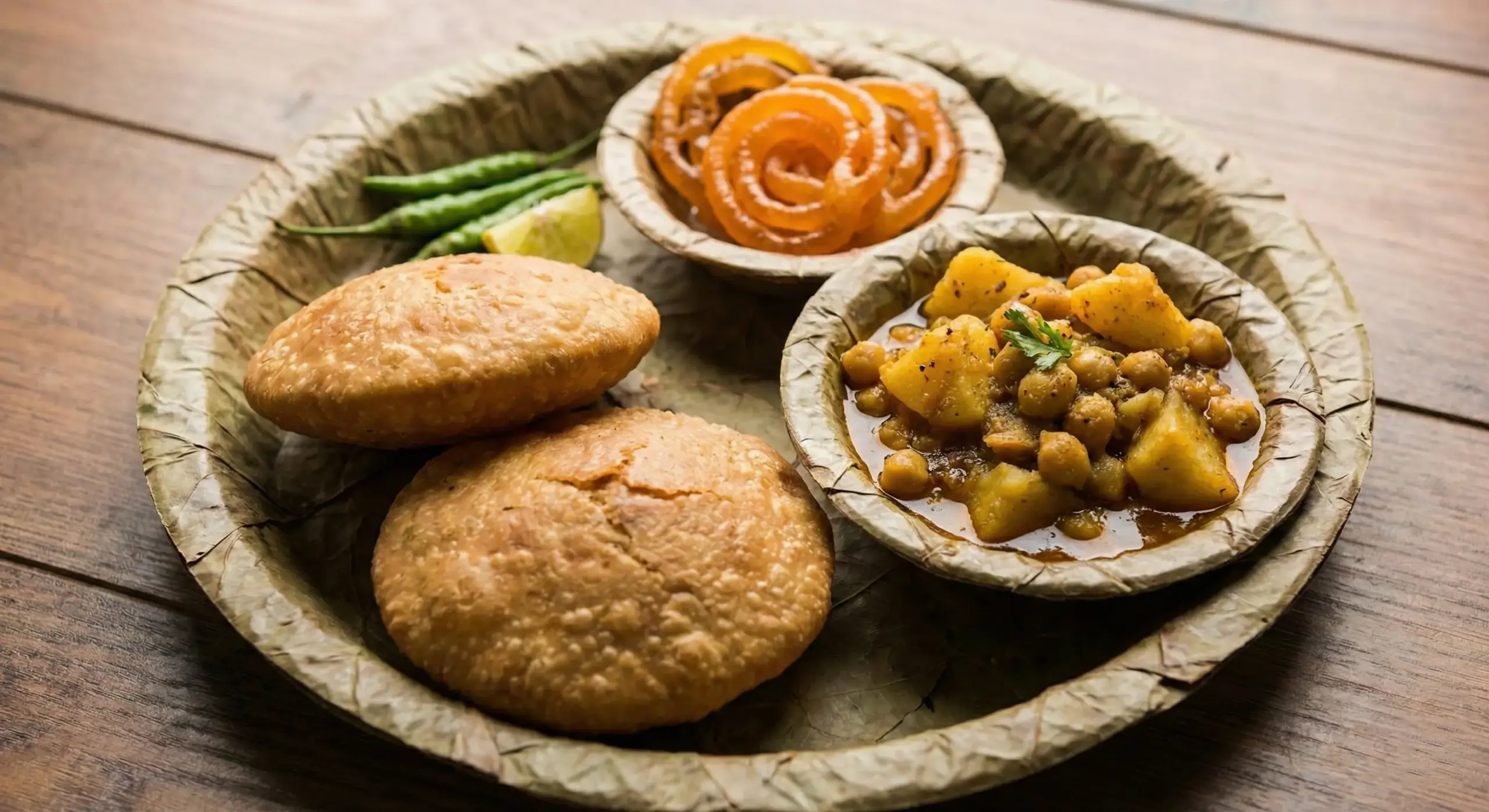
Kachori Gali in Varanasi fills before sunrise, and the best stalls are often sold out by late morning. That single detail tells you most of what you need to know about how Banaras eats in the morning: breakfast is an early, serious meal, cooked fresh in front of you, and finished while the day is still cool.
This guide covers what a Banaras household and the city around it actually eat between waking and mid-morning, how that changes with the seasons, and why the choices make sense once you understand the older ideas about food in Kashi. Where a point rests on family tradition and not on a documented source, we say so.
The short answer
In short
A traditional Banaras morning starts with prayer and a bath in the Ganga or at home, and food comes afterwards. The everyday breakfast is kachori with a rasedar aloo sabzi and jalebi, often with curd on the side. Winter brings malaiyo and chura matar, summer brings sattu, and the rainy months favour lighter food. Onion and garlic are usually left out of the sabzi, and mustard oil, ghee and hing do most of the flavouring.
Before the first bite: the morning routine
In a traditional household, the day does not begin with the kitchen. It begins in the hour before dawn that the old texts call Brahma Muhurta, when many families wake, wash, and pray. In Banaras, a large number of people walk to the ghats for a dip in the Ganga and water offered to the rising sun. Others do the same ritual at home with a small pot of river water.

Families who follow the custom more strictly take a first sip of Gangajal, tulsi water or charanamrit (the water from a deity’s bath) before they eat anything. This is a household practice, not a rule across the city, and many families skip it. What holds across most traditional homes is the order: wash, pray, then eat. Nobody reaches for breakfast on waking.
That order explains the portions. By the time food arrives, a person has been up for an hour or two, walked to the water and back, and has a real appetite. A light snack would not match that, and neither would a sweet drink alone.
Kachori, sabzi and jalebi: the city’s signature breakfast
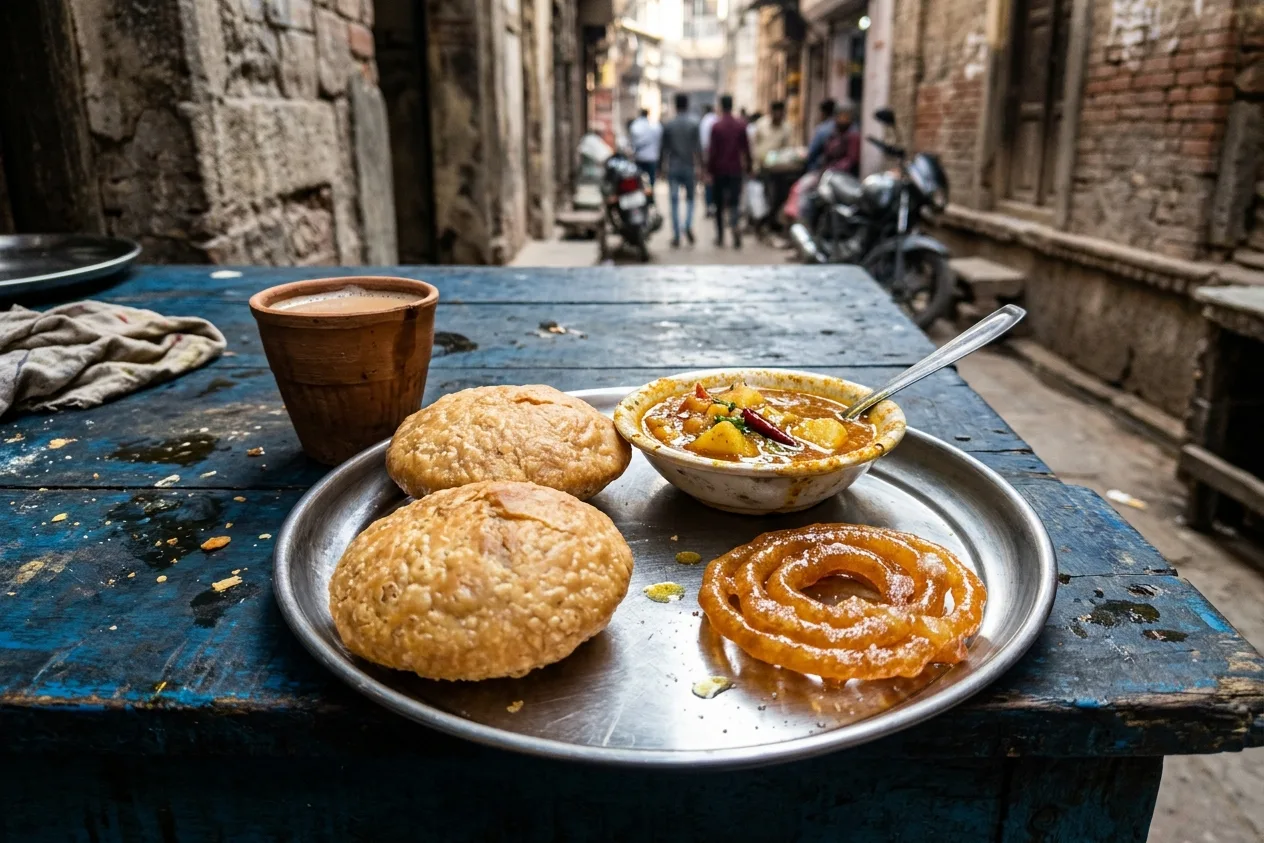
Kachori sabzi and jalebi is widely described as the quintessential Varanasi breakfast. The three parts are built to work together.
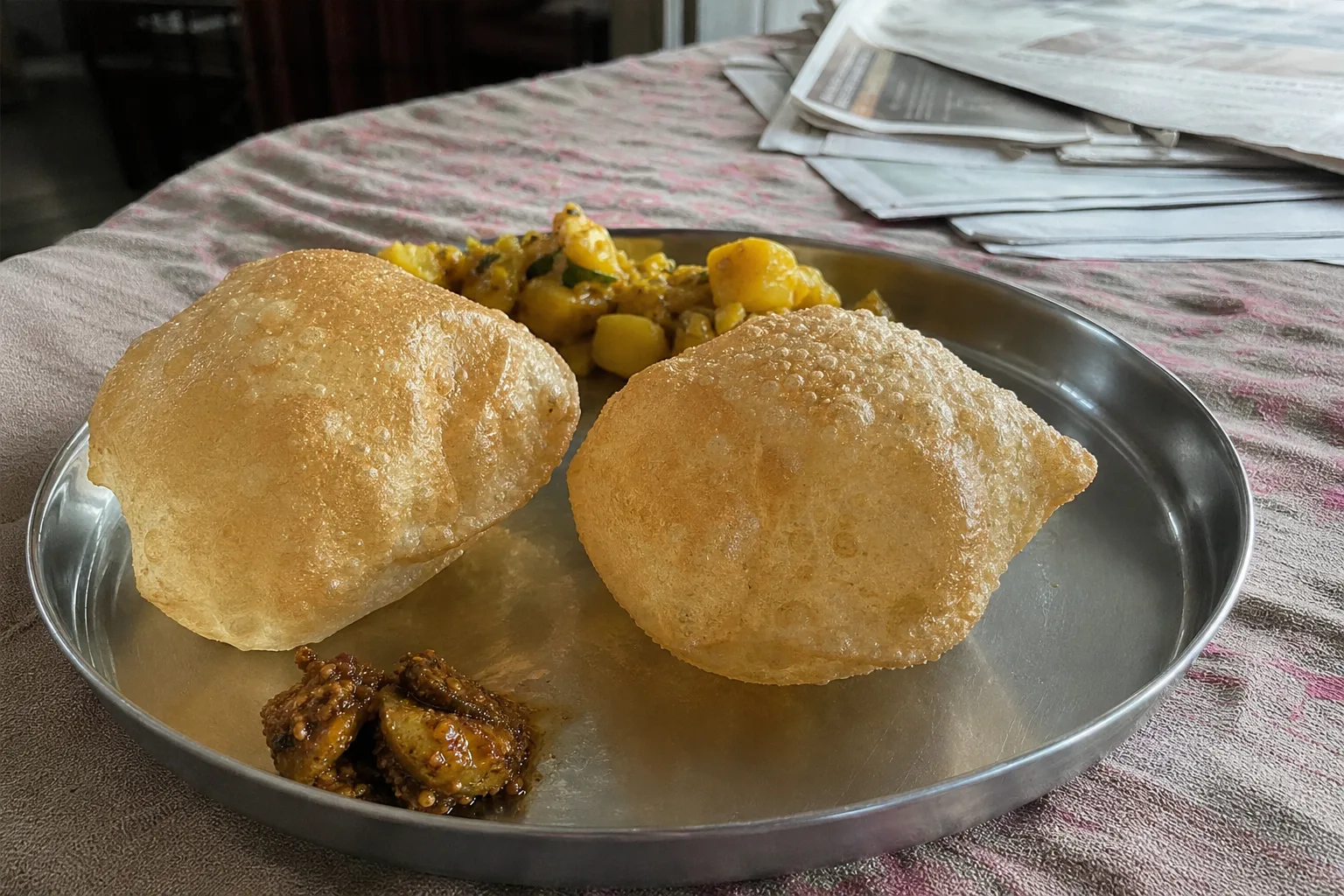
The kachori in Banaras is a small, round, puffed fried bread. The dough is wheat, and the filling is a spiced paste of ground dal, usually urad or moong. Two sizes turn up in conversation: the chhoti kachori, which is a bite or two, and the badi kachori, which is larger and fuller. Both are fried in ghee or oil on the spot and eaten hot.
The sabzi is a thin, tangy, rasedar potato curry. Banaras households and most shops make it without onion and garlic, and the flavour comes from hing, cumin, fenugreek seeds, and amchur (dried mango powder), with green chilli for heat. Tomato is often left out as well, which is why the gravy tastes sharp from the dried mango and fenugreek and not sweet from the fruit. Some versions are mild enough for children, others are properly hot.
The jalebi is a deep-fried spiral soaked in sugar syrup. In Banaras you will also see larger ones, sometimes called jalebas, and a spoon of curd is commonly taken to cut the sweetness. The pairing of salty-spiced kachori with a sugar-soaked jalebi is deliberate. The sweet resets the palate between bites of chilli and hing.
The lane that eats at dawn
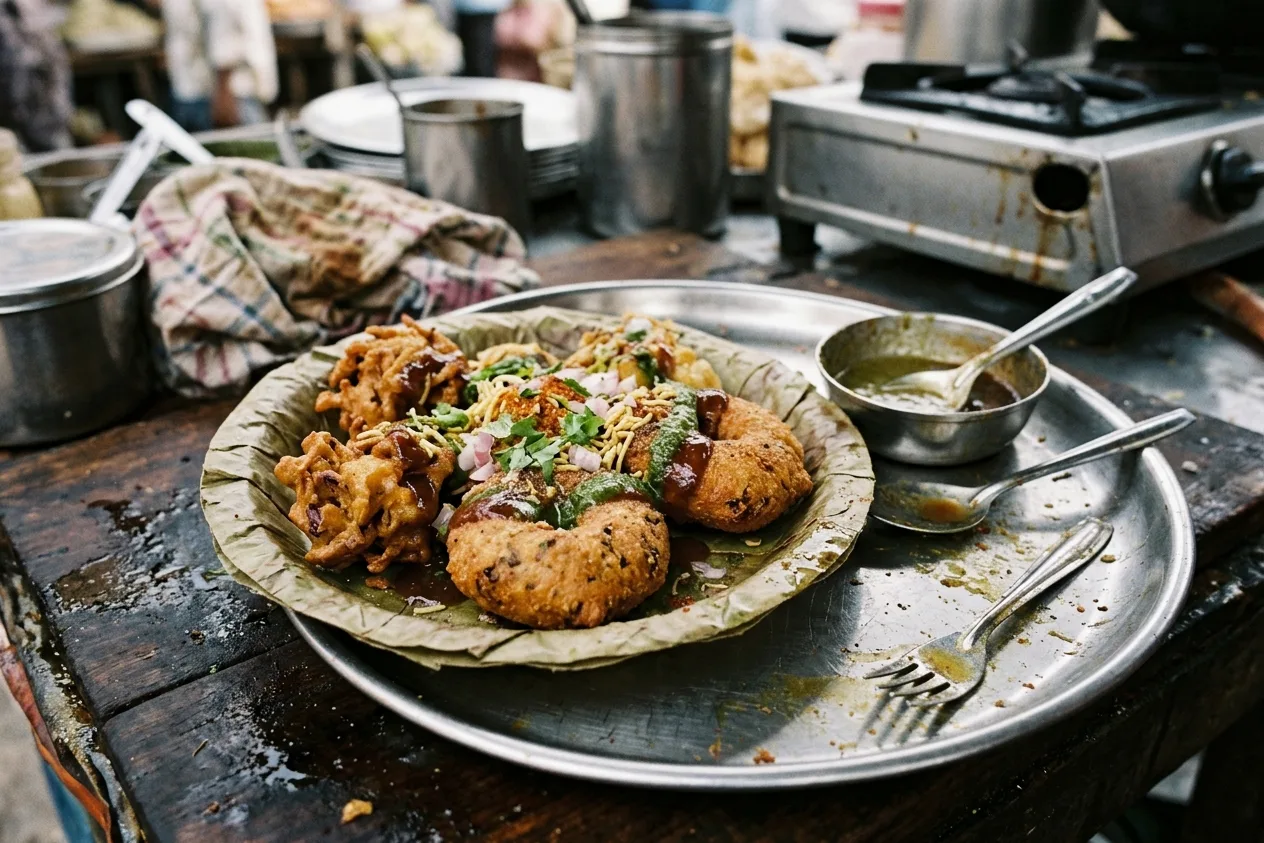
Near Godowlia and the Kashi Vishwanath area, one lane is known simply as Kachori Gali, and in the Thatheri Bazaar area an entire lane is called Kachori-gali, with breakfast often served in a leaf pattal and a kulhad of tea or curd. Long-running shops there open before most of the city is awake. If you plan to eat there as a visitor, go early, because the popular counters run out and close up well before noon. Prices, shop names and opening hours change, so check on the day and do not rely on any figure quoted in a blog post, including this one.
Why this combination, and why fried food in the morning
The usual objection from visitors is that fried food and sugar make a heavy start. The traditional answer, which is family belief and not nutrition science, is that the morning is when the body is thought to be strongest and most active, so the heaviest cooked food of the day makes sense early, and the evening meal is kept light on purpose. That idea shows up again in our guide to evening meals in traditional Banarasi homes. It also reflects work: ghat labourers, boatmen, weavers and shopkeepers needed a breakfast that lasted until a late lunch.
Kachcha and pucca food: the old rule behind the menu
Banaras households have long sorted cooked food into two kinds. Pucca food is fried in ghee or oil, such as puri, kachori and jalebi. Kachcha food is boiled or cooked in water, such as dal, rice and plain roti. The old convention, which many families still follow in some form, is that pucca food travels better, can be eaten in many settings and keeps longer without spoiling in the heat, while kachcha food was kept to the home kitchen and its own purity rules.
This is part of why a puri or kachori breakfast is common at gatherings and on the road, and why a halwai (the sweet and snack maker) became central to the city’s food life. The halwai in a Banaras lane works almost as an extension of the household kitchen. Families buy breakfast, sweets for festivals and snacks for guests from the same shops year after year.
What changes with the season
A Banaras household does not eat the same breakfast in January and in June. The shift is one of the clearest things about the city’s food, and it connects directly to how pickles and preserved food are used through the year (see our note on seasonal eating practices in Kashi).
| Season | Typical morning food | What it adds |
|---|---|---|
| Winter | Malaiyo, chura matar, kachori sabzi with hot tea | Warmth, fat and sweetness for cold mornings |
| Summer | Sattu drink or sattu paratha, curd, light poori sabzi | Cooling, filling and quick to digest |
| Monsoon | Lighter food, fewer leafy greens, fried snacks with ginger tea | Caution about spoilage and indigestion |
| Festival days | Phalahar, kuttu or singhara puri, fruit, sabudana | Observes the fast |
Winter: malaiyo and chura matar
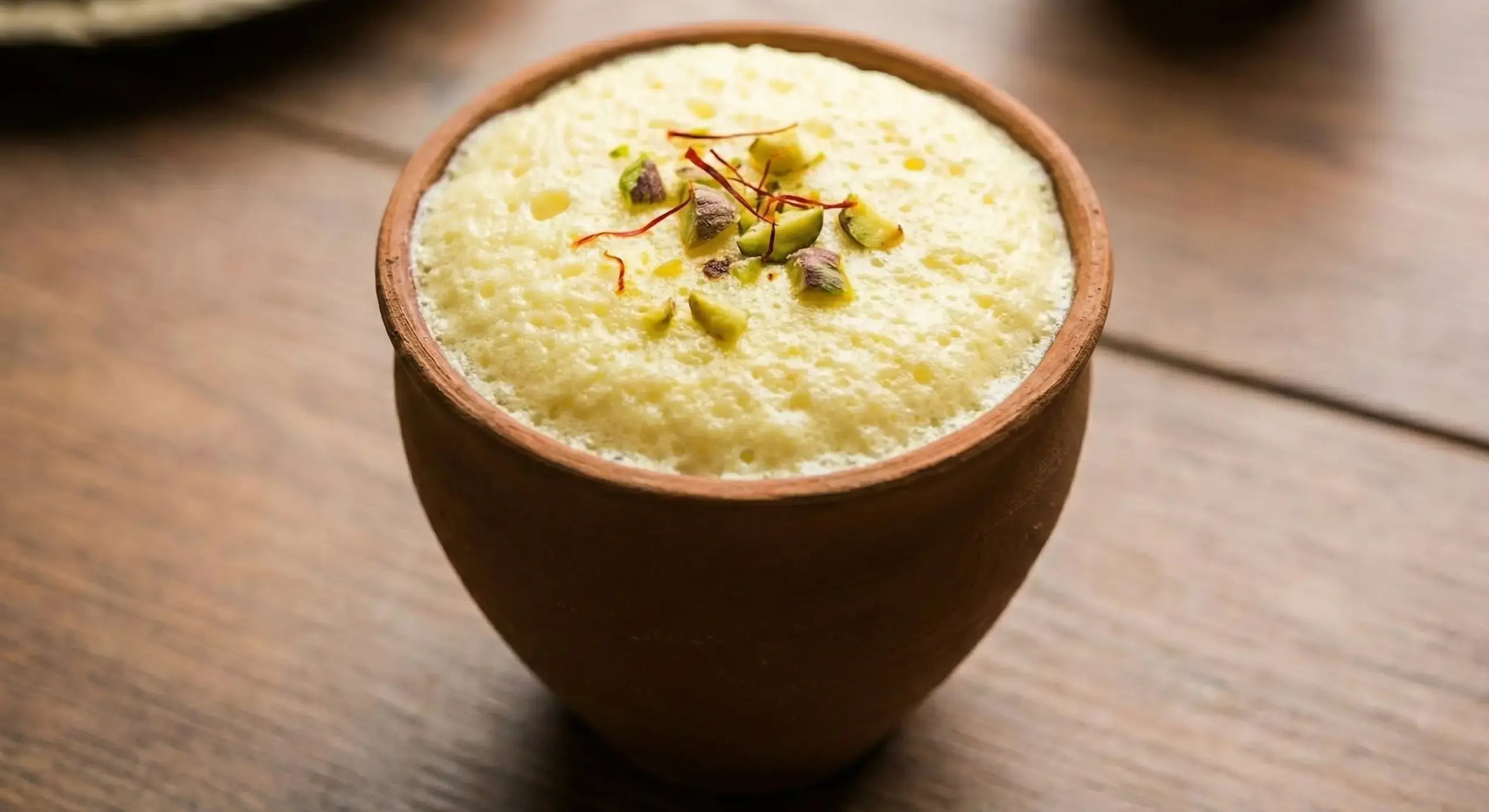
Malaiyo is a Banaras winter speciality that appears roughly from November to February and is usually sold until about eleven in the morning. Milk is boiled slowly, often with saffron and cardamom, in a wide iron pan, then left out overnight in the cold and dew. In the early morning it is whisked until a froth rises and sets into a light foam, which is spooned into a kulhad or a leaf bowl. It has almost no weight, and it melts in the mouth. The dew is part of the method, which is why it can only be made in the colder months.
Chura matar is a fresh pea and flattened-rice dish, made with winter peas, with no onion or garlic, and often finished with ghee and black pepper. It is warm, a little sweet from the peas, and very filling. It shows up on winter breakfast tables across the city, and in most households it is made only while fresh peas are in season.
Summer: sattu
When the heat rises, many homes shift to sattu, a flour of roasted gram. Stirred into water with salt, roasted cumin and lemon it makes a drink that is thick and cooling, and it is also kneaded into parathas with spices. It is inexpensive and portable, and has been a staple across eastern Uttar Pradesh and Bihar for generations.
The rainy months
Traditional Banaras households tend to avoid leafy greens in the monsoon because of the risk of spoilage and stomach upset in wet weather, and shift towards dry, cooked, lightly spiced food. Ginger tea with fried snacks is the common comfort.
The pastoral side: curd, milk and kulhad
Banaras sits in the Gangetic plain, and its pastoral communities (traditionally Ahir and Yadav families) have long kept the city supplied with milk, curd, ghee and paneer. That dairy supply shapes the breakfast table. Curd is a common accompaniment, tea or milk is served in a kulhad (a clay cup that adds a faint earthy note and is discarded after use), and sweets such as rabri and malai appear in the early hours.
Fasting days and the morning meal
On Ekadashi, Mondays during Shravan and the nine days of Navratri, many households keep a fast. Breakfast on those days changes to phalahar: fruit, milk, sabudana, kuttu (buckwheat) or singhara (water chestnut) flour, and sendha namak (rock salt) in place of regular salt. The household kitchen separates fast food from regular food, with its own pots and often its own cook, and the rules are followed with some care.
Where pickle fits at breakfast
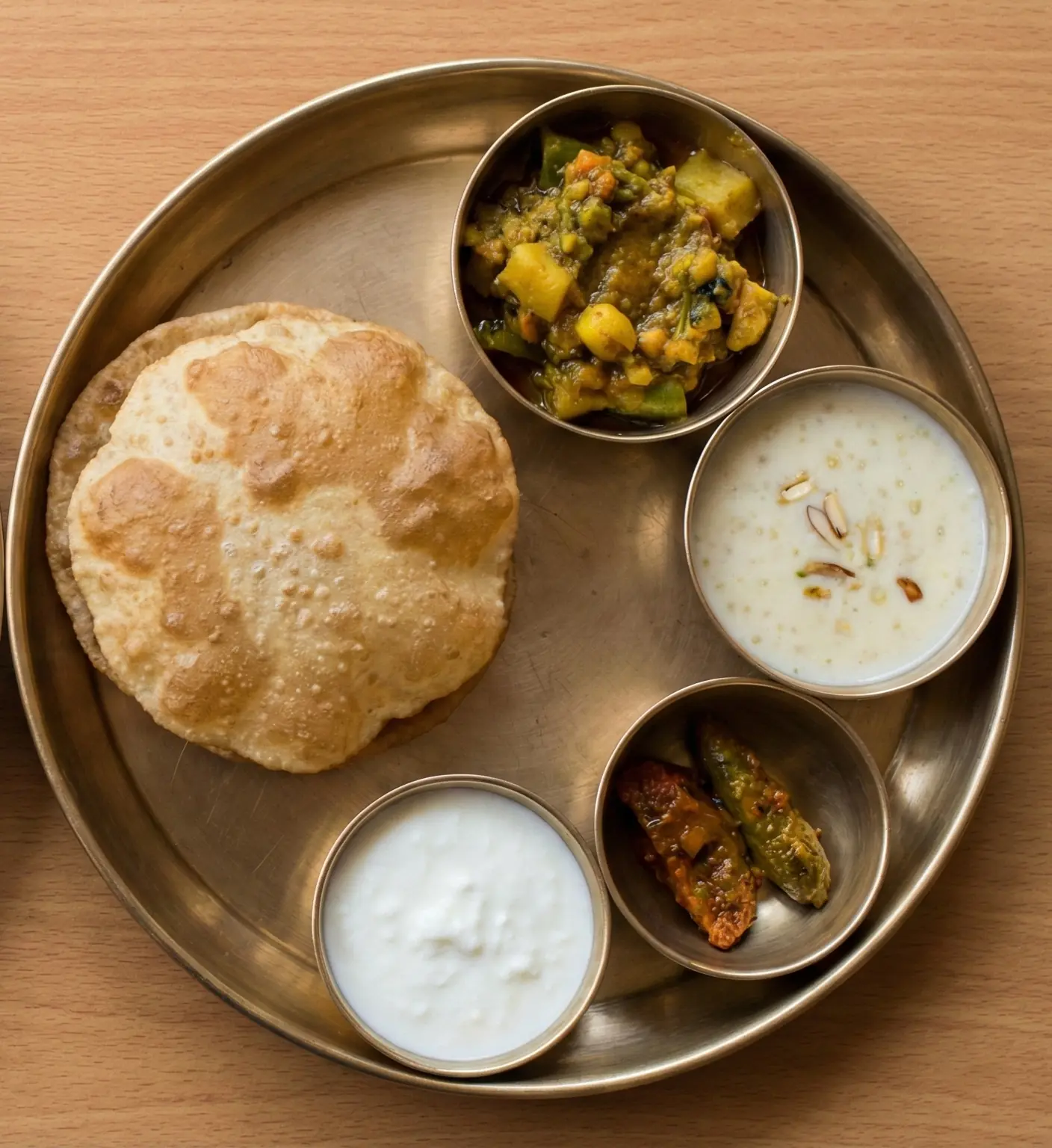
Pickle is not the centrepiece of a Banaras breakfast the way it is at lunch, but it is rarely absent. A small spoon of lemon, mango or green chilli pickle often sits beside a paratha or a puri, and sattu is almost always taken with a bit of pickle and raw onion or green chilli on the side where onion is used at all. This is where the oil-heavy, sun-cured pickles of the region do their job: a small portion adds salt, sourness and sharpness to a plain, filling meal. Our post on the role of pickles in the Banaras thali goes into this in more detail.
Common mistakes visitors make
- Arriving late. The famous counters are at their best before eight and often finished by late morning.
- Expecting a garlic-and-onion gravy. The traditional sabzi is built on hing, fenugreek and amchur, and is meant to taste sharp and light.
- Skipping the jalebi. Eating the kachori without the sweet misses the balance the combination was designed for.
- Treating malaiyo as a year-round item. It is a winter food made in dew, and out of season versions are often stand-ins.
- Relying on quoted prices. They rise, and old blog posts go stale quickly.
Frequently asked questions
What is the most common breakfast in Banaras?
Kachori with a rasedar aloo sabzi and jalebi is the most widely known breakfast in the city, eaten at lane-side shops and at home on festival mornings.
Is Banarasi breakfast made without onion and garlic?
The traditional kachori sabzi is usually cooked without onion and garlic, using hing, cumin, fenugreek and amchur instead. Some modern shops and homes do use them, so it varies.
What is malaiyo and when is it available?
Malaiyo is a light milk foam made in the cold months, roughly November to February, from milk boiled with saffron and cardamom and set out in the dew. It is usually sold early in the day, until about eleven.
What is chura matar?
A winter dish of flattened rice (chura or poha) cooked with fresh green peas, usually without onion or garlic, often with ghee and black pepper.
Is the morning Gangajal or charanamrit custom universal?
No. It is a household practice followed by some traditional families, and we recommend confirming details with a family before describing it as the norm.
What do Banaras households eat in summer mornings?
Sattu in drink or paratha form, curd, and light puri or paratha with a sabzi are common choices in the heat.
Does a Banaras breakfast include pickle?
Often a small portion does, particularly with paratha, puri or sattu. It adds salt and sourness to a plain meal.
Sources used for this post: Varanasi breakfast and Kachori Gali coverage from local food and travel publications; Varanasi malaiyo and chura matar coverage from Indian food and travel publications.