Blog
Why Banaras Food Is Simple Yet Flavorful: Ghee, Patience and Very Few Spices

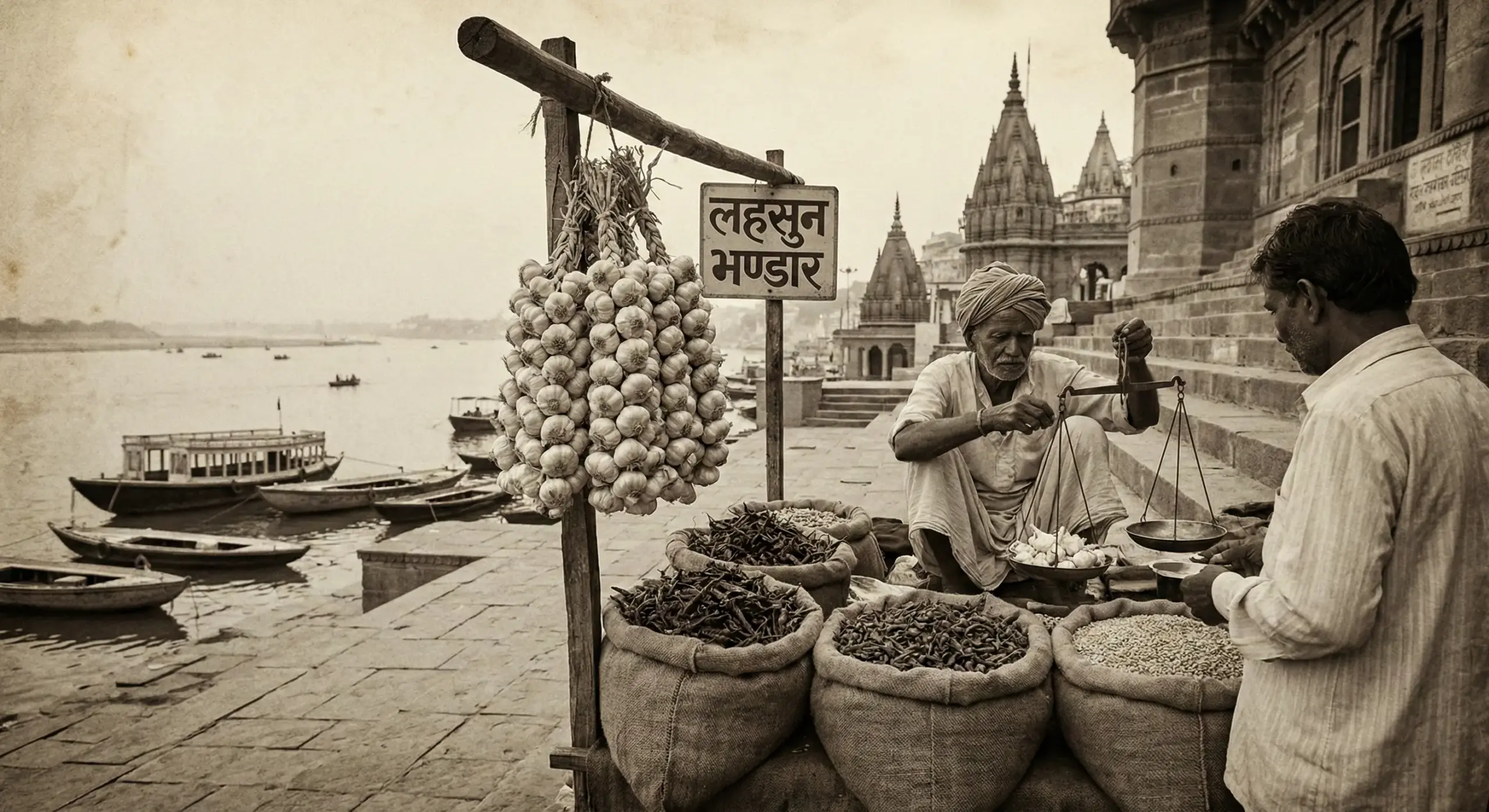
A traditional Banarasi kitchen runs on cumin, black pepper, hing, turmeric, dried ginger and green chilli, which is a short shopping list next to most North Indian cooking. The food still tastes full and rounded, and the reasons come from belief, geography, technique and patience in roughly equal parts.
This guide sets out those reasons one at a time, so that a reader can taste a plate of Banarasi food and understand what is happening in it.
The short answer
In short
Banarasi food looks plain because it follows satvik thinking, which avoids onion and garlic and prefers fresh seasonal produce. It tastes rich because it leans on good ghee and mustard oil, a hot tempering at the right moment, and slow cooking that lets a few spices do their work. Hing stands in for the pungency of onion and garlic. The result is food that is light on the plate and layered on the tongue.
Satvik thinking: the starting point
Indian food philosophy describes three qualities, or gunas: sattva (clarity and calm), rajas (activity and passion) and tamas (heaviness and dullness). Food is sorted into the same three groups. Fresh vegetables, grains, milk, ghee and fruit are called satvik. Hot, sour and heavily spiced food is called rajasic. Stale, fermented or very pungent food is called tamasic.
Onion and garlic fall into the last two groups in traditional thinking, and writers on Varanasi note that the city’s cooking forbids them because they are believed to increase restlessness and anger. Travel and food writers describe local satvik cooking in Varanasi as eaten mainly at home, with restaurants adjusting for visitors. One Outlook Traveller writer suggests the no-onion, no-garlic Vaishnava food culture may have spread in a city of Shiva through the influence of the Gopal Mandir. That is a theory, and we offer it as one.
Whatever the origin, the effect on the kitchen is large. Take away onion and garlic, and a cook loses the two ingredients that build most North Indian gravies. What replaces them is the interesting part.
Annapurna and the idea of feeding
Banaras is also the city of Goddess Annapurna, the goddess of food. Cooking for the household is treated as a kind of service, and a meal is expected to be clean, warm and made with attention. That attitude produces a particular style: nothing is rushed, nothing is wasted, and the cook tastes before serving. The same attitude shows up in the temple kitchens described in our post on food offerings in Banaras temples.
The soil and the dairy
The Ganga’s alluvial plain gives Banaras fertile land and a steady supply of vegetables, pulses and grain. The pastoral communities of the region, traditionally Ahir and Yadav families, keep the city supplied with milk, curd and ghee. Ghee in a Banaras kitchen is not an occasional luxury. It is the standard cooking fat for tempering, for finishing dal, for frying kachori, and for rubbing on a hot phulka.
Mustard oil does similar work in the vegetable pot. Street food in Varanasi, according to one writer, is made with either mustard oil or desi ghee. That choice gives Banarasi cooking two distinct voices: the nutty sweetness of ghee, and the sharp bite of mustard oil. Our post on mustard oil in Banaras cooking covers the second in more depth.
The short spice list, and what each one does
| Spice | What it does in a Banarasi pot |
|---|---|
| Cumin (jeera) | The base note. Tempered whole in hot ghee, it gives a toasted, earthy smell |
| Black pepper | Gentle, lingering heat, often used where chilli would be too sharp |
| Hing (asafoetida) | Stands in for the savoury depth of onion and garlic |
| Turmeric | Colour and a mild bitterness, used in small amounts or skipped |
| Dried ginger (saunth) | Warming and sharp, common in winter and in rainy-day dishes |
| Green chilli | Fresh heat, added whole or slit |
Amchur (dried mango powder), fenugreek seeds and coriander appear in specific dishes, such as the tangy kachori sabzi. The point is that each spice has a job, and the cook uses it with intent.
Hing in particular
Writers on Varanasi street food point out that where onion and garlic are not used, there is a liberal but careful use of hing. This is correct to the way Banarasi food tastes. A small pinch, fried for a few seconds in hot ghee, releases a deep savoury smell that fills the gap onion would otherwise leave. Use too much and it overpowers. Use it correctly and a plain potato or pea dish tastes finished.
The technique: tempering at the right moment
Most of the flavour in a Banarasi dish is added in the last step, the chaunk or tempering (also called tadka). The method is simple. Heat ghee or mustard oil until it is hot, add whole cumin and let it crackle, then hing, then a dried or green chilli, and pour the lot over the dal or sabzi, or add the vegetable straight into the pan.
The timing matters more than the ingredients. Spices burn within seconds, and a tempering that goes too dark turns bitter. The skill is in the sequence and in reading the smell. Cooks in Banaras describe it as listening to the pan.
Patience: itminan and slow cooking
An Awadhi chef quoted in Outlook describes the dining ideal of Lucknow as built on tehzeeb (etiquette), saleeka, nafasat (artistry) and itminaan (satisfaction). The same article contrasts Awadh’s strong flavours, whole spices and dum cooking, sealed to preserve aroma and finished with saffron and dried fruit, with Banaras, where the food is described as simple but extremely flavourful.
It is a fair contrast, and worth stating carefully. Awadh builds flavour through layering and sealed, slow cooking with a long spice list. Banaras gets there through restraint: fewer ingredients, fresher produce, and a pace that lets each one come through. Both rely on time. Neither is the lesser cuisine, and the two share a region.
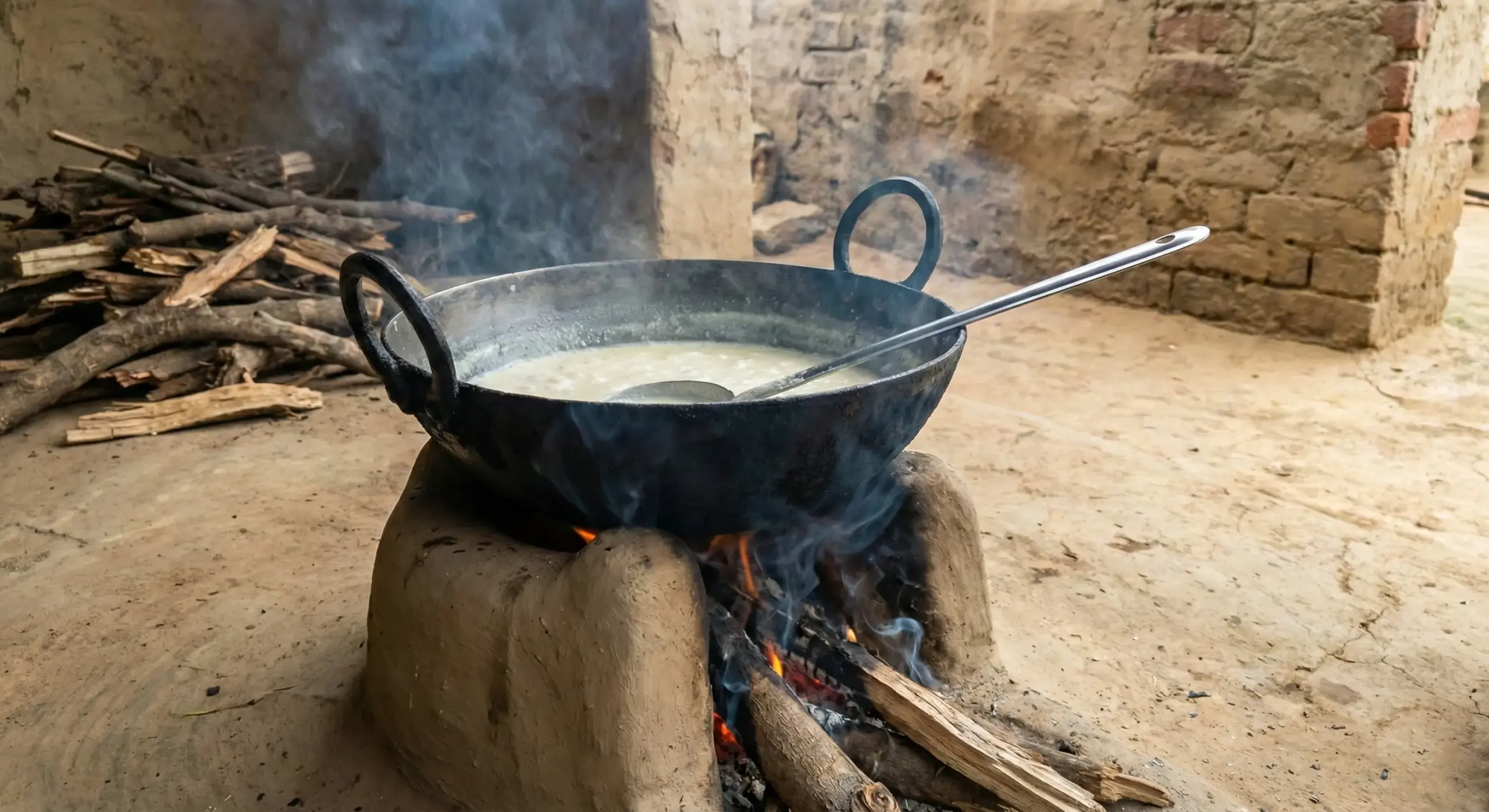
In a Banaras kitchen, pacing shows in small ways. Dal is allowed to simmer until it breaks down on its own. Vegetables are cooked on a low flame, covered, in their own moisture. Milk is boiled down in a wide iron kadhai until it browns slightly and develops a toasted, caramel taste, which is the same reaction that browns bread crust and roasted nuts. Chulha cooking, over wood or cow-dung fuel, gives food a gentle, steady heat that gas cannot quite copy, and some older cooks still insist on it.
Seasonal produce does the rest
With so few spices, the main ingredient has to taste of something. That is why Banarasi cooking is tied tightly to the season. Winter brings sweet peas and the nimona made from them, with potato and urad dal wadi. A chef at a Varanasi hotel describes nimona as a dish whose beauty lies in its simplicity, because the sweetness of fresh winter peas takes centre stage. Spring and summer bring lauki, turai and parwal. Autumn brings kaddu (pumpkin), which a typical Banaras home cooks with amchur for a sweet-sour finish.
A home cook will not make nimona with out-of-season peas if she can help it, and recipe writers on the dish say plainly that it needs fresh sweet peas. That discipline is part of the flavour. Ingredients that taste right do not need rescuing. See seasonal eating practices in Kashi for the full cycle.
The role of the sweet and the sour
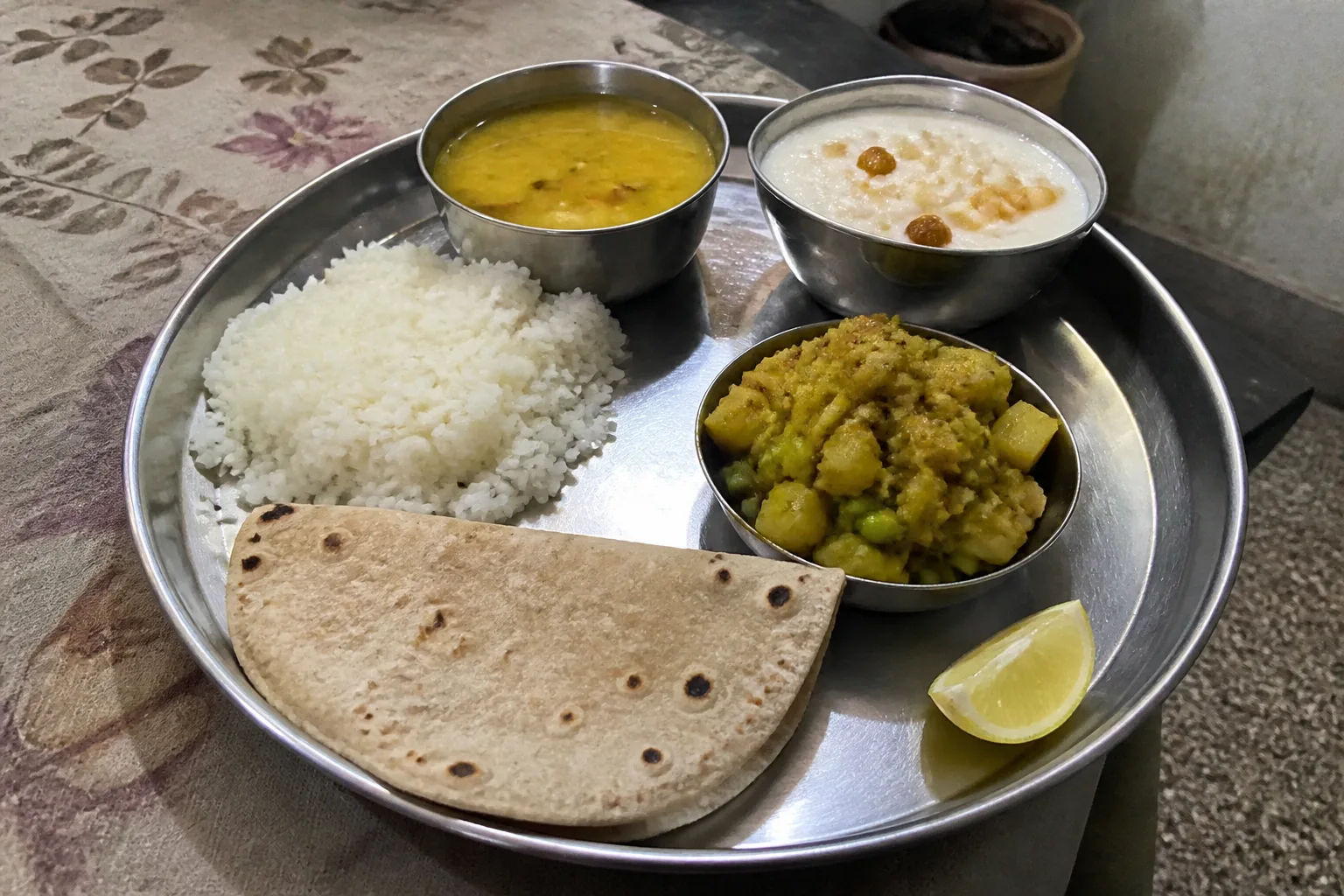
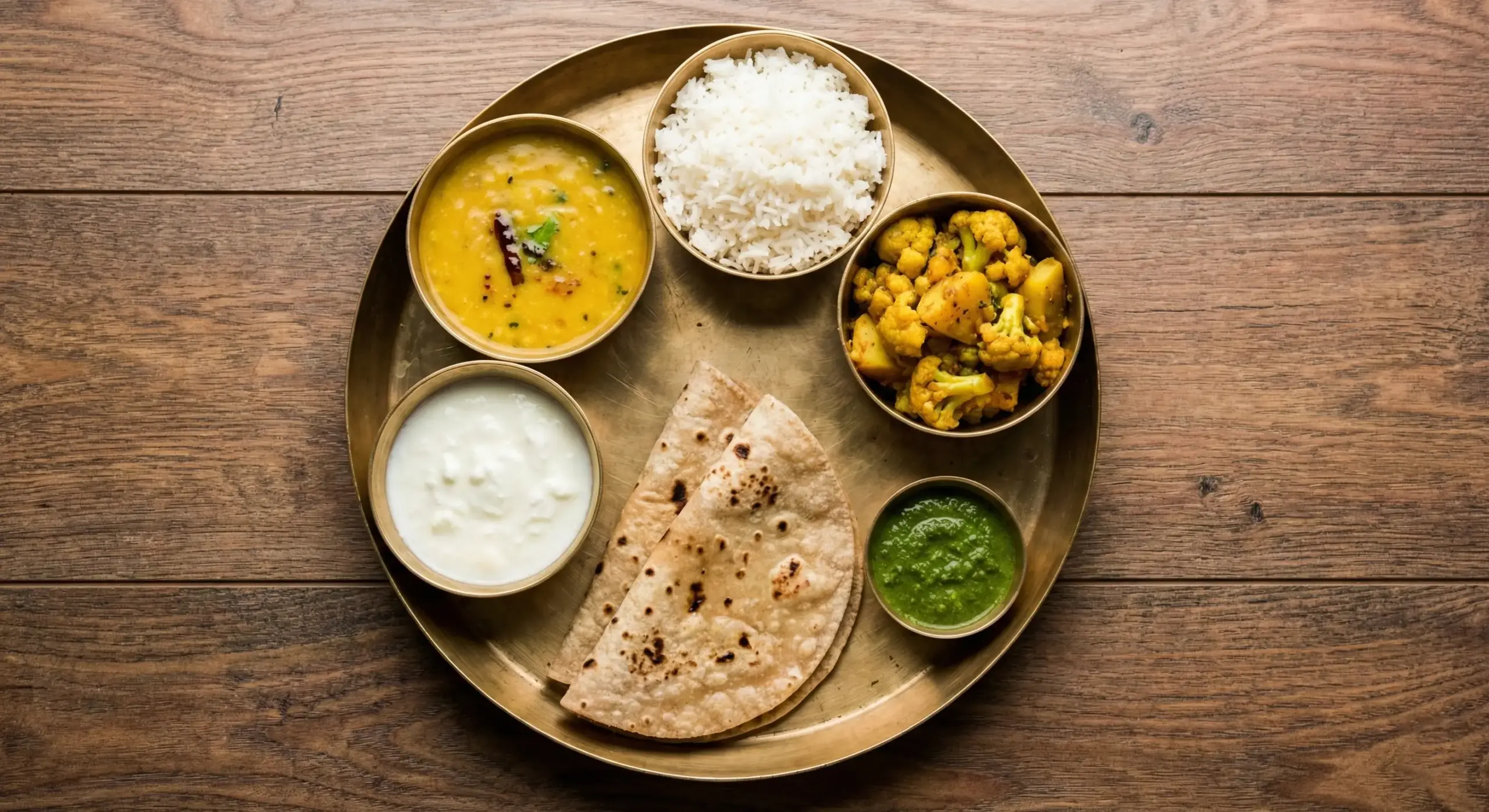
Plain food needs contrast, and Banaras gets it from the side of the plate. A pickle, a spoon of curd, a squeeze of lemon, a bit of green chutney. The pickles of the region are oil-rich, sun-cured and sharp, and a small spoon lifts a plate of dal and roti. In that sense the pickle is part of the cooking logic and not an extra. Our guide to the role of pickles in the Banaras thali explains how the thali is balanced.
Sweetness has its own place. The city is famous for its syrupy sweets, which are treated as a separate course and eaten after the meal, not woven into the savoury dishes as in some other regional cuisines.
What to try if you want to taste the idea
Visitors and home cooks who want to understand the flavour can start with a few dishes where the principle is easy to see:
- Matar nimona in winter, for the sweetness of fresh peas and the restraint of hing and green chilli.
- Moong dal with a ghee tempering, to taste how cumin and hing transform a plain pot.
- Kaddu ki sabzi with amchur, where sourness does the work onion usually would.
- Kachori with a rasedar aloo sabzi, the city’s breakfast, built without onion and garlic.
- Chooda matar, a simple dish of flattened rice and peas that Outlook calls divinely delicious.
Common misunderstandings
- “Simple” means bland. The cooking is spare but not weak. Hing, ghee and fresh produce carry a lot.
- Banarasi food is the same as Awadhi food. The two share a region and some dishes, but they differ in spice, technique and religious background.
- All Banaras food is satvik. The city also has a long non-vegetarian tradition, including Muslim gharana cooking that mixes Mughal, Awadhi, Hindu and East Bengal influences, and restaurants serve meat to cater to visitors.
- No onion and garlic means no depth. Depth comes from the tempering, the fat and the time taken.
Frequently asked questions
Why is Banarasi food made without onion and garlic?
Satvik and Vaishnava traditions in the city treat them as heating and stimulating, and many households and temples avoid them. Many restaurants and non-vegetarian households do use them, so it is a common pattern and not a rule.
What replaces onion and garlic in the cooking?
Hing, cumin, dried ginger, green chilli and amchur carry most of the flavour, with ghee or mustard oil as the base.
Is Banarasi food spicy?
It is usually moderate. Heat comes from fresh green chilli and black pepper, and the overall style favours balance over fire.
What is the difference between Banarasi and Awadhi food?
Awadhi cooking is associated with Lucknow and uses whole spices, sealed dum cooking and richer garnishes. Banarasi cooking, as writers describe it, is simpler, lighter and tied to satvik tradition.
What is a ghee tadka?
A tempering of spices fried briefly in hot ghee and added to a dish at the end, which supplies most of its aroma.
Why does nimona need fresh peas?
Recipe writers say the dish depends on the sweetness of fresh winter peas, and frozen peas give a flatter result.
Is Banarasi food healthy?
We make no health claim. It is traditionally light, seasonal and home-cooked, and uses ghee generously.
Sources used for this post: Outlook India, “Between Korma and Karma” (Awadh and Banaras contrast); Outlook Traveller on Banarasi food and Gopal Mandir; 30 Stades on Varanasi street food; Zee Zest, Slurrp and Tribune India (nimona); Lonely Planet on Varanasi food; The Quint on Banaras cuisines; Daily Trust on Varanasi satvik cooking. Traditional beliefs are described as such, with no health claim.