Blog
Ratlami Sev, Bikaneri Bhujia and Indori Sev: Regional Namkeen Compared

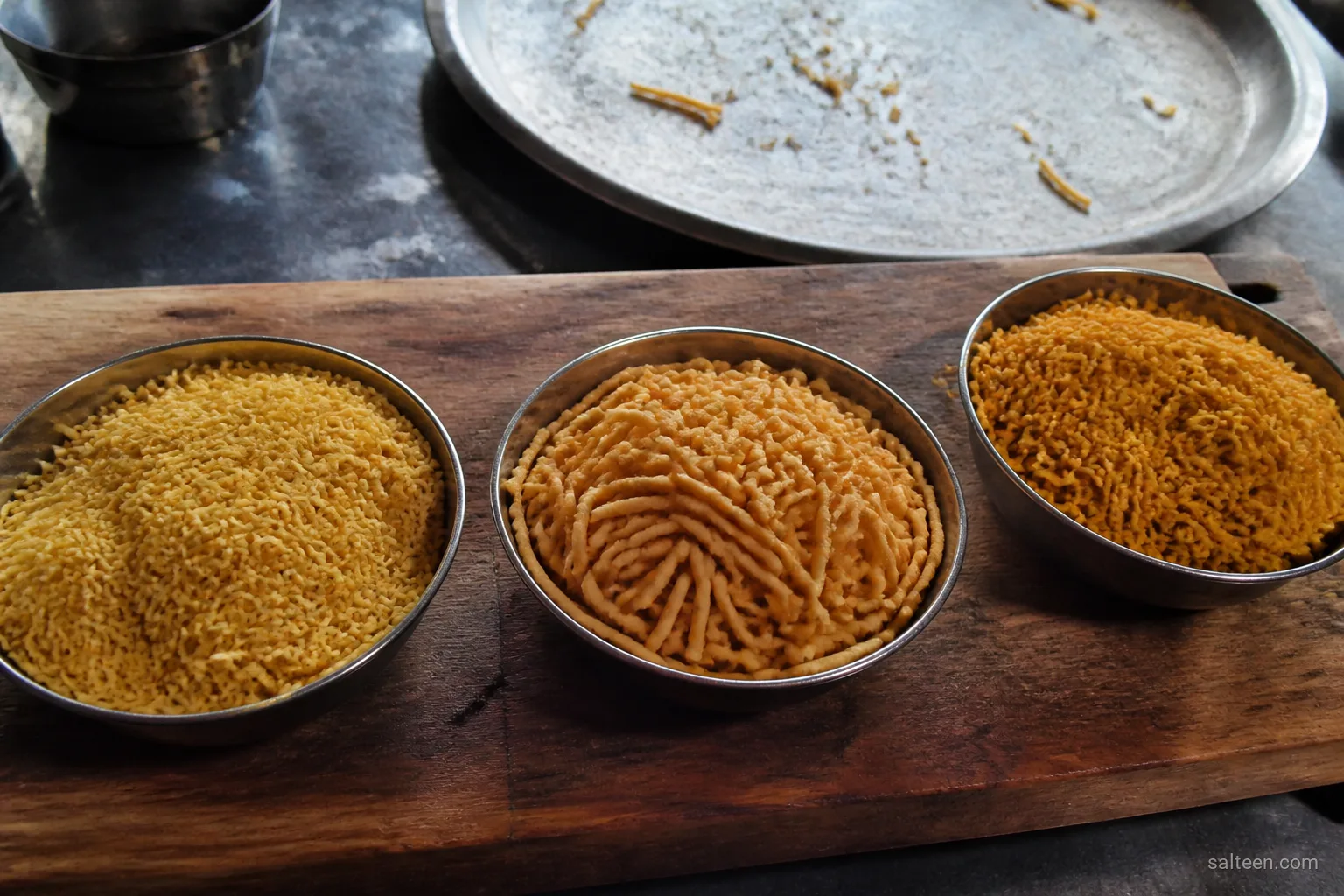
On a shop shelf the three packs look alike: golden strands of gram flour, fried and seasoned. A Hans India explainer puts the first split plainly. Sev uses only gram flour as its base, while bhujia blends gram flour with moth bean flour, which gives a crisper bite. Add the spice blend and the thickness of the strand, and the three namkeens separate.
This guide compares them by flour, spice, shape and home town.
The short answer
In short
Ratlami sev is a thicker, clove and pepper spiced sev from Ratlam in Madhya Pradesh. Bikaneri bhujia is a thin, crisp namkeen from Bikaner in Rajasthan, made with moth bean flour and gram flour. Indori sev is the Indore style of the same sev family, and the name overlaps with Ratlami in many shops.
Ratlami sev
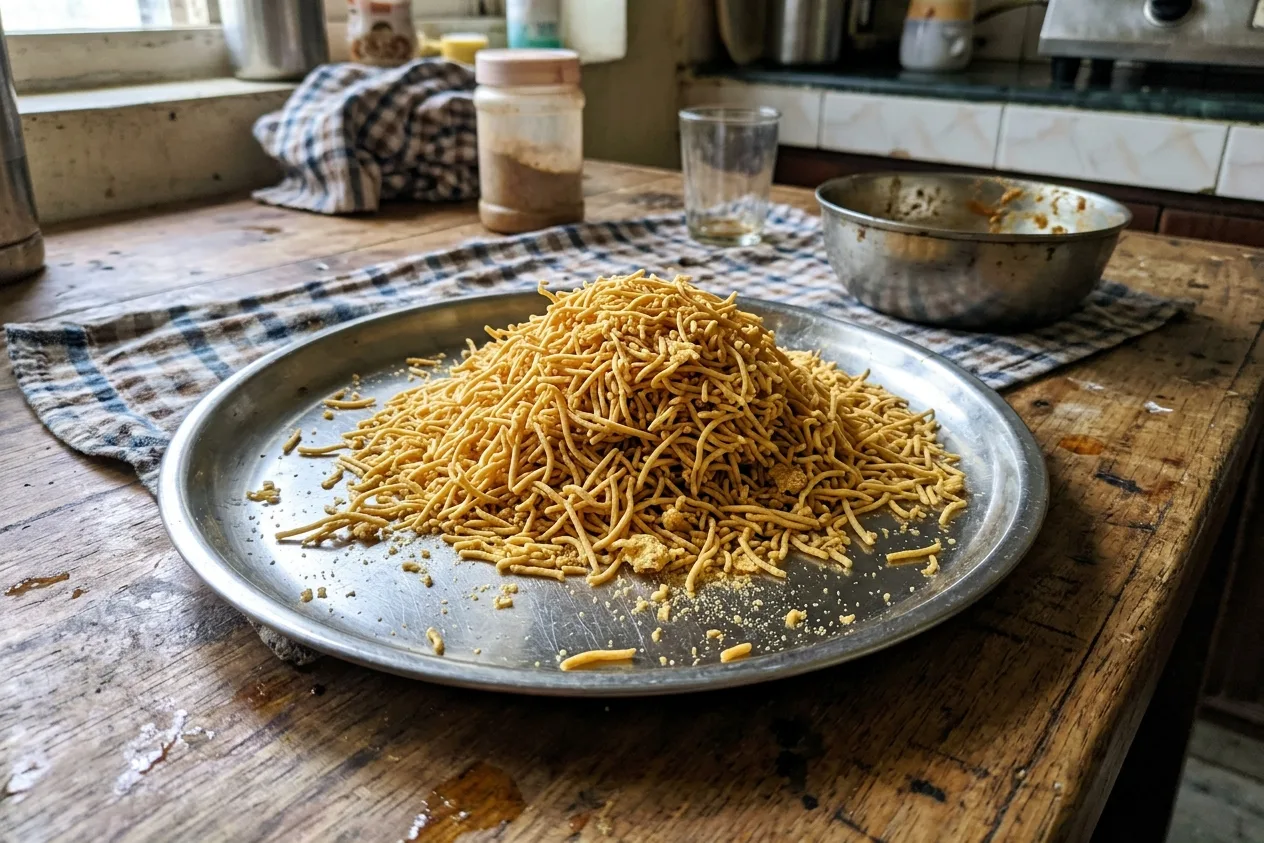
Maayeka describes ratlami sev as a fried, crisp snack made with gram flour, clove, pepper and other spices, and notes that the spice blend and the thickness differ from Bikaneri sev. Its recipe uses a medium sev maker plate, bigger than the one used for Bikaneri bhujia. A retailer describes the strands as thicker than bhujia, and The Better India traces the snack to Ratlam in the Malwa region of Madhya Pradesh. It reports an origin story that goes back to the late nineteenth century.
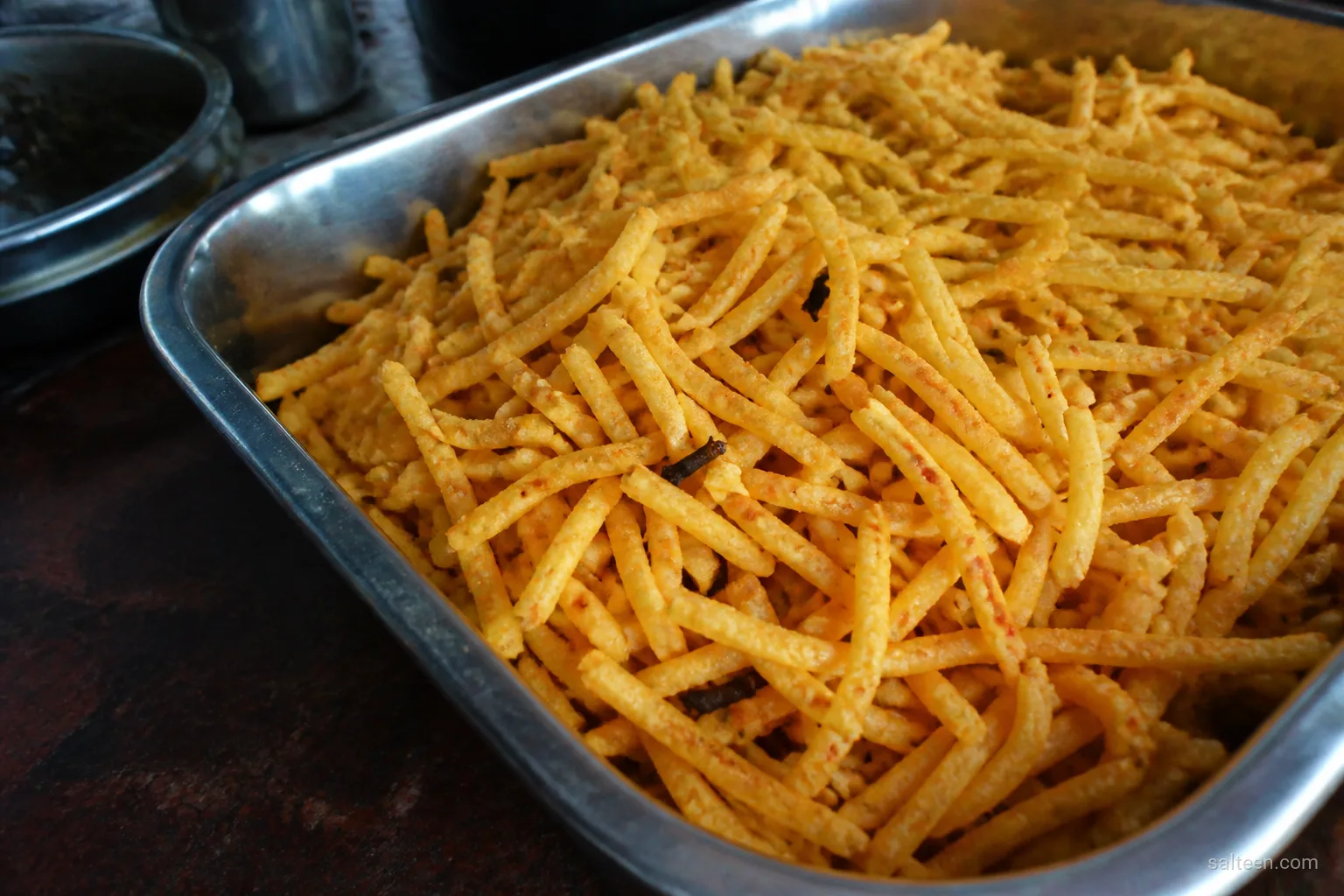
Heat is its signature, and clove and black pepper do much of the work. It is eaten with tea, and scattered over poha, chaat and misal, as a seller suggests.
Bikaneri bhujia
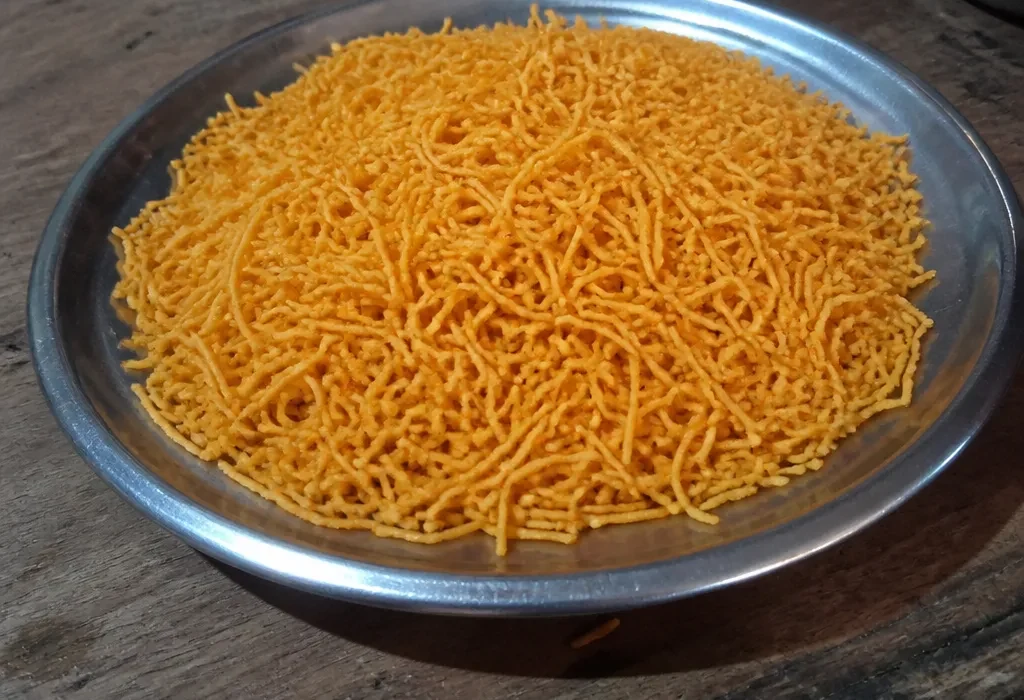
Bikaneri bhujia comes from Bikaner in Rajasthan. A Hans India piece says the snack holds a Geographical Indication (GI) tag. A snack maker’s note says the best known version is made with moth bean flour, gram flour, oil and spices. Strands are fine and crisp.
Indori sev
Wikipedia lists Ratlam sev and Indori sev among the many variations of sev, which is made mainly from chickpea flour. Indore sells many versions, and some shops label ratlami sev as an Indori snack.
Side by side
| Ratlami sev | Bikaneri bhujia | Indori sev | |
|---|---|---|---|
| Home | Ratlam, Madhya Pradesh | Bikaner, Rajasthan | Indore, Madhya Pradesh |
| Flour | Gram flour | Moth bean and gram flour | Gram flour |
| Strand | Thicker | Thin | Varies by maker |
| Signature | Clove, pepper, heat | Crisp, peppery | Often sold as spicy sev |
| Eaten with | Tea, poha, chaat | Tea | Poha, chaat |
Reading a pack
Because the names are used loosely, look at the ingredients list. A snack made of gram flour alone is a sev. A bhujia that names moth bean flour is closer to the Bikaner style. Our post on how sev bhujia is made explains the process, and our wider guide to namkeen types and origins places all three in the family.
Frequently asked questions
What is the difference between ratlami sev and bhujia?
Ratlami sev is thicker and spiced with clove and pepper. Bikaneri bhujia is thin and made with moth bean flour added to gram flour.
Which city is famous for which namkeen?
Ratlam for ratlami sev, Bikaner for bhujia, and Indore for its own sev and a wide range of snacks.
Is Bikaneri bhujia GI tagged?
Hans India reports that it holds a GI tag.
Sources used for this post: Hans India, Bhujia vs Sev; Maayeka, ratlami sev; The Better India, history of ratlami sev; Wikipedia, Sev (food).; TheDesiFood product page; a sev vs bhujiya explainer. Indori sev needs a stronger source.