Blog
Why Small-Batch Food Tastes Better: Silbatta, Chulha, Bilona and Fresh Flour

Spices lose a measurable share of their aroma in the grinder. A food-processing chapter from India’s e-PG Pathshala course on spice grinding reports volatile oil losses of 37 percent for nutmeg, 14 percent for mace and 17 percent for cinnamon, and 32 percent for caraway seed when grinding temperature rises from 17 to 45 degrees Celsius. That single table explains why the phrase “small batch” keeps returning in conversations about Indian food: slow, low-heat processing is a way of keeping what the ingredient already has.
The phrase also gets stretched past what the evidence can carry. This guide goes through the main small-batch claims one at a time: stone grinding, the earthen hearth, bilona ghee and fresh-milled flour, and says where the research supports tradition, where it is mixed, and where it is silent.
The short answer
In short
Small-batch food tends to taste better mostly because of less heat, less time between processing and eating, and more attention from the cook. The strongest evidence is for spice grinding, where heat measurably removes aroma. For flour and ghee the picture is mixed or depends on how the product is made rather than on batch size alone. “Small batch” describes a way of working, not a guarantee of quality.
Stone grinding: what heat does to spices
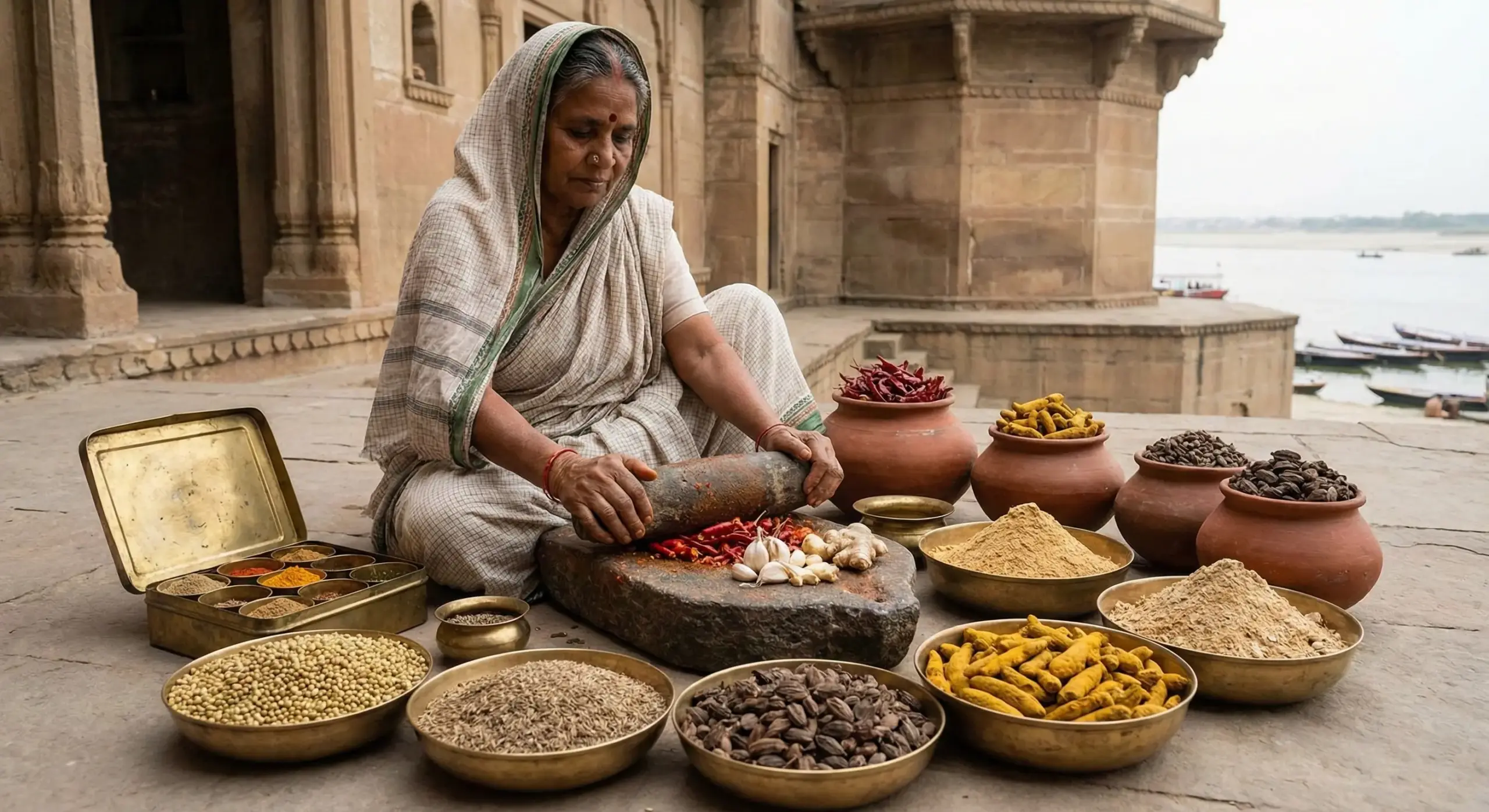
The e-PG Pathshala chapter on grinding explains the mechanism. In normal grinding, energy goes into creating new surface, but the greater part is dissipated as heat. The product’s temperature rises, and since spices contain volatile oils, they lose a significant fraction of their flavouring components. The chapter adds that the temperature reached varies with the oil and moisture content of the spice.
The Tasting Table makes the household version of the same point: electric grinders generate a lot of heat, which can lead to increased oxidation of the spices and an overall loss of quality, while a mortar and pestle does not generate heat in the same way.
The silbatta works on the crushing principle that the Slurrp comparison of traditional and electric grinders describes: it grinds coarsely and, in the writer’s account, keeps the taste of the ingredients intact and retains their aroma. Another Slurrp piece on chutney makes the same case for the mortar, saying components release essential oils more efficiently when ground by hand, giving a more complex flavour.
Two cautions apply. First, the quantified losses above come from industrial grinding research, not from a head-to-head test of a silbatta against a mixer, and we are not aware of one. Second, the same Slurrp piece says the tradeoff is texture and effort: a stone gives a coarse grind and takes far longer than an electric appliance. We would put it as a reasonable, partly supported belief with a real mechanism behind it. The Banarasi kitchen tools guide and traditional spice blends in Banaras look at how the stone fits into a working kitchen.
The chulha and slow heat
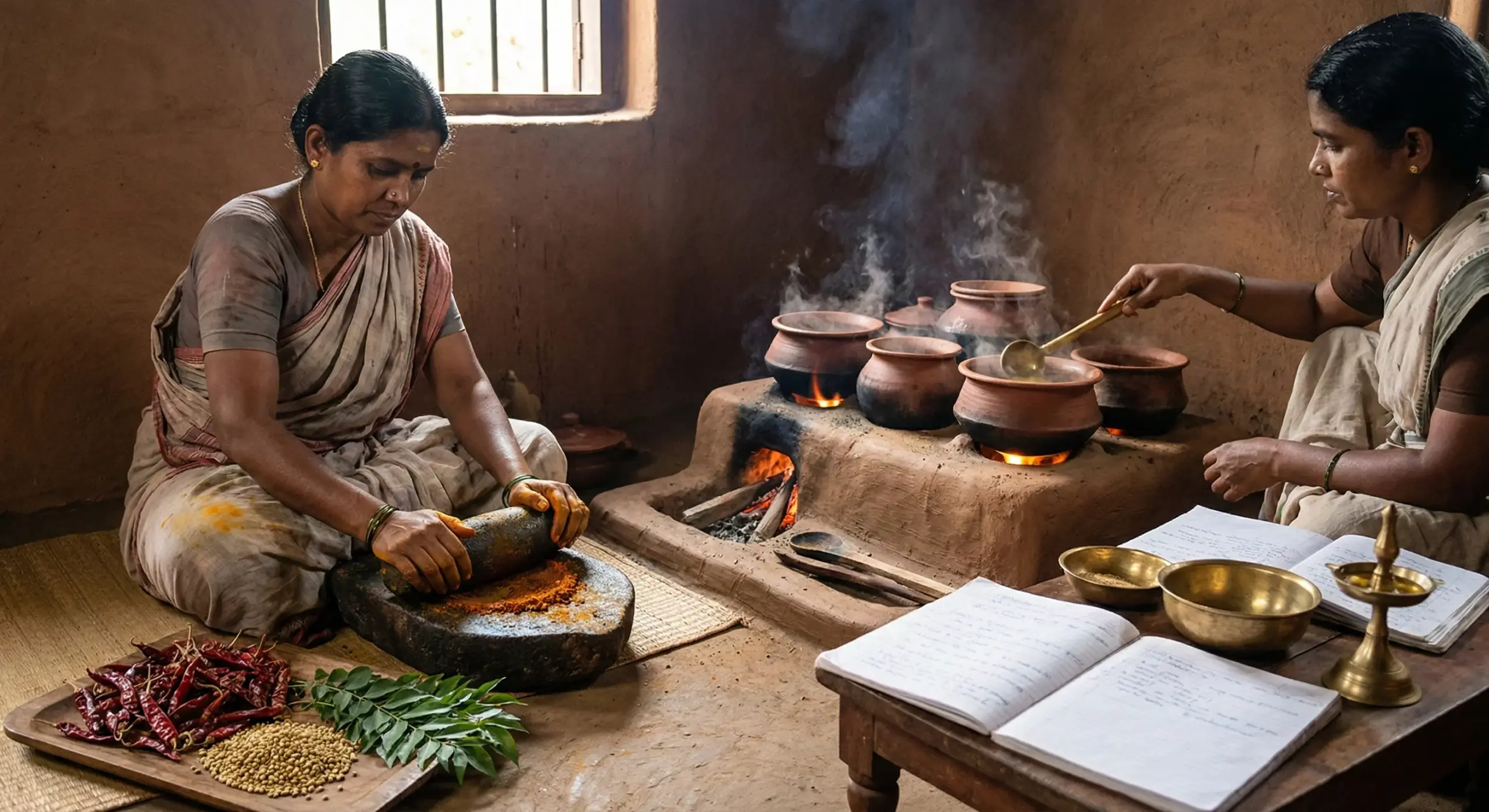
A clay hearth burning wood or dung cakes delivers heat that is slower to rise and slower to fall than a gas flame, and cooks who use one describe cooking by adjusting the fuel rather than a knob. What can be said with confidence is the simpler point: a small fire under a small pot pushes the cook toward watching the food, and the watching is much of what people mean by taste.
Bilona ghee: a process defined by its starting point
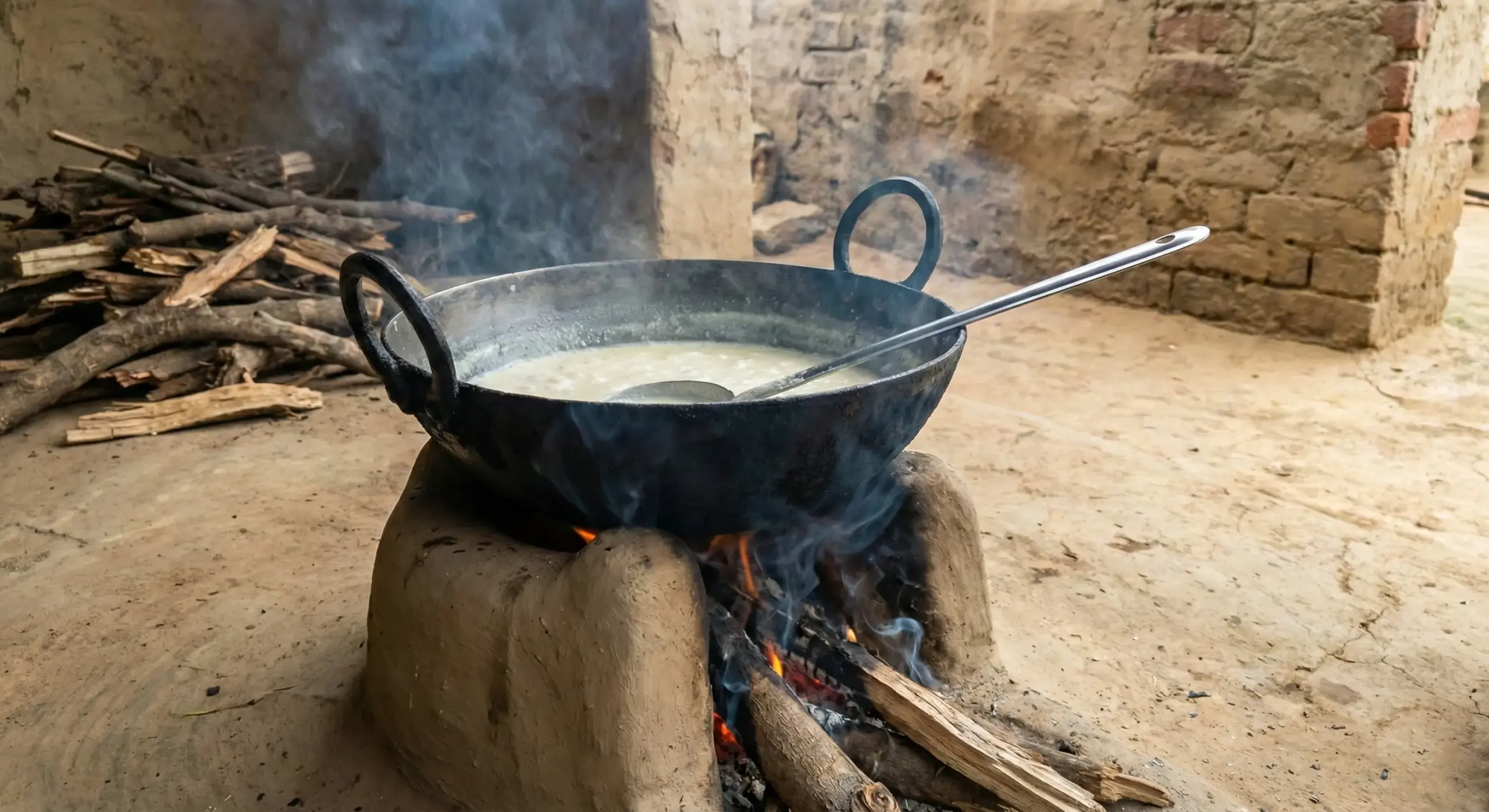
The bilona method has a clear technical definition. According to a producer’s explanation, it is a traditional Indian ghee-making process in which milk is first converted into curd, and the curd is then churned slowly to separate butter, traditionally known as makkhan. The defining difference is the starting point: bilona ghee is made from curd rather than directly separated cream. The e-PG Pathshala chapter on ghee technology describes the same indigenous method, in which makkhan (traditional unsalted butter made by hand churning of whole milk dahi at room temperature) is heated to about 110 to 120 degrees Celsius with constant stirring to evaporate nearly all the water.
The same chapter lists the factors that decide ghee quality: the animal feed, the raw material (makkhan, cream or white butter), the method of preparation, the clarification temperature and the storage conditions. A lecture summary adds that the indigenous or desi method contributes about 80 percent of the ghee produced in India, a figure we repeat as reported and have not independently verified.
That list is the honest version of the “small batch” story for ghee. Curd-based ghee has a distinct process and a distinct flavour profile that producers describe as cultured, and the process is slower and more manual than the direct-cream method. Several producer websites go further and make nutrition or health claims for bilona ghee. We do not repeat those claims, because the sources we found are sellers and not independent studies. Where bilona ghee tastes different, the plausible reasons are the fermentation step and the cooking temperature and time. See ghee versus oil in traditional sweets for how ghee is used in the kitchen.
Fresh-milled flour: a mixed picture
Flour is where the small-batch story needs the most care, because the evidence does not all point one way.
The case for fresh stone-ground atta is that the whole kernel, including the germ, goes into the flour, and germ oils go rancid, which limits shelf life. Organic Mandya, a food retailer, says stone-ground atta retains the wheat germ and has a shelf life of two to three months against six to twelve months for roller-milled atta, describing the shorter life as a sign of less processing. That is a seller’s claim, though it matches the chemistry of germ oil.
The case against treating stone milling as automatically better comes from the Whole Grains Council, which reports that stone mills can run at much higher temperatures than roller mills, as high as 90 degrees Celsius against 35 degrees Celsius for roller mills, and that this could explain why some data show stone-milled flour with greater loss of amino acids and healthy fats. A peer-reviewed comparison of stone and roller milling of soft wheat, (PMC8834297), found no compositional difference in phytic acid between stone-milled and roller-milled flour when the milling streams are recombined.
The sensible reading is that freshness matters more than the machine. Flour milled recently, from a whole grain, stored cool and used promptly, will smell and taste better than flour that has sat on a shelf for months, whichever way it was ground. The old village routine of grinding a few days’ worth of grain on a hand chakki fits that principle, and it is the part of the tradition that survives scrutiny best.
The traditional idea of freshness
Behind the physical arguments sits a cultural one. In the Ayurvedic framework that many Indian households still refer to, freshly cooked food is considered satvik, and food that has been kept and reheated is thought to lose vitality, a quality called prana, becoming tamasic. This is a traditional belief about food and mind, not a nutritional finding, and we state it as belief. Its practical effect is real, though: households that hold the belief cook in quantities that will be eaten the same day, which is a form of small-batch cooking by custom. We explain the seasonal side of this thinking in seasonal eating practices in Kashi and the simplicity side in why Banaras food is simple yet flavourful.
What “small batch” can and cannot promise
A label that says small batch tells you something about scale and almost nothing about quality unless the maker explains the process. Questions that separate real practice from a label:
- How is the ingredient processed, and at what temperature?
- How long passes between making and selling?
- Is the batch size stated?
- Which regulator oversees it? A discussion of what small-batch means under food law is in FSSAI and small-batch food brands.
None of this requires accepting the romance of the old kitchen. It requires asking what is actually different about how the food was made.
Frequently asked questions
Does stone-ground spice taste better than machine-ground spice?
The mechanism is real: grinding heat drives off volatile oils, and a stone generates less heat than a high-speed grinder. We know of no direct taste trial of silbatta against mixer, so it is a reasonable belief and not a proven ranking.
How much aroma do spices lose in grinding?
An Indian food-processing course chapter reports volatile oil losses of 37 percent for nutmeg, 14 percent for mace and 17 percent for cinnamon, and 32 percent for caraway when temperature rises from 17 to 45 degrees Celsius.
What is bilona ghee?
Ghee made from curd: milk is set into curd, the curd is churned into makkhan, and the makkhan is heated to clarify it. It differs from ghee made directly from cream.
Is stone-ground atta healthier than roller-milled atta?
The evidence is mixed. The Whole Grains Council notes stone mills can run hotter than roller mills, and a peer-reviewed comparison found no difference in phytic acid when milling streams were recombined. Freshness and whole-grain content matter more than the machine.
Why does fresh flour taste better?
The germ contains oils that go rancid, so flour kept for months tastes flatter than flour milled recently.
Does a clay hearth change the taste?
Cooks report a difference, but we could not find measurements, so we present it as an observation.
Is small-batch food always better?
No. It describes scale, and quality depends on ingredients, process and handling.
Sources used for this post:
– e-PG Pathshala, “Grinding: Grinding Methods” (volatile oil losses)
– Tasting Table, “The Big Downside of an Electric Grinder That a Mortar and Pestle Eliminates Completely”
– Slurrp, “Traditional Stone vs Modern Electric Wet Grinders”
– Slurrp, “Ditch the Mixie, Use Mortar and Pestle to Make Your Chutney”
– Royal Bee Brothers, bilona ghee making process
– e-PG Pathshala, “Technology of Ghee making”
– Lecture summary on ghee preparation methods (SlideShare)
– Organic Mandya, stone-ground vs roller mill atta
– Whole Grains Council, “Whole Grain Flour: Sifting True from False”
– “Stone Milling versus Roller Milling in Soft Wheat (Part 2)”