Blog
Tamatar Chaat of Banaras: A Street Classic and Its Spice Logic

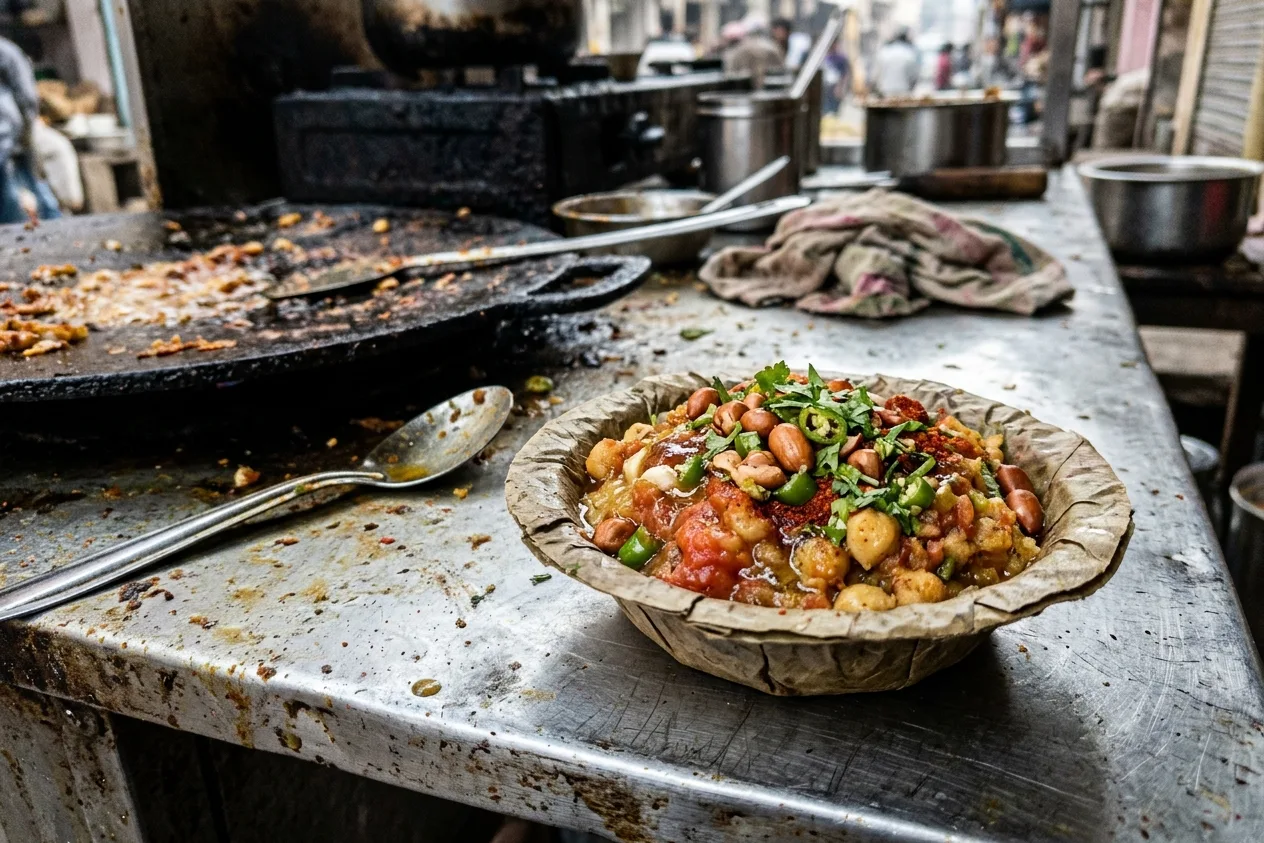
Nisha Madhulika opens her tamatar chaat recipe with a plain claim: tomato chaat is one of the famous dishes of Banaras, and its sour sweet taste will not leave the tongue. Hebbar’s Kitchen calls it a popular snack from North Indian street food, particularly the city of Banaras, and notes its uniqueness: it is made without any onions and garlic.
This post looks at what goes into the chaat and why those ingredients sit together.
The short answer
In short
Banarasi tamatar chaat is a hot, sweet and tangy tomato dish, usually with boiled potato, cooked in ghee with cumin, black pepper and black salt, and topped with crunchy sev or crushed namak pare. Many versions leave out onion and garlic.
What is in it
Recipes differ, but a pattern appears across them.
- Tomato and potato. Hebbar’s Kitchen describes the chaat as tomatoes and boiled potatoes with chaat chutneys.
- Ghee. Nisha Madhulika’s recipe starts with desi ghee and cumin seeds. Hebbar adds that chaat made with desi ghee gives the best flavour.
- Sweetness. Sanjeev Kapoor’s version adds three to four tablespoons of sugar, and a recipe on Robin Age uses jaggery powder.
- Spices. Manjula’s Kitchen adds salt, black salt, black pepper and cumin powder to the tomatoes, and notes the chaat’s sweet, tangy and spicy mix.
- Crunch. Hebbar suggests sev or namak pare as garnish, and Sanjeev Kapoor’s version uses crushed namak para.
Not every recipe leaves out onion and garlic. Slurrp’s version adds ginger, garlic and green chillies, and a DNA India list includes onion. Hebbar says the base recipe has none, but can be changed. It is fair to say that the classic is often made without them, and that home versions vary.
The spice logic
Read together, the recipes build a balance of five things.
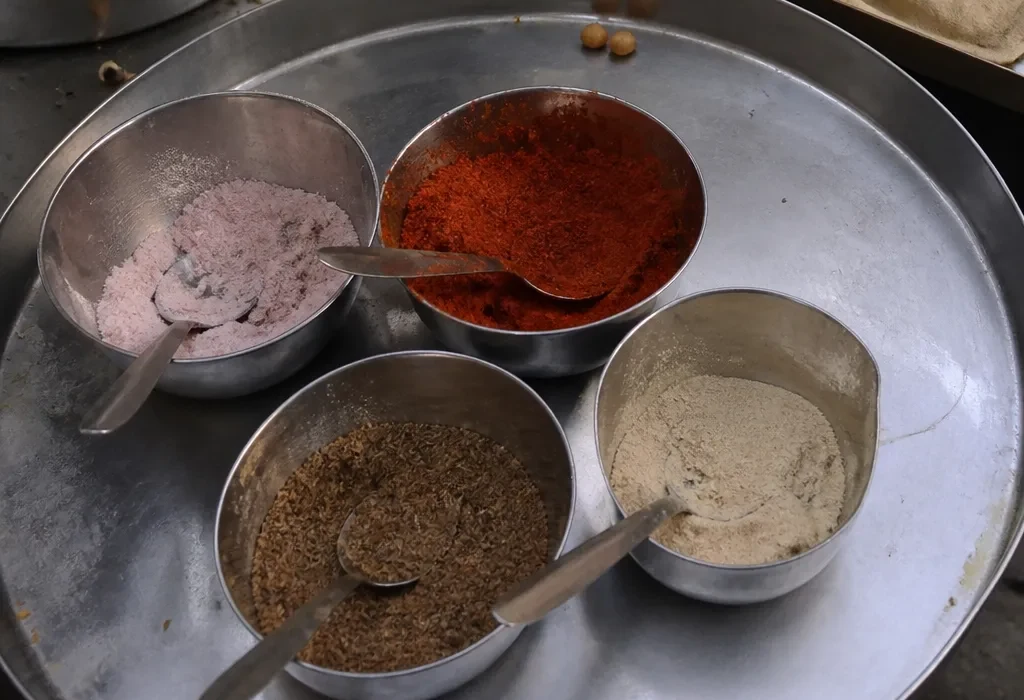
How the plate is balanced
- Sour: tomato.
- Sweet: sugar or jaggery, which rounds the sourness.
- Heat: black pepper, chilli, green chilli.
- Earth: cumin and black salt.
- Fat and crunch: ghee underneath, sev or namak pare on top.
None of this is written down as a rule, and the proportions come from the cook. It is a pattern in the recipes, and not a claim about how any one Banaras shop makes it.
Why it tastes different from other chaat
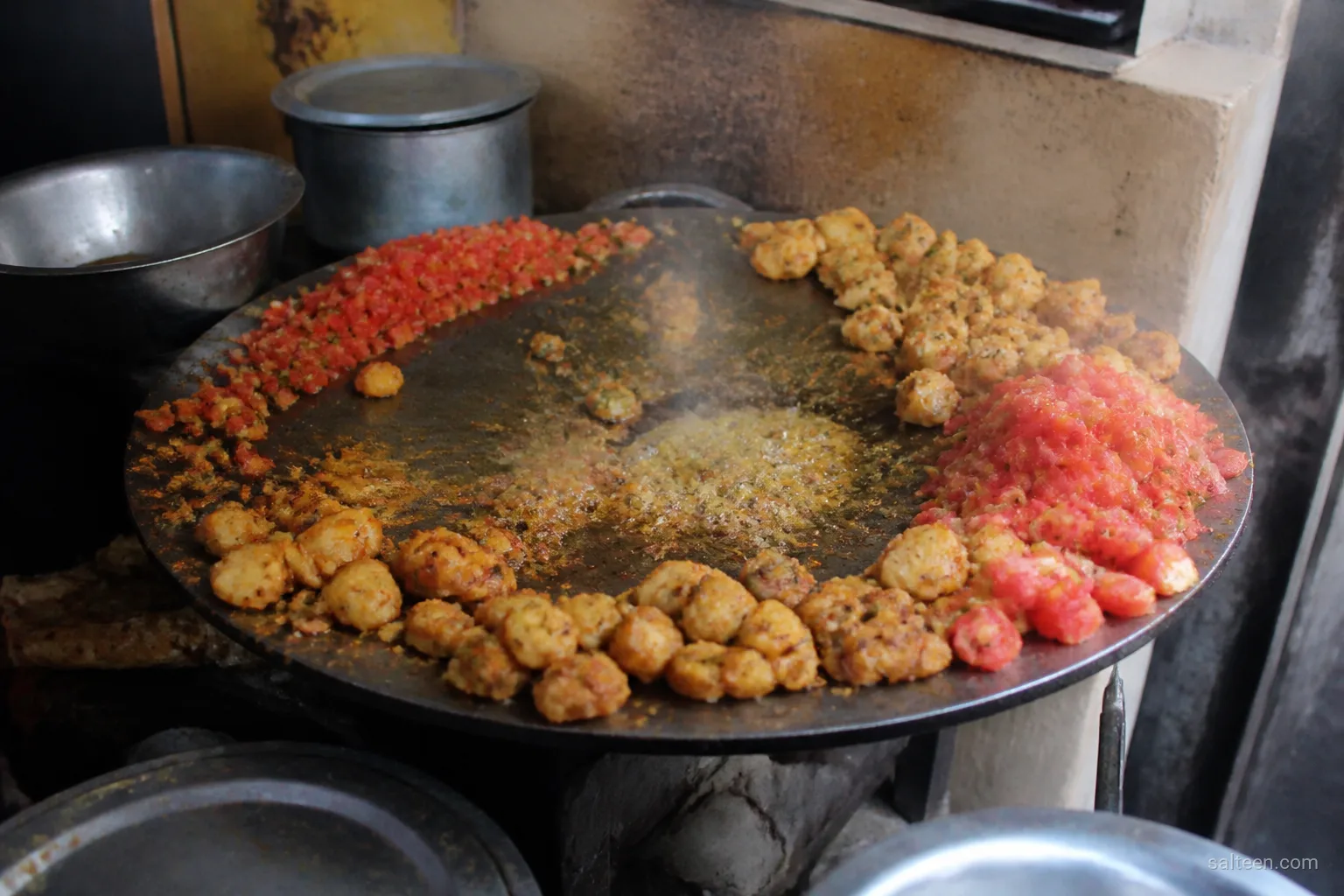
Compared with chaat built on curd, tamarind chutney and onion, tamatar chaat is cooked. The tomato goes into hot ghee and spices, and it is served warm. Our post on the city’s food covers the other chaats. Incredible India lists chopped tomatoes with spices, crispy fried spinach, curd, sev, and sweet tamarind or green chutney among Varanasi’s chaats.
The crunch on top
The namak pare or sev on top connects the dish to the tea table. See mathri, namak para and nimki and how sev bhujia is made.
Frequently asked questions
What is in Banarasi tamatar chaat?
Tomato, usually boiled potato, ghee, cumin, black pepper, black salt, sugar or jaggery, and a topping of sev or namak pare.
Why does Banarasi chaat taste different from other chaats?
It is cooked in ghee and served warm, with a sweet, sour and peppery balance.
Is it made without onion and garlic?
The classic version often is, according to Hebbar’s Kitchen, though many home versions add them.
Sources used for this post: Nisha Madhulika, tamatar chaat; Hebbar’s Kitchen, tamatar chaat; Manjula’s Kitchen, Banaras tamatar ki chaat; Sanjeev Kapoor, Banarsi tamatar chaat; Robin Age, Banaras ka tamatar chaat; Slurrp, tamatar chaat; DNA India, tamatar chaat; Incredible India, Varanasi food. Recipes are used for the pattern only, and quantities vary.