Blog
Mathri, Namak Para and Nimki: Three Cousins of the Tea Table

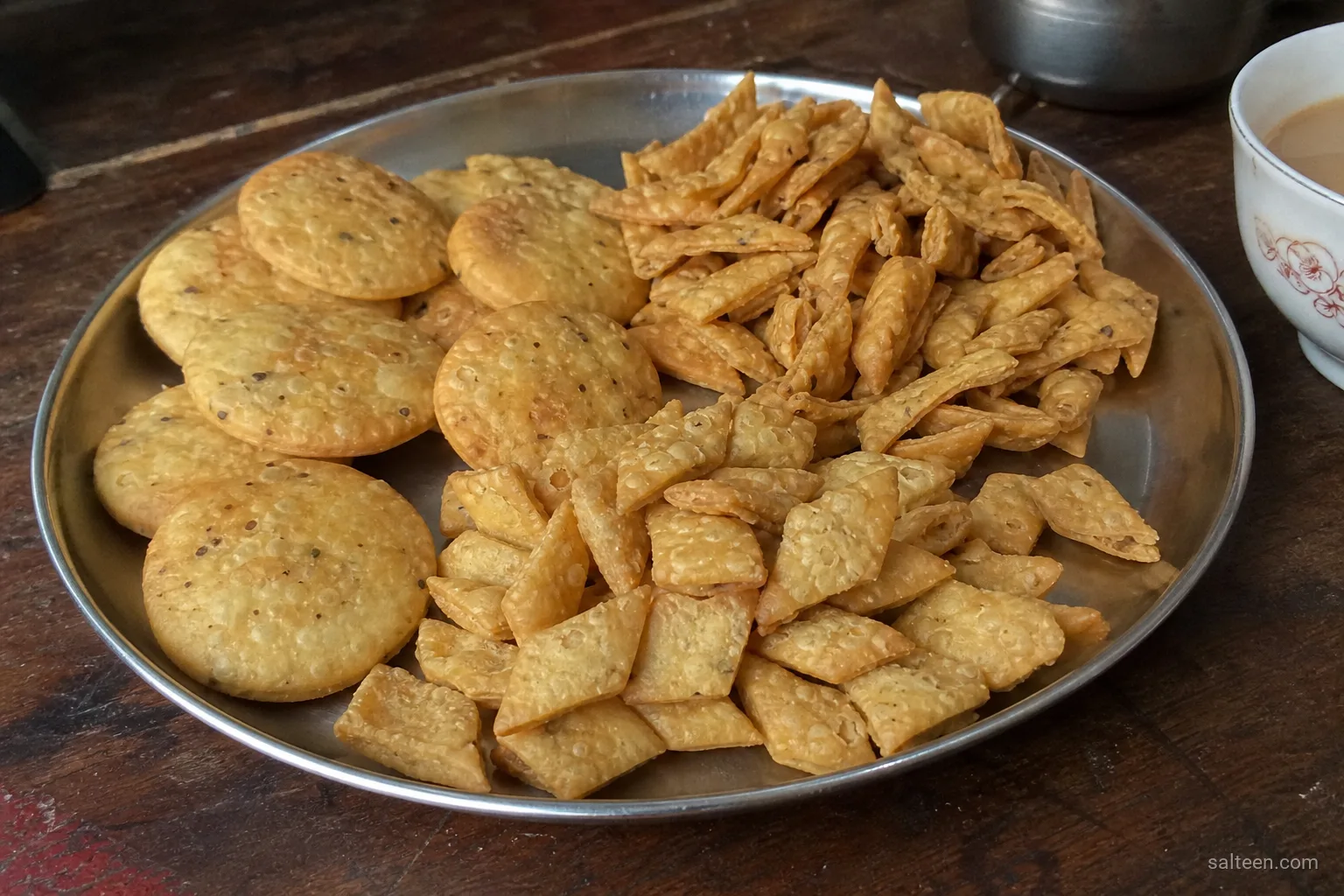
Maayeka, a recipe site with a large Bihar and Rajasthan section, says namak para is made differently in every state and every household, and is known by different names in different regions, such as nimki, mathri and diamond mathri. That sentence is the honest answer to the question people ask most often about these snacks. The three names point to a family of fried, salty, flaky biscuits of flour and fat, and where one cook says mathri another says namak para.
This guide sorts out what the names usually mean, how the snacks are made and what gives them their crunch, so that the next plate on the tea table can be named with confidence.
The short answer
In short
Mathri is usually round, thick and flaky, associated with Rajasthan and Punjab. Namak para is usually cut into diamonds, squares or strips. Nimki is the Bihar and Bengal name for the same kind of snack as namak para. The names overlap, and no rule is followed everywhere.
Mathri
Wikipedia lists mathri as a snack from Rajasthan made with maida, semolina, curd and ghee. A Punjabi recipe describes the traditional mathri as flaky (khasta in Hindi) and flavoured with ajwain (carom seeds), black peppercorns, dry fenugreek leaves (kasuri methi) and cumin. That recipe uses 250 grams of maida and 60 grams of atta, with three tablespoons of ghee or oil, and a firm dough made with water.
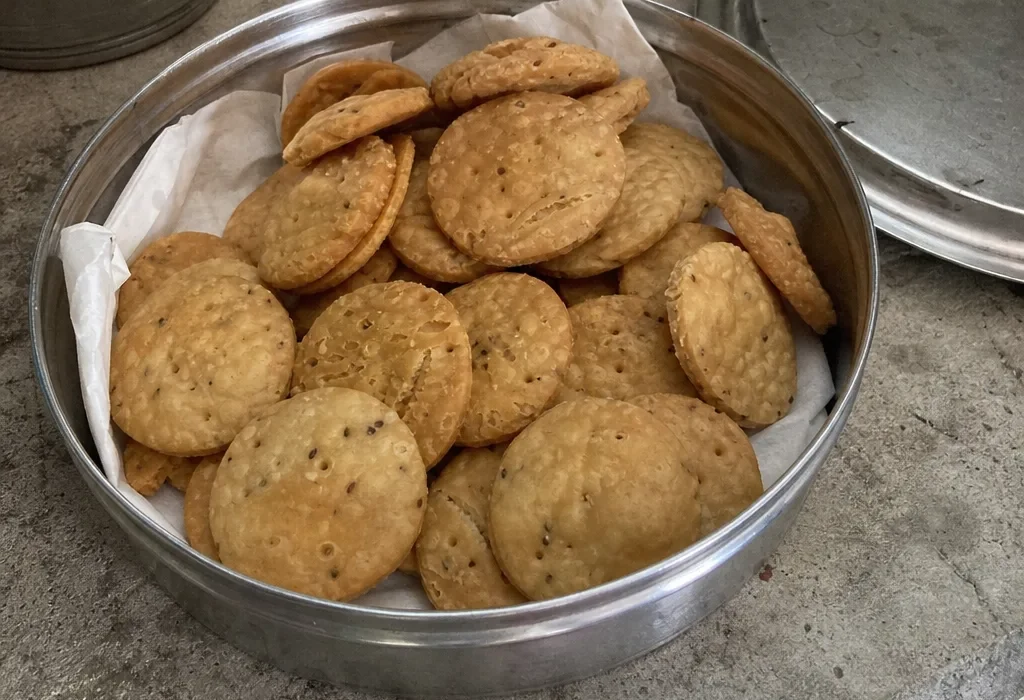
A food writer who also lists namak para says that mathri is usually round, even where the two names are used loosely. In Punjab and Uttar Pradesh the thin, flat snack is sometimes also called mathri, she adds. The word is therefore both a specific snack and a common nickname for the crisp, salty biscuit.
Namak para
The name comes from namak, salt. Wikipedia describes namak para as ribbon like strips of pastry made of refined flour, oil and water, delicately seasoned with ajwain and cumin and fried in ghee or oil. It is usually cut into diamonds. Cook With Manali says namak para is usually diamond shaped, though it is sometimes rectangular or square, and that shops almost always sell the diamond shape.
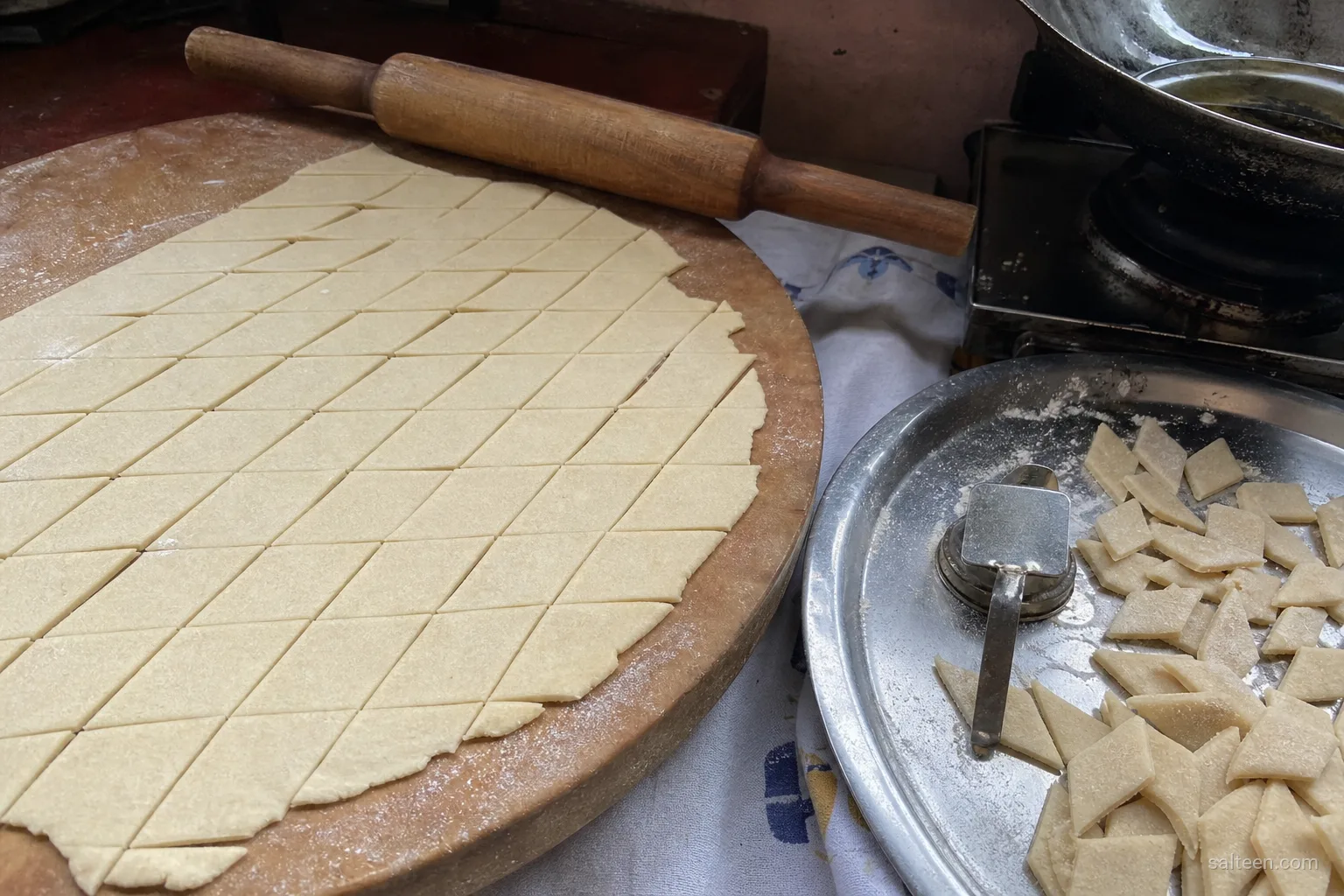
Ingredients differ. A recipe from Veg Recipes of India uses equal parts whole wheat flour and maida, with ajwain, crushed black pepper, cumin and salt, and a little baking soda that makes the snack lighter and crisper. Another uses maida and semolina with ajwain, salt and pepper. Semolina is optional but recommended for texture, one writer says.
A sweet cousin exists. Namak pare is similar to shakarpare, which is also called shankarpali, with the only difference that the first is salty and the second is sweet. Both are popular at Diwali.
Nimki
Wikipedia describes nimki, also written nimkin or namkin, as a crunchy savoury snack that originated in Bihar, and as similar to mathri. Veg Recipes of India says the snack is called nimki in West Bengal. A list of its names also includes shankarpali, in Maharashtra, where one recipe calls it khara shankarpali, and in some parts of Punjab it is also called matar.
Nimki is eaten in Bihar and eastern Uttar Pradesh as a tea time snack and is a festival food. We mention it again in our post on what Poorvanchal migrants miss most.
Side by side
| Mathri | Namak para | Nimki | |
|---|---|---|---|
| Usual shape | Round, thick disc | Diamond, square, strip | Diamond or strip |
| Usual region | Rajasthan, Punjab | Pan Indian | Bihar, West Bengal |
| Flour | Maida with some atta or semolina | Maida, or atta and maida | Maida, sometimes with atta |
| Seasoning | Ajwain, pepper, cumin, kasuri methi | Ajwain, pepper, cumin | Ajwain, cumin |
| Fat | Ghee or oil, often curd too | Oil or ghee | Oil or ghee |
| Texture | Flaky (khasta) | Crisp, flaky | Crisp |
| Sweet cousin | none well known | Shakarpara, shankarpali | Shakarpara |
The table is a rough guide. A cook in one town may call the snack in the first column by the name in the third.
How they are made
The method is the same for all three, and it is short.
Dough to crunch
- Rub the fat into the flour with salt and ajwain, until the mix looks like breadcrumbs and holds when pressed.
- Add water a little at a time to make a firm, stiff dough, firmer than roti dough.
- Rest the dough briefly.
- Roll it thick (mathri) or thin (namak para), and cut into shapes. Prick the pieces so that they do not puff.
- Fry slowly in oil or ghee on a medium to low flame until golden and crisp.
- Cool completely and store in an airtight tin.
The key is the fat in the dough. A recipe site explains that mixing oil into the flour until it holds a shape when pressed is what makes the pieces flaky, and that a firm dough is essential. Maayeka says these snacks are crisp, crunchy and flaky and have a long shelf life, which is why they are made in bulk for festivals such as Diwali and Holi.
Why they last
All three are dry, salty and fried, with very little moisture, which is what makes them good keepers. They are stored in a tin and eaten with tea over days and weeks. The same is true of many Indian dry snacks, and we explain the wider family in our guide to namkeen types, origins and smarter snacking.
Eating them
With tea, mainly. A mathri is also eaten with pickle, a pairing we cover in our guide to what to eat with achar, and a pile of namak para sits on a Diwali plate beside sweets.
Frequently asked questions
What is the difference between mathri and namak pare?
Mathri is usually round, thick and flaky and comes from Rajasthan and Punjab. Namak pare is cut into diamonds or strips and is thinner. In many homes the two names are used for the same snack.
Is nimki the same as namak para?
Largely, yes. Nimki is the Bihar and Bengal name for a salty fried biscuit of the same kind. Recipes and names differ from home to home.
What makes namak para crisp?
A stiff dough with fat rubbed into the flour, rolled thin and fried slowly. Semolina and a pinch of baking soda help.
What is shankarpali?
The sweet cousin of namak para, popular at Diwali. In Maharashtra the salty version is called khara shankarpali.
Sources used for this post: Wikipedia, Namak para, Nimki and Mathri.; Maayeka, namak pare recipe; Piping Pot Curry, namak para; Veg Recipes of India, namak paare and mathri; Cook With Manali, namak pare; Indian Healthy Recipes, namak para. Names and shapes vary by region and household, and the table is a guide and not a rule.