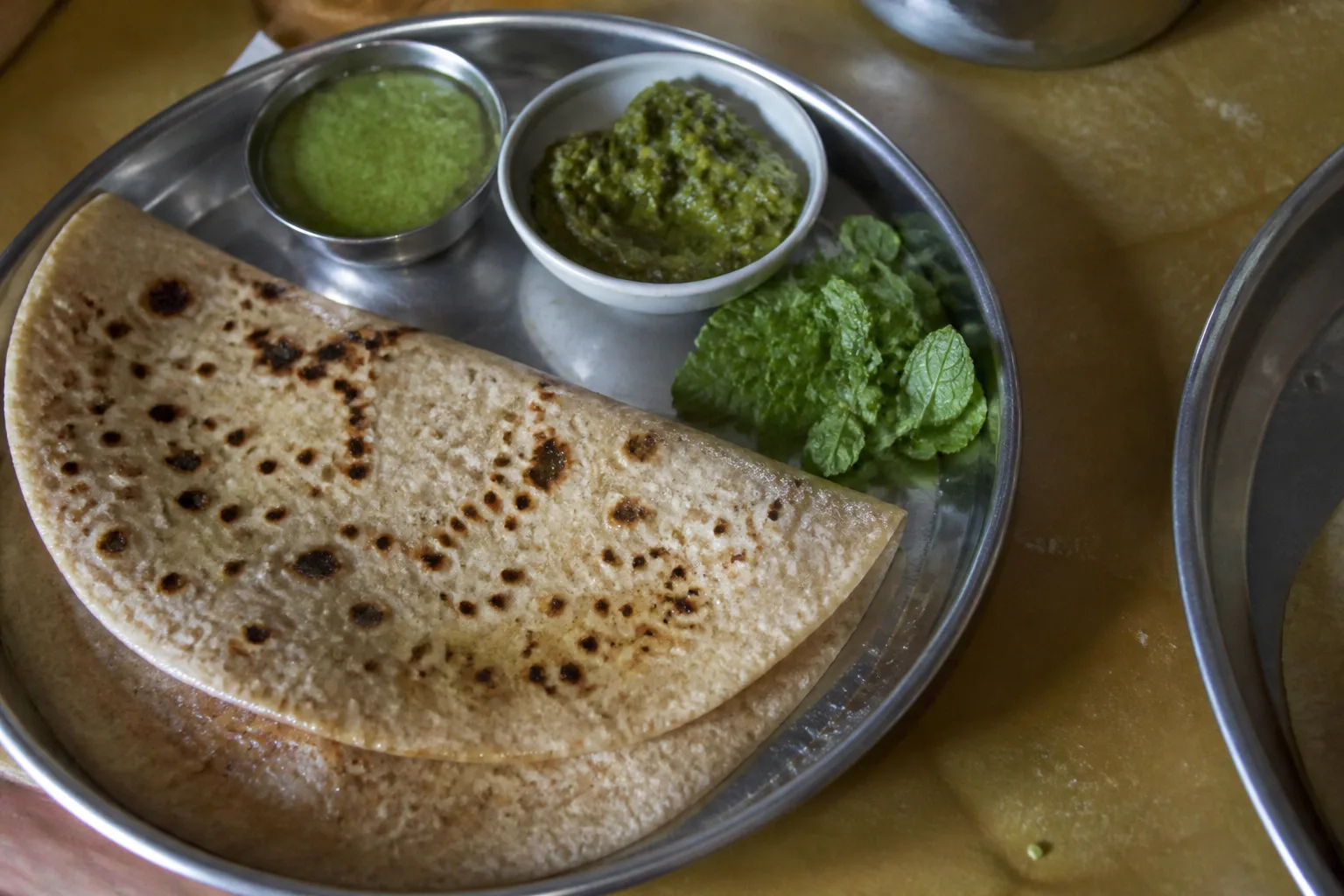
Blog
The Banaras Food Guide: What to Eat in Kashi, From Breakfast to Late-Night Paan

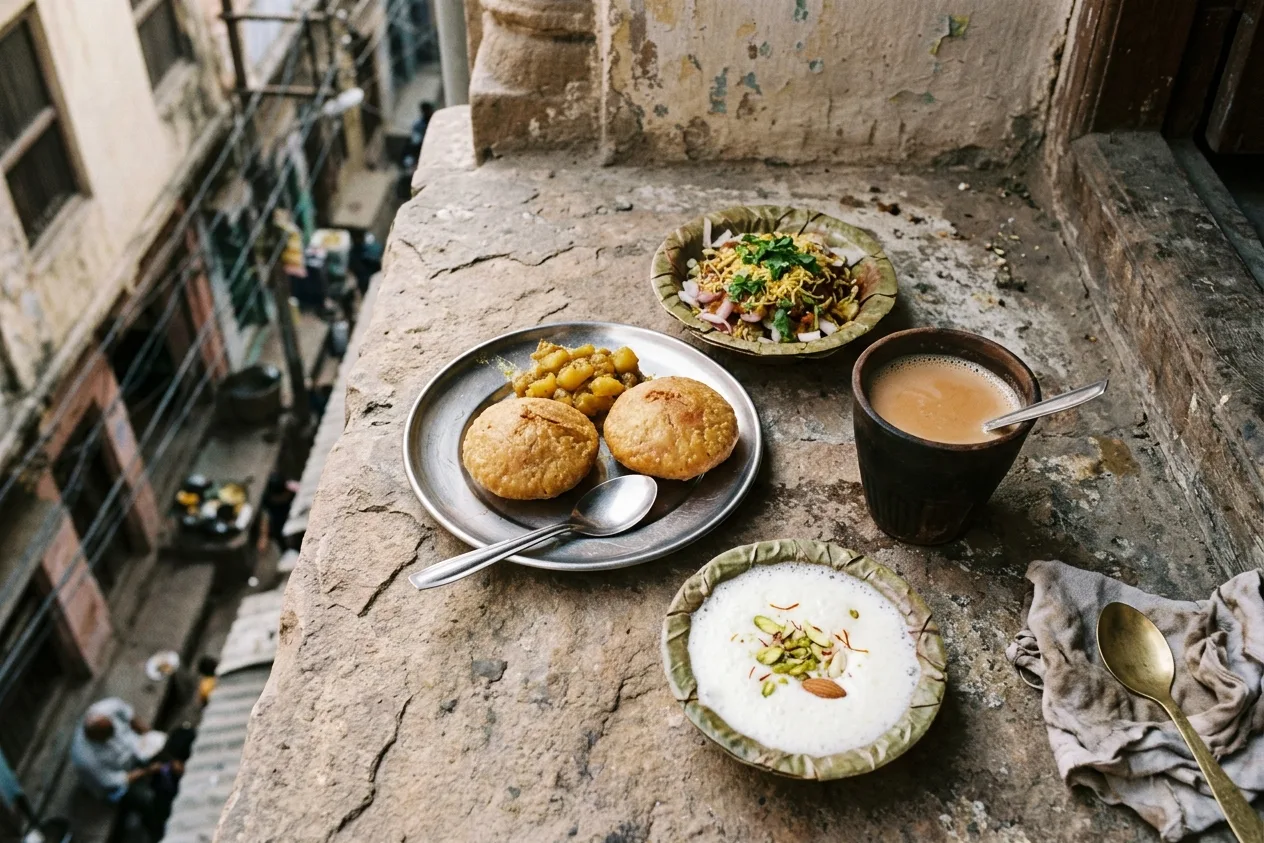
A day of eating in Varanasi can begin at 7 in the morning with a hot kachori in a leaf bowl and end near midnight with a folded paan, and in between there is more food than most visitors expect. The city sells it in lanes, at ghat steps, in clay cups and on steel plates, and a lot of it is vegetarian and made without onion or garlic, in keeping with a temple city.
This guide walks through that day in order. It is the hub for the Banaras Ka Swad series on this blog, so each dish links to a longer post where we have written one.
In short
The famous food of Banaras is kachori sabzi with jalebi for breakfast, baati chokha or litti chokha for lunch, tamatar chaat, chooda matar and lassi in the afternoon and evening, thandai, lal peda, rabri jalebi and malaiyo (winter only) for sweets, and Banarasi paan to finish.
Morning: the breakfast of Kashi
Breakfast is the meal Varanasi is proudest of. Kachori sabzi is a deep fried bread with a lentil filling, served hot with a thin potato curry, and it is usually followed by jalebi. Shops in Kachori Gali, near Godowlia and the Kashi Vishwanath temple, are known for it, and writers often name Ram Bhandar. The best stalls open around 7 and sell out by about 10, so go early. We have written the full story in our post on the Banarasi breakfast.
Other morning dishes include chooda matar, flattened rice cooked with peas and ghee, which is often called the Banarasi version of poha, and puri sabzi, which is the plainer relative of kachori sabzi. Tea comes in a kulhad, the unglazed clay cup, and we cover that habit in our post on kulhad chai.
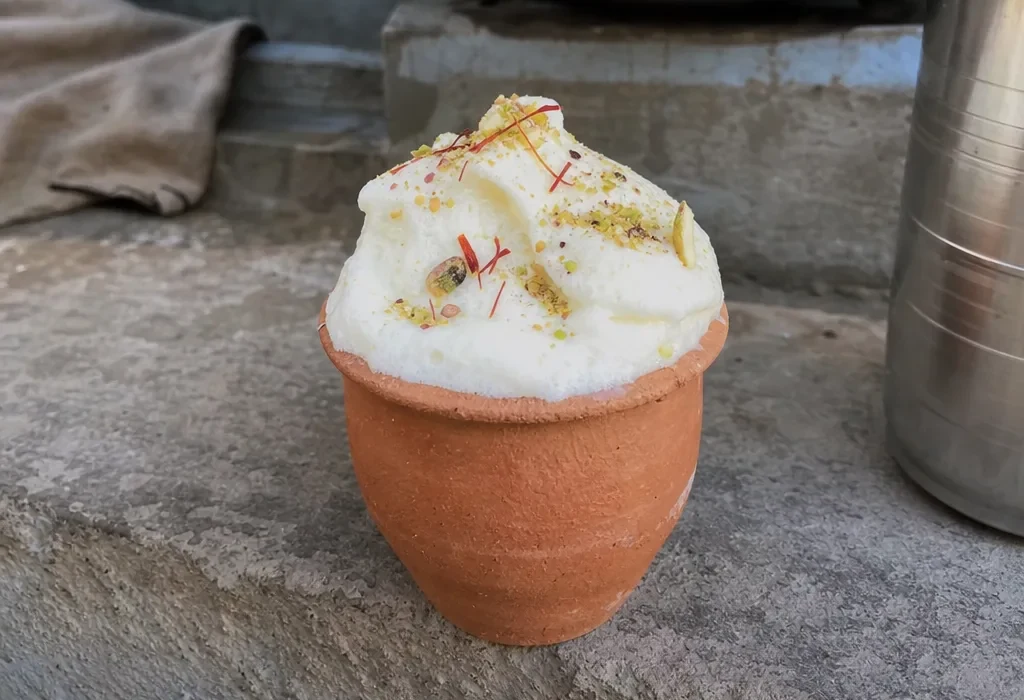
In winter the morning has one more dish. Malaiyo is a saffron milk foam made overnight under the open sky and sold from large pots in the lanes near Chowk and Vishwanath Gali until about 11 AM. It is gone before noon, which is why people queue for it. Read more in malaiyo, the winter foam.
Midday: baati chokha and litti chokha
For lunch, eastern Uttar Pradesh and Bihar meet on the plate. Baati chokha is a round of wheat flour dough, stuffed with spiced sattu (roasted gram flour) and cooked over a fire, served with a mash of baked brinjal, tomato and potato called chokha, and a spoon of ghee. Varanasi’s baatis are described as made entirely from wheat flour, stuffed with sattu masala and cooked over charcoal, and you find them from small eateries to proper restaurants. Litti chokha is a close cousin that visitors often treat as the same dish.
Another midday plate is chena dahi vada, lentil dumplings dipped in curd, topped with salt, cumin and coriander. Hot plates of puri and samosa also turn up in the lanes at all hours.
Afternoon and evening: chaat
If one dish defines the city’s chaat, it is tamatar chaat. It is a spicy, tangy preparation of tomatoes with asafoetida, ginger, green chillies and spices, often with boiled potatoes, and it is served in an earthen bowl. A detail that surprises visitors is that it is traditionally made without onion or garlic. Kashi Chaat Bhandar in Godowlia is the shop most writers name, and Lonely Planet says it has been making tamatar chaat for over 70 years. Deena Chaat Bhandar near Dashashwamedh Ghat is another name that comes up, along with its chooda matar, palak patta chaat and golgappe.
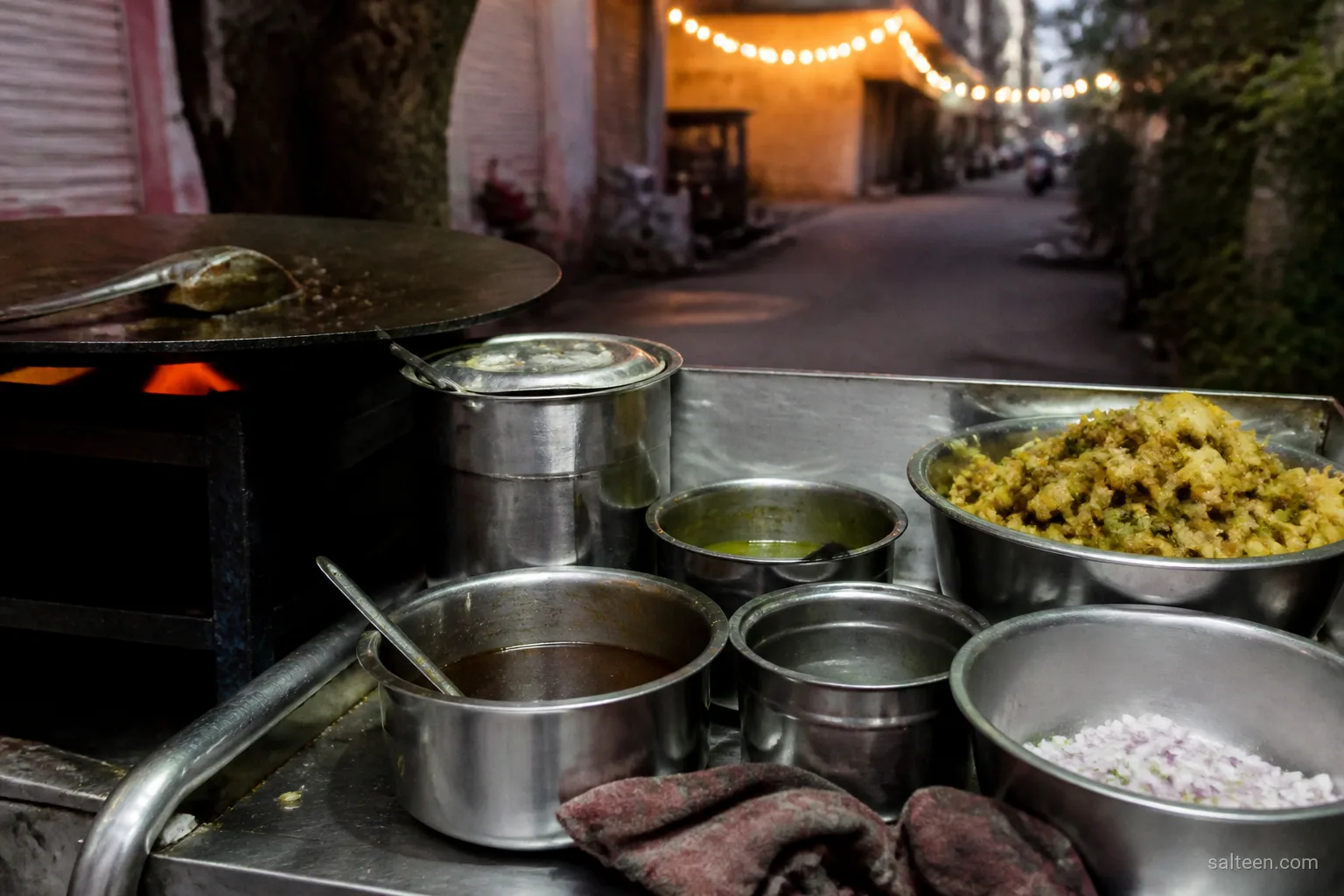
Banarasi golgappe are served with a dahi and chutney twist in some shops. Evening is when the chaat stalls fill up and the old city is at its loudest.
Lassi, thandai and the cold drinks
The Banarasi lassi is thick, served in a clay pot, and often topped with rabri and malai, which makes it closer to a meal than a drink. Blue Lassi in Kachori Gali is the name most guides mention. Thandai, milk blended with nuts, seeds and spices, is the city’s other famous drink and is especially linked to festivals like Holi and Mahashivratri. The GI filing for Banaras Thandai mentions evening crowds at shops around Godowlia Chowk, Lahurabir and the lanes of Pakka Mahal.
Sweets
Sweets in Banaras go well beyond jalebi.
- Lal peda, the reddish brown milk sweet.
- Tiranga barfi, the three coloured burfi in saffron, white and green.
- Rabri and jalebi, a classic pair for a heavy sweet tooth.
- Malaiyo, in winter only.
- Thandai, as a drink.
Banaras Lal Peda, Banarasi Thandai, Tiranga Barfi and Banaras Lal Bharwa Mirch are among the local products that carry a Geographical Indication (GI) tag, which marks a product as belonging to a place. The Hindu reported in 2024 that Banaras Thandai, Banaras Lal Bharwamirch and Banaras Lal Peda were among a record 60 Indian products granted the tag.
Paan
The day ends with paan. The Banarasi paan was granted a GI tag in 2023, alongside the Banarasi langda mango, the Ramnagar bhanta (brinjal) and Adamchini rice. The film song Khaike Paan Banaras Wala helped make the city’s paan famous across India, and a paan in Banaras is prepared in front of you, folded and handed over for the last bite of the evening.
Why dairy runs through the menu
Many of the best known dishes of the city rest on milk and curd. A travel site on Varanasi’s street food notes that the city produces a great deal of milk and curd, and that this shows in its preparations: lassi topped with rabri and malai, thandai, rabri jalebi, malaiyo, chena dahi vada and the dahi that comes with chaat and golgappe. Once you notice it, the menu reads as a map of what the local dairy produces.
Food by season
The city eats differently through the year. Winter brings malaiyo at dawn, fresh peas for chooda matar, and sweets made in ghee. Summer is the time for thandai and lassi, and The Print calls thandai the city’s go to summer drink. Festivals bring their own plates: the evening of Dev Deepawali, when lakhs of lamps are lit on the ghats, ends with simple hot food, and we describe it in our post on Dev Deepawali in Kashi. If you plan a visit around a festival, read the festival post first.
Eating without onion and garlic
A visitor who asks why a Banarasi curry tastes different will often hear the same answer: it was made without onion and garlic. Both the tamatar chaat and many versions of the kachori sabzi are described that way, in keeping with the customs of a temple city and of the households around it. The result is a cleaner, sharper flavour that depends on asafoetida, ginger, green chilli and dry spices. If you cook Banarasi food at home, this is the single change that will make it taste closer to the original.
A day of eating in one table
A Banaras food day at a glance
- 7 to 10 AM: kachori sabzi, jalebi, chooda matar, tea in a kulhad (winter: malaiyo until about 11)
- 12 to 3 PM: baati chokha or litti chokha, chena dahi vada
- 4 to 8 PM: tamatar chaat, golgappe, lassi
- After dinner: thandai, rabri jalebi, lal peda, paan
What goes on the side: Banarasi achar
A Banarasi meal is not complete without a pickle, and the city has a pickling tradition of its own. The stuffed red chilli is the best known of them, and Banaras Lal Bharwa Mirch carries a GI tag. We have written about it in our post on bharwa lal mirch achar, and about the mustard oil that sits under most Banarasi pickles in the kacchi ghani guide. For the winter pickle, see amla achar. Our own range is in the pickle and achar collection.
Tips for eating in Banaras
- Go early for breakfast. The best shops sell out before 10.
- Choose busy stalls. Fast turnover means fresh food.
- Carry water and small notes, since many stalls take cash.
- Winter (November to February) is the season for malaiyo, peas and fresh produce.
- Ask what is made without onion and garlic if that matters to you. Many traditional dishes are.
- Shop names and timings change. Confirm on the day.
Frequently asked questions
What is Varanasi famous for in food?
Kachori sabzi with jalebi, tamatar chaat, baati chokha, lassi, thandai, lal peda, malaiyo and Banarasi paan.
What should you eat in Varanasi?
Start with kachori sabzi and jalebi in the morning, have baati chokha for lunch, tamatar chaat in the evening, and end with thandai or paan. In winter, add malaiyo at dawn.
What is the best time to eat street food in Varanasi?
Early morning for kachori sabzi and jalebi, and evening for chaat. Winter mornings are the time for malaiyo.
Is Banarasi food vegetarian?
Most of the famous street dishes are vegetarian, and many are made without onion and garlic.
Sources used for this post: Lonely Planet, Varanasi food guide; Outlook Traveller Varanasi food guides; National Virtual Library of India (NVLI) Banarasi food notes; Slurrp Varanasi dish features; Zee Zest Varanasi guide; Explurger Varanasi guide; Varanasi Guru; The Hindu (GI tags, 2024); Organiser, Hans India and Zee Business reports on the 2023 GI tags. Shop names appear only where more than one source agrees.