Blog
Banarasi Paan Explained: Leaf, Lime, Katha and the Rituals Around It

Outlook Traveller opens its history of the Banarasi paan with a small embarrassment: the most famous paan in India is iconised by Amitabh Bachchan, and its leaf does not come from Banaras at all. The writer calls it the best known secret that non paan eaters are shut out of.
This post explains what goes into the paan, which leaf it is, and the place it holds in the city.
The short answer
In short
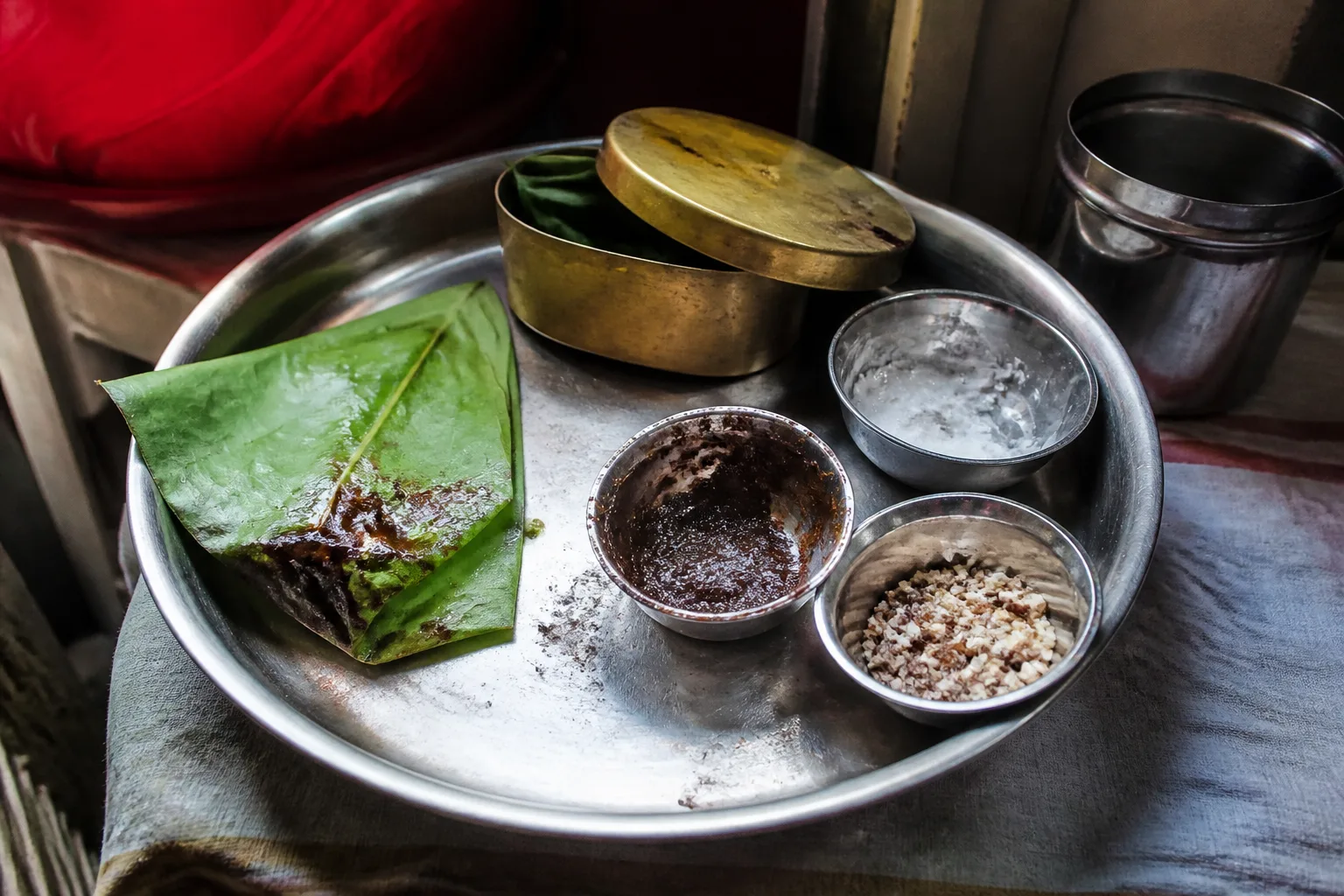
A Banarasi paan is a betel leaf spread with chuna (slaked lime) and katha, then filled with chopped supari and other fillings, folded and fixed with a clove or toothpick. The prized leaf is the Maghai of Bihar, or the Jagannathi of Odisha.
The leaf
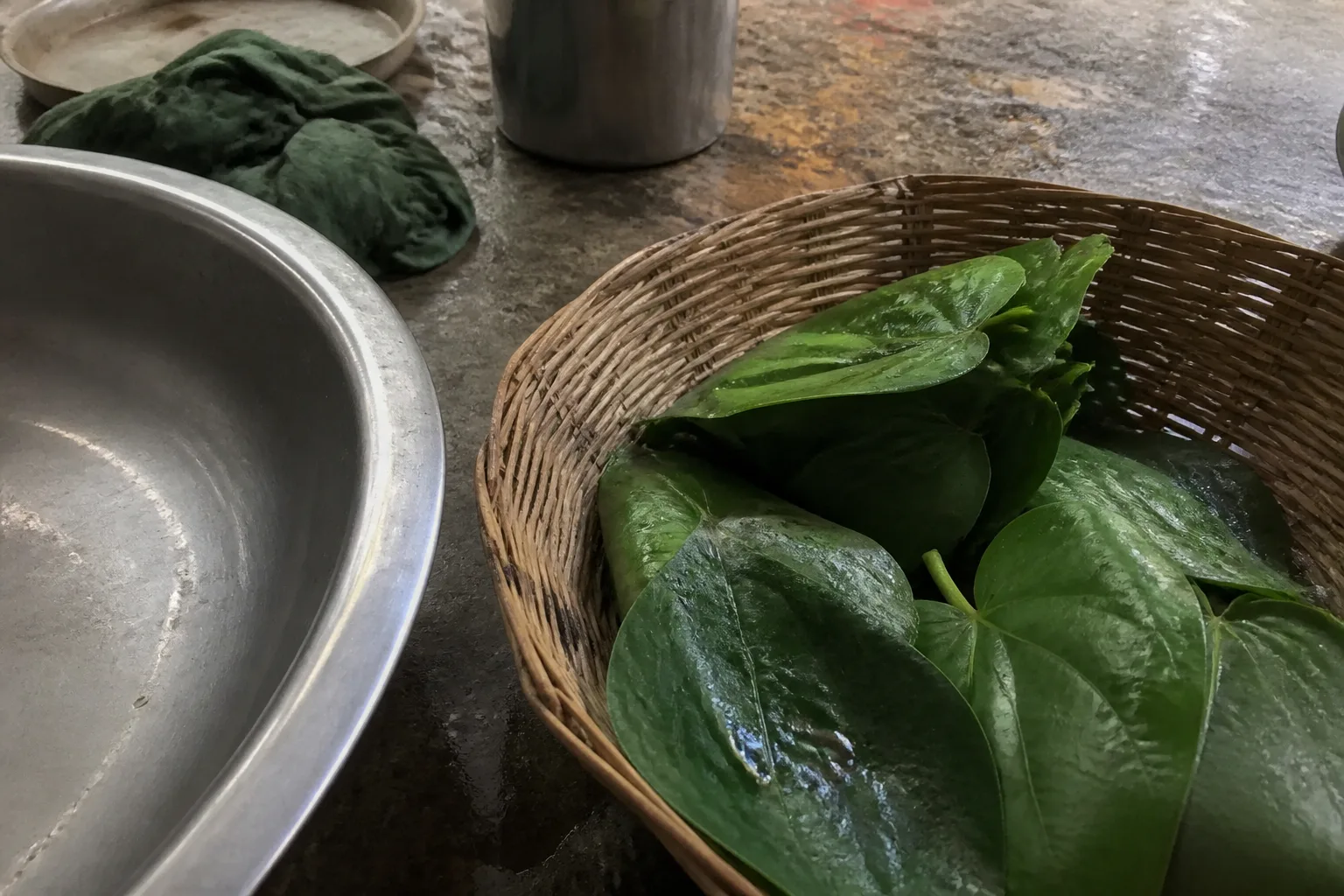
Outlook Traveller says the leaf that brings tears to a dedicated Banarasi’s eyes is the Maghai, grown in Bihar. It could be the Jagannathi of Odisha, or the desi leaf grown in Jaunpur. A feature on the GI tagged paan adds a seasonal detail: the Maghai is used from December to May, and the Jagannathi from June to November. Wikipedia notes that the leaf carries a Geographical Indication tag as “Banaras Pan (Betel Leaf)”, cultivated in Uttar Pradesh.
What buyers say about the Maghai is consistent. In the Outlook piece, one paanwala swears it is soft and melts in the mouth, and another says it leaves no resha, or strands, in the teeth.
What goes inside
Wikipedia describes the filling as typically chopped betel nut (supari), slaked lime (chuna) and red katha, a paste made from the khair tree. Slurrp lists the same base for the Banarasi sada paan, with some spices, and describes the last step: the ingredients are folded within the leaf and secured with a toothpick or a clove.
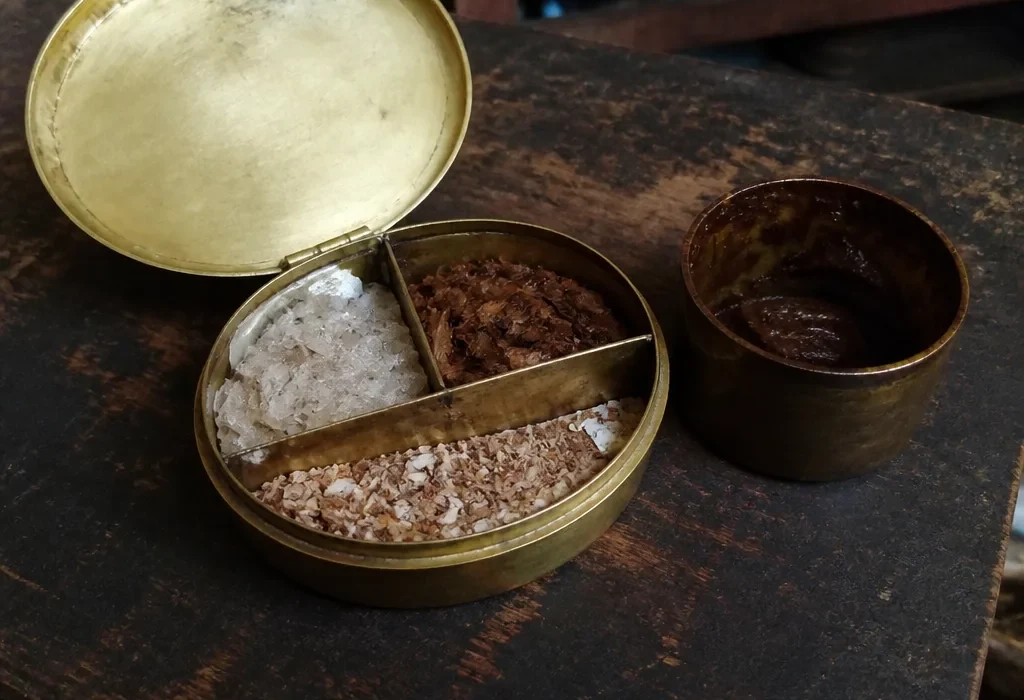
- Chuna: the slaked lime paste spread on the leaf.
- Katha: the red paste from the khair tree.
- Supari: chopped betel nut, which Slurrp says gives crunch and, in the sweet version, a touch of sweetness.
- Meetha paan: the sweet variety, one of the styles Slurrp lists for the city.
The proportions are the paanwala’s decision. Holy Weaves, a Banaras textile seller writing about the paan, says the fame of the paan lies less in the ingredients than in the artistry of the paanwala, who balances fillings, spices and aromatics to each customer’s taste.
Paan in the life of the city
Outlook Traveller says the Banarasi’s love for paan runs from using it as a religious offering to eating it some five times a day. Holy Weaves says paan has been part of Varanasi’s history for centuries, though it is impossible to pinpoint its origins in the city.
Good to know
Paan can contain betel nut and, in some shops, tobacco. This post describes a cultural food and makes no recommendation. Salteen does not sell paan.
Where to go next
Frequently asked questions
What goes into a Banarasi paan?
Betel leaf, chuna, katha and chopped supari, with spices or sweet fillings, folded and fixed with a clove.
Which leaf is used in Banarasi paan?
The Maghai of Bihar or the Jagannathi of Odisha, according to Outlook Traveller, with a desi leaf from Jaunpur also named.
Is Banarasi paan made from leaves grown in Banaras?
The GI tag lists Banaras Pan as grown in Uttar Pradesh, while food writers say the favoured leaf comes from Bihar and Odisha.
Sources used for this post: Outlook Traveller, a very short history of the Banarasi paan; Wikipedia, Banaras Pan.; Slurrp, flavours of Banarasi paan; inkl, Banarasi paan GI tagged mouth freshener; Holy Weaves, Banarasi paan.