
Blog
Laddu Across India: Besan, Boondi, Til, Gond and Atta

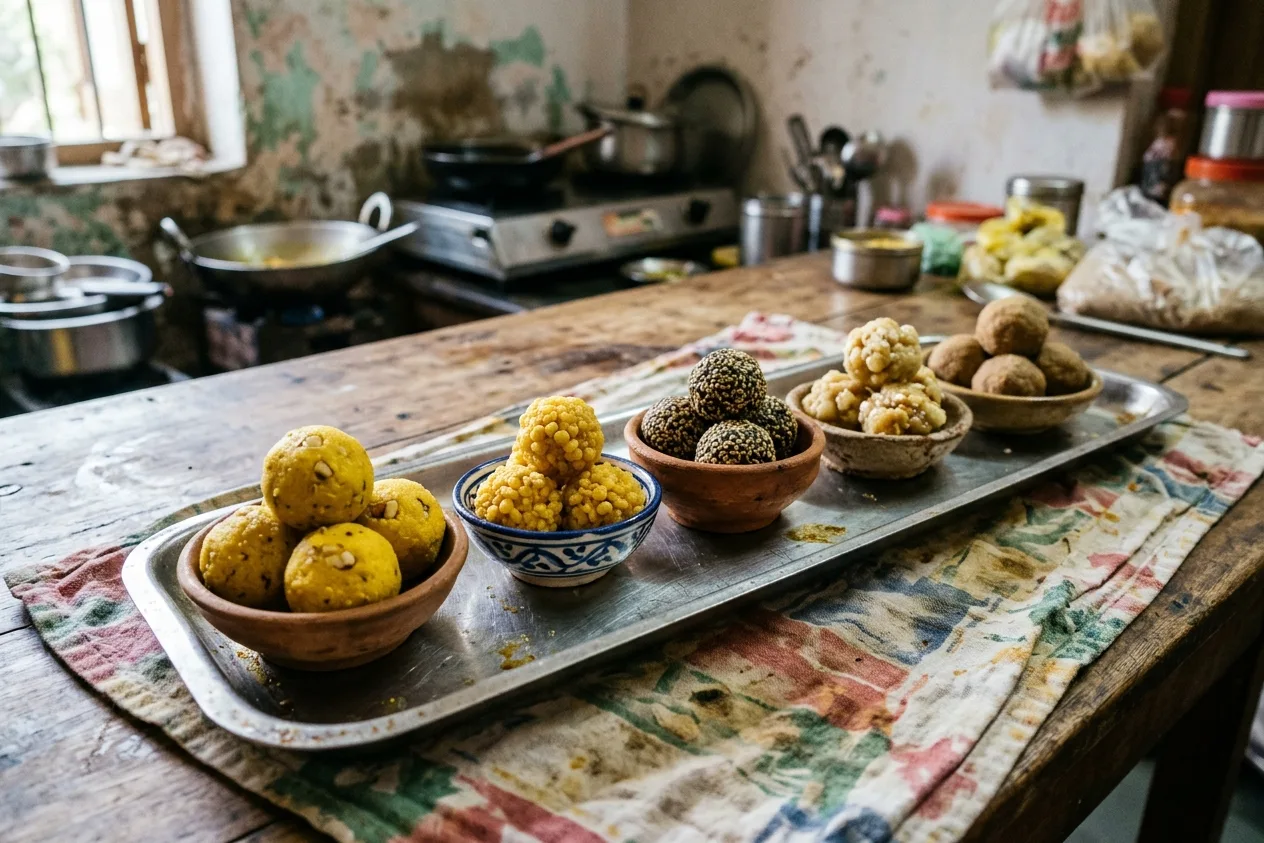
The word laddu, Curly Tales notes, comes from the Sanskrit ladduka, meaning small balls. A ball of flour, fat and sweetener is the simplest sweet there is, and India has dozens of versions of it. Veg Recipes of India alone lists motichoor, til, boondi, atta, ragi, rava, gond, moong dal, peanut, badam and dry fruit laddu.
This guide covers the main ones, how they are made and when they are eaten.
The short answer
In short
There is no fixed count of laddu types. The main families are besan, boondi and motichoor (from gram flour), til (sesame), atta (wheat), gond (edible gum), and rava or coconut. Til laddu belongs to Makar Sankranti, boondi laddu to Raksha Bandhan and Diwali, and motichoor to Ganesh Chaturthi.
Besan laddu
Besan laddu is made from roasted gram flour, sugar and ghee, as NewsX describes it, and rich and nutty in flavour. Roasting slowly on a low flame avoids a raw taste. Wikipedia says the besan laddu served at the Venkateswara Temple in Tirupati has been called the most famous temple laddu.
Boondi and motichoor
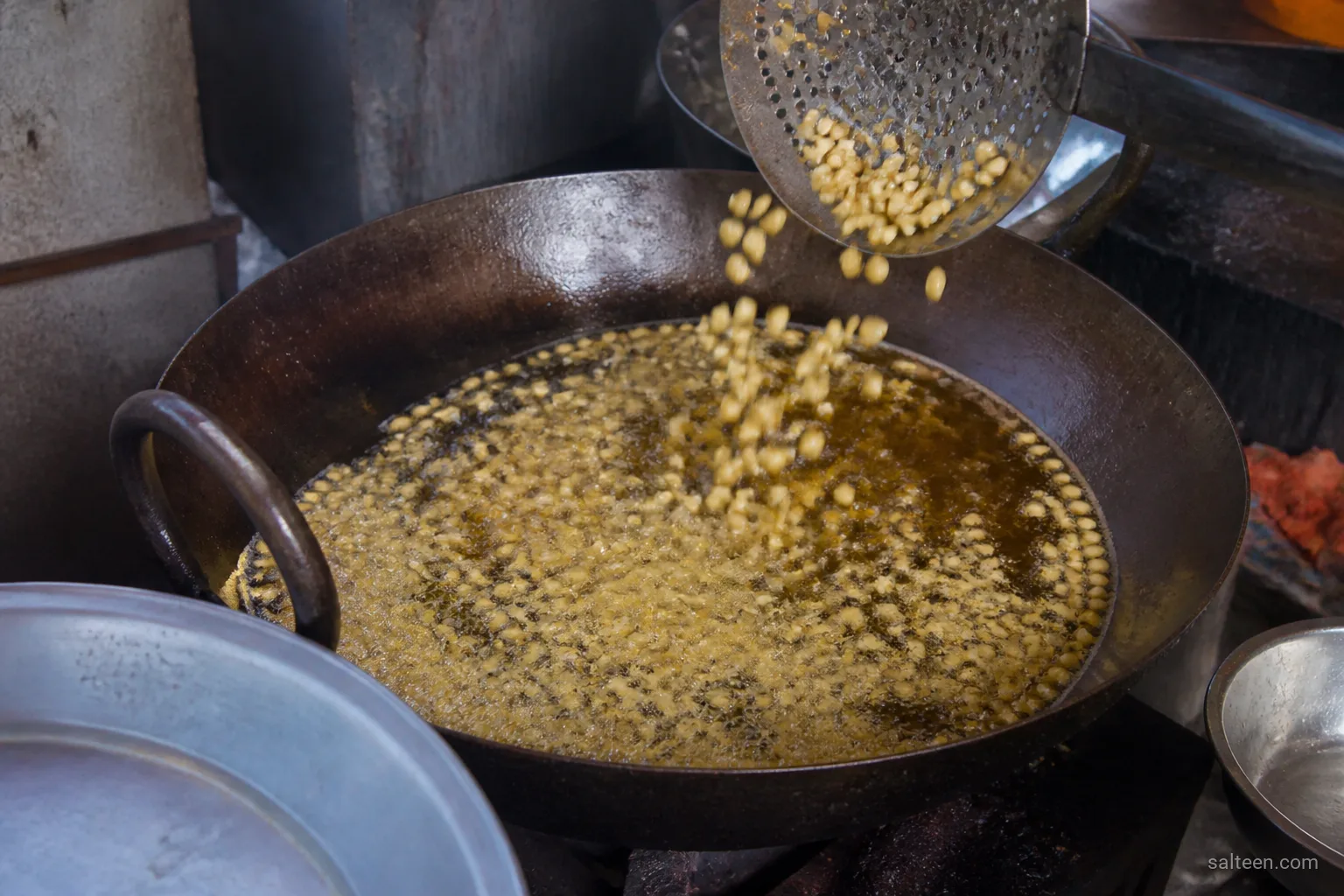
Wikipedia says boondi laddu is made from besan boondi and is often served at festivals such as Raksha Bandhan and Diwali. Motichoor laddu uses fine boondi, tiny fried balls of chickpea batter soaked in sugar syrup, and the name means crushed pearls. The recipe originated in north India, it adds. Zee Zest says that boondi laddu is a traditional dessert from Rajasthan, and that the boondi pearls are comparatively bigger than those in motichoor. Slurrp notes that motichoor is offered to Lord Ganesha at festivals such as Ganesh Chaturthi.
Til laddu
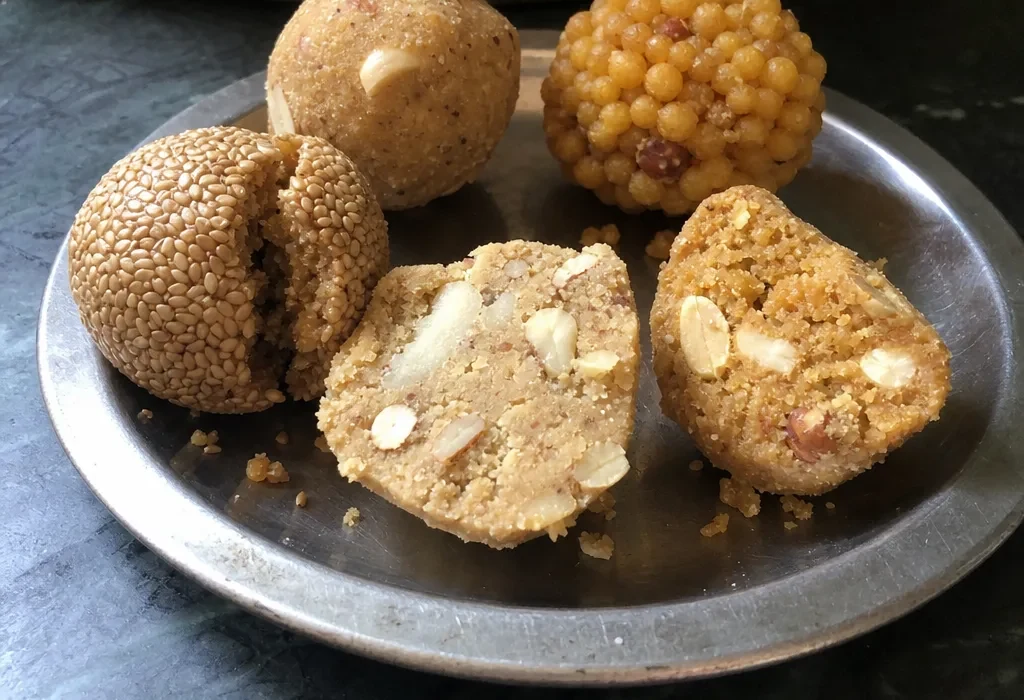
Slurrp says til laddu is made during Makar Sankranti, from sesame seeds, jaggery and ghee. We cover this in tilkut and til ladoo of the Gangetic belt and in our Makar Sankranti plate.
Atta laddu
Atta laddu is the wheat flour version, roasted in ghee and sweetened, and usually made at home. Our winter sweets post covers it: atta ladoo and panjiri.
Gond laddu
Gond laddu uses edible gum, known as gond in Hindi, fried and mixed with nuts and ghee. Wikipedia says these are called dinkache ladoo in Marathi and gond ka laddu in Hindi.
Others
Wikipedia says that coconut and khoa laddu is served at the Maa Tarini Temple in Ghatgaon, and that nuts such as pistachios and almonds are commonly stuffed into laddus. Rava, ragi, peanut and moong dal versions appear in Veg Recipes of India’s list.
A laddu table
| Laddu | Main ingredient | Usually tied to |
|---|---|---|
| Besan | Roasted gram flour | Everyday, temple prasad |
| Boondi | Fried besan pearls, syrup | Raksha Bandhan, Diwali |
| Motichoor | Fine boondi, syrup | Ganesh Chaturthi |
| Til | Sesame, jaggery | Makar Sankranti |
| Atta | Wheat flour, ghee | Winter, home |
| Gond | Edible gum, nuts, ghee | Winter |
What decides the texture
The sweetener and the fat do. A syrup holds the pearls of boondi, and a jaggery syrup binds sesame. Our guide to jaggery and sugar in mithai explains what each does. For the wider family of sweets and snacks, see namkeen types and origins.
Frequently asked questions
How many types of laddu are there?
There is no fixed number. Besan, boondi, motichoor, til, atta, gond, rava, coconut and dry fruit are among the many.
Which laddu is made for which festival?
Til laddu for Makar Sankranti, boondi laddu for Raksha Bandhan and Diwali, and motichoor for Ganesh Chaturthi, among others.
What is the difference between boondi and motichoor laddu?
Motichoor uses much finer boondi than boondi laddu, so it is softer and finer in texture.
Sources used for this post: Wikipedia, Laddu.; Slurrp, laddus for gods and goddesses; Slurrp, history of ladoos; Zee Zest, top laddus in India; NewsX, laddus at home; Curly Tales, types of laddus; Veg Recipes of India, ladoo recipes. Claims about nutrition in these sources were not used.