Blog
Seasonal Ingredients Used in Banaras Homes: Gourds, Sattu, Suran, Greens

Once the festival rush of Diwali subsides, households across North India reach for ingredients that have always belonged to winter, according to Slurrp: til, gur, peanuts, bajra, methi and bathua. A Banaras kitchen reads that shift as an instruction, and the instruction changes again with every season of the year.
This guide is an ingredient calendar for a traditional Banaras home. It lists what is cooked in each season, why it fits, and how it connects to the pickles and preserves of the year. Where a detail rests on household custom and not on a published source, we say so.
The short answer
In short
Banaras homes cook by season. Summer brings gourds (parwal, lauki, turai) and sattu. The rainy months, including Chaturmas, bring a pause on leafy greens and a table of gourds, roots and stored grain. Autumn brings suran around Diwali. Winter brings sarson, bathua, fresh peas, carrots, radish, amla, sesame and jaggery, and the dew-set milk foam malaiyo. Spring turns lighter, with fresh chickpeas and bitter vegetables. A short list of spices ties it together.
The foundation: a satvik pantry
Before the seasons, the pantry. Many Banaras households, particularly those in the satvik tradition, cook without onion and garlic, and the pantry is built around that. The National Virtual Library of India describes a satvik ensemble in Varanasi with dishes such as parwal ki sabzi, baingan kalonji and nimona, spiced with hing. Writers on Varanasi street food note a liberal but careful use of hing where onion and garlic are absent, and say the food is made with mustard oil or desi ghee.
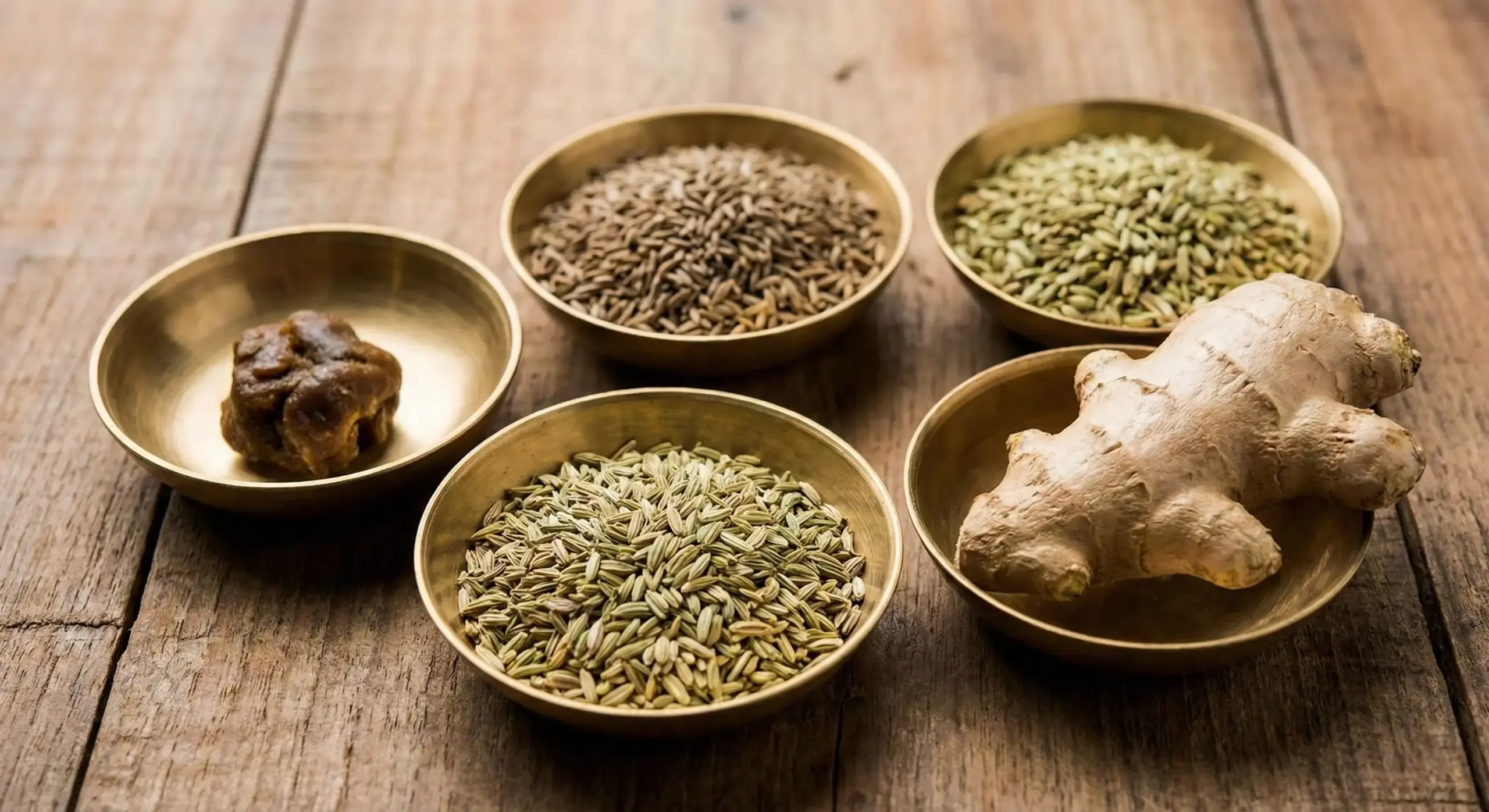
The fixed items on the shelf are ghee, mustard oil, hing, cumin, black pepper, dried ginger, turmeric, green chilli, rock salt, jaggery, wheat flour, moong and arhar dal, rice and sattu. Our posts on why Banaras food is simple yet flavorful and traditional spice blends used in Banaras cover how a few of these do so much.
Summer (Grishma): water-rich gourds and sattu
Summer heat in Varanasi is long and severe, and the vegetables that grow in it are the ones that carry water.
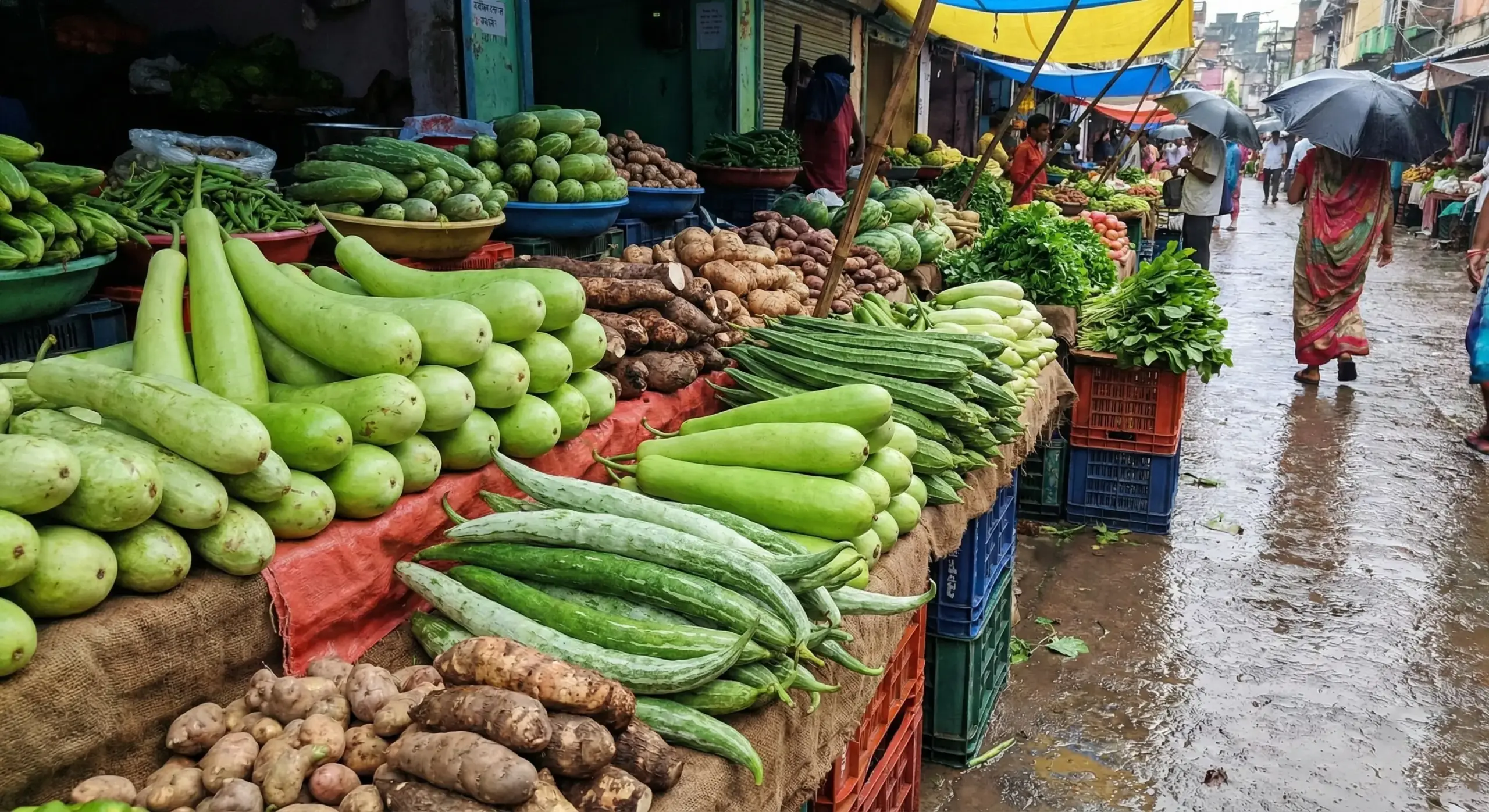
- Parwal (pointed gourd) is the most characteristic summer vegetable of eastern Uttar Pradesh and Bihar. It is stuffed with roasted spices or cooked in a light, thin gravy. Parwal ki sabzi is listed among the region’s satvik dishes by the National Virtual Library of India.
- Lauki (bottle gourd) is cooked plain with cumin and hing, or as a light curry, and appears often at dinner.
- Turai and nenua (ridge and sponge gourd) are cooked soft with minimal spice.
- Tinda and kaddu appear at the edges of the season.
- Raw mango (kairi) becomes aam panna, chutney and the year’s first pickles.
- Sattu, roasted gram flour, is the grain of the hot weeks. Lonely Planet calls it Bihar’s hero and notes it is eaten as litti and as a sherbet, sometimes sweetened with jaggery. In Varanasi, baati is stuffed with a sattu masala and cooked over charcoal, according to Zee Zest.
The summer table also carries curd, lassi and thandai, and we cover the cooling drinks in seasonal eating practices in Kashi.
Monsoon and Chaturmas (Varsha): the quiet table
When the rains come, many traditional households pause leafy greens. Spinach, fenugreek and similar greens are set aside through Chaturmas, the four months of religious restraint that overlap with the monsoon. The reason given is that wet leaves carry mud and insects. Some households also reduce onion and garlic for the period.
What remains is a plain, stored-food table:
- Gourds and root vegetables, cooked through
- Stored grains and pulses, especially moong
- Dried items such as papad and urad dal wadi
- Roasted maize with rock salt and lemon
- Pickles made months earlier
This is where the summer’s preservation work pays off, a theme in why Banaras pickles are oil-rich and traditional storage methods for pickles.
Autumn (Sharad): suran and festival food
Autumn brings Navratri, Dussehra, Diwali and the sweets that go with them. The vegetable most tied to the season is the elephant foot yam, suran or jimikand. Deccan Herald describes jimikand as a vegetable that is not a choice for most of the year, except one season when this “grandad of tubers” becomes a celebrity of produce, cooked in everything from curries to kebabs.
Annakut, the day after Diwali, brings its own seasonal dish. Down To Earth describes Annakut ki sabzi as a mix of all seasonal vegetables boiled with very little spice, with no fixed ingredient list, and most families have their own recipe. For the temple side of Annakut, see food offerings in Banaras temples.
Winter (Hemant and Shishir): the richest table
The cold months are the most abundant. Slurrp’s post-Diwali ingredient guide says households across the country reach for til, gur, peanuts, bajra, methi and bathua, and notes that the weeks after Diwali bring leafy vegetables that thrive in cooler air: sarson, bathua, palak and chaulai. In Uttar Pradesh and Bihar, it adds, bathua is blended into parathas, raitas or saag, providing a distinctive earthy taste that balances richer foods.
In Banaras the winter list looks like this:
| Ingredient | How it is used |
|---|---|
| Fresh green peas | Nimona, chura matar, parathas |
| Sarson and bathua | Cooked with ghee and ginger, or in parathas |
| Carrot, radish, cauliflower | Sabzi, salad, winter pickles |
| Amla | Fresh chutney, pickle, murabba |
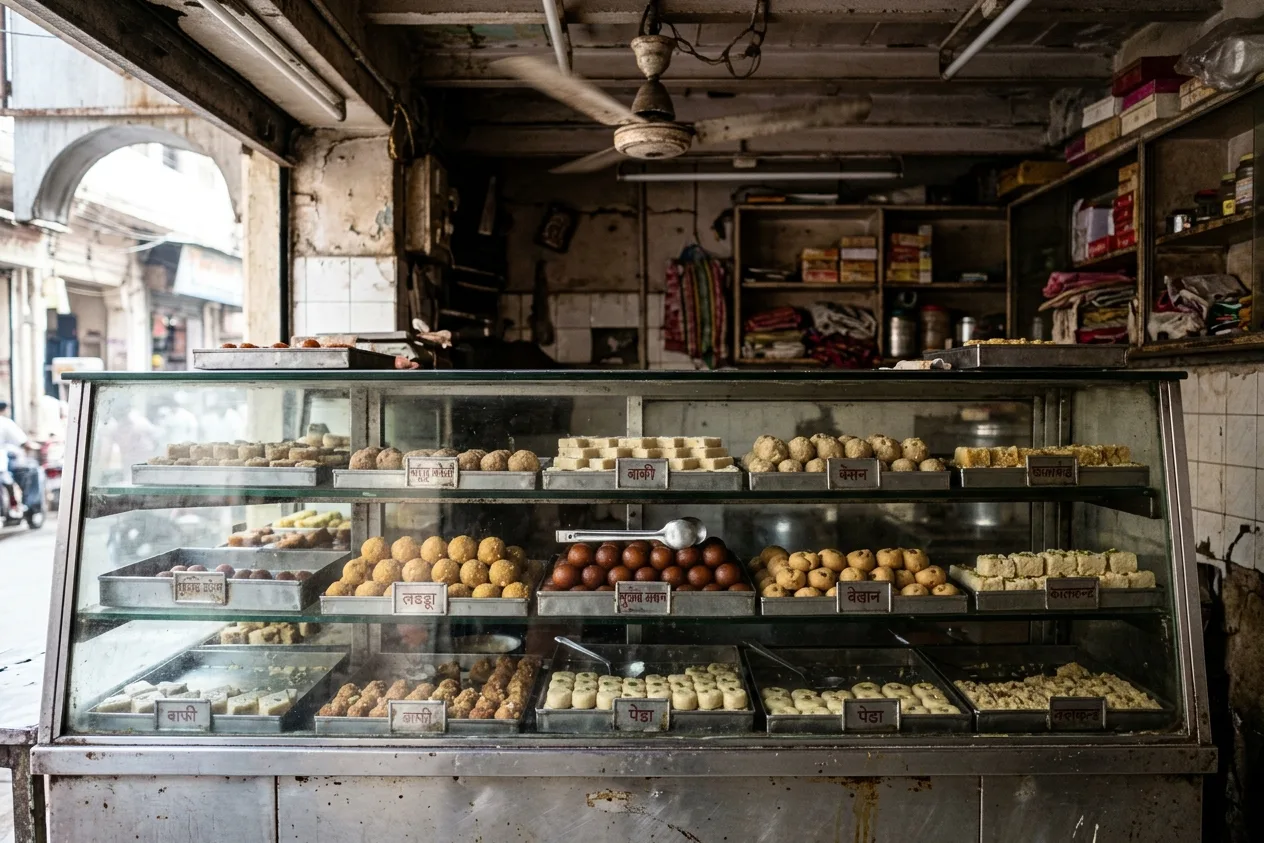
| Til and gud | Laddus, chikki, Makar Sankranti sweets |
| Milk, khoya, malai | Winter sweets and malaiyo |
Peas, nimona and chura matar
Fresh peas drive the season. Lonely Planet calls chura matar a signature Varanasi winter snack, and Zee Zest and the Tribune’s Pushpesh Pant describe nimona as a green pea dish loved in eastern Uttar Pradesh when sweet peas are plentiful and comparatively affordable. Recipe writers say it needs fresh peas, and we discuss both dishes in morning food habits of Banaras households and evening meals in traditional Banarasi homes.
Malaiyo and winter sweets
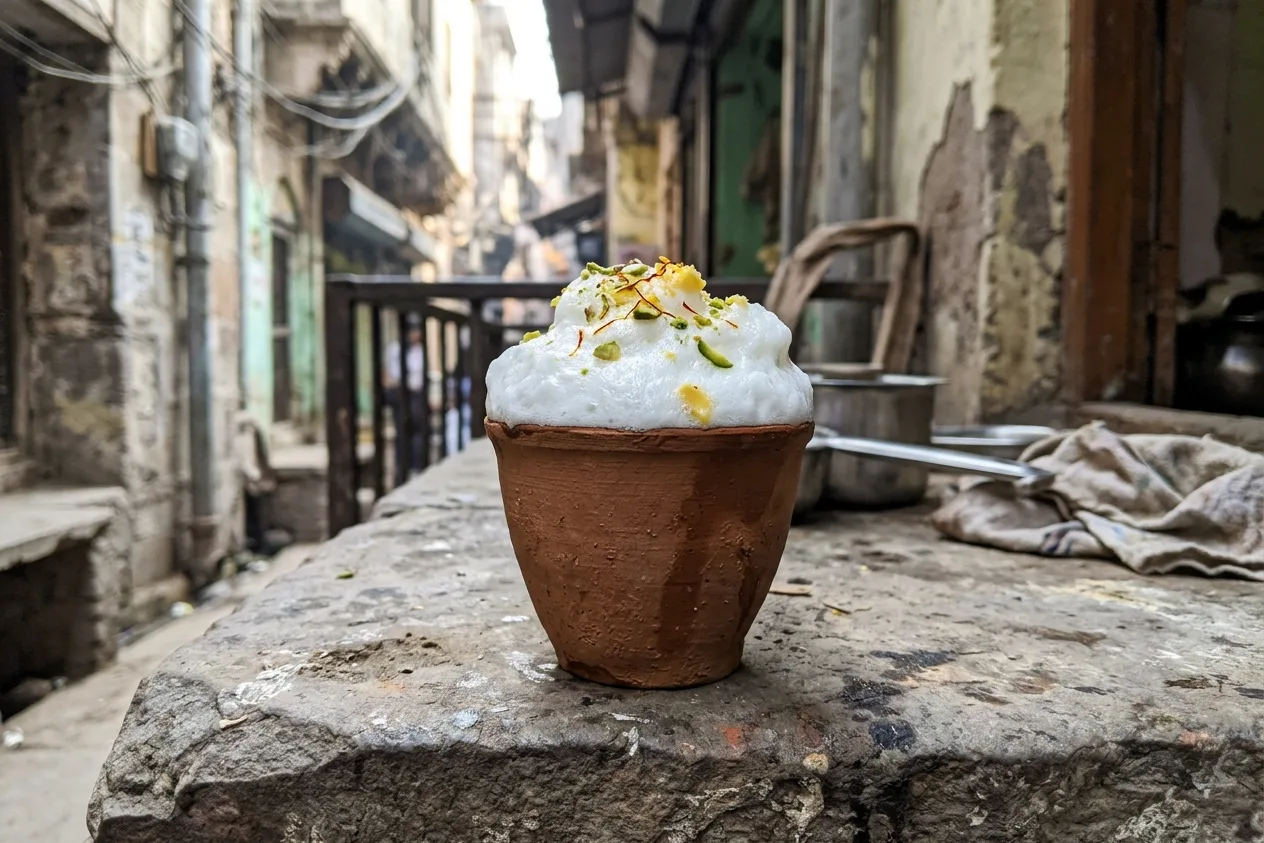
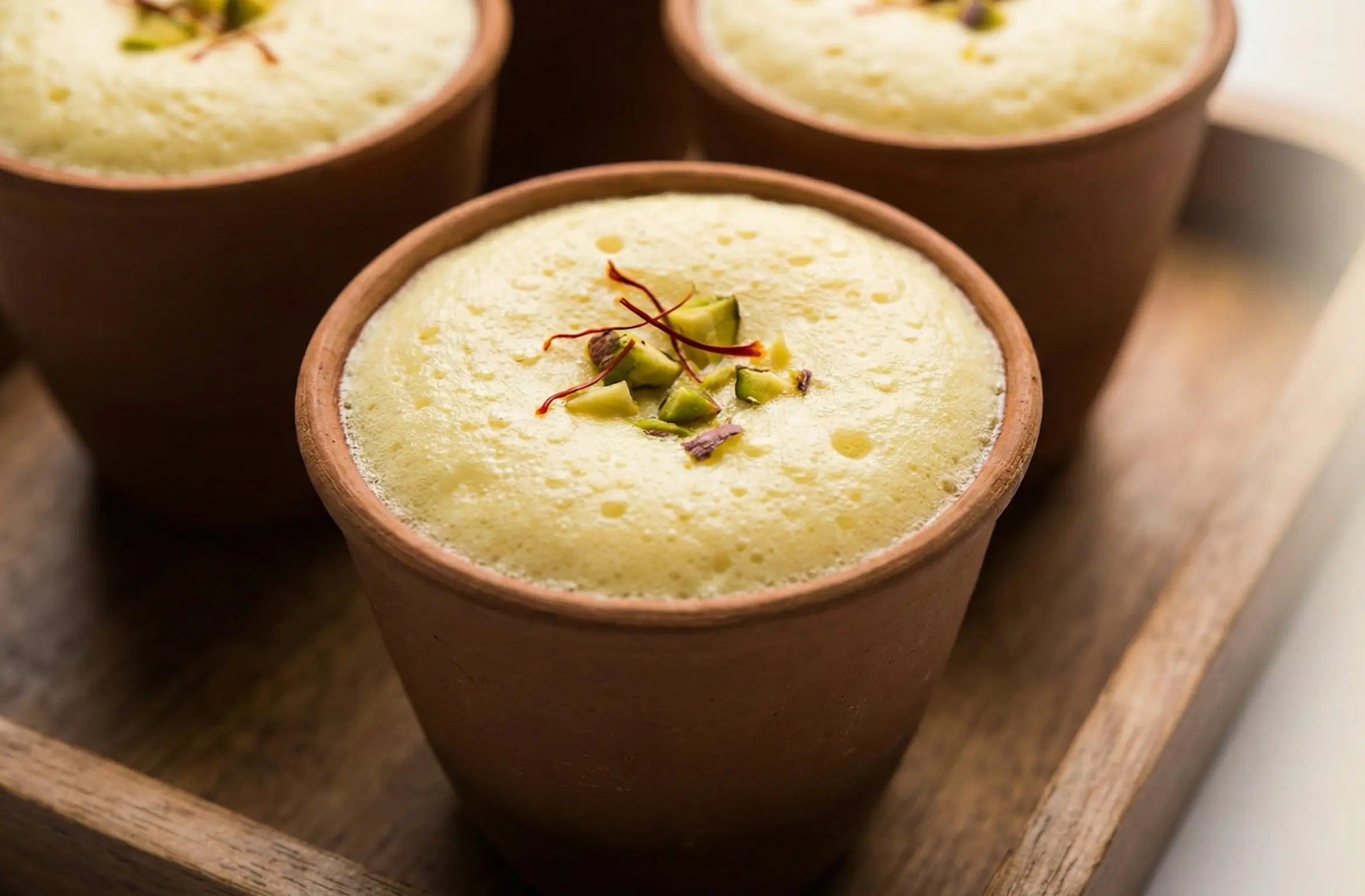
Malaiyo belongs to this season only, since it is made by setting boiled, saffron-and-cardamom milk out in the dew. Lonely Planet places malaiyo vendors with brass pots in the lanes of Chowk and Vishwanath Gali in the early morning. The Unstumbled’s guide to the Dev Deepawali period lists it with other Varanasi winter sweets, including launglata, a fried pastry stuffed with mawa and nuts, sealed with a clove and dipped in syrup.
Amla and the winter pickles
Amla, carrot, radish, green chilli and the stuffed red chilli all arrive in this window. The post on amla in Indian households covers the fruit, and the season’s pickles are covered in seasonal pickles of Uttar Pradesh.
Sankranti
Makar Sankranti in mid-January brings til-gud laddus and khichdi, and PTI reported that Lord Vishwanath was offered khichdi, chivda, peanut brittle and papad on the day.
Spring (Vasant): the lighter turn
As the cold fades, the diet lightens. Holi brings gujiya, and thandai returns, as we describe in seasonal eating practices in Kashi.
One year at a glance
| Season | Months (approx.) | Headline ingredients |
|---|---|---|
| Spring | Feb to Mar | Green chickpeas, karela, gujiya for Holi |
| Summer | Apr to Jun | Parwal, lauki, turai, sattu, raw mango |
| Monsoon | Jul to Sep | Gourds, stored grain, wadi, pickle; no leafy greens |
| Autumn | Oct to Nov | Suran, festival sweets, Annakut vegetables |
| Winter | Dec to Jan | Peas, sarson, bathua, amla, til, gud, malaiyo |
Why a home cook follows the calendar
There are practical reasons beyond tradition.
- Taste. A pea in January tastes like a pea, and the sweetness of fresh winter peas is what makes nimona work.
- Cost. Seasonal produce is plentiful and cheaper, as the Tribune notes of winter peas.
- Preservation. The glut of one season is dried, pickled or sugared for the next.
- Ritual fit. The festival calendar and the harvest calendar line up, so fast days, feast days and market days support each other.
Frequently asked questions
What vegetables are eaten in Banaras in summer?
Parwal, lauki, turai, nenua and tinda, along with sattu and raw mango preparations.
Why are leafy greens avoided in the monsoon?
Households say wet leaves carry mud and insects, and the practice overlaps with Chaturmas. It is a tradition and not medical advice.
What is suran?
Elephant foot yam, also called jimikand, a tuber eaten in the autumn and winter season in many North Indian homes.
What winter greens are used in Banaras?
Sarson (mustard greens), bathua, palak and methi, often cooked with ghee and ginger.
What is chura matar?
A winter dish of flattened rice cooked with fresh peas, ghee and black pepper, without onion or garlic.
What is Annakut ki sabzi?
A mix of all seasonal vegetables boiled with very little spice for Annakut, with no fixed recipe.
How does preservation fit the seasons?
Each harvest is salted, dried, pickled or sugared for the months when it is gone, and the pickle jar is the most visible result.
Sources used for this post: National Virtual Library of India and 30 Stades (satvik dishes and hing); Lonely Planet and Zee Zest (sattu, baati, chura matar, malaiyo); Slurrp (post-Diwali ingredients); Deccan Herald (jimikand); Down To Earth (Annakut ki sabzi); The Unstumbled (Varanasi winter sweets); Tribune India (nimona and winter peas); PTI report via ThePrint (Makar Sankranti).