Blog
Garlic in Banaras Cuisine: Who Eats It and Who Leaves It Out

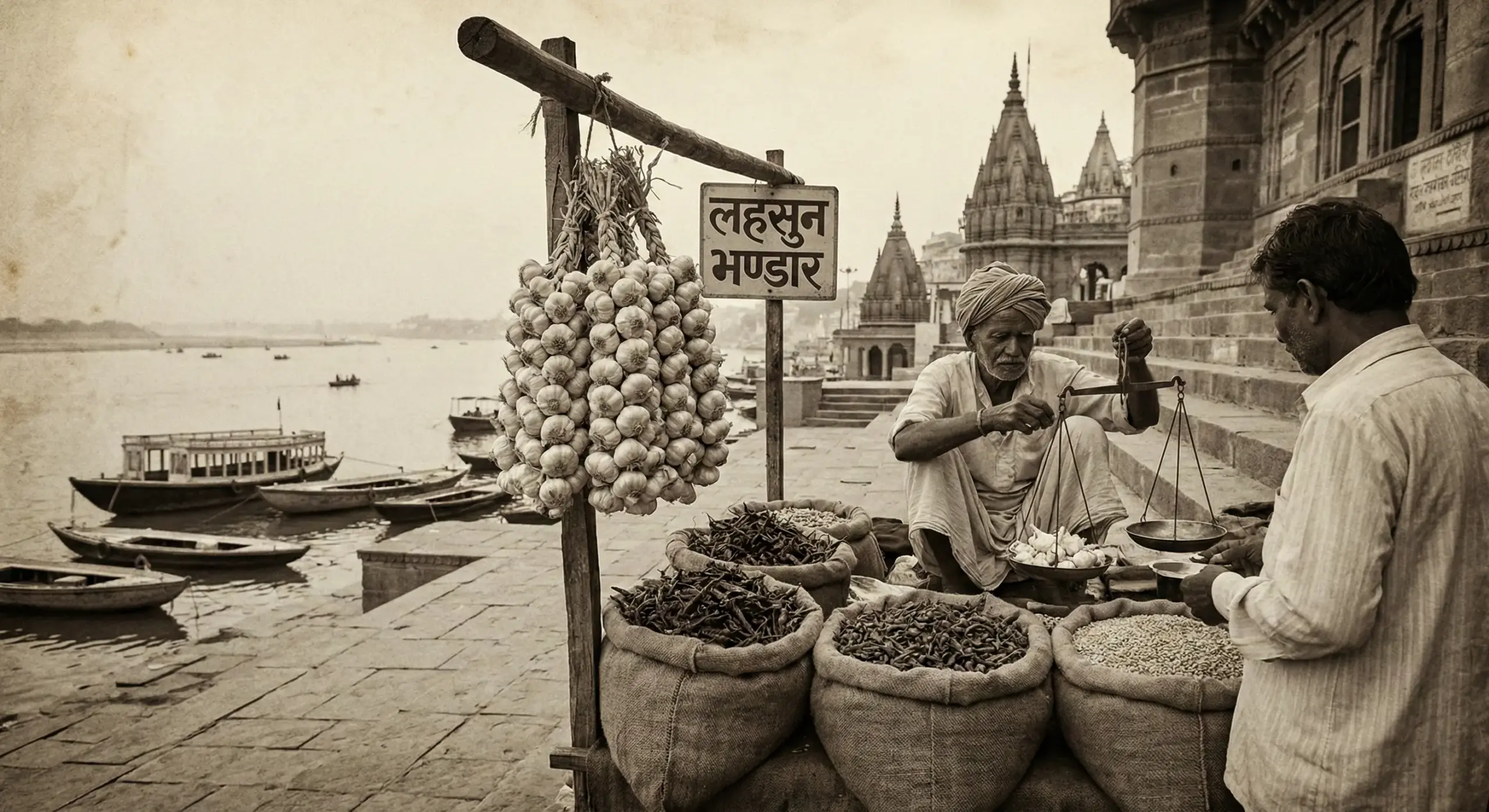
Banarasi chokha, the smoky mash of roasted brinjal, tomato and potato eaten with baati, is made in many kitchens with raw garlic and mustard oil, according to one Varanasi food guide. A few lanes away, the kachori sabzi that most visitors eat for breakfast is cooked with no garlic at all. Both are Banaras food, and both are cooked in the same city on the same day.
This guide explains why garlic sits on one side of a line in the city’s kitchens, who stays on which side, what the tradition says and what it does not, and what cooks use when garlic is left out. We treat religious ideas as belief and mark where evidence is thin.
The short answer
In short
Many Banaras households, temples and fasting menus leave out garlic and onion because Hindu food classification, especially in Vaishnava and satvik traditions, places them among rajasic and tamasic foods thought to stir the mind and body. A popular story traces them to the demon Rahu. Other homes in the city, including many that cook non-vegetarian food, use garlic freely, and eastern Uttar Pradesh chokha is a good example. Both habits are old, and neither is an error.
The classification behind the rule
Hindu food philosophy sorts food into three groups by their effect on mind and body, called gunas: sattva, rajas and tamas. The CSR Journal describes the grouping simply: food is divided into saatvik, raajsik and taamasik. The Hans India explains that satvik food is regarded as pure, calming and supportive of mental clarity, rajasik food is stimulating and often provokes restlessness, and tamasik food is thought to induce lethargy and irritability.
Onion and garlic fall into the second and third groups. The CSR Journal says they are considered taamasik and partly raajsik, which is why they are traditionally left out of offerings to gods and avoided during religious fasts and rituals. Hindu Blog adds a line from the Bhagavad Gita (chapter 17, verse 9) that describes bitter, sour, salty, very hot and pungent foods as liked by those in the mode of passion, and notes that onion falls in this category.
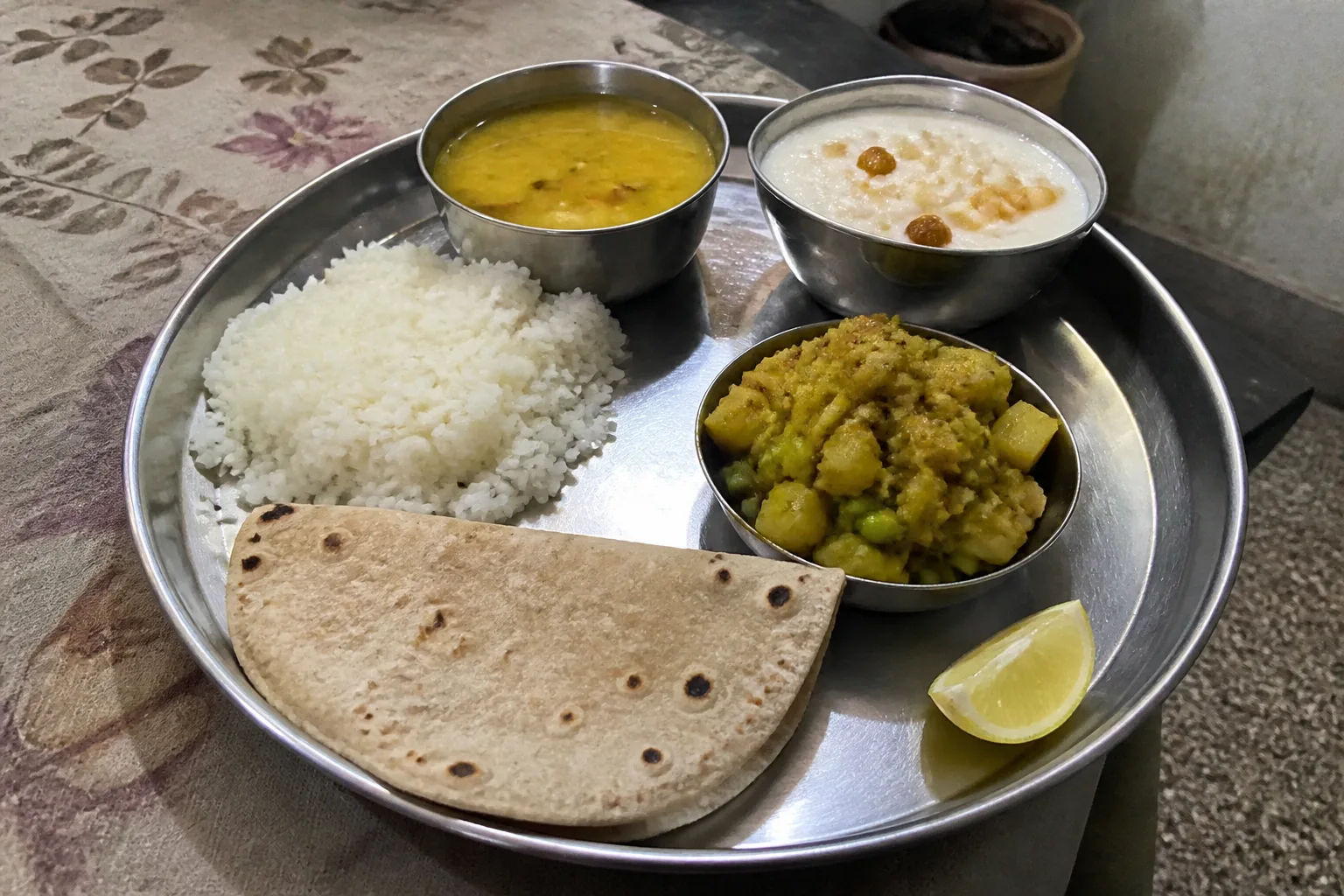
The effect is practical. A satvik kitchen builds its flavour without garlic and onion, and a sizeable part of what visitors call Banarasi food follows that rule. The result is described in our post on why Banaras food is simple yet flavorful.
The story of Rahu and Ketu
Popular tradition attaches a myth to the rule. During the churning of the ocean, Samudra Manthan, Vishnu took the form of Mohini to give the nectar of immortality to the gods. The demon Rahu disguised himself among the gods and drank some. The CSR Journal retells what follows: Vishnu cut off his head, his head became Rahu and his body Ketu, and drops of blood from Rahu mixed with the nectar and fell to earth. From those drops, the story goes, onion and garlic grew, and because of this origin they are considered impure for offerings.
It is worth being clear about the status of the story. It is a popular explanation passed through households. At least one Vaishnava writer, on the Jiva Institute site, calls the stories of garlic born of Rahu’s blood stories for the general masses, and says the reasoning in the older sources is different. We give the myth because it is how many families explain the habit, not because it is the only account.
Other reasons given
Writers give several overlapping explanations for the garlic rule:
- Spiritual focus. The Hans India says garlic and onion are avoided during religious observances because they can disturb mental focus and hinder spiritual and physical balance.
- Sect and offering. A Vaishnava writer argues that, in the Vaishnava tradition, foods in the rajasic and tamasic categories are considered unfit to offer to the deity.
- Non-violence. A Jain explanation is that harvesting root vegetables disturbs the ground and the creatures in it, which conflicts with the Jain principle of least harm.
- The smell. Many households simply say garlic and onion have strong smells that do not belong in a prayer room or temple kitchen.
These explanations do not all agree, and a household usually holds the rule as inherited habit more than as a reasoned doctrine.
What Banaras cooks use in its place
Without garlic and onion, a Banarasi cook leans on a handful of other ingredients. Writers on Varanasi street food say that where onion and garlic are not used, hing (asafoetida) appears in a liberal but careful way. The satvik ensemble in a National Virtual Library of India note on Varanasi food includes parwal ki sabzi, baingan kalonji and nimona, spiced with hing.
The standard replacements are:
| Ingredient | Role |
|---|---|
| Hing | Savoury depth and a cooked-onion smell |
| Ginger | Warmth and sharpness |
| Cumin | Toasted base note |
| Black pepper | Lingering heat |
| Fennel and fenugreek | Aromatic and slightly bitter notes |
| Amchur | Sourness |
Many of these are the same spices described in traditional spice blends used in Banaras, and the same tempering method works for all of them.
Where garlic is part of the cooking
The other half of the picture is that garlic is used widely in the city. Daily Trust notes that Varanasi restaurants have traditionally served meat to cater to visitors and non-vegetarian pilgrims, with the local satvik cuisine primarily eaten at home. The Quint describes the cuisine of Banaras’s Muslim gharanas, influenced by Mughal, Awadhi, Hindu and East Bengal flavours.
Garlic also turns up in the region’s plain vegetarian food. A Varanasi food guide describes chokha, the roasted brinjal, tomato and potato mash eaten with baati, as being made with mustard oil, green chilli and raw garlic. Lonely Planet’s guide to baati chokha notes it comes with raw onion and green chilli on the side. In this part of Uttar Pradesh and Bihar, garlic belongs to the rustic, smoky, mustard-oil side of the cuisine.
The safe summary is that practice varies by family, sect, occupation and occasion.
Garlic and the seasons
In the old Ayurvedic framework garlic is regarded as a heating food. Households that do eat it tend to eat more of it in the cold months and less in summer. During Chaturmas, the four months of the rainy season, many orthodox households also give up garlic and onion along with leafy greens, as part of a broader restraint described in seasonal eating practices in Kashi. Garlic grows as a cool-season crop in northern India and is harvested in late winter or early spring.
Garlic in pickle
Garlic pickle is a separate and well-loved item. Even households that avoid garlic in daily cooking vary in how they treat it in a pickle, and we cover the full picture in garlic pickle and its cultural use. A practical note belongs here, and we make it again in that post: garlic stored in oil is a low-acid food, and homemade preparations of that kind need careful handling and dry, clean tools.
What the temples do
Temple kitchens in Banaras follow the satvik rule without exception, as we describe in food offerings in Banaras temples. The Zee Zest write-up of Banarasi bhaji notes that a preparation using fresh seasonal ingredients and no onion or garlic has found its place in satvik temple cooking. Fasting menus follow the same rule, and a household observing a vrat sets garlic aside on that day regardless of what it eats on others.
A note on health talk
We do not make health claims here. The point of this post is the cultural logic of the kitchen: why garlic is in some pots and not in others, and how cooks manage without it.
Frequently asked questions
Why is garlic not used in many Banaras kitchens?
Hindu food classification places garlic and onion among rajasic and tamasic foods, and satvik, Vaishnava and temple kitchens leave them out. The reason is religious and traditional.
What is the Rahu and Ketu story about garlic?
A popular legend says onion and garlic grew from drops of blood that fell to earth when Vishnu, as Mohini, severed the demon Rahu’s head after he drank the nectar of immortality. It is folklore, not scripture, and some Vaishnava writers say the older reasoning is different.
Is all Banarasi food made without garlic?
No. Much of the temple and home vegetarian food is, but restaurants, Muslim households, non-vegetarian cooking and the chokha of eastern Uttar Pradesh often use garlic.
What replaces garlic in satvik cooking?
Hing, ginger, cumin, black pepper, fennel, fenugreek and amchur supply savoury depth, heat and sourness.
Is garlic avoided during Chaturmas?
Many orthodox households avoid garlic and onion during the rainy months, along with leafy greens, though practice varies.
Is kachori sabzi made with garlic?
The traditional Banaras version is made without onion and garlic, using hing, cumin and amchur.
Is garlic pickle eaten in Banaras?
Yes, in many homes, and we cover it in a separate post.
Sources used for this post: The CSR Journal (onion, garlic and Samudra Manthan); The Hans India and Republic World (satvik, rajasik and tamasik food); Hindu Blog (onion avoidance and the Gita verse); Jiva Institute (the origin stories); Daily Trust, The Quint and Lonely Planet (Varanasi cuisines); 30 Stades and the National Virtual Library of India (hing and satvik dishes); Zee Zest (Banarasi bhaji). Beliefs are described as beliefs.