Blog
Kachori Sabzi, Jalebi and a Banarasi Breakfast: What a Kashi Morning Tastes Like

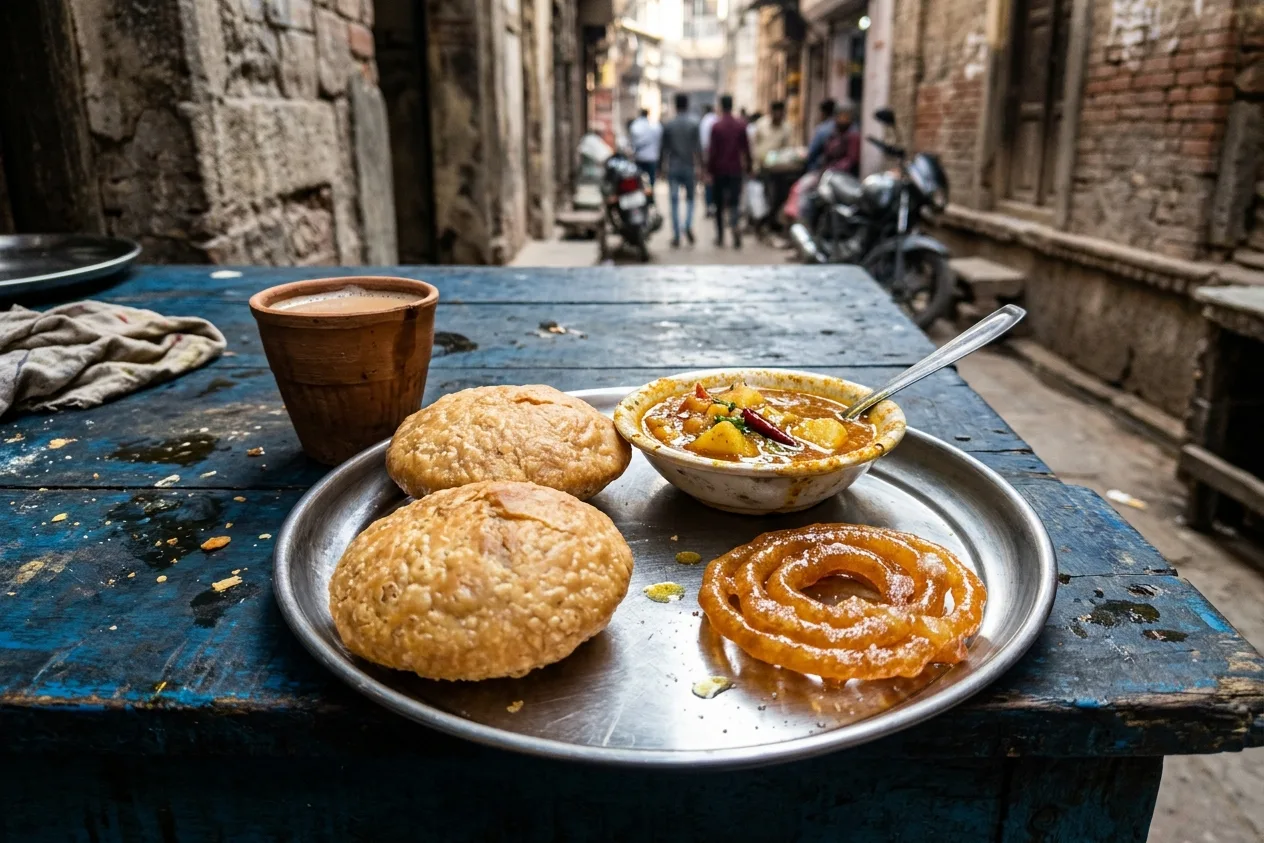
The best kachoris in Varanasi are often gone by 10 in the morning. Guides and visitors say the same thing again and again: stalls open around 7, the best ones sell out within a few hours, and the people who arrive at 11 are left with what remains. That tells you a lot about how the city eats. Breakfast in Banaras is a fresh, fried and hot meal that is made in batches, eaten standing or sitting on a bench in a lane, and finished before the day has properly begun.
This post describes what is on the plate, what goes with it, and how a Kashi morning changes through the seasons. It is a food post and there is nothing to buy at the end of it.
In short
A traditional Banarasi breakfast is hot kachori with a thin potato sabzi, followed by jalebi and tea in a kulhad. In winter, malaiyo joins the table. Go early: the best shops sell out by about 10 AM.
The plate: kachori and sabzi
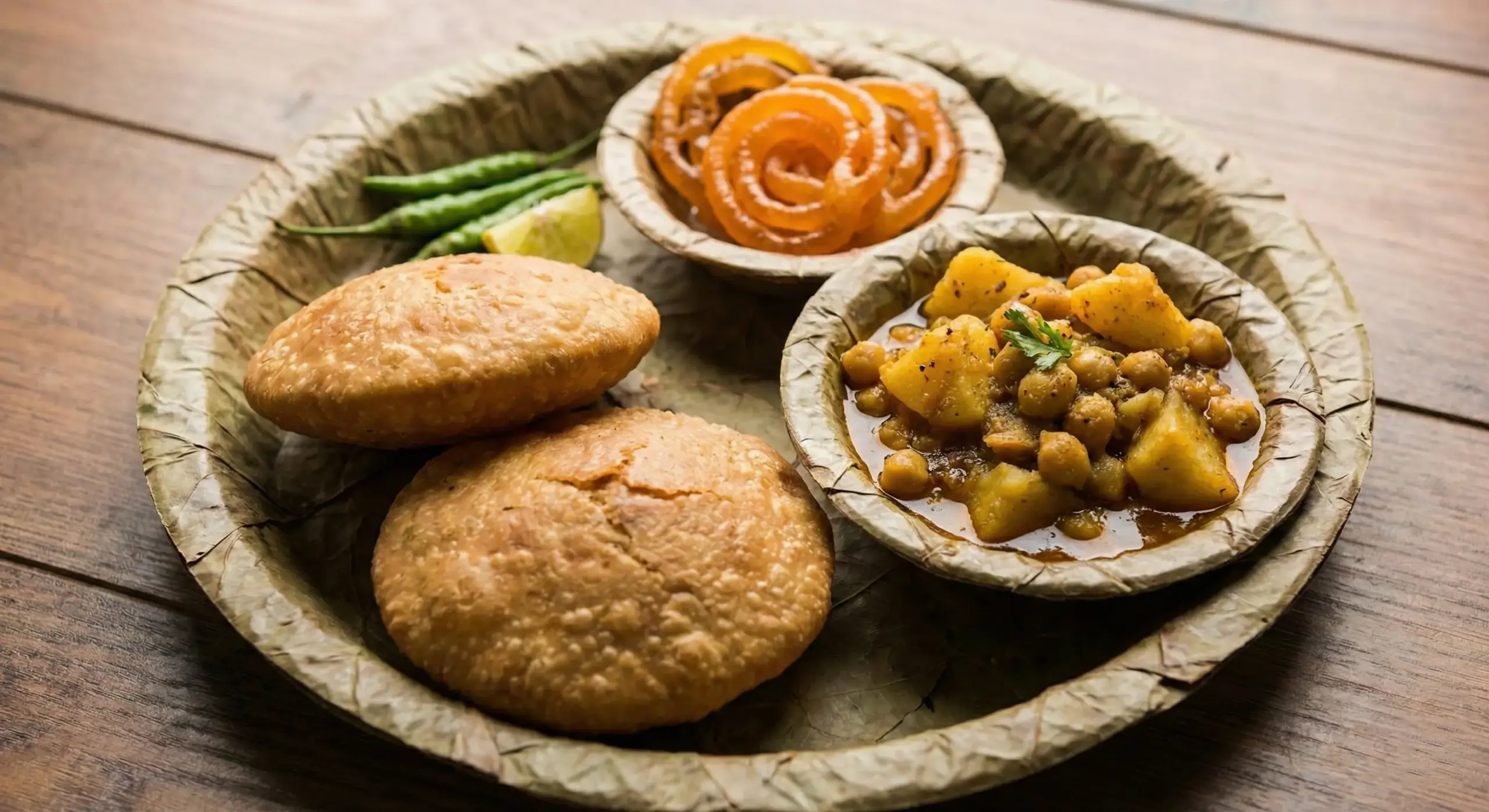
The centre of a Banarasi breakfast is kachori sabzi. A kachori here is a round, deep fried bread made of wheat flour and stuffed with a spiced filling of lentils, often urad or moong dal, though some stalls use peas or potato. Recipes and shops differ on whether the dough uses atta or maida, and both versions are sold. The kachori is fried in hot oil or ghee until it puffs and turns crisp and golden, and it is served hot.
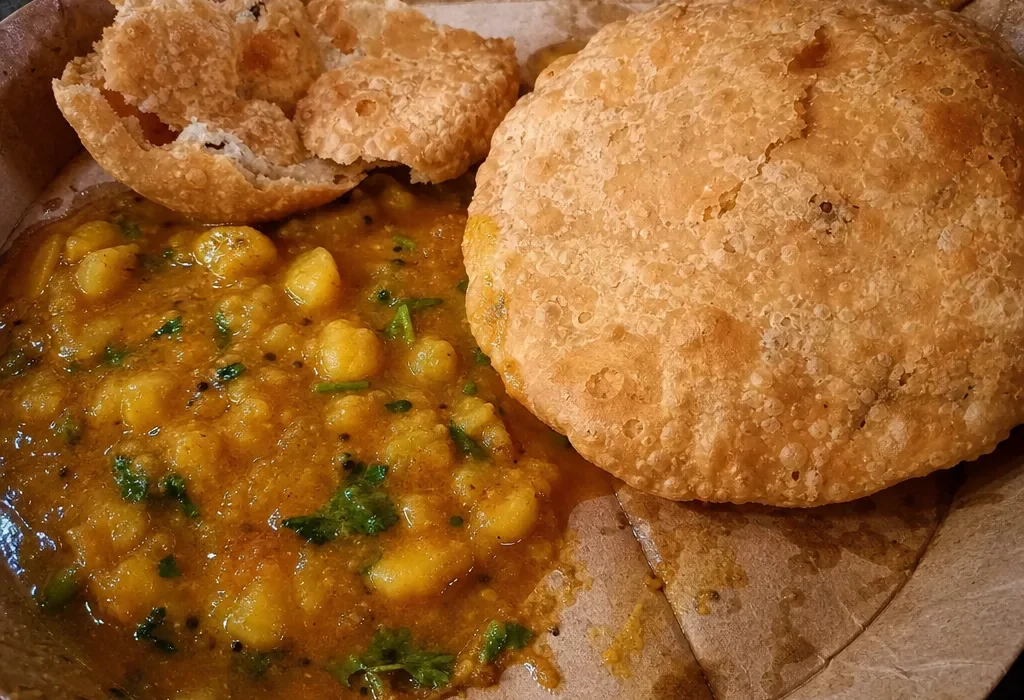
The sabzi that goes with it is a potato curry, and its character is the first thing that surprises visitors. It is thin, almost runny, and quite light compared to the dry or heavy potato dishes of other cities. Many traditional versions are made without onion and without garlic, which suits the temple city and the households around it. Recipes do vary on whether tomato goes in, so you will meet both a plainer yellow sabzi and a redder one. Some stalls add pumpkin (kaddu) to the potato, which gives a slight sweetness. It is finished with fresh coriander and sometimes served with a green chutney or a sweet tamarind one.
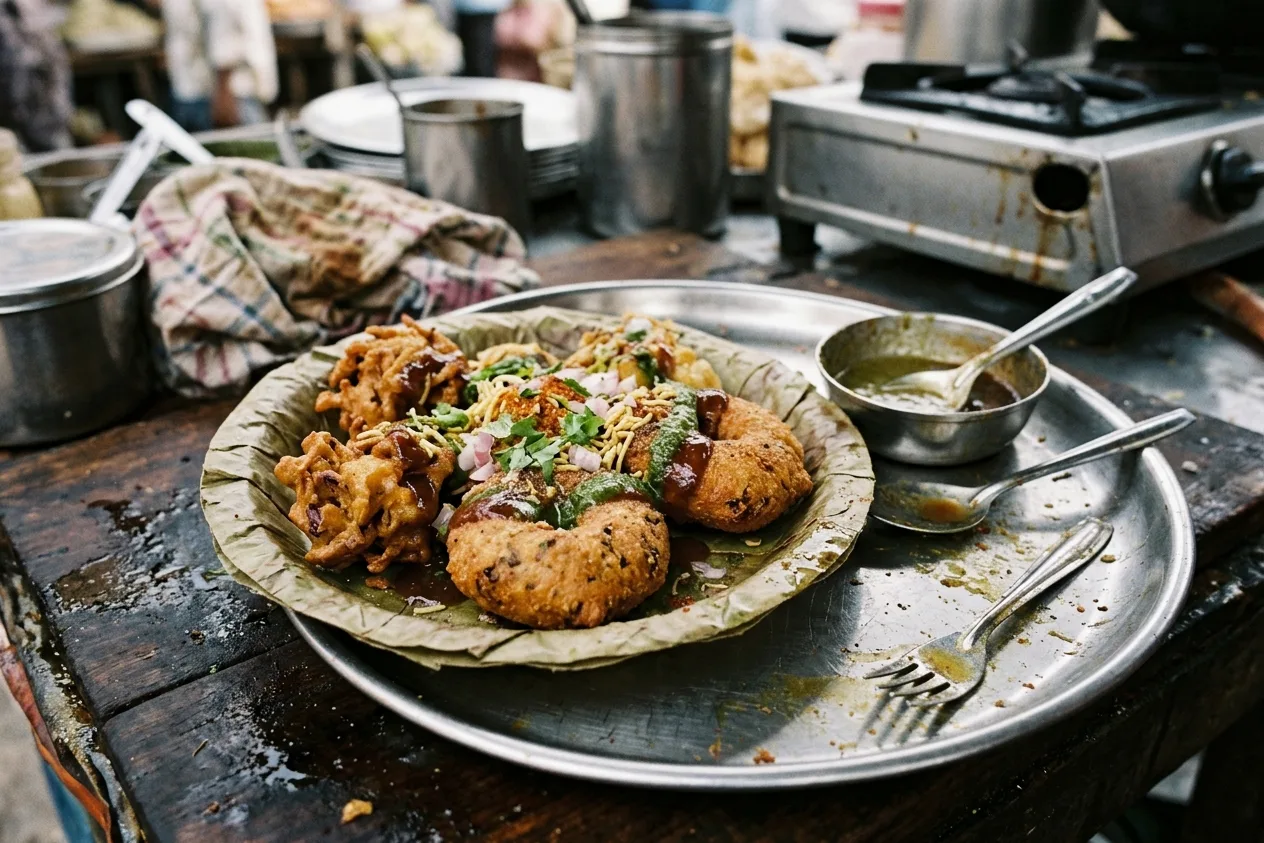
You break the kachori with your hand, dip the pieces in the sabzi and eat. Plates are often made of dried leaves, or the food is served in a leaf bowl called a pattal or donna, which is why a Kashi breakfast still has the smell of warm leaf along with fried dough.
Kachori Gali
There is a lane in the old city called Kachori Gali, and the name is quite literal. It sits near Godowlia and the Kashi Vishwanath temple, within the lanes of the Thatheri Bazaar area, and shops there have fried kachoris for generations. Ram Bhandar is the name that comes up most often in food writing, and other shops along the lane and nearby are mentioned as well, including Shree Rajbandhu, one of the oldest sweet shops in the city. Locals and visitors gather here in the early hours, and writers who have visited describe a mix of shopkeepers, pandits, pilgrims and college students in the same queue. We have not eaten at every shop mentioned in guides, so if you plan to visit, ask around on the morning itself and follow where the crowd is.
Kachori is widely believed to have come from Rajasthan, but Banaras has made it its own with the thin sabzi, the leaf plate and the sweet that follows it.
Jalebi comes next
A Banarasi breakfast has a sweet at the end, and the sweet is jalebi. Spirals of fermented batter are fried in oil or ghee and dropped into warm sugar syrup. In the city you will also find jalebas, which are the same idea but larger and heavier. In some shops jalebi is eaten with dahi, a pairing that sounds odd until you try it: the cold, sour curd cuts the sugar and makes the hot jalebi easier to finish.
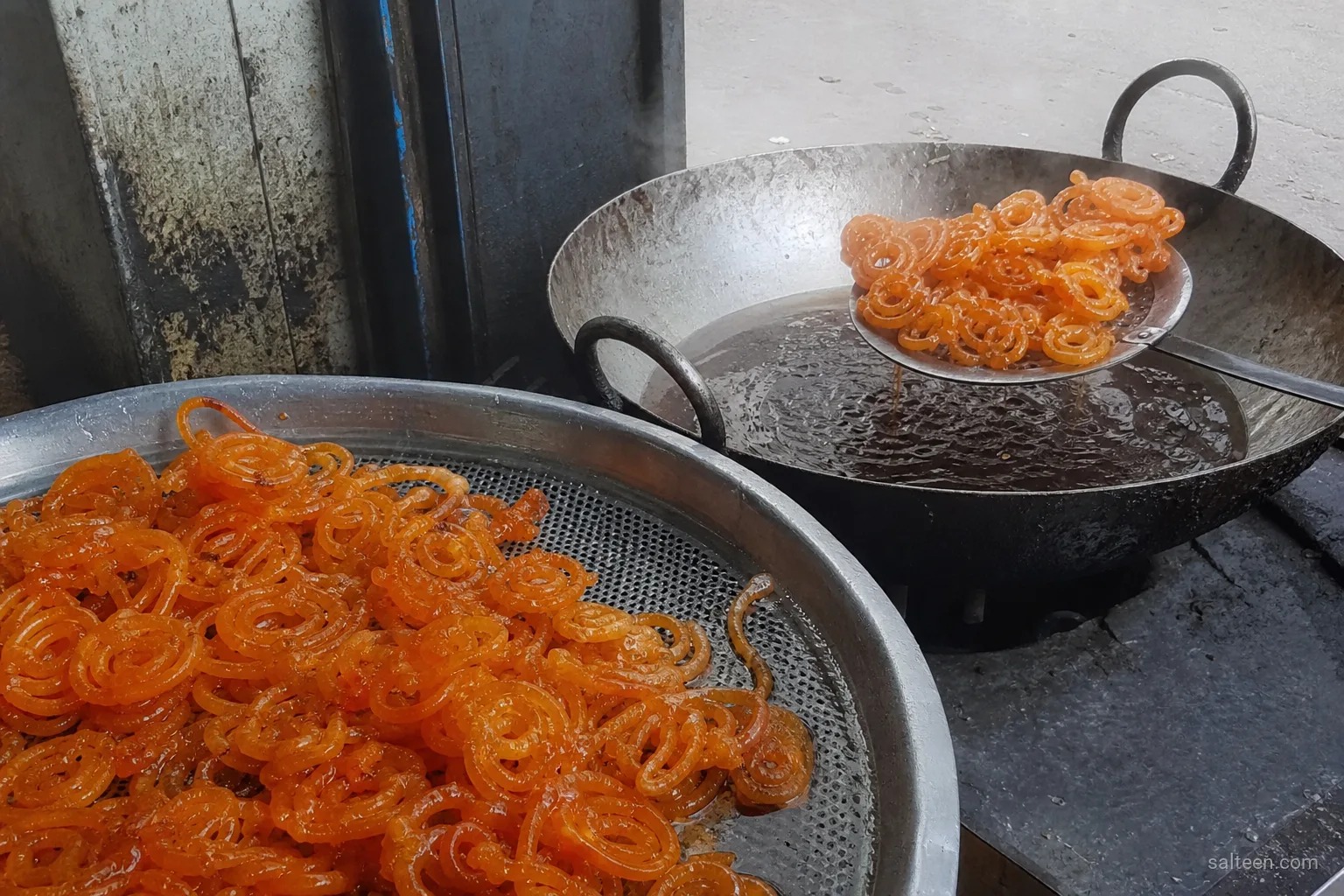
The kachori and jalebi pairing is so common here that most people do not question it. There is no documented origin for it that we could find, so what follows is an explanation and not a fact.
A morning of salty fried bread followed by hot syrup gives the body quick energy, which suits people who are heading to a bath in the Ganga, a long walk through the lanes or a day of work.
The contrast of salt, spice and sugar in one sitting is also simply pleasing, and the habit has been repeated for so long that it has become the order of things. The pairing is reported by food writers as part of the Subah-e-Banaras morning celebrations too, where it forms part of the way people mark the start of the day on the ghats.
Tea in a kulhad
A meal like this needs tea, and in Banaras tea comes in a kulhad, the small unglazed clay cup that is thrown away or broken after use. The tea is strong, sweet and boiled with milk, and the clay gives it a faint earthy note. Tea stalls sit next to many kachori shops, so the cup arrives within a minute of the plate. We will write about kulhad chai in a separate post, because it deserves one.
What else is on the Banarasi breakfast table
Kachori sabzi is the headline, but a Kashi morning offers more than one choice.
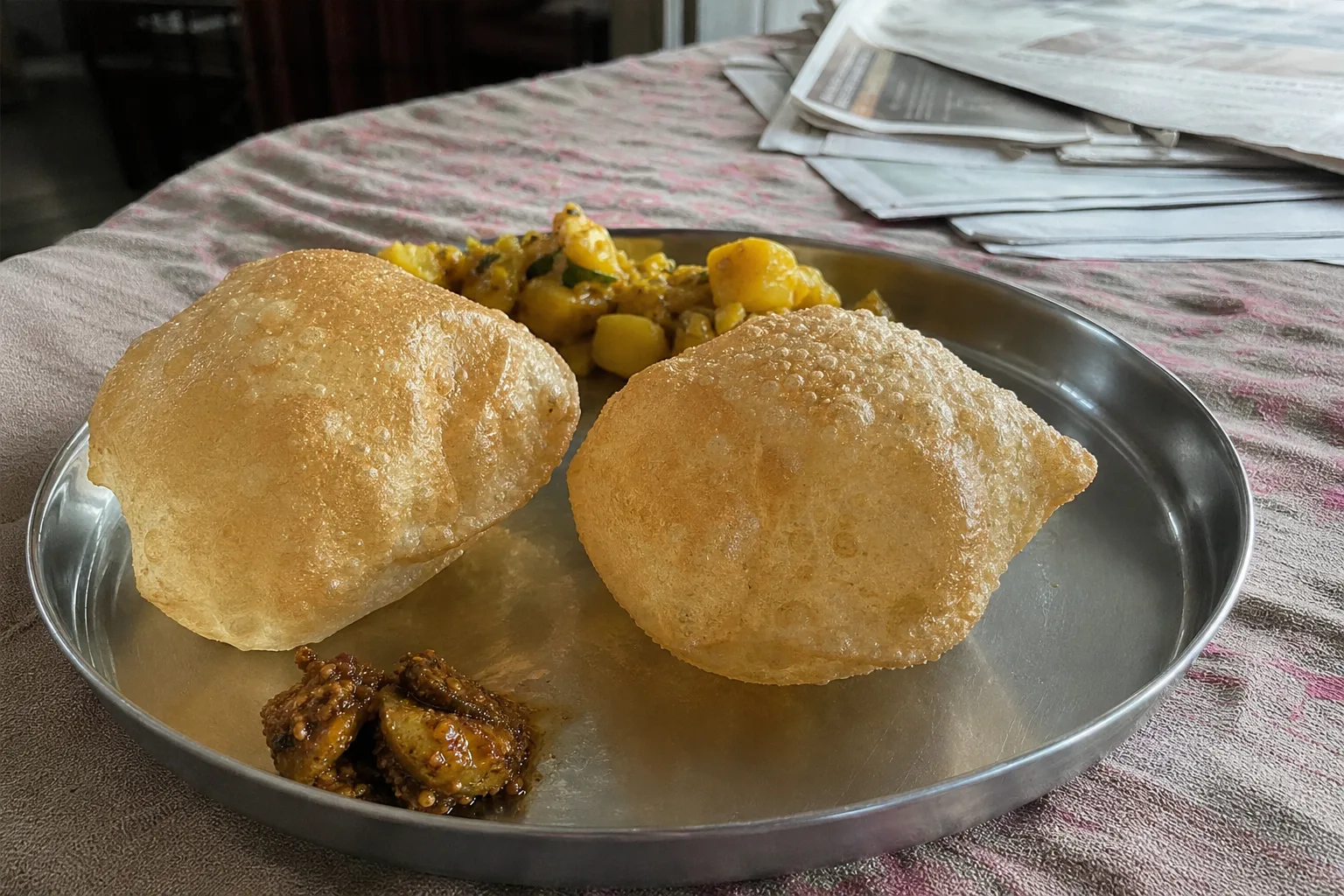
- Puri sabzi. A plainer version of the same meal, with soft puffed puris in place of kachori. Some shops serve both side by side.
- Chura matar. Flattened rice cooked with green peas, spices and ghee, a lighter dish that appears in winter when peas are fresh.
- Safed makhan toast. Toasted bread with white butter, found at small stalls near the ghats and described by visitors as a lighter alternative to the fried plate.
- Lassi. Thick curd lassi with a layer of malai on top, eaten in the morning in the city’s old lanes.
- Malaiyo. The winter foam of milk and saffron sold from large brass pots by vendors in the lanes around Chowk and Vishwanath Gali. It is a winter morning only dish, and it is gone by noon. We have given it a post of its own.
Seasons change the plate
A Banarasi breakfast follows the year. In summer the stalls go lighter, with lassi and cold drinks beside the kachori. In the cold months, peas arrive, chura matar returns, malaiyo appears and jalebi tastes better than usual because the cold air makes hot sugar more welcome. Winter mornings in Kashi are also the time when mist sits on the river, and a plate of hot kachori eaten in that cold is part of why people remember the city so clearly after they leave.
A morning in Kashi, in order
A typical morning plan, put together from what food writers and visitors describe, goes like this. The day starts before sunrise with a boat ride or a walk on the ghats. By 7 or 8 the kachori stalls are open. Plates are served hot, jalebi follows, and tea comes in a kulhad. By 10 the best shops are sold out, and the lanes move on to the heavier lunch and the next round of sweets. Winter adds malaiyo to the early hour.
How to eat it well
- Arrive early. The window between 6:30 and 10 AM is the one cited most often by food writers.
- Eat standing or on the shop bench. The leaf plate is part of the meal.
- Take the sabzi thin. Do not ask for it to be thickened.
- Ask for jalebi fresh from the kadhai.
- Carry water, and choose busy stalls where food moves fast, since a fast turnover means a fresh batch.
Make it at home
A home version of kachori sabzi is a good weekend project, though it will never taste like the lane. A dal filling is cooked dry with fennel, coriander and a little asafoetida, then sealed inside a dough ball and rolled out and fried slowly on a medium flame so that it puffs without browning too fast. The sabzi is a thin potato gravy with cumin, ginger, green chilli and coriander. Keep it light and slightly runny, which is the Banarasi way.
Frequently asked questions
What is a traditional breakfast in Banaras?
Kachori sabzi with jalebi, usually with tea in a kulhad. In winter, malaiyo is added, and other morning dishes include puri sabzi, chura matar and white butter toast.
Why is kachori sabzi eaten with jalebi?
We could not find a documented origin. It is a long standing pairing of a salty fried bread with a sweet, and many people find that the contrast works well in one meal.
Where is Kachori Gali in Varanasi?
It is in the old city near Godowlia and the Kashi Vishwanath temple, within the Thatheri Bazaar area.
What time do kachori shops in Banaras open and close?
Most open around 7 or 8 AM and many sell out by about 10. Arrive early.
Is the sabzi made without onion and garlic?
Many traditional Banarasi versions are, though shops differ, so ask if it matters to you.
More from Banaras Ka Swad: read our Banaras food guide, the winter post on malaiyo and the post on kulhad chai.
Sources used for this post: Roads and Kingdoms, “The Divine Breakfast for the Unapologetic and Reckless”; Lonely Planet, Varanasi food guide; National Virtual Library of India, Banarasi food notes; Slurrp, Varanasi breakfast specials; Slurrp, kachori sabji in Varanasi; Varanasi Guru on Kachodi Gali; Outlook Traveller, Varanasi: a gastronomic trail; Explurger Varanasi food guide; Republic World kachori sabzi recipe feature (2026). Shop names appear only where sources agree. Sold out times are visitor reports and vary by day.