Blog
Malaiyo: The Winter Foam of Banaras That Is Gone by Noon

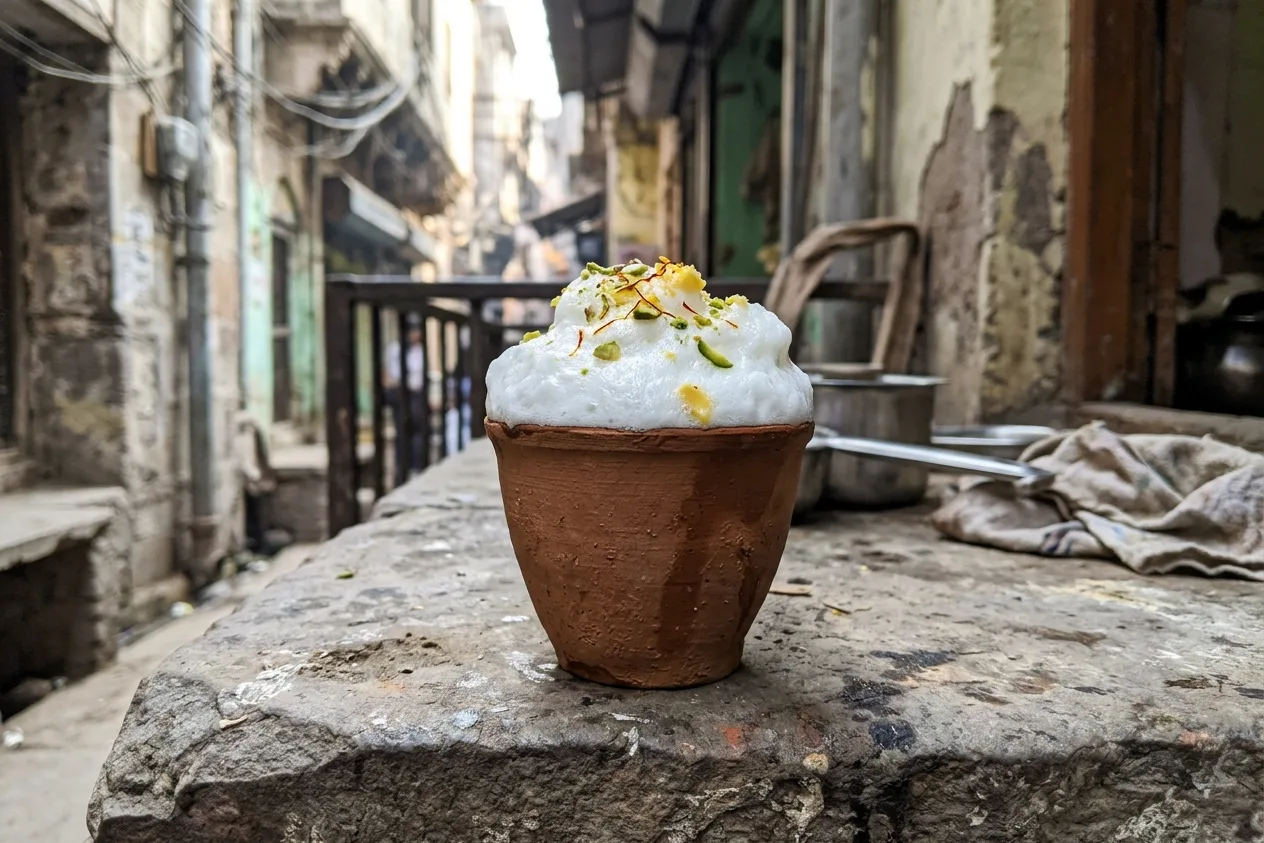
On a December morning in the old lanes of Varanasi, a man under a bright parasol hands out small clay bowls filled with a pale yellow froth to a crowd that has been waiting since before sunrise. The froth is called malaiyo, it tastes of saffron and sweet milk, and it disappears on the tongue almost before it can be tasted. By about 11 AM the pot is empty and the vendor goes home. Nobody in the city thinks this is a problem, because it is the reason the dish is loved.
This post is about what malaiyo is, how it is made, why only winter allows it, and how it differs from the same sweet in other cities.
In short
Malaiyo is a winter foam of milk, saffron, cardamom and sugar, made by boiling milk, leaving it open to the dew overnight and churning it by hand at dawn. It is sold in Varanasi from about November to February and is finished by around 11 AM.
What malaiyo is
Malaiyo (also spelled malaiyyo) is a sweet snack made from milk, light as air and served in a clay bowl. It belongs to a family of winter foam sweets in North India. The same idea goes by different names: nimish in Lucknow, makhan malai or malai makhan in Kanpur, and daulat ki chaat in Delhi. In Varanasi it is malaiyo.
Unlike most Indian sweets, it has very little weight. The texture is compared to whipped cream, but it is lighter, and it vanishes in the mouth leaving behind a rich taste of saffron. When the froth is finished, vendors often give a mouthful of the saffron milk left at the bottom of the bowl.
How malaiyo is made
The method is simple to describe and slow to do. Sources that describe it agree on the main steps.
- Boil the milk. Full fat milk is boiled with saffron and cardamom in a wide pan, in some accounts an iron wok, for hours, until it has reduced to about half.
- Cool it. The milk is cooled.
- Leave it under the sky. The milk is set out in the open at night so that the dew can settle on it. Winter dew is credited with starting the froth.
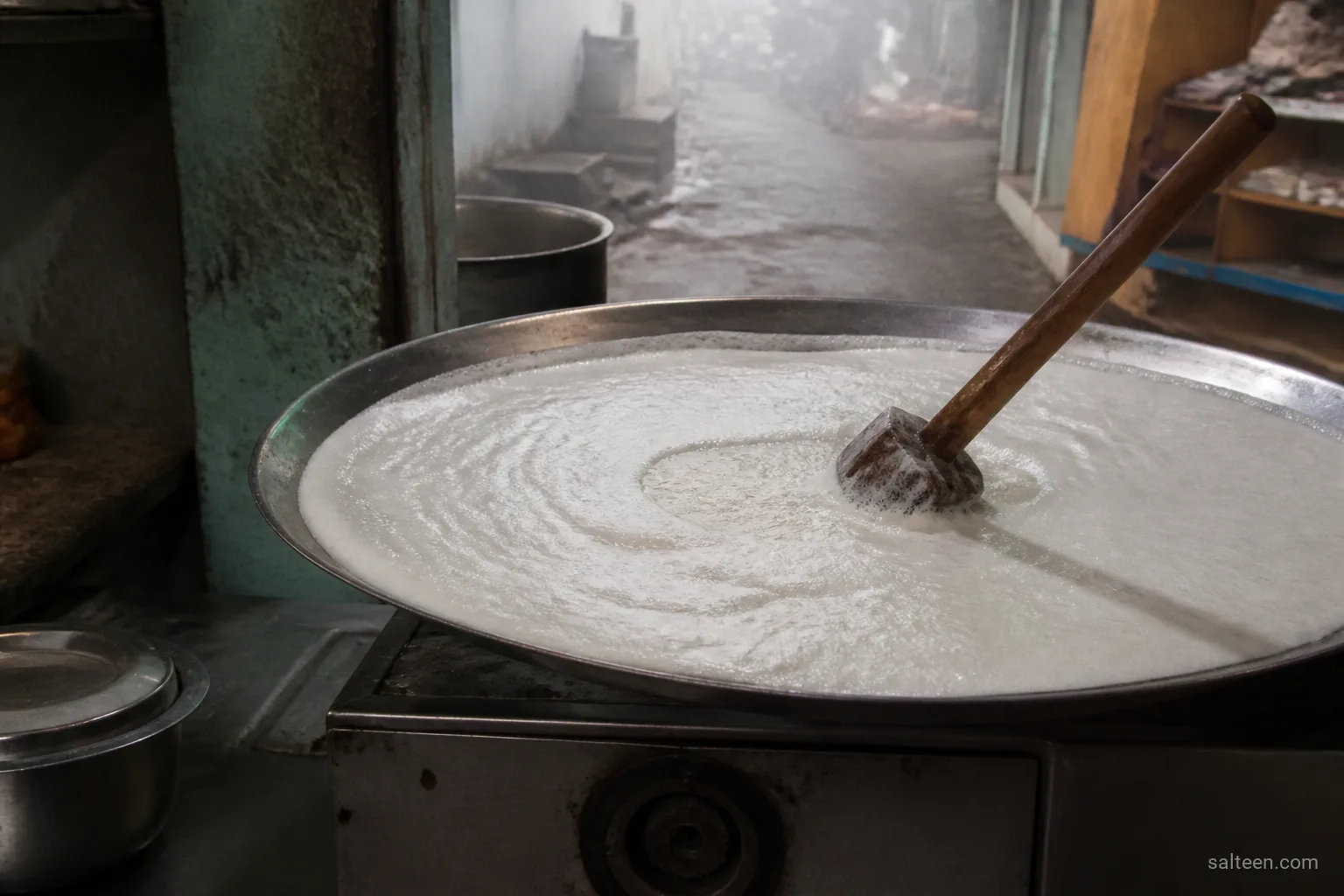
- Churn at dawn. Before sunrise the milk is churned by hand for a couple of hours until a thick froth rises. The froth is skimmed off and collected.
- Finish. Sugar, saffron and cardamom are folded in, and the froth is served in clay bowls with a topping of chopped pistachio and almonds, sometimes with a few drops of rose water.
The work runs through the night. A shop that sells at 6 AM has been preparing since the evening before.
Why only winter
Two things make malaiyo a winter dish. The first is the weather: the dish is made only in the cooler months, and the best froth comes in peak winter, when the dew is heavy. The second is the fat. One explanation given by food writers is that butterfat melts in warmth, so the froth would not hold in summer. That is why you will not find malaiyo in the hot months.
Sources agree that the season runs from about November to February, and that the real thing is made in peak winter. Some makers also say that the froth falls quickly once the sun is up, which explains the cut off near 11 AM.
Malaiyo cannot be made in the summer, and even in winter it is only good if eaten early in the morning.
A role for the dew
Makers say that the dew is what makes the milk froth, and that is the traditional explanation. Writers who have watched the process describe the milk being put out under the night sky, with the dew drops starting the foaming before the churning begins. It is difficult to test this at home, since nights are warmer and the dew is lighter in a city flat. Cold air and long churning probably matter as well, and some food writers mention the cold as the reason the foam holds its shape. We note the dew because every maker we have read credits it, and we leave the science to those who study it.
Malaiyo, nimish and daulat ki chaat
The versions are close cousins with different details.
| City | Name | What is different |
|---|---|---|
| Varanasi | Malaiyo | Extra saffron that gives a golden colour, served in clay bowls, eaten near Lanka Gate, Chowk and the ghat lanes |
| Lucknow | Nimish | Made with rich milk, dew, saffron and cardamom, with pistachio and rose water; linked by food writers to the Nawabi kitchens |
| Kanpur | Malai makhan | Made in winter with a similar method |
| Delhi | Daulat ki chaat | Sold in Old Delhi lanes; one account says the name comes from the shop owner who began selling it |
The Lucknow version is described as dissolving in the mouth within seconds, and the Banaras malaiyo as a little richer in saffron. We have not tasted every version at the same table, so we leave the comparing to you.
Where and when to find it in Varanasi
In winter, vendors with large brass pots appear early in the lanes around Chowk, Vishwanath Gali and Godowlia, near Dashashwamedh Road and on the road near Lanka Gate and BHU. Shops such as Shreeji Sweets and Deena Chaat Bhandar are named in several guides, and a vendor with a parasol and a clay bowl is often enough. Aim to be there between about 6 and 10 AM. By 11 the pots are empty.
How it is served and eaten
A vendor sets the pot on a stool or a cart, spoons the froth into a clay bowl and tops it with chopped pistachio and almonds. Some serve it with a few drops of rose water. It is eaten at the stall, with a small spoon or straight from the bowl. The froth goes first, and then the saffron milk at the bottom of the bowl is drunk. The clay bowl is a close cousin of the kulhad used at the tea stalls nearby.
A few habits help the first time.
- Go early. The best froth is at dawn, and the pot is often finished by 11 AM.
- Eat it where you buy it. The foam begins to collapse within minutes.
- Choose a stall with a queue. A queue means a fresh pot.
- Expect something much lighter than ice cream or whipped cream. It is meant to vanish.
Can you make it at home
A home version is possible, and you will find recipes with 1 litre of full fat milk, a little fresh cream, saffron, cardamom, powdered sugar and chopped nuts. The result is nice, but the airy, melting texture of the street version needs cold air, long churning and patience. A cold winter terrace helps, and a night with real dew helps more. Treat a home attempt as a version of malaiyo and not the same thing.
How malaiyo fits into a Kashi morning
Malaiyo is one part of a winter morning in Banaras. It is eaten after a visit to the ghat or a bath in the Ganga, before the kachori shops fill up, and beside a cup of tea. We have written about the savoury side of the same morning in our post on the Banarasi breakfast, and the whole city’s food is in our Banaras food guide.
Frequently asked questions
What is malaiyo?
A winter milk foam of Varanasi, made with saffron, cardamom and sugar and served in clay bowls. Similar sweets are called nimish in Lucknow, malai makhan in Kanpur and daulat ki chaat in Delhi.
Why is malaiyo only sold in winter mornings?
Because the froth depends on cold nights and morning dew, and butterfat would melt in warm weather. The foam is also fragile, so it is eaten fresh, up to about 11 AM.
Which months can you eat malaiyo in Banaras?
Roughly November to February, and the best froth comes in peak winter.
What is the difference between malaiyo and nimish?
They are the same idea under different city names. Banaras malaiyo is described as having extra saffron and a golden colour, and Lucknow nimish is linked to Nawabi cooking with rose water and pistachio.
Sources used for this post: Slurrp features on malaiyo and nimish; Roads and Kingdoms (Lucknow makkhan malai); The National (Varanasi food tour); Varanasi Guru; Wikipedia (Makhan malai).; Atlas Obscura (nimish); Republic World (daulat ki chaat); Cadbury Desserts Corner (malaiyo notes); SCMP (winter froth sweets). Where sources differ, the post says so.