Blog
Sunday Breakfast: Poori, Aloo Sabzi and Achar the Banarasi Way

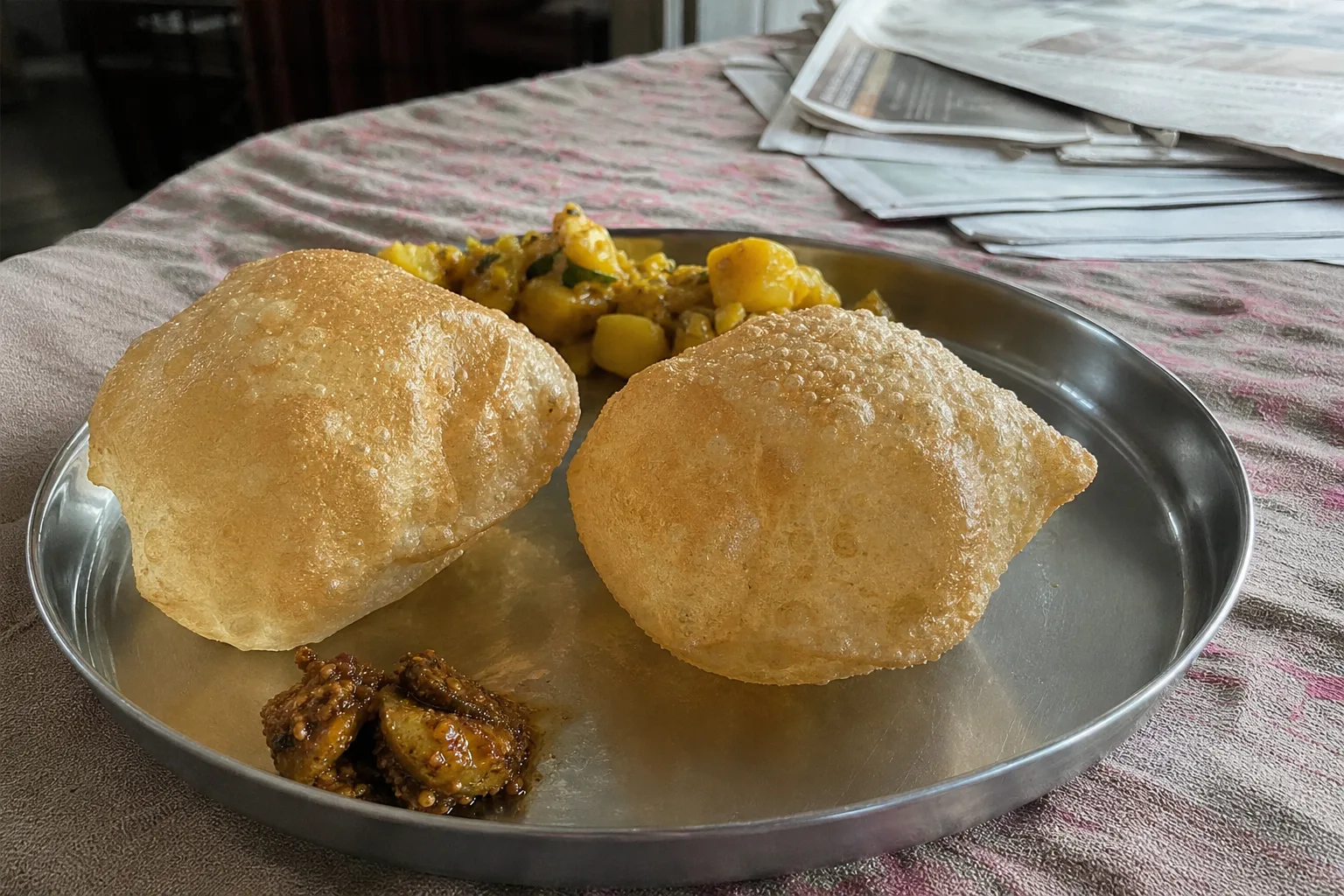
Veg Recipes of India calls aloo puri the definition of a perfect Sunday morning breakfast: a warmly spiced potato curry with crisp fried bread. The same site says that in most Punjabi homes Sunday breakfast includes some kind of fabulous bread. Banaras has its own version of the weekend plate.
The short answer
In short
Poori and aloo sabzi is a hot, thin potato curry with freshly fried, puffed poori. To keep poori puffed, use a firm dough, hot oil and small batches, and serve at once. A spoon of achar on the side is common, and so is a small halwa.
Keeping poori puffed
- Firm dough. Veg Recipes of India says the dough must be firm and tight, since a soft dough will not hold its shape in frying. Slurrp says a soft dough absorbs more oil and makes greasy puris. Piping Pot Curry says poori dough needs to be stiff, unlike roti dough.
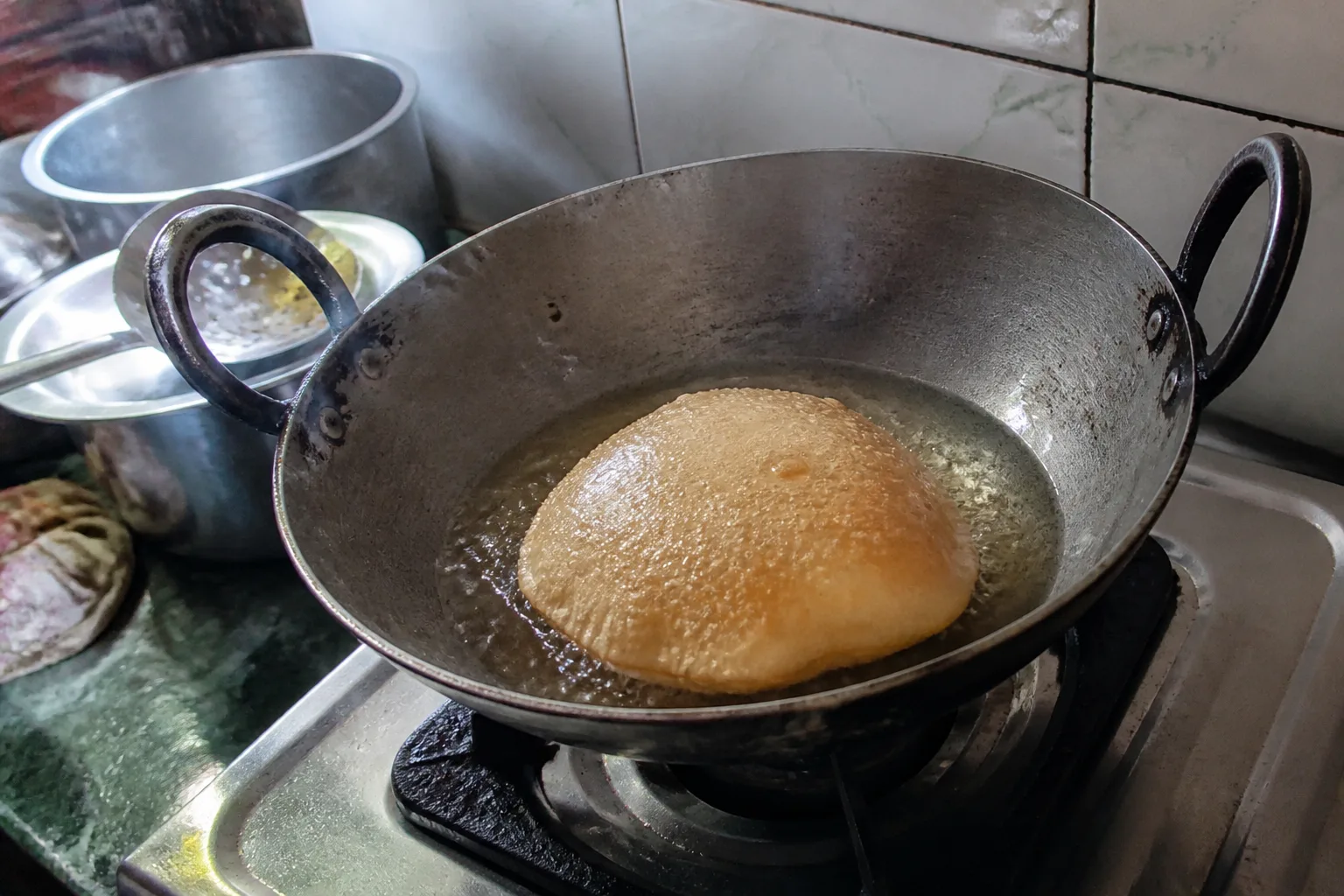
- Hot oil. Whisk Affair says the oil should be 360 to 380 degrees Fahrenheit and that a poori puffs fully in 10 to 15 seconds. Piping Pot Curry says an oily poori means the oil was not hot enough or the dough too thin.
- Small batches. Piping Pot Curry says to fry in small batches so the oil stays hot, and Sinfully Spicy says that after 5 or 6 pooris the oil gets very hot, so reduce the heat and wait a few minutes.
- Rest briefly. Sinfully Spicy says to rest the dough for only about 5 minutes, or the pooris turn out soft. Indian Healthy Recipes says that if the dough rests longer, pooris absorb more oil.
- Roll with oil, not flour. Whisk Affair says to use only oil for rolling, and to roll the centre slightly thicker than the edges.
- Why it puffs. Whisk Affair says the hot oil turns the water in the dough to steam, which inflates it from the inside.
The aloo sabzi
Whisk Affair describes a thin, tangy potato curry, like the one served at bhandaras. Veg Recipes of India finishes with amchur and coriander, and Sinfully Spicy has a no onion no garlic version, starting with ghee and whole spices fried slowly. For a Banaras reference, Republic World describes Banarasi kachori sabzi as made without onion, garlic or tomato, with a thin, slightly runny consistency. See kaddu ki sabzi with puri for another no onion no garlic curry, and satvik cooking.
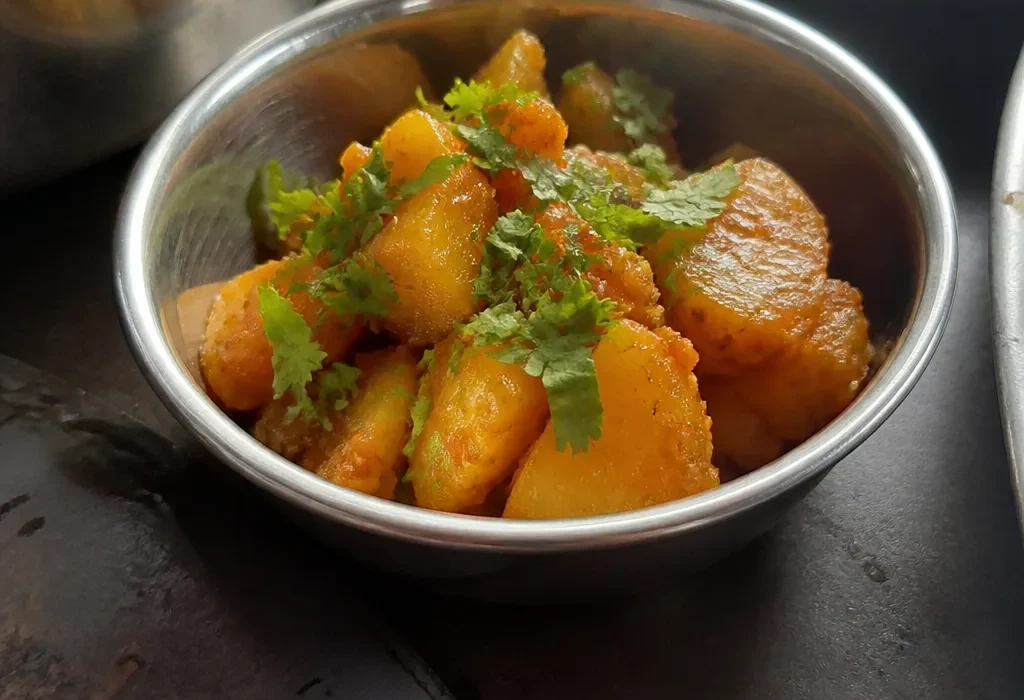
What goes on the plate
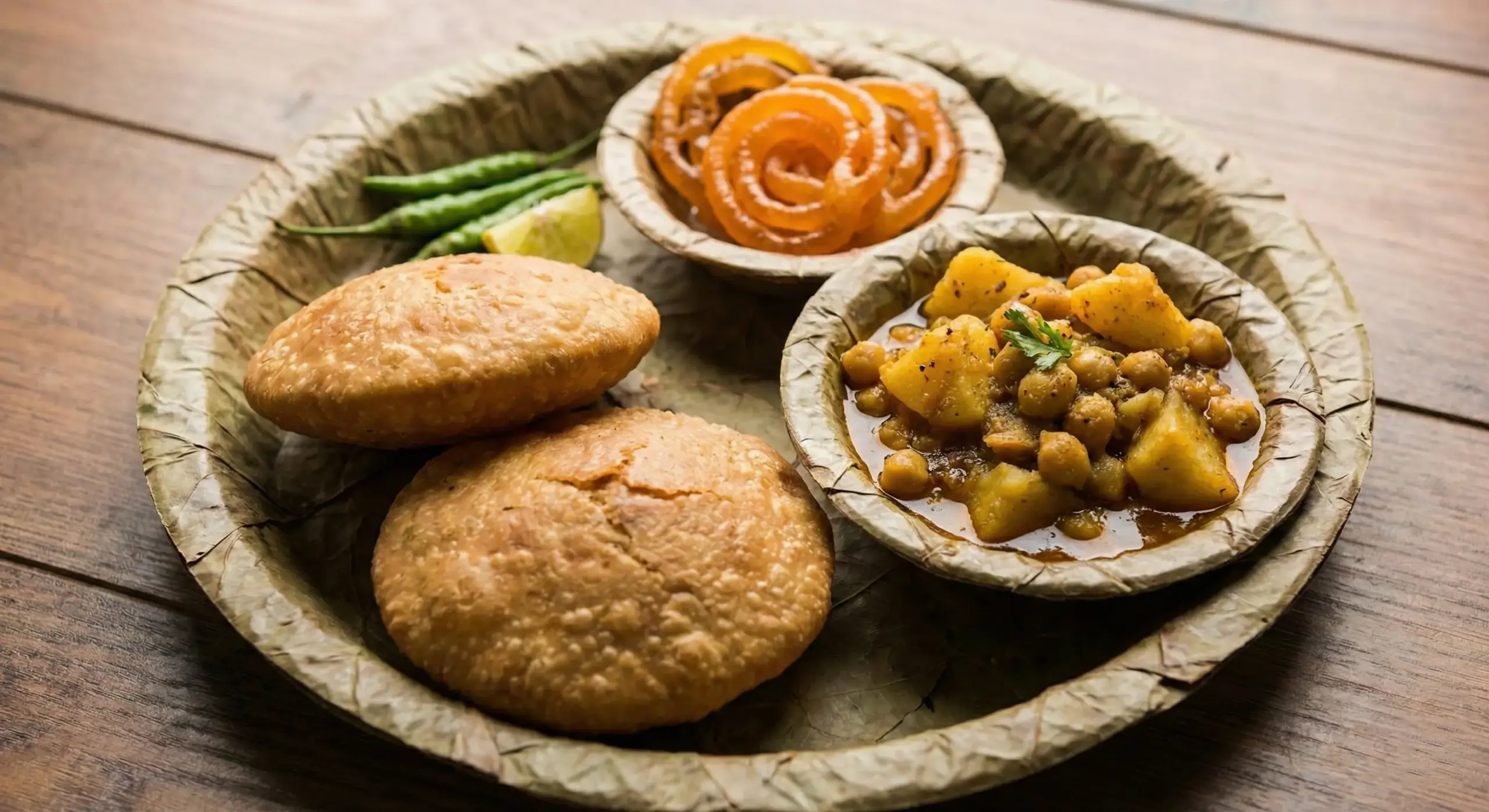
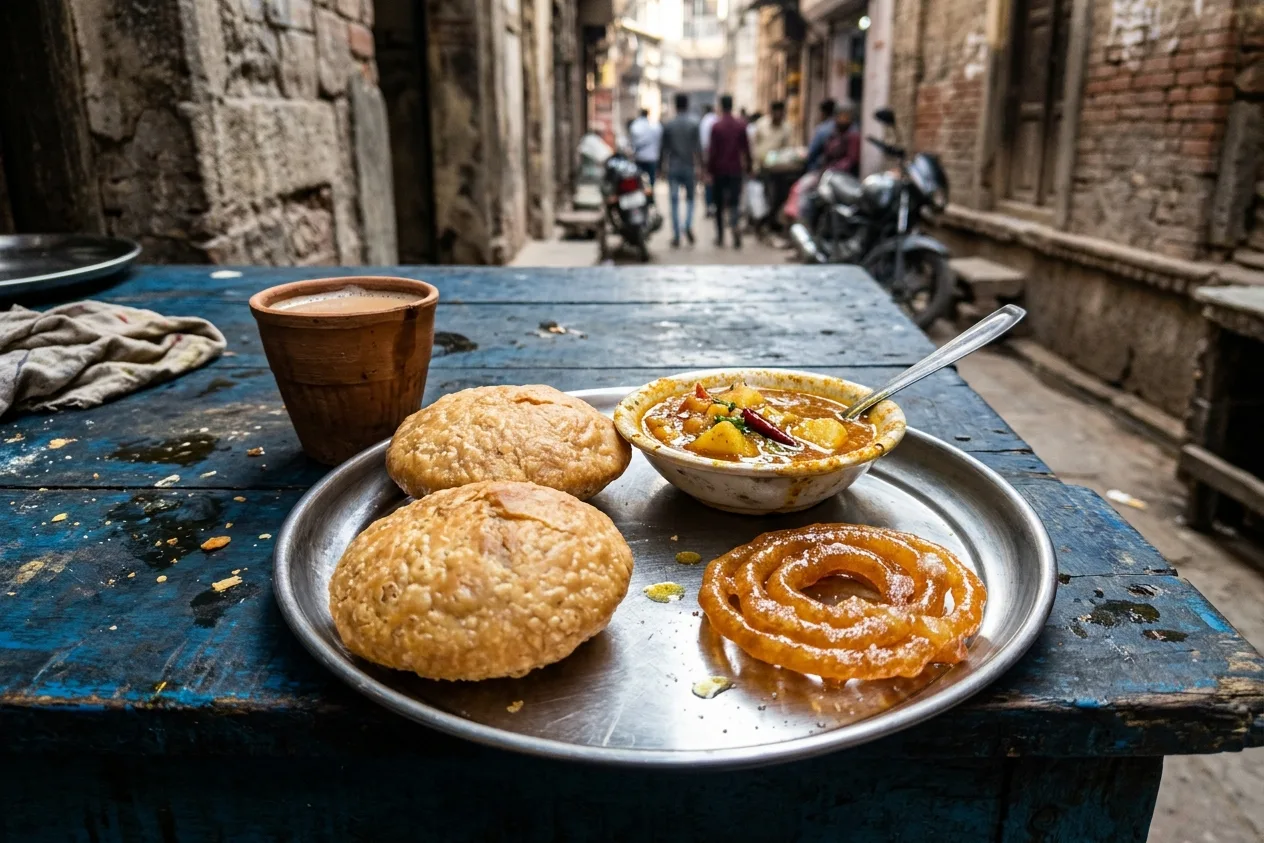
My Ginger Garlic Kitchen describes piping hot puris with aloo sabji, some pickle, laccha onion and suji or atta halwa as a breakfast bliss. Veg Recipes of India says aloo puri with sooji halwa is very popular in North India, and serves it with onions and lemon wedges.
Where the achar fits
A spoon of sharp pickle cuts through a fried bread and a soft potato. Banarasi hari mirch achar, a mango achar or a lemon pickle suit it. See what to eat with achar, aloo paratha with achar and which achar for which meal. Use a dry spoon, as in achar in monsoon.
Frequently asked questions
What goes with poori and aloo sabzi?
A thin hot potato curry, a spoon of achar, onions with lemon, and sometimes suji halwa.
How do you keep poori puffed?
Knead a firm dough, fry in hot oil in small batches, and serve right away.
Why is my poori oily?
The oil may not be hot enough, or the dough too soft or too thin.
Sources used for this post: Veg Recipes of India, aloo poori and poori; Whisk Affair, poori and aloo puri; Piping Pot Curry, poori; Sinfully Spicy, aloo poori without onion and garlic; Indian Healthy Recipes, poori; Slurrp, make your puris fluff up; My Ginger Garlic Kitchen, aloo puri; Republic World, Banarasi kachori sabzi