
Blog
Kulhad Chai and Clay Cups: Why Banaras Still Drinks From Earth

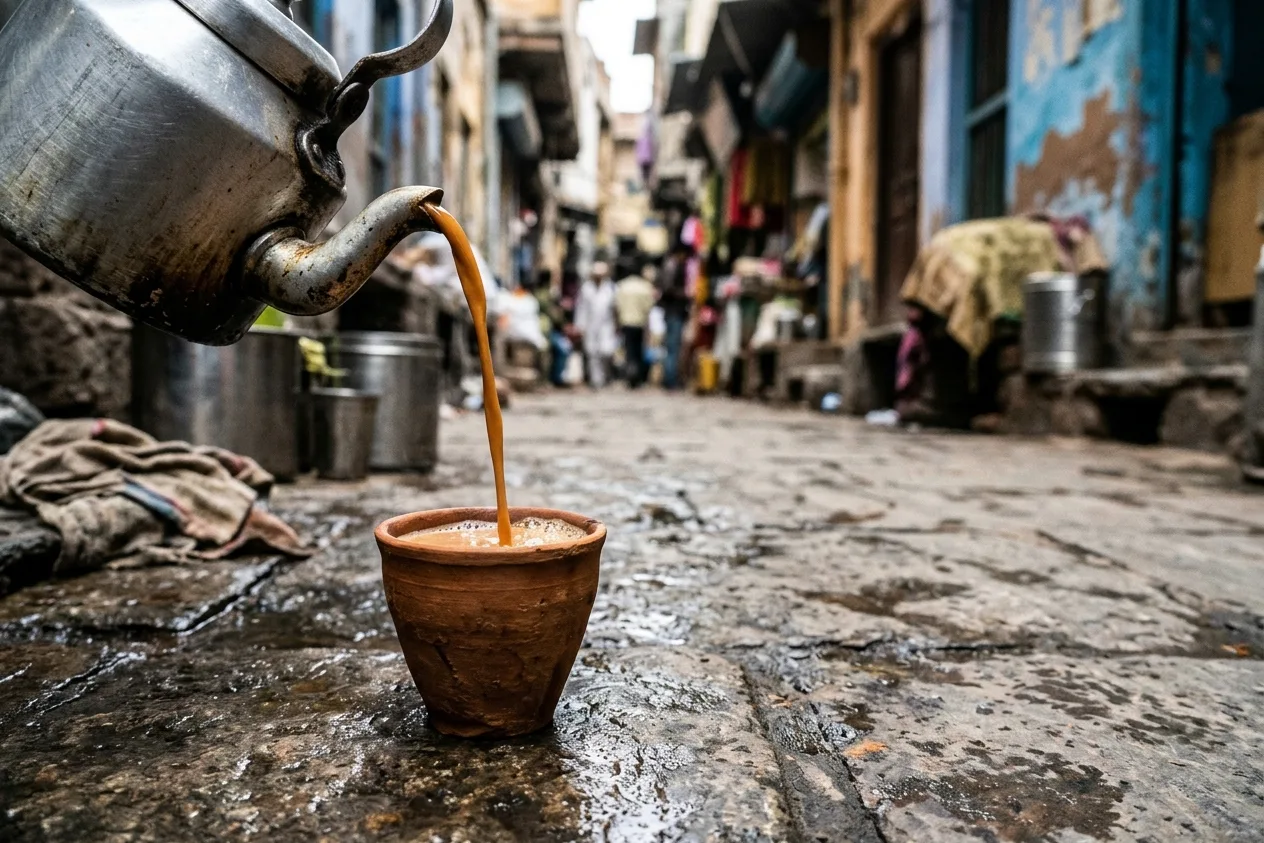
When India’s railway minister signed an order in 2004 to serve hot drinks only in clay cups, the stated aim was to give potters in villages an income, and plastic cups were to be banned from railway stations altogether. The minister was Lalu Prasad Yadav, and the cups were kulhads, small unglazed pots with no handle that tea sellers in north India had used for generations. The order did not hold. Plastic cups returned to the platforms over the following years, and the kulhad survived mainly on the street, where a chai seller in Banaras still pours from a kettle into a fresh clay cup.
This post is about that cup. It covers where the kulhad comes from, why people say it changes the taste of chai, what the clay absorbs, and why the cup has been revived and dropped by Indian Railways more than once.
What is a kulhad
In short
A kulhad (also written kulhar or kulhhad) is a small, unglazed clay cup with no handle, used once and thrown away. It is made from river clay, baked in a kiln, and used for chai, lassi, curd and sweets across north India.
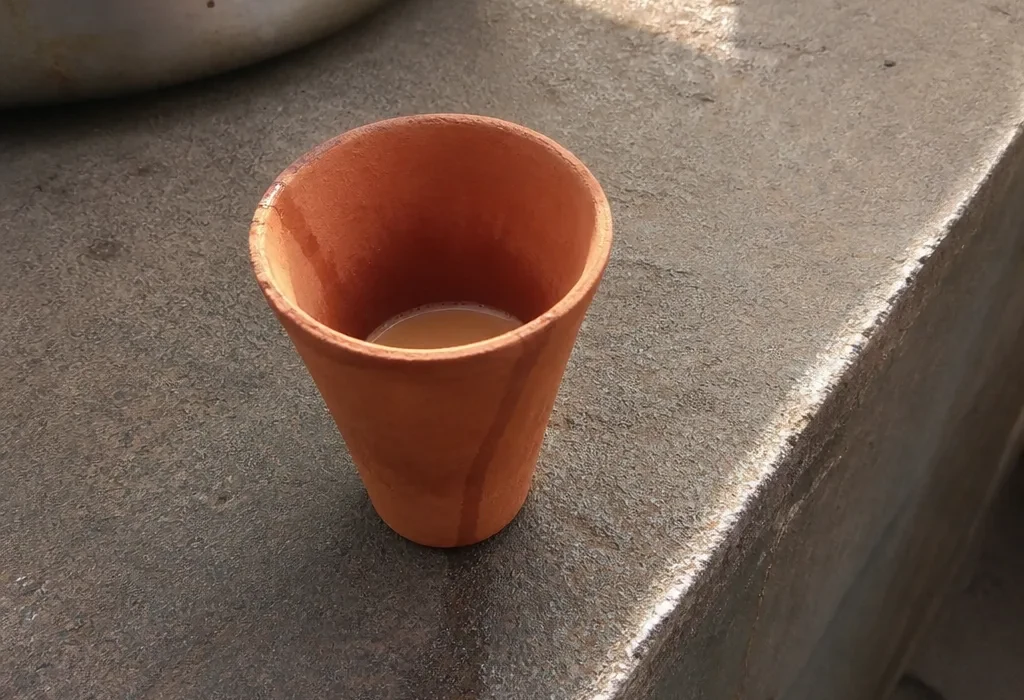
A report on railway kulhads describes them as unpainted, unglazed and without handles, and perfectly biodegradable. Another says the clay is usually dug from a river, shaped into a cup and baked over fire. In Bengal the same cup is called a bhar, and a writer for a London university journalism project says it is often called maathi cha, or soil tea, because of the earthy flavour.
The cup is not only for tea. The same writer says it serves lassi, malai milk and curd across the subcontinent. A retired potter interviewed by the food writer Ruchika Agarwal for Goya magazine points to kulhad-like vessels excavated from the Indus Valley civilisation, which is one way of saying that clay cups are very old.
Why chai tastes different in clay
Almost everyone who writes about kulhad chai says the same thing, which is that the cup gives the tea an earthy smell. A columnist in Deccan Herald describes it as the pleasant smell of soil after the first drizzle, coming from a fresh kulhad and mixing with the aroma of the tea, which fancy porcelain, plastic or paper cups cannot reproduce. Another source says the kulhad adds to the flavour and keeps the tea warmer for longer.
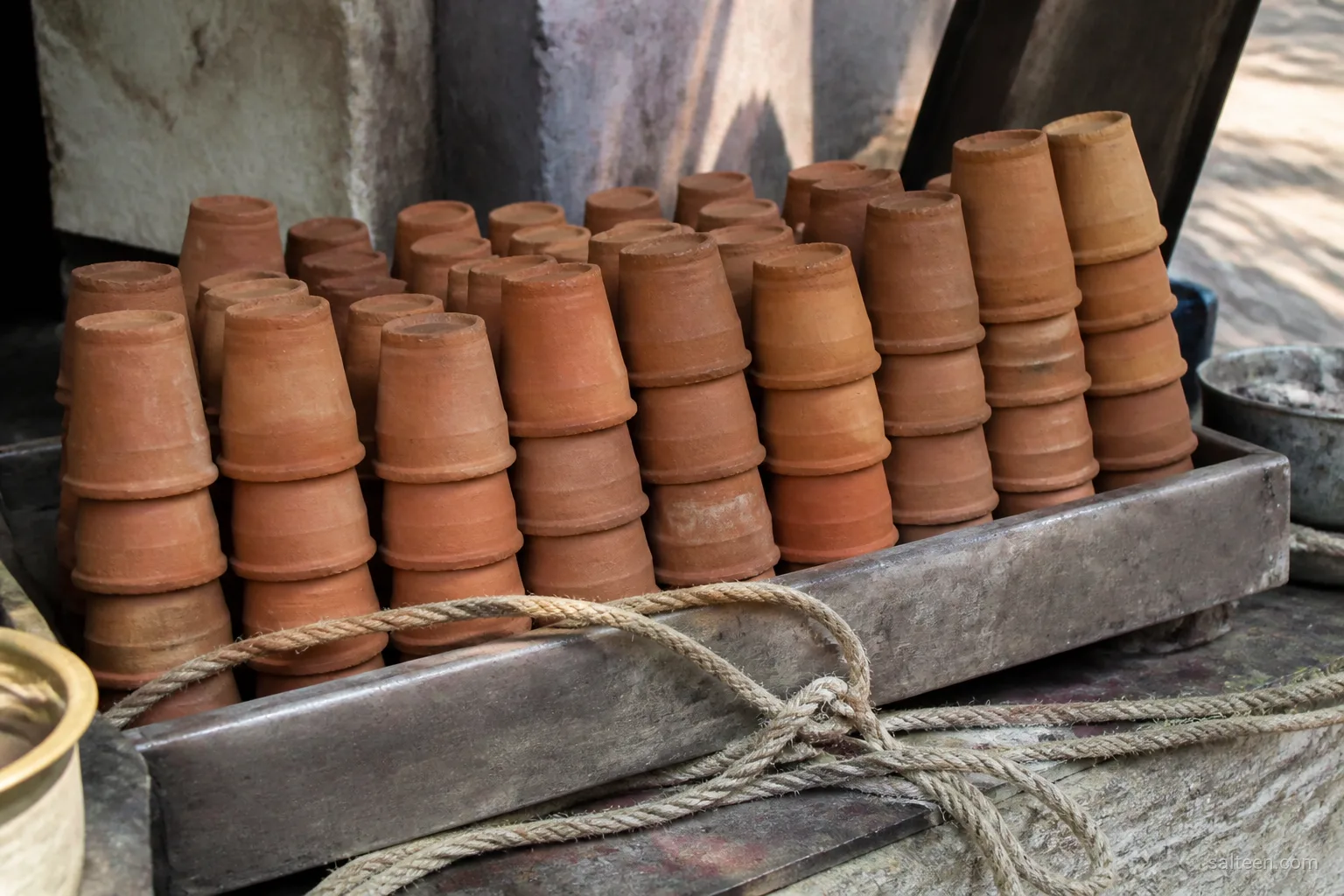
Taste is a personal matter, and none of these descriptions is a laboratory finding. What can be said is that unglazed clay is porous. It takes up some of the liquid and some of its heat, and it gives a smell of its own to a hot drink. The experience of the cup is partly the taste and partly the smell, the rough feel of clay on the lip and the small ritual that goes with it.
What the cup drinks
Because the clay is porous, it absorbs tea. A journalism student’s report from Kolkata says that for 150 ml of chai, as much as 50 ml may soak into the clay, which means a seller must charge less for the same cup than if it were glass. That is one report from one city and the figure will vary with the clay and the cup, but it explains something about the economics. A kulhad costs the seller very little, and the buyer is paying for the experience and not for a full measure of tea.
In Kolkata the custom after the last sip is to throw the bhar to the ground and crush it. Al Jazeera’s photo story calls it a ceremonial ending to each cup. The broken pieces return to earth, which is the logic of a cup made from soil.
The railway story
The 2004 order is the best known chapter. Hinduism Today reported in May 2004 that the new railway minister planned to ban plastic and Styrofoam, replace them with earthen cups and thereby provide employment to potters in villages. A later account says the move failed in practice. Kulhads weigh more than plastic cups, and the kilns that fire them were reported to burn cow dung and coal. Tea began selling again in plastic cups.
About fifteen years later, a later railway minister, Piyush Goyal, announced that kulhads would come back to stations, again with the aim of cutting plastic waste. Reports from the time said the railways would serve tea, lassi and other items in clay. The policy was again argued over. An article cited by Yahoo News says the eco-friendly nature of clay cups is disputed, because the carbon footprint of making a fired cup is not small.
That argument is worth knowing. A clay cup is biodegradable, and it supports a craft. It is also fired in a kiln, and the fuel is a real cost. Both facts can be true at once.
Kulhad chai in Banaras
- Which shop, ghat or lane do you remember, and at what time of day?
- What did the chai seller do, and what did the cup smell like?
- Did you drink at a stall near Assi, Godaulia, a ghat or somewhere else?
- Did the family make a stop for chai on the way to the farm or a wedding?
- Anything about how winter changes the chai habit in Banaras.
If a line cannot be confirmed, this section stays out of the post.
Why the kulhad matters to a food culture
A cup like this carries two things. The first is livelihood, because potters in villages make the cups and sell them in bulk, and a ban on plastic can mean regular work for them. The second is a food memory. Anyone who grew up in north India can tell you about the smell of a wet clay cup, and it is that smell that people miss when it is gone.
For a brand that sells traditional food, that is the real lesson. A food is more than its ingredients. The vessel, the season and the hand that serves it are part of the taste, and they are the first things lost when a dish is made at scale. This is why we have chosen to tell stories of Banaras on this blog alongside our recipes. Our guide to Banaras food covers the wider table the kulhad belongs to.
Where to go next
If you enjoyed this, read our post on the Banarasi breakfast of kachori, sabzi and jalebi and our note on malaiyo, the winter sweet of Banaras.
Frequently asked questions
Why is chai served in a kulhad?
Because the unglazed clay gives tea an earthy smell that many people prefer, it is cheap, and the cup is thrown away after one use. In some states it is also a way of supporting potters.
Does a clay cup change the taste of tea?
People widely say it does, mainly through the earthy smell and the warmth of the cup. These are reports of experience and not laboratory findings.
Is kulhad chai better than tea in a paper cup?
Taste is personal. Kulhads are biodegradable, but firing a clay cup uses fuel, and the environmental case is argued by both sides.
What is a kulhad made of?
River clay that is shaped into a cup and baked in a kiln or over fire. It is not glazed or painted.
Why did Indian Railways bring back kulhads?
To cut plastic waste and give work to potters. Lalu Prasad Yadav ordered it in 2004, and the idea returned about fifteen years later.
Sources used for this post: Hinduism Today (24 May 2004) on the railway kulhad order; The Quint and The Better India on the railway revival; Wikipedia on the kulhar.; Deccan Herald opinion piece on the earthen cup; Goya magazine on kulhads and potters; Goldsmiths MCCS Journalism on the Kolkata bhar; Al Jazeera photo story on Kolkata clay cups (2016); Yahoo News on the reintroduction and the dispute over its footprint. Figures on absorption come from one student report and are quoted as given.